Arabian Post Staff -Dubai
US Central Command said American forces completed another round of attacks intended to weaken Iran’s ability to threaten civilian mariners and commercial vessels using the strategic waterway. Dozens of targets were struck, including air-defence systems, coastal radar installations and missile and drone capabilities positioned near southern Iran.
Explosions were reported around Bandar Abbas, Jask and Sirik, as well as Qeshm Island, a strategically important location overlooking shipping lanes through the strait. Tehran condemned the attacks and responded with missile and drone operations against US-linked military facilities across the Gulf region.
Iranian forces targeted sites in Bahrain, Kuwait and Jordan, extending a pattern of retaliatory attacks that has also placed bases and infrastructure in Qatar, Oman and the United Arab Emirates under heightened alert. Regional air-defence systems intercepted several incoming weapons, though officials were assessing damage and casualties.
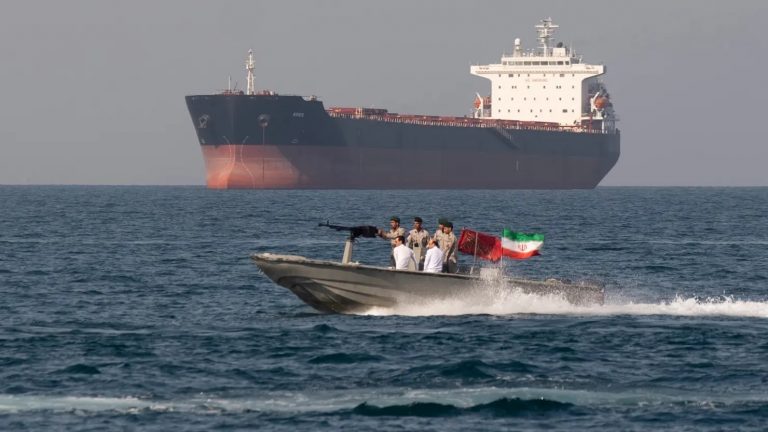
The confrontation has become increasingly centred on control of the Strait of Hormuz, through which a substantial share of the world’s internationally traded oil and liquefied natural gas normally passes. Iran’s Revolutionary Guards have declared the passage closed until further notice, while Washington insists it remains open to lawful commercial shipping.
US President Donald Trump rejected Tehran’s closure claim and said American forces were ensuring freedom of navigation. The opposing declarations have created a distinction between whether the strait is legally open and whether shipping companies consider it safe enough to enter.
Vessel movements fell to a five-week low on Sunday, with only six ships detected transiting the waterway. The limited traffic included a very large crude carrier transporting about two million barrels of Iranian oil and another tanker carrying roughly 500,000 barrels of Kuwaiti petroleum products.
Three empty tankers sailed into the Gulf to collect cargo, but no liquefied natural gas carriers were detected during the weekend. Some vessels were believed to be operating with automatic identification systems switched off, making the full scale of traffic difficult to establish.
The Revolutionary Guards said they had stopped two vessels by disabling their systems after the ships allegedly failed to comply with instructions. Tehran provided few details about the vessels, their ownership or the circumstances of the interceptions.
Shipping companies have increasingly delayed voyages, altered routes or instructed vessels to wait outside the danger zone. War-risk insurance costs have risen, while crews face growing hazards from missiles, drones, electronic interference and possible misidentification by opposing forces.
The latest American operation followed an attack on a Cyprus-flagged container ship in the strait. The incident triggered rescue operations and strengthened Washington’s claim that Iranian military activity was directly endangering international commerce.
Tehran maintains that foreign military operations and restrictions imposed on its vessels have destabilised the area. Iranian officials have argued that ships must follow routes and procedures approved by their forces, a position rejected by Washington as an attempt to control an international passage.
Oil prices climbed sharply as traders assessed the possibility of a sustained disruption. Brent crude rose by more than 4 per cent to around $79 a barrel, while US crude advanced towards $75. Equity markets across Asia weakened as investors considered the risk of higher energy costs, renewed inflation and slower economic growth.
The escalation has further weakened diplomatic efforts that had focused on preventing attacks against commercial shipping and securing dependable access through Hormuz. Qatar, Egypt and Pakistan have been involved in mediation, but the continuing strikes have narrowed the space for negotiations.
A June understanding had been intended to limit hostilities and create conditions for broader talks. Repeated attacks on vessels, followed by American strikes and Iranian retaliation, have exposed the fragility of that arrangement.
Also published on Medium.
Follow Arabian Post
Select Arabian Post as your preferred source on Google and MSN News for trusted business news and Arab politics and updates.