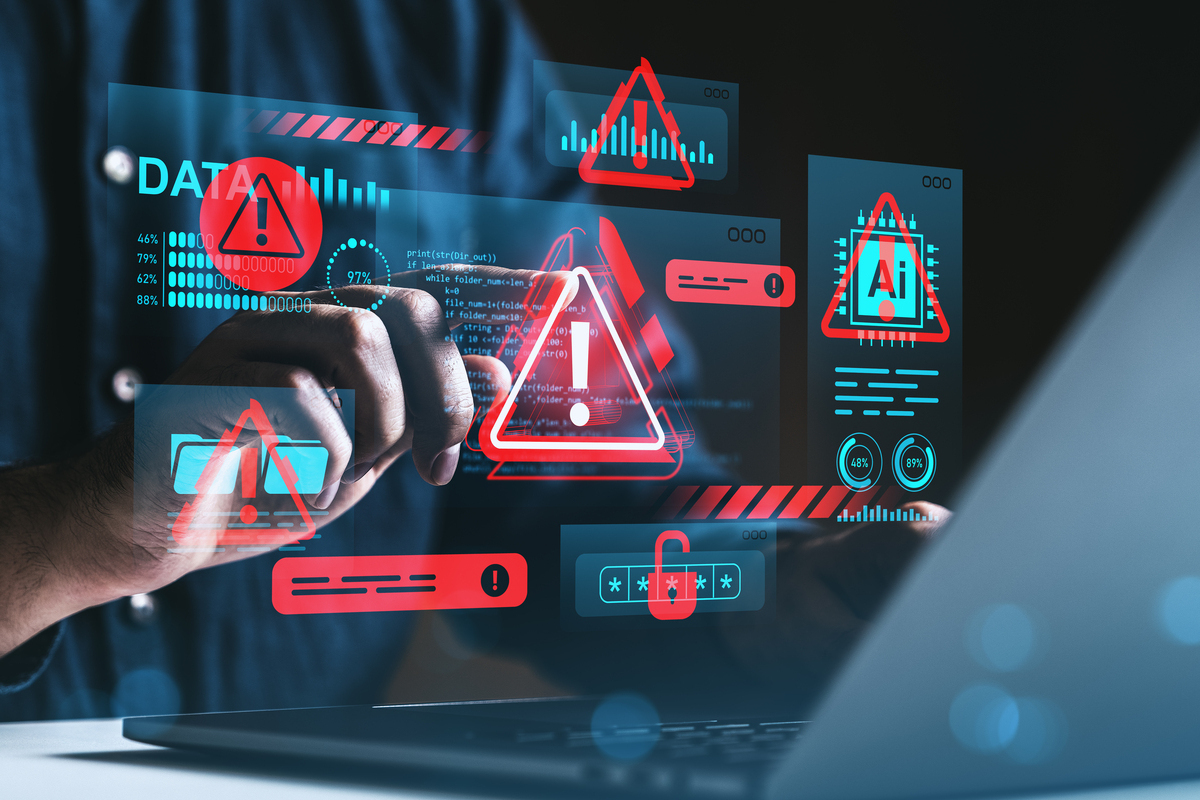
Artificial intelligence is emerging as the defining battleground in global cybersecurity, with defenders racing to counter increasingly sophisticated threats as cyber criminals adopt the same technologies to scale and sharpen their attacks.
A report by PwC highlights how malicious actors are integrating AI into core operations, enabling even relatively inexperienced hackers to launch complex campaigns that once required advanced technical expertise. The shift is altering the threat landscape, forcing organisations to rethink traditional security frameworks and accelerate investment in AI-driven defences.
Security analysts say generative AI tools are lowering barriers to entry for cybercrime. Automated phishing campaigns now mimic human communication with greater precision, while AI-assisted malware can adapt in real time to evade detection. Attackers are also using machine learning to identify vulnerabilities at scale, dramatically increasing the speed and reach of intrusions.
The findings reflect a broader trend across the cybersecurity industry, where AI is no longer viewed as an optional enhancement but as a central pillar of defence. Enterprises are deploying AI systems to monitor networks, detect anomalies, and respond to threats with minimal human intervention. This transition is driven by the sheer volume and complexity of attacks, which have outpaced the capacity of conventional security operations.
Executives warn that the same capabilities empowering defenders are being weaponised by criminal groups. AI-generated deepfakes, for instance, are being used in fraud schemes to impersonate executives or manipulate financial transactions. Meanwhile, automated reconnaissance tools allow attackers to map corporate systems in minutes, identifying weak points before launching targeted strikes.
Cybersecurity firms report a marked increase in attacks that combine social engineering with AI-generated content. Emails, voice messages, and even video communications are crafted with a level of realism that makes detection increasingly difficult. This has heightened concerns among regulators and corporate leaders, particularly in sectors such as finance, healthcare, and critical infrastructure.
Governments and international bodies are responding with policy measures aimed at strengthening resilience. Regulatory frameworks are evolving to address AI-related risks, including requirements for transparency, accountability, and robust data protection. However, enforcement remains uneven, and experts caution that regulation alone may not keep pace with technological change.
Industry leaders argue that collaboration between the public and private sectors is essential. Sharing threat intelligence and best practices is seen as critical to countering adversaries who operate across borders and exploit jurisdictional gaps. Cybersecurity alliances and information-sharing networks are expanding, reflecting a recognition that no single entity can address the challenge alone.
At the corporate level, boards are increasingly treating cybersecurity as a strategic priority rather than a technical issue. Investment in AI-based security tools is rising, alongside efforts to train employees to recognise and respond to evolving threats. Human awareness remains a key line of defence, particularly against phishing and social engineering attacks that rely on deception rather than technical exploits.
The integration of AI into cybersecurity is also reshaping the workforce. Demand for specialists with expertise in both AI and security is growing, creating new opportunities but also highlighting a skills gap. Organisations are competing for talent capable of developing and managing advanced defence systems, while educational institutions are adapting curricula to meet emerging needs.
Despite the benefits of AI-driven security, concerns persist بشأن over-reliance on automated systems. Experts warn that attackers may exploit weaknesses in AI models, including biases or vulnerabilities in training data. Adversarial AI, where systems are deliberately manipulated to produce incorrect outputs, is becoming a focal point of research and defence strategies.
The economic impact of cybercrime continues to rise, with global losses estimated in the trillions of dollars annually. Businesses face not only financial damage but also reputational risks and regulatory penalties. As attacks become more sophisticated, the cost of prevention and recovery is increasing, placing pressure on organisations to invest proactively in security.
Technology companies are responding by embedding AI capabilities into their security products, offering solutions that promise faster detection and response times. Cloud providers, in particular, are leveraging AI to secure vast and complex infrastructures, providing customers with scalable protection against evolving threats.
Follow Arabian Post
Select Arabian Post as your preferred source on Google and MSN News for trusted business news and Arab politics and updates.