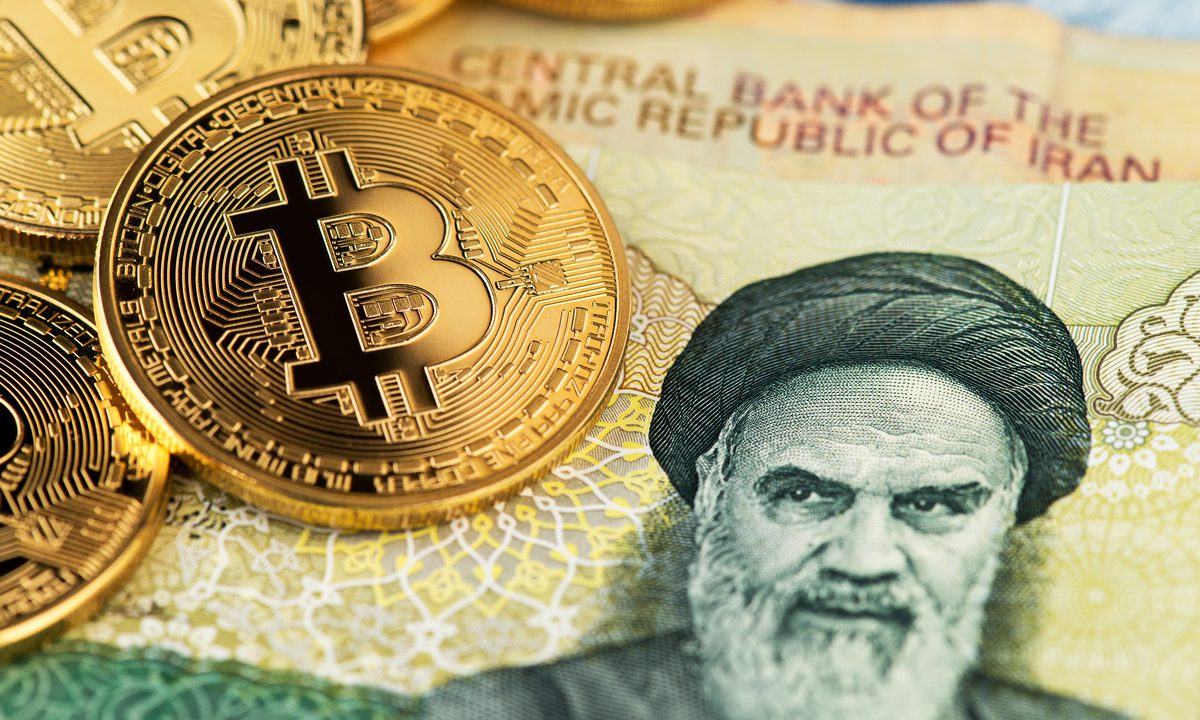
Thousands of internal records linked to digital currency transactions have surfaced online, offering a rare glimpse into how financial networks connected to Iran may have used cryptocurrency platforms to navigate international sanctions. The leaked database, analysed by cybersecurity researchers and blockchain investigators, contains transaction logs, account identifiers and operational notes tied to exchanges and wallet services believed to have facilitated transfers linked to entities operating under restrictions imposed by the United States and other Western governments.
Details emerging from the dataset suggest a coordinated effort involving intermediaries, over-the-counter brokers and decentralised finance tools to obscure transaction trails. Analysts studying the information say the records highlight the scale at which digital assets have become embedded in the financial ecosystem around Iran, providing an alternative channel for trade settlements and cross-border payments at a time when traditional banking access remains limited.
Cryptocurrency has long been viewed by policymakers as a potential avenue for sanctions circumvention. The leaked records appear to reinforce those concerns, indicating that networks tied to the country’s financial sector experimented with various blockchain-based mechanisms to move funds. Some transactions appear routed through exchanges operating in jurisdictions with limited regulatory oversight, while others involve decentralised protocols that allow peer-to-peer transfers without centralised intermediaries.
Researchers examining the material say the information points to a layered structure designed to minimise traceability. Funds were often broken into smaller transfers and routed through multiple wallets before reaching their final destination. Blockchain analytics specialists note that such “chain-hopping” techniques, which involve moving assets across different cryptocurrencies or networks, are widely used by actors attempting to obscure financial flows.
The disclosure arrives amid mounting international scrutiny of Iran’s financial system and its use of emerging technologies to mitigate the impact of sanctions. Financial intelligence experts have warned for years that digital assets could enable sanctioned entities to bypass restrictions placed on conventional banking channels. Governments in Europe and North America have responded by expanding monitoring of cryptocurrency transactions and imposing compliance requirements on exchanges.
Data within the leak suggests that some transactions were connected to platforms offering high-volume trading services or over-the-counter brokerage operations. These intermediaries often play a crucial role in converting cryptocurrency into fiat currencies or facilitating large transfers outside traditional exchanges. According to investigators reviewing the records, such brokers can help move funds discreetly when conventional banking options are unavailable.
Economic pressure has pushed Tehran to explore a range of financial workarounds, including barter arrangements, local-currency trade agreements and alternative payment networks. Digital currencies have increasingly entered that mix as both a store of value and a transfer mechanism. Officials associated with the country’s economic policy have publicly acknowledged interest in blockchain technologies and have explored the development of a state-linked digital currency to facilitate trade.
Evidence emerging from the leaked database suggests that cryptocurrency usage may extend beyond individual traders or small enterprises. Some analysts argue the scale and coordination implied in the records indicate involvement by organisations linked to broader economic activities, including importers, exporters and intermediaries handling payments related to sanctioned sectors.
International regulators have been strengthening oversight of cryptocurrency platforms in response to concerns that digital assets could be used to evade financial restrictions. Exchanges operating in many jurisdictions are now required to verify customer identities, monitor suspicious transactions and report potentially illicit activity to authorities. Despite these measures, decentralised finance services and peer-to-peer trading channels remain more difficult to regulate.
Blockchain researchers emphasise that cryptocurrency transactions leave permanent records on public ledgers, making large-scale concealment challenging over time. Analytical tools developed by specialised firms allow investigators to map wallet connections, track flows across exchanges and identify clusters associated with particular entities. Such technology has played an increasing role in law-enforcement operations targeting ransomware groups, darknet markets and sanctions evasion networks.
The leak’s timing coincides with heightened attention on Tehran’s financial strategies as authorities grapple with economic constraints imposed by international sanctions. Reports circulated earlier this year that the Central Bank of Iran had acquired roughly $507 million worth of digital assets, a move interpreted by some analysts as part of a broader attempt to diversify reserves and facilitate cross-border payments outside the conventional banking system.
Financial experts caution that cryptocurrency alone cannot fully replace access to global financial infrastructure. Liquidity constraints, price volatility and regulatory scrutiny can complicate large-scale transactions. Nonetheless, the leaked material underscores how digital assets are becoming part of the toolkit used by sanctioned economies seeking alternative channels for trade and financial transfers.
Follow Arabian Post
Select Arabian Post as your preferred source on Google and MSN News for trusted business news and Arab politics and updates.