News related to
Asia

MACAU SAR – Media OutReach Newswire – 8 October 2025 – Organised by the Macao Government Tourism Office (“MGTO”), the “Experience Macao Mega Sale” in Malaysia will be held in Kuala Lumpur, with SJM Resorts, S.A. (“SJM”) as a key participant. This four-day tourism and cultural showcase, from 9 to 12 October at IOI City Mall, underscores SJM’s strategic collaboration with the Macao SAR Government to further […]

BANGKOK, THAILAND – Media OutReach Newswire – 10 October 2025 – Amari Bangsaen, the newly launched hotel by ONYX Hospitality Group—a leading hospitality company in Southeast Asia managing hotels, resorts, serviced apartments, and luxury residences—has received a warm welcome since its opening in June. Rapidly emerging as a favoured destination for short breaks, the hotel appeals to travellers seeking a retreat within close distance of Bangkok, to […]

By Nitya Chakraborty The Israel-Hamas peace deal announced by the US President Donald Trump on Wednesday night in Washington is a welcome development, however limited it be at the moment as the agreement between the two warring parties is only for the first phase of Trump sponsored deal involving the release of all hostages by […]

The article Israel-Hamas Ceasefire Deal Is Welcome But The Follow Up Is Crucial For Enduring Peace appeared first on Latest India news, analysis and reports on Newspack by India Press Agency).

MACAU SAR – Media OutReach Newswire – 9 October 2025 – Galaxy Macau™ Integrated Resort is delighted to present an evening of operatic splendour with “Galaxy Macau™ Presents – Galaxy Music Gala: Sumi Jo – Mad for Love” as internationally acclaimed South Korean soprano Sumi Jo makes her long-awaited Macau debut at 17:00 on December 28 at Auditorium of the Galaxy International Convention Center (GICC). Tickets will […]

Google has broadened the accessibility of its AI-powered search feature, now available in 35 additional languages and 40 more countries. This global expansion brings cutting-edge search capabilities to millions more users, further solidifying the tech giant’s position in the evolving digital landscape.

The search engine’s AI mode, which has already been integrated into several regions, is designed to enhance user experience by delivering more nuanced, contextually aware responses. It leverages advanced machine learning algorithms to provide users with relevant, personalised information based on their search queries. As a result, users now receive more accurate results and immediate answers, whether they’re looking for detailed technical data, news, or casual information.

The expansion into 35 new languages, including Bengali, Malay, and Persian, marks a significant milestone in Google’s ambition to create a more universally accessible search engine. The company’s efforts to make its AI-powered features more inclusive have resonated with a global audience, particularly in regions with high numbers of native speakers who had previously been underrepresented in AI-driven services.

This development is part of Google’s broader strategy to strengthen its competitive edge in the search market. With AI now becoming a central element in search functionality, the company aims to differentiate itself from other players, such as Microsoft’s Bing, which has also integrated AI technology into its search engine.

Google’s move aligns with its ongoing efforts to prioritise artificial intelligence across its platforms. AI’s role in search has evolved beyond simple query-based responses to complex problem-solving and semantic understanding. By deploying AI in this expanded format, the company is setting a new benchmark for how search engines should interact with users. The introduction of more languages ensures that users worldwide benefit from a more intuitive and responsive search experience.

The roll-out is also designed to capture the attention of non-English-speaking markets, where Google has faced competition from regional players. For example, in countries where local languages dominate, such as parts of Southeast Asia and the Middle East, the ability to use AI-driven search in native languages is a crucial step towards maintaining user loyalty. Google’s strategy appears to be not only about providing relevant information but also tailoring responses in ways that reflect cultural and linguistic contexts.

Industry analysts note that the deployment of AI in search is becoming increasingly vital for tech companies looking to stay ahead in the digital space. By bringing AI to more languages, Google is ensuring its search platform remains at the forefront of technological innovation, offering greater value to users around the globe. Furthermore, the technology promises to assist businesses in connecting with customers more effectively by improving discoverability and delivering content more suited to regional and linguistic preferences.

This step towards universal AI integration is also a response to the growing demand for more accessible, user-centric services. As artificial intelligence continues to mature, users expect it to provide not only immediate answers but also solutions that are tailored to their individual needs and linguistic background.

However, the move is not without its challenges. Ensuring that AI algorithms perform optimally in diverse languages, including those with complex grammatical structures and dialects, remains a significant hurdle. For instance, languages like Bengali or Malay pose unique challenges due to their rich vocabulary and varied sentence structures. Google’s AI team is likely to continue refining its models to handle these nuances, improving accuracy and overall user satisfaction.

The growing global reach of AI-powered search further emphasises the broader trend of AI’s role in shaping future technology. With machine learning increasingly being embedded into everyday tasks, from search engines to digital assistants, the evolution of AI represents both an opportunity and a responsibility for companies like Google. The company must balance rapid innovation with ethical considerations, ensuring that its AI systems are transparent, equitable, and accountable.


GITEX, the iconic technology and innovation expo, is broadening its footprint by expanding into Vietnam, heralding a new chapter for the Southeast Asian nation’s burgeoning digital economy. With the event’s successful history in the Middle East and Asia, this expansion signals a strong shift towards positioning Vietnam as a central player in the global digital arena. The launch aligns with Vietnam’s ambitious vision to develop a digital economy worth over $200 billion by 2030, driven by the country’s evolving tech ecosystem, government-backed initiatives, and an increasingly connected population.

GITEX Vietnam, set to take place in Hanoi, is expected to be a major catalyst for the nation’s digital transformation. The expo, known for showcasing the latest advancements in AI, cloud computing, cybersecurity, and smart technologies, will provide a platform for global tech giants and local startups to foster collaboration. This shift not only promises to boost local innovation but also offers international companies the opportunity to tap into Vietnam’s rapidly growing market. The country’s young, tech-savvy population and expanding digital infrastructure make it an ideal destination for the event, underscoring the symbiotic relationship between GITEX’s global platform and Vietnam’s digital future.

The expansion into Vietnam is a testament to GITEX’s strategic move to capture the rising tide of digitalisation across Southeast Asia. According to industry analysts, Vietnam’s digital economy is one of the fastest-growing in the region. With the government’s commitment to building a robust digital infrastructure, the country aims to integrate digital solutions across key sectors, including healthcare, education, logistics, and manufacturing. This government push is expected to further accelerate innovation in AI and blockchain technologies, sectors where Vietnam has begun to make notable strides.

One of the main drivers behind Vietnam’s digital economy ambitions is the government’s Digital Transformation Program, which aims to equip businesses and individuals with the tools to thrive in the new digital world. As part of this initiative, the Vietnamese government has pledged to support local startups and foster an environment conducive to technological advancements. Public-private partnerships are expected to play a pivotal role in bridging the gap between government policy and the commercial sector, ensuring that both infrastructure and innovation go hand in hand.

GITEX’s involvement in this transformation is poised to elevate Vietnam’s digital capabilities on the global stage. By offering a comprehensive view of the latest trends, technologies, and business solutions, the event will expose Vietnamese enterprises to the tools and insights needed to enhance productivity, efficiency, and innovation. As part of the expansion, Vietnam’s homegrown tech companies will also be able to showcase their capabilities, fostering collaboration with global leaders in digital technologies.

The 2025 edition of GITEX Vietnam will feature a broad spectrum of sectors, including digital health, fintech, artificial intelligence, and cybersecurity. These areas align closely with the country’s vision to modernise key industries and improve overall living standards through technology. AI, for instance, is expected to play a crucial role in enhancing Vietnam’s manufacturing sector, enabling greater automation and precision in production. Additionally, fintech’s rise in Vietnam promises to boost financial inclusion by offering innovative solutions to underserved populations, with digital payments and mobile banking expanding rapidly in urban and rural areas alike.

The growing momentum of GITEX in Southeast Asia is evident through its ongoing success in regions like the UAE, India, and Saudi Arabia, where it has served as a crucial platform for digital transformation discussions. The move into Vietnam further strengthens its position as a global tech hub, providing valuable opportunities for cross-border collaboration. Vietnamese companies, eager to expand their reach, will benefit immensely from the international exposure GITEX provides, potentially paving the way for future partnerships, investments, and technological breakthroughs.

Phuket’s great weather, safe tropical environment and world-class infrastructure offers Europeans an unrivalled escape from cold winters and political tensions PHUKET, THAILAND – Media OutReach Newswire – 9 October 2025 – Phuket, Thailand’s largest island is now a top destination for European families, retirees and investors seeking property abroad. Known for its pristine beaches, vibrant culture, warm year-round climate and the equally warm Thai hospitality, Phuket is […]

Advertisements

Branded residential developments in the Middle East and North Africa are now capturing a larger share of global signings, with standalone projects set to make up 45 per cent of the regional portfolio—well above the global average of 36 per cent.

Data from Global Branded Residences shows that the MENA region now accounts for 36 per cent of new global branded residence signings, outstripping traditional hubs such as North America, Europe and Asia. The region currently has 99 completed branded residences and 241 under development, representing 13 per cent of existing global supply and 25 per cent of the pipeline. The UAE leads with 201 projects, followed by Saudi Arabia and Egypt.

Dubai remains the most active city globally, with nearly 160 branded developments either completed or in the pipeline—surpassing markets like Miami, London, and New York. The breakdown in MENA shows that 31 per cent of completed branded residences are standalone, while 51 per cent of the pipeline comprises standalone projects. This shift indicates broader confidence among developers in models unlinked to hotel operations.

Fashion and lifestyle brands are playing an increasingly prominent role in driving the shift away from purely hospitality-anchored residences. In MENA, fashion labels account for 51 per cent of non-hotel branded projects—nearly double the global average of 26 per cent. Non-hotel brands now represent 30 per cent of the regional pipeline, up from 24 per cent among completed schemes. In effect, branded residences in the region are diversifying beyond hotels into lifestyle, design and luxury branding.

Fairmont is poised to be the largest operator in the region, with 19 schemes across completed and pipeline stages. New entrants include jewellery brand De Grisogono and hospitality/lifestyle brand Nobu.

Globally, the branded residences sector has expanded rapidly over the past decade. The total number of schemes globally stands at 1,746—779 completed and 967 under development. Across this global portfolio, hotel brands still dominate, accounting for 79 per cent of projects. However, standalone branded residences—those without hotel attachments—are projected to rise from about 8 per cent of the world’s projects to 12 per cent over time.

Broadly, the market is seeing several converging trends. Buyers are increasingly willing to pay a premium—often 20 to 35 per cent or more—for branded units over comparable non-branded luxury real estate, citing consistency of design, service, and long-term resale value. Developers, in turn, see branding as a differentiator that supports stronger pricing, absorption rates and margins. In fast-growing wealth markets, branding provides credibility and global marketing reach.

Asia Pacific has also moved into the spotlight. GBR has formally launched operations in APAC, targeting markets such as Thailand, Vietnam, India, Malaysia and emerging resort destinations. The firm forecasts that branded development projects in APAC may more than double, with the region evolving into one of luxury real estate’s fastest growing markets.

Nevertheless, challenges remain. Aligning brand partnerships with regional regulatory, legal and operational frameworks is complex. Delivering consistent service quality over time, especially in newer locations with less mature hospitality infrastructure, is no small task. In denser branded markets, developers must differentiate amenities, design and buyer experience to avoid commoditisation.

Celebrating Thai Culture and Soft Power on the Global Stage While Highlighting the Success of Korea’s Clean Energy Transformation BANGKOK, THAILAND – Media OutReach Newswire – 9 October 2025 – B.Grimm Power, a leading global energy producer, proudly announced its successful role as the main sponsor of the “Sawasdee Seoul Thai Festival 2025,” a vibrant celebration of Thai culture held in Seoul, South Korea. The festival highlighted […]

The U. S. Department of Commerce has granted export licences for several billion dollars’ worth of Nvidia chips destined for the United Arab Emirates under a bilateral AI agreement struck in May, paving the way for a high-stakes test of America’s artificial intelligence diplomacy. The licences were issued through the Commerce Department’s Bureau of Industry and Security, marking the first concrete implementation of the Trump-era pact with […]

JAKARTA, INDONESIA – Media OutReach Newswire – 9 October 2025 – PT Bank Amar Indonesia Tbk. (“Amar Bank”, IDX: AMAR), a pioneer in digital banking serving the retail and MSME segments, today announces that SBI Holdings, Inc. (“SBI Holdings”, TYO:8473), a leading Japanese financial services conglomerate, has taken a stake in Amar Bank. Following this transaction, SBI Holdings now holds more than 5% of Amar Bank’s shares, […]

By Nitya Chakraborty Just forty eight hours within the external affairs minister Dr. S Jaishankar’s candid statement that Trump has to respect red lines drawn by India at trade talks, Indian officials joining China, Russia, Taliban government of Afghanistan and even Pakistan denouncing President Trump’s bid to take over Bagram air base in Afghanistan, is […]

The article India’s Opposition To Trump Bid To Take Over Bagram Airbase Has Special Significance appeared first on Latest India news, analysis and reports on Newspack by India Press Agency).

The World Bank has trimmed its projection for South Asia’s economic expansion in 2026, citing elevated U. S. tariffs on Indian exports as a key drag. The region’s growth is now forecast at 5.8 percent, down from 6.6 percent this year.

The updated “South Asia Development Update” flags the U. S. trade measures as a major headwind, especially given India’s size and its integration into regional supply chains. The report sets India’s growth for fiscal year 2025–26 at 6.5 percent, up from its earlier estimate of 6.3 percent, but warns of a drop to 6.3 percent in 2026–27 as tariff pressures intensify.

The U. S. has imposed tariffs of up to 50 percent on a broad swath of Indian goods—impacting sectors such as textiles, gems and jewellery and seafood—affecting nearly $50 billion in exports. These are among the highest duties levied on any U. S. trading partner. The World Bank notes that these tariffs will particularly bite in 2026 as initial buffers from public spending fade.

Franziska Ohnsorge, chief economist for South Asia at the World Bank, asserted that the toll from trade restrictions reflects “a reversal of the gains” India had made in integrating into global value chains. She urged structural adjustments: lowering tariffs and signing free trade agreements to support export competitiveness.

Beyond India, Bangladesh and Sri Lanka show varying trajectories. The Bank upgrades forecasts for Bangladesh and Sri Lanka, citing easing fiscal strain and improving external balances. Meanwhile, Nepal and the Maldives bear the brunt of tighter global conditions, with their outlooks revised downward.

Policy responses in India are already in motion. The government launched sweeping tax cuts spanning consumer goods to automobiles, one of the largest fiscal interventions in recent years. Concurrently, infrastructure spending is being boosted to drive domestic demand and counterbalance export headwinds. The Reserve Bank of India held its repo rate at 5.50 percent in October, citing subdued inflation and leaving open room for a future cut.

Indian officials remain confident. Finance Minister Nirmala Sitharaman called the economy “resilient,” expressing faith it could absorb external shocks while targeting an ambitious 8 percent growth. The Chief Economic Adviser affirmed earlier forecasts of 6.3–6.8 percent GDP growth, downplaying long-term damage from trade friction.

International institutions have also flagged downside risks. The Asian Development Bank cut India’s FY 26 forecast to 6.5 percent from 6.7 percent, pointing to duty pressures and policy uncertainty. The IMF earlier trimmed India’s 2025-26 prediction to 6.2 percent, citing heightened global trade tensions.

The World Bank’s report emphasises that over the medium term, trade liberalisation combined with labour flexibility and investment in digital infrastructure could help South Asia reclaim momentum. Within the document, a scenario of tariff cuts and deeper trade integration is modelled to yield significant gains in productivity, employment, and output per capita.

Still, the path ahead is fraught. The report cautions that the region is vulnerable to a global slowdown, geopolitical shocks and labor market disruptions from artificial intelligence. In particular, it warns that weaker export growth from India will spill over across the region via trade, financial and migrant-worker channels.

Over 200 films from 40 countries light up Bangkok until October 15 BANGKOK, THAILAND – Media OutReach Newswire – 8 October 2025 – The Bangkok International Film Festival (BKKIFF) has returned in spectacular form, transforming the Thai capital into a global stage for cinema and culture. Running from September 27 to October 15, 2025, the 19-day festival is now in full swing, already drawing packed audiences, international […]

Oil markets climbed modestly on Wednesday as traders digested OPEC+’s decision to raise production by only 137,000 barrels per day from November — a figure widely viewed as cautious and aimed at managing oversupply pressures. Brent crude gained about 0.7 per cent to $65.93 a barrel, while US West Texas Intermediate added 0.8 per cent, reaching $62.24.

The measured increase is part of an ongoing tug-of-war between easing supply fears and softening demand estimates. Analysts argue that the restrained hike helped calm immediate market jitters about a flood of new barrels entering global markets. At the same time, the surge in output from non-OPEC producers—especially the United States—is tipping the scale toward a heavier supply environment.

The U. S. Energy Information Administration raised its 2025 forecast for domestic oil production to a record 13.53 million barrels per day, up from earlier projections. That upward revision intensifies concerns that global inventories could swell, placing downward pressure on prices. The EIA warns that crude inventories may build further, potentially squeezing prices in the coming months.

OPEC+ has signalled a cautious approach. The bloc’s members, including Saudi Arabia and Russia alongside six others, opted for incremental supply additions rather than aggressive increases. The decision underscores a balancing act: securing market share without triggering a disruptive oversupply.

Some market watchers believe the group is constrained by internal capability limits and the risk of destabilising the market. Only about 75 per cent of the targeted 2.7 million bpd raise since April has actually materialised, as certain member states struggle to meet output goals. Meanwhile, signs of macro slowdown and tepid fuel demand, especially in Asia and Europe, loom as headwinds.

Large oil majors are already adjusting strategies to navigate the tighter margins. Chevron, ExxonMobil, BP, Shell, and TotalEnergies are implementing cost cuts, trimming share buybacks, and streamlining operations to preserve balance sheets. Oil prices under $65 are straining profitability across the sector, particularly for producers with high breaking-even costs. Shell, for instance, has taken a $600 million impairment hit tied to biofuel and remediation operations in Europe.

In Argentina, falling oil revenues threaten the government’s ambitious economic plans centred on energy exports. Output at the country’s Vaca Muerta formation peaked in August but has shown signs of deceleration due to weaker global pricing and elevated costs. Local industry sources warn that strapped fiscal conditions and foreign-exchange restrictions are discouraging further investment.

Futures markets also reflect a state of tension. The structure remains sensitive to signals that either reassure or alarm about supply and demand balances. Traders are closely watching upcoming US inventory data, geopolitical developments affecting Russian shipments, and demand dynamics from China. Some analysts regard the cautious output hike as a temporary reprieve, with the risk that a sharper fall may take prices into the $50–$60 range if oversupply intensifies.

The International Energy Agency projects a potential surplus of 3.3 million barrels per day in 2026, even if current output levels persist — a scenario that would further test OPEC+’s capacity to contain downside. In contrast, OPEC’s internal modeling suggests a smaller deficit under the same conditions, reflecting wide divergences in forecasting assumptions. Investors and policymakers now wait for signs of demand resilience or fresh supply shocks, both of which could dictate whether oil stabilises in the $60s or slips further.

Arabian Post Staff -Dubai Abu Dhabi-based PureHealth Holding has finalised the acquisition of a 60 percent stake in Hellenic Healthcare Group, valued at €800 million, in a move that places HHG’s full equity valuation at around €1.3 billion. This deal represents a major step in PureHealth’s plan to build a globally connected, innovation-driven healthcare platform from its base in the UAE. PureHealth will acquire its majority stake […]

The mobile app-based Chronic Disease Management Programme (CDMP) provides expert coaching and personalised resources to encourage healthier lifestyle changes, complementing Healthier SG and expanding the insurer’s comprehensive suite of healthcare solutions SINGAPORE – Media OutReach Newswire – 8 October 2025 – AIA Singapore and Amplify Health today announced the launch of a Chronic Disease Management Programme (CDMP), which leverages technology and multi-disciplinary health expertise to help Singaporeans […]

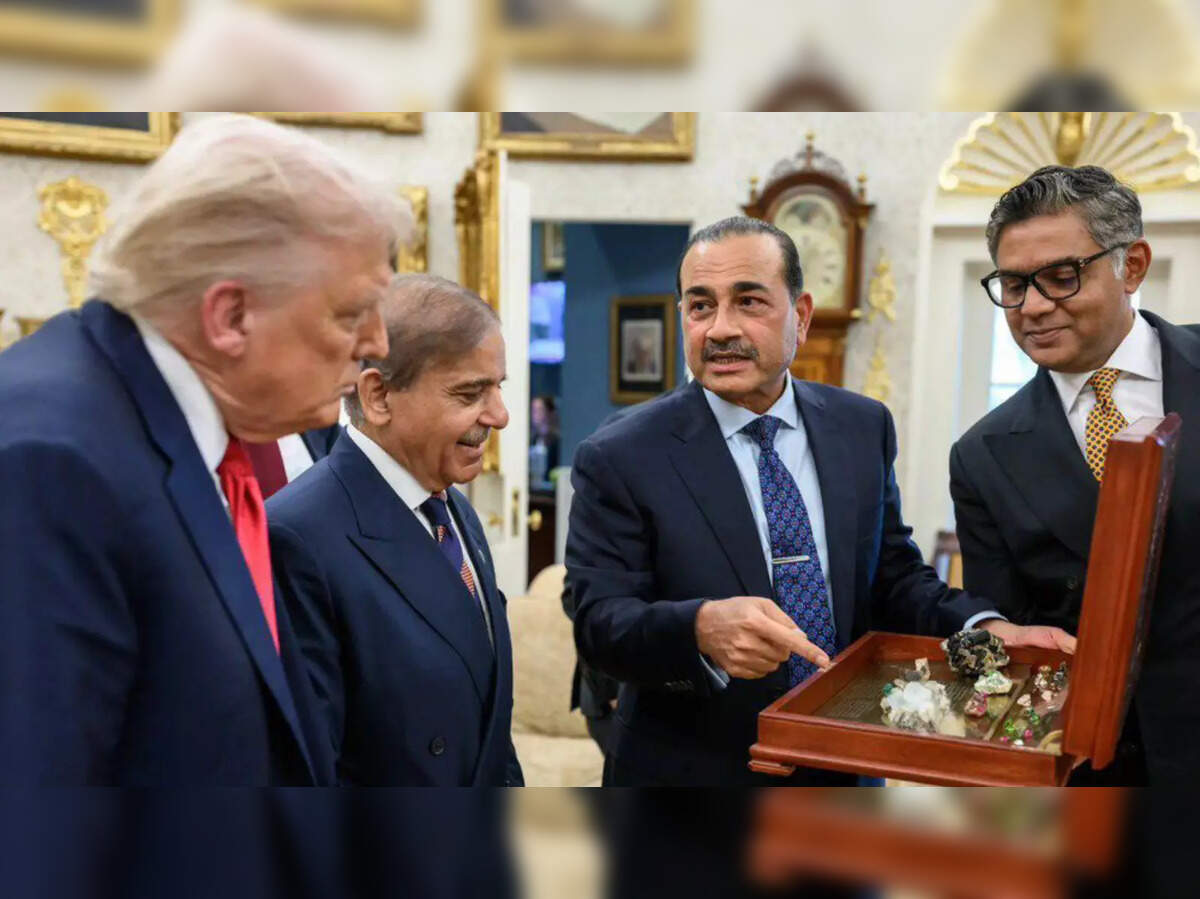
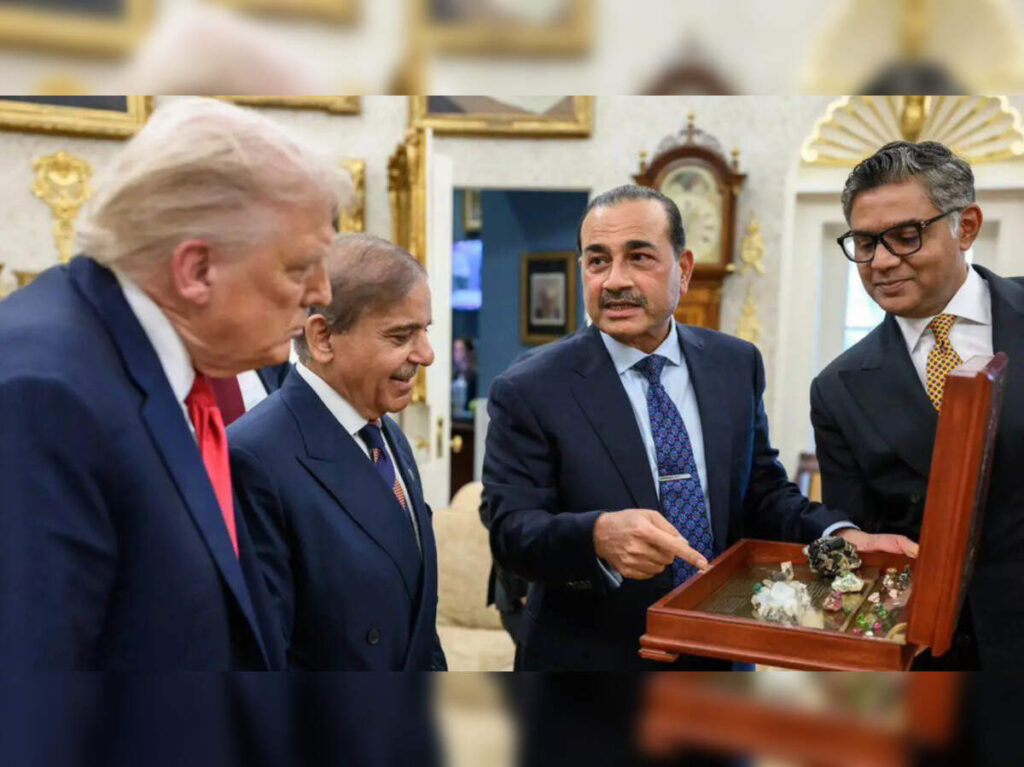
By Sushil Kutty Rare minerals included lots of ores, this was something we were taught in school and we learned about stone age, copper age and iron age, the last of which remains to this day the most basic of minerals, out of which was born steel and the term steely strength, like in ‘Superman […]


The article Pakistan Is The Dearest To Trump In Asia As Islamabad Exports Rare Earth Minerals appeared first on Latest India news, analysis and reports on Newspack by India Press Agency).

OpenAI has struck letters of intent with Samsung Electronics and SK Hynix to supply undiced DRAM wafers for its ambitious “Stargate” AI infrastructure initiative, with projected demand reaching as high as 900,000 wafers per month—potentially equivalent to 40 percent of global DRAM output. The agreements were announced during meetings in Seoul among OpenAI CEO Sam Altman, South Korean President Lee Jae-myung, Samsung Chairman Jay Y. Lee and […]

More than 70 percent of H-1B visa recipients are citizens of India, underscoring the country’s dominant role in the U. S. skilled-worker pipeline. According to U. S. Citizenship and Immigration Services data, in fiscal year 2024, India accounted for 71 percent of approved H-1B petitions. China followed distantly with 11.7 percent.

The H-1B visa programme allows U. S. companies to employ foreign nationals in “specialty occupations,” typically requiring at least a bachelor’s degree, over periods of up to six years. The annual statutory cap is 65,000 new visas plus 20,000 reserved for holders of advanced U. S. degrees.

The Indian concentration in the H-1B cohort has persisted over decades, yet its scale is striking under renewed policy pressure. A recent presidential proclamation raised the cost for new H-1B petitions to $100,000—a move critics say targets exactly the cohort with the greatest concentration in India.

Industry analysts warn the fee hike could shrink participation in the programme or push firms to avoid new petitions, particularly when the number of new visas is strictly limited. The policy excludes existing visa holders and those whose petitions were filed before the proclamation.

The Indian government has cautioned that such steep increases in visa costs may have “humanitarian consequences” for workers and families. It has also expressed concern about disruption to bilateral skilled labour mobility and urged U. S. authorities to reconsider the policy in light of its broader economic implications.

Indian IT firms such as Tata Consultancy Services and Infosys have historically been among the top sponsors of H-1B workers. But recent years have seen U. S. tech firms like Amazon, Microsoft, Google and Meta increasingly dominate the list of petitioners, reflecting evolving dynamics in who hires global talent.

Critics of the visa fee hike argue that Congress—not the executive branch—retains authority to impose fees and that the move could contravene statutory limits on visa allocation. A coalition of industry groups, unions and educational organisations has filed a federal lawsuit challenging the policy’s legality.

Supporters of the change frame it as a measure to prioritise domestic wage levels and reduce abuse of the H-1B system by contractors hiring at low rates. They contend the increased barrier will press firms to invest more in U. S.-based workforce development, though critics counter that American companies rely heavily on foreign technical talent to stay globally competitive.

HO CHI MINH CITY, VIETNAM – Media OutReach Newswire – 7 October 2025 – Vinpearl Golf Léman, a 36-hole course with a distinctive design and comprehensive 5-star facilities, has officially opened in Củ Chi, on the outskirts of Ho Chi Minh City. The launch represents a new step in Vinpearl Golf’s development of international-standard courses and introduces a destination where the golf community can meet, compete, and […]

A dramatic wave of forced liquidations has swept the crypto derivatives market, with around $160 million in long positions closed automatically in just 60 minutes. The event underscores the fragility of leverage-driven trading in volatile markets.

Data from major derivatives platforms points to sudden upward swings in key assets—chiefly Bitcoin and Ethereum—as the trigger. When prices move sharply against leveraged long positions, margin protocols step in to liquidate them to prevent further losses, compounding price moves in the process.

According to platform-level monitors, the lion’s share of the liquidation volume was concentrated in large longs on Bitcoin, with estimates suggesting individual trades as big as $8–10 million being liquidated in one go. Ethereum longs also saw heavy hits, as speculators betting on further upside were forced out. Metrics such as open interest and funding rate imbalances spiked just before the cascade, signalling a regime shift in market sentiment.

Insiders point to a cluster of cascading margin calls amplified by tight funding conditions. Some hedge funds and high-leverage retail positions lacked sufficient buffers against rapid price swings. As each liquidation pushes prices further, it creates a feedback loop that forces more delinquencies. Traders on social media flagged what they called “liquidation cascades” targeting illiquid zones and stop-loss clusters—areas where multiple orders are programmed to execute in close proximity.

Several trading desks observed that for every $1 million in liquidation, the price impact was amplified by slippage and widened spreads, particularly on derivatives contracts with low depth. One senior derivatives strategist remarked that the aggressiveness and sudden clustering of these liquidations suggest algorithmic triggers—bots scanning for vulnerable clusters and executing en masse.

The timing aligned with fresh macro data that hinted at stronger-than-expected economic indicators, which lifted risk appetite broadly and boosted crypto flows. Simultaneously, institutional participants monitored rising retail inflow indicators—such as large deposits moving on-chain into exchanges—which can foretell directional stress. With leverage high and positions tightly wound, the market was primed for this flush.

This is not the first time such mass liquidations have occurred. In mid-September, more than $149 million of crypto positions were liquidated within an hour, nearly all from longs, with a top single order of $9 million on a leading platform. That event and the current one both reflect how fragile leveraged markets are when macro sentiment shifts sharply.

Market watchers are parsing whether this is a short-term squeeze preparatory move or part of a deeper regime change. Some argue it clears out weak hands and sets the stage for fresh momentum. Others warn that forced liquidations may just be the start of a larger reversal, as residual leverage and alignment of hedge-fund strategies make markets prone to repeat stress.

On-chain and order-book signals are under scrutiny. Rising Token flows from wallets to exchanges, shifts in funding curves, and concentrated seller clustering in spot markets might shape the near-term path. Some algorithms already have “sniffers” for these stress events built in; in days following a liquidation cascade, trading volumes and volatility tend to stay elevated.

TOKYO, JAPAN – Media OutReach Newswire – 6 October 2025 – ANDPAD (Headquarters: Chiyoda City, Tokyo; Representative Director: Takeo Inada; hereinafter called “ANDPAD”), which operates a cloud-based construction project management service, and the Vietnamese subsidiary ANDPAD VIETNAM COMPANY LIMITED, hereby announces the completion of the demonstration project to develop and deploy construction project management systems to improve operational efficiency in the construction industry in Vietnam. This project […]

Dubai Aerospace Enterprise has enlisted a consortium of international and regional banks to host a series of fixed income investor calls beginning 6 October 2025, with the aim of gauging demand for a potential benchmark 5-year senior unsecured US dollar sukuk issuance. The mandate positions Emirates NBD Capital, First Abu Dhabi Bank, Goldman Sachs International and HSBC as active bookrunners, while Abu Dhabi Commercial Bank, Ajman Bank, […]

VISHNU RAJA
RYO YAMADA
HITORI GOTOH
IKUYO KITA