News related to
Asia

China has imposed sanctions on a retired senior Japanese military officer, accusing him of colluding with what Beijing describes as separatist forces in Taiwan, a move that underscores sharpening tensions in East Asia and Beijing’s growing readiness to penalise foreign individuals it says undermine its sovereignty claims. The Chinese foreign ministry announced punitive measures against Katsutoshi Kawano, who served as Japan’s chief of joint staff until his […]

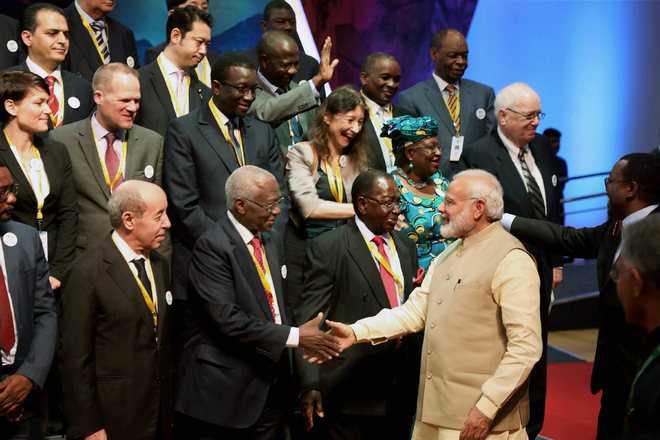
Prime Minister Narendra Modi began a three-nation diplomatic tour covering Jordan, Ethiopia and Oman, signalling a calibrated push to deepen political engagement, economic cooperation and people-to-people ties across West Asia and Africa. The visit places emphasis on long-standing partnerships while marking diplomatic milestones that officials describe as pivotal to a wider strategy linking the Gulf, the Horn of Africa and South Asia.

The tour opened in Jordan, where Modi held talks with King Abdullah II in Amman. Discussions focused on regional stability, counter-terror cooperation and expanding trade and investment links. Jordan occupies a strategic position in West Asia diplomacy, and both sides underlined shared concerns over conflicts affecting the region and their spillover effects. Bilateral exchanges also addressed cooperation in health care, education and technology, areas where existing agreements are being reviewed for expansion.

Jordan has emerged as a steady political partner, and the visit underscored efforts to elevate ties beyond symbolism. Officials highlighted collaboration in renewable energy and pharmaceuticals, alongside labour and skills partnerships that reflect Jordan’s role as a hub for regional services. Cultural engagement featured prominently, with references to the shared heritage reflected in academic exchanges and archaeological cooperation.

From Amman, Modi travelled to Addis Ababa, marking a significant diplomatic moment with Ethiopia. The visit coincides with the strengthening of relations with the African Union, headquartered in the Ethiopian capital, and signals intent to broaden engagement with Africa’s multilateral institutions. Talks with Prime Minister Abiy Ahmed centred on development cooperation, infrastructure financing and capacity building, as well as coordination in international forums.

Ethiopia’s role as a gateway to the Horn of Africa places it at the centre of regional connectivity and security discussions. The leaders examined cooperation in agriculture, manufacturing and digital public infrastructure, with attention to skills development and technology transfer. Ethiopia has been seeking diversified investment partnerships to support industrial parks and export-oriented growth, and the talks reflected interest in long-term collaboration rather than project-based engagement.

Diplomatic officials also pointed to cooperation in peacekeeping and humanitarian assistance, noting Ethiopia’s contribution to regional stability and its engagement with multilateral peace processes. The visit reinforced engagement with Africa at a time when competition for influence and investment has intensified, and when African economies are prioritising infrastructure and human capital development.

The final leg of the tour takes Modi to Oman, a country with deep historical and economic links, particularly in trade, energy and maritime cooperation. Meetings in Muscat are expected to focus on energy security, logistics and defence ties, building on agreements covering strategic petroleum reserves, port development and naval collaboration. Oman’s role as a stable interlocutor in the Gulf has given it a distinctive place in regional diplomacy.

Economic cooperation remains central to the Oman visit, with attention on bilateral trade, investment flows and collaboration in downstream energy projects. The presence of a large expatriate community has added a people-centric dimension to relations, shaping discussions on labour welfare, skills recognition and mobility. Financial services, tourism and green energy have emerged as additional areas of interest as both sides seek to diversify economic engagement.

Across the three stops, the tour reflects a broader pattern of outreach that links West Asia and Africa through trade corridors, energy routes and strategic partnerships. Officials involved in the preparations described the itinerary as a deliberate effort to balance political dialogue with economic substance, moving beyond ceremonial diplomacy. The focus on infrastructure, digital governance and energy transition aligns with priorities shared by many emerging economies.

Quality of life has emerged as the defining differentiator in Dubai’s luxury real estate market, overtaking the earlier emphasis on global brand names as affluent buyers continue to flow into the emirate, according to senior industry voices tracking buying behaviour at the top end of the sector.

Developers and brokers say high-net-worth individuals are no longer drawn solely by branded residences, waterfront addresses or headline prices. Instead, purchasing decisions are increasingly shaped by liveability factors such as community design, access to green space, wellness infrastructure, privacy, security, and the integration of daily services within residential districts. This shift reflects the changing profile of buyers, many of whom are relocating families or establishing long-term bases rather than acquiring purely investment assets.

Dubai’s luxury segment has expanded sharply over the past few years, with prime residential areas such as Palm Jumeirah, Emirates Hills, Jumeirah Bay Island and Dubai Hills Estate recording strong demand across villas and high-end apartments. Transaction values at the upper end of the market have risen, supported by sustained interest from buyers based in Europe, the Middle East, East Asia and parts of Africa. Market participants note that this demand has remained resilient despite global economic uncertainty, underpinned by Dubai’s status as a low-tax jurisdiction, political stability and international connectivity.

Industry executives argue that the maturation of buyer expectations is a sign of a more sophisticated market. Luxury purchasers are placing greater weight on neighbourhood planning, walkability, schools, healthcare access and leisure amenities, alongside the quality of construction and long-term maintenance standards. Smart home technology, energy efficiency, noise management and private outdoor space have become standard expectations rather than premium add-ons.

Wellness has become a particularly influential theme. Developers are incorporating features such as landscaped parks, jogging tracks, cycling paths, spa facilities and air-quality controls into master-planned communities. Water access, whether through beachfront living, marinas or canal-side developments, remains a powerful draw, but buyers are increasingly scrutinising how these elements support daily living rather than visual appeal alone.

The rise of liveability as a core selling point has altered developer strategies. Several major players are prioritising mixed-use developments that blend residential, retail, hospitality and office components into self-contained ecosystems. This approach is designed to reduce commuting times and create neighbourhoods where residents can live, work and socialise within a short radius, aligning with broader urban planning goals set out by Dubai authorities.

Pricing dynamics also reflect the shift. Properties that combine prime locations with strong community features have outperformed standalone luxury units that rely mainly on branding or architectural statement. Analysts observe that buyers are willing to pay premiums for homes that offer privacy, low density and access to well-managed communal spaces, while overly dense developments face greater scrutiny.

Rental demand in the luxury segment has mirrored these trends. Executive tenants and relocating families are seeking properties that provide stability and lifestyle benefits, driving demand for villas and larger apartments in established communities. This has supported yields in select areas, reinforcing the appeal of liveability-focused developments to both end users and long-term investors.

Dubai’s regulatory environment has also played a role in shaping buyer confidence. Clear property ownership rules, long-term residency options linked to investment, and transparent transaction processes have helped position the city as a secure destination for capital. Market participants say this framework encourages buyers to consider lifestyle factors, confident that their legal and financial interests are protected.

Competition among developers has intensified as a result. Rather than competing solely on scale or brand partnerships, firms are differentiating through design quality, community management and post-handover services. Some developers have expanded in-house property management and concierge offerings to ensure consistent standards after completion, addressing a long-standing concern among luxury buyers.


SINGAPORE – Media OutReach Newswire – 15 December 2025 – Chubb announced today the appointment of Chris Colahan as Head of Commercial Property & Casualty, Asia Pacific, effective 9 February 2026. In this role, Colahan will have overall operating responsibility for Chubb’s Commercial Property & Casualty portfolio throughout the Asia Pacific region. Colahan will report to Marcos Gunn, Regional President of Chubb Overseas General, Asia Pacific, and […]

Google has expanded its cultural mapping ambitions with the debut of the Google Art Project, a digital platform that places high-resolution artworks and virtual museum galleries within reach of anyone with an internet connection. The initiative extends the company’s mapping tools beyond streets and landmarks, offering close-up access to paintings, sculptures and artefacts held by leading museums across Europe, North America and Asia. Launched as a collaboration […]

Acquisition creates a fully integrated regional connectivity platform, enabling seamless, low-latency connectivity that supports ASEAN’s expanding digital economy SINGAPORE/KUALA LUMPUR, MALAYSIA – Media OutReach Newswire – 13 December 2025 – SEAX Global (“SEAX”), a leading wholesale connectivity provider in Southeast Asia, today announced it has acquired a major stake in Interlink Telecom Public Company Limited (“ITEL”), a prominent Thai fixed network telecommunications provider. This acquisition consolidates SEAX’s […]

On December 11, at W Dubai – The Palm, Entrepreneur Middle East hosted the Leadership Awards 2025 — one of the region’s key business events recognizing outstanding entrepreneurs and industry leaders whose work is shaping the economic and technological landscape of the Middle East. In the Fintech Leader of the Year category, the award was presented to Alexander Lozben, founder of INTERHASH and one of the notable […]

Advertisements

Warnings that Japanese companies face existential risks if supply chains linked to China are disrupted are sharpening the debate in Tokyo over economic security, diversification and the costs of geopolitical strain in East Asia. Hidetoshi Tashiro, chief economist at Infinity LLC and chief executive of Terra Nexus Project Management Services, said the most serious danger from worsening Japan–China relations lies not in tariffs or diplomacy but in […]

Hong Kong-based Almad Group and Dubai-based Wafi Group have formalised a strategic partnership aimed at tapping the fast-expanding animation, retail and cultural entertainment market in the Gulf, marking a notable deepening of commercial and cultural ties between East Asia and the Middle East.

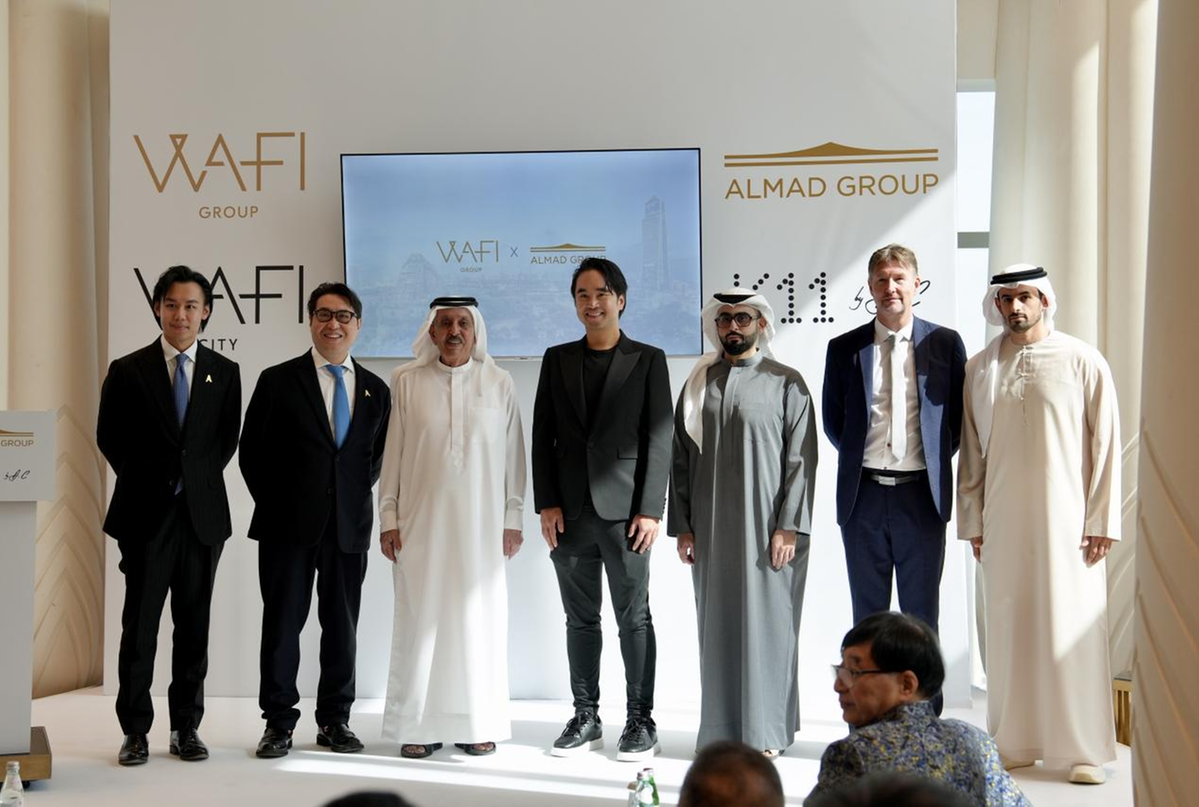
The agreement, signed on December 11 in Dubai, brings together Almad Group’s lifestyle and cultural development arm, K11 by AC, and Wafi Group, one of the city’s established real estate and hospitality players. At the centre of the cooperation is the creation of a new joint venture entity, Wafi Anime 11, designed to anchor animation-led retail, immersive entertainment and intellectual-property-driven experiences in the UAE, with an eye on regional expansion.

Senior executives and representatives from both sides attended the signing, including Richard Cheung, group chief executive of K11 by AC; Dr Adrian Cheng, founder and executive chairman of K11 by AC of Almad Group; Sheikh Mana bin Khalifa Al Maktoum, founder and chairman of Wafi Group; and Sheikh Rashid bin Mana Al Maktoum, director of Wafi Group. The presence of Dubai Chambers’ executive vice-president for international relations, Salem Al Shamsi, underscored the broader trade and investment significance of the deal.

The partnership goes beyond a single retail concept. According to the framework outlined at the ceremony, Wafi Anime 11 will serve as a platform for developing themed cultural and entertainment projects, hosting IP-exclusive activities, and curating experiences aimed at both residents and international visitors. These initiatives are intended to align with Dubai’s wider strategy of positioning itself as a global hub for creative industries and experiential tourism.

A key commercial pillar of the agreement involves leasing and brand-entry cooperation for Hong Kong and the Chinese mainland labels seeking a foothold in the Middle East. The partners plan to introduce a portfolio of lifestyle, fashion and cultural brands that reflect contemporary Chinese creativity while adapting to local consumer tastes and regulatory environments. This approach reflects a growing trend among Asian brand owners to use Dubai as a gateway to the Gulf and wider Middle East and North Africa markets.

Tourism collaboration also features prominently. Almad Group and Wafi Group will roll out targeted incentive strategies aimed at visitors from Hong Kong and the Chinese mainland, encouraging longer stays and deeper engagement with Dubai’s retail and cultural offerings. Under the plan, travellers will be guided towards premium hospitality assets such as Sofitel Dubai The Obelisk and Raffles Dubai, both located within or adjacent to Wafi City, while being introduced to curated shopping, dining and entertainment itineraries.

Wafi City itself is expected to play a central role in the initiative. Long known as a mixed-use destination combining retail, hospitality and leisure, the complex will host several of the new animation-themed and IP-driven concepts. The partners believe this integrated environment provides a ready-made ecosystem for blending retail with storytelling, live events and digital engagement, a model increasingly favoured by younger consumers and families.

Another element of the cooperation involves the expansion of Gentry Club, a private members’ lifestyle concept, into the Middle East and North Africa. While details remain under development, the inclusion of Gentry Club signals an ambition to build community-based, experience-led offerings alongside mainstream retail, catering to affluent and culturally engaged audiences.

Richard Cheung said the agreement followed extensive groundwork and market analysis. “Our team has been studying the Middle East market since 2024 and is well aware of its immense development potential,” he noted. Cheung added that the first phase of cooperation would focus on brand introduction and ecosystem building, with several flagship labels representing Chinese cultural aesthetics expected to open by 2026.

Industry observers see the partnership as part of a broader shift in how cultural IP and retail are being deployed globally. Animation, gaming and character-driven franchises are no longer confined to screens or merchandise, but are increasingly used to anchor physical destinations, from themed malls to pop-up exhibitions and interactive spaces. The UAE, with its diversified economy, strong tourism flows and appetite for experiential formats, has emerged as a testing ground for such concepts.

By Nitya Chakraborty The announcement by the Bangladesh Election Commission on the holding of general elections in Bangladesh on February 12 next year is a major development in the evolving politics of South Asia, especially with respect to India. The EC statement was welcomed by all the contesting political parties. The nomination process will be […]

The article Bangladesh Elections On February 12, 2026 Matter A Lot To India appeared first on Latest India news, analysis and reports on Newspack by India Press Agency).

BANGKOK, THAILAND – Media OutReach Newswire – 12 December 2025 – Vinhomes has been honored as “Developer of the Year Southeast Asia 2025”, the most prestigious title within the Dot Property Southeast Asia Awards 2025. The award marks a significant milestone in Vinhomes’ regional expansion journey and reaffirms its pioneering role in shaping modern urban developments, enhancing quality of life, and setting sustainable development benchmarks for Southeast […]

Dubai Chamber of Commerce has launched the Bulgarian Business Council, marking a new institutional step aimed at expanding bilateral trade, strengthening commercial partnerships and encouraging mutual investment between Dubai and Bulgaria.

The council has been established under the umbrella of Dubai Chambers and is intended to serve as a structured platform for companies from both markets to collaborate, exchange market intelligence and identify joint opportunities. Officials involved in the initiative said the move reflects growing interest among Bulgarian firms in using Dubai as a regional base, while Dubai-based businesses increasingly view Bulgaria as a gateway to the European Union and South-Eastern Europe.

The new body brings together representatives from key sectors including manufacturing, logistics, food and agriculture, information technology, tourism, construction and renewable energy. Its mandate includes organising business delegations, facilitating B2B meetings, supporting regulatory understanding and helping members navigate investment frameworks in both jurisdictions. Dubai Chamber of Commerce indicated that the council will also work closely with public institutions and trade promotion agencies in Bulgaria to ensure alignment with national economic priorities.

Speaking at the launch, Dubai Chambers officials said the council was designed to “build stronger partnerships between business communities and unlock new opportunities for joint investment”, highlighting a shared interest in diversifying trade flows and deepening private-sector engagement. Bulgarian representatives echoed that view, noting that Dubai’s position as a global trade and logistics hub offers Bulgarian exporters and investors access to markets across the Middle East, Africa and Asia.

Trade ties between Dubai and Bulgaria have been expanding steadily, supported by improved logistics links and a broader push by Dubai to strengthen economic relations with European economies. Non-oil trade between the UAE and Bulgaria has grown over the past decade, driven by machinery, metals, chemicals, food products and pharmaceuticals, according to publicly available trade data. Dubai’s role as a re-export centre has also helped Bulgarian firms reach third markets more efficiently.

The launch of the Bulgarian Business Council fits into Dubai Chamber of Commerce’s wider strategy of establishing country-specific business councils to institutionalise trade relations and provide structured support to foreign investors. Dubai Chambers now hosts dozens of such councils, covering markets across Europe, Asia, Africa and the Americas. These councils have become a central tool in Dubai’s efforts to attract foreign direct investment, promote cross-border partnerships and reinforce the emirate’s status as a preferred base for international companies.

Analysts note that Bulgaria’s competitive advantages include its EU membership, relatively low operating costs, skilled workforce and strategic location linking Europe, the Balkans and the Black Sea region. For Dubai-based companies, these factors make Bulgaria an attractive destination for manufacturing, near-shoring, logistics and technology development. At the same time, Bulgarian companies see Dubai as a stable business environment with advanced infrastructure, business-friendly regulations and strong connectivity.

Investment interest between the two sides has been widening beyond traditional trade. Sectors such as renewable energy, agri-tech, fintech, health care and tourism development have emerged as areas of mutual focus. Bulgarian technology firms have shown growing interest in Dubai’s innovation ecosystem, while companies from Dubai are exploring opportunities in Bulgaria’s industrial zones, real estate and tourism assets.

The Bulgarian Business Council is expected to play a coordinating role in these areas by aligning private-sector initiatives with broader economic strategies. Its agenda includes promoting joint ventures, supporting start-ups seeking cross-border expansion and encouraging knowledge exchange in areas such as digitalisation and sustainability. Council members will also work to address practical barriers faced by businesses, including regulatory clarity, market entry requirements and partner identification.

Diplomatic and business officials involved in the initiative stressed that the council is intended to complement, rather than replace, existing government-to-government frameworks. By focusing on commercial engagement, it aims to translate high-level economic cooperation into tangible outcomes for companies operating on the ground. Similar councils under Dubai Chambers have previously been credited with accelerating deal-making and improving investor confidence by providing direct access to market insights and decision-makers.

Abu Dhabi has hosted the CGIAR System Council meeting for the first time in the Arabian Gulf region, marking a significant moment for global agricultural governance and underscoring the UAE’s ambition to position itself as a convening hub for food systems innovation, climate resilience and sustainable development.

The gathering brought together representatives of governments, multilateral organisations, donors and research leaders who collectively oversee CGIAR, the world’s largest public agricultural research partnership. The System Council sets strategic direction, approves funding allocations and assesses the impact of research programmes that influence food security for hundreds of millions of people, particularly in climate-vulnerable regions.

Hosting the council in the UAE reflects a broader shift in global agricultural research towards regions facing acute water stress, rising temperatures and land degradation. Officials involved in the meeting emphasised that solutions for future food systems must be designed and tested in environments that mirror the challenges many countries already face, including arid climates and fragile ecosystems. The Gulf, long associated with food import dependence, is increasingly presented as a laboratory for innovation in desert agriculture, controlled-environment farming and climate-smart technologies.

CGIAR’s research portfolio spans crop improvement, climate adaptation, nutrition, water management and biodiversity conservation. Its network includes 15 research centres operating across Africa, Asia, Latin America and parts of the Middle East. Discussions in Abu Dhabi focused on aligning research priorities with accelerating climate risks, tightening development budgets and the need to demonstrate measurable outcomes for smallholder farmers and vulnerable communities.

Senior figures attending the meeting highlighted the urgency of scaling innovations that improve productivity while reducing environmental footprints. Heat-tolerant crop varieties, drought-resilient seeds, precision irrigation systems and data-driven advisory services were cited as areas where scientific advances are already delivering tangible benefits. Council members also reviewed progress on integrating gender equity and nutrition outcomes into agricultural research, recognising that yield gains alone do not guarantee food security.

The UAE’s role as host was framed around its investments in agri-tech, food security strategies and international development partnerships. Over the past decade, the country has expanded funding for agricultural research, supported pilot projects in arid farming and strengthened ties with international institutions working on climate adaptation. Officials involved in organising the meeting said the decision to host the council aligned with national priorities on sustainable food production and knowledge-based economic diversification.

Beyond symbolism, the location influenced the agenda. Sessions examined how lessons from desert agriculture can be adapted for other water-scarce regions, including parts of Africa and Central Asia. Controlled-environment agriculture, including greenhouse and vertical farming, featured prominently as participants assessed their potential to complement open-field farming rather than replace it. Energy use, affordability and scalability in lower-income settings were central to these debates.

Financing emerged as a critical issue. CGIAR operates in an environment of competing global crises, where humanitarian needs, climate finance and development assistance all draw from limited public funds. Council members discussed strategies to broaden the donor base, attract blended finance and strengthen partnerships with the private sector without compromising CGIAR’s public-good mandate. Transparency, accountability and rigorous impact evaluation were repeatedly emphasised as essential to maintaining donor confidence.

The meeting also addressed governance reforms within CGIAR, which has undergone structural changes aimed at improving coordination across its research centres. Council members reviewed progress on streamlining programmes, reducing duplication and enhancing collaboration with national research systems. Strengthening ties with regional institutions in the Middle East and North Africa was identified as an opportunity to expand the reach of research outputs while respecting local contexts.

Bhutan has entered the digital asset arena with the rollout of a sovereign gold-backed token built on the Solana blockchain, marking a cautious but notable step by the Himalayan kingdom into tokenised finance. The initiative, unveiled on Thursday, aligns with Bhutan’s long-standing emphasis on economic stability and social well-being, while testing how blockchain technology can be used to modernise public finance without undermining monetary discipline. The token […]

Global oil supply is likely to align closely with demand through 2026, according to fresh projections from the Organization of the Petroleum Exporting Countries, setting up a clear divergence with forecasts from other major agencies that warn of a sizeable surplus building in the same period. OPEC’s latest monthly assessment indicates that the OPEC+ alliance, which brings together OPEC members, Russia and other producing partners, expects market […]

Arabian Post Staff -Dubai Abu Dhabi’s sovereign investor Mubadala Investment Company plans to almost double its exposure to Asia to around a quarter of its global portfolio over the next decade, signalling a long-term shift in capital allocation as the region’s digital economy, energy transition and infrastructure needs accelerate. Speaking at Abu Dhabi Finance Week, Mohamed Albadr, Mubadala’s Head of Asia, said Asia’s share of assets under […]

Engineered for the AI era, MIMO delivers breakthrough metrics: 400 GB/s bandwidth, 54 million IOPS, and 40–90 μs latency—all within a form factor comparable to a large suitcase. MIMO serves as both a high-performance data hub for large-scale GPU clusters and a flexible edge deployment platform, extending seamlessly to desktop environments where it orchestrates workflows with various DGX Spark units based on NVIDIA’s GB10 Grace Blackwell superchip. […]

Global development officials are assessing faltering progress on sustainable development targets as the United Nations Development Programme warns that economies and communities face mounting pressures from climate shocks, widening inequality, and geopolitical instability. The review comes at a time when the Global Environment Outlook 7 underscores the scale of environmental disruption, projecting that unchecked climate change could shave about 4 per cent off annual global GDP by […]

Borrowing against physical and financial assets has become a defining feature of credit markets as more companies look for flexible funding beyond traditional loans. The model, known as asset-based lending, is drawing interest from mid-sized firms facing tighter bank standards and from fast-growing businesses seeking to unlock capital tied up in receivables, inventory, or machinery. This shift reflects an environment where cash-flow volatility, higher borrowing costs, and […]

HONG KONG SAR – Media OutReach Newswire – 11 December 2025 – Skychakra Group recently held a grand inauguration ceremony at the Hong Kong International Center, announcing the official acceleration of its globalization strategy. With a mission to “enhance individual energy, empower enterprise growth, and promote asset capitalization,” Skychakra simultaneously launched three major international initiatives: a cross-border listing incubation system, an RWA (Real World Assets) technology ecosystem, […]

Abu Dhabi’s drive to deepen its role as a global financial and technology destination accelerated with the Abu Dhabi Investment Office and cross-border payments firm YeePay announcing the establishment of YeePay’s regional headquarters and technology hub in the emirate. The collaboration, unveiled at Abu Dhabi Finance Week 2025, positions the new base to serve the Middle East and Africa while bolstering digital payment links between the UAE, […]

Abu Dhabi has secured a strategic collaboration between the Abu Dhabi Investment Office and US-based Prudential Financial Inc aimed at bolstering the emirate’s capacity in long-term retirement savings, income solutions and reinsurance as part of its financial sector transformation agenda. The agreement, unveiled during Abu Dhabi Finance Week 2025, also sees PFI joining the FinTech, Insurance, Digital and Alternative Assets cluster, a cornerstone initiative designed to position […]

Arabian Post Staff -Dubai Abu Dhabi’s move to establish an investment corridor with China gained further traction after the Abu Dhabi Investment Office confirmed a strategic partnership with China International Capital Corporation aimed at expanding two-way capital flows and creating a formal framework for long-term collaboration. The initiative positions the emirate to attract a new wave of Chinese companies while giving institutional investors in Abu Dhabi structured […]

BALI, INDONESIA – Media OutReach Newswire – 11 December 2025 – A distinguished cohort of Philippine enterprises was celebrated at the Asia Corporate Excellence & Sustainability (ACES) Awards 2025 for setting new standards in responsible business transformation, sustainability and people-centred leadership. Celebrating the exceptional Day 1 and Day 2 ACES Award winners. The 2025 recipients, Gothong Southern, Cebu Landmasters, Mober Technology, First Oceanic Property Management (FOPM), Monde […]

VISHNU RAJA
RYO YAMADA
HITORI GOTOH
IKUYO KITA