News related to
Asia

China’s push into humanoid robots is emerging as a new test of its ability to convert industrial policy, supply-chain depth and scale manufacturing into export power, with Morgan Stanley research arguing that the sector could help lift the country’s share of global manufacturing by the end of the decade.

Economists led by Chetan Ahya have drawn a parallel with electric vehicles, where early policy support, component localisation and aggressive production expansion turned China from a fast follower into the world’s dominant exporter. Their research projects China’s share of global manufacturing could rise to 16.5 per cent by 2030, from about 15 per cent now, as advanced automation and embodied artificial intelligence move from demonstration projects into factory and logistics use.

The bullish case rests on China’s widening lead in humanoid robot production. Industry estimates show the country produced about 12,800 humanoid robots in 2025, close to 90 per cent of global output, though the market remains tiny compared with conventional industrial robotics. China also remains the world’s largest industrial robot market, accounting for more than half of global factory robot installations in 2024, with an operational stock above 2 million units.

That foundation matters because humanoid robots require the same manufacturing strengths that supported China’s rise in solar panels, batteries and electric vehicles: precision motors, sensors, actuators, batteries, control systems, machine vision and low-cost assembly. Local companies are building ecosystems around these components, while provincial governments are offering subsidies, industrial parks and procurement support to accelerate commercial deployment.

Beijing has identified humanoid robots as a strategic industry, setting targets for mass production and global leadership while integrating robotics into wider plans for artificial intelligence and advanced manufacturing. The 15th Five-Year Plan framework is expected to place AI-powered robots near the centre of industrial upgrading, although large-scale commercialisation is more likely toward the later part of the plan period than immediately.

The sector’s momentum has drawn major private capital. Start-ups such as Unitree, UBTech, AgiBot and Fourier Intelligence have moved quickly from stage demonstrations to pilot factory and warehouse deployments. Linkerbot, a fast-growing maker of dexterous robotic hands, is seeking a valuation of about $6 billion after building a strong position in high-degree-of-freedom robotic hands used in humanoids and industrial systems. Its modular products point to an important feature of the market: some of the earliest profits may come from components rather than complete humanoid machines.

Automakers and electronics groups are also moving into the field. Xpeng has said humanoid robotics could become a long-term investment area alongside electric vehicles, while other manufacturers are testing robots for inspection, sorting, materials handling and repetitive shop-floor tasks. The logic is clear. China faces an ageing workforce, rising labour costs in coastal manufacturing hubs and growing pressure from tariff barriers. A successful humanoid robotics industry could help preserve competitiveness even as low-cost labour advantages fade.

The export implications are broader than robot sales. If humanoids improve productivity in Chinese factories, they could lower production costs across electronics, machinery, appliances and consumer goods. That would reinforce the country’s position in global supply chains at a time when the United States, Europe and several Asian economies are trying to reduce dependence on Chinese manufacturing. It could also create a new export category in robots, components, software and maintenance services.

Yet the constraints remain substantial. Humanoid robots are still expensive, often have limited battery life and struggle with unstructured environments. Many can perform scripted tasks in controlled settings but fall short when asked to handle the speed, judgement and dexterity of human workers. Even executives in China’s robotics industry acknowledge that factory humanoids remain less efficient than people in many jobs. Safety certification, liability rules, data protection and workplace integration will also affect adoption.

Dependence on high-end chips and advanced software ecosystems is another weakness. US restrictions on AI semiconductors have pushed Chinese firms to localise more hardware, but training and deploying capable embodied AI systems remains compute-intensive. Without steady access to cutting-edge chips, progress may be uneven, particularly in models that require real-time perception, movement planning and continuous learning.

HONG KONG SAR – Media OutReach Newswire – 7 May 2026 – The Chinese University of Hong Kong (CUHK) has achieved outstanding results in the QS World University Rankings by Subject 2026, released on 25 March, further cementing its position as a global leader in research and academic excellence. Ten CUHK subjects have secured the top position in Hong Kong, and 21 subjects rank among the top 50 worldwide. These outstanding results reflect CUHK’s sustained commitment to research impact and the calibre of its scholars, whose work continues to advance the collective understanding of the world’s most pressing challenges.

CUHK latest QS World University Rankings by Subject 2026 is released.

CUHK’s Academic Excellence and Global Research Impact

Ranked among the world’s top 50 universities, CUHK ascended to 32nd place globally in the QS World University Rankings 2026, marking a four-place rise that reinforces its role as a hub for rigorous inquiry, and a dynamic environment where students are empowered to pursue meaningful research and knowledge exchange. This trajectory is supported by 17 CUHK researchers recognised on the Highly Cited Researchers 2025 list by Clarivate Analytics, and 431 academics listed among the world’s top 2% scientists by Stanford University. Among them, 47 scholars were ranked within the global top 100 in their respective fields. Notably, three scholars, including Vice-Chancellor and President Professor Dennis Lo Yuk-ming, have earned positions within the global top 10, a distinction that highlights the remarkable depth and excellence of CUHK’s research community.

CUHK’s The Nethersole School of Nursing: Nurturing Research Innovation and Global Talent in Nursing

Among CUHK’s strongest performers in this year’s rankings, the Nethersole School of Nursing has been ranked #1 in Hong Kong and Asia, and #6 worldwide. Reflecting on the academic environment, Pham Nhat Vi DO, a Vietnamese PhD student in Nursing, shared: “My PhD journey at CUHK has transformed my research abilities, critical thinking, and leadership skills. Through CUHK’s outstanding faculty support, I have accessed diverse academic resources and gained invaluable hands-on experience, building a strong foundation for my future career.”

Vi’s research focuses on colorectal cancer survivorship using cutting-edge technology. As the first Vietnamese researcher adopting this approach, her work reflects CUHK’s strength in empowering students to break new ground.

CUHK’s Geography and Resource Management: Advancing Student Research on Pressing Climate Challenges

CUHK’s Department of Geography and Resource Management has also earned notable recognition in this year’s ranking, placing #4 in Asia and #21 worldwide. Arati POUDEL, a Nepali PhD student, highlighted the University’s research ecosystem as a key defining aspect of her experience. “CUHK exceeds expectations through outstanding research facilities, supportive faculty, and comprehensive professional development opportunities. The prestigious Belt and Road Scholarship has also enriched my research journey in this beautiful campus environment.”

Supported by CUHK, Arati’s research investigates how adaptation to climate extremes—particularly water scarcity and excess—are being addressed, and the pivotal role played by communities and civil society in leading these responses.

Through the QS World University Rankings by Subject 2026, CUHK continues to demonstrate the impact of its research and scholarship. These achievements underscore the University’s growing influence on the global academic stage and its steadfast commitment to addressing complex global challenges through innovation, insight, and collaboration.
Hashtag: #CUHK

The issuer is solely responsible for the content of this announcement.

About CUHK

The Chinese University of Hong Kong (CUHK) is a leading higher education institution dedicated to nurturing and empowering students to become responsible and compassionate global citizens. With a rich heritage and a forward-looking vision, CUHK strives to blend tradition with innovation, fostering academic excellence, research breakthroughs, and meaningful societal impact.

A second ADNOC-linked liquefied natural gas tanker has cleared the Strait of Hormuz, signalling that Abu Dhabi is cautiously restoring limited export movement through one of the world’s most sensitive energy chokepoints despite the war involving Iran. Ship-tracking data on Wednesday showed the LNG carrier Mraweh, managed by ADNOC Logistics & Services and chartered by ADNOC Gas, had reappeared loaded off Indonesia after losing its automatic identification […]

Arabian Post Staff -Dubai Dubai’s financial free zone has strengthened its standing as a global insurance centre after gross written premiums climbed to $4.2 billion in 2025, up 20 per cent from $3.5 billion a year earlier. Underwriting volumes at Dubai International Financial Centre have doubled since 2022, marking a sharp expansion in the emirate’s role as a booking, structuring and specialist underwriting platform for risks flowing […]

MANILA, PHILIPPINES – Media OutReach Newswire – 6 May 2026 – VinFast has officially launched the VF MPV 7 electric vehicle in the Philippines, marking the third international market where the model is present. The launch further strengthens VinFast’s diverse product portfolio in the country and reaffirms its commitment to making electric mobility more accessible, thereby accelerating the transition toward greener transportation in the Philippines.

In the Philippines, the VF MPV 7 is priced at PHP 1,518,000 for the battery-included version and PHP 1,239,000 under the battery subscription model.

In the Philippines, the VF MPV 7 is priced at PHP 1,518,000 for the battery-included version and PHP 1,239,000 under the battery subscription model. The flexible battery subscription policy is tailored to real-world usage needs, with a monthly fee of PHP 2,700 for distances of up to 2,000 km and PHP 4,150 for distances exceeding 2,000 km.

Starting from May 5, 2026, customers can place orders for the VF MPV 7 through VinFast dealerships nationwide. Notably, until May 31, 2026, the first 1,000 customers will be entitled to a promotional program, including one year of free battery subscription for usage of up to 2,000 km per month. Customers opting to purchase the vehicle with battery included will receive a direct discount of PHP 27,200.

Photo2

Positioned as a versatile 7-seater electric MPV for families, the VF MPV 7 targets customers seeking a meaningful upgrade from conventional MPVs. With the MPV segment accounting for nearly 20% of total automotive sales in the Philippines, the VF MPV 7 offers a well-balanced solution combining spaciousness, strong performance, and competitive ownership costs, addressing the most critical criteria for family vehicle buyers.

The VF MPV 7 measures 4,740 x 1,872 x 1,734 mm with a 2,840 mm wheelbase, delivering interior space that exceeds typical segment standards and suits the needs of multi-generational families. The vehicle is developed around the “golden ratio” characteristic of MPVs, with wheels pushed toward the corners to optimize cabin space. This is combined with a modern design language, VinFast’s signature V-shaped LED daytime running lights, and 19-inch alloy wheels, creating a well-balanced and robust appearance.

The interior is configured to maximize space and practicality, ensuring comfort for all occupants, including those in the third row. Cargo capacity reaches up to 1,240 liters, providing flexibility for both daily use and long-distance travel. The VF MPV 7 is equipped with an electric motor delivering 150 kW of power and 280 Nm of torque, paired with a 60.13 kWh battery, enabling a driving range of up to 450 km on a full charge under NEDC standards. Fast-charging capability allows the battery to charge from 10% to 70% in approximately 30 minutes, ensuring flexible operation in real-world conditions.

Notably, the VF MPV 7 offers a clear advantage in monthly operating costs, as energy expenses remain stable and significantly lower than those of gasoline-powered vehicles in the same segment, helping optimize total cost of ownership over the long term. Owners also benefit from free charging at V-Green stations across the Philippines through March 2029, along with a 7-year or 160,000 km vehicle warranty and a 10-year or 200,000 km battery warranty, among the best in the segment.

Photo3

Mr. Antonio Zara, CEO of VinFast Southeast Asia, said: “The launch of the VF MPV 7 in the Philippines marks another step forward in VinFast’s global expansion strategy and demonstrates our long-term commitment to this market. With its spacious interior, strong performance, optimized operating costs, and sustainable ownership value, we believe the VF MPV 7 will serve as a comprehensive upgrade for Filipino families and set a new benchmark in the MPV segment.”

Alongside the product introduction, VinFast has continued to strengthen its comprehensive electric mobility ecosystem in the Philippines by expanding its dealership and aftersales network. The company is also implementing attractive policies such as free charging, long-term warranties, and flexible buying solutions to lower barriers to EV adoption and enhance the overall ownership experience.

Hashtag: #VinFast

The issuer is solely responsible for the content of this announcement.

HUALIEN, TAIWAN – Media OutReach Newswire – 6 May 2026 – The “Pacific Ocean International Festival of Rock Balancing and Arts” officially kicked off May 1st at the Qixingtan Scenic Area in Hualien. The event brings together renowned artists from Sweden, Spain, Iraq, Japan, and Turkey, collaborating with local Taiwanese creators. Through traditional rock balancing and interdisciplinary artistic concepts, the festival fosters a cross-cultural dialogue along the Pacific coastline, showcasing vibrant creative energy.

Pacific Ocean International Festival Of Rock Balancing And Arts – Land Art and Artists

Centered on public participation, the festival features a diverse range of activities, including international art exhibitions, professional rock balancing competitions, family-friendly experiences, local markets, and hands-on workshops. Visitors are invited to engage directly with nature and create their own rock artworks. A photography contest encourages participants to capture the diverse beauty of rock stacks under varying light conditions and perspectives, while a short video competition invites creative visual storytelling.

During the preparation phase, the organizers established a strategic partnership with Scotland’s European Land Art Festival and received its official endorsement. This collaboration aims to develop Hualien into a key Asian hub for international competitions, strengthening connections with Europe and the United States.

The opening ceremony featured a unique musical performance inspired by rocks, presented by Professor Lin Tze-ying and students from Taipei National University of the Arts, alongside local Hualien students. Their performance blended the region’s distinctive natural soundscape with its rich cultural heritage.

Running through June 30, the festival transforms Qixingtan Scenic Area into a two-month outdoor art venue, inviting both domestic and international visitors to experience the enchanting intersection of art and nature between the mountains and the sea.

Hashtag: #Hualien

The issuer is solely responsible for the content of this announcement.

Arabian Post Staff -Dubai   US President Donald Trump has temporarily halted Washington’s ship-escort operation through the Strait of Hormuz, saying talks with Tehran have made “great progress” toward a wider settlement after weeks of disruption to one of the world’s most critical energy corridors. The pause, announced on Tuesday, came only hours after Secretary of State Marco Rubio detailed a US effort that began on Monday […]

Advertisements

Arabian Post Staff -Dubai Abu Dhabi’s EDGE Group and France-headquartered ICAPE Group have signed an agreement to explore joint development and local supply of critical electronic subsystems, strengthening the UAE’s drive to build more resilient defence and advanced-technology manufacturing chains. The memorandum of understanding was signed on 5 May at Make it in the Emirates 2026 in Abu Dhabi, where industrial localisation, supply-chain security and high-value manufacturing […]

SEMICON Southeast Asia 2026 opened in Kuala Lumpur on Tuesday, putting Malaysia at the centre of a regional push to capture a larger share of the global semiconductor value chain as chipmakers rethink production networks, sourcing risks and capacity plans.

The three-day industry gathering at the Malaysia International Trade and Exhibition Centre runs from 5 to 7 May and is expected to draw more than 20,000 policymakers, manufacturers, suppliers, investors, researchers and technology specialists. Held under the theme “Transform Tomorrow”, the event is being staged in strategic partnership with Malaysia’s Ministry of Investment, Trade and Industry and the Malaysian Investment Development Authority.

The launch ceremony was officiated by Datuk Seri Johari Abdul Ghani, Malaysia’s Minister of Investment, Trade and Industry, with senior SEMI executives, MIDA leadership and global semiconductor company representatives in attendance. The programme places manufacturing scale-up, advanced packaging, intelligent manufacturing, sustainability and workforce development at the centre of discussions, reflecting the industry’s shift from pure capacity expansion to more resilient and geographically diversified ecosystems.

Malaysia enters the event with a strong base in electrical and electronics manufacturing, particularly assembly, testing and packaging. The country has long been a critical node for chip back-end operations, with Penang and Kulim playing key roles in outsourced semiconductor assembly and test activity. The policy focus is now moving further up the value chain into chip design, advanced packaging, automation, materials, equipment support and higher-value manufacturing services.

Datuk Sikh Shamsul Ibrahim Sikh Abdul Majid, chief executive officer of MIDA, said Malaysia was no longer positioning itself as a passive beneficiary of industry shifts. “The semiconductor industry is at an inflection point, and Malaysia intends to be at the centre of what comes next,” he said, pointing to the MADANI Economy Framework and the New Industrial Master Plan 2030 as policy anchors for a broader industrial upgrade.

The E&E sector secured RM28.5 billion in approved investments in 2025, underlining continued investor interest despite a more fragmented global trade environment. Malaysia’s broader semiconductor strategy is focused on supply-chain integration, stronger domestic enterprise capability and talent development, as the country seeks to build a deeper industrial base around its existing production strengths.

Ajit Manocha, president and chief executive officer of SEMI, said closer coordination across design, manufacturing, materials and supply chains had become essential as artificial intelligence, high-performance computing and advanced electronics reshape demand. He said SEMICON Southeast Asia was designed not only as a technology showcase but as a platform for partnerships that can support long-term industry growth and resilience.

The timing of the Kuala Lumpur event is significant. Global semiconductor sales are on course to approach $1 trillion in 2026, driven largely by demand for AI accelerators, memory, advanced logic, data-centre infrastructure, automotive electronics and edge devices. Monthly industry sales crossed $99 billion in March 2026, while first-quarter sales were sharply higher than the previous quarter, showing the scale of the current upcycle.

Capital expenditure is also accelerating. Spending on 300mm fab equipment is projected to rise to about $133 billion in 2026 and $151 billion in 2027, as chipmakers expand capacity for advanced logic and memory while governments push for more localised semiconductor supply chains. Yet Southeast Asia remains under-represented in new front-end fabrication plans compared with China, Taiwan, South Korea, Japan and the United States, leaving room for Malaysia, Singapore, Vietnam, Thailand and the Philippines to compete more aggressively for future investment.

SEMICON Southeast Asia 2026 features the Executive Leadership Summit, the MIDA Strategic Semiconductor Forum and Seminar, the Sustainability and Energy Summit, TechZoomers Challenge and TalentCONNECT. These sessions are designed to connect policy, capital, manufacturing capability and workforce planning, rather than treating the exhibition as a conventional trade fair.

The emphasis on talent is especially important. Semiconductor expansion is being constrained not only by investment cycles and export controls but also by shortages of engineers, technicians, automation specialists and materials experts. Malaysia’s challenge is to match global investor confidence with a skilled workforce capable of supporting advanced packaging, precision manufacturing and design-linked activity.

Botswana’s beef industry is under mounting pressure as foot-and-mouth disease disrupts exports, closes key slaughter facilities and threatens rural incomes in a country where cattle remain central to household wealth, food security and national trade. Acting Minister of Lands and Agriculture Dr Edwin Dikoloti has warned that the outbreak is placing significant strain on the economy and livelihoods, with the most immediate commercial blow coming from lost […]

Chicago wheat futures advanced for a third straight session on Tuesday as drought damage across the US Plains kept traders focused on tightening prospects for the winter crop, even as forecasts for rainfall checked sharper gains. The most-active wheat contract on the Chicago Board of Trade rose 0.8 per cent to $6.44-1/4 a bushel in early Asian trade, extending a rally that last week pushed prices to […]

Arabian Post Staff -Dubai London-listed Man Group is moving to establish an office in Abu Dhabi, adding fresh momentum to the UAE capital’s drive to become a larger global centre for hedge funds, alternative assets and private capital. The firm, one of the world’s biggest publicly traded hedge fund managers, has applied for a Category 3A licence at Abu Dhabi Global Market, the emirate’s international financial centre. […]

The official ceremony underscores Southeast Asia’s growing role in the global semiconductor value chain through collaboration, innovation and ecosystem-wide partnerships

KUALA LUMPUR, MALAYSIA – Media OutReach Newswire – 5 May 2026 – SEMICON Southeast Asia (SEMICON SEA) 2026 was officially launched today at the Malaysia International Trade and Exhibition Centre (MITEC), bringing together policymakers, manufacturers, suppliers, researchers, investors and emerging talent from across the global semiconductor ecosystem for three days of industry dialogue, technology showcases and business engagement.

The opening ceremony was officiated by YB Datuk Seri Johari Abdul Ghani, Minister of Investment, Trade and Industry (MITI), and attended by SEMI leadership, the Malaysian Investment Development Authority (MIDA) led by the Chief Executive Officer Datuk Sikh Shamsul Ibrahim Sikh Abdul Majid, and senior executives from global semiconductor companies.

Held under the theme ‘Transform Tomorrow’ in strategic partnership with MITI and MIDA, SEMICON Southeast Asia 2026 is expected to welcome more than 20,000 innovators, policymakers and technology experts. The three-day event focuses on key industry priorities including manufacturing scale-up, advanced packaging, intelligent manufacturing and workforce development, as companies respond to demand driven by artificial intelligence, high-performance computing and advanced electronics.

Datuk Sikh Shamsul Ibrahim Sikh Abdul Majid, Chief Executive Officer of MIDA, said Malaysia is approaching the next phase of semiconductor growth as an active builder rather than a beneficiary of global trends.

“The semiconductor industry is at an inflection point, and Malaysia intends to be at the centre of what comes next. Under the MADANI Economy Framework and the New Industrial Master Plan 2030, we are not simply maintaining our position in the global semiconductor supply chain, we are deliberately reshaping it. The NIMP 2030 sets a clear direction for the E&E sector to move beyond assembly and test into design, advanced packaging and innovation-driven manufacturing, and MIDA is here to make that transition real. The RM28.5 billion secured by the E&E sector in 2025 is proof that global confidence in Malaysia has not wavered. What we are now building is the ecosystem to match that confidence, through supply chain integration, local capability development and the kind of high-value partnerships that platforms like SEMICON Southeast Asia are uniquely placed to catalyse,” said Datuk Sikh Shamsul Ibrahim.

“SEMI’s role has always been to bring together the global semiconductor ecosystem, and that responsibility becomes even more important as the industry grows in scale and complexity. Today, innovation is no longer confined to a single segment. It requires closer alignment across design, manufacturing, materials and supply chains. SEMICON Southeast Asia provides a platform to bridge these different parts of the ecosystem, enabling stakeholders to engage in more meaningful collaboration and move from discussion to execution,” said Ajit Manocha, President and CEO of SEMI.

“As demand continues to be driven by artificial intelligence, high-performance computing and advanced electronics, the ability to coordinate across regions and capabilities will be critical. SEMICON Southeast Asia 2026 is not only about showcasing technology, but about strengthening the partnerships needed to support long-term industry growth and resilience.”

The event features key leadership programmes including the Executive Leadership Summit, MIDA Strategic Semiconductor Forum and Seminar, Sustainability and Energy Summit, TechZoomers Challenge and TalentCONNECT, reflecting SEMICON Southeast Asia’s role not only as an exhibition platform, but as a convening point for leadership, capability and execution across the region’s semiconductor ecosystem.

Marking over a decade of strategic collaboration, MIDA and SEMI today reinforce 12 years of a transformative partnership dedicated to elevating Malaysia’s standing in the global semiconductor value chain. This enduring alliance remains anchored on three core pillars designed to future-proof the nation’s industrial landscape:

  • Ecosystem Integration: Harmonising domestic and international supply chains to ensure seamless operational synergy.
  • Enterprise Capability: Empowering local businesses to scale their technical expertise and compete on a global stage.
  • Talent Advancement: Cultivating a high-skilled workforce as the essential bedrock of Malaysia’s long-term economic resilience and competitive edge.

SEMICON Southeast Asia 2026 runs from 5–7 May 2026 at MITEC, Kuala Lumpur, with participation from companies and organisations across Asia, the United States and Europe.

The issuer is solely responsible for the content of this announcement.

About MIDA

MIDA is the government’s principal investment promotion and development agency under the Ministry of Investment, Trade and Industry (MITI) to oversee and drive investments into the manufacturing and services sectors in Malaysia. Headquartered in Kuala Lumpur Sentral, MIDA has 12 regional and 20 overseas offices. MIDA partners with investors at every stage of their journey, supporting sustainable growth and long-term value creation for Malaysia. For more information, please visit and follow MIDA on X, Instagram, Facebook, LinkedIn, TikTok and YouTube.

About SEMI

SEMI® is the global industry association connecting over 4,000-member companies and 1.5 million professionals worldwide across the semiconductor and electronics design and manufacturing supply chain. We accelerate member collaboration on solutions to top industry challenges through Advocacy, Workforce Development, Sustainability, Supply Chain Management and other programs. Our SEMICON® expositions and events, technology communities, standards and market intelligence help advance our members’ business growth and innovations in design, devices, equipment, materials, services and software, enabling smarter, faster, more secure electronics. Visit , contact a regional office, and connect with SEMI on and to learn more.

Danish shipping group A. P. Moller–Maersk has confirmed that its US-flagged vehicle carrier Alliance Fairfax has left the Arabian Gulf through the Strait of Hormuz under US military escort, giving Washington’s effort to reopen one of the world’s most important maritime chokepoints its most visible commercial test so far. The vessel, operated by Maersk’s Farrell Lines subsidiary, completed the passage on May 4 accompanied by US military […]

Dubai food group IFFCO is poised for provisional liquidation after months of debt restructuring talks failed to produce agreement, pushing a major Gulf consumer-goods business into a court-led process as creditors seek to protect assets and stabilise operations. A lender group led by HSBC Holdings has initiated legal proceedings to take control from the owners, with FTI Consulting nominated to act as provisional liquidator. The move follows […]

OSAKA, JAPAN – Media OutReach Newswire – 5 May 2026 – Travelodge Hotels Asia continues its expansion in Japan with the upcoming opening of Travelodge Osaka Shinsaibashi, set to welcome its first guests in August 2026.

TLOS-1600x1200

Located in Minamisenba, Chuo Ward, the hotel sits in the heart of Osaka’s vibrant Shinsaibashi district—one of the city’s most popular areas for shopping, dining, and nightlife. The hotel is just steps from Shinsaibashi Station, with immediate access from North Exit 3 for seamless connectivity across the city. With more than 300 rooms, the property will be the largest Travelodge hotel in Japan and one of the biggest in the Shinsaibashi area, offering newly renovated, modern accommodation for both leisure and business travelers.

“We are excited to introduce Travelodge Osaka Shinsaibashi to our hotel collection in Japan. It is an important milestone that reflects Travelodge Hotels Asia’s commitment to regional growth, especially in Japan,” said Pinky Lam, Chief Operating Officer of Travelodge Hotels Asia. “Osaka continues to attract travelers from around the world, and we are confident in our ability to continue delivering our signature experience—comfortable stays in strategic locations at great value—in one of the city’s most dynamic districts.”

Comfortable Rooms for Every Traveler

The hotel offers a range of thoughtfully designed rooms to suit different travel needs, from solo travelers to groups.

Room categories include:

  • Standard Double – A comfortable option for solo travelers or couples
  • Standard Twin – Ideal for friends or travel companions
  • Friends & Family Triple – Designed for small groups or families
  • Friends & Family Quadruple – Suitable for families or group stays


Prime Location in the Heart of Osaka

Guests will enjoy convenient access to Osaka’s top attractions, including the iconic Dotonbori, just a 10-minute walk away and known for its vibrant neon lights and street food scene.

Other nearby attractions include:

  • Amerikamura — a lively hub for youth culture, street fashion, and cafés
  • Midōsuji — a major boulevard known for shopping and seasonal illuminations
  • Namba Parks — a popular shopping complex with a rooftop garden
  • Honmachi — a central business district with offices and commercial centers
  • Yodoyabashi — Osaka’s financial hub, home to banks and leading companies

With multiple transport stations within walking distance, guests can also easily access major attractions across the city, including Osaka Aquarium Kaiyukan.

Exclusive Pre-Order Sale

To celebrate the upcoming opening, Travelodge Hotels Asia is launching a limited-time Pre-Order Sale, offering 50% off stays at Travelodge Osaka Shinsaibashi.

The promotion is available exclusively for bookings made through www.travelodgehotels.asia, allowing guests to secure exceptional value for upcoming trips—whether for summer holidays, autumn foliage season, winter festivities, or spring travel next year.

Strengthening Travelodge’s Presence in Japan

The opening marks another milestone for Travelodge Hotels Asia as it continues to expand across key destinations in Asia. With its prime location, large room inventory, and accessible pricing, the hotel is expected to become a preferred choice for travelers seeking accommodation near Shinsaibashi, Dotonbori, and Namba.

More details about the hotel and its opening promotions will be announced closer to the launch.

Hashtag: #TravelodgeHotelsAsia #TravelodgeOsakaShinsaibashi

The issuer is solely responsible for the content of this announcement.

About Travelodge Hotels (Asia)

Travelodge Hotels Asia is a fast-growing hotel management and franchise company headquartered in Singapore, with operations across Japan, South Korea, Singapore, Hong Kong, Malaysia, and Thailand.

With 20 hotels currently in operation and plans to expand to over 50 properties by 2030, the company focuses on delivering value-driven stays in strategic locations. Backed by more than 80 years of global brand heritage, Travelodge offers its signature experience centered on comfort, convenience, and connectivity.

HANOI, VIETNAM – Media OutReach Newswire – 4 May 2026 – Cangio Tourist City Corporation, the developer of Vinhomes Green Paradise, and Marriott International have signed a strategic partnership agreement to introduce two of the world’s leading hotel brands, The Ritz-Carlton and Marriott Hotel, to Vinhomes Green Paradise Can Gio (Ho Chi Minh City). With a combined scale of approximately 700 rooms and high-end resort villas, The Ritz-Carlton and Marriott Hotel will not only expand the project’s portfolio of prestigious hotel brands but also reinforce world-class luxury service standards, befitting the stature of a global “urban wonder“.

Leading global hotel brands under Marriott International will elevate luxury service standards at Vinhomes Green Paradise to a world-class level.

The Ritz-Carlton Can Gio is located at a prime riverside site in the heart of the Vinhomes Green Paradise coastal mega-urban area and is expected to open in Q4 2027.

The hotel will feature 9 floors and approximately 250 keys, with room sizes ranging from 50 to 500 sqm, including suites and pool villas. Facilities include six restaurants and bars, two swimming pools, a spa integrating hydrotherapy and thermal wellness, meditation spaces, a fitness center, beauty salon, and the Ritz Kids club. The event space will comprise three function rooms totaling approximately 540 sqm, catering to a wide range of meetings and events.

Can Gio Marriott Hotel, located adjacent to the opera house and near the golf course and sports complex within the coastal mega-urban area, is also scheduled to open in Q4 2027.

The hotel will rise 25 floors and offer approximately 450 rooms ranging from 40 to 160 sqm, including premium suites. Amenities include an M Club Lounge, a system of restaurants and bars, a swimming pool, Quan Spa, and a sports club. Additionally, the hotel will provide approximately 1,570 sqm of meeting and event space, including two ballrooms, catering to large-scale events.

Together, The Ritz-Carlton and Marriott Hotel will deliver approximately 700 rooms, featuring a diverse range of accommodations, from standard rooms and suites to villas, supported by a comprehensive ecosystem of premium amenities and world-class five-star infrastructure.

The development and operational collaboration will be managed by Vinpearl, a member of Vingroup. With extensive experience in luxury hospitality, Vinpearl will oversee and directly implement operations to ensure the effective performance of these international hotel brands, contributing to the positioning of luxury service standards commensurate with a global “urban wonder” such as Vinhomes Green Paradise Can Gio.

Mr. Gautam Bhandari, Chief Development Officer for Asia Pacific (excluding China) at Marriott International, stated:“Marriott International’s long-standing partnership with Vingroup has helped shape Vietnam’s hospitality market over the years. We currently operate 11 hotels with Vinpearl, a member of Vingroup, and have several projects under development. With Vingroup’s visionary approach, commitment to excellence, and strong core values, we are confident that this project will not only deliver high-quality accommodations but also elevate the destination and create sustainable value for the local economy.”

Ms. Ngo Thi Huong, Chief Executive Officer of Vinpearl Joint Stock Company, added:“Our collaboration with Marriott International to bring The Ritz-Carlton, Can Gio and Can Gio Marriott Hotel represents a strategic step toward introducing global luxury service standards to Vinhomes Green Paradise Can Gio. Beyond developing internationally branded hotels, we aim to build a fully integrated service ecosystem, enhancing customer experience, strengthening operational capabilities, and aligning service quality with global standards, so that residents and visitors can enjoy international-level experiences right here in Vietnam.”

Previously, Vinhomes Green Paradise Can Gio partnered with IHG Hotels & Resorts to develop four hotels with a total of 1,000 rooms. The presence of international brands such as IHG Hotels & Resorts and Marriott International not only expands accommodation capacity but also significantly enhances the project’s ability to attract global visitors. This forms a critical foundation for the coastal mega-urban area to elevate experiences and move closer to its goal of becoming a world-class residential, tourism, and resort destination.

Vinhomes Green Paradise Can Gio is a 2,870-hectare coastal mega-urban development located in the southeastern part of Ho Chi Minh City, featuring three sides facing the sea and adjacent to a 75,000-hectare biosphere reserve recognized by UNESCO. The project benefits from major infrastructure connectivity, including the Ben Thanh – Can Gio high-speed railway (reducing travel time to 13 minutes from central Ho Chi Minh City), the Can Gio Bridge, the Rung Sac – Ben Luc – Long Thanh interchange, and the Can Gio – Vung Tau coastal expressway.

A distinctive feature of the project is its integrated Green – Smart – Ecological & Regenerative model aligned with leading global ESG++ standards. Alongside its spectacular natural setting and green living environment, the development offers a synchronized amenity system and unique highlights, including the 122-hectare VinWonders theme park featuring the world’s tallest artificial snow mountain and nearly 200 attractions; the 800-hectare Paradise Lagoon; Landmark Harbour international port; the 5,000-seat Song Xanh Opera House; an international-standard golf course; and a portfolio of five-star accommodation. These elements form the foundation for Vinhomes Green Paradise Can Gio to emerge as a new “urban wonder”, with the capacity to welcome up to 40 million visitors annually in the future.

Hashtag: #Vinhomes

The issuer is solely responsible for the content of this announcement.

About Vinhomes

Vinhomes is Vietnam’s leading real estate developer, pioneering the development of large-scale, well-planned urban areas with integrated amenities, green living environments, and modern lifestyles. In addition to 36 urban developments currently in operation nationwide, Vinhomes continues to focus on building next-generation mega and super urban developments of regional scale and significance, aspiring to create some of the most livable cities in the world while significantly transforming Vietnam’s urban landscape.

For more information, please visit

About Vinpearl
Vinpearl is Vietnam’s leading tourism, hospitality, and entertainment brand, currently operating 60 properties across 20 provinces and cities, including five-star hotels and resorts, VinWonders theme parks, golf courses, and convention centers. With 22 years of development, Vinpearl owns 35 five-star hotels and resorts with 17,300 rooms, 15 VinWonders parks, six golf courses, three VinPalace centers, and integrated service complexes. With flagship destinations such as Nha Trang, Phu Quoc, Da Nang – Nam Hoi An, Ha Long, and Hai Phong, Vinpearl delivers premium travel experiences, contributing to elevating Vietnam’s tourism profile globally.

About Marriott
Marriott International (Nasdaq: MAR), headquartered in Bethesda, Maryland, USA, operates a diverse portfolio of brands spanning luxury, premium, select, midscale, extended stay, and all-inclusive segments, with more than 9,800 properties across 145 countries and territories as of December 31, 2025. Marriott operates, franchises, and licenses hotel, residential, timeshare, cruise, outdoor lodging, and other hospitality products globally. The company also offers Marriott Bonvoy®, its award-winning travel platform.

For more information, please visit and , or connect via Facebook and @MarriottIntl on X and Instagram.

Dubai has moved a new cluster of mega projects from ambition to execution, tying transport, aviation, finance, mobility and artificial intelligence into a single development push aimed at reshaping how the emirate lives, works and competes. The programme is anchored by the Dubai Metro Blue Line, the expansion of Al Maktoum International Airport, future mobility systems, a major widening of Dubai International Financial Centre and an AI-powered […]

Wall Street’s latest rally is being driven less by relief over geopolitics than by a force investors can measure more easily: earnings. Morgan Stanley strategists say the strength of US corporate profits, led by technology companies, is giving equities enough support to look beyond the market risks created by the Iran conflict and the disruption around the Strait of Hormuz. The bank’s team, led by Michael Wilson, […]

Auto China 2026 closed in Beijing on Sunday after setting new benchmarks for scale, attendance and vehicle premieres, reinforcing China’s position as the central battleground for electric vehicles, intelligent driving and next-generation automotive supply chains.

The 19th Beijing International Automotive Exhibition, held from April 24 to May 3, brought together nearly 1,000 companies from 26 countries and regions across two venues for the first time. Its 380,000 square metres of exhibition space, spread across 17 halls at the China International Exhibition Center in Shunyi and the Capital International Convention and Exhibition Center, made it the largest edition in the event’s history.

Organisers recorded 1.28 million visitors, including about 65,000 overseas attendees, underlining the show’s growing appeal beyond China’s domestic market. A total of 1,451 vehicles were displayed, including 181 world premieres and 71 concept cars, placing the event among the most active global platforms for new model launches.

The numbers told only part of the story. Auto China 2026 was dominated by a clear shift from conventional vehicle launches to software-defined mobility, artificial intelligence, battery breakthroughs and advanced driver assistance. Carmakers used the show not merely to present new models, but to demonstrate how quickly vehicles are becoming technology platforms.

China’s home-grown manufacturers were at the centre of the exhibition’s momentum. BYD, XPeng, Nio, Geely, Chery, Dongfeng and Huawei-linked brands showcased vehicles and systems aimed at defending their lead in the world’s largest car market while accelerating overseas expansion. Their focus was sharply aligned with consumer demand for longer range, faster charging, smarter cabins and more automated driving functions.

BYD highlighted fast-charging and low-temperature battery performance, including technology designed to charge under conditions as cold as minus 30 degrees Celsius. CATL drew attention with new battery systems promising ultra-fast charging and longer driving ranges, including a version of its Shenxing battery that can charge from 10 per cent to 98 per cent in about six and a half minutes. These advances added further pressure on global rivals still working to close gaps in battery cost, charging speed and supply-chain depth.

Huawei’s presence illustrated the growing power of technology suppliers inside the automotive ecosystem. Its intelligent driving systems, HarmonyOS cockpit technology and vehicle partnerships featured prominently across several brands. The company’s Qiankun advanced driving system was presented as part of a broader push into AI-assisted mobility, with claims of stronger collision avoidance and more natural in-car interaction.

XPeng used the event to promote intelligent driving features that can detect when a driver is unable to control the vehicle, pull over automatically and alert emergency services. Nio displayed its three brands, Nio, Onvo and Firefly, together at the same booth, signalling a wider product strategy covering premium, family and mass-market electric segments.

Foreign automakers also used Beijing to reset their China strategies. Volkswagen introduced China-focused electric models and AI-driven cockpit features developed with local partners, including XPeng and Horizon Robotics. BMW, Mercedes-Benz and Toyota presented products tailored to a market where customers increasingly expect high-end digital functions even in mid-priced vehicles.

The competitive pressure remains intense. China’s passenger car sales fell sharply in the first quarter from a year earlier, reflecting weaker subsidy support, cautious consumers and price competition across the sector. Exports, however, continued to expand strongly as China-made vehicles gained ground in Europe, Southeast Asia, Latin America and other growth markets.

That divergence shaped much of the discussion around the exhibition. Domestic demand is tougher, margins are thinner and consolidation risks are rising, yet China’s automakers and suppliers are moving faster on product cycles than many overseas competitors. More than 80 new models were launched in China in March alone, a pace that underscores the speed of iteration in the market.

Auto China 2026 also showed that global expansion is entering a new phase. Chinese manufacturers are no longer relying only on exports. Several are building or planning overseas production bases to reduce tariff exposure, ease regulatory concerns and strengthen local market access. Hungary, Turkey, Southeast Asia and Latin America have emerged as important destinations for investment.

Arabian Post Staff -Dubai Dubai International is moving to rebuild flight momentum after weeks of regional airspace disruption forced airlines to redraw schedules, trim frequencies and manage passenger flows through one of the world’s most important long-haul transit corridors. Dubai Airports said UAE airspace has now been fully restored, allowing DXB to increase daily flight movements in step with available regional routing capacity. The airport operator is […]

Google has begun construction of a $15 billion artificial intelligence hub in Visakhapatnam, placing Andhra Pradesh at the centre of one of the largest digital infrastructure investments planned in India and sharpening the country’s bid to host high-intensity AI computing at global scale.

The Google Cloud India AI Hub, being developed with AdaniConneX and Nxtra by Airtel, is designed as a gigawatt-scale private cloud and data centre network across three campuses near the port city. The investment is planned over 2026-2030 and marks Google’s biggest infrastructure commitment in the country, combining hyperscale computing, subsea cable connectivity and clean-energy-linked operations.

Andhra Pradesh Chief Minister N. Chandrababu Naidu laid the foundation stone for the project on April 28, 2026, alongside Union electronics and IT minister Ashwini Vaishnaw, state IT and HRD minister Nara Lokesh, Google global infrastructure vice-president Bikash Koley and senior representatives of Adani and Bharti Airtel. The project follows Google’s October 2025 announcement that Visakhapatnam would host its first gigawatt-scale AI hub in the country.

The development is expected to occupy about 600 acres across locations including Tarluvada, Rambilli and Adavivaram. State officials have projected the facility’s operational launch around September 2028, though large data centre campuses of this scale typically move through phased commissioning as power, cooling, network and security systems are completed.

Google’s plan goes beyond a conventional cloud facility. The hub is intended to support AI workloads for services such as enterprise cloud computing, consumer applications, advanced model deployment and data-intensive digital platforms. Its location on the east coast gives Visakhapatnam a strategic role in subsea connectivity, with plans for international cable landings that can improve bandwidth, reduce latency and strengthen links between India, Southeast Asia and global cloud regions.

AdaniConneX, the joint venture between Adani Enterprises and EdgeConneX, is expected to lead major elements of data centre construction and power-linked infrastructure. Nxtra by Airtel will support data centre development, fibre connectivity and cable landing infrastructure. Airtel’s existing telecom backbone and Adani’s energy and infrastructure capabilities give the project domestic execution partners at a time when AI infrastructure is becoming capital-intensive and geopolitically sensitive.

The project also fits into a wider policy push to reduce dependence on overseas compute capacity. Demand for AI infrastructure has expanded rapidly as startups, banks, telecom operators, public agencies and manufacturing groups test generative AI, automation and data analytics. Large language models and AI inference services require dependable access to graphics processing units, high-density power systems, liquid cooling, resilient connectivity and local data storage.

Visakhapatnam’s selection reflects Andhra Pradesh’s attempt to position itself as a technology and logistics corridor after years of competition from established hubs such as Bengaluru, Hyderabad, Chennai, Pune and the National Capital Region. The port city already has an industrial base, naval presence, road and rail connectivity and a coastline suited to cable infrastructure. The state government is banking on the Google project to attract hardware suppliers, energy providers, construction contractors, cloud specialists and AI startups.

Employment claims around the project have been ambitious, with state leaders citing the possibility of hundreds of thousands of direct and indirect jobs through construction, operations, supply chains and associated services. The more immediate employment impact is likely to come from civil works, electrical systems, fibre deployment, facility management, security and engineering support. Higher-skilled roles in cloud architecture, AI operations and chip-level systems may depend on how quickly local training pipelines are aligned with industry needs.

Power and water use will be closely watched. Gigawatt-scale data centres require enormous electricity supply and sophisticated cooling systems, making renewable energy procurement, grid stability and water stewardship critical. Google has said the project will be tied to a long-term clean energy strategy and community programmes covering water, skills, maritime trade modernisation and women-led businesses. Delivering on those commitments will be essential for public acceptance, especially as data centres worldwide face scrutiny over their environmental footprint.

  • US$8 billion ultra-premium integrated commercial property debuts new lifestyle destination located along Shanghai’s iconic Huangpu River waterfront
  • New “Enjoy Life” brand theme highlights premium tenant mix of designer retail and lifestyle brands

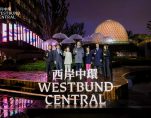
HONG KONG SAR – Media OutReach Newswire – 4 May 2026 – Hongkong Land Holdings Limited (“Hongkong Land” or the “Company”) marked a key milestone with the opening of Phase Two at Westbund Central, its flagship ultra-premium integrated commercial property in Shanghai’s Xuhui District that is one of the largest mixed-use developments in the world. This stage of the US$8 billion project’s rollout is complemented by its new “Enjoy Life” brand theme, reinforcing the district’s role as a dynamic environment for work, living and leisure.

Photo 1: (From left to right) Mr. Raymond Wong, Director & Head of Property Development, Westbund Central; Mr. John Simpkins, General Counsel, Hongkong Land; Ms. Alfreda Zeng, Chief Operating Officer, Ping An Real Estate; Mr. Stuart Grant, Chief Executive, Westbund Central; Ms. Gan Jin, Vice Chairman, Shanghai West Bund Development Group; Mr. Craig Beattie, Chief Financial Officer, Hongkong Land and Ms. Vera Wu, Director & Head of Commercial Property, Westbund Central.

The Phase Two commercial launch introduces a diverse mix of global first stores, designer labels, and flagship concepts that reinforce Westbund Central’s position as a new downtown in Shanghai. New tenants include international icons such as Issey Miyake, the multi-brand boutique SND, Leica Store & Gallery, artisanal Swiss chocolatier House of Läderach, and design houses HAY and Paulmann.

With a planned total gross floor area of more than 1.7 million square metres, Westbund Central is the Company’s largest-ever single investment and brings together a diversified commercial mix that includes more than 600 international retail and lifestyle brands, 180 food and beverage operators, more than 50,000 square metres dedicated to cultural and art facilities, as well as 650,000 square metres of premium Grade A offices that will house occupiers including globally renowned companies such as adidas and lululemon.

While Phase One centred on food and beverage, cafes, and sports and leisure facilities, Phase Two enhances the district’s prestige by focusing on designer lifestyle brands. Looking ahead, Phase Three will introduce a cluster of global luxury maison flagships to further boost the district’s international appeal. Around 12,000 square metres of retail space is already open, with an additional 30,000 square metres opening within this year.

Michael T. Smith, Group Chief Executive of Hongkong Land, said: “Westbund Central is a fresh and dynamic example of our strategic focus to develop ultra-premium, integrated commercial districts in Asia’s leading gateway cities. As Hongkong Land’s largest single investment to date and our flagship China property, Westbund Central is one of the most significant projects in the company’s portfolio and designed to deliver sustained long-term value.”

Stuart Grant, Chief Executive of Westbund Central, said: “Westbund Central is being shaped as Shanghai’s new downtown and we are incredibly proud to build one of the largest mixed-use properties in the world that redefines modern urban living. We are creating a globally renowned ‘city within a city’ where the finest quality office, retail, residential and hospitality components converge in a single vibrant destination where people can truly enjoy life.”

As further phases are delivered, Westbund Central will continue to reinforce its position as one of Shanghai’s most significant integrated commercial districts and a cornerstone of the company’s long-term growth strategy in its portfolio.
Hashtag: #HongkongLand

The issuer is solely responsible for the content of this announcement.

Westbund Central

Hongkong Land’s Westbund Central is the Group’s largest-ever single investment. Scheduled to complete in phases up until 2028, it is an US$8 billion development encompassing approximately more than 1.7 million sq. m. of prime mixed-use property strategically located at Shanghai’s Xuhui Waterfront. It is a flagship development of Hongkong Land’s prime commercial properties’ CENTRAL Series. The ultra-premium integrated commercial property includes 240,000 sq. m of retail space, 650,000 sq. m. of premium Grade A offices, 160,000 sq. m. of high-end waterfront luxury residences, two hotels (55,000 sq. m.) and over 50,000 sq. m. of cultural and art venues.

Hongkong Land

Hongkong Land is a major listed property development, investment and management group. It focuses on developing, owning and managing premium and ultra-premium mixed-use real estate in Asian gateway cities, featuring Grade A office, luxury retail, residential and hospitality products. With over US$50 billion in assets under management, Hongkong Land’s ultra-premium mixed-use real estate footprint spans over 1.97 million sq. m. lettable area in operation and 1.43 million sq. m. lettable area under development, with flagship mixed-use projects in Hong Kong, Singapore and Shanghai. Its properties hold industry leading green building certifications and attract the world’s foremost companies and luxury brands. Established in 1889, Hongkong Land takes a long-term view, investing significantly alongside its capital partners and concentrating its portfolio where it can create the most value for tenants, customers and investors. Hongkong Land Holdings Limited has a primary listing on the London Stock Exchange, with secondary listings in Singapore and Bermuda. Hongkong Land is a member of the Jardine Matheson Group.

  • Building upon its expertise in Europe, Rhenus is expanding its road freight solutions in Asia Pacific
  • The strategic move will see dedicated expertise and resources to better support the region’s demand for fast and reliable freight transportation options

SINGAPORE – Media OutReach Newswire – 4 May 2026 – With demand for road freight services across Asia Pacific rising, leading global logistics provider Rhenus Group has announced plans to further expand its road freight operations in the region. As part of its broader regional growth strategy, the company is strengthening cross-border trucking across Southeast Asia and key corridors between Greater China and Southeast Asia. Building on this, it is continuously integrating road with air and ocean freight, while scaling local distribution, sourcing and leveraging existing free trade zone warehousing capabilities.

As part of this expansion, Rhenus is investing in local capabilities to support individual market needs including the recent establishment of its Bukit Kayu Hitam Border Office in Malaysia, with full customs capabilities to support smoother cross-border movements.

Prem Anand Anandaverl, Regional Director of Cross Border Trucking Asia, Rhenus Logistics notes, “Our goal is to provide a seamless connectivity to the global network by reinforcing a comprehensive road freight service and continue to help businesses to move their goods across Asia efficiently and compliantly. Road Freight is playing an increasingly important role in building a resilient supply chain especially in this region.”

Asia Pacific to see high demand for road freight services

The global freight trucking market size [1] is projected to be valued at US$2.74 Tn in 2025 and is set to reach US$3.70 Tn by 2032, growing at a CAGR (Compound Annual Growth Rate) of 3.9%. Asia Pacific remains a key growth driver, supported by expanding industrial output, a large consumer base, and rapidly developing logistics infrastructure enabling both domestic and cross-border trade.

Achieving Sustainable Growth through Road Freight: Consistency, Scalability and Increasing Customer Value

With more than 150 owned and partner road freight locations in Europe, Rhenus currently operates in over 15 countries through a well-established network. The expansion of road freight services in Asia Pacific will enable the company to further integrate its’ end-to-end supply chain solutions, combining road freight solutions with air and ocean services to deliver more flexible and customized logistics solutions globally.

Ongoing investments in multilingual local teams, dedicated border infrastructure, and best practice transport management systems will support seamless cross-border operations, stronger customs and regulatory expertise across markets.

Leveraging its rail connections between Greater China and Europe, alongside a robust multimodal network spanning sea, land, and rail, the company aims to provide customers with greater flexibility and scalability in response to evolving supply chain demands. The company is also working with partners to improve CO₂ tracking and explore alternative fuel options, supporting more sustainable road freight operations.


[1] Based on analysis by Persistence Market Research

Hashtag: #Rhenus

The issuer is solely responsible for the content of this announcement.

About Rhenus

The Rhenus Group is one of the leading logistics specialists with global business operations and annual turnover amounting to EUR 8.2 billion. 39,000 employees work at 1,300 business sites in more than 70 countries and develop innovative solutions along the complete supply chain. Whether providing transport, warehousing, customs clearance or value-added services, the family-owned business pools its operations in various business units where the needs of customers are the major focus at all times.

VISHNU RAJA
RYO YAMADA
HITORI GOTOH
IKUYO KITA
Just in:
Ajman University MBA climbs to joint 13th regionally // Turkish Airlines adds Chengdu to mainland China services // Valarmathi restarts fast as teachers defy police // ONYX Hospitality Group Unveils Plans for Amari Samui Resort and Villas, Elevating Its Premium Resort Offering on Koh Samui // UAE crews sustain coastal oil removal as beaches reopen // EBANX and Eneba strengthen partnership in Latin America with 138% YoY growth in payment volume // Forged court directives trigger probe into website blocking // U.S. Democratic Leadership Starts Dialogue With Progressive Bloc For Joint Strategy // LANDMARK Presents ‘Destination CENTRAL’: A District-Wide Celebration Inviting Global Travellers to Explore the Dynamism, Luxury, and Soul of Central // Wizz Air half-year earnings sink as fuel costs surge // L’OCCITANE Celebrates 50 Years Of Provençal Craftsmanship With Holiday 2026 Collection // Crescent Enterprises venture arm funds Oyster Therapeutics development // Electric and hybrid interest rises at Sharjah car market // High Court orders scrutiny of Thachankary hospitalisation // Microsoft outage leaves Outlook and Teams users disconnected // Saudi fund assets forecast to cross $400 billion // DP World transports million containers through UAE corridors // How A Newly Elected Democratic Congress Could Reshape US–India Relations? // Yicura BioMed Advances Dual Capital and Industrial Strategy: Completes First Closing of Series B Financing Led by Gobi Partners // Ration dealers seek GPS aided grain deliveries //