News related to
Delhi

By Bhasha Singh New defence partnerships are emerging across the world. Their purpose is not merely to strengthen military capabilities but also to reduce dependence on other countries for weapons production and technology. On October 21, Türkiye, Pakistan, Indonesia and Qatar signed the Badr Memorandum of Understanding in Doha, the capital of Qatar. Under this […]

The article From Mecca To Badr: New Defence Alliances And The Questions Facing India appeared first on Latest India news, analysis and reports on Newspack by India Press Agency).

By Dr. Gyan Pathak Denotification of Jantar Mantar as protest site on 12 October 2026 has given anti-CEC and anti-SIR protesters to decentralize and widen the scope and ambit of the movement. The call for the nationwide street protest on October 23 given by the umbrella organization People Against SIR is likely to create numerous […]

The article October 23 Nationwide Anti-CEC Anti-SIR Protests Deepen Centre’s Dilemma appeared first on Latest India news, analysis and reports on Newspack by India Press Agency).

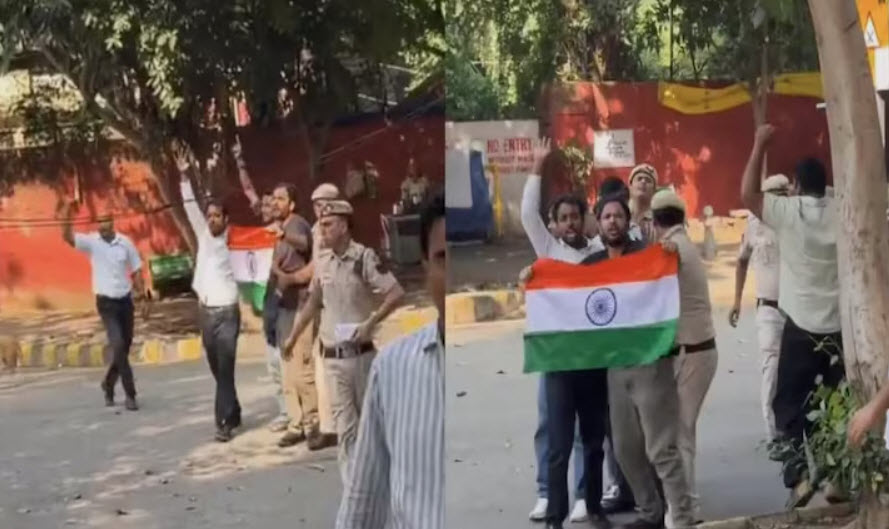
By Nilotpal Basu The struggle over defending the right to vote has spilled over to issues which are more fundamental to Indian nationhood. At the same time, it has also inevitably brought to fore the question of right to peaceful protest and public assembly. These are the issues which were once thought to have been […]

The article Asserting The Tricolour And Right To Protest Is A Positive Development appeared first on Latest India news, analysis and reports on Newspack by India Press Agency).

By K Raveendran The humble cockroach has entered Indian politics, and the establishment seems uncertain whether to arrest it, ridicule it or burn it. After years of projecting muscular leadership, electoral invincibility and civilisational confidence, the BJP now finds itself confronting an adversary that survives without television studios, corporate donations, elaborate manifestos or permission from […]

The article Cockroaches Survive BJP Extermination Strategies, Overwhelm Exorcist appeared first on Latest India news, analysis and reports on Newspack by India Press Agency).

By Dr. Gyan Pathak Though India has asserted at the UN General Assembly’s Third Committee, on the agenda item concerning the Working Group on Enforced Disappearance, that human rights should not be used as an instrument of political pressure or selective targeting of countries, India’s democratic institutions and International reputation is on stake on account […]

The article India’s Democratic Institutions And Global Reputation On Stake appeared first on Latest India news, analysis and reports on Newspack by India Press Agency).

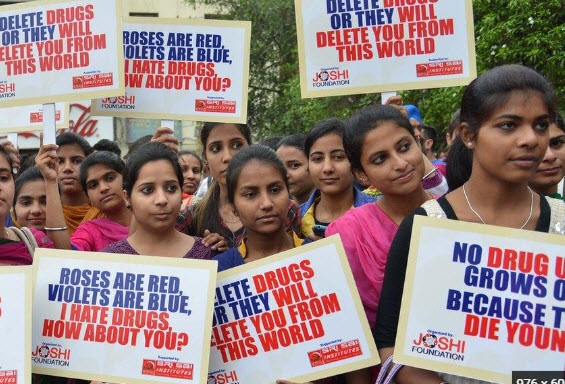
By Jag Mohan Thaken CHANDIGARH: Drug issue has boiled up the political and social atmosphere in the state of Punjab. Seeing the assembly elections on the head, all political parties are trying to get the waves in their own favour and targeting each other for the current deteriorated condition due to root level web of […]

The article Drug Issue Is Now A Potential Electoral Weapon Of BJP In Punjab Before 2027 State Polls appeared first on Latest India news, analysis and reports on Newspack by India Press Agency).

India’s space economy could expand fivefold to $45 billion within eight years as the government seeks more private investment, quicker regulatory clearances and stronger commercial demand, Space Minister Jitendra Singh has said.

Singh estimated the sector’s current value at approximately $9 billion and projected it could reach $40 billion to $45 billion over seven to eight years. Speaking at a New Delhi roundtable on Saturday, he said the next priority was building internationally competitive businesses rather than simply demonstrating technological capabilities.

The minister identified predictable customer demand, domestic and overseas capital, efficient approvals and sustainable business models as essential conditions for expansion. His remarks at the Bloomberg New Economy Forum placed commercial viability at the centre of the government’s efforts to enlarge the role of private companies in space activities.

Government departments could become anchor customers for emerging enterprises, Singh said, providing contracts that enable businesses to test technology and develop products for wider markets. Support for proof-of-concept projects would also help companies demonstrate practical applications before committing to larger production programmes.

Such arrangements could address a central challenge for space ventures: securing reliable revenue while facing substantial development costs and lengthy periods before projects generate returns. Singh argued that an identifiable customer base would encourage manufacturing investment and allow companies to establish more durable commercial operations.

He also called for defined timeframes for installation and export licences, alongside lower operating costs and better integration of supply chains. Regulatory improvements, he said, must produce practical results for companies seeking to enter the market or expand their activities.

Singh referred to goods and services tax measures affecting space products, saying policy changes should deliver tangible benefits to industry. He did not announce a fresh tax package or specify new deadlines for regulatory decisions during the discussion.

The forecast broadly matches the longer-term ambition set out by the Indian National Space Promotion and Authorisation Centre, or IN-SPACe, which has outlined a $44 billion space economy by 2033. Its strategy envisages $11 billion in exports, with opportunities spanning satellite communications, navigation, Earth observation, manufacturing and launch services.

That target remains an aspiration rather than an assured outcome. Delivering it would require sustained growth across multiple segments, with private operators securing customers and financing while navigating technical, regulatory and commercial risks.

Figures disclosed to Parliament in July illustrate both the expansion of private participation and the distance still to travel. Singh said cumulative private investment had reached $618.5 million by March 31, 2026, while $187 million had been reported during 2026. The government had granted 105 authorisations to non-government entities as of July 14.

Those authorisations are subject to national security and strategic considerations under IN-SPACe procedures. The government has said it is developing dedicated safety and security guidelines as commercial activity expands, reflecting the need to balance market access with oversight of sensitive technologies.

Singh said international partnerships could bring investment, technological expertise and access to overseas customers, while domestic capabilities remained important for strategic autonomy. He advocated closer cooperation among government agencies, private enterprises and foreign partners, particularly where collaboration could strengthen manufacturing networks and market access.

He pointed to satellite communications, geospatial services and Earth observation as areas where space technology already supports economic activity. Applications include infrastructure monitoring, agriculture, disaster management and defence, alongside services built around satellite data.

The minister highlighted government use of geotagging to monitor development projects, track implementation schedules and assist administrative clearances. He also cited space-based disaster information supplied to neighbouring countries, including Myanmar, Bangladesh and Sri Lanka.

The commercialisation programme follows the opening of space activities to private participation in 2019 and 2020, a change that enabled enterprises to work alongside public institutions. Singh said that cooperation had yielded results but that technical achievement alone would not guarantee commercial success. The distinction is significant for companies developing satellite hardware, data services and launch technologies: demonstrating that a system works is different from securing repeat orders at prices sufficient to sustain operations. Public procurement and export access could therefore influence investment decisions.

The roundtable, titled Space, Sovereignty and New Economy, included IN-SPACe promotion director Vinod Kumar and Aisha Bowe, founder and chief executive of STEMBoard and LINGO, a former NASA engineer who has flown with Blue Origin. Participants discussed investment, international cooperation and the challenge of converting national space capabilities into commercially viable enterprises.

Advertisements

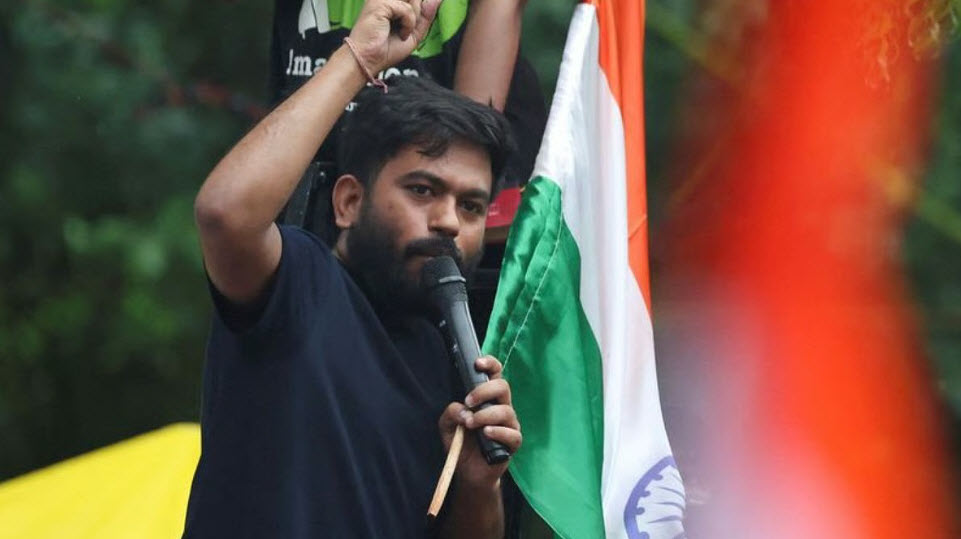
Cockroach Janta Party founder Abhijeet Dipke was due before a magistrate on Saturday after Delhi Police arrested him ahead of a protest against disputed electoral roll revisions, extending a confrontation between demonstrators and authorities in the capital. Police took Dipke into custody on Friday under preventive provisions intended to avert a breach of public peace. He was expected to appear before a Special Executive Magistrate, while the […]

By K Raveendran The Bharatiya Janata Party’s increasingly aggressive response to the agitation against Chief Election Commissioner Gyanesh Kumar reveals a political anxiety that its leaders are struggling to conceal. Behind the familiar display of confidence, accusations of opposition conspiracies and warnings about attempts to destabilise the government lies an uncomfortable reality: a movement that […]

The article BJP’s Bravado Betrays Its Fear Of Uprising Against Voter Disenfranchisement appeared first on Latest India news, analysis and reports on Newspack by India Press Agency).

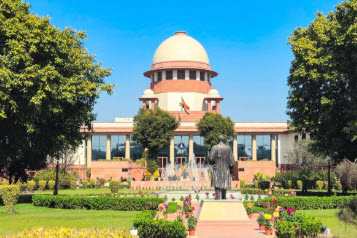
By Dr. Gyan Pathak Socio-political situation in India is worsening faster than anyone can handle it, even the Judiciary, which is seen as moving at comparatively slower pace in delivering justice in the fight between competing interests. “We hope better sense will prevail on everyone,” said Chief Justice of India (CJI) Surya Kant today October […]

The article Protests Against CEC, Scheming Government, And The Judiciary appeared first on Latest India news, analysis and reports on Newspack by India Press Agency).

By Arun Srivastava Increased aggressiveness and confrontationist attitude of Union home minister Amit Shah —musing police and state machinery, even denying the Supreme Court’s directive to maintain restraint — to curb students’ protests, has caused immense worry in the social and political circles. Apparently, it is being perceived as a sign of the saffron ecosystem […]

The article Behind Modi-Shah Turning Confrontationist Lies Fear Of Losing Ground appeared first on Latest India news, analysis and reports on Newspack by India Press Agency).

By Rahil Nora Chopra The Leader of Opposition in the Lok Sabha, Rahul Gandhi, on Thursday requested President Droupadi Murmu to ask the Union Government to reconsider Dushyant Gautam’s appointment as Sikkim governor and defer his assumption of office until the CBI completes its investigation into the alleged VIP angle in the 2022 murder of […]

The article Rahul Urges President Murmu To Reconsider Sikkim Gov’s Appointment appeared first on Latest India news, analysis and reports on Newspack by India Press Agency).

By Dr. Gyan Pathak Prime Minister Narendra Modi’s government has appointed four new governors on October 12, but serious controversies have instantly erupted on two of them – Governor for Odisha Braj Mohan Ram and Governor for Sikkim Dushyant Gautam. Governor of Odisha has betrayed the political motif of the Modi government, while mother and […]

The article Controversies Over Two Governor Designates Are Too Serious To Ignore appeared first on Latest India news, analysis and reports on Newspack by India Press Agency).

Bengaluru-based Flying Wedge Defence & Aerospace has unveiled a full-scale static prototype of its FWD Supreme autonomous combat aircraft in New Delhi, while preparing a lighter demonstrator for its maiden flight.

The company presented the programme on Tuesday as a proposed family of artificial intelligence-piloted aircraft intended for surveillance, strike and coordinated combat missions. Its smaller FWD Supreme Lite has completed taxi trials, founder Suhas Tejaskanda said, but no first-flight date has been confirmed.

The unveiling marks a further stage in the company’s effort to move from aircraft designs to flight-tested hardware. A static prototype demonstrates the proposed configuration rather than operational performance, and the aircraft’s advertised speed, range and combat capabilities remain development targets.

Flying Wedge envisages two principal versions. The approximately 250kg Supreme Lite is intended to test autonomous navigation, flight control and cooperation between aircraft. The larger Supreme Heavy is designed for longer-range intelligence, surveillance and reconnaissance operations, precision strikes and missions conducted alongside other aircraft.

Company specifications for the heavier aircraft describe a flying-wing configuration measuring roughly 10 metres across, with an internal weapons bay and a payload of about 350kg. The proposed maximum speed is Mach 0.8 to 0.85, with cruising speeds of 500 to 600 kilometres an hour.

Flying Wedge also projects a range exceeding 1,500km and endurance of more than two hours, supported by satellite communications. Those figures have not been validated through publicly documented flight trials of the Supreme Heavy. Its propulsion and systems integration will be crucial to determining whether the design can meet them.

The company calls its operating concept the Mobbing Doctrine. It envisages groups of autonomous aircraft exchanging information and coordinating decisions during missions, rather than relying exclusively on individual high-value combat platforms. Under the concept, surviving aircraft would continue assigned tasks if others were lost.

Such coordination would require dependable communications, reliable target identification and systems capable of operating when links are disrupted. Flying Wedge says artificial intelligence will support navigation, sensor processing and mission execution, although the extent of human oversight during weapons employment has not been established in publicly available technical documentation.

Tejaskanda has described affordability and operational relevance as central aims of the programme. The company is also seeking foreign participation in an India-led development and manufacturing initiative called Operation Triple Seven. Details of binding investment commitments, production arrangements and customer orders have not been publicly established.

A Anbarasu, director general for acquisition at the Ministry of Defence, linked the initiative to the government’s emphasis on joint operations, domestic manufacturing and innovation. His remarks signalled policy interest in such technologies but did not amount to confirmation of a procurement contract or an operational requirement for the aircraft.

Flying Wedge has outlined plans to increase domestically sourced components and has identified the Defence Research and Development Organisation’s Manik engine as a potential propulsion option. The company has indicated that the proportion of locally sourced content could depend substantially on the engine eventually selected.

Its proposed navigation technologies include visual odometry, which estimates an aircraft’s movement by comparing successive camera images. The approach could supplement conventional satellite navigation where signals are degraded or unavailable, although its effectiveness in military conditions would need to be demonstrated through testing.

The Supreme programme joins international efforts to develop uncrewed aircraft capable of cooperating with piloted fighters or carrying out assigned missions autonomously. Such projects differ widely in maturity, from conceptual designs and ground tests to aircraft already conducting experimental flights. Their development does not establish that fully autonomous combat operations have been approved for routine military use.

Flying Wedge previously released footage of the Supreme Lite technology demonstrator undergoing development and ground preparations. Its earlier target of a first flight during the third quarter of 2026 has passed, making completion of taxi trials the clearest publicly stated milestone ahead of airborne testing.

The company separately develops Kaalbhairav unmanned aircraft and smaller interception and loitering-munition systems. Those products form part of its broader portfolio but should not be confused with the Supreme fighter programme, whose larger aircraft has yet to demonstrate its stated performance in flight.

Flying Wedge operates from Bengaluru’s Electronic City area. Its published product portfolio includes surveillance aircraft, interceptor drones and compact loitering munitions, alongside the proposed Supreme family. The company also lists agricultural unmanned aircraft among its products, reflecting its involvement in civilian applications.

By Arun Srivastava BJP’s second in command, Amit Shah has been aggressively deploying tactical counters and localized statecraft to retrieve his long-standing “Chanakya” reputation following recent legislative and coalition challenges. While political shifts after the 2024 Lok Sabha elections forced a more collaborative alliance approach, his October 13 observation that the Congress party will face […]

The article Amit Shah’s Prediction Of Big Win For BJP In 2029 Lok Sabha Polls Has To Be Taken Seriously appeared first on Latest India news, analysis and reports on Newspack by India Press Agency).

By Dr. Gyan Pathak “Jantar Mantar has been reclaimed! We have entered Jantar Mantar and now we are being detained! But this is a message to all of us young gen! We can do it!” said CJP’s chief spokes person Saurav Das in a social media post after he was detained on Tuesday October 13. […]

The article Anti-CEC Protests To Escalate Further In The Country appeared first on Latest India news, analysis and reports on Newspack by India Press Agency).

By Arun Srivastava Antonio Gramsci in his Prison Notebooks (written between 1929 and 1935) explains how a ruling class maintains power not through military or physical force (coercion), but through ideology, culture, and consent (hegemony). He argued that the capitalist state is divided into two spheres: political society (which uses force, like the police and […]

The article Full Collaboration Of INDIA Bloc And CJP Needed To Fight Modi Govt appeared first on Latest India news, analysis and reports on Newspack by India Press Agency).

By Dr. Gyan Pathak Hundreds of protesters ultimately were able to reach near Jantar Mantar on October 10 to protest against CEC Gyanesh Kumar despite the Union Government’s unprecedentedly locking off the venue and the entire Central Delhi, heavy deployment of police force in entire Delhi, internet shut down, erecting blockades across Delhi and its […]

The article Opposition Bloc Is Upbeat Despite Suppression Of Its Dharna By Delhi Police appeared first on Latest India news, analysis and reports on Newspack by India Press Agency).

By K Raveendran India’s electoral democracy has reached a critical juncture where judicial intervention can no longer remain confined to procedural scrutiny and expressions of concern. The mounting controversy surrounding Chief Election Commissioner Gyanesh Kumar, the unprecedented scale of voter deletions under the Special Intensive Revision (SIR), and the government’s increasingly coercive response to public […]

The article Supreme Court Must Act Decisively To Restore Electoral Democracy appeared first on Latest India news, analysis and reports on Newspack by India Press Agency).

Delhi police detained more than 1,500 people, including prominent youth movement leaders, on Saturday as authorities imposed extensive security restrictions across the capital to prevent a demonstration demanding the resignation of Chief Election Commissioner Gyanesh Kumar.

Cockroach Janta Party (CJP) founder Abhijeet Dipke and senior organisers Saurav Das and Ashutosh Ranka were detained at Indira Gandhi International Airport after arriving from Mumbai. Their detention followed overnight police operations targeting supporters preparing to assemble at Jantar Mantar.

Thousands of police and paramilitary personnel were deployed across New Delhi, with barricades, vehicle inspections, transport restrictions and mobile internet disruptions affecting movement through several districts. Security arrangements extended to railway stations, major intersections and roads leading towards the proposed demonstration.

Police maintained that the gathering had not received official permission and that preventive measures were necessary to protect public order. Organisers accused authorities of attempting to suppress peaceful dissent over disputed revisions to electoral rolls.

The protest, organised under a campaign to safeguard democracy, sought Kumar’s removal following allegations that the Election Commission’s Special Intensive Revision of voter lists had excluded substantial numbers of eligible voters.

The commission has rejected accusations of partisan manipulation, maintaining that electoral roll verification is intended to identify inaccuracies and ensure that voter registers remain accurate. It has also pointed to procedures allowing eligible citizens to challenge exclusions and seek reinstatement.

Police confirmed that detentions occurred across several districts, including areas near transport terminals and Delhi’s borders. The number of people detained increased throughout Saturday as officers intercepted groups attempting to reach central Delhi.

Dipke, Das and Ranka were subsequently taken to separate locations. Dipke was moved towards Gurugram, Ranka to Dwarka and Das to another location within Delhi, according to information emerging after their detention.

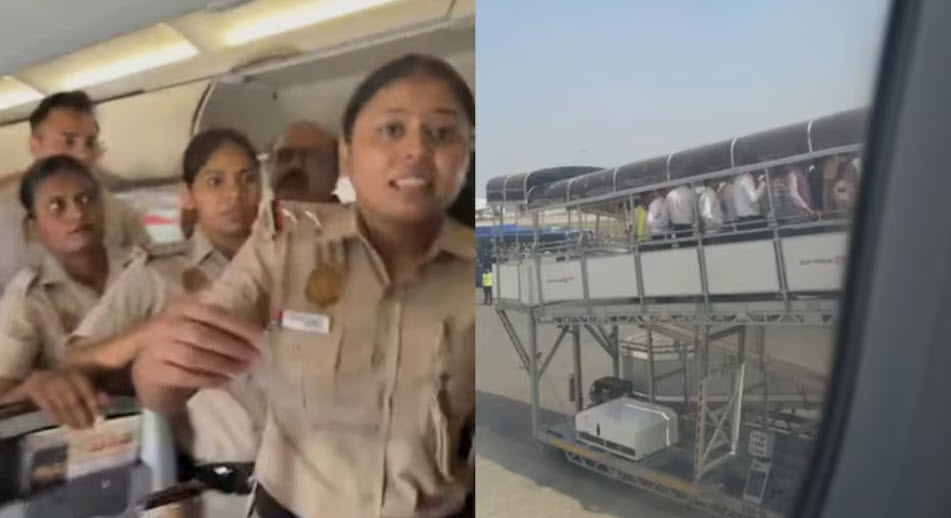
The CJP condemned the action against its leadership and maintained that its supporters were exercising their constitutional right to protest. Videos circulated by the organisation showed its leaders confronting officers aboard an aircraft and raising slogans before being escorted away.

The Delhi Police had refused permission for the Jantar Mantar gathering, citing concerns about public safety, traffic disruption and compliance with regulations governing demonstrations. Authorities said previous conduct by organisers had contributed to their assessment of potential risks.

The Union Ministry of Home Affairs had alerted state governments and Union Territories to possible disturbances associated with the planned mobilisation. Its communication called for coordination with Delhi Police, intelligence sharing and preventive action under applicable laws.

Security personnel established checkpoints along major approaches to the capital, while restrictions at metro stations complicated journeys for commuters. Traffic diversions were introduced around sensitive government installations and routes associated with the proposed rally.

Mobile internet services were suspended in parts of central Delhi, adding to disruption caused by transport controls. Railway operations also faced restrictions, with some services delayed or cancelled amid the security arrangements.

Opposition politicians criticised the detentions, arguing that denying permission for the gathering and restricting movement undermined the right to peaceful assembly. Government supporters defended the precautions as necessary to prevent disorder and disruption to essential services.

The controversy centres on the Special Intensive Revision, an electoral verification exercise that opposition parties allege has resulted in the removal of legitimate voters from official lists.

Critics have cited figures suggesting that approximately 130 million electoral entries were affected by revisions, although the circumstances and validity of individual deletions remain contested. The figure does not establish that an equivalent number of eligible citizens were unlawfully disenfranchised.

Opposition parties contend that the exercise could disadvantage particular communities and alter electoral competition. The Election Commission denies political bias and maintains that verification procedures operate within the established electoral framework.

The dispute has sharpened scrutiny of election administration ahead of state assembly contests scheduled for 2027. Opposition representatives have demanded greater transparency concerning deletions, verification procedures and opportunities for affected voters to appeal.

The CJP has attracted support from students, activists and digital campaigners who have questioned the handling of electoral records. Its mobilisation has also drawn participation from opposition groups, although their political affiliations and demands are not identical.

Police deployments included specialised units assigned to crowd management and the protection of sensitive locations. Officers used loudspeakers to warn prospective demonstrators against entering restricted areas without authorisation.

Jantar Mantar, a designated venue for public demonstrations near Parliament, remained under heavy security throughout Saturday. Small groups nevertheless attempted to assemble at scattered locations, prompting further interventions by police personnel.

Authorities also monitored movement around accommodation facilities and transport hubs used by visitors arriving for the demonstration. Additional security checks remained in place at major entry points to central Delhi.

By Dr Arun Mitra The unprecedented security arrangements in Delhi, which have virtually turned the capital into a cantonment, are reminiscent of the British Raj, when colonial rulers resorted to brute force to suppress popular movements and crush dissent. The arrests of leaders and activists of CJP, AISF, SFI and AISA, along with students and […]

The article In Delhi, The Battle Is Between The Powerful State And Its Citizens appeared first on Latest India news, analysis and reports on Newspack by India Press Agency).

New Delhi was placed under heightened security on Saturday as authorities imposed sweeping restrictions to prevent a mass demonstration by the Cockroach Janta Party (CJP), which is demanding the resignation of Chief Election Commissioner Gyanesh Kumar over controversial electoral roll revisions.

Thousands of police and paramilitary personnel were deployed across the capital, with barricades, surveillance equipment and detention facilities positioned around Jantar Mantar, where the youth-led movement planned to assemble despite being denied permission.

Delhi Police strengthened checkpoints at major entry routes, restricted access to sensitive areas and warned that unauthorised gatherings would face action. Security arrangements included drones, closed-circuit television cameras, body-worn cameras and additional personnel assigned to monitor crowd movements.

The authorities prepared for approximately 7,000 demonstrators, although organisers have claimed substantially wider support. Police officials said their priority was maintaining public order while preventing confrontations between protesters and security personnel.

The Ministry of Home Affairs instructed police chiefs across states and Union Territories to remain vigilant, citing possible law-and-order consequences arising from the mobilisation. Union Home Secretary Govind Mohan communicated the concerns after Delhi Police rejected the organisers’ application.

Police said the request had not complied with the prescribed ten-day advance notice requirement. Authorities also cited alleged failures to follow lawful instructions during an earlier demonstration and concerns about traffic disruption and public safety.

CJP representatives challenged the restrictions, arguing that peaceful assembly was a constitutional right. Founder Abhijeet Dipke maintained that the demonstration would proceed despite the security measures, accusing the government of attempting to suppress public opposition.

The planned protest centres on allegations that the Election Commission’s special intensive revision of electoral rolls has resulted in widespread exclusion of eligible voters. Organisers accuse the commission of conducting the exercise in a manner that benefits the ruling Bharatiya Janata Party.

The Election Commission and the BJP have rejected allegations of electoral manipulation. The dispute has nevertheless drawn opposition parties, student organisations and civil society campaigners into demonstrations demanding greater transparency and accountability.

The confrontation has intensified following claims by opposition groups that more than 130 million names were removed from electoral registers during the revision exercise. The figure remains politically contested, while the commission maintains that electoral roll verification follows established procedures.

Security officials said approximately 35,000 police and paramilitary personnel were available for deployment. Additional forces were mobilised from outside Delhi, while officers established multiple layers of security around government buildings, transport hubs and approaches to the proposed protest venue.

Preventive detentions began before the scheduled gathering. Police acknowledged detaining hundreds of people as part of security operations, while CJP leaders alleged that substantially larger numbers of supporters had been stopped or taken into custody across several states. The organisers’ figures could not be independently established.

Transport restrictions compounded the disruption. Delhi Metro authorities curtailed access to several stations, while railway services connecting the capital with neighbouring states faced cancellations and rescheduling. The restrictions affected commuters travelling for purposes unrelated to the demonstration.

Mobile internet access was also restricted in parts of central Delhi, alongside heightened monitoring of roads leading towards government offices. The measures attracted criticism from civil liberties campaigners concerned about their impact on communication and freedom of movement.

The Supreme Court’s intervention over the extent of transport restrictions prompted authorities to reconsider some closures, reflecting concerns about the consequences for ordinary passengers. Police nevertheless retained powers to regulate access to areas considered vulnerable to large gatherings.

Delhi Traffic Police issued an advisory identifying 30 locations where diversions could be imposed from 6 am. These included Connaught Place, Mandi House, Dhaula Kuan, Patel Chowk and roads approaching Jantar Mantar.

Commuters were advised to allow additional travelling time, particularly when heading towards railway stations, interstate bus terminals and the airport. Traffic arrangements were to be adjusted according to conditions on the ground.

Joint Commissioner of Police Madhur Verma urged officers to exercise restraint and maintain professional standards while handling demonstrators. The instructions emphasised minimum force, discipline and the protection of public safety during crowd-control operations.

Student organisations supporting the CJP maintained that their campaign would remain peaceful. The All India Students’ Association and other groups joined calls for accountability over electoral roll changes, while organisers appealed to participants to avoid confrontation.

Police also sought information from authorities outside Delhi about planned journeys, accommodation arrangements and organisers coordinating the mobilisation. Intelligence-sharing arrangements covered railway stations, road transport routes and potential assembly points.

Hotels and guest houses around central Delhi were asked to restrict bookings where necessary, while security personnel monitored arrivals at transport terminals. Police established designated detention facilities to accommodate people taken into preventive custody.

The traffic advisory identified additional possible restrictions around Lodhi Road, Sardar Patel Marg, Moti Bagh and the Ram Manohar Lohia Hospital roundabout, with diversions subject to operational assessments by traffic officers.


By Rahil Nora Chopra Leader of Opposition in the Lok Sabha Rahul Gandhi stole the spotlight with a display of athleticism, seamless climbing over a police barricade during the Opposition MPs’ march to the Election Commission headquarters. Dressed in his trademark white collared T-shirt, Rahul stood atop the barricade, waving the Tricolour in the face […]

The article Anti-Election Commission Protest: Athletic Rahul Steals The Show appeared first on Latest India news, analysis and reports on Newspack by India Press Agency).

Arabian Post Staff -Dubai Lufthansa Group, IndiGo, Air India and Akasa Air have suspended flights to Riyadh following renewed threats from Yemen’s Houthi movement and its claim of a ballistic missile attack on the Saudi capital’s international airport. The cancellations announced on Thursday disrupted international services as airlines assessed security conditions around King Khalid International Airport, where explosions and smoke were reported following the alleged attack. Lufthansa […]

VISHNU RAJA
RYO YAMADA
HITORI GOTOH
IKUYO KITA