Software developers across close to 100 organisations have been targeted by a likely North Korea-linked hacking operation that used fake recruitment and code-review tasks to steal cryptocurrency, browser credentials and wallet data. The campaign, tracked by security researchers as UNK_DeadDrop, unfolded over April and May and reached targets in technology, finance, cryptocurrency, education, business services and other sectors. More than 250 phishing emails were sent during a […]
Citrini Research has placed Hyperliquid among its more compelling crypto ideas, arguing that the decentralised exchange stands apart from much of the digital asset market because it generates meaningful cash flow and channels a large share of trading fees into token buybacks. The research firm’s attention carries unusual weight after its February essay on artificial intelligence and market risk helped trigger a sharp sell-off across technology and […]
A powerful offshore earthquake struck the southern Philippines early Monday, killing at least 12 people, damaging buildings in General Santos City and sending coastal residents racing to higher ground after tsunami waves hit parts of Mindanao. The magnitude was placed at 7.8 by global monitors, while domestic bulletins initially listed the tremor at 7.4. The quake struck at 7.37am local time, with its centre at sea near […]
BEML Ltd. is chasing a sharp expansion in orders this fiscal year, targeting a book of more than ₹31,000 crore as the state-run manufacturer leans on urban rail, high-speed train projects and defence contracts to move beyond its traditional heavy-equipment base.
The Bengaluru-headquartered company’s plan marks an attempt to nearly double a pipeline that has stood at about ₹16,600 crore, with management betting that public transport expansion and defence procurement will support multi-year growth. Rail and metro projects are expected to account for the largest share of the order flow, while defence and aerospace are being positioned as higher-value engines for future revenue.
The target comes as BEML’s three core businesses — rail and metro, defence and aerospace, and mining and construction — are being reshaped by government capital spending, local manufacturing mandates and the need to expand urban transport networks. The company, a Schedule A enterprise under the Ministry of Defence, has supplied metro coaches, passenger railway coaches, high-mobility vehicles, trailers, military wagons and mining equipment across its operating history.
Urban rail is the clearest growth driver. BEML has supplied more than 1,650 metro cars and is among the key domestic rolling-stock makers for metro corporations. Bengaluru Metro has emerged as a major customer, with BEML delivering the first driverless-ready train set for the Blue Line in June and continuing deliveries for the Pink Line. The Blue Line, linking Central Silk Board and KR Pura along the Outer Ring Road, is intended to serve one of Bengaluru’s busiest technology and business corridors once commercial operations begin after testing.
The company also holds a top-up order worth ₹414 crore from Bangalore Metro Rail Corporation for six additional driverless metro trainsets, raising the project scope to 66 trainsets comprising 396 cars. The order is tied to Phase 2 of the city’s metro expansion and strengthens BEML’s position in communications-based train control rolling stock, where metro operators are gradually moving towards higher levels of automation.
High-speed and semi-high-speed rail have added another layer to the company’s growth story. BEML has secured work linked to Vande Bharat sleeper trainsets and an Integral Coach Factory contract worth about ₹866 crore for high-speed trainsets. These projects are strategically important because they move BEML into technologically demanding segments where design, testing, safety certification and execution discipline will matter as much as manufacturing scale.
Defence orders are also providing support. The company secured a ₹590 crore contract for trawl assemblies from the Ministry of Defence in April, adding to a portfolio that includes ground-support vehicles, high-mobility vehicles, trailers, pontoon bridge systems and armoured recovery vehicles. BEML says it has supplied more than 8,500 high-mobility vehicles, over 3,200 trailers and military wagons, and more than 330 pontoon bridge systems to defence services.
Management is seeking to convert that installed base into repeat orders while moving into more sophisticated defence and marine systems. Partnerships with Bharat Forge, Data Patterns, STX Engine and Dragflow point to a strategy of widening technology access in areas such as advanced defence systems, marine engines and dredging solutions. The challenge will be to translate memoranda and strategic tie-ups into executable contracts with predictable margins.
BEML’s ambitions are being helped by a policy environment that favours domestic procurement, import substitution and local value addition. Its own disclosures highlight high levels of indigenisation in several product lines, including defence products, high-mobility vehicles and railway products. Metro cars remain a more demanding segment, where local content is rising but complex components and systems integration continue to require careful supply-chain management.
Execution remains the central risk. A larger order book does not automatically translate into stronger earnings if deliveries are delayed, input costs rise or contract terms compress margins. Rolling-stock projects can involve long testing cycles, penalty clauses and dependence on civil works progress by metro operators. Defence contracts also involve strict acceptance protocols and staggered delivery schedules, making cash-flow management critical.
Competition is another factor. BEML faces domestic and global rivals across rail and defence manufacturing, including companies with deeper private-sector execution flexibility or established international technology partners. Metro corporations and rail agencies have become more demanding on cost, localisation, energy efficiency and delivery timelines, forcing suppliers to invest steadily in design, tooling and quality systems.
Financially, the company is entering the expansion phase with investor interest tied closely to order visibility. BEML shares have benefited from defence and rail announcements, though valuation expectations remain sensitive to quarterly execution and margin delivery. The December quarter showed revenue growth, but the larger test will be whether the expanding pipeline can be converted into sustained earnings rather than headline order wins.
Microsoft has warned that Anthropic’s Claude Code GitHub Action could expose CI/CD workflow secrets when AI agents process untrusted GitHub content, raising fresh concerns over how autonomous coding tools operate inside software delivery pipelines. The issue centres on the way Claude Code Action handled file-reading capabilities inside GitHub Actions runners. While subprocess paths such as Bash were subject to environment scrubbing and sandboxing controls, the agent’s Read […]
SAN MATEO/HANOI – Media OutReach Newswire – 8 June 2026 – VinDynamics, a robotics technology company within Vingroup, and Skild AI, a company developing foundation models for robotics, today announced the signing of a strategic Memorandum of Understanding (MOU) to collaborate on humanoid robotics and embodied AI. The move marks another step in VinDynamics’ strategy to accelerate humanoid robotics development through global collaboration and advanced technology partnerships.
Representatives of VinDynamics and Skild AI at the signing ceremony of a Memorandum of Understanding (MoU) in San Mateo, California, USA.
Under the MOU, the collaboration will focus on embodied AI research, robot manipulation, sim-to-real transfer, edge AI deployment, and validation of humanoid systems in real-world environments. Both companies will also explore opportunities to integrate The Skild Brain, Skild AI’s omnibodied AI software, into VinDynamics’ humanoid robots. The Skild Brain runs directly on robotic hardware and enhances the adaptability, efficiency, and reliability of humanoid systems in practical applications.
Additional areas under discussion may include knowledge exchange related to robot intelligence and real-world deployment, as well as potential cooperation in software, model, and hardware development, alongside the potential manufacturing of humanoid robots at scale.
The partnership brings together VinDynamics’ robotics engineering, manufacturing capabilities, and real-world deployment ecosystem with Skild AI’s foundation model technology. Together, the companies aim to accelerate the development and deployment of humanoid robots capable of operating in complex and dynamic environments, while supporting growing demand for intelligent robotic systems across industries including manufacturing, logistics, hospitality, and commercial services.
Prof. La Manh Hung, President, VinDynamics, said: “This partnership represents an important step for VinDynamics as we continue building scalable humanoid robotics platforms for real-world deployment. Skild AI brings the most exciting advances in embodied AI today. Combined with our robotics platform and manufacturing capabilities, we believe this partnership can accelerate the deployment of humanoid robots in complex environments.”
Mr. Deepak Pathak, Co-Founder and CEO of Skild AI, said: “The future of robotics depends on combining scalable physical systems with adaptable, general-purpose intelligence. VinDynamics brings strong engineering capabilities, manufacturing scale, and access to real-world deployment environments through the Vingroup ecosystem. We are excited to work together to advance embodied AI for practical applications.”
Established in September 2025, VinDynamics is a pioneering company in the field of humanoid robotics within Vingroup. The company is dedicated to developing versatile, human-centric robots capable of seamless integration into everyday life, with the scalability to support global deployment.
Hashtag: #VinDynamics
The issuer is solely responsible for the content of this announcement.
About VinDynamics
VinDynamics is a technology company under Vingroup, dedicated to the research, development, and manufacturing of advanced robotics and automation solutions, particularly in the field of humanoid robots. Leveraging cutting-edge technologies such as artificial intelligence, mechatronics, and motion control, VinDynamics aims to deliver intelligent, safe, and cost-effective robotic products that enhance productivity and improve quality of life.
Founded in 2023, Skild AI builds a general-purpose foundation model for robotics. Backed by SoftBank Group, NVIDIA Ventures, Jeff Bezos, Lightspeed, Coatue, Sequoia Capital, Felicis, and others, the company is valued at over $14 billion. Offices in Pittsburgh, the San Francisco Bay Area, and Bengaluru.
Arabian Post Staff -Dubai Etihad Airways is ordering more widebody aircraft as the Abu Dhabi carrier moves to restore momentum across long-haul markets and lift flying by about 8 per cent from year-earlier levels by 15 June. Chief executive Antonoaldo Neves said the airline was buying widebody planes in double digits, though he declined to identify the manufacturer, aircraft type or exact number. The remarks, made on […]
Luxury hair and scalp rejuvenation pioneer Sheer Reprime invests nearly HK$10 million to deploy next-generation, FDA and CE-certified hair restoration and scalp rejuvenation technologies.
HONG KONG SAR – Media OutReach Newswire – 8 June 2026 – Celebrating eight years of clinical excellence, premier hair and scalp rejuvenation brand Sheer Reprime today announced the grand opening of its ultra-luxury flagship center on Wellington Street, Central. Representing a strategic investment of nearly HKD10 million, the expansive facility positions Sheer Reprime at the epicenter of Hong Kong’s elite financial and cultural district. This expansion marks a new era of medical-grade, advanced hair restoration and scalp rejuvenation.
Hair and scalp rejuvenation pioneer Sheer Reprime expands into Hong Kong’s Wellington Street with a flagship center.
Located at 50 Wellington Street, adjacent to the iconic Yung Kee restaurant, the near-full-floor flagship features private treatment suites engineered for maximum comfort and discretion. The venue is optimized for busy and successful individuals, stars and celebrities seeking world-class clinical trichology with exceptional hospitality.
Bridging Follicle Biology and Biophotonics
Sheer Reprime’s expansion directly addresses a surging global market demand for scientifically backed hair-loss solutions, particularly as stress and lifestyle factors accelerate the onset of premature thinning among younger demographics.
“Our expansion into the heart of Central marks a watershed moment for Sheer Reprime,” said a Brand Spokesperson. “The modern consumer demands rigorous, evidence-based hair and scalp treatments. Sheer Reprime is built at the intersection of Follicle Biology and Biophotonics. Our multi-million-dollar investment into an advanced clinical instrumentation allows us to optimize the scalp microenvironment at a cellular level, far surpassing the limitations of older generation treatments.”
Internal clinical metrics validate the brand’s scientific approach. In a recent study tracking 100 urban professionals over a 12-week regimen of Sheer Reprime’s laser hair rejuvenation therapy, participants demonstrated an average increase of 22% in hair shaft thickness and an 18% increase in active follicular density.
Departing from standard industry practices focused merely on surface-level scalp cleansing, Sheer Reprime introduces its proprietary Connotation Therapy. This multi-modality framework combines technologies which have received FDA, Medical CE, and EU MDR (Medical Device Regulation) certifications. Amongst them SLD LLLT hair loss treatment, which delivers biophotonic laser energy 3–5mm beneath the scalp surface to revive the follicular base. Winback Tecar Therapy and 500kHZ cellular radio frequency, which utilizes deep thermal energy to enhance localized microcirculation across the head, neck, and shoulders, maximizing nutrient and oxygen delivery to the hair bulb while flushing out metabolic waste and DHT (dihydrotestosterone).
The launch of Sheer Reprime’s Wellington Street flagship redefines the luxury trichology landscape in Hong Kong, merging clinically proven regenerative technologies with an unparalleled bespoke experience.
Hashtag: #sheerreprime #煥光活髮
The issuer is solely responsible for the content of this announcement.
About Sheer Reprime
Sheer Reprime is a premier scientific hair and scalp rejuvenation brand. By fusing Follicle Biology with Biophotonics, the brand transcends the boundaries of traditional hair care. Operating its multi-million-dollar flagship in Central, Sheer Reprime deploys FDA and CE-certified medical-grade technologies to lead the global industry into the era of cellular hair restoration. For more information, visit: http://www.reprime.hk
Dubai’s Roads and Transport Authority has completed 90 per cent of the new Dubai Harbour access bridge, moving the 1.5-kilometre link closer to a phased opening that is expected to cut travel time between Sheikh Zayed Road and the waterfront district from 12 minutes to three. The bridge, being developed with Shamal Holding, will provide direct entry and exit between Sheikh Zayed Road and Dubai Harbour, one […]
Arabian Post Staff -Dubai Saudi Arabia has opened talks with Russia’s Sistema investment group in St Petersburg as Riyadh seeks to deepen industrial partnerships, localise advanced technologies and strengthen supply chains under its wider economic diversification programme. Minister of Industry and Mineral Resources Bandar Alkhorayef met senior Sistema executives during a visit to the Russian city, with discussions centred on cooperation in high-priority industrial sectors and the […]
Thousands of Central Board of Secondary Education Class 12 students have pressed for grace marks and a waiver of post-result fees after complaints of evaluation errors, portal glitches and delayed access to answer sheets placed their college admissions under fresh strain.
The demand has gathered pace across student networks, parent groups and coaching circles after candidates reported unusually low marks, unchecked answers, blurred scanned copies, payment failures and difficulty accessing the board’s post-result services. Many students say the burden of paying for verification and re-evaluation should not fall on candidates if the discrepancies arose within the evaluation system.
The dispute is centred on the board’s On-Screen Marking system, introduced for Class 12 answer books in the 2026 main examinations. CBSE has described the system as a technology-led reform intended to improve standardisation, accuracy, confidentiality and speed in evaluation. Students and parents, however, argue that the transition has exposed gaps in implementation at a time when even small changes in marks can affect eligibility, merit lists, counselling and scholarship decisions.
By June 5, CBSE had received more than 60,000 applications for verification and re-evaluation from Class 12 students across the country. The volume of requests has underlined the scale of unease after the declaration of results, particularly among students applying for engineering, medicine, commerce programmes and overseas universities, where documentation deadlines can be tight.
CBSE reduced the cost of post-result services after concerns were raised over access and affordability. The fee for obtaining a scanned copy of an evaluated answer book was cut from ₹700 to ₹100. The verification fee was lowered from ₹500 to ₹100, while the re-evaluation charge was reduced from ₹100 to ₹25 per question. The board has also said the fee will be refunded if marks increase after re-evaluation.
Students seeking redress must first obtain their scanned answer sheets before applying for verification or re-evaluation in the relevant subject. Applications are being handled through the official post-result portal, with Aadhaar-based verification added for security. CBSE has said answer sheets are available in candidate accounts and may also be sent to registered email addresses.
The fee reduction has not ended the dispute. Students argue that a refund after marks increase does not address the wider issue of upfront cost, uncertainty and loss of admission time. Families applying in multiple subjects may still have to pay for several stages of the process, while those waiting for revised marks risk missing cut-off dates at universities and professional institutions.
Technical concerns have widened the controversy beyond marks alone. CBSE acknowledged vulnerabilities linked to a portal used for scanned answer sheets after claims that answer booklets and examination papers had been exposed through an unsecured cloud storage route. The board said cybersecurity professionals from government agencies and IITs were being deployed to strengthen digital assets and move systems to a safer infrastructure.
The episode has also triggered questions about the service provider handling the digital evaluation process. Coempt Edutek Private Limited, a Hyderabad-based company associated with the On-Screen Marking framework, has come under scrutiny as students, parents and political figures call for greater transparency in the tendering, scanning, storage and review process. CBSE has maintained that the digital system includes quality checks and is meant to make evaluation more consistent.
Admission-related pressure has sharpened the demand for swift relief. Engineering aspirants are especially concerned because Class 12 marks remain relevant for eligibility in several routes. IIT Roorkee, which is handling JEE Advanced admissions, has allowed candidates below the 75 per cent Class 12 threshold to participate in the seat allocation process, provided they submit a revised qualifying scorecard by July 15 if their marks change after re-evaluation.
Parents’ associations have sought a one-time package covering grace marks for affected students, fee waiver for post-result services and flexibility in admission documentation deadlines. Teachers and education consultants have urged CBSE to publish clearer data on how many answer sheets are revised after verification and re-evaluation, arguing that transparency would help restore confidence in the system.
Attackers are increasingly abusing legitimate system utilities and widely used administrative tools to deliver malware, move through networks and avoid detection, forcing security teams to rethink defences built mainly around blocking suspicious files. The tactic, commonly described as “living off the land”, relies on trusted tools already present inside corporate environments. PowerShell, Windows Management Instrumentation, certutil, mshta, rundll32, regsvr32, scheduled tasks, remote monitoring software and JavaScript execution […]
Controlled fire whirls have emerged as a promising tool for tackling offshore oil spills after large-scale field tests showed that spinning columns of flame can burn crude oil faster, consume more fuel and sharply cut soot compared with conventional surface burning. Researchers led by Elaine Oran and Qingsheng Wang at Texas A&M University, with Michael Gollner of the University of California, Berkeley, created fire whirls under controlled […]
HONG KONG SAR – Media OutReach Newswire – 5 June 2026 – The 19th (2026) International Photovoltaic Power Generation and Smart Energy Exhibition & Conference (SNEC 2026) was grandly held from June 3 to 5, 2026, at the National Exhibition and Convention Center (Shanghai). Attracting over 3,000 exhibitors from 95 countries worldwide, the event stands as the largest and most influential professional grand gathering for the photovoltaic and energy storage sectors across Asia and globally.
During the exhibition, Mr. Yiu Wang Lee, Chairman of the Board of Wing Lee Development Construction Holdings Limited (“Wing Lee” or the “Group”, stock code: 9639.HK); Mr. Cai Huihui, General Manager of Wing Kai New Energy Technology Co., Limited (“Wing Kai New Energy”); Mr. Wang Yi, Key Account Manager of QIJI Energy; Mr. Xu Jun, Overseas Energy Storage Commercial Director of Contemporary Amperex Technology Co., Limited (CATL); and Mr. You Yuxian, ASEAN Regional Energy Storage Sales Director of CATL, jointly visited the exhibition booth of C&D Hi-Tech. The delegation engaged in in-depth discussions with the team led by General Manager Mr. Zhan Shengli, focusing on battery swapping station projects in Hong Kong and Southeast Asia. By integrating multi-party resources, the teams successfully finalized and signed a Strategic Cooperation Agreement.
Through this signing, the three parties will join forces to address and resolve the industry pain points of overseas markets regarding regulatory compliance, engineering infrastructure, and supply chain coordination. The collaboration represents a deep integration of QIJI Energy’s cutting-edge battery swapping solutions, Wing Kai New Energy’s localized infrastructure and operational capabilities across Hong Kong and Shenzhen, and C&D Hi-Tech’s robust global resource allocation strengths. Moving from single-project development to an ecosystem of mutual win-win, this partnership will significantly enhance the delivery efficiency of green energy across Hong Kong, Macau, and the Southeast Asian region, setting a brand-new benchmark for regional zero-carbon smart transportation.
As a subsidiary of Wing Lee, Wing Kai New Energy has been rooted in Hong Kong since its inception while radiating its presence globally, deeply cultivating sustainable clean energy solutions. Addressing the acute pain points in the Greater Bay Area and Southeast Asian markets, where rapid fluctuations in energy prices have led to surging cost pressures for logistics distribution enterprises, Wing Kai New Energy will focus on urban distribution logistics battery swapping businesses in the future. The company plans to integrate site resources, infrastructure, and operations to fill the gap in regional infrastructure. We firmly believe that this cooperation will effectively bridge the cross-border green energy eco-link, accelerate the construction of a green energy service network, and contribute solidly to the realization of the “dual carbon” goals. Meanwhile, we sincerely invite more partners to join the Zero-Carbon Smart Alliance to jointly advance sustainable development.
Hashtag: #WingLee
The issuer is solely responsible for the content of this announcement.
About Wing Lee Development Construction Holdings Limited
Deeply rooted in Hong Kong, Wing Lee is an established contractor engaged in civil engineering, electrical and mechanical engineering, and new energy businesses, and has participated in various large-scale landmark projects in Hong Kong. The Group’s civil engineering business specialized in site formation waterworks as well as road and drainage works, while its electrical and mechanical engineering business specializes in power system-related projects and emergency maintenance works. In recent years, the Group has actively expanded into the new energy sector, undertaking solar photovoltaic projects, distributing various electric commercial vehicles and electric construction machinery, and engaging in the construction and subsequent maintenance of charging piles, battery swapping, recycling, and energy storage businesses. In 2025, Wing Lee Construction, together with SANY Group Co., Ltd. and CATL, among other industry giants, founded the “Zero-Carbon Smart Alliance” to develop full-industry-chain solutions for photovoltaics, energy storage, charging and battery swapping, and smart applications in green transportation.
TAIPEI, TAIWAN – Media OutReach Newswire – 5 June 2026 – The global demand for AI computing power continues to experience a massive construction boom. At the highly anticipated exhibition COMPUTEX 2026 in Taipei, Karrie, a globally leading server mechanical engineering solutions provider, showcased its latest advancements in AI server chassis and rack-scale mechanical solutions. Observing the latest dynamics from the recently concluded NVIDIA GTC 2026 conference to this year’s COMPUTEX, it is evident that AI hardware infrastructure is rapidly evolving from the server level to rack-scale deployment, placing higher demands on high-density mechanical design, modular configuration, and liquid-cooling readiness. Driven by this evolution, Karrie has expanded its footprint from traditional server chassis manufacturing into the global AI hardware ecosystem, encompassing early engineering involvement, precision mechanical component development, and volume manufacturing execution.
Since its official inclusion in NVIDIA’s approved and recommended vendor lists for server chassis and rack components in September 2025, Karrie has continually advanced its collaborations based on the NVIDIA MGX architecture and DGX-related platforms. During COMPUTEX this year, Karrie’s relevant server products and mechanical solutions have been featured prominently across the booths of major technology giants, showcasing its milestone achievements spanning from front-end R&D and collaborative design to back-end precision manufacturing. As highlighted by Karrie’s official statement during the exhibition: “We are proud to support NVIDIA MGX™ and be part of the ecosystem shaping the next generation of AI factories.”
Mechanical Technology Upgrade: Transitioning from Traditional Chassis to Full-Scale AI Mechanical Integration to Accelerate Hardware Deployment
As the industry undergoes this generational technological shift, mechanical engineering has become a critical part of system readiness. Behind every advanced AI computing platform is a robust, precise, and production-ready mechanical foundation—from rack-level structures and server chassis to key brackets, frames, and other precision assemblies that support system integration, serviceability, and large-scale deployment.
Leveraging decades of experience in server chassis, precision metal and plastic components, tooling development, automation, and high-volume manufacturing, Karrie consistently turns complex AI server and rack-level requirements into practical, production-ready, and deployment-flexible mechanical solutions. These capabilities support customers in accelerating their infrastructure rollouts based on the NVIDIA MGX architecture and the next-generation NVIDIA Vera Rubin platform.
Deeply Aligned with the Core Supply Chain: Early Engineering Involvement Empowers Tech Leaders Toward Volume Deployment
At COMPUTEX 2026, in addition to NVIDIA, multiple system integrators and ODM partners also showcased Karrie’s 1U, 2U, and 6U series AI chassis and rack-related products developed based on the MGX architecture. This extensive display fully demonstrates Karrie’s executive capability in delivering comprehensive engineering solutions and rapid prototyping, solidifying its position as a highly engaged mechanical engineering partner in the global AI supply chain.
Strategic Positioning for the Future of Intelligent Computing: Serving as a Trusted Mechanical Partner to Build the Physical Foundation for Accelerated Computing
As AI factories continue to scale worldwide, Karrie is committed to serving as a trusted mechanical engineering strategic partner for global technology leaders. The Group will continue to deepen its collaboration with world-class chipmakers, server brands, and cloud service providers to build the ultimate physical foundation for the accelerated computing ecosystem.
Karrie — A Leading Mechanical Partner for Global AI Computing Infrastructure.
The issuer is solely responsible for the content of this announcement.
Karrie International Holdings Limited
Established in 1980 and listed on the Stock Exchange of Hong Kong in 1996, Karrie International Holdings Limited (1050.HK) is a leading global provider of server mechanical engineering solutions. The Group specializes in server chassis, rack-scale mechanical components, and related precision metal and plastic parts. It delivers fully integrated, one-stop solutions, encompassing engineering design, rapid prototyping, tooling manufacturing, automated production, assembly, quality validation, and global delivery, to world-leading technology brands, server customers, and cloud service providers.
As AI servers and data center infrastructure accelerate their development, server mechanical components are evolving toward higher precision, enhanced reliability, and more complex rack-scale systems. Leveraging over four decades of manufacturing expertise, strong vertical integration capabilities, and a dual-production footprint in China and Thailand, Karrie continuously participates in the development of next-generation AI server platforms and rack-level solutions, providing global customers with scalable, agile, high-quality, and supply-chain-resilient manufacturing support.
Microsoft Edge users have been urged to update their browsers after three security flaws tied to the Pwn2Own hacking contest were publicly detailed, including one vulnerability that could allow remote attackers to execute arbitrary code if a target opens a malicious page or file. The vulnerabilities, tracked as CVE-2026-45492, CVE-2026-45494 and CVE-2026-45495, affect Chromium-based Microsoft Edge and were credited to Orange Tsai of DEVCORE Research Team, one […]
Cybersecurity teams are warning that VECT 2.0, a ransomware strain promoted as a recovery-for-payment tool, can leave victims with files that even its operators may be unable to restore, widening concern over a campaign that behaves closer to a destructive wiper than conventional extortion malware. The latest technical findings show that VECT 2.0 suffers from multiple encryption and file-handling flaws, including a failure to preserve critical nonce […]
Kairos-HomeWorld is purpose built for embodied intelligence and represents the first unified framework capable of generating a complete, fully interactive home environment from a single text prompt. Extending indoor scene generation beyond individual rooms, it enables whole-home simulation in which every object is fully manipulable within an integrated simulation engine.
Kairos-HomeWorld employs a four-stage hierarchical architecture encompassing floorplan generation, 2D-to-3D lifting, recursive refinement, and manipulable object placement. This approach enables the production of globally coherent, physically accurate, and simulation-ready scenes. Each environment contains more than 15 manipulable objects and achieves a Footprint Object Density of 4.16, the highest among compared methods.
The accompanying open-source dataset is purpose-built for Chinese households, pairing 300,000 real residential floor plans with 5,000 fully furnished, simulation-ready homes and 50,000 physics-enabled interactive object assets. Already deployed in ACE ROBOTICS’ daily robot training, it significantly accelerates the simulation-to-reality transfer cycle.
SHANGHAI, CHINA – Media OutReach Newswire – 5 June 2026 – ACE ROBOTICS, in collaboration with the Multimedia Laboratory at The Chinese University of Hong Kong (CUHK) and Shenzhen Loop Area Institute, today announced the open-source release of Kairos-HomeWorld, the industry’s first unified World Model framework capable of generating full home-scale, object-level interactive 3D environments from a single text prompt. The solution addresses longstanding limitations in indoor scene generation, which has typically been restricted to single-room outputs with weak global consistency and limited interactivity. Kairos-HomeWorld overcomes these constraints by delivering structurally coherent, physically plausible, and functionally complete residential environments. These high-fidelity, large-scale simulations provide a robust foundation for advancing embodied intelligence applications and accelerating real-world robot training.
The long-term vision for embodied intelligence is the home environment. However, residential settings are inherently diverse and highly personalized, requiring robots to be trained across a broad range of realistic and differentiated scenarios before they can reliably operate in even a single household. High-fidelity simulation offers the most practical pathway to achieving this at scale, yet existing approaches typically involve a trade-off: synthetic environments lack realism, while scanned real-world scenes offer limited interactivity. Kairos-HomeWorld, together with its accompanying dataset, is designed to bridge this gap, delivering both realistic and interactive environments within a unified framework.
A four-stage architecture for whole-home, object-level generation Conventional approaches to indoor scene generation remain constrained to single-room outputs, often exhibiting weak global consistency, frequent physical inaccuracies, and limited or no interactivity. Kairos-HomeWorld takes a fundamentally different approach. It decomposes whole-home generation into a structured, four-stage process, redefining the underlying architectural paradigm from the ground up.
Stage 1 — Floor Plan Generation. A K-D tree-based approach translates real-world floor plans into a hierarchical text representation that can be efficiently processed by large language models (LLMs). This method mitigates common issues in conventional layout generation, including room overlaps and fragmented topologies, resulting in more coherent and structurally consistent spatial configurations.
Stage 2 — 2D-to-3D Lifting & Furniture Layout Generation. A “top-down global initialization combined with a first-person detail walkthrough” approach anchors the process to the 3D building shell generated in Stage 1. This methodology mitigates the geometric drift commonly associated with conventional 2D-to-3D lifting techniques, enabling more stable and spatially consistent scene generation.
Stage 3 — Recursive Refinement. A fine-tuned vision-language model performs iterative validation and correction, automatically identifying and resolving physical inconsistencies, such as obstructed doorways or object collisions. This recursive process materially reduces spatial errors, achieving among the lowest reported furniture-collision rates in the industry.
Stage 4 — Manipulable Object Placement. A surface-centric placement algorithm assigns each object detailed physical properties, including material composition, density, friction, and structural support relationships. Each generated scene incorporates an average of more than 15 manipulable objects and achieves a Footprint Object Density (FOD) of 4.16, a metric reflecting the concentration of items across furniture surfaces. All objects are natively compatible with simulation engines, enabling direct interaction for tasks such as grasping, movement, and stacking.
The resulting environments move beyond “viewable but not actionable” outputs. Their coherent spatial structure enables seamless, continuous navigation across multiple rooms, while objects embedded with realistic physical properties allow robots to simulate complex household tasks end-to-end. Taken together, this approach addresses key limitations in existing data pipelines, resolving the scarcity of high-quality 3D simulation data, the lack of realism in synthetic environments, and the limited interactivity of scanned scenes within a single unified framework.
The dataset: 300,000 real floor plans, 5,000 fully interactive homes, built for Chinese households ACE ROBOTICS and CUHK are open-sourcing a dataset of 300,000 structurally annotated residential floor plans, sourced from real-world listings and processed through a multi-stage automated pipeline. The pipeline vectorizes and labels key spatial elements, including door and window positions, room geometry, functional zoning, and connectivity. By comparison, widely used benchmarks such as RPLAN and ResPlan contain approximately 80,000 and 17,000 floor plans, respectively, underscoring the scale and comprehensiveness of the Kairos-HomeWorld dataset.
Building on this foundation, the dataset also includes 5,000 fully furnished residential environments, each featuring a complete furniture layout and an average of more than 15 physics-enabled, manipulable objects, powered by the PhysX-Omni model. All assets are sim-ready and can be directly imported into a simulation engine, enabling immediate use in interactive training scenarios.
Most existing open indoor-scene datasets are centered on North American and European residential formats, typically featuring open-plan kitchens, the absence of service balconies, and layouts and design elements that capture only a narrow segment of global housing. As a result, robots trained on these datasets often exhibit limited transferability when deployed in environments outside their scope. Kairos-HomeWorld ‘s dataset is purpose-built for Chinese households, with deliberate coverage of historically under-represented housing typologies. It spans a wide range of unit sizes, from approximately 30 m² (around 320 sq ft) studio apartments to residences exceeding 200 m² (approximately 2,150 sq ft). The dataset accurately reflects key architectural features common in these settings, including north-south cross-ventilated layouts, enclosed kitchens, dedicated service balconies, wet-and-dry-separated bathrooms, and entryway storage, as well as the irregular room configurations often found in older housing stock.
The dataset is being openly released to both academic and industry communities. Going forward, the team plans to expand its scope to include additional regions, interior styles, and interaction scenarios, further lowering barriers to real-world-ready training for embodied intelligence.
See it in action: one prompt to a fully interactive home Kairos-HomeWorld runs the full end-to-end pipeline, from initial text input to a fully interactive home environment, delivering global spatial consistency, physical realism, and seamless interactivity from a single prompt.
The system begins with a single-line prompt: “Generate a 90 m² (approximately 970 sq ft) two-bedroom apartment in neo-Chinese style.” Leveraging real floor plan data and its K-D tree representation, Kairos-HomeWorld first constructs an empty spatial layout aligned with real-world living patterns, incorporating cross-ventilation and well-defined functional zoning. Building on this foundation, a hierarchical “global layout plus first-person detail” approach furnishes the environment with stylistic coherence, while a PhysX-Omni rendering pass assigns full physical properties to all surfaces and objects, including articulated behavior, ensuring the scene is fully interactive and sim-ready.
A single natural-language instruction, “tidy the whole home”, is decomposed by the robot into a variety of discrete sub-tasks, executed sequentially along a complete navigation path spanning the living room, bedrooms, kitchen, bathroom, and dining area. The robot recognizes objects, plans efficient routes, and performs precise manipulation tasks, including articulated-object interactions for opening refrigerator and cabinet doors, fluid interactions for pouring laundry detergent, soft-body interactions for drawing curtains, irregular-object interactions for grasping apples, and gravity-based physical interactions for placing snacks.
Conventional simulation environments typically support navigation-focused training in isolation. By contrast, Kairos-HomeWorld integrates globally consistent spatial structures with objects that embody realistic physical properties. This enables robots to interact naturally with more than 15 object types, accurately modeling real-world dynamics such as collision, gravity, and friction, and to rehearse the full lifecycle of complex household tasks entirely within a virtual environment.
Across the industry, the same structural bottleneck, the scarcity of home-scale training data, is being addressed through multiple approaches. For example, Figure AI’s collaboration with Brookfield focuses on collecting human activity data across more than 100,000 residential units. Kairos-HomeWorld addresses this challenge through on-demand synthetic generation, delivering scalable training environments enhanced with object-level physical realism, capabilities that real-world data capture alone cannot fully provide.
In contrast, Kairos-HomeWorld delivers significantly lower costs and higher efficiency for household robot training. Powered by its world model, it can programmatically generate diverse Chinese home simulation scenes and physics-enabled interactive objects at scale.
Robots can complete a full range of household tasks training entirely within the virtual environment. New scene generation incurs near-zero marginal cost, eliminating substantial real-world testing expenses such as site operation and maintenance and furniture damage. Meanwhile, unconstrained by the limited stock of physical residential properties, it outperforms real-world data collection approaches in both training efficiency and scalable expansion.
Kairos-HomeWorld is already deployed in ACE ROBOTICS’ embodied intelligence training workflows, enabling full-pipeline simulation of long-horizon household tasks, including cross-room navigation and multi-room tidying. By allowing robots to rehearse complete task sequences in a virtual environment, the platform significantly shortens the simulation-to-reality transfer cycle. This approach lowers barriers to developing embodied intelligence systems and supports the accelerated, large-scale deployment of home robotics, particularly within the Chinese market. Kairos-HomeWorld is now available on GitHub.Hashtag: #ACEROBOTICS
The issuer is solely responsible for the content of this announcement.
About ACE ROBOTICS
Equipping robots with intelligent “brains” and engaging “souls”.
ACE ROBOTICS is a pioneering robotics company dedicated to advancing the field of embodied intelligence. Through breakthrough technological innovations and deep insights into embodied intelligence scenarios, we aim to empower robots with the ability to autonomously understand and explore the physical world, thereby accelerating their commercial implementation.
The company pioneered the ACE R&D paradigm and built a vision-based “environmental data engine, real-world cognition, embodied interaction generalization” technology chain. Using full spatiotemporal and multi-perspective environmental capture as its engine, along with Kairos 3.0 – China’s first open-source and commercially applicable world model – plus the Embodied Foundation Model as its technical backbone, ACE ROBOTICS addresses core industry challenges such as data scarcity, common sense gaps, poor generalization, and limited versatility. Simultaneously, the company unveiled its flagship A1 Embodied Super Brain Module, accelerating the large-scale commercial deployment of embodied intelligence across diverse scenarios.
ACE ROBOTICS is both a technology pioneer and an ecosystem builder. Through strategic cooperation with top hardware manufacturers, cloud service providers, and vertical scenario partners, we have broken through the “model-hardware-scenario” industrial deadlock, providing standardized and customized solutions that are driving the development of China’s embodied intelligence industry.
MIT and IBM researchers have opened a new front in multimodal artificial intelligence by releasing ChartNet, a large synthetic dataset designed to teach smaller vision-language models how to read, extract and reason from charts with greater accuracy than far larger commercial systems. The dataset, available through Hugging Face, contains 1.7 million richly annotated core chart samples and a broader collection running into millions of synthetic examples. Its […]
Over five years, nearly 9,000 teachers and students have participated in the Fair to drive youth engagement in innovation and technology
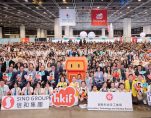
HONG KONG SAR – Media OutReach Newswire – 4 June 2026 – Organised by the Hong Kong Innovation Foundation (‘HKIF’), the Fifth Hong Kong Science Fair (‘Science Fair’) will take place from 27 to 28 June 2026 at the Hong Kong Convention and Exhibition Centre. The event will showcase around 120 shortlisted teams from primary and secondary schools across Hong Kong, presenting creative inventions that integrate artificial intelligence with a diverse range of technology applications. With Sino Group as Principal Patron, the Innovation, Technology and Industry Bureau of the HKSAR Government (ITIB) as the Supporting Bureau, and the Hong Kong Council for Testing and Certification (HKCTC) as Strategic Partner, HKIF is also honoured to have, for the first time, invited the Foundation for the Development of Science and Technology in China as an Advisory Organisation. Representatives from the Foundation will attend the award ceremony to witness the announcement of this year’s winning teams. Consistently a major draw for the community, the Science Fair is now open for online registration with free admission, and the public is warmly invited to attend in person.
Since its launch in 2021, the Science Fair has attracted participation from over 400 local schools, engaging nearly 9,000 students and teachers from Primary 4 to Secondary 6. To date, more than 2,200 creative invention submissions have been received, and the event has established itself as a key platform for youth I&T exchange.
Following Hong Kong’s first astronaut, Dr Lai Ka-ying, into space, the local innovation and technology ecosystem has attracted even greater attention. This year’s Science Fair has specially incorporated aerospace engineering elements, enabling the public to learn about the daily work and challenges of payload specialists, gain insight into the reality of aerospace research and development, and spark greater interest among young people in space exploration. Dr Lai launched aboard the Shenzhou-23 manned spacecraft and is expected to remain in space for approximately six months to conduct space science experiments and maintenance tasks. Visitors can express their support and encouragement by creating message cards for her. In addition, UBTECH Robotics, a globally leading enterprise in embodied AI robotics, will participate in the exhibition, showcasing multiple humanoid robots and offering visitors the opportunity to experience the appeal of embodied intelligence up close.
Professor Sun Dong, JP, Secretary for Innovation, Technology and Industry of the HKSAR Government, stated: ‘The Hong Kong SAR Government is fully committed to developing Hong Kong into an international innovation and technology (I&T) centre, with talent being a key driver of this growth. Now in its fifth edition, the Hong Kong Science Fair – organised by the Hong Kong Innovation Foundation – has become an annual flagship I&T education event. It offers students a valuable platform to turn their innovative ideas into practice, deepen their interest and confidence in I&T, and help bring I&T into schools and the wider community, thereby fostering a more innovation-friendly atmosphere. I look forward to seeing more young people unleash their potential through this platform, pursue careers in I&T, and contribute to the high-quality development of Hong Kong and our nation.’
Mr Daryl Ng, SBS, JP, Chairman of the Hong Kong Innovation Foundation and Chairman of Sino Group, said ‘Innovation and technology are key to Hong Kong’s long-term sustainable development and are integral to the country’s 15th Five-Year Plan. It is vital for Hong Kong to strengthen its I&T capabilities and actively contribute to national development, as underscored by the historic moment when Dr Lai Ka-ying became Hong Kong’s first astronaut. We are encouraged to see growing recognition of I&T opening up new opportunities for young people aspiring to pursue scientific research. As the Hong Kong Science Fair enters its fifth edition, its growth has been made possible by the support of the HKSAR Government, industry partners, tertiary institutions, research organisations, and our panels of judges. This year, we are grateful for the guidance and support of the Foundation for the Development of Science and Technology in China. Moving forward, the Science Fair will remain committed to nurturing talent from an early age, bringing together all sectors to promote I&T and inspire more young people to pursue careers in science and technology.’
Professor Anderson Shum, MH, Chairman of Judging Panel, Hong Kong Science Fair, President of The Hong Kong Young Academy of Sciences, said, ‘The Science Fair adopts the format of “integrating competition with exhibition,” enabling students to translate their learning into tangible and verifiable outcomes. This plays an important role in nurturing Hong Kong’s youth I&T ecosystem. I am delighted to have served as a judge for this major event over the years, witnessing students progressively enhance their presentation skills, build confidence, and broaden their horizons through exchanges with experts, participation in workshops and showcasing their work to the public. The standard of participating projects continues to improve each year, with increasing integration of artificial intelligence and diverse technological applications across different fields. Scientific research is a journey that demands passion and perseverance, and the growth of young scientists often begins with curiosity during their primary and secondary school years. Through these exchanges, we hope to leverage the role-model influence of young scientists, inspiring more students to pursue I&T as their lifelong career. I look forward to seeing our younger generation continue to grow and excel in scientific research and innovation, and officially join the community of scientists in the near future to jointly drive Hong Kong’s I&T development.’
Mr Michael Tam, Chief Brand Officer of UBTECH, said, ‘Humanoid robots are among the most promising real-world embodiments of artificial intelligence, reflecting a future in which intelligent systems are deeply integrated with the physical world. As a global pioneer in humanoid robotics, UBTECH has remained at the forefront of innovation for more than 14 years, with a long-standing commitment to I&T education. The company is dedicated to translating advanced technologies into practical, accessible educational resources. Through collaboration with like-minded partners such as the Hong Kong Innovation Foundation, we aim to inspire greater interest and engagement among both teachers and students in humanoid robotics and artificial intelligence. We are committed to supporting the development of Hong Kong’s I&T education ecosystem, helping to nurture future-ready talent and build a strong, sustainable foundation for long-term growth.’
Since its launch in 2021, the Science Fair has attracted participation from over 400 local schools, engaging nearly 9,000 Primary 4 to Secondary 6 students and their teachers. To date, more than 2,200 creative invention submissions have been received and total attendance has exceeded 120,000 visitors. The Science Fair has gradually established itself as a key platform for youth innovation and technology (‘I&T’) exchange and one of Hong Kong’s most representative I&T education initiatives. This year’s response has been enthusiastic, with over 500 project submissions received. Following preliminary judging, around 120 shortlisted teams took part in a series of workshops and mentorship sessions, and will present their projects at the exhibition in late June to compete for top awards. Gold award-winning teams from each category will have the opportunity to participate in the International Exhibition of Inventions Geneva in Switzerland, fostering idea exchange with global I&T talents.
The Hong Kong Science Fair draws tens of thousands of visitors each year. During the exhibition period, the venue will be transformed into a catalyst for city-wide I&T inspiration. In addition to student showcases, five interactive zones will offer hands-on experiences, including DIY bubble bath bomb workshops, freezer-free slushie making, themed games celebrating the Science Fair’s fifth anniversary, and modified remote-controlled cars made from upcycled household appliances, allowing visitors of all ages to explore science and innovation through engaging and enjoyable activities.
Bulu Bulu Bubble Factory: Blending science with sensory experiences, visitors can mix and mould from scratch to create a delightful ‘bathroom blind box’.
Shake Shake Ice Factory: Applying the principle of freezing point depression, participants will see how temperature can be rapidly lowered using only salt, ice and water to create personalised slushies — all without a freezer.
Scan2Play: Scan the QR Code on your phone to join the themed game celebrating the Hong Kong Science Fair’s Fifth Anniversary.
Racing Homey Kart 2.0: Showcasing the spirit of upcycling and upgrades, visitors can transform old, small household appliances into remote-controlled racing cars and compete on a dedicated track.
UBTECH Robotics Base: Featuring a wide range of robots, this zone provides a comprehensive showcase of the integration of artificial intelligence with mechanical engineering.
To celebrate the Science Fair’s fifth edition, various special experiences will be introduced. The venue will feature a hidden Science Fair character treasure hunt and check-in activity, through which visitors can redeem curated gifts upon completion. Limited-edition souvenirs, including the ‘HKSF-5 Metal Standee Collection’ and the ‘Special Edition Robo K’ blind boxes, will also be available in limited quantities. All proceeds from the HKSF Bazaar, with no deduction, will go directly to charity to support local community technology initiatives.
The Fifth Hong Kong Science Fair Details:
Date: 27 to 28 June 2026 (Saturday and Sunday)
Time: 10:00 am to 6:00 pm
Venue: Hong Kong Convention and Exhibition Centre, Hall 3FG
Admission: Free of Charge (Pre-registration online is required)
Hackers are using large-scale online advertising campaigns to deliver FlutterShell, a newly identified macOS backdoor that marks a sharper turn in financially motivated malware operations targeting Apple users. The campaign, tracked as Operation FlutterBridge, is linked to a broader cybercrime cluster known as CL-CRI-1089, which has operated since at least 2023. The group has used paid advertisements, verified advertiser accounts and shell companies to place malicious promotions […]
Arabian Post Staff -Dubai Computex 2026 has turned the personal computer market into a three-way contest over AI laptops, handheld gaming and mid-range graphics, with Nvidia, Intel and AMD using Taipei to push new silicon into segments long shaped by Apple’s Mac ecosystem and AMD-powered portable consoles. Nvidia’s RTX Spark platform drew the sharpest attention after the company positioned it as a Windows-based alternative for developers, creators […]
Malicious agent-skill uploads have slipped past detection tools used by ClawHub, Cisco and Vercel-linked scanning services, raising fresh concern over the security of fast-growing marketplaces that distribute third-party capabilities for AI agents. The findings point to a widening supply-chain problem around “skills”, the modular instruction-and-file packages that allow AI agents to perform tasks such as editing documents, running scripts, managing workflows or connecting with external services. Unlike […]
MMC Port Holdings Sdn Bhd has approached prospective bidders for a minority stake in the business, shifting attention from a delayed public listing to a private transaction that could test investor appetite for one of Southeast Asia’s most significant port platforms. The move follows the postponement of an initial public offering that had been expected to rank among Malaysia’s largest listings in more than a decade. The […]




 https://vindynamics.net/en






 https://www.linkedin.com/company/karrie-industrial-co–ltd-/
 https://www.youtube.com/@karrieinternational8734