News related to
Engine

Arabian Post Staff -Dubai Las Vegas — Yarbo used CES 2026 to sharpen its pitch that outdoor maintenance can be handled by a single, adaptable robot rather than a shed full of specialised machines. The company presented updates to its modular “yard robot system”, arguing that advances in onboard intelligence, perception and autonomy are bringing the category closer to everyday household use rather than niche early adopters. […]

Cocos, the long-running developer of cross-platform game technology, has moved its Cocos 4 game engine from a proprietary model to full open source, a step that reshapes its relationship with developers and signals a strategic shift in the competitive middleware market. The company confirmed that the entire Cocos 4 engine codebase is now available under an open-source licence, allowing studios and independent developers to inspect, modify and […]

BlueFive Capital has been appointed as the first General Partner for a newly established fund-of-funds created by CICC Capital, marking a strategic partnership that brings together global asset management expertise with Chinese industrial capital. The mandate also reflects the involvement of HBIS Group, one of the world’s largest steelmakers, whose industrial priorities will shape the investment direction of the vehicle. The fund-of-funds structure is designed to deploy […]

  • Geely returned to CES 2026 for the third time, unveiling Full-Domain AI 2.0 and G-ASD to redefine next-gen smart vehicle tech.
  • Geely advanced from “Full-Domain AI 1.0” to 2.0, while officially launching the G-ASD intelligent driving system to accelerate the transition to high-level autonomous driving.

LAS VEGAS, USA – Media OutReach Newswire – 7 January 2025 – Geely Auto Group attended the Consumer Electronics Show (CES) 2026 for the third consecutive year, reinforcing its commitment to leading the next era of intelligent mobility. As CES continues to evolve into an AI-driven cross-industry innovation platform, Geely took center stage to unveil two major breakthroughs that will redefine the technical foundation of next-generation smart vehicles: Full-Domain AI 2.0, Geely’s upgraded vehicle intelligence architecture, and G-ASD (Geely Afari Smart Driving), Geely’s newly launched intelligent driving system designed to accelerate the transition to high-level autonomous driving.

Full-Domain AI 2.0 marks a significant evolution from Geely’s previous Full-Domain AI 1.0, shifting from fragmented, module-based intelligence toward a unified vehicle-wide AI architecture. Geely has achieved deep integration of vehicle-level computing power, data, and models to establish a powerful central intelligent engine, effectively empowering all vehicle functions with a “super AI brain” capable of unified scheduling and efficient collaboration across domains. This approach enables intelligent systems across the cockpit, chassis, safety, and driving domains to achieve mutual access and real-time interaction.

G-ASD marks a major step forward toward high-level autonomous driving. Developed as Geely’s next-generation intelligent driving system, G-ASD combines advanced AI, large-scale real-world driving data, and high-performance sensing and computing hardware to enhance safety and driving confidence in complex traffic scenarios.

Jerry Gan, CEO of Geely Auto Group: “AI is reshaping the automotive industry in many ways, from powertrains and components to a systematic reconstruction of mobility ecosystems and lifestyles. Geely is committed to creating safe, sustainable, and intelligent mobility for the world.”

Li Chuanhai, CTO of Geely Auto Group: “By 2030, cars will evolve into ‘Super Intelligence’ with emotional awareness, proactive service, and continuous evolution. G-ASD and Full-Domain AI 2.0 are not distant concepts—they are tangible innovations that integrate with cockpits and chassis to deliver highly humanlike, super intelligent, and extremely user-friendly experiences.”

Hashtag: #Geely

The issuer is solely responsible for the content of this announcement.

Dubai Aerospace Enterprise Ltd has moved to the international debt markets with plans for a benchmark-sized, dollar-denominated Regulation S senior unsecured bond with a seven-year tenor, as the aircraft leasing and aviation services group looks to extend its maturity profile amid steady demand for high-quality aviation credit. The proposed notes will be issued through DAE Funding LLC under the company’s Global Medium Term Note Programme and are […]

Arabian Post Staff -Dubai Motorola used the Lenovo Tech World Showcase alongside CES 2026 to outline a sharpened strategy for premium smartphones, unveiling a new Razr foldable and a broader flagship portfolio designed to embed artificial intelligence deeper into everyday mobile use. The announcements signal a renewed attempt by the Lenovo-owned brand to regain momentum in the high-end segment, where competition from Samsung, Apple and fast-rising Chinese […]

LAS VEGAS, UNITED STATES – Media OutReach Newswire – 7 January 2026 – Amidst a CES 2026 landscape dominated by AI headlines and humanoid robots, a quiet corner of the Lens Technology booth has unexpectedly become a focal point for commercial space analysts.

There are no flashy RGB lighting effects here, only a sheet of glass as thin as a cicada’s wing, being repeatedly rolled and unrolled like a tape measure. This is the public debut of Lens Technology’s aerospace-grade UTG (Ultra-Thin Glass) photovoltaic encapsulation solution. This technology marks the official entry of the manufacturing titan—best known as a giant in the Apple supply chain—transferring its precision manufacturing capabilities from consumer electronics to humanity’s next trillion-dollar market: space infrastructure.

As leading global satellite companies begin the mass deployment of third-generation (V3) satellites, the Low Earth Orbit (LEO) internet race is entering a “second half” defined by heavy payloads, long lifespans, and low costs. Lens Technology’s entry aims to untie the knot that has long plagued the aerospace industry: the trade-off between flexibility and durability.

Farewell to the “Plastic Feel”: The Material Battle in Space

At the Lens Technology booth, engineers demonstrated the core contradiction to the audience: Traditional aerospace solar cell covers are either heavy Cerium-doped Glass (CMG) or expensive Fused Silica, typically ranging from 100μm to 500μm in thickness. They are robust, but too heavy and impossible to bend.

To adapt to the massive power demands of next-generation satellites (such as those supporting direct-to-cell services), solar wing designs are rapidly evolving from rigid panels to Roll-Out Solar Arrays (ROSA-like structures). This shift forced designers to temporarily turn to polymer materials like transparent Polyimide (CPI).

“However, polymers have a fatal weakness in space,” explained a Lens Technology on-site technical lead. “The LEO environment is filled with high-energy Atomic Oxygen (AO) and strong UV radiation. Under long-term exposure, polymer molecular chains break, causing the material to yellow, become brittle, and suffer a drastic drop in light transmission. This efficiency decay was tolerable for early satellites with 5-7 year lifespans, but for the new generation of mega-constellations pursuing higher commercial returns, it is unacceptable.”

Lens Technology’s answer is Aerospace-Grade UTG. As an inorganic material, glass possesses innate “immunity” to Atomic Oxygen and UV aging, ensuring high light transmission throughout the satellite’s lifecycle. More importantly, its dense structure provides an effective barrier against water vapor and micrometeoroids, offering physical protection for delicate ultra-thin HJT or future Perovskite batteries.

The 30-Micron “Moat”: A Perfect Match for Next-Gen Satellites

In the demo area, a piece of glass only 30μm-50μm thick is bent to an astonishing radius of R1.5mm. This level of flexibility drew gasps from the audience.

This is exactly the characteristic most coveted by top global satellite companies today. To reduce the cost per launch, next-generation mega-satellites must be stowed with origami-like efficiency inside the rocket fairing. Lens Technology’s UTG solution allows solar wings to be tightly wound like a tape measure during launch, and instantly recover to a flat state upon orbital deployment.

However, making glass thin is the first step; keeping it from shattering during the violent vibration of a rocket launch is the real challenge.

Analysts point out that Lens Technology’s core competitiveness lies in its proprietary chemical strengthening processes and laser/diamond wire cutting technologies. Glass fractures often originate from micro-cracks invisible to the naked eye. Leveraging processes honed on foldable smartphones, Lens has significantly reduced the density of micro-defects on the glass edges and surfaces. This means that even under immense tension and vibration, this “glass skin” remains tough and resilient.

Dimensional Strike: Reshaping Aerospace Costs with “Consumer-Grade” Capacity

If technical specifications are the ticket to entry, then capacity and cost control are Lens Technology’s ultimate weapons.

“The logic of commercial space has changed; it is now the era of industrial mass production,” commented an industry analyst at the scene. Compared to the small-batch, lab-grade customization model of traditional aerospace glass manufacturers, Lens Technology brings the scale of consumer electronics manufacturing.

Facing the grand ambition of global satellite leaders planning to launch tens of thousands of satellites annually, supply chain elasticity is critical. Lens Technology stated that it has the capability to rapidly expand existing pilot lines or flexibly retrofit mass production lines. This potential for “ten-thousand-satellite scale” delivery and yield control can significantly lower the BOM (Bill of Materials) cost per satellite—addressing the most sensitive pain point for commercial space giants today.

Outlook: The New Cornerstone of Next-Gen Space Energy

At CES, Lens Technology also “spoiled” its future technology roadmap.

As Perovskite/Silicon tandem cells are viewed as the mainstream for future satellite power, UTG will serve not just as a cover, but as an encapsulation substrate. Lens Technology revealed it is developing next-generation composite UTG integrated with Anti-Static (ESD) coatings and Selective Radiation coatings, which will not only protect chips from electrostatic discharge damage but also assist in regulating battery temperature.

Although this business currently accounts for a tiny fraction of Lens Technology’s massive revenue and is in a period of intensive validation with global top-tier photovoltaic component manufacturers (Tier 2) and top commercial space clients (Tier 1), its signal significance cannot be ignored.

From smartphone screens to satellite wings, Lens Technology is proving that in the era of scaled expansion for space infrastructure, ground-based industrial giants possessing extreme craftsmanship and mass manufacturing capabilities will be indispensable “pavers” for the interstellar journey.

Hashtag: #LensTechnology

The issuer is solely responsible for the content of this announcement.

Advertisements

Britain’s new car market crossed the two-million mark in 2025 for the first time since the pandemic, signalling a broad-based recovery powered by electric vehicle uptake and steady fleet demand, according to industry data compiled across manufacturers and dealers. Registrations reached about 2.02 million units, lifting volumes above levels seen during the disrupted years of supply shortages and subdued consumer confidence. Britain’s auto market clears two million […]

Pitchengine has re-emerged with a rebuilt platform and an expanded ambition, signalling a renewed push into the crowded public relations technology market with tools aimed at creators, brands and communications teams seeking more control over distribution and measurement. The company says its comeback centres on a modernised newsroom, stronger analytics and tighter integrations designed to meet how PR now intersects with social platforms, search and owned media. […]

Web Awesome has entered the front ranks of open-source front-end projects with an explicit ambition: to make modern, high-quality user interface components available without locking developers into any single framework or tooling stack. Positioned as the largest open-source library of web-standards-based UI components, the project arrives at a moment when many developers are reassessing heavy framework dependencies and long-term maintainability in their front-end architectures. Launched as a […]

Meta’s plan to expand artificial intelligence across private messaging on Facebook, Instagram and WhatsApp has triggered a wave of privacy concerns, as users, civil society groups and regulators question how conversational data will be used and protected under the company’s 2026 policy framework. The update, disclosed as part of Meta’s broader AI roadmap, allows automated systems to analyse interactions in private chats to refine content recommendations and […]

Google has continued to expand the reach and capabilities of Copybara, its open-source tool designed to automate code migration and synchronisation across repositories, positioning it as a critical utility for organisations grappling with large, distributed codebases and complex development workflows. Originating from the company’s own need to manage code movement out of its vast internal monorepo, Copybara has evolved into a mature project used well beyond its […]

Apollo Global Management has agreed to anchor an investor group committing more than $1bn to QXO, the building products distributor led by Brad Jacobs, strengthening the company’s balance sheet as it presses ahead with an ambitious acquisition-led expansion.

People familiar with the transaction said the capital injection is structured to provide QXO with flexibility to pursue large-scale deals while maintaining access to public markets. The funding is expected to be deployed alongside existing cash and debt capacity to accelerate consolidation across a fragmented construction materials supply chain that spans roofing, insulation, waterproofing and related products.

QXO, chaired and controlled by Jacobs, was formed to assemble a scaled distribution platform capable of competing with established regional and national players. Jacobs, known for building multibillion-dollar logistics businesses through serial acquisitions, has positioned QXO as a long-term consolidator targeting steady cash flows and pricing power in non-cyclical end markets such as residential repair, maintenance and infrastructure upgrades.

Apollo’s participation signals institutional backing for that strategy at a time when dealmaking in building products is reshaping supply networks in North America. The alternative asset manager has extensive experience in industrial and services investments, and its involvement is expected to reassure lenders and potential sellers as QXO negotiates transactions that could reshape the sector’s competitive landscape.

People briefed on the matter said the investment gives QXO additional firepower to support a transformative purchase announced earlier, while also preserving capacity for follow-on acquisitions. The company has indicated that scale is critical to improving procurement economics, expanding private-label offerings and deploying technology to optimise inventory and logistics across a wide branch network.

Market participants note that building products distribution has drawn sustained private equity interest due to its resilience during economic slowdowns and its exposure to long-term housing and infrastructure demand. While new construction can fluctuate with interest rates, repair and renovation spending tends to be more stable, supporting predictable earnings for distributors with diversified customer bases.

Apollo’s investment arrives amid cautious optimism in credit markets. Financing conditions have improved compared with earlier tightening cycles, though borrowers remain selective and focused on leverage discipline. By bringing in a deep-pocketed sponsor, QXO reduces reliance on debt at a time when acquisition multiples remain elevated for high-quality assets.

Executives close to the company have said QXO aims to balance rapid growth with operational integration, avoiding the pitfalls that can accompany aggressive roll-up strategies. Jacobs has emphasised disciplined capital allocation, standardised systems and experienced management teams as cornerstones of value creation.

The transaction also underscores Apollo’s broader strategy of partnering with founder-led platforms that can compound value through scale rather than short-term financial engineering. The firm has increasingly favoured equity-heavy structures in sectors where operational improvements and market positioning drive returns over extended horizons.

Analysts covering the building products space say the investment could intensify competitive pressure on mid-sized distributors, many of which face succession challenges or capital constraints. For sellers, a well-capitalised buyer with public currency and sponsor backing can offer certainty of execution, a factor that often influences deal outcomes alongside price.

QXO’s shares have reflected heightened investor attention since the company outlined its acquisition plans, with trading volumes increasing as the market digests the implications of a more aggressive growth profile. The Apollo-backed financing is expected to reduce uncertainty around funding while sharpening focus on execution and integration milestones.

Porsche has announced its largest vehicle recall to date, calling back 173,538 cars across several high-profile model lines after identifying a fault that could cause rearview camera images to fail, raising the risk of collisions while reversing. The action affects the Cayenne SUV, the 911 sports car, the Taycan electric saloon and the Panamera luxury sedan, marking a significant moment for the German manufacturer as regulators sharpen […]

Saal. ai and Nutanix have unveiled SovereignGPT at a launch event in Abu Dhabi, positioning the platform as a government-grade artificial intelligence system designed to meet stringent data sovereignty and security demands while retaining the performance expected of mission-critical deployments. The announcement places Abu Dhabi at the centre of a growing push by governments and regulated industries to localise advanced AI capabilities without ceding control over sensitive […]

Aviation in the United Arab Emirates has deepened its role as a strategic pillar of the national economy, with 2025 marking a year of consolidation that underscored the sector’s influence on trade, tourism, logistics and supply chains. Policymakers and industry leaders say the ecosystem’s direct and indirect contribution has reached as much as 18 per cent of gross domestic product, reflecting the scale of activity generated by airlines, airports, maintenance hubs, free zones and aviation-linked services.

Passenger and cargo volumes across the federation continued to trend higher, supported by steady growth in international travel demand and the country’s positioning as a crossroads between Asia, Europe and Africa. Major hubs operated by Dubai Airports and Abu Dhabi Airports handled sustained traffic flows as carriers expanded networks and frequencies. Capacity discipline and targeted route additions allowed operators to absorb higher volumes while maintaining service standards, reinforcing the UAE’s reputation for operational reliability.

Flag carriers remained central to the sector’s momentum. Emirates Airline pressed ahead with fleet renewal and network optimisation, focusing on long-haul markets that underpin connectivity for tourism and business travel. Etihad Airways pursued a parallel strategy centred on profitability and partnerships, aligning growth with demand and strengthening Abu Dhabi’s role as a transfer hub. Together, the airlines’ scale supported ancillary industries ranging from catering and ground handling to training and aviation finance.

Cargo performance remained a defining feature of the year. Dedicated freighter operations and belly-hold capacity benefited from the UAE’s role in high-value, time-sensitive shipments, including pharmaceuticals, perishables and e-commerce. Logistics providers highlighted improved customs processes and digital clearance systems as key enablers, allowing faster turnaround times and reinforcing confidence among multinational shippers. The integration of air cargo with ports and free zones helped sustain supply chains amid ongoing adjustments in global trade patterns.

Governance and regulation were cited by executives as competitive advantages. The General Civil Aviation Authority continued to align oversight with international standards while supporting innovation through performance-based regulation. Industry participants pointed to predictable policy frameworks and coordinated planning between federal and emirate-level authorities as factors that reduced friction for investors and operators.

Sustainability initiatives gathered pace across airlines and airports, reflecting both regulatory expectations and commercial imperatives. Carriers advanced fuel-efficiency programmes through newer aircraft types and operational measures, while airports invested in energy management, waste reduction and water stewardship. Trials involving sustainable aviation fuel expanded through partnerships with energy suppliers and research institutions, positioning the UAE as an early mover in the region’s decarbonisation efforts. While volumes of alternative fuels remain limited, industry leaders argued that early adoption builds expertise and supply-chain readiness.

Technology adoption also shaped the sector’s evolution. Biometric processing, predictive maintenance and data-driven air traffic management systems were rolled out to improve efficiency and resilience. Airports leveraged automation to manage peak flows without proportional increases in staffing, while airlines used analytics to refine scheduling and revenue management. These investments were framed as necessary to accommodate future growth while preserving service quality.

The aviation workforce expanded alongside operations, with training academies and partnerships focusing on pilots, engineers and air traffic specialists. Officials emphasised localisation and skills development as priorities, citing aviation’s role in high-value employment and knowledge transfer. At the same time, competition for specialised talent remained intense, prompting employers to enhance retention and career progression pathways.

Tourism authorities linked aviation capacity directly to visitor inflows, noting that air connectivity underpins hotel occupancy, events and retail activity. Route launches and increased frequencies supported diversification into new source markets, aligning with broader economic strategies aimed at reducing reliance on hydrocarbons. Business travel and exhibitions contributed to premium traffic, reinforcing the UAE’s positioning as a regional commercial hub.

Europe’s ambitions in semiconductors, embedded software and advanced electronic systems have been sharpened with the release of the Electronic Components and Systems Strategic Research and Innovation Agenda 2026, a document that sets priorities for research, industrial deployment and public investment across the continent’s technology base. The updated agenda outlines how Europe plans to strengthen technological sovereignty in electronic components and systems at a time of intense global […]

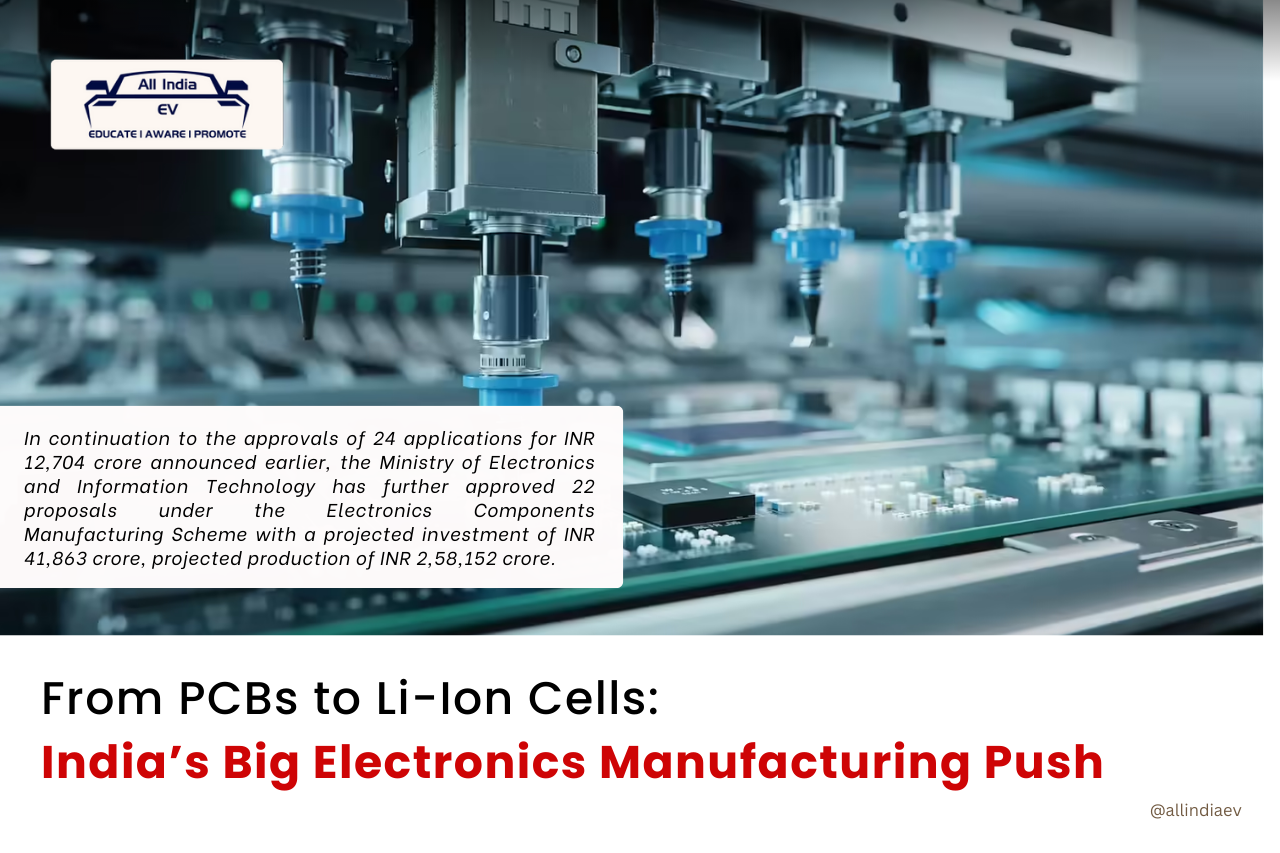
Government approval for 22 proposals under the third tranche of the Electronics Component Manufacturing Scheme marks another step in the effort to deepen domestic supply chains and reduce reliance on imported parts. The cleared projects are expected to draw investment of ₹41,863 crore and generate projected production worth ₹2,58,152 crore over their implementation period, according to official disclosures tied to the decision.

The proposals, cleared by the Union Cabinet chaired by Prime Minister Narendra Modi, span a mix of large conglomerates and specialised component makers focused on sub-assemblies that feed into consumer electronics, industrial equipment and emerging technology segments. Officials said the projects are expected to create 33,791 direct jobs, with a larger number of indirect roles anticipated across logistics, tooling, testing and ancillary services as manufacturing capacity scales up.

The Electronics Component Manufacturing Scheme, commonly referred to as ECMS, is designed to address a persistent weakness in the electronics ecosystem: dependence on imported components even when final assembly takes place domestically. While handset and electronics assembly has expanded rapidly over the past decade, component localisation has lagged, leaving manufacturers exposed to supply disruptions and currency volatility. The third tranche approvals are intended to close that gap by encouraging firms to manufacture key inputs such as printed circuit boards, camera modules, connectors, passive components and specialised sub-systems within the country.

Officials involved in the evaluation process said the latest round places greater emphasis on scale, technology depth and export potential. Several approved proposals involve backward integration into higher-value components, including precision engineering and advanced materials, rather than basic assembly. This approach reflects feedback from earlier tranches, where industry participants argued that long-term competitiveness would depend on mastering complex components rather than expanding low-margin manufacturing alone.

The ECMS operates alongside other incentive programmes such as the Production Linked Incentive framework, but differs in its narrower focus on components rather than finished products. Policy planners view this distinction as critical, given that components account for a substantial share of the value of electronics imports. By targeting this segment, authorities aim to improve value addition within the domestic ecosystem and strengthen resilience against external shocks.

Industry executives welcomed the approvals but cautioned that execution will be as important as policy intent. Several component manufacturers noted that success would depend on timely disbursement of incentives, stable policy conditions and parallel investments in infrastructure such as power reliability, clean-room facilities and logistics. Skilled manpower also remains a concern, particularly for projects involving advanced fabrication and testing processes.

Analysts tracking the sector said the projected production figure of ₹2,58,152 crore signals the government’s expectation that approved firms will not only meet domestic demand but also serve export markets. Global electronics supply chains are undergoing reconfiguration as companies seek to diversify manufacturing bases, and policymakers see an opportunity to position the country as a credible alternative for component sourcing. However, competition remains intense, with established hubs in East and Southeast Asia continuing to benefit from mature ecosystems and economies of scale.

Employment generation has been highlighted as a key outcome of the third tranche. The estimate of 33,791 direct jobs reflects roles across engineering, operations, quality control and management. Economists note that electronics manufacturing tends to create a multiplier effect, supporting additional employment in services and small-scale manufacturing clusters that develop around large plants.

OpenAI chief executive Sam Altman has publicly acknowledged the expanding impact of artificial intelligence on mental health and cybersecurity, signalling a shift in how one of the world’s most influential AI developers frames the social risks of its technology. The remarks came alongside an announcement that OpenAI is seeking a Head of Preparedness, a role designed to anticipate and mitigate potential harms as AI systems grow more […]

Researchers at the City University of Hong Kong have developed an artificial skin that mimics key functions of the human nervous system, marking a step towards robots that can feel touch, detect injury and react instinctively to harmful contact. The neuromorphic “e-skin”, created by a team led by materials scientist Yuyu Gao, converts physical pressure into electrical signals resembling neural pulses, allowing machines to distinguish between gentle […]

Footage of a Tesla humanoid robot losing balance and falling during a controlled demonstration has reignited debate over the pace and credibility of Elon Musk’s ambitions in robotics, exposing the gap between promised timelines and the realities of building general-purpose machines that can operate safely among people. The incident occurred during a late-2025 demonstration of Optimus, Tesla’s bipedal robot unveiled as a future cornerstone of the company’s […]

Yas Marina Circuit will stage the opening rounds of the new Emirates Drift Championship season this weekend, drawing leading regional drivers to Abu Dhabi for tightly fought door-to-door battles that organisers say will push technical precision and crowd engagement to a higher level. The championship’s return to the capital’s flagship motorsport venue signals a renewed focus on competitive depth, youth participation and international exposure for a discipline […]

Arabian Post Staff -Dubai Samsung Electronics has lifted the curtain on the Freestyle Plus, a new generation of its portable projector range that pushes further into artificial intelligence-driven home entertainment. Revealed ahead of the CES 2026 technology show in Las Vegas, the device signals Samsung’s intent to blend mobility with smarter software, at a time when consumer electronics firms are racing to embed AI across everyday products. […]

Plans to turn India into a major semiconductor manufacturing hub are moving from policy to execution, with four companies scheduled to begin chip production during 2026 and the government setting its sights on becoming one of the world’s leading producers by 2035. The transition marks a decisive phase for a country long dependent on imported chips but now seeking to embed itself in global electronics supply chains amid geopolitical realignments and rising demand for secure manufacturing bases.

The most advanced of the announced projects is the large-scale fabrication facility planned at Dholera in Gujarat, a joint venture between Tata Electronics and Taiwan’s Powerchip Semiconductor Manufacturing Corporation. The plant, cleared with government backing and financial incentives under the Semiconductor Mission, is designed to manufacture mature-node chips used in automobiles, power electronics, consumer devices and industrial equipment. Construction work has progressed through 2025, with commercial production targeted to start the following year, according to timelines shared with policymakers and industry partners.

Alongside the Dholera fab, three other facilities are slated to commence output in 2026, primarily in the assembly, testing, marking and packaging segment. Micron Technology’s ATMP plant at Sanand in Gujarat is expected to be the first major operational unit, focusing on memory products for global markets. Two domestic groups, Tata Electronics and Kaynes Semicon, are also developing advanced packaging facilities, while CG Power, in partnership with Japan’s Renesas Electronics and Thailand’s Stars Microelectronics, is setting up an outsourced semiconductor assembly and test unit in Gujarat. Together, these projects are intended to establish a foundational ecosystem rather than a single flagship plant.

Government officials argue that the emphasis on both fabrication and packaging reflects a deliberate strategy. While advanced-node fabs require decades of experience and heavy capital, mature-node manufacturing and packaging are seen as realistic entry points that align with India’s strengths in engineering talent, scale and cost efficiency. Officials involved in the programme say the objective is to capture value across the semiconductor chain while gradually building capabilities for more complex processes.

Public funding has played a central role. Under the incentive framework, the central government is offering support covering up to half the project cost for approved semiconductor and display manufacturing units, with additional incentives from host states. The total committed investment across approved projects runs into tens of billions of dollars, according to official estimates, making it one of the most capital-intensive industrial initiatives undertaken in the country.

Industry analysts note that the timing coincides with a global rethinking of chip supply chains. Disruptions during the pandemic years, coupled with trade and technology tensions, prompted governments and companies to seek diversified manufacturing locations. India’s pitch combines policy stability, a large domestic electronics market and strategic partnerships with established chipmakers. Executives at electronics firms say the presence of local chip production could shorten supply chains and reduce vulnerability to external shocks.

Challenges remain substantial. Semiconductor manufacturing demands ultra-reliable power, water and logistics, as well as a deep supplier base for chemicals, gases and equipment. Skills development is another constraint. While India produces large numbers of engineers, chip fabrication requires specialised expertise built through years of hands-on experience. To address this, training collaborations with overseas partners and academic institutions have been initiated, and several universities have launched semiconductor-focused programmes.

There is also scepticism about the 2035 ambition. Market researchers point out that becoming a “top” producer can be defined in different ways, whether by volume, value or technological sophistication. Countries such as Taiwan, South Korea and the United States dominate advanced-node manufacturing, while China has invested heavily across the value chain. India’s near-term projects focus on mature technologies, which serve vast markets but command lower margins. Supporters counter that demand for such chips is set to remain strong due to electric vehicles, renewable energy systems and industrial automation.

VISHNU RAJA
RYO YAMADA
HITORI GOTOH
IKUYO KITA