News related to
Engine

Larsen & Toubro’s hydrocarbon onshore unit, in partnership with Greek firm Consolidated Contractors Group, has booked an ultra-mega contract valued at over ₹150 billion to build a natural gas liquids plant and associated processing facilities in the Middle East. The engineering, procurement, construction, installation and commissioning scope will cover the handling of rich associated gas, integration of utilities, and interfacing with existing infrastructure. L&T will lead engineering […]

Dubai Healthcare City Authority has unveiled a Dhs1.3 billion development programme for Phase 1 of Dubai Healthcare City, marking an aggressive expansion that aims to elevate its global standing in health infrastructure. Construction is set to start in December, with a targeted completion window by November 2027.

At the heart of the initiative lies a triple-pronged buildout: a LEED Platinum-certified office block, a purpose-built medical complex, and supporting infrastructure—each tailored to attract health-related investors and operators. The office building, designed by P&T Architects & Engineers, spans some 13,000 sqm across nine levels and includes flexible workspaces and ground-floor retail zones. The medical complex, by Design & Architecture Bureau, covers 5,800 sqm, with two basements and five floors, and is planned to accommodate surgical units, diagnostics, outpatient services and lab facilities.

Beyond buildings, the infrastructure scope includes multi-storey parking with electric vehicle charging points, integration with Salik for smart parking, and accessibility enhancements. The aim is to strengthen the underlying ecosystem so that the healthcare precinct becomes not just a cluster of clinics, but a fully serviced global health hub.

Issam Galadari, DHCA’s CEO, asserted that these projects reflect the authority’s ambition to combine sustainability, global investment appeal and design excellence, aligned with Dubai’s Economic Agenda and the UAE’s Net Zero Strategy 2050. Allae Almanini, COO, added that the works will “boost confidence for healthcare providers and investors” by improving efficiency, accessibility and sustainability across the community.

Phase 1 of DHCC, located in Oud Metha, currently operates within a 4.1 million sq ft footprint dedicated to medical services and education. Phase 2, by contrast, spans around 19 million sq ft at Al Jaddaf, and is oriented more toward wellness and mixed support services.

This new investment signals a sharpened focus on physical infrastructure as a differentiator. In recent years, DHCC has emphasised partnerships and innovation: its free-zone model already supports over 400 licensing entities and more than 168 clinical facilities. Earlier this year, DHCA collaborated with AI Quantum Intelligence Institute to launch an AI healthcare innovation lab in the free zone, and formed an agreement with AirMed International to deepen medical transport capabilities.

Analysts see the move as a bid to compete not only regionally, but globally. Healthcare infrastructure, especially when linked with sustainability credentials such as LEED Platinum certification, is increasingly a factor in investors’ decisions. The new build will position DHCC among the few healthcare zones worldwide that combine clinical, administrative and research capacity within one contiguous ecosystem.

However, the scale and timeline carry risks. Dubai’s construction sector is already navigating supply-chain pressures, labour constraints, and rising material costs. Ensuring timely delivery and quality control in a high-performance project will demand rigorous project management. Meanwhile, the authority must ensure that demand from healthcare operators, both local and international, matches the expanded real estate supply, lest vacancy rates rise.

More immediately, the December commencement date — just weeks away — will test DHCA’s readiness in securing contractors, tendering work packages and coordinating certifications. Delays in permitting or approvals could cascade into missed target windows. Yet, if executed successfully, the project will enable DHCC to present itself as an integrated health campus offering offices, clinical space, and support services under one sustainable umbrella.

Observers note that medical tourism in Dubai already commands significant weight, drawing patients from the GCC, the broader Arab world, Europe, and Asia. DHCA’s bet is that infrastructure sophistication will amplify that pull, especially for high-end specialty and precision medicine segments.


A group of physicists has unveiled a new warp-drive model that conforms to conventional energy constraints, indicating the concept long relegated to science fiction may be inching toward viability. Their “constant-velocity subluminal warp drive” avoids the exotic negative energy typically required in earlier designs, potentially marking a paradigm shift in propulsion theory. The research, led by Jared Fuchs and colleagues, describes a warp bubble framework that satisfies […]

Nanoprecise has selected AccuKnox’s Cloud Native Application Protection Platform to overhaul its cloud security, governance and compliance architecture. This collaboration aims to merge Nanoprecise’s AI-driven predictive maintenance capabilities with a hardened Zero Trust posture across its cloud workloads. The decision followed a competitive evaluation involving top cloud security vendors, with Nanoprecise opting for AccuKnox’s agentless architecture, swift risk assessment, and modular pricing model. During the proof-of-concept phase, […]

China’s expanded export controls on rare-earth materials have jolted global semiconductor supply chains, with firms scrambling to assess vulnerabilities while the United States countered by threatening a sweeping 100 % tariff and new software export curbs. The Chinese Ministry of Commerce broadened restrictions to 12 elements and extended licensing requirements to include mining, refining and recycling equipment—pressing that any dual-use or defence-tied requests will be denied. Foreign […]

Cryptocurrency markets endured a historic collapse as leveraged positions were liquidated en masse – over 1.6 million traders wiped out $19.13 billion in bets within 24 hours, data from Coinglass shows.

The crash accelerated sharply after U. S. President Donald Trump announced an additional 100 per cent tariff on Chinese imports and threatened export controls on critical software, heightening fears of a full-blown trade war. Bitcoin plunged more than 12 per cent from its recent highs, briefly sliding below $102,000 before rebounding above $113,000.

Before the sell-off, Bitcoin had breached a new all-time peak above $125,000, buoyed by institutional inflows into crypto exchange-traded funds. Governments and institutional investors had viewed digital assets as a hedge amid macroeconomic uncertainty.

Today’s market rout, however, exposed the fragility of overleveraged positions in a thinly capitalised market. In a single hour on Friday, more than $7 billion of liquidations occurred. The top losses were seen among long positions, particularly in Bitcoin and Ethereum derivatives, which accounted for a substantial share of the forced unwinds.

Institutional players and high-net-worth traders were swept up in the cascade. Market watchers noted that order books lacked the depth to absorb such a severe shock, triggering knock-on effects through futures and perpetual swap markets.

Beyond crypto, equity indices faltered under the weight of renewed global risk aversion. The S&P 500 dropped 2.7 percent, while tech stocks, sensitive to trade tensions, bore steep losses.

Some analysts likened the event to a “black swan” moment for crypto markets — a sudden shock revealing systemic vulnerabilities in a still nascent asset class. Traders operating with high leverage, little hedging, and aggressive margin policies found themselves particularly exposed.

Efforts to assess contagion effects to traditional finance are underway. Banks offering crypto derivatives and prime brokers are now scrutinising counterparty risks. Regulators in several jurisdictions may use today’s crash to justify stricter margin and leverage rules for crypto trading.

Reviewing policy implications, the tariff escalation marks a sharp pivot in U. S.–China trade strategy. Trump framed the measures as retaliation for China’s export curbs on rare earth metals, which are critical for tech manufacturing. The move signals willingness to escalate economic confrontation, with markets already pricing in broader disruption to global supply chains.

Despite the volatility, some investors are still betting on long-term resilience of digital assets. The week before the crash saw a record $5.95 billion flow into global crypto ETFs, led by U. S. allocations, suggesting that capital rotation into crypto remains strong over medium timeframes.

Liquidity providers and market makers face fresh trials. Some have temporarily withdrawn from funding markets or widened spreads to mitigate risk exposure. In highly volatile hours, arbitrage desks and algorithmic liquidity engines contributed to exaggerated price swings.

Wider sentiment has turned cautious: on-chain analytics show a rise in stablecoin inflows to exchanges, possibly reflecting flight from risk. Options markets registered growing demand for deep out-of-the-money puts, as traders brace for further downside.

Abu Dhabi — EDGE entity FADA has completed a week-long “Space Roadshow” across six Emirati educational institutions, aiming to galvanise youth interest in space sciences and strengthen the UAE’s space ecosystem. The roadshow, conducted in collaboration with the UAE Space Agency and Space42, carried the theme “Living in Space” and comprised workshops, interactive sessions, and networking opportunities touching on Earth observation, satellite communications, CubeSat technologies and astronaut […]

Advertisements

Dubai — DOOGEE is rolling out a bold “Tech For Nature” showcase at GITEX GLOBAL 2025, positioning itself at the intersection of rugged devices and sustainability. From 13 to 17 October, the company will host its exhibit at booth A40 in Hall 13, where its outdoor-oriented hardware and eco-aware design features will be on full display.

DOOGEE describes the exhibit as centred around its “Tech Impact” zone, a curated space meant to demonstrate how its devices can withstand extreme conditions while serving the needs of explorers, scientists, and rescue personnel. The lineup includes models engineered for shock, heat, immersion, and drops — with features aimed at bridging utility and resilience.

Among the highlight products is the V Max Play, which pairs a high-capacity battery with a 200 MP main camera and integrates a mini projector for on-the-go displays. DOOGEE also plans to exhibit the S200 Ultra, built with aluminium-titanium alloy framing and a rear display for rapid glanceable information. Wearables and peripheral devices are similarly designed for outdoor resilience: the Anywise W1 Pro watch offers dual-band GPS, 5ATM water resistance, and offline map capability, while BoneAir Swim provides bone conduction audio under IP68 waterproof rating.

The firm frames “Tech For Nature” as both a mission and a product philosophy—suggesting that its devices should “coexist with nature” rather than merely tolerate it. In its public communications, DOOGEE emphasises use of sustainable materials and energy-efficient design elements. For instance, it references the use of recycled coffee grounds in casing composites and UV-responsive surfaces that shift hues with ambient light.

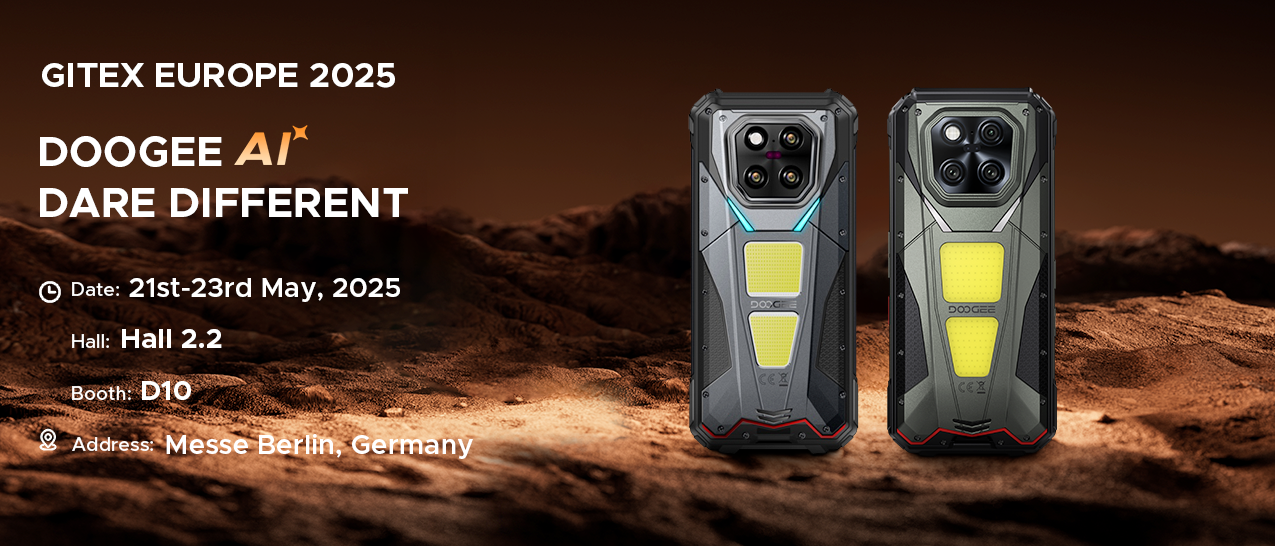
DOOGEE is no stranger to rugged or niche technology showcases. Earlier in 2025, the company participated in GITEX Europe, where it spotlighted AI-enhanced rugged devices and wearables built for industrial and outdoor environments. The Dubai event, by contrast, marks its largest commitment yet to the consumer-facing “outdoor tech” narrative.

Analysts note that DOOGEE is entering a competitive space where brands like CAT, Ulefone, and Blackview already target the rugged market segment. To distinguish itself, DOOGEE appears to lean into hybrid positioning: ruggedness plus eco credentials. “The idea is to appeal to users who don’t want to sacrifice environmental sensibility for durability,” commented one industry observer.

GITEX GLOBAL 2025 is itself a major platform: this 45th edition of the event draws participants across AI, quantum, data centres, and startup ecosystems. DOOGEE’s exhibit is aligned with the trend of hardware firms emphasizing sustainability, resilience, and experience-driven product showcases.

Visitors at booth A40 will have hands-on access to the full “Tech For Nature” suite, including tablets, phones, wearables, and audio gear. DOOGEE is also promoting discounts on first orders for attendees and encouraging media and partners to trial devices on-location. Beyond demonstration, the firm is signalling intention to gear up distribution and service channels in regions where demand for rugged outdoor gear is rising.

Xogot has extended its reach: the full Godot engine can now run natively on iPhone, allowing developers to build, edit, test and export games entirely from their pocket. Xogot, developed by Xibbon Inc., launched for iPad earlier in 2025, and its iPhone version is built upon Godot 4.4 with a rewritten user interface in SwiftUI, tailored for touch and smaller screens. The app supports both 2D and […]

A fresh campaign deploying SnakeKeylogger is targeting users with weaponized emails that lead to the execution of PowerShell scripts and ultimately exfiltrate sensitive data. Security analysts warn that the threat now blends social engineering with native Windows scripting to evade detection. Emails purporting to be from “CPA-Payment Files” or similar remittance services carry attachments—most often ISO or ZIP files. Once opened, these contain a malicious BAT file […]

Google has broadened the accessibility of its AI-powered search feature, now available in 35 additional languages and 40 more countries. This global expansion brings cutting-edge search capabilities to millions more users, further solidifying the tech giant’s position in the evolving digital landscape.

The search engine’s AI mode, which has already been integrated into several regions, is designed to enhance user experience by delivering more nuanced, contextually aware responses. It leverages advanced machine learning algorithms to provide users with relevant, personalised information based on their search queries. As a result, users now receive more accurate results and immediate answers, whether they’re looking for detailed technical data, news, or casual information.

The expansion into 35 new languages, including Bengali, Malay, and Persian, marks a significant milestone in Google’s ambition to create a more universally accessible search engine. The company’s efforts to make its AI-powered features more inclusive have resonated with a global audience, particularly in regions with high numbers of native speakers who had previously been underrepresented in AI-driven services.

This development is part of Google’s broader strategy to strengthen its competitive edge in the search market. With AI now becoming a central element in search functionality, the company aims to differentiate itself from other players, such as Microsoft’s Bing, which has also integrated AI technology into its search engine.

Google’s move aligns with its ongoing efforts to prioritise artificial intelligence across its platforms. AI’s role in search has evolved beyond simple query-based responses to complex problem-solving and semantic understanding. By deploying AI in this expanded format, the company is setting a new benchmark for how search engines should interact with users. The introduction of more languages ensures that users worldwide benefit from a more intuitive and responsive search experience.

The roll-out is also designed to capture the attention of non-English-speaking markets, where Google has faced competition from regional players. For example, in countries where local languages dominate, such as parts of Southeast Asia and the Middle East, the ability to use AI-driven search in native languages is a crucial step towards maintaining user loyalty. Google’s strategy appears to be not only about providing relevant information but also tailoring responses in ways that reflect cultural and linguistic contexts.

Industry analysts note that the deployment of AI in search is becoming increasingly vital for tech companies looking to stay ahead in the digital space. By bringing AI to more languages, Google is ensuring its search platform remains at the forefront of technological innovation, offering greater value to users around the globe. Furthermore, the technology promises to assist businesses in connecting with customers more effectively by improving discoverability and delivering content more suited to regional and linguistic preferences.

This step towards universal AI integration is also a response to the growing demand for more accessible, user-centric services. As artificial intelligence continues to mature, users expect it to provide not only immediate answers but also solutions that are tailored to their individual needs and linguistic background.

However, the move is not without its challenges. Ensuring that AI algorithms perform optimally in diverse languages, including those with complex grammatical structures and dialects, remains a significant hurdle. For instance, languages like Bengali or Malay pose unique challenges due to their rich vocabulary and varied sentence structures. Google’s AI team is likely to continue refining its models to handle these nuances, improving accuracy and overall user satisfaction.

The growing global reach of AI-powered search further emphasises the broader trend of AI’s role in shaping future technology. With machine learning increasingly being embedded into everyday tasks, from search engines to digital assistants, the evolution of AI represents both an opportunity and a responsibility for companies like Google. The company must balance rapid innovation with ethical considerations, ensuring that its AI systems are transparent, equitable, and accountable.

Since its arrival in September 2025, the XPL token has drawn attention as the fulcrum of Plasma’s stablecoin-first blockchain vision. The network, engineered to process high-volume stablecoin transfers with minimal friction, stakes much on XPL’s design, distribution, and incentive architecture. A close look at how the token functions, how it has been received in markets, and what early ecosystem moves suggest reveals both promise and pitfalls.

XPL is conceived as the backbone of network security, transaction operations, and ecosystem growth. Under Plasma’s model, validators will stake XPL to secure the network under the PlasmaBFT consensus protocol, earning rewards in return. Meanwhile, the token also acts as the medium for executing non-basic transactions and participating in governance-like decisions tied to ecosystem programs. In that sense, XPL parallels Bitcoin’s role on the Bitcoin network and Ether’s role on Ethereum, though with nuances shaped by Plasma’s stablecoin orientation. The team states that its architecture deliberately ties token mechanics to campaign-driven incentives designed to migrate traditional financial flows onto its rails.

From a distribution perspective, Plasma launched with a fixed supply of 10 billion XPL. Ten percent was allocated to a public sale, while 40 percent was reserved for ecosystem and growth initiatives. At mainnet beta, 8 percent of the total supply was unlocked to support initial liquidity, partner incentives, and launch integrations. The remainder—particularly allocations for team, investors, and long-term contributors—follows graded vesting schedules to temper sudden sell pressure. In the public sale design, non-U. S. participants’ tokens were fully unlocked at launch, while U. S. participants face a 12-month lockup. This dual-track unlocking scheme aims to balance inclusion and capital discipline.

The tokenomics also include a built-in inflation schedule and fee mechanics intended to contain supply pressure. Initial validator rewards are targeted around 5 percent per annum, with planned reductions over time toward 3 percent baseline. Meanwhile, the protocol supports a form of fee burn inspired by EIP-1559; as transaction usage scales, some portion of fees will be removed from supply, offsetting inflation. The combined effect is intended to sustain staking incentives without runaway dilution. Another technical feature is Plasma’s “paymaster” system, which allows standard USDT transfers to carry zero fees, subsidized by the protocol itself. That mechanism reduces the necessity for every user to hold XPL merely to pay gas, lowering adoption friction.

Market reception to XPL turned dramatic almost immediately. At launch, the network held more than USD 2 billion in stablecoin liquidity across over 100 DeFi protocols. Within 24 hours of trading, XPL surged by over 50 percent in some reports—a mark of speculative demand meeting limited immediate circulating supply. Some early buyers from the public sale reportedly reaped significant multiples, even as Plasma distributed bonus tokens to pre-deposit participants regardless of purchase. At peak, XPL reportedly hit above USD 1.50 before retracing to levels around USD 0.90 to USD 1.10. Observers estimated its fully diluted value approaching USD 8–10 billion, reflecting soaring expectations baked into launch pricing.

Yet that market euphoria also exposes structural tensions. The disparity between circulating supply and total supply creates a potential “float risk”—many tokens locked under vesting may exert downward pressure as unlocks commence. The timing and pacing of those unlocks will test whether early demand can be sustained under growing supply. Furthermore, while the paymaster model reduces friction, it also transfers the burden of fee subsidies to the protocol’s reserves. If usage scales unpredictably, that subsidy cost could challenge sustainability unless fee revenue or ecosystem yield compensates.

Another variable is how decentralized and secure the validator structure becomes. The strength of PlasmaBFT relies on meaningful decentralization and active participation. If validator concentration remains high or slashing risks are unevenly applied, token holders may question whether XPL truly underpins a secure, trust-minimized system. The use of reward slashing somewhat mitigates direct capital loss risk, but critics argue it may weaken incentives for strict validator discipline.

Beyond core mechanics, XPL’s ecosystem deployment matters. Early integrations offer a glimpse: Plasma granted XPL funding to Clearpool to support PayFi, a stablecoin‐settled credit infrastructure. That move reflects a play to establish secondary use cases—credit rails, yield protocols, merchant flows—that could entrench XPL usage beyond staking and fees. Meanwhile, Binance’s announcement of a 75 million XPL airdrop tied to its HODLer program signals aggressive token distribution into retail investor hands. That distribution may expand user base but also risks speculative churn.

On the regulatory front, XPL must navigate emerging scrutiny. Since stablecoins straddle monetary and securities domain, a blockchain built entirely around them invites questions about oversight and compliance. To date, Plasma has employed jurisdictional filtering, KYC onboarding, and cautious distribution to U. S. investors, but scaling into global payments heightens exposure. If major jurisdictions impose stricter rules on stablecoin issuance or transfer, XPL’s value proposition may face constraints or require adaptation.

Smartphone storage is on the cusp of its biggest leap in years as the Universal Flash Storage 5.0 specification arrives with headline sequential bandwidth touted at up to 10.8GB/s, nearly a twofold jump over today’s mainstream UFS 4. x. The stated aim is clear: keep pace with feature-rich camera pipelines and the growing wave of on-device AI so that apps open quickly, multitasking holds steady, and background […]

The RNTrust Group is set to roll out its digital-trust architecture under the banner “Infinite Trust” at GITEX Global 2025 in Dubai. The offering is built around three flagship technology pillars—BOAT orchestration, cyber-intelligence, and stratum-level time synchronisation—aimed at solving friction points faced by large enterprises operating across complex, digital ecosystems.

At the core of the strategy is Coopera BOAT, RNTrust’s enterprise orchestration and automation engine, which integrates bots, APIs, microservices, content, case-management, and AI agents under a unified platform. The company positions BOAT as a successor to legacy BPM and ECM systems, enabling long-running and cross-domain workflows across IT and business domains. Integrated AI and generative flows help with decision intelligence and unstructured data extraction. RNTrust claims the platform aligns with market forecasts that predict the orchestration market will expand markedly in the coming years.

Complementing BOAT is ThreatLeap, a cyber threat intelligence and compliance platform operating 24/7 to scan external attack surfaces, detect leaks, misconfigurations, phishing domains and advanced threats, and flag compliance gaps across regulations such as NIS2, DORA, GDPR and PCI-DSS. The system is portrayed as proactive, intended to reduce risk exposure rather than simply respond to incidents.

Lastly, the group is spotlighting StratumOne, a time-synchronisation solution leveraging GNSS signals, atomic clocks and precision engineering to deliver nanosecond-level accuracy. Target sectors include finance, telecoms, 5G networks and critical infrastructure where time precision is essential.

RNTrust leadership will host product demos and discussions at the Novotel World Trade Centre during the expo, targeting CIOs, CISOs, system integrators and partner firms. The platform claims deployments and partnerships across the GCC, Europe and the U. S., drawing on R&D centres in Southeast Europe, Italy and the UAE.

The company frames “Infinite Trust” as a unification strategy—bringing orchestration, security and timing coherence into a cohesive architecture that can scale across diverse enterprise landscapes. This positioning aims to appeal to large organisations wrestling with digital transformation, hybrid workloads, compliance burdens and the growing attack surface of distributed systems.

Market watchers note that digital trust is becoming a key battleground for software and cybersecurity vendors. The integration of orchestration and security is a direction echoed by peers embedding zero-trust and AI decision engines into automation platforms. The time-sync component adds a niche yet strategic dimension, tapping into sectors where precision timing is a regulatory and technical requirement.

Apple has removed Eyes Up, an iPhone app that collected and archived videos of U. S. Immigration and Customs Enforcement arrests, marking the second platform the company has taken down after ICEBlock. The swift removal followed concerns from U. S. law enforcement that such apps pose risks to officers. Eyes Up’s functionality allowed users to upload videos, tag arrest locations, and view past incidents on an interactive […]

Genians and RASInfotech are set to showcase a unified cybersecurity stack centred on Network Access Control, Endpoint Detection & Response and Universal Zero Trust Network Access at GITEX 2025, positioning their approach as a path to measurable security outcomes in the Middle East and Africa.

At the heart of their presentation is the proposition that NAC is not just an access control tool but a foundational anchor for Zero Trust adoption. With RASInfotech acting as their MEA distributor, Genians claims to deliver seamless transitions from on-premises NAC systems to cloud-managed deployment models with no operational downtime, while extending enforcement to both IT and OT environments.

Genians’ EDR offering, emphasised as on-premises to satisfy data sovereignty demands, is promoted as a complement to NAC—working together to fortify visibility, threat response, and enforcement. Executives point to deployments in sectors such as government, healthcare and retail across the MEA region to validate their approach.

Cybersecurity demand in the region is rising sharply. The Middle East cyber market is projected to expand significantly in coming years. Observers note that adversaries are increasingly adopting AI-driven techniques such as deepfake phishing, polymorphic malware and supply chain intrusions, making traditional perimeter defences inadequate. At GITEX, solutions built on identity, device context and continuous monitoring are gaining traction.

To that end, Genians intends to demonstrate how NAC and EDR modules integrate into a unified Zero Trust architecture—eschewing fragmented SASE modules in favour of a cohesive platform. Their roadmap emphasises enforcement from the network layer outwards, rather than additive overlays. The company also claims to have identified threat campaigns—such as a North Korean cyber espionage operation leveraging ChatGPT—that its platform is capable of detecting and analysing, reinforcing its real-world efficacy.

Regional support is central to Genians’ strategy. RASInfotech maintains a technical support centre in India to offer 24/7 engineering backup across time zones, while a regional Korean government–backed cybersecurity initiative taps Genians and partner vendors to strengthen regional infrastructure resilience. The collaboration is framed around “regional sovereignty” in data control and local compliance alignment.

Within the channel ecosystem, the role of integrators and resellers is evolving. Traditional resellers are being pushed to become resilience architects—advisors that guide enterprises from legacy infrastructure to Zero Trust, rather than merely deploying point products. Genians and RASInfotech are reportedly investing in partner training, labs, and enablement to support that shift.

Portuguese quantum computing firm Quantica Tech has revealed a new digital currency, Quantic Bitcoin, engineered to resist attacks from future quantum computers. The project rests on a proprietary “Quantum Interoperability” protocol designed to allow conventional blockchains and quantum‐era architectures to communicate and co-operate.

BTCQ is intended to preserve Bitcoin’s proof-of-work consensus but replace vulnerable cryptographic signatures with algorithms that conform to NIST-approved post-quantum standards. In transitional phases, the system runs quantum algorithm emulation on classical hardware—enabling development without immediate dependence on quantum hardware. Quantica has also introduced tiered fractional units, named Photons, Quarks and Bosons, to mirror Bitcoin’s Satoshi model at microtransaction scale.

The announcement reflects intensifying concern within cryptographic and blockchain communities about quantum threats to existing systems. Shor’s algorithm, for instance, is capable of undermining widely used public-key schemes, such as ECDSA, that secure most cryptocurrencies today. A literature review of quantum impacts on blockchain estimates that, although scalable quantum machines remain a work in progress, the threat horizon is accelerating, pushing many in the industry to preemptively explore quantum-safe alternatives.

Quantica says its interoperability protocol enables smart contracts in languages such as Solidity, Rust, Plutus and Vyper to invoke quantum layer functions through external script calls. The firm claims it has already shared the initial design of that protocol with the scientific community, though specific cryptographic details remain withheld. Plans are in place to issue Simple Agreements for Future Tokens in late 2025 and conduct a pre-sale of the token units ahead of public launch. The company is also working in parallel on related projects—Quanticacoin, USDT-Q and Q-Solana—to extend its quantum-capable ecosystem.

BTCQ joins a growing number of blockchain initiatives adopting quantum-resistant techniques. The Quantum Resistant Ledger, for example, has long leveraged XMSS to offer protection against quantum attacks, and many networks have begun integrating lattice-based or hash-based post-quantum cryptography.

Still, implementation and security challenges loom. Recent academic analysis warns that purely algorithmic guarantees do not suffice; side-channel attacks and hardware vulnerabilities may undermine post-quantum schemes if not carefully addressed. Analysts caution that the “harvest now, decrypt later” risk remains active: encrypted data captured today may be decrypted when quantum capabilities mature.

Market reception has been cautious. Many observers view Quantica’s claims as ambitious, given the dearth of open cryptographic proofs or independent audits so far. Some see the project as an early bet on quantum transition rather than an immediate substitute for existing value chains. Others argue the broader utility of quantum-resistant assets will depend heavily on regulatory frameworks, interoperability standards, and community adoption.

Quantica’s announcement arrives against the backdrop of intensifying activity in quantum and cryptographic infrastructure. Hardware vendors and research institutions are racing to scale error correction, qubit coherence and interconnects. Meanwhile, financial and security firms are preparing migration strategies for sensitive systems. Among commercial players, SEALSQ has unveiled hybrid cryptographic hardware intended to safeguard blockchain systems and IoT devices against quantum attacks.

Quantica has positioned BTCQ’s development as a shift from theoretical readiness to pragmatic construction. The firm contends it can build bridges between classical chains and quantum systems without heavy disruption to existing protocols. Early access via SAFTs and token presales aim to bootstrap an ecosystem of developers and enthusiasts.

Nvidia CEO Jensen Huang dismissed assertions that the artificial intelligence boom is mirroring the dot-com bubble, saying the current momentum rests on strong fundamentals rather than speculation. He defended Nvidia’s recent investments in AI startups and pitched infrastructure build-out as the engine sustaining growth. During a wide-ranging interview on CNBC, Huang stated that what differentiates today’s environment from the dot-com era is the depth of demand: global […]

Law Blocks AI, a UAE-based legal tech startup, is staging an event titled “From Disputes to Digital Trust: ADR Meets AI & Blockchain” on 14 October at Emirates Financial Towers in Dubai, scheduled alongside GITEX and Future Blockchain Summit. The firm aims to present its integrated platform combining artificial intelligence, blockchain, and alternative dispute resolution to legal professionals, corporates and technologists. At the heart of the company’s […]

MetaMask has rolled out an integration with Hyperliquid that allows perpetual futures trading directly within its wallet, marking a major expansion beyond its core custodial functionality. The launch went live today in selected jurisdictions, enabling users to take leveraged positions without leaving the application’s interface.

This move transforms MetaMask from a simple wallet to a more comprehensive on-chain trading hub. By embedding Hyperliquid’s perpetuals engine natively, MetaMask removes several intermediate steps that historically deter adoption—such as requiring users to traverse to external exchanges, cross chains, or cover multiple transaction fees. According to MetaMask’s global product lead, Gal Eldar, the integration “offers a frictionless path for passive holders to become active traders.” The wallet’s new “one-tap” experience is optimised for mobile usage, lowering barriers to entry.

Hyperliquid, a decentralised derivatives platform built with its own Layer 1 infrastructure, claims to support gas-free settlement and performance at scale. The platform processes tens of billions in trading volume, placing it among the leading names in on-chain perpetual markets. Hyperliquid’s architecture, with reported throughput exceeding 200,000 orders per second, underpins the performance demands of integrating derivatives directly inside a wallet.

MetaMask’s entry into this domain arrives amid sharp growth in decentralized perpetuals. In September, the total trading volume across decentralised perpetual platforms exceeded $700 billion, spurred by trader demand for leverage, 24/7 markets, and non-custodial exposure. Hyperliquid is a consistent high performer, with some estimates attributing to it a majority share of decentralised perpetual activity.

The new feature supports USDC deposits from any Ethereum Virtual Machine-compatible chain, and trades can be initiated with a single tap. The integration includes slippage checks, fee previews, and confirmation flows meant to shield users from common UX pitfalls. MetaMask’s team emphasises that the wallet retains self-custody at all stages, with users retaining control over private keys.

Critics caution that embedding leverage within a wallet may amplify risks for inexperienced users. Rapid liquidation, sharp market swings, and elevated margin requirements could expose users to sudden losses. To mitigate this, MetaMask is integrating risk-control measures and permission checks, though the success of those mechanisms will be closely watched by the community.

MetaMask’s expansion aligns with its broader roadmap. Earlier in the year, it unveiled a Mastercard-powered card feature, enabling spending directly from self-custodial wallets. It has also signalled intent to launch its native token, MASK, and is refining a loyalty rewards engine tied to on-chain activity. Those ancillary products may dovetail with its perpetuals integration, potentially weaving them into loyalty tiers, discounts, or governance models.

The decision pits MetaMask more directly against both centralised and decentralised exchanges. Centralised venues such as Binance and Bybit continue to dominate derivatives in terms of volume; however, their users must trust custody and counterparty risk. MetaMask’s proposition is differentiated by offering derivatives inside a wallet, combining convenience with self-custody.

Wizz Air Hungary is reopening bookings for flights from Abu Dhabi to several European destinations, with services beginning in October and November 2025. Flight schedules show routes from Katowice and Krakow in Poland launching on 10 October. The carrier plans to resume Larnaca services from 15 November, operating four times weekly on Tuesdays, Thursdays, Saturdays and Sundays, and Sofia flights from 17 November on Mondays, Wednesdays and […]

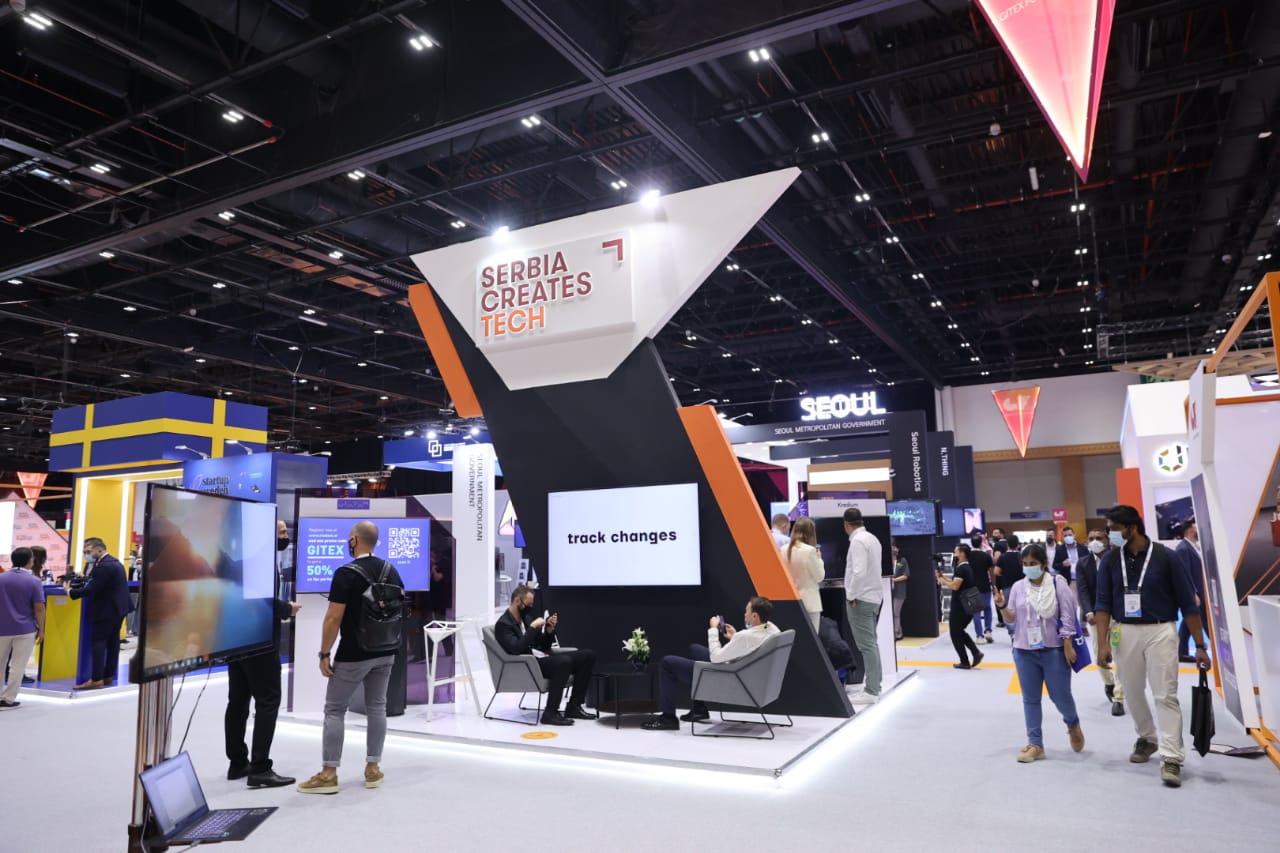
Serbia will serve as the Future Digital Economy Partner Country at GITEX Global 2025 in Dubai, becoming the first European nation accorded that role. The designation foregrounds Serbia’s ambitions to reposition itself from outsourcing hub to innovator in global tech markets.

Serbia’s IT exports crossed €3.5 billion in 2023, and the sector has maintained close to 20 percent year-on-year growth. The number of IT firms now exceeds 4,000, with many branching into domains such as fintech, health tech, AI and gaming. The Chamber of Commerce and Industry of Serbia, which leads the national delegation, views the GITEX platform as an opportunity to elevate the country’s narrative beyond cost-competitiveness to creative capacity.

Marko Čadež, president of CCIS, said Serbian firms are now pitching themselves as long-term transformation partners rather than simple vendors. He emphasised that enterprises increasingly expect strategic collaboration, not just software delivery. Meanwhile, analysts point to Serbia’s strong foundations—high math and engineering education standards, English proficiency, and relatively affordable costs—as a competitive edge in Eastern Europe.

Yet Serbia confronts headwinds. Talent retention is an ongoing challenge: many trained professionals migrate to Western Europe or the U. S. Infrastructure remains uneven, with rural areas lagging behind Belgrade in connectivity. In addition, venture capital inflows to the Balkans are smaller compared to Western Europe, constraining the ability of startups to scale aggressively.

Serbia is attempting to counterbalance those constraints through targeted programmes. The Chamber of Commerce has launched “Start 2,” a support scheme for scale-up firms, which includes mentoring and market access, and will be showcased at GITEX Europe in Berlin. The programme focuses on Serbian companies already achieving revenues above €250,000 and aims to open doors into German and EU markets.

At GITEX Global 2025, Serbia will present a showcase of startups and products under “North Star,” highlighting innovations in AI, e-commerce, predictive analytics, and diagnostics tools. Its delegation will also include outsourcing firms pitching upscaled offerings—product co-development, R&D support, and domain expertise in sectors such as telecom and healthcare.

GITEX organisers themselves have underscored Serbia’s place among rising tech nations: the 2025 edition includes 6,800 tech enterprises, 2,000 startups, and participant countries from 180 nations. Serbia joins Brazil and Pakistan as Country Partners this year—a reflection of the broader intention to diversify the event’s global footprint. The spotlight on AI, biotech, semiconductors, data infrastructure, and robotics offers Serbia a chance to align its exposure with the global themes defining tech agendas.

Turkish authorities reaffirmed their commitment to maintaining energy ties with Russia, dismissing US appeals to cut off Moscow from the country’s gas supply network. The Turkish Energy Minister, Alparslan Bayraktar, emphasised that existing contracts and technical dependencies render any abrupt withdrawal impractical. Bayraktar told CNNTurk that “we cannot tell our citizens: We have run out of gas,” adding that Turkey must ensure continuous supply from Russia, Azerbaijan, […]

OpenAI has struck letters of intent with Samsung Electronics and SK Hynix to supply undiced DRAM wafers for its ambitious “Stargate” AI infrastructure initiative, with projected demand reaching as high as 900,000 wafers per month—potentially equivalent to 40 percent of global DRAM output. The agreements were announced during meetings in Seoul among OpenAI CEO Sam Altman, South Korean President Lee Jae-myung, Samsung Chairman Jay Y. Lee and […]

VISHNU RAJA
RYO YAMADA
HITORI GOTOH
IKUYO KITA