A quiet but unsettling episode in the artificial intelligence ecosystem has sharpened concerns about how quickly powerful autonomous tools are being deployed without robust safeguards. A single message, sent politely and without any technical wizardry, was enough for an attacker to extract a private cryptographic key from a user within minutes. The breach did not rely on malware, brute force or advanced exploits. It relied on trust, […]
Global Brand Ambassador Lando Norris and Asia-Pacific Brand Ambassador Wei Daxun gear up to launch the latest evolution of TUMI Alpha.
HONG KONG SAR – Media OutReach Newswire – 28 January 2026 – Today, international travel, lifestyle, and accessories brand TUMI unveils the next generation of the Alpha collection, brought to life through individual campaigns starring Formula 1 World Champion and Global Brand Ambassador Lando Norris, and Asia-Pacific Brand Ambassador and actor Wei Daxun. Together, they embody a revitalized expression of Alpha: sleek, precise, and intentionally understated — designed for modern movement.
Wei Daxun pictured with the Alpha TUMI Brief Pack TM in Navy.
Lando Norris pictured with the Alpha Double Expansion Duffel in Black.
The global campaign, directed by Alice Schillaci and photographed by Reto Schmid, casts Norris in a cinematic, suspense-driven narrative. Framed as a man preparing for a mission, the visuals draw from classic action storytelling, defined by precision, focus, and intent.
“When you’re preparing for something important, you don’t want distractions — you want everything to work exactly as it should,” says Norris. “Whether I’m racing or on the move, it’s about being ready. Alpha feels built for that mindset.”
That same sensibility continues in the campaign starring Asia-Pacific Brand Ambassador Wei Daxun. Directed by David Pun and photographed by GK (国琨), the campaign captures Daxun moving through sleek, modern spaces, highlighting Alpha’s clean lines, smooth movement, and refined design.
“Alpha is designed with real intention — you feel it in the materials, the balance, the way it moves with you. It’s something I trust to be there, no matter where the day takes me.” says Wei.
“Alpha represents a blueprint for modern movement,” says Victor Sanz, TUMI Global Creative Director. “It’s where we return to rethink performance. We look at how people move, what they carry, and how design can support that journey.”
“Both Lando Norris and Wei Daxun represent that next generation. Alpha isn’t just designed to keep up with them; it’s designed to perform alongside them.”
Across both campaigns, Alpha’s design intelligence takes focus. Signature FXTTM Ballistic Nylon anchors the collection, paired with streamlined pocketing, silent magnetic closures, and intuitive access points engineered for efficiency. Core styles — including the Dual Access Expandable Carry-On, TUMI Brief PackTM, Double Expansion Duffel, and Convertible Clutch Crossbody — are refined to support movement without interruption.
To celebrate Alpha’s latest evolution, TUMI debuts Ultra Blue, identified by vivid blue accents across key touchpoints on six iconic Alpha silhouettes. The colorway aims to commemorate TUMI’s relentless innovation and commitment to excellence.
This next generation of Alpha reflects TUMI’s enduring commitment to understanding its customer and supporting every moment of their journey, wherever it leads.
PRODUCT HIGHLIGHTS
* TUMI Brief PackTM
Built for those who demand more from every journey. Take your office with you — and then some — with our iconic design. Intuitively crafted to be spacious and well-organized, every item has its place, from the organizational panel to the hidden phone pocket.
* Double Expansion Duffel
Built for travelers who demand more from every journey. Cleverly crafted to maximize packing
capacity, this bestselling duffel features impressive depth and expansion, making it the ultimate companion for long weekends.
* Dual Access Expandable 4 Wheeled Carry-On
Built for travelers who demand more from every journey—this large-capacity, dual-access
expandable carry-on features our signature FXTTM Ballistic Nylon and best-in-class functionality.
* Convertible Clutch Crossbody
Built for those who demand more from every journey. This compact style features signature TUMI design elements and is versatile by design. Carry as a crossbody, wristlet or clutch by
interchanging the included straps accordingly.
Explore the TUMI Alpha Collection now at TUMI.com and in TUMI stores worldwide. Follow @TUMITravel for exclusive behind-the-scenes content from the campaign.
Hashtag: #TUMI
The issuer is solely responsible for the content of this announcement.
About TUMI
Since 1975, TUMI has been creating world-class business, travel, and performance luxury essentials, designed to upgrade, uncomplicate and beautify all aspects of life on the move. Blending flawless functionality with a spirit of ingenuity, we’re committed to empowering journeys as a lifelong partner to movers and makers in pursuit of their passions. For more about TUMI, visit TUMI.com and follow on Instagram, TikTok, Facebook, and YouTube.
AfricAI has secured exclusive continental rights from Micropolis Robotics to commercialise and deploy advanced autonomous robotics platforms across Africa, under a multi-year agreement that industry analysts describe as a pivotal development for robotics infrastructure on the continent. The deal prohibits Micropolis from direct sales or appointing alternative distributors in the territory, establishing AfricAI as the central execution, localisation and go-to-market partner for Micropolis’s robotics systems across industrial, […]
Negotiators from India and the European Union have moved into the final stretch of talks on a long-pending free trade agreement that both sides now describe as a strategic necessity, as uncertainty over United States trade policy reshapes global supply chains and export strategies. Officials involved in the discussions say most market-access chapters are broadly settled, with remaining work focused on sensitive tariff lines, regulatory safeguards and timelines for implementation.
The proposed pact, under negotiation for more than a decade with several pauses, has regained momentum over the past two years as Brussels and New Delhi seek to reduce exposure to external shocks. For the European Union, diversifying trade ties beyond the US and China has become an explicit policy goal. For India, securing preferential access to one of the world’s largest consumer markets offers a counterweight to potential tariff pressures elsewhere.
Trade specialists say the structure of the deal reflects this shared urgency. India is expected to secure phased tariff reductions on a wide range of labour-intensive exports, including textiles, apparel, leather goods, footwear, gems and jewellery, and certain engineering products. These sectors employ millions and are among the most exposed to changes in external demand. Ajay Srivastava, a former trade official, has said that improved access to the EU market would help exporters partly offset the impact of higher duties or restrictive measures imposed by the US on selected product categories.
European manufacturers, in turn, are seeking lower tariffs and clearer rules for automobiles, high-end machinery, wines and spirits, medical devices and chemicals. Current import duties on some of these products remain among the highest faced by EU exporters in major economies. Brussels has also pressed for stronger commitments on intellectual property protection, government procurement and regulatory transparency, areas that have historically slowed progress.
People familiar with the talks say negotiators have narrowed differences on goods tariffs by agreeing to longer transition periods for politically sensitive items, allowing domestic industries time to adjust. Agriculture remains a delicate chapter, with India resisting broad concessions on dairy and certain farm products, while offering limited quotas and safeguards to protect small producers. The EU has signalled flexibility, recognising the social and political weight of agriculture in India’s economy.
Beyond goods, services and investment provisions are central to the pact’s commercial value. India is pushing for easier movement of professionals in information technology, engineering and healthcare, alongside mutual recognition of qualifications. European counterparts are cautious, balancing labour-market concerns with industry demands for skilled talent. Investment protection rules are also under discussion, with both sides aiming to avoid disputes that have characterised earlier bilateral treaties.
Geopolitics has added another layer to the negotiations. Heightened trade frictions involving the US have reinforced the case for dependable partners and rules-based commerce. European policymakers increasingly view India as a key pillar in their Indo-Pacific strategy, while New Delhi sees the EU as a stable market that complements its manufacturing and export ambitions. The alignment is evident in parallel talks on a separate investment protection agreement and a framework for cooperation on sustainable development.
Environmental and labour standards have emerged as important, though contentious, elements. The EU has sought binding commitments linked to climate goals and workers’ rights, consistent with its newer trade agreements. India has pushed back against provisions it views as intrusive or misaligned with domestic development priorities, arguing for cooperation rather than enforcement-driven clauses. Compromise language is being explored to bridge these positions without derailing the broader deal.
Economists note that the scale of potential gains is significant, though uneven across sectors. The EU is already one of India’s largest trading partners, with bilateral goods trade running into tens of billions of euros annually. A comprehensive agreement could lift trade volumes further by lowering costs, improving predictability and encouraging investment flows. Export-oriented clusters in states with strong manufacturing bases are expected to be among the main beneficiaries.
Industry groups on both sides have stepped up engagement, urging negotiators to maintain momentum. Indian exporters highlight the risk of losing market share to competitors that already enjoy preferential access to the EU. European businesses argue that delayed agreement leaves them at a disadvantage in a fast-growing market with rising consumer demand and infrastructure spending.
Google is preparing a notable shift in Android’s visual language with a leaked system-level feature known as WindowBlur, signalling a more deliberate move towards refined interface effects that have long been associated with Apple’s mobile software. The capability, expected to debut with Android 17, introduces background blur at the operating-system level, allowing apps and system surfaces to soften content beneath translucent panels without relying on custom, app-by-app […]
Arabian Post Staff -Dubai PureLab and LODD have launched a pilot programme in Abu Dhabi to transport blood samples using drones, marking a step towards integrating unmanned aerial vehicles into routine medical logistics and emergency healthcare supply chains. The initiative is designed to cut transit times for critical diagnostic samples, reduce reliance on road transport, and strengthen the resilience of laboratory networks during peak demand or traffic […]
Arabian Post Staff -Dubai Kuwait has cancelled nine upstream oil tenders with a combined value approaching $10 billion after bids submitted by overseas contractors exceeded the approved budget by a wide margin, signalling a pause in the country’s near-term expansion plans and a reset of procurement expectations across the energy sector. The tenders were issued by the state-owned Kuwait Oil Company, the upstream investment arm tasked with […]
Bringing together local and overseas innovation talents and leaders to deepen cross-border, cross-campus collaboration
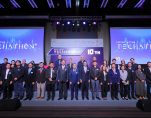
HONG KONG SAR – Media OutReach Newswire – 27 January 2026 – Hong Kong Science and Technology Parks Corporation (HKSTP), together with 15 local tertiary institutions, marked a major milestone as Hong Kong Techathon+, the city’s largest international intercollegiate innovation and technology (I&T) annual event, celebrated its 10th anniversary. The Hong Kong Techathon+ Finale was successfully held recently (on 24 January) at Hong Kong Science Park. The team “Cresento” from The Hong Kong University of Science and Technology won the Gold Award in the category of Trusted AI and Data Science under the Local Track (Open Group) as well as the Best Presentation Award voted by the audience.
The 10th anniversary finale of Hong Kong Techathon+, co-organised by HKSTP and 15 local tertiary institutions, took place at Hong Kong Science Park, bringing together representatives from local and overseas institutions, industry partners, and innovation teams to mark this milestone.
In parallel, the Global University Innovation Network (GUIN), jointly established by HKSTP and its 15 local tertiary institution partners, convened its inaugural forum on 23 January. The forum brought together GUIN member representatives and academic I&T leaders for in-depth exchanges on innovation and entrepreneurship ecosystem development, further strengthening Hong Kong’s position as an international I&T and talent hub.
Hong Kong Techathon+ is co-organised by HKSTP and 15 local tertiary institutions, including: City University of Hong Kong, Hong Kong Baptist University, Hong Kong Metropolitan University, Hong Kong Shue Yan University, Lingnan University, The Chinese University of Hong Kong, The Education University of Hong Kong, The Hang Seng University of Hong Kong, The Hong Kong Polytechnic University, The Hong Kong University of Science and Technology, The University of Hong Kong, Tung Wah College; and three institutions under the Vocational Training Council – The Technological and Higher Education Institute of Hong Kong, Hong Kong Institute of Vocational Education, and Hong Kong Institute of Information Technology.
Record-high International Participation Highlights Hong Kong’s Role as a Hub for Talent, Markets and Opportunity
This year’s Techathon+ attracted enthusiastic participation from both local and overseas universities, Approximately 1,900 participants formed over 470 teams. Notably, 215 overseas teams joined, underscoring the event’s growing international appeal.
Following rigorous selection, 172 teams advanced to the finale, including 122 local teams and 50 overseas teams from Australia, Brazil, Chinese Mainland, Japan, Kazakhstan, Malaysia, Portugal, Singapore, the Republic of Korea, Taiwan, the UK, and the US. Kazakhstan, Japan, Korea and the UK participated for the first time through their university representatives, further demonstrating Techathon+’s reach as an international platform for I&T exchange.
A Decade of Growth: From a Local Challenge to One of Asia’s Major Inter-University I&T Platforms
HKSTP Chief Executive Officer Mr Terry Wong said: “Since its launch in 2015, Hong Kong Techathon+ has grown from a local challenge to one of Asia’s largest intercollegiate I&T events — driving creativity and collaboration while creating international impact. Techathon+ brings together outstanding young talents across tertiary institutions, turning ideas into innovative solutions that respond to societal needs and carry strong potential for real-world application. The platform has expanded the global pipeline of innovators and entrepreneurs, reinforcing Hong Kong’s role as a hub connecting talents, markets, and opportunities, and writing the next chapter of Hong Kong’s I&T story.”
Beyond a Competition: A Comprehensive “Soft-landing” platform for Entrepreneurship
Hong Kong Techathon+ is more than a university innovation competition. Over the past decade, the platform has engaged over 9,000 participants, nurturing innovative talents and supporting the growth of startups.
Non-local teams also participated in a four-day immersive programme, featuring I&T ecosystem seminars, mentorship, investor matching, visits at Hong Kong Science Park, and tours to Chinese Mainland I&T bases, helping participants explore market expansion opportunities across the Greater Bay Area.
HKSTP also invites selected high-potential finalist teams and winners to join its Ideation Programme, offering up to HK$100,000 in seed funding (along with support aligned with participating universities’ startup programmes), free co-working spaces, access to advanced technology resources and professional mentorship. Through HKSTP’s incubation and industry networks, teams are supported from prototype development to sustainable startups operations – scaling progressively and building international impact.
Amazon Web Services (AWS) is the exclusive Technology Enabler for the 10th Edition of Hong Kong Techathon+, providing participating startups with access to leading cloud and artificial intelligence technologies and platforms. Through this collaboration, AWS offered competing teams technology resources in generative AI and machine learning, professional technical support, and workshop to accelerate innovation and drive Hong Kong’s development as an international I&T hub.
Inaugural GUIN Forum: Deepening Global University Innovation Collaboration
The first Global University Innovation Network (GUIN) Forum was successfully held on 23 January at Hong Kong Science Park, bringing together GUIN member institution representatives and I&T experts. The forum focused on three key areas:
Exploring strategies for university-industry technology transfer collaboration to achieve win-win innovation outcomes
Examining the Greater Bay Area as a hub for international innovation collaboration, including opportunities for research commercialisation and cross-border partnership, and
Strengthening global collaboration networks through actionable pathways.
Speakers included Dr Tony Raven, former CEO of Cambridge Enterprise; Professor Poh Kam Wong, Emeritus Professor at National University of Singapore; and Dr Alwin Wong, Chair of the Association of Technology Transfer Professionals (ATTP), among others.
Co-founded last year by HKSTP and 15 local tertiary institution partners with support from multiple overseas institutions and partners, GUIN aims to bring together leading minds to advance international collaboration in innovation and entrepreneurship, reinforcing Hong Kong’s role as a global talent and innovation hub.
In his welcome address at the forum, Mr Terry Wong, Chief Executive Officer of HKSTP remarked: “We are building GUIN into a ‘global platform for innovation exchange and incubation’ — sharing knowledge, co-creating initiatives, and connecting startups with campus incubation resources and markets worldwide to turn concepts into tangible outcomes.”
Since last summer, HKSTP and university partners have launched the Theme-based Global Incubation Programmes under GUIN with three initiatives currently underway focusing on dentistry, visual technology, and the circular economy. The inaugural ” Global Hub for Future Dentistry” programme has attracted 40 top applicants worldwide. Additional thematic incubation programmes are in preparation, and GUIN members and partner organisations are welcomed to co-develop this expanding international collaboration.
The 10th Edition of Hong Kong Techathon+ Partial Awards List:
Local Track (Student Group)
Technology Theme
Award
Winning Team
Project Brief
Trusted AI & Data Science
Gold
SpeakRight
An AI‑powered voice‑changing solution designed to demonstrate and enhance speech training applications.
Sustainability & ESG
Gold
Hydroforge Tech
Development of cost‑efficient AEM electrolysis systems using a binder‑free, self‑growing electrode technology to enable scalable green hydrogen production.
Life Science & Healthcare
Gold
Nanos
A tech‑driven Contract Development & Manufacturing Organisation (CDMO) platform that rescues undeliverable drug candidates through proprietary drug‑carrier optimisation, targeting breakthrough therapies including Alzheimer’s.
Digital Economy & Smart City
Gold
Smart Mall Wayfinding with AI Paedestrian Dead Reckoning Technology
An AI-powered Pedestrian Dead Reckoning (PDR) solution – an infrastructure‑light indoor navigation that delivers accurate mall wayfinding using AI‑powered pedestrian dead‑reckoning with minimal deployment cost.
Tech FYP Group
Gold
OmniWatch AI – A Scalable, Multi-Model AI Proctoring Engine and Invigilator Dashboard
A privacy‑preserving, multi‑modal AI platform for onsite digital exam proctoring that detects suspicious behaviours in real time and enables scalable, non‑intrusive invigilation.
Local Track (Open Group)
Technology Theme
Award
Winning Team
Project Brief
Trusted AI & Data Science
Gold
Cresento*
A Hong Kong–based sports technology startup developing AI‑powered smart shin guard solution, delivering actionable performance insights for safer, smarter football training.
Sustainability & ESG
Gold
Off-Grid AEM Hydrogen Production Driven by Fluctuating Renewable Energy
A modular off‑grid AEM electrolysis system designed for stable hydrogen production from fluctuating renewable energy sources.
Life Science & Healthcare
Gold
Illuminatio Medical Technology
A medical imaging startup developing non‑invasive diagnostics to improve the assessment of chronic liver disease (CLD).
Digital Economy & Smart City
Gold
MicroLink
A micro‑LED‑based optical interconnect technology enabling faster, more energy‑efficient data transfer for next‑generation AI data centres.
Global Track
Technology Theme
Award
Winning Team
Project Brief
Life Science & Healthcare
Gold
Cancer Immunotherapy
A next‑generation cancer immunotherapy programme developing novel PD‑1 combination treatments to improve outcomes for solid tumours.
Non-Life Science & Healthcare
Gold
ROTOBOOST
ROTOBOOST develops Thermo‑Catalytic Decomposition (TCD) technology to produce low‑cost, low‑carbon hydrogen from diverse hydrocarbon feedstocks, enabling efficient pre‑combustion carbon removal at industrial scale.
*Winner of Best Presentation Award voted by the audience.
Hashtag: #HKSTP
The issuer is solely responsible for the content of this announcement.
Advancing R&D, talent development and the region’s energy transition
SINGAPORE – Media OutReach Newswire – 26 January 2026 – ST Telemedia Global Data Centres (STT GDC), one of the world’s fastest growing data centre colocation providers headquartered in Singapore, today announced two significant initiatives that strengthen Singapore’s position in the global digital and energy transition: the launch of the FutureGrid Accelerator, Southeast Asia’s first live High Voltage Direct Current (HVDC)-powered AI infrastructure testbed; and a suite of strategic Memoranda of Understanding (MOUs) with four Institutes of Higher Learning (IHLs) to advance skills development and expand internship and early career pathways for Singaporeans entering the workforce. These initiatives align with national efforts to support talent graduating into a challenging job market, while building the specialised capabilities required for next generation power and digital infrastructure.
Celebrating the official launch of the FutureGrid Accelerator; a new benchmark for HVDC-powered AI infrastructure in the region.
[Pictured from left to right] Lim Kian Tiong, Chief Financial Officer, LITEON; Bruno Lopez, President & Group Chief Executive Officer, ST Telemedia Global Data Centres; Minister Gan Siow Huang, Minister of State, Ministry of Foreign Affairs & Ministry of Trade and Industry; Professor Lam Khin Yong, Vice President (Industry), Nanyang Technology University Singapore; Brian Dow, Chief Executive Officer, Amperesand.
Officiated by Ms Gan Siow Huang, Minister of State for Foreign Affairs and Trade & Industry, the announcement underscores a national push to build capabilities not only for AI-ready data centres, but also for the wider energy ecosystem, as Singapore and the region pursue net-zero ambitions.
FutureGrid Accelerator: HVDC innovation for AI and the wider energy transition Located at the Nanyang Technological University, Singapore (NTU Singapore) Electrification and Power Grids Centre (EPGC) on Jurong Island, the FutureGrid Accelerator is a pioneering initiative jointly developed by STT GDC and LITEON, supported by the Energy Research Institute @ NTU (ERI@N) and NTU deep-tech spinoff Amperesand. It is the region’s first live testbed demonstrating HVDC integration with real AI workloads, addressing the high-density and high-resiliency requirements of next-generation AI computing.
While central to the future of AI data centre architecture, HVDC represents a broader opportunity: it is a foundational technology that supports more efficient, resilient and integrated power systems. This is critical for Singapore’s long-term energy strategy, its transition to low-carbon energy grids and the region’s increasing need for sustainable power delivery.
Why HVDC Matters: A scalable platform beyond the data centre As AI and high-performance computing workloads scale, traditional alternating current (AC) power systems face inherent limitations. HVDC overcomes these constraints and delivers several transformative benefits:
Up to 30% overall energy savings compared to conventional AC systems
A reduction of up to 400 tonnes of CO2 equivalent (CO2e) per megawatt per year
45% lower copper consumption and a 30–40% smaller power-infrastructure footprint
The ability to support ultra-high-density racks exceeding 1,000kW, with higher reliability and lower cost
Native compatibility with renewable power sources able to feed directly to the direct-current system, avoiding inefficient power conversions
“The FutureGrid Accelerator is a strategic investment in Singapore’s long-term digital leadership,” said Bruno Lopez, President and Group Chief Executive Officer, ST Telemedia Global Data Centres. “By bringing together global industry leaders like LITEON with local deep-tech talent such as Amperesand, we are building infrastructure that is ready for future AI workloads while pioneering sustainable practices and setting new benchmarks for energy efficiency and carbon-conscious innovation. This initiative reflects our commitment to future-ready technologies and reinforces Singapore’s position as a global Centre of Excellence for advanced sustainable digital infrastructure. It is a bold step forward in shaping the future of data centres and accelerating energy transition across the region.”
Ms Gan Siow Huang, Minister of State for Foreign Affairs & Trade and Industry, said: “The FutureGrid Accelerator demonstrates how industry and academia can work together to drive innovation and strengthen Singapore’s global leadership in cutting-edge technologies. I also welcome STT GDC’s partnerships with ITE and SP, which will add to the suite of training options for the rapidly growing areas of AI and energy-efficient systems.”
The FutureGrid Accelerator will validate HVDC system performance at power loads of at least 325kW, incorporating the latest AI servers. The environment incorporates LITEON’s data centre reference architecture with Amperesand’s Solid State Transformer (SST) technology—an enabling innovation for next-generation HVDC deployment. STT GDC plans to deploy this technology in future data centres in Singapore and progressively scale adoption across its global operations.
“LITEON is committed to advancing the frontier of power management efficiency, and our collaboration with STT GDC and Amperesand is key to establishing the next standard for sustainable AI infrastructure in Asia,” said Jason Tsao, Head of Direct Current Microgrid at LITEON. “By deploying an end-to-end data centre reference architecture and integrated power management system in a live environment with STT GDC and partners, we are validating a high-density, energy-saving solution ready to meet the extreme demands of global technology leaders.”
“The FutureGrid Accelerator underscores NTU’s role as a strategic partner in shaping the future of sustainable AI infrastructure”, said Prof Lam Khin Yong, NTU’s Vice President (Industry). “By integrating cutting-edge HVDC technologies with our research capabilities and the entrepreneurial drive of NTU spin-offs like Amperesand, we are advancing impactful solutions that can significantly enhance energy efficiency and grid resilience. This collaboration showcases how universities can drive transformative innovations at the intersection of energy, digitalisation and sustainability.”
“Amperesand is obsessed with revolutionising Medium Voltage to critical load power delivery for next-generation AI data centres, defence, and other essential electrified assets. We focus on first principles to achieve market leading power density, efficiency, and reliability,” said Brian Dow, CEO and Co-Founder of Amperesand. “In this era of AI data centre and other critical power systems becoming economic and national security interests for many countries, Amperesand’s MV SST Platform enables in-country cyber-secure controls and data, regionally available supply chains, and low CAPEX intensity local manufacturing. Our solution is an intelligent, universal Medium Voltage power source that works on-and-off grid to improve critical infrastructure resilience as new large electrical loads come online.”
Developing Energy-Ready Skills: Partnerships with ITE, SP, NTU and NUS STT GDC signed MOUs with the Institute of Technical Education (ITE), Singapore Polytechnic (SP), NTU Singapore and National University of Singapore (NUS). These partnerships will benefit more than 8,000 Singaporeans over five years through industry-aligned training in AI infrastructure and sustainable energy systems. This ensures the scaling of HVDC—and the broader energy transition—is matched by the transformation and availability of skills, jobs and talent development pathways.
Mr Lopez added, “Talent is the decisive enabler as we advance AI and sustainability infrastructure. These partnerships build a skilled workforce needed to strengthen Singapore as a global hub for advanced digital and energy systems.”
Key initiatives and impact:
Building a talent pipeline: STT GDC will provide internship placements across ITE, SP, NTU and NUS over the next five years, with support from Enterprise Singapore. The programme offers immersive, hands-on experience in data centre operations and corporate functions such as IT, sustainability, finance and marketing, supported by mentoring from industry professionals. In addition, STT GDC will offer 100 sponsorships for Data Centre Foundation Certificate (DCFC®) offered by EPI, a global certification body for data centre facilities, data centre operations and industry professionals, accelerating entry into the sector.
Developing industry-ready talent with ITE: The collaboration with ITE will benefit approximately 800 students annually — totalling 2,400 students over three years — from ITE’s engineering and information and communications technology (ICT)-related Higher Nitec and Work-Study Diploma courses. Key initiatives include co-developing industry-relevant curricula for full-time and Continuing Education & Training (CET) courses in data centre operations and sustainability; deploying a data centre virtual reality system at the ITE Extended Reality Centre for immersive training; supporting lecturer attachments and student internships; and enabling students to pursue the sponsored DCFC® course.
Sustainability leadership with SP: The partnership with SP develops expertise in environmental sustainability and green data centre solutions. Initiatives include joint exploration of green technologies and practices; industry seminars and events to promote sustainable solutions; and targeted programmes for training, mentorship, applied projects and internships.
Innovation and research leadership with NTU: The partnership with NTU combines cutting-edge joint R&D of solutions for AI data centres powered by direct current sources; training, curriculum and talent development for the AI data centre sector; industry and career talks; and internship opportunities across STT GDC’s group of companies.
Graduate pathways with NUS: STT GDC’s collaboration with NUS supports accessible entry points for graduates through internships, training opportunities and ongoing career and industry engagement to raise awareness of digital infrastructure pathways.
The issuer is solely responsible for the content of this announcement.
About ST Telemedia Global Data Centres
ST Telemedia Global Data Centres (STT GDC) is one of the fastest-growing data centre providers with a global platform serving as a cornerstone of the digital ecosystem that helps the world to connect. Powering a sustainable digital future, STT GDC operates across Singapore, the UK, Germany, Italy, India, Thailand, South Korea, Indonesia, Japan, the Philippines, Malaysia and Vietnam, providing businesses an exceptional foundation that is built for their growth anywhere. For more information, visit https://www.sttelemediagdc.com/
Appendix: Partner Quotes
Mr Peter Lam, Chief Executive Officer, Institute of Technical Education (ITE): “At ITE, our focus is on equipping our students with future-ready skills for Singapore’s evolving economy. Through the partnership with STT GDC, our students gain valuable real-world training and exposure to advanced tools in data centre operations. This strengthens our efforts to prepare career-ready students and develop talent for Singapore’s growing digital infrastructure sector.”
Mr Soh Wai Wah, Principal and CEO of SP: “Singapore Polytechnic is committed to developing a future-ready workforce that can support Singapore’s growing demand for sustainable and resilient data centre operations. This partnership with STT GDC brings together our strengths in training, applied learning and industry collaboration to nurture talent in environmental sustainability and green solutions for data centres. Through co-developed programmes, mentorship, student projects and internships, we will build deeper capabilities and broaden pathways for learners to contribute to this important sector. SP looks forward to advancing this effort with STT GDC to support Singapore’s long-term industry and sustainability goals.”
Professor Lam Khin Yong, Vice President (Industry), Nanyang Technological University: “STT GDC is a partner that shares our commitment to advancing impactful research and developing future-ready talent. Leveraging NTU’s strengths in artificial intelligence, energy-efficient systems and translational innovation, this partnership will accelerate the co-development of next-generation AI data centre technologies while providing our students and researchers with valuable real-world experience. Together, we are helping to build a robust pipeline of skilled professionals who will support Singapore’s ambitions in sustainable and AI-driven digital infrastructure.”
Ms Joan Tay, Senior Director, NUS Centre for Future-ready Graduates: “NUS’ partnership with STT GDC is timely, as demand grows for skilled professionals to manage complex, high-density AI infrastructure. Through internships, training, industry engagement and access to recognised certification, we bridge education and industry to equip students with the skills and experience needed to thrive in today’s fast-evolving digital infrastructure space.”
Alibaba Cloud and NVIDIA as Key Technology Partners. Usher in a New Era of Industrial AI.
HONG KONG SAR – Media OutReach Newswire – 26 January 2026 – AsiaInfo Technologies Limited (“AsiaInfo Technologies” or the “Company”; HKEX stock code: 01675), a leading provider of software products, solutions, and services, and ABB Robotics jointly established the “Embodied Intelligence Laboratory” and held its inauguration ceremony at AsiaInfo Plaza in Beijing on 25 January.
Tian Suning, Chairman of AsiaInfo Technologies, and Dr. Ouyang Ye, Chief Executive Office and Chief Technology Officer of AsiaInfo Technologies, together with Han Chen, Vice President of ABB Group and President of ABB Robotics China, jointly held an unveiling ceremony for the laboratory. Li Li, Vice President of the Government-Enterprise Business Unit at Alibaba Cloud Intelligence Group, attended the ceremony as key technology partners, witnessing this milestone that ushers in a new phase of integration between Physical AI technologies and the real economy.
ABB Robotics is one of the world’s leading robotics suppliers, offering a comprehensive and integrated portfolio that includes industrial and collaborative robots, autonomous mobile robots (AMRs), controllers, application solutions, services, and equipment. Powered by its intelligent software, its technologies help businesses across industries from automotive to electronics and logistics to become more resilient, flexible, and efficient.
As AI rapidly moves from the digital realm into the physical world, Physical AI, as the key bridge linking AI capabilities with real‑world industries, is becoming a core engine driving the intelligent upgrade of manufacturing sector. Against this backdrop, AsiaInfo Technologies has established a strategic partnership with ABB Robotics to jointly set up the Embodied Intelligence Laboratory, integrating both parties’ core strengths in foundation AI large models, industrial automation, communications technologies and robot control. The laboratory will focus on cutting‑edge areas such as industrial simulation and Physical AI, aiming to break through bottlenecks in the perception, decision‑making and execution capabilities of intelligent agents in complex real‑world scenarios. It will build an end‑to‑end innovation system spanning technology research and development (“R&D”), technology commercialization and large‑scale industrial deployment, thereby injecting strong AI‑driven momentum into high‑quality development.
As a leader in full‑stack digital‑intelligence capabilities, AsiaInfo Technologies will take AI large model application as the core lever, deeply integrating its strengths in 5G‑A telecommunications technology and network security to drive technology integration and large‑scale deployment at the laboratory. By developing replicable, scalable scenario‑based solutions, the Company will accelerate the rollout and value realisation of innovation in the intelligent manufacturing sector. Leveraging its global expertise in industrial automation and flexible control, ABB Robotics will provide the laboratory with real‑world, production‑line use cases and strong engineering support capabilities, enabling efficient validation, optimisation and iteration of technical solutions, and achieving deep coupling and mutual empowerment between technology and application scenarios.
The laboratory will leverage external technology partners to reinforce its R&D capabilities. By utilising Alibaba Cloud’s massive data processing power and cutting‑edge algorithmic frameworks such as Vision‑Language‑Action (VLA), and NVIDIA accelerated computing technology for training optimisation, it will significantly speeding up the industrialisation of Physical AI technologies.
The Embodied Intelligence Laboratory jointly established by AsiaInfo Technologies and ABB Robotics has been officially launched, marking the shift of their strategic partnership into a practical stage of implementation based on previous research. This collaboration represents not only a forward-looking initiative by both parties to deploy cutting-edge technologies and fulfill their industrial responsibilities, but also a pivotal step in advancing Physical AI from the laboratory into real-world applications on the factory floor. Looking forward, AsiaInfo Technologies together with partners including ABB Robotics and Alibaba Cloud, will use the laboratory as a core platform to deepen technical collaboration and scenario co‑creation, drive large‑scale deployment of Physical AI in industry, build a globally impactful benchmark for industrial intelligence, and help shape an open and collaborative Physical AI ecosystem. Hashtag: #AsiaInfo
The issuer is solely responsible for the content of this announcement.
E-commerce platforms and AI startups are under a sharper spotlight as automation deepens its role in online retail, with one fast-growing software firm facing governance questions even as a major commerce platform discloses a steep rise in AI-assisted transactions. The twin developments underline both the speed of adoption and the growing expectations around transparency and leadership as artificial intelligence moves from experimentation to core operations. Shopify has […]
Saudi Arabia’s Real Estate General Authority has brought into force a sweeping set of legal changes that widen access to property ownership for foreign companies and expatriate residents, marking a significant shift in how the Kingdom regulates and opens its real estate market. The new framework, effective from January 22, integrates these provisions into the national real estate legislative system, making all rules immediately enforceable under a […]
Digital Twin Consortium has published a set of interoperable digital twin frameworks aimed at reshaping how multimodal transport networks are planned, operated and scaled, marking a shift away from fragmented pilots toward coordinated system-wide deployment. The guidance, released as part of the consortium’s evolving technical reference architecture, sets out common models, interfaces and data-sharing principles designed to allow digital twins across roads, rail, ports and aviation to […]
Snowflake has rolled out its AI Data Cloud on Amazon Web Services’ UAE region, a move designed to help enterprises build and deploy artificial intelligence workloads while keeping data residency and latency requirements in check. The expansion gives organisations operating in the Gulf access to Snowflake’s platform within the AWS Middle East Region, aligning with regulatory expectations that data generated in the country can be processed locally. […]
India’s largest information technology services firms together reported a net reduction of close to 3,000 employees in the third quarter of the 2025–26 financial year, underscoring a structural shift in hiring as companies rebalance workforces around artificial intelligence, cloud platforms and higher-value digital engineering.
Quarterly disclosures showed that headcount at several bellwether firms edged lower despite stable deal pipelines. The combined net decline, modest by historical standards, contrasted sharply with the aggressive campus hiring and broad-based workforce expansion that defined the sector for more than a decade. Executives and analysts pointed to a “barbell” pattern in demand, with strong hiring at the high end for niche digital and AI skills and limited intake, or attrition-led pruning, in legacy application maintenance and commoditised services.
At Tata Consultancy Services, the country’s largest IT services exporter by revenue, total employee strength slipped during the quarter as voluntary attrition stayed elevated in certain service lines and fresh hiring remained selective. Infosys also reported a marginal fall in headcount, reflecting a focus on utilisation, internal redeployment and productivity improvements rather than large-scale lateral recruitment. Wipro and HCLTech posted similar trends, with management teams emphasising skill transformation over volume growth.
The net reduction came even as revenue growth stabilised sequentially for most firms, helped by cost optimisation deals, vendor consolidation and demand for cloud migration. Industry executives said the hiring slowdown was not a signal of weakening fundamentals but a recalibration after years of overcapacity built during the post-pandemic surge in digital spending.
What is different this cycle, analysts argue, is the depth of the technology shift reshaping delivery models. Generative AI tools, low-code platforms and automation frameworks are beginning to decouple revenue growth from headcount expansion. Routine coding, testing and support tasks are increasingly automated, reducing the need for large teams, while boosting productivity per employee.
This dynamic has produced the barbell model now widely discussed in boardrooms. On one end, firms are competing fiercely for specialists in data engineering, AI model deployment, cybersecurity, semiconductor design services and advanced cloud architecture. On the other, demand for entry-level roles tied to traditional application development and infrastructure support has softened, leading to fewer campus offers and limited backfilling of exits.
Management commentary during earnings calls reinforced this shift. Several chief executives highlighted large internal reskilling programmes, with tens of thousands of employees undergoing training in AI, machine learning and cloud-native technologies. The emphasis has moved from hiring for scale to building depth in targeted capabilities that command higher billing rates and longer-term client commitments.
Client behaviour has also played a role. Enterprises in North America and Europe, which account for the bulk of export revenues, continue to scrutinise technology budgets amid macroeconomic uncertainty. Discretionary projects have faced delays, while spending has been redirected toward efficiency-led initiatives where automation is central. This has compressed demand for traditional staff-augmentation models that once absorbed large numbers of engineers.
Despite the headline job losses, the sector remains a major employer, with total headcount across the top firms still running into the millions. Analysts caution against interpreting the quarterly decline as a broad-based contraction. Instead, they see a transition phase in which workforce pyramids are being reshaped to align with evolving client needs and delivery economics.
Wage dynamics reflect the same adjustment. Salary hikes have been measured, variable pay has been linked more closely to utilisation and skill relevance, and onsite deployments have been rationalised. At the same time, niche talent continues to command premiums, widening pay dispersion within firms.
Microsoft and the Mercedes-AMG PETRONAS Formula One Team have entered a multi-year partnership that places cloud computing and enterprise artificial intelligence at the centre of one of the sport’s most analytics-intensive operations, extending from race-weekend decision-making to long-term car development and factory workflows. The agreement positions Microsoft as the team’s official cloud and AI partner, with Azure, Microsoft Fabric and Copilot technologies set to be woven into […]
Vertiv has unveiled an artificial intelligence-based predictive maintenance service designed to help data centre operators manage the growing operational strain created by high-density computing and AI-driven workloads. The service, branded Vertiv Next Predict, is positioned as a response to the rising complexity of power and cooling infrastructure as operators race to support advanced computing environments. The company said the new platform uses machine learning models, real-time sensor […]
By Nantoo Banerjee India’s transport sector, combining road, rail, air and water, is ready for a significant job boom, with the logistics industry alone projected to grow at a 10.7 percent compound annual growth rate (CAGR) through the current year. The national budget for 2026-27, which is scheduled to be placed in Parliament on February […]
Arabian Post Staff -Dubai Dubai has approved a Dh12.8bn expansion of Dubai Silicon Oasis, signalling a renewed push to scale the emirate’s knowledge economy and deepen its appeal to global technology, research and advanced manufacturing firms. The programme was launched by Sheikh Mohammed bin Rashid Al Maktoum, Vice President and Prime Minister of the UAE and Ruler of Dubai, and positions the zone for a new phase […]
Strong international validation for India’s ambitions in semiconductors and artificial intelligence has emerged during Union minister Ashwini Vaishnaw’s visit to Veldhoven, the Netherlands, where he held discussions centred on advanced manufacturing technologies and long-term collaboration. Vaishnaw described the engagement as a major opportunity to understand cutting-edge systems and align partnerships that could accelerate India’s high-technology ecosystem.
The visit to Veldhoven, home to the world’s most sophisticated chipmaking equipment capabilities, comes at a time when New Delhi is pushing to anchor itself more firmly in global semiconductor supply chains while building domestic capacity. Vaishnaw indicated that interlocutors acknowledged India’s policy direction and scale as compelling factors for deeper cooperation across semiconductors and artificial intelligence, two areas that are increasingly intertwined in next-generation computing and industrial automation.
Discussions during the trip focused on lithography technologies, supply-chain resilience and skills development, according to people familiar with the engagements. India’s pitch rests on a combination of policy incentives, a large engineering workforce and expanding demand from electronics, automotive and data-driven sectors. Officials accompanying the minister underlined that partners in Europe see India as a credible long-term manufacturing and innovation base rather than merely a consumption market.
The Netherlands occupies a critical position in the global chip industry because of its dominance in extreme ultraviolet lithography, a technology essential for producing advanced semiconductors. India’s engagement with Dutch stakeholders is therefore viewed as strategically important, particularly as countries and companies diversify supply chains amid geopolitical and commercial pressures. Vaishnaw’s meetings sought to map pathways for collaboration spanning equipment ecosystems, materials, precision engineering and research linkages.
Artificial intelligence featured prominently in the conversations, reflecting the convergence between advanced chips and AI workloads. Executives and policymakers discussed how specialised processors, high-performance computing and data infrastructure underpin AI deployment across sectors such as healthcare, mobility, energy management and public services. Indian officials emphasised the country’s growing base of AI startups, public digital platforms and applied research, arguing that closer alignment with global technology leaders would strengthen both sides.
The endorsement referenced by Vaishnaw also reflects broader international assessments of India’s semiconductor strategy, which combines fiscal incentives with infrastructure support and regulatory facilitation. Several fabrication and assembly projects have been announced across different states, while partnerships with global firms aim to address gaps in design, packaging and testing. Industry analysts note that execution risks remain, including timelines, talent depth in specialised manufacturing and integration into mature supply networks, yet acknowledge that momentum has improved.
From the Dutch perspective, collaboration with India offers access to a fast-growing market and diversification beyond traditional hubs. European technology firms have been recalibrating their engagement with Asia, balancing commercial interests with strategic considerations. India’s emphasis on trusted partnerships and standards-based cooperation resonates in this context, particularly in areas linked to critical technologies.
Vaishnaw’s visit also included interactions with research institutions and industry representatives to understand best practices in precision manufacturing and workforce training. Officials highlighted the importance of skilling programmes that align academic curricula with industry needs, a factor seen as decisive for sustaining semiconductor operations. India has been expanding such initiatives, including specialised training for chip design and manufacturing processes.
The talks in Veldhoven are part of a broader diplomatic and industrial outreach aimed at positioning India within high-value segments of global technology chains. Previous engagements with partners in East Asia and North America have similarly stressed co-development, supply assurance and innovation partnerships rather than transactional sourcing. The Netherlands visit adds a European dimension to that strategy.
Access to Microsoft’s cloud-based productivity tools was restored after a widespread disruption interrupted email, security and compliance services for users across multiple regions, the company said, following hours of degraded performance that affected businesses, governments and schools. Microsoft confirmed that the incident disrupted several Microsoft 365 services, including Outlook, Microsoft Defender and Microsoft Purview, with users reporting problems sending and receiving email, delays in threat alerts and […]
Microsoft has unveiled WinApp CLI, an open-source command-line tool released in public preview, aimed at simplifying how developers build and package applications for Windows. The tool brings together tasks that are typically spread across multiple utilities, allowing teams to initialise projects, manage software development kits, configure app manifests, handle certificates and generate MSIX packages from a single workflow. The launch reflects a broader push by Microsoft to […]
Arabian Post Staff -Dubai NMK Electronics has unveiled NMK Beyond, a 21,500 sq ft immersive technology hub positioned in Dubai’s urban core, marking a significant expansion of the company’s footprint in professional audio-visual and integrated solutions. The facility is designed to function as a live, hands-on environment where enterprise clients, systems integrators, consultants, educators and content creators can experience end-to-end technology workflows rather than static product displays. […]
Taara, a California-based connectivity venture built around high-capacity laser links, has formally separated from Alphabet, marking a decisive shift in how ultra-fast internet could be delivered to hard-to-reach regions. The spin-out places the spotlight on a terrestrial alternative to satellite broadband, with the company arguing that its ground-based approach can deliver fibre-like speeds at lower cost and with fewer regulatory hurdles. Born inside Alphabet’s experimental “moonshot” unit, […]





 TUMI.com
 Instagram
 TikTok
 Facebook
 YouTube