News related to
Nvidia

G42 has inaugurated a London-based subsidiary, named G42 Europe & UK, marking a strategic expansion into the continent’s private and public sectors. The entity aims to deliver AI-driven solutions and collaborate with governments and industry partners to erect critical AI infrastructure across continental Europe. The new operation will be co‑chaired by Omar Mir, a board member at World Wide Technology with over 20 years’ experience in 5G, edge computing, […]

Abu Dhabi Global Market has recorded a substantial leap in its development as a financial hub, marking a more than 30 per cent increase in registered firms last year and a remarkable 245 per cent surge in assets under management. Such gains stem from the emirate’s strategic mobilisation of its nearly US $2 trillion in sovereign wealth, aimed at diversifying its economy beyond its dominant oil sector. This year’s first quarter performance continued […]

LiquidStack has introduced the GigaModular Coolant Distribution Unit, its most advanced liquid‑cooling solution yet, engineered to deliver up to 10 megawatts of scalable, direct‑to‑chip cooling. The debut of this system at the Datacloud Global Congress in Cannes, France, signals a pivotal advance in thermal infrastructure necessary for high‑density AI and cloud‑computing workloads. As data centre rack densities climb past 120 kW and approach projections of 600 kW by 2027, conventional […]

Inventec has partnered with Nvidia and Solomon to introduce a collaborative robotic system aimed at revolutionising server manufacturing. This initiative integrates Nvidia’s Isaac cuMotion acceleration libraries, Solomon’s AI-driven optical inspection software, and Inventec’s proprietary Manufacturing Execution System , resulting in a streamlined, intelligent production line. The collaborative robotic arm system, commonly referred to as a cobot, is designed to enhance automation in server assembly. By embedding Nvidia’s […]

Nvidia CEO Jensen Huang has issued a stark warning that U.S. export restrictions on advanced semiconductors are inadvertently accelerating China’s progress in artificial intelligence , potentially undermining America’s technological leadership. Huang contends that the sanctions, intended to curb China’s access to cutting-edge AI chips, have instead galvanized Chinese firms to develop domestic alternatives. “The Chinese competitors have evolved,” Huang remarked, highlighting Huawei’s rapid advancements. He emphasized that […]

Over 100 AI+ Game Changers Share Cutting-Edge AI Trends—Register for Free to Unlock New Opportunities. HONG KONG SAR- Media OutReach Newswire – 29 May 2025 – Artificial Intelligence (AI) is the game-changing key! Presented by BUSINESS GOVirtual (BGOV), AI+ Power 2025, Hong Kong’s premier AI application exhibition, will take place on June 5-6, 2025, at the Hong Kong Convention and Exhibition Centre. Showcasing local and Greater Bay […]

A striking new technological marvel took centre stage at Beitou Shilin Technology Park in Taipei, where Nvidia revealed its latest innovation, the Constellation. The Constellation is an extraordinary modular structure, designed to resemble a spaceship that can transform into a fully operational factory. This development represents a bold step forward in integrating advanced manufacturing with futuristic design.

During the demonstration, the Constellation made a dramatic entrance, appearing as a sleek, spaceship-like vessel. As the event progressed, the structure descended gracefully and unfolded into an expansive, functional manufacturing facility. This transformation highlights Nvidia’s vision of combining mobility and rapid deployment with cutting-edge industrial capabilities.

The concept behind the Constellation aligns with the growing trend of adaptable infrastructure in the technology and manufacturing sectors. Traditional factories are often fixed in place, requiring extensive setup and significant lead time before production begins. Nvidia’s design challenges this by offering a mobile, transformable manufacturing hub that can be deployed wherever it is needed, potentially revolutionising how production lines are established and operated.

Experts point out that such flexibility is crucial for industries facing supply chain uncertainties, fluctuating demand, and the need for rapid response to market changes. The ability to deploy a factory-like unit that arrives as a compact structure and expands on-site offers strategic advantages, including reduced construction costs, faster operational readiness, and increased scalability.

Nvidia’s Constellation project reflects broader ambitions beyond graphics processing units and AI chips, tapping into the realm of smart manufacturing and Industry 4.0. The company has increasingly focused on leveraging its technological prowess to enable more efficient and intelligent production methods. Integrating AI, robotics, and modular hardware within a transformable space embodies this approach.

While the demonstration attracted attention for its visual spectacle, the underlying technology is equally compelling. The transformation mechanism relies on advanced engineering to ensure structural integrity and operational functionality once expanded. Nvidia has incorporated automated systems that manage the unfolding process and ensure the workspace is ready for immediate use. This level of automation underscores the company’s commitment to seamless user experience and operational efficiency.

Taipei’s Beitou Shilin Technology Park, known for fostering innovation and supporting high-tech ventures, provides an ideal setting for such a launch. The park hosts numerous tech companies and research institutions, creating a fertile environment for collaborative development and commercialisation of futuristic projects like the Constellation.

Industry observers note that Nvidia’s entry into mobile and modular factory design could spur competition and innovation in the manufacturing landscape. Competitors and collaborators alike are likely to explore similar concepts as the demand for agile manufacturing solutions increases globally. Companies in sectors such as automotive, electronics, and aerospace are already exploring mobile production units to address regional production needs and mitigate risks associated with global supply chains.

The Constellation’s ability to function as a compact transport vessel and a fully equipped factory could also have implications for disaster response and remote area manufacturing. Rapidly deployable factories can aid in recovery efforts by producing essential goods and equipment close to affected zones, thereby shortening supply lines and enhancing resilience.

Nvidia’s demonstration included a detailed explanation of the Constellation’s design philosophy. The modular units are constructed using lightweight but durable materials to withstand transport stresses and ensure longevity in operational environments. The internal layout is configurable, allowing for customised setups tailored to different manufacturing processes and industry requirements.

This flexibility extends to the technological ecosystem within the factory space. Nvidia envisions integrating AI-powered control systems to optimise production workflows, predictive maintenance, and resource management. The system’s connectivity supports real-time monitoring and remote management, enabling companies to maintain high efficiency and adapt quickly to changing production demands.

Although Nvidia has not disclosed specific plans for commercial rollout or pricing, the unveiling of the Constellation signals a clear intent to expand its footprint in manufacturing technology. The project dovetails with global shifts toward decentralised and digitised production models, which prioritise speed, adaptability, and intelligent automation.

As governments and corporations invest heavily in reshaping supply chains and boosting domestic manufacturing capabilities, innovations like the Constellation may play a pivotal role. The ability to deploy advanced manufacturing capabilities rapidly and in a self-contained format aligns with strategic priorities in multiple countries seeking greater industrial autonomy and technological leadership.

Critics caution that the real-world viability of such a mobile factory concept will depend on practical factors such as regulatory approvals, logistical considerations, and the ability to maintain consistent quality standards across deployments. Ensuring seamless integration with existing supply chains and labour forces will also be a challenge.


Advertisements

Abu Dhabi is set to host the world’s largest artificial intelligence data centre outside the United States, following a landmark agreement between OpenAI, G42, Oracle, NVIDIA, SoftBank, and Cisco. The project, named Stargate UAE, will be situated at the newly established UAE–US AI Campus in the capital. The Stargate UAE initiative is part of OpenAI’s broader “OpenAI for Countries” programme and represents a significant AI investment by […]

HANOI, VIETNAM – Media OutReach Newswire – 22 May 2025 – The VinFuture Prize, a global science and technology award, has officially concluded the nomination period for its fifth season with a total of 1,705 nominations submitted from around the world. Notably, the number of official nominating partners has seen exceptional growth, reaching 14,772 – more than a twelvefold increase from the 1,200 recorded in the inaugural […]

Cryptocurrency exchange Kraken has announced the launch of tokenized versions of over 50 U.S.-listed stocks and exchange-traded funds , including Apple, Tesla, and Nvidia, for non-U.S. customers. These digital assets, branded as “xStocks,” will be available for trading around the clock via the Solana blockchain, enabling investors in Europe, Latin America, Africa, and Asia to access U.S. equities beyond traditional market hours.

Each xStock token is backed by actual shares held by Kraken’s partner, Backed Finance, ensuring that the tokens’ values closely mirror their underlying securities. The tokens are redeemable for the cash equivalent of the corresponding stock or ETF, providing a seamless bridge between digital and traditional financial markets.

Kraken’s co-CEO, Arjun Sethi, emphasized the platform’s commitment to reducing barriers for international investors. “Overseas investors can currently buy U.S. stocks through local brokerages, but it typically involves very high fees and slow settlement times,” Sethi noted. “There’s a lot of friction.” By leveraging blockchain technology, Kraken aims to offer a more efficient and cost-effective alternative.

The introduction of xStocks also allows for greater flexibility in asset management. Investors can store these tokenized equities in digital wallets, trade them across various crypto platforms, and even use them as collateral for crypto trading strategies. This integration of traditional assets into the crypto ecosystem reflects a growing trend toward the tokenization of financial instruments.

Kraken’s move follows earlier attempts by other exchanges to offer tokenized stocks. In 2021, Binance introduced similar products but discontinued them after regulatory challenges. Learning from such precedents, Kraken is actively collaborating with regulators to ensure compliance across different jurisdictions. A company spokeswoman stated that Kraken is “actively working with various regulators” to navigate the complex international regulatory landscape.

The broader financial industry has shown increasing interest in the potential of tokenization. The U.S. Securities and Exchange Commission hosted a roundtable discussion on the subject earlier this month, and major firms like BlackRock and Robinhood have expressed support for the tokenization of securities. Sethi predicts that tokenized equities could surpass stablecoins in market size, highlighting their transparency, speed, and global accessibility.

Kraken’s expansion into tokenized equities is part of a larger strategy to bridge traditional finance and the crypto world. The company has also launched commission-free trading for over 11,000 U.S.-listed stocks and ETFs through its Kraken Securities platform, initially available in select U.S. states with plans for broader rollout. This integrated approach allows users to manage cryptocurrencies, equities, ETFs, stablecoins, and fiat currencies within a single platform.

Taiwan’s healthcare system is undergoing a significant transformation with the introduction of Nurabot, an AI-powered nursing assistant developed by Foxconn in collaboration with Kawasaki Heavy Industries. Designed to alleviate the workload of nursing staff, Nurabot is currently being trialed in several of Taiwan’s leading hospitals, including Taichung Veterans General Hospital , Baishatun Tung Hospital, Mazu Hospital, and Cardinal Tien Hospital. Equipped with advanced real-time sensing capabilities, Nurabot […]

A group of prominent Senate Democrats, led by Elizabeth Warren and Minority Leader Chuck Schumer, has urged the Trump administration to reconsider newly announced artificial intelligence chip agreements with Saudi Arabia and the United Arab Emirates . The lawmakers argue that these deals could compromise U.S. national security by potentially exposing advanced technology to adversaries like China and Russia, while also limiting the availability of critical components for American companies.

The agreements, unveiled during President Donald Trump’s recent trip to the Middle East, involve major U.S. tech firms such as Nvidia Corp. and Advanced Micro Devices Inc. selling tens of thousands of advanced semiconductors to the Gulf nations. These deals could pave the way for the sale of over a million more chips, coinciding with the administration’s plans to rescind and rewrite Biden-era rules that had capped the access of these countries to such technology.

Critics within the Senate express concern that these moves could inadvertently aid China’s technological advancement, given the close ties between the Gulf states and Beijing. They also warn that the agreements might strain the domestic supply of AI chips, potentially hindering the growth of U.S. companies reliant on these components.

OpenAI CEO Sam Altman has defended the administration’s decisions, dismissing critics as “naïve” and emphasizing the strategic benefits of the deals. Altman, along with White House AI advisor David Sacks, argues that the agreements shift the technological balance in favor of the U.S. against China. Despite these assurances, concerns persist among lawmakers and national security experts about the potential risks associated with the export of sensitive technology to the Gulf region.

The deals have also sparked debate within the tech industry, with some companies eager to pursue opportunities in the Gulf, while others express apprehension regarding security and geopolitical implications. The collaborations highlight a divide in the industry and raise broader questions about the global strategic direction of emerging technologies.

AI security solution integrated with NVIDIA Enterprise AI Factory validated design HONG KONG SAR – Media OutReach Newswire – 19 May 2025 – Trend Micro Incorporated (TYO: 4704; TSE: 4704), a global cybersecurity leader, today announced its bringing powerful and simplified security capabilities to NVIDIA Enterprise AI Factory validated design, helping organizations worldwide safely transform their business with next-gen AI infrastructure. Eva Chen, Co-Founder and CEO at […]

Sweden has embarked on a major technological initiative to establish a National AI Cloud infrastructure, with the Nordic data centre provider atNorth selected as the host for this critical platform. The project, led by 6G AI Sweden, aims to significantly enhance the country’s capacity to develop and deploy artificial intelligence technologies by providing state-of-the-art cloud computing resources tailored for AI research and industrial applications. This National AI […]

The United Arab Emirates has finalised a significant agreement with the United States to import advanced American-made artificial intelligence semiconductors, marking a pivotal step in Abu Dhabi’s ambition to become a global AI hub. The deal, announced during President Donald Trump’s Gulf tour, permits the UAE to import 500,000 Nvidia H100 chips annually, facilitating the development of large-scale data centres in the region.

This agreement coincides with the UAE’s broader commitment to invest $1.4 trillion in the U.S. over the next decade, focusing on sectors such as AI infrastructure, semiconductors, energy, and manufacturing. The investment framework includes partnerships with major U.S. companies like BlackRock, Microsoft, and Global Infrastructure Partners, aiming to mobilise up to $100 billion for next-generation data centres and energy infrastructure.

A key component of the deal is the construction of a 10-square-mile, 5-gigawatt data centre in Abu Dhabi, led by Emirati firm G42 and involving several U.S. tech companies. This facility is set to be the largest of its kind outside the United States, significantly enhancing the UAE’s data processing capabilities and supporting its AI initiatives.

The agreement also includes substantial U.S. investments in the UAE, with American energy companies expected to invest in upstream oil and gas and unconventional energy projects. Top U.S. firms such as ExxonMobil, Oxy, and EOG Resources are involved in these initiatives, reflecting a deepening of bilateral energy ties.

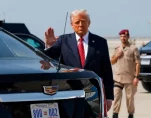
President Trump’s Gulf tour, which included visits to Saudi Arabia, Qatar, and the UAE, focused on securing financial commitments from wealthy energy producers to boost the U.S. economy and create jobs. The UAE’s pledge to increase its energy sector investments in the United States to $440 billion by 2035, up from the current $70 billion, underscores the success of this diplomatic effort.

The UAE’s strategic shift towards the U.S. in technology and energy sectors is seen as a move to decouple from Chinese influence, particularly in AI. Emirati officials have explicitly pursued this realignment to secure U.S. technology transfers, including advanced semiconductors like Nvidia’s H100 GPUs. This pivot follows U.S. pressure to remove Chinese equipment from critical infrastructure, exemplified by G42’s removal of Huawei technology from its data centres.

The $1.4 trillion investment framework also encompasses initiatives in critical minerals and industrial capacity. The UAE’s $1.2 billion mining partnership with Orion Resource Partners targets lithium, cobalt, and rare earth metals essential for AI hardware and renewable energy systems. Additionally, Emirates Global Aluminum plans to build the first new aluminum smelter in the U.S. in 35 years, aiming to nearly double the country’s domestic production.

President Donald Trump’s strategic tour across the Middle East has ignited internal discord within his administration, as China-focused officials express concern over expansive artificial intelligence agreements with Saudi Arabia and the United Arab Emirates . These deals, involving the acquisition of advanced semiconductors from U.S. firms Nvidia and Advanced Micro Devices , are perceived by some as potential threats to national security and economic interests. During his […]

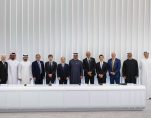
President Donald Trump has unveiled a series of agreements with the United Arab Emirates totalling over $200 billion, encompassing significant investments in aviation and artificial intelligence. The announcements followed Trump’s meeting with UAE President Sheikh Mohamed bin Zayed Al Nahyan, underscoring a deepening strategic partnership between the two nations. Etihad Airways has committed $14.5 billion to acquire 28 wide-body Boeing aircraft, including 787 Dreamliners and 777X models, […]

Saudi Aramco has unveiled 34 preliminary agreements with major American firms, collectively valued at up to $90 billion, marking one of its most substantial single-day commitments to deepening commercial ties with the United States. The signings, announced during the U.S.-Saudi Investment Forum in Riyadh, coincide with U.S. President Donald Trump’s Gulf tour and underscore Aramco’s strategic push to diversify its portfolio under Saudi Arabia’s Vision 2030 initiative.

The agreements span a broad spectrum of sectors, including energy, technology, and finance. In the energy domain, Aramco has entered into memoranda of understanding with U.S. liquefied natural gas producers NextDecade and Sempra, securing approximately 6.2 million tons of LNG supply. This move aligns with Aramco’s ambition to reach nearly 7.5 million tons of LNG capacity by 2030. Additionally, a $3.4 billion investment is earmarked for the expansion of the Motiva refinery in Texas, enhancing its refining capabilities.

In the technology sector, Aramco has partnered with Nvidia to establish advanced industrial AI infrastructure, including an AI Hub and a robotics center. Collaborations with Amazon Web Services and Qualcomm aim to drive digital transformation and enhance industrial networks and AI capabilities. An agreement with ExxonMobil focuses on evaluating significant upgrades to their SAMREF refinery, with plans to expand it into an integrated petrochemical complex.

The financial services front sees Aramco forging agreements with asset management giants such as PIMCO, State Street Corporation, and Wellington. A notable initiative includes the establishment of a unified investment fund, named ‘Fund of One,’ in collaboration with BlackRock, Goldman Sachs, Morgan Stanley, and PIMCO, aimed at streamlining short-term cash investments.

Arabian Post Staff -Dubai Qatar Airways has finalised a monumental agreement to acquire up to 210 Boeing aircraft, marking the largest wide-body order in the company’s history. The deal, valued at $96 billion, was announced during U.S. President Donald Trump’s visit to Doha, underscoring a significant enhancement in U.S.-Qatar economic relations. The order encompasses 130 Boeing 787 Dreamliners, 30 777X jets, and options for an additional 50 […]

The United States is deliberating a significant agreement that would permit the United Arab Emirates to acquire over one million advanced Nvidia AI chips, a move that could reshape the technological landscape in the Gulf region. The proposed arrangement, still under negotiation, would allow the UAE to import 500,000 of Nvidia’s most sophisticated chips annually through 2027. Approximately 20% of these chips are earmarked for G42, an Abu Dhabi-based artificial intelligence firm, while the remainder would support U.S. companies establishing data centers within the UAE.

This potential deal marks a notable shift from the stringent export controls implemented during the Biden administration, which aimed to limit the proliferation of advanced AI technologies to certain regions. The Trump administration’s consideration of this agreement aligns with its broader strategy to bolster alliances and counterbalance China’s growing technological influence.

G42 has been at the forefront of the UAE’s AI ambitions, developing a bilingual Arabic-English large language model named Jais and collaborating with global tech giants to enhance its capabilities. The firm’s efforts to sever ties with Chinese entities and comply with U.S. regulations have been pivotal in facilitating this prospective deal.

The U.S. Department of Commerce’s introduction of the Validated End User program has further streamlined the export process for advanced technologies to trusted partners. Under this program, foreign data centers that meet rigorous security and compliance standards can receive AI chips without the need for individual export licenses. This initiative aims to safeguard national security while promoting international technological collaboration.

Nvidia’s advanced chips, particularly the H100 and the newer GB300 Blackwell models, are integral to the development of cutting-edge AI applications. The company’s collaboration with Saudi Arabia’s AI startup, Humain, to deliver 18,000 AI chips underscores the region’s commitment to becoming a global AI hub. These chips are set to power a 500-megawatt data center in Saudi Arabia, reflecting the Gulf’s substantial investments in AI infrastructure.

The UAE’s strategic partnerships extend beyond Nvidia. A notable collaboration between Microsoft and G42 has received U.S. approval, allowing the export of advanced AI chips to a Microsoft-operated facility in the UAE. This partnership is part of a broader U.S. effort to counter China’s Digital Silk Road initiative by strengthening technological ties with Gulf nations.

Despite these advancements, concerns persist regarding the potential for U.S. technologies to be accessed by adversarial nations. The U.S. government has imposed strict conditions on these deals, including prohibitions on the use of exported chips for model training by individuals from countries under U.S. arms embargoes, such as China. Regular audits and compliance checks are mandated to ensure adherence to these restrictions.

The UAE’s pursuit of AI sovereignty is evident in its initiatives to develop indigenous AI capabilities and infrastructure. Core42, a subsidiary of G42, has established a “regulated technology environment” to deploy Nvidia’s H100 Tensor chips securely within the country. This setup ensures that sensitive technologies are handled under strict guidelines, aligning with the UAE’s objectives to safeguard data and maintain control over its AI systems.

Arabian Post Staff -Dubai President Donald Trump’s ambitious pursuit of $1 trillion in investment pledges from Saudi Arabia is encountering a formidable challenge: the kingdom’s own sweeping economic transformation plans, which are projected to cost nearly twice that amount. As Trump embarks on his first Middle East tour of his second term, his administration is focusing on securing substantial trade and investment agreements with Gulf allies, including […]

HONG KONG SAR – Media OutReach Newswire – 8 May 2025 – On May 3, at the “China Lawyers Going Global – Hong Kong Session” held at the University of Hong Kong, GE Jun, Chairman and CEO of TOJOY Smart Enterprises Services, delivered an insightful lecture titled “Compliance Management and Globalized Operations for Enterprises Going Overseas.” The lecture offered a valuable learning opportunity for Chinese lawyers and […]

The United States is deliberating the possibility of easing restrictions on Nvidia Corp.’s semiconductor sales to the United Arab Emirates , according to sources familiar with the ongoing discussions. The potential shift in policy comes as President Donald Trump is preparing for an upcoming visit to the Gulf region, where talks about a bilateral semiconductor deal could be initiated. Sources with direct knowledge of the matter disclosed […]

Technology stocks surged on April 24, 2025, lifting broader U.S. markets as optimism grew over easing tariff tensions between the United States and China. Investors responded positively to reports suggesting that trade officials from both countries were nearing a compromise to de-escalate tariffs imposed over the past two years. The Nasdaq Composite climbed 2.5% to close at 16,012.34, marking its highest level in over five months. The […]

VISHNU RAJA
RYO YAMADA
HITORI GOTOH
IKUYO KITA