News related to
Nvidia

Cloud infrastructure provider Vultr has introduced a production-ready artificial intelligence inference stack built on NVIDIA’s Rubin platform, marking a significant expansion of their collaboration as enterprises accelerate adoption of generative AI workloads. The deployment is designed to provide scalable, cost-efficient inference capabilities across Vultr’s global cloud network, targeting businesses seeking to operationalise AI models without the high capital expenditure typically associated with dedicated infrastructure. The Rubin platform, […]

  • A native world model built from the ground up for embodied intelligence, Kairos 3.0-4B delivers exceptional physics-consistent deep understanding and cross-embodiment generalization, enabling a single “brain” to drive robots of multiple form factors.
  • Kairos 3.0-4B leverages a unified “multi-modal understanding-generation-prediction” architecture for physical-level deep understanding, long-horizon dynamic interaction, precise action control, and long-horizon interaction — 7-minute coherent interaction videos set a new industry benchmark.
  • As a lightweight 4B-parameter model, Kairos 3.0-4B outperforms mainstream embodied world models while delivering industry-leading inference efficiency. It achieves real-time edge generation on the THOR platform with a1:1.5 ratio of generation time to video duration, leading performance across both cloud and edge environments.
  • Kairos 3.0-4B achieves top-ranking accuracy across multiple authoritative benchmarks. Furthermore, leveraging model capabilities and inference tooling, its inference speed is 72 times faster than Cosmos 2.5, setting a new global performance record for embodied world models.

SHANGHAI, CHINA – Media OutReach Newswire – 13 March 2026 – ACE ROBOTICS announced the open-source release of Kairos 3.0-4B, the industry’s first native world model for embodied intelligence to realize unified “multi-modal understanding-generation-prediction” within a single architecture. As the technical cornerstone of the company’s “Human-Centric” ACE Embodied Intelligence R&D Paradigm, Kairos 3.0-4B is designed from the ground up for real-world robotic operation — integrating physical laws, human behavior, and real robot actions to deliver physics-consistent deep understanding of the real world.

The prevailing approach to embodied world models has largely involved retrofitting general-purpose large language or vision models with motion interfaces. Kairos 3.0-4B takes a fundamentally different path. Rather than appending motion capabilities onto existing model architectures, it is built from the architectural level around the fundamental physical and causal laws that govern real-world environments, constructing a unified world-understanding framework capable of cross-embodiment generalization. By embedding causal reasoning chains directly into its decision-making process, the model transcends behavioral imitation and achieves what ACE ROBOTICS defines as physical-level deep understanding — enabling robots to not only know what to do, but to understand why. Its core breakthrough lies in the deep integration of three categories of data: real robot interaction data, structured human behavioral data, and chain-of-thought reasoning data, effectively breaking down multi-source data barriers and significantly improving the reuse efficiency of real-world data.

A landmark achievement of this release is Kairos 3.0-4B’s real-time edge deployment capability. Deployed on the NVIDIA Jetson Thor T5000 platform at 517 TFLOPs, it is the world’s first embodied world model to achieve real-time generation on edge hardware — achieving a 1.5x faster-than-real-time generation speed on the THOR platform — and the first capable of directly driving physical robot bodies for real-world task execution through native edge deployment. The model issues full-body control commands spanning upper limbs, fingers, and lower limbs without intermediate control layers, enabling robots to move from “capable of performing” to genuinely “capable of working.”

Kairos 3.0-4B also delivers a breakthrough in long-horizon interaction. By combining its unified architecture with Agent-based hierarchical planning and a self-reflective iterative optimization mechanism, the model generates coherent future-state predictions up to 7 minutes in length while maintaining full scene coherence and physical fidelity throughout — setting a new industry benchmark for long-horizon embodied interaction and opening new pathways for embodied intelligence training and deployment.

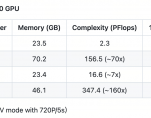
On the A800 GPU benchmark, Kairos 3.0-4B’s inference speed surpasses NVIDIA Cosmos 2.5 by 72 times, setting a new global performance record for embodied world models. This performance is delivered with a lightweight footprint of just 4B parameters and 23.5GB of VRAM — a fraction of Cosmos 2.5’s 70.2GB requirement — demonstrating that efficiency and capability need not be in tension and fundamentally challenging the assumption that larger parameters are a prerequisite for superior performance. The model has also achieved top rankings across three authoritative global benchmarks: PAI-Bench-robot, co-developed by Georgia Tech and CMU; WorldModelBench-robot TI2V, introduced at CVPR 2025; and NVIDIA GEAR Lab’s DreamGen Bench, outperforming all evaluated models on physical consistency and instruction-following metrics.

In A800 GPU benchmarks, Kairos 3.0-4B achieves order-of-magnitude breakthroughs in compute efficiency and inference speed

Supporting seamless cross-embodiment deployment across single-arm, dual-arm, and dexterous hand configurations with no additional per-embodiment training required, Kairos 3.0-4B is compatible with major hardware platforms including Agilex PIPER, Unitree G1, and Galaxy G1. Kairos 3.0-4B is now available on Github (https://github.com/kairos-agi/kairos-sensenova) and Hugging Face (https://huggingface.co/kairos-agi/kairos-sensenova-common).

Hashtag: #ACEROBOTICS


The issuer is solely responsible for the content of this announcement.

About ACE ROBOTICS – Equipping robots with intelligent “brains” and engaging “souls”

ACE ROBOTICS is a pioneering robotics company dedicated to advancing the field of embodied intelligence. Founded by SenseTime co-founder Wang Xiaogang, the company has brought together a team of young, globally scarce AI scientists and industry experts to focus on embodied intelligence. Through breakthrough technological innovations and deep insights into embodied intelligence scenarios, we aim to empower robots with the ability to autonomously understand and explore the physical world, thereby accelerating their commercial implementation.

The company pioneered the ACE R&D paradigm and built a vision-based “environmental data engine, real-world cognition, embodied interaction generalization” technology chain. Using full spatiotemporal and multi-perspective environmental capture as its engine, along with Kairos 3.0 – China’s first open-source and commercially applicable world model – plus the Embodied Foundation Model as its technical backbone, ACE ROBOTICS addresses core industry challenges such as data scarcity, common sense gaps, poor generalization, and limited versatility. Simultaneously, the company unveiled its flagship A1 Embodied Super Brain Module, accelerating the large-scale commercial deployment of embodied intelligence across diverse scenarios.

ACE ROBOTICS is both a technology pioneer and an ecosystem builder. Through strategic cooperation with top hardware manufacturers, cloud service providers, and vertical scenario partners, we have broken through the “model-hardware-scenario” industrial deadlock, providing standardized and customized solutions that are driving the development of China’s embodied intelligence industry.

Arabian Post Staff -Dubai UAE-based venture capital firm Shorooq has joined a $1.03 billion funding round for French artificial intelligence startup AMI Labs, a company founded by prominent AI researcher Yann LeCun, as investors intensify backing for technologies designed to give machines a deeper understanding of the physical world. The financing round also drew participation from technology and investment heavyweights including Nvidia, Temasek and entrepreneur Mark Cuban, […]

Chinese artificial intelligence developer DeepSeek has withheld early access to its newest large language model from two of the world’s dominant semiconductor designers, Nvidia and AMD, a move that industry observers interpret as a calculated step in Beijing’s effort to reduce dependence on United States technology and strengthen domestic computing ecosystems. The decision centres on the company’s latest generation AI model, which is designed to compete with […]

Nvidia has indicated that its era of large-scale equity investments in leading artificial-intelligence developers may be drawing to a close, with chief executive Jensen Huang saying the company is unlikely to make further major financial commitments to OpenAI or Anthropic as both firms move closer to potential public listings. Speaking at a technology and telecom conference in the United States, Huang said Nvidia’s existing stakes in the […]

Building on the acquisition of Illumex by NVIDIA, the firm validates its Seed-to-Exit thesis and reinforces its mission to bridge Asian capital with world-class DeepTech.

TAIPEI, TAIWAN – Media OutReach Newswire – 4 March 2026 – Cardumen Capital, a leading European DeepTech venture capital firm, today marks a pivotal milestone in its international momentum following the acquisition of its portfolio company, Illumex, by NVIDIA. This landmark exit further solidifies the firm’s strategic presence in the Asia-Pacific region and cements its 2019 vintage fund’s position as a leading performer within its vintage cohort.

A Seed-to-Exit Success Story

Cardumen Capital was Illumex’s first investor and led its 2021 seed round, supporting the company from inception through to exit. General Partners Gonzalo Martínez de Azagra and Igor de la Sota identified the startup’s potential at the seed stage, guiding it toward this landmark milestone.

“This acquisition validates our DeepTech thesis,” said Gonzalo Martínez de Azagra. “By backing visionary founders early, we demonstrate our ability to identify the core building blocks of the AI era.”

Igor de la Sota added: “The success of the Illumex exit underscores the global demand for robust data infrastructure in the age of Generative AI. We are proud to have supported the team from day one in building a platform that now sits at the heart of the world’s AI computing network.”

Strengthening the Bridge to Asia-Pacific

Illumex joining NVIDIA serves as a powerful catalyst for Cardumen Capital’s mission in Asia. Led by Taipei-based APAC Venture Partner Stan Yu, a serial entrepreneur turned venture capitalist, the firm is intensifying its efforts to bridge Asian strategic capital with world-class innovation hubs in Europe, Israel, and global DeepTech ecosystems.

“Building on this milestone exit to NVIDIA, we are seeing unprecedented momentum for our strategy in the APAC region,” said Stan Yu. “The journey of Illumex proves the caliber of opportunities we bring to our partners. From our base in Asia, we are uniquely positioned to facilitate these high-stakes connections, ensuring that Asian institutional capital has exclusive access to the next wave of transformative DeepTech and frontier innovations.”

As a pioneering venture capital firm with a dedicated partner presence in Taipei bridging the EMEA tech ecosystem, Cardumen Capital is uniquely positioned to drive cross-border synergies and deliver the performance expected by the institutional investment landscape in Asia.

Hashtag: #CardumenCapital #Illumex #NVIDIA #DeepTech #AI #VentureCapital #M&A #Taiwan


The issuer is solely responsible for the content of this announcement.

About Cardumen Capital

Cardumen Capital, a leading global venture capital firm supervised by the CNMV (Spanish Securities Market Commission), was founded in 2018 by Gonzalo Martínez de Azagra and Igor de la Sota. With over 15 years of investment experience and a presence across Europe, the Middle East, and Asia, the firm specializes in investing in private market companies and funds, supporting innovation, disruptive technologies, and long-term value creation.

Backed by leading institutional investors, corporations, and family offices, Cardumen Capital focuses on generating sustainable long-term returns through its specialized DeepTech investment strategies and a demonstrated track record of connecting strategic capital with the global innovation frontier.

Landmark agreements, product unveilings and policy signals at the IESA Vision Summit 2026 have sharpened the country’s bid to emerge as a significant player in the global semiconductor value chain, as industry leaders and policymakers mapped out the next phase of chip manufacturing, design and talent expansion. Held against a backdrop of supply chain realignment and geopolitical competition in advanced technologies, the annual gathering of the India […]

Advertisements

Barcelona set the stage for a decisive shift in telecoms strategy as leading network vendors and chipmakers used Mobile World Congress 2026 to outline how artificial intelligence will be embedded at the core of 6G systems, signalling a move beyond incremental 5G upgrades towards a fully software-defined, AI-native architecture. Executives from Nokia, Ericsson and Intel presented live demonstrations, new research partnerships and early field deployments aimed at […]

OpenAI has secured an unprecedented $110 billion investment commitment from Amazon, Nvidia and SoftBank, propelling the artificial intelligence company into what could be the largest private funding round in history and sharply intensifying competition in the AI sector. The financial injection comes as the developer of the ChatGPT generative AI platform prepares for a potential public offering later this year and looks to expand its global infrastructure […]

Nvidia delivered record quarterly and annual revenue, beating Wall Street expectations and pushing back against claims that the artificial intelligence boom is overheating. The Silicon Valley chip designer said revenue for the fourth quarter of its fiscal year ended 26 January 2025 rose to $39.3 billion, up sharply from a year earlier and above market forecasts. Full-year revenue reached $130.5 billion, more than doubling on the previous […]

Wayve has secured more than $1bn in fresh capital as it accelerates plans to bring fully autonomous vehicles to public roads in Britain, marking one of the largest single funding rounds for a European artificial intelligence company. The London-based start-up said it had raised $1.05bn in a round led by Japan’s SoftBank Group, with participation from Nvidia and Microsoft. The deal values the company at about $11bn, […]

Meta Platforms has struck a landmark long-term agreement with Advanced Micro Devices to buy tens of billions of dollars’ worth of AI processors and data-centre hardware over the next five years, a deal that could exceed $100 billion and reshape the competitive landscape for artificial-intelligence infrastructure. This multiyear pact will see Meta deploy up to six gigawatts of AMD-based computing capacity, starting with initial shipments in the second […]

By Nantoo Banerjee The global AI impact summit 2026 in Delhi, last week, couldn’t have come at a more appropriate time when the world continues to be somewhat skeptical about adoption of Artificial Intelligence (AI), its limitations and potential consequences. Thanks to the pioneering effort by firms such as Nvidia, Microsoft, Google, Amazon, Meta and […]

The article India Should Adopt ‘Trustworthy’ AI Tools To Stay Safe And Transparent appeared first on Latest India news, analysis and reports on Newspack by India Press Agency).

India is pushing ahead with a rapid build-out of artificial intelligence data centres, even as concerns mount over water stress and rising electricity demand in the very regions chosen to host them.

Global technology groups including Microsoft, Amazon and Google have pledged billions of dollars to expand cloud and AI infrastructure across the country, betting on strong digital adoption, a vast developer base and policy support from New Delhi. At the same time, domestic conglomerates such as Reliance Industries and the Adani Group have unveiled plans to scale up capacity, signalling an arms race to capture the next phase of AI growth.

The surge is centred on established data centre hubs such as Mumbai, Hyderabad, Chennai and the National Capital Region. Industry estimates place India’s operational data centre capacity at more than 900 megawatts, with projections that this could double within a few years as hyperscale facilities come online. Much of the new supply is being designed for AI workloads, which require more powerful processors and higher rack densities than traditional cloud computing.

Microsoft has committed to expanding its Azure footprint in multiple regions, while Amazon Web Services continues to invest in its Mumbai and Hyderabad zones. Google Cloud has also deepened its presence, citing demand from financial services, healthcare and government clients. Nvidia, whose graphics processing units underpin many AI systems, has strengthened partnerships with Indian firms to support sovereign AI initiatives and localised computing.

Officials argue that this wave of investment will support economic growth, digital inclusion and advanced research. India’s data protection framework and semiconductor incentives have been positioned as part of a broader strategy to create a resilient digital ecosystem. The government has also outlined ambitions to develop domestic AI models trained on local languages and datasets, increasing the need for high-performance computing infrastructure within national borders.

Yet environmental experts warn that the geography of expansion raises difficult trade-offs. Mumbai and Chennai, two of the country’s largest data centre clusters, face periodic water shortages and are vulnerable to climate-related risks, including extreme heat and flooding. Hyderabad, another key hub, has experienced mounting pressure on groundwater resources amid rapid urbanisation.

AI data centres are particularly resource-intensive. Training large language models can consume vast amounts of electricity, and the cooling systems required to maintain optimal temperatures often rely on significant volumes of water. While operators increasingly use advanced cooling technologies and pursue renewable energy procurement, critics question whether efficiency gains can keep pace with the scale of expansion.

According to industry analysts, AI-optimised facilities can draw substantially more power per rack than conventional data centres. India’s peak power demand has been rising steadily, touching record highs during heatwaves. Coal continues to account for a large share of electricity generation, although solar and wind capacity have expanded rapidly. The tension between decarbonisation goals and surging digital energy needs is becoming more pronounced.

Water usage is another flashpoint. Traditional evaporative cooling systems can require millions of litres annually for large facilities, though some operators are shifting to air-cooled or liquid immersion systems to reduce dependence on freshwater. Companies state that they are investing in water recycling, rainwater harvesting and wastewater treatment, particularly in regions classified as water-stressed.

Environmental groups argue that even with mitigation measures, cumulative impacts could strain local communities. Urban residents in Chennai and parts of Maharashtra have already experienced water rationing during drought periods. The prospect of energy-hungry AI campuses expanding in these same areas has prompted calls for stricter environmental assessments and greater transparency around resource use.

Corporate leaders counter that hyperscale operators often have stronger sustainability commitments than smaller, on-premise data centres. Many global firms have pledged to run on 100 per cent renewable energy and to become water positive within the decade. In India, power purchase agreements for solar and wind farms are increasingly tied to data centre projects, supporting the build-out of clean energy capacity.

Policy makers face a delicate balancing act. Digital infrastructure is viewed as critical to competitiveness, especially as countries race to develop generative AI capabilities. India’s large pool of engineers and its expanding start-up ecosystem make it an attractive base for AI research and deployment. Delaying capacity expansion could risk ceding ground to regional rivals in Southeast Asia or the Middle East, where governments are also courting hyperscale investment.

At the same time, climate resilience is rising on the national agenda. The country has set ambitious renewable energy targets and emphasised sustainable development in international forums. Integrating AI growth with environmental safeguards will test regulatory frameworks at both central and state levels.


Centralised control of artificial intelligence is facing a serious challenge as decentralised networks gather pace, promising to dilute the dominance of technology giants and open development to a broader community of users and developers. For much of the past decade, cutting-edge AI models have been built and deployed by a handful of well-funded companies with access to vast computing infrastructure and proprietary data. Firms such as OpenAI, […]

Nvidia’s chief executive officer, Jensen Huang, will not attend the India AI Impact Summit scheduled to begin in New Delhi on February 16, the company confirmed over the weekend, citing “unforeseen circumstances” that prevent his planned trip. Nvidia said it remains committed to participating in the five-day event and will instead dispatch a senior leadership delegation to represent its interests at the summit, which is positioned as a global forum on artificial intelligence, semiconductors and technology policy.

Huang’s absence removes one of the most high-profile speakers from a programme that is expected to bring together global leaders, technology executives and policymakers. Nvidia has been at the centre of international attention this year as its graphics processing units and specialised chips have powered significant advances in AI model training and deployment worldwide. Despite his cancellation, the company’s executive vice-president Jay Puri is set to lead Nvidia’s delegation in New Delhi.

The India AI Impact Summit has been framed by its organisers as a strategic platform for discussions on AI’s impact on economies, governance, and society. With over 20 heads of government and multiple chief executives from major technology firms slated to take part, the absence of Nvidia’s CEO is unlikely to derail the summit’s broader agenda but does shift attention to the array of other leaders expected on stage. Summit organisers have emphasised that the event will focus on actionable frameworks for AI governance and international cooperation rather than immediate regulatory commitments.

India’s push to host the summit reflects the growing emphasis placed on its AI ecosystem, both domestically and internationally. The event at Bharat Mandapam is intended to spotlight innovation, human capital and collaborative initiatives that leverage artificial intelligence for economic and social development. Heads of state from Europe, Asia and Africa, as well as senior executives from leading technology companies, are planning to contribute to sessions addressing ethical AI, inclusive growth, and public-private partnerships.

Nvidia’s statement confirmed that Huang will not be able to travel to India at this time, but stopped short of elaborating on the specific reasons for the change in plans. The company’s leadership team reiterated its support for the summit’s objectives and expressed confidence in the delegation’s ability to engage constructively with participants across sectors. Nvidia’s central role in the global AI supply chain — particularly through its GPUs, which underpin much of the world’s AI compute infrastructure — has made its presence significant at forums shaping the future of the industry.

For many tech observers, Huang’s decision underscores the intense demands on executives at the helm of firms that are pivotal to AI’s evolution. As Nvidia continues to navigate a landscape marked by rapid technological change, supply chain pressures and geopolitical scrutiny, its leadership choices are closely watched by investors, partners and policymakers alike. The company has maintained that its strategic focus on AI remains undiminished, even as senior personnel adjust their engagement in global events.

The summit is expected to feature a range of high-level engagements, including discussions on AI’s implications for labour markets, national competitiveness, and regulatory cooperation among nations. Organisers have highlighted sessions aimed at bridging gaps between emerging markets and established technology hubs, while also addressing concerns about safety, privacy and equitable access. Participants will include chief executives from major AI and cloud-computing firms, senior government officials from participating countries, and representatives of international organisations.

Despite the absence of Nvidia’s CEO, interest in the India AI Impact Summit remains strong among industry stakeholders. Discussions are slated to explore how public-sector frameworks can align with the dynamic pace of innovation in the private sector, with particular emphasis on fostering trust and transparency in AI systems. The summit’s agenda also places emphasis on skills development, research collaboration, and the role of AI in addressing societal challenges such as healthcare, climate and education.

Executives attending the summit will face intense scrutiny from delegates keen to understand how technology firms plan to balance commercial imperatives with ethical responsibilities. As governments around the world refine their approaches to AI governance, the outcomes of deliberations at gatherings such as the India AI Impact Summit could inform future policy frameworks and cross-border cooperation on technology standards and norms.

OpenAI has launched GPT-5.3-Codex-Spark, an ultra-fast version of its coding artificial intelligence that runs on specialised hardware from Cerebras Systems, marking its first major production deployment outside of the long-dominant Nvidia-based infrastructure. The Codex-Spark release delivers more than 1,000 tokens per second in interactive coding workflows, designed to give developers near-instant responsiveness for editing and iterative tasks while maintaining competitive capabilities for real-world software development. The debut […]

China’s Z. ai has propelled its artificial intelligence ambitions into the global spotlight with the launch of GLM-5, a 744-billion-parameter open-source large language model that stands toe-to-toe with leading Western counterparts and underscores Beijing’s drive for technological self-sufficiency. Released on 11 February by the company formerly known as Zhipu AI, GLM-5 combines advanced architecture with broad hardware compatibility and permissive licensing, signalling a shift in the global AI landscape.

The GLM-5 model, built on a mixture-of-experts framework and trained on an expanded dataset of roughly 28.5 trillion tokens, is designed for multifaceted tasks including coding, reasoning and agentic operations. Z. ai reports that the model’s performance on internal benchmarks approaches that of leading proprietary systems such as Anthropic’s Claude Opus 4.5, and on certain tests it outperforms Google’s Gemini 3 Pro. Its permissive MIT licence allows unrestricted commercial use and adaptation, making GLM-5 one of the most accessible frontier AI models available to developers and enterprises worldwide.

A standout feature of GLM-5 is its independence from American semiconductor technology. Trained and deployable on domestic Chinese chips from manufacturers like Huawei Ascend, Moore Threads, Cambricon and Kunlunxin, the model sidesteps reliance on high-end Nvidia GPUs that are constrained under US export controls. Z. ai’s use of the MindSpore AI framework further embeds the model within a Chinese software ecosystem, emphasising self-reliant technological development. This strategy exemplifies a broader push within China’s AI sector to mitigate the impact of external trade restrictions and build robust, locally supported infrastructures.

Market reception underscored the impact of GLM-5’s launch: Z. ai’s shares surged nearly 29 per cent on the Hong Kong Stock Exchange following the announcement, reflecting investor optimism about the company’s competitiveness and growth prospects. Industry analysts note that GLM-5’s arrival comes amid an acceleration of model releases and chip optimisation efforts by several Chinese AI firms, signalling more intense competition on both domestic and international fronts.

Benchmarks published by Z. ai highlight GLM-5’s strengths and limitations. On software engineering evaluations, the model achieved a score of 77.8 per cent on the widely referenced SWE-bench Verified suite, trailing slightly behind Claude Opus 4.5’s 80.9 per cent but outperforming other notable systems in agentic and multitask contexts. The architecture’s efficient handling of long-context sequences—up to 200 000 tokens—positions GLM-5 for applications requiring extensive reasoning over lengthy inputs.

GLM-5’s low cost of deployment also enhances its appeal. Analyses of pricing data suggest inference can cost around US $1 per million tokens, a fraction of the fees charged by some proprietary APIs, potentially lowering barriers for startups and research teams seeking cutting-edge language modelling without prohibitive expenditure. The MIT licence further expands this accessibility by granting broad rights to adapt and deploy the underlying model weights in commercial and research settings.

Despite its technical achievements and open licensing, experts caution against over-interpretation of benchmark results as definitive proof of superiority. Performance under controlled test conditions does not always translate to uniformly strong real-world applications, particularly in generative and reasoning tasks where robustness and safety remain critical hurdles. Some observers also warn that differences between self-reported evaluations and independent assessments could emerge as the model is adopted more widely.

GLM-5’s emergence reflects broader trends within China’s AI ecosystem, where domestic firms and chipmakers are increasingly synchronised in advancing cutting-edge technologies. Industry developments suggest that model and hardware optimisation efforts are happening in near tandem, with architecture adaptations and inference support enabling faster incorporation of new Chinese semiconductor products. These developments sit against a backdrop of regulatory frameworks that increasingly emphasise the alignment of AI systems with government objectives, including content governance and cybersecurity considerations.

ServerDirect has finalised a €25 million enterprise artificial intelligence infrastructure deployment, marking one of the largest projects in its portfolio and underscoring Europe’s accelerating investment in high-performance computing for corporate AI workloads. The Netherlands-based systems integrator said the project, delivered in partnership with Super Micro Computer, widely known as Supermicro, involved the design, supply and commissioning of advanced GPU-accelerated servers and supporting data centre architecture for a […]

Samsung Electronics plans to begin mass production of its next-generation high-bandwidth memory chips, HBM4, next month, positioning the company to step up supplies to key artificial intelligence customers led by Nvidia as competition in advanced memory intensifies. The South Korean chipmaker has been racing to finalise yields and qualification for HBM4, a critical component for the latest generation of AI accelerators that demand faster data transfer and […]

Oracle is preparing to raise about $50 billion during 2026 as it accelerates spending on data centres, specialised chips and network capacity to meet a sharp rise in demand for artificial-intelligence workloads, according to people familiar with the company’s plans. The proposed capital raise, which would rank among the largest ever attempted by a US technology group in a single year, reflects the scale of investment required […]

Sharon AI has unveiled plans to deploy a 1,000-unit NVIDIA B200 GPU cluster at NEXTDC’s Tier IV M3 facility in Melbourne, a move that sharply increases domestic capacity for training and running large-scale artificial intelligence models within Australia’s borders. The announcement places the neocloud provider among a small group globally able to operate Blackwell-generation systems at this scale and underscores intensifying competition to localise high-end compute amid […]

Nvidia Corp chief executive Jensen Huang has pushed back against suggestions that the chipmaker had lined up a $100 billion investment in OpenAI, saying any such figure was never a firm commitment and that the company would assess participation in funding rounds on their individual merits. The remarks seek to clarify Nvidia’s role at a moment when expectations around financing for advanced artificial intelligence models are reshaping […]

Nvidia has issued urgent security updates for its GPU display drivers after identifying multiple high-severity flaws that could allow attackers to execute arbitrary code and gain elevated privileges across a wide range of systems. The vulnerabilities, disclosed in a security bulletin dated January 27, affect drivers used on Windows, Linux and virtualised environments, underscoring the broad exposure created by modern GPU deployments in consumer, enterprise and cloud […]

VISHNU RAJA
RYO YAMADA
HITORI GOTOH
IKUYO KITA