News related to
Russian

Pavel Durov, the founder and CEO of Telegram, was detained by French authorities at Le Bourget airport near Paris. The arrest took place after Durov disembarked from a private jet arriving from Azerbaijan. French security forces, acting on a warrant issued by the Office for Minors, detained Durov as part of an ongoing investigation into allegations related to terrorism, drug trafficking, and money laundering.

The arrest follows mounting pressure from European law enforcement agencies over Telegram’s perceived lack of cooperation in combating criminal activities on its platform. Authorities have criticized Telegram for its minimal content moderation, arguing that this has allowed various illegal activities, including fraud and narcotics distribution, to flourish unchecked.

Durov, who holds both French and Russian citizenship, was accompanied by his bodyguard and an unidentified woman at the time of his arrest. The charges against him are currently under review, and further legal action is expected as the investigation progresses. The case has sparked widespread attention, as it raises questions about the responsibilities of tech companies in regulating content and cooperating with law enforcement.

The investigation has drawn international scrutiny, particularly regarding the implications for digital privacy and freedom of expression on messaging platforms like Telegram. Durov has been a vocal advocate for user privacy, often clashing with governments over the issue. His arrest could potentially set a precedent for how authorities handle similar cases involving tech executives and their platforms.

The case is ongoing, and French authorities have yet to release detailed information on the specific charges Durov may face. However, this development marks a significant escalation in the legal challenges facing Telegram and its controversial stance on user privacy versus public safety.

Ukrainian President Volodymyr Zelenskyy has reiterated his urgent call for increased and expedited defense aid from the United States and its allies, as the conflict with Russia continues to intensify. Following a phone call with U.S. President Joe Biden, Zelenskyy emphasized that Ukraine’s ability to defend itself hinges on the timely delivery of military support. The U.S. has pledged an additional $500 million in budgetary aid, yet Kyiv continues to press for more comprehensive and immediate assistance to bolster its defenses against Russian advances.

Ukrainian military operations have reportedly incapacitated three crucial bridges over the Seym River in western Russia, according to statements from Russian sources. The strikes, which are part of Kyiv’s ongoing efforts to disrupt logistics and supply lines in the region, have escalated tensions as the conflict deepens. The targeted bridges are located near the border of Ukraine and are vital for the movement of Russian military equipment […]

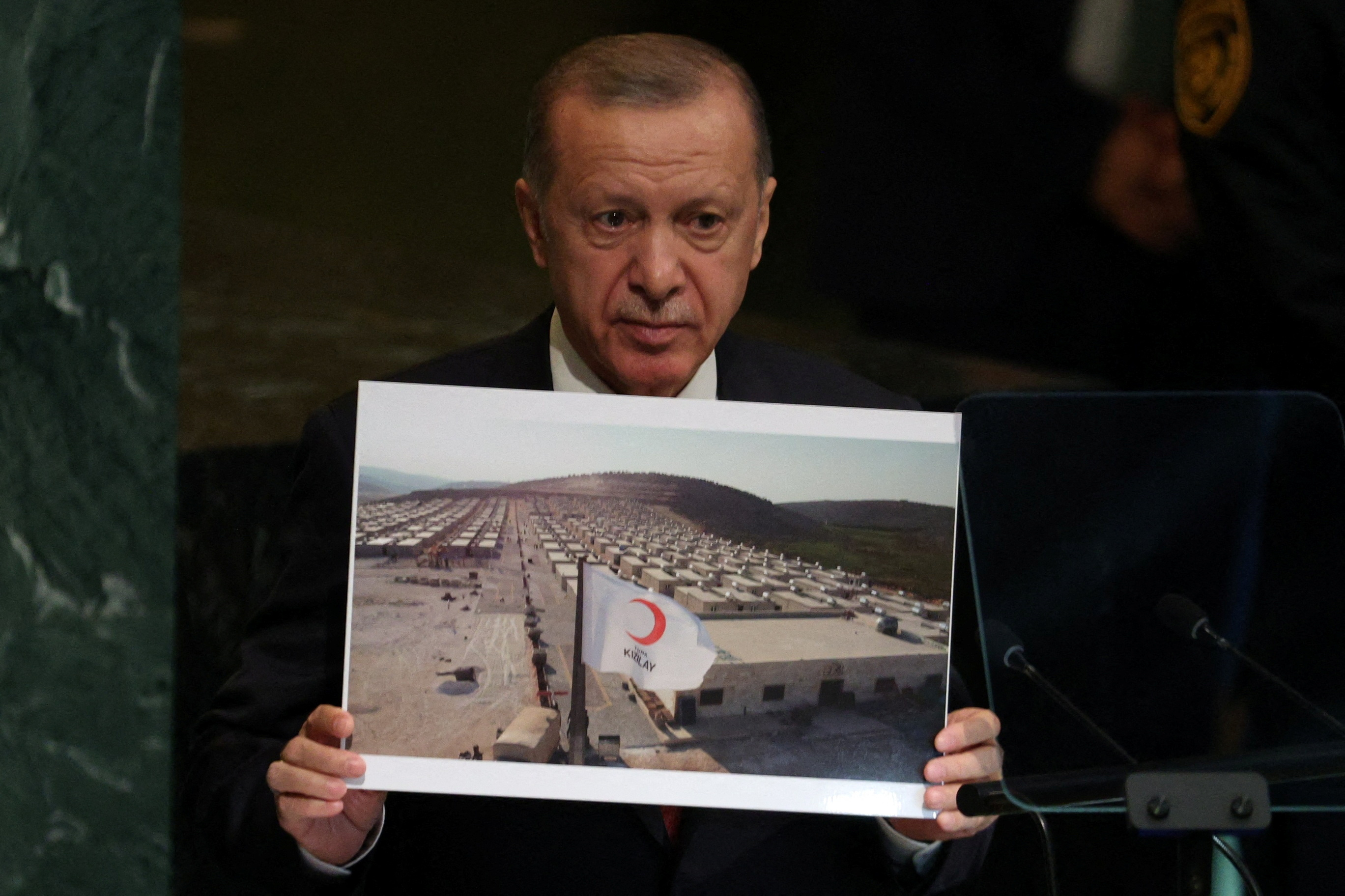
A new trade agreement between government-controlled and opposition-held areas in Syria marks a significant development in the Syrian conflict. This trade initiative, involving key economic exchanges between these once-divided regions, hints at a possible warming of relations between Syrian President Bashar al-Assad and Turkish President Recep Tayyip Erdogan.

The trade agreement comes amid shifting geopolitical dynamics, with Russia playing a pivotal role in facilitating dialogue between the Assad regime and various opposition factions. Moscow’s intervention in the Syrian conflict in 2015, aimed at restoring Assad’s control, has now expanded to include efforts to bridge the gap between conflicting parties. The recent trade pact underscores a potential realignment of alliances and objectives in the region.

The agreement involves the exchange of goods such as food, medicine, and construction materials, which are crucial for rebuilding efforts in the war-torn country. This trade is being managed through a network of intermediaries and is expected to alleviate some of the economic pressures faced by both sides. The move also reflects broader strategic interests, with both Assad and Erdogan seeking to stabilize their respective positions in the region.

The initiative has garnered attention from various international observers and analysts, who view it as a strategic maneuver by both leaders to consolidate their control and influence. The Syrian government sees this trade agreement as a means to reinforce its authority and address humanitarian needs, while Erdogan’s administration is leveraging the opportunity to address economic and political pressures within Turkey.

The trade pact aligns with Russia’s broader objectives in Syria, where Moscow has been working to strengthen its diplomatic and strategic foothold. The Russian government has been actively involved in brokering discussions and mediating between conflicting parties, aiming to create a more stable and cooperative environment in Syria. This recent development is seen as a part of Russia’s strategy to enhance its influence and facilitate a more sustainable resolution to the conflict.

The reaction from the international community has been mixed. While some view the agreement as a positive step towards reducing tensions and fostering dialogue, others remain skeptical about its long-term impact on the broader conflict. Critics argue that while the trade initiative may offer short-term benefits, it does not address the underlying political and security challenges that continue to plague Syria.

As the situation evolves, stakeholders are closely monitoring how this trade agreement will affect the broader dynamics of the Syrian conflict. The potential for improved relations between Assad and Erdogan could reshape the geopolitical landscape of the region, influencing not only Syria’s internal politics but also its interactions with neighboring countries and international actors.

The trade agreement between Syrian regime and rebel areas represents a notable shift in the ongoing conflict, with implications for both regional politics and international diplomacy. The development highlights the complex and evolving nature of the Syrian crisis, reflecting broader trends and strategic interests that continue to shape the region’s future.

Trade between Syria’s regime-held territories and rebel-controlled regions in Idlib has begun to show signs of increased cooperation, potentially hinting at a warming relationship between Syrian President Bashar al-Assad and Turkish President Recep Tayyip Erdogan. This development comes after years of hostilities that have defined the Syrian civil war and the broader geopolitical dynamics in the region.

The Bab al-Hawa crossing, a critical gateway for humanitarian aid and commercial trade between Syria and Turkey, is now functioning under the control of Hayat Tahrir al-Sham (HTS), an Islamist rebel group that dominates the Idlib region. Despite Turkey’s classification of HTS as a terrorist organization, the crossing has become a vital economic lifeline, with HTS reportedly generating millions of dollars in revenue from customs and tariffs imposed on goods passing through the border.

In a more controversial move, HTS has initiated trade with areas under the control of the Syrian regime, particularly through the Saraqib crossing. This crossing, which reopened following negotiations involving HTS, Syrian regime representatives, and Russian commanders, was touted as a means to revitalize the local economy. HTS claimed that the reopening would alleviate the severe shortages of medicine and other essential goods in Idlib, while also boosting the region’s agricultural sector.

The reopening of the Saraqib crossing has been met with mixed reactions. While HTS argues that this economic cooperation is necessary to sustain the local population and reduce reliance on smuggling, critics view it as a betrayal of the rebel cause, potentially signaling a shift in HTS’s stance towards the Assad regime. Additionally, there are reports of ongoing consultations between HTS and Turkey regarding the crossing, indicating a complex interplay of interests that could be influencing the group’s decisions.

The potential rapprochement between Assad and Erdogan is further complicated by Russia’s role in mediating and promoting these trade links. Russia, a key ally of the Syrian government, has been pushing for a normalization of relations between Turkey and Syria, as part of its broader strategy to stabilize the region and secure its interests. This effort aligns with Russia’s goal of strengthening Assad’s position while ensuring that Turkey, which backs several rebel factions, remains engaged in the political process rather than pursuing military options.

However, the thaw in relations is not without challenges. Turkey continues to support rebel groups in Idlib, and any overt alignment with the Assad regime could undermine Erdogan’s standing domestically and among Syrian opposition groups. Moreover, the economic benefits of these trade arrangements, while significant, do not address the underlying political and military tensions that persist between the two sides.

As trade between regime and rebel areas continues to expand, observers are closely monitoring whether this economic cooperation will lead to a broader political detente or if it will merely serve as a pragmatic arrangement in a protracted conflict. The implications of this development could have far-reaching consequences for the future of Syria and the region, particularly if it leads to a recalibration of alliances and power dynamics.

Civilians in the eastern Ukrainian city of Pokrovsk are facing an urgent evacuation order due to advancing Russian military forces. Local authorities have instructed families with children to leave the city immediately, highlighting the intensifying threat posed by the ongoing conflict. The directive comes as Russian troops make significant progress toward this key logistical hub. Pokrovsk, a vital city in eastern Ukraine, has been under heightened scrutiny […]

Ukraine has targeted critical infrastructure in Russia’s Kursk region, significantly disrupting supply lines. Over the weekend, Ukrainian forces destroyed a major bridge and damaged another near the area, marking a significant escalation in the ongoing cross-border conflict.

The Ukrainian government confirmed that the assault on these bridges is part of a broader strategy to establish a buffer zone within Russian territory. This tactic aims to create a secure area to better protect Ukrainian-controlled regions and to exert pressure on Russian logistical networks.

The destruction of these bridges is seen as a strategic move to impair Russia’s ability to move troops and supplies efficiently within the Kursk region. Ukrainian officials assert that this operation is crucial for maintaining momentum in their offensive and ensuring the safety of their advancing forces.

The Kursk region, located in western Russia, has been a focal point of the cross-border incursions that began earlier this month. The Ukrainian military’s actions are a part of a broader strategy to counter Russian advances and assert Ukrainian dominance in contested areas. By targeting key infrastructure, Ukraine seeks to undermine Russian operational capabilities and force a strategic realignment.

This development underscores the ongoing volatility of the conflict and the intensifying efforts by both sides to gain an upper hand. The Ukrainian government has been vocal about its need to disrupt Russian supply chains as part of its broader military strategy. The successful execution of these operations demonstrates the effectiveness of Ukraine’s approach and its commitment to its strategic objectives.

The Russian response to these attacks has been swift, with increased security measures and military mobilization in the affected areas. Russian officials have condemned the incursions and vowed to take measures to safeguard their infrastructure and reinforce their defensive positions.

As the situation continues to evolve, the impact of these actions on the broader conflict remains to be seen. The Ukrainian offensive highlights the high stakes of the ongoing struggle and the critical role of infrastructure in modern warfare.

Advertisements

The International Military-Technical Forum has commenced at the Patriot Exhibition and Convention Center in Kubinka, near Moscow. This prestigious event, organized by the Russian Ministry of Defense, is set to showcase cutting-edge military technologies and innovations from across the globe. This year’s forum has attracted a diverse array of international participants, including defense contractors, technology firms, and military officials. Attendees will explore a range of advanced systems […]

Russian military forces have escalated their offensive in eastern Ukraine, concentrating efforts on the strategic city of Pokrovsk. Civilians have been urged to evacuate as shelling intensifies, with the city suffering significant casualties and damage from missile strikes. Ukrainian authorities have reported that the strikes targeted residential buildings and key infrastructure, causing widespread destruction. Meanwhile, Ukrainian forces claim advancements in the Kursk region, marking a counteroffensive push against Russian positions. The situation remains volatile as both sides continue to engage in heavy combat.

The central banks of India and Russia are engaged in discussions to establish a robust mechanism that will expand bilateral trade using local currencies. These negotiations are seen as a strategic move to address the ongoing payment challenges that have emerged due to the significant increase in trade between the two nations following the conflict in Ukraine. Efforts to shift from traditional trade currencies to local currencies […]

NagaCorp Ltd, a key player in the Asian casino industry and the operator of the NagaWorld casino resort in Phnom Penh, Cambodia, is facing financial instability due to a substantial revaluation of its casino resort project in Primorye, Russia. This project, located near Vladivostok, has been stalled for some time, contributing to the current financial challenges the company is grappling with. The company recently announced that its […]

Palestinian President Mahmoud Abbas met with Russian President Vladimir Putin in Moscow to address the ongoing conflict in Gaza and broader issues affecting the Palestinian territories. The meeting highlighted Abbas’s call for increased international support for Palestinian statehood and urgent action to alleviate the humanitarian crisis in Gaza.

The discussion comes amid escalating violence in Gaza and the West Bank, with significant casualties reported in recent weeks. Abbas and Putin explored various measures to de-escalate the situation and pave the way for renewed peace efforts. Abbas emphasized the dire humanitarian conditions in Gaza, where continuous airstrikes and blockades have exacerbated the suffering of civilians.

During the meeting, Abbas reiterated his call for the establishment of an independent Palestinian state, asserting that a two-state solution remains the most viable path to peace. He also voiced concerns about ongoing violence in East Jerusalem and the West Bank, which has further complicated efforts to achieve stability and security in the region.

Putin’s response to Abbas’s proposals was notably diplomatic. He reaffirmed Russia’s support for a two-state solution and expressed concern over the humanitarian situation in Gaza. However, he also stressed the need for a balanced approach to addressing both Palestinian and Israeli concerns. The Russian leader emphasized the importance of direct negotiations between the conflicting parties, highlighting Russia’s role in facilitating dialogue.

The meeting also touched upon the international community’s role in resolving the conflict. Abbas urged greater involvement from global powers and regional stakeholders to pressure Israel into halting its military operations and committing to peace talks. He specifically called for the lifting of the blockade on Gaza, which he argued is a significant barrier to alleviating the humanitarian crisis.

The discussion on Gaza coincides with a broader international discourse on the conflict. Various international organizations and governments have expressed growing alarm over the situation, with some calling for sanctions or other measures against Israel to pressure it into compliance with international law.

In addition to discussing the immediate conflict, Abbas and Putin addressed the ongoing international legal efforts concerning allegations of genocide and war crimes. Abbas has been vocal about the need for accountability and justice, advocating for international legal bodies to address alleged violations by Israel. This aspect of the discussion underscores the broader context of the conflict, where legal and humanitarian concerns intertwine with geopolitical considerations.

Abbas’s visit to Moscow also serves as a strategic move to bolster Palestinian diplomatic efforts. By engaging with major international players like Russia, Abbas aims to garner broader support and exert pressure on other key actors to address the Palestinian cause. The interaction with Putin represents an attempt to leverage Russia’s position in the global arena to further the Palestinian agenda.

The meeting between Abbas and Putin reflects ongoing international efforts to address the complexities of the Israeli-Palestinian conflict. As the situation in Gaza remains dire and violence continues in the West Bank and East Jerusalem, the international community remains divided on the most effective strategies to achieve a lasting resolution. The discussions between Abbas and Putin highlight the urgent need for comprehensive and sustained diplomatic efforts to address the myriad issues at the heart of the conflict.

Palestinian President Mahmoud Abbas is set to meet with Russian President Vladimir Putin in Moscow on Tuesday amid ongoing hostilities in Gaza. This high-level meeting comes as international concern mounts over the escalating violence and humanitarian crisis in the region.

The discussion between Abbas and Putin will focus on the unfolding situation in Gaza, where recent conflicts have intensified. Abbas aims to seek support and explore potential diplomatic solutions with Russia, a key ally with influence in the Middle East.

The Gaza Strip has been plagued by violence and destruction, with numerous reports highlighting the severe impact on civilians and infrastructure. The international community has called for restraint and a renewed push for peace negotiations, with varying levels of engagement from global powers.

Putin’s meeting with Abbas reflects Russia’s ongoing role in Middle Eastern diplomacy. Russia has positioned itself as a mediator in the region, advocating for balanced approaches to the Israeli-Palestinian conflict. The Kremlin’s involvement underscores its strategic interest in maintaining influence over regional affairs and bolstering its diplomatic credentials on the global stage.

The meeting comes as the United Nations and other international organizations have raised alarms about the humanitarian conditions in Gaza. Reports indicate shortages of essential supplies, medical resources, and a deteriorating living environment for residents affected by the conflict. Both Russia and the Palestinian leadership have expressed concerns over these conditions and the need for a resolution that addresses humanitarian needs while working towards a sustainable peace.

Abbas’s visit to Moscow is expected to address these issues and discuss possible Russian contributions to relief efforts. The Palestinian leadership is seeking a strengthened partnership with Russia to leverage its diplomatic weight and secure international backing for their position. This dialogue aims to align with broader international efforts to mitigate the crisis and facilitate a return to negotiations between the conflicting parties.

The Kremlin has historically been an advocate for Palestinian statehood and has hosted multiple rounds of peace talks in the past. Putin’s engagement with Abbas is seen as part of Russia’s strategy to enhance its influence and act as a counterbalance to Western involvement in Middle Eastern peace processes.

This meeting also highlights the shifting dynamics in international diplomacy regarding the Gaza conflict. As major global powers weigh in, the outcomes of these high-level talks could impact the trajectory of international responses and interventions. The global community is watching closely, with hopes pinned on diplomatic solutions that could lead to an enduring resolution to the conflict.

The talks between Abbas and Putin are set against a backdrop of heightened tensions and complex geopolitical considerations. The effectiveness of this dialogue in contributing to a peaceful resolution remains to be seen, as both leaders navigate a challenging landscape of diplomatic and humanitarian concerns.

Moscow’s Patriot Expo and Kubinka Air Base have become the center of attention as the 10th International Military-Technical Forum, known as Army-2024, kicked off. Organized by the Russian Ministry of Defence, this prestigious event has attracted military delegations from 83 countries, with high-ranking officials from 39 nations, including defense ministers and chiefs of general staff, leading their respective teams. The forum, which spans over 340,000 square meters, […]

Ukrainian forces have launched a surprise offensive into Russia’s Kursk region, heightening geopolitical tensions and prompting immediate evacuations. This move, confirmed by Ukrainian President Volodymyr Zelenskyy, marks a significant escalation in the conflict between the two nations. The attack on Kursk, a key border area in Russia, has been described by Zelenskyy as a strategic action designed to apply “necessary pressure” on Russia. This development follows a […]

European natural gas prices have surged to their highest levels in eight months, driven by mounting concerns over disruptions in Russian gas supplies. This increase highlights the ongoing volatility in the energy markets and the broader implications for European economies dependent on natural gas. The recent price spike follows reports of significant delays and potential reductions in Russian gas deliveries to Europe. European energy markets have been […]

US $5.9 million Prize attracts submissions from 156 countries High number of entries leverage advanced technologies like artificial intelligence and blockchain to address pressing sustainability challenges Since 2008, the Prize has transformed the lives of over 384 million people ABU DHABI, UAE – Media OutReach Newswire – 9 August 2024 – The Zayed Sustainability Prize, the UAE’s pioneering global award for sustainability and humanitarianism, has officially closed […]

By Sushil Kutty India didn’t know what was cooking in its backyard. Prime Minister Narendra Modi, vaunted vishwaguru – supposedly the only leader with the charisma to talk Russia out of the war with Ukraine – was caught off-guard when a coup forced Bangladesh Prime Minister Sheikh Hasina to take a clandestine flight to India, […]
By Arun Srivastava After the sudden, inglorious exit of Sheikh Hasina from the political theatre of Bangladesh, the tone and temper of the students’ movement have changed. A new narrative is making rounds in the political and media circles that the student movement for quota reform is fading from the official narrative and BNP-Jamaat have […]

MOSCOW, RUSSIA – Media OutReach Newswire – 5 August 2024 – The Russian Chemists Union and the Chemical Industry Development Aid Fund have completed a large-scale study at Rosbiotech University on the quality of repeatedly recycled polymers. The study proved that, after being recycled as many as 10 times, these materials retain operational properties comparable to those of primary polymers. The scientists involved in the study used […]

HONG KONG SAR – Media OutReach Newswire – 25 July 2024 – On July 24-25, an off-site session of the Eastern Economic Forum (EEF) was held in Hong Kong. Representatives from Russia and Hong Kong discussed the expansion of trade and economic ties and new opportunities for cooperation. Following the event, it was noted that entrepreneurs from Hong Kong plan to present their investment projects at EEF-2024. […]

A fabricated story claiming that Olena Zelenska, wife of Ukrainian President Volodymyr Zelensky, purchased a $4.8 million Bugatti with U.S. aid has recently surged to the top of Google search results. This disinformation campaign, fueled by artificial intelligence, has leveraged social media platforms and state media to gain traction and influence public perception. The false narrative originated from a network of websites that have been artificially amplified […]

Arabian Post Staff Shawn Henry, the president of cybersecurity firm CrowdStrike, has stirred controversy with his recent testimony, casting new doubts on the integrity of investigations into Russian interference in the 2016 U.S. presidential election. Henry’s statements, given under oath, have prompted scrutiny regarding whether key players, including Special Counsel Robert Mueller and various intelligence officials, may have misled the public about the extent of Russian involvement. […]

Modi-Putin Talks Have Imparted A New Dimension To Overall Economy Of IndiaModi-Putin Talks Have Imparted A New Dimension To Overall Economy Of IndiaBy Subrata Majumder Narendra Modi’s visit to Russia on July 8 and 9, the first since Ukraine war, carries major significance. India’s shifting of oil dependence from OPEC to Russia opens a new chapter of economic relation between the two nations, after it was subdued with the breakdown of Soviet Union in 1991. Apart from […]

VISHNU RAJA
RYO YAMADA
HITORI GOTOH
IKUYO KITA