News related to
Technology

A survey by Ipsos, sponsored by GSK, found that while 63% of adults aged 50 years or over in Singapore were aware of shingles, only 29% recognised that 1 in 3 may develop the disease in their lifetime. Less than half of respondents (44%) understood that shingles can increase the risk of stroke or heart attack; fewer (36%) knew that the risk for shingles further increases amongst […]

Japan’s exports rose by 4.2 % in September compared with a year earlier, marking the first increase after five consecutive months of decline. The rebound was driven by a 12.6 % jump in shipments of semiconductors and electronic components as demand across Asia strengthened. Meanwhile shipments to the United States fell by 13.3 %, reflecting persistent tariff pressures.

The official data released by the Ministry of Finance show total export value reached ¥9.41 trillion, while imports rose 3.3 % to ¥9.65 trillion, resulting in a trade deficit of ¥234.6 billion. Economists had expected exports to climb about 4.4 %.

The shift in trade dynamics highlights Japan’s evolving export mix. Analysts attribute the up-turn primarily to regional technology supply-chain demand, particularly from China and other parts of Asia, where exports climbed by around 9.2 %. Shipments to mainland China rose approximately 5.8 %. By contrast, the United States market remained weak, hit by ongoing tariffs and cooling automotive exports.

Japan has been repositioning itself within the global semiconductor industry, capitalising on strengths in chip-making equipment and materials, even as it lags peers in logic-chip fabrication. According to the ASEAN+3 Macroeconomic Research Office, Japanese firms still hold about 30 % of global equipment market share and roughly half of materials supply, although they are behind in advanced logic nodes.

With global demand shifting toward next-generation technologies such as artificial-intelligence servers and 5G infrastructure, Japan’s export engine appears to be realigning. The sharp rise in chip-related shipments suggests that Japanese firms are responding to increased regional tech investment and supply-chain diversification away from the US-China axis.

Japan’s auto industry remains under pressure, however. The drop in exports to the US was exacerbated by a 15 % tariff on Japanese autos imposed in July, which continues to dampen shipments to that key destination. This has left Japan reliant on growth elsewhere. Japan’s new prime minister, Sanae Takaichi, who took office amid this trade shift, sees the export data as an early boost; her government has pledged fiscal stimulus and monetary support to sustain momentum.

The export recovery still carries caveats. While the semiconductor and electronic component sectors are expanding, traditional export categories such as automobiles and machinery have not yet shown comparable strength. Imports rising faster than forecast reflect continuing underlying demand for energy and raw-material inputs, and the trade deficit underscores Japan’s ongoing reliance on external inputs despite the export uptick.

Japan’s export performance could indicate a structural shift rather than a temporary bounce. The country’s strategy to revive its chip industry through initiatives such as the Rapidus consortium and the Japan Advanced Semiconductor Manufacturing venture illustrates a long-term push into advanced-node technologies and supply-chain resilience. These initiatives, supported by government subsidies targeting thousands of billions of yen, aim to re-establish Japan as a key node in advanced electronics manufacturing.

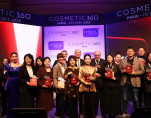
BEIJING, CHINA – Media OutReach Newswire – 21 October 2025 – On October 15-16, the annual global beauty innovation event, the 2025 INPD was held in Paris, France. From unveiling of the INPD awards to the specially curated “C-Beauty Landscape” and the dedicated Chinese Premium Cosmetics Appreciation Event, the rise of Oriental beauty made a remarkable impact at the Louvre, captivating the entire audience. Chinese Cosmetics Companies […]

JAKARTA, INDONESIA – Media OutReach Newswire – 21 October 2025 – SCG participated in the Forbes Global CEO Conference 2025: THE WORLD PIVOTS in Jakarta, Indonesia, which was organized under the theme “Sustainable Philanthropy.” The conference brought together business leaders from around the world to exchange visions on driving sustainable business practices amid the changing global economic, technological, and environmental landscape. Photo credit: Forbes Global CEO Conference […]

The government of British Columbia has introduced legislation that would permanently ban new crypto-mining operations from connecting to the provincial grid via BC Hydro, and impose formal limits on power access for AI and data-centre operators. The bill, known as the Energy Statutes Amendment Act, aims to steer the province’s clean-electricity supply toward mining, LNG and natural-resource industries viewed as higher-priority than the high-load crypto sector.

Under the new framework, BC Hydro will no longer approve fresh power-grid connections for crypto-mining facilities. The moratorium first established in 2022 is now set to become law. In parallel, beginning in late 2025 the province will introduce an allocation process for electricity demanded by AI and data-centres: only a capped amount of power will be available to those sectors, and they must compete for it under stricter criteria.

Government officials say the shift reflects a need to address surging grid-demand from emerging industries and to ensure that public electricity resources deliver broad economic and employment benefits. Premier David Eby said the move will help the province “move faster” on major transmission infrastructure and support industrial growth in a planned megaproject in the northwest. Energy and Climate Solutions Minister Adrian Dix added: “Our new allocation framework will prioritise vital growth in sectors like mining, natural gas and lowest-emission LNG, while ensuring our clean energy is directed to projects that deliver the greatest benefit to British Columbians.”

The backdrop encompasses the looming construction of the North Coast Transmission Line, a roughly $6 billion project designed to bring new clean-electricity capacity to the province’s sparsely-electrified northwest. That infrastructure is central to the government’s strategy of prioritising industrial connections over speculative, high-load users such as crypto-mining farms.

Industry analysts have mixed reactions. Supporters say the policy reflects sound planning in a jurisdiction dependent on hydroelectric power and facing increasing pressure from multiple large-scale electricity users. They note that the high energy-intensity of crypto-mining—with relatively modest job creation and economic multiplier effects—makes it a less compelling candidate compared with mining, LNG, hydrogen and industrial AI. On the other hand, critics warn that the framework gives the government wide discretionary power, potentially reducing transparency and favouring incumbents. As one Green-party MLA noted: “With no detail on this framework or the criteria for decision-making in Bill 31, we are concerned that the minister will be the one making these consequential determinations under the influence of friends or lobbyists.”

The government has indicated that data-centres and AI firms will still be eligible for power, but will face competition under the new mechanism: for example, BC Hydro reportedly will allocate only about 300 megawatts for AI and 100 megawatts for data-centre use every two years. Those thresholds will represent a major scaling down in open-access grid connections for such technology users and signal a shift away from first-come, first-served power allocations.

For prospective crypto-miners, the measure marks a turning point. Major mining projects that had anticipated low-cost Canadian hydro power will face altered calculus: either repurpose for non-crypto uses, or relocate to jurisdictions with more open grid access. This may induce capital flight or slow the growth of a nascent mining industry in the province. Conversely, proponents of the policy argue it will preserve affordability for households and existing industrial users by preventing unmanaged load growth.

The government’s timing is also notable. The bill not only formalises the ban on new crypto-mining connections, but synchronises with the broader policy shift to accelerate the NCTL and re-shape grid access rules. Construction is scheduled to begin in 2026 and extend into the early 2030s. For the grid, this means a period of constrained supply allocation while demand from resource-intensive projects expands.

Community and Indigenous groups have been emphasising that increased industrial electrification must occur in consultation and benefit-sharing with First Nations. The legislation allows for First Nations co-ownership of the transmission line and signals a broader reconciliation dimension to the infrastructure strategy.

In the crypto-community the reaction is sharp. Firms and investors note that BC’s abundant hydro power was a major attraction to set up mining operations at scale. With the ban in place, developers will need to evaluate stranded-asset risk or shift to other Canadian provinces or international venues. Some warn that innovation in GPU- and AI-mining overlap may find itself constrained as power availability tightens.

From a global lens, British Columbia joins a growing cohort of jurisdictions imposing stricter controls on high-energy crypto-activities and re-examining how emerging tech intersects with energy policy. The regulation underscores the tension between rapid tech growth and public-utility responsibilities in regions reliant on renewables and constrained transmission.

Abu Dhabi — Multip­ly Group PJSC’s subsidiary Emirates Driving Company PJSC has secured a 22.5 per cent shareholding in Mwasalat Holdings LLC, the Abu Dhabi-based transport operator, with an option to raise its stake to 50.6 per cent pending regulatory approval and other conditions. The acquisition reflects Multiply Group’s push into the broader mobility sector beyond its legacy in driving education and training, positioning EDC as a […]

HONG KONG SAR – Media OutReach Newswire – 20 October 2025 – The second annual Global Youth Powerhouse Summit 2025, organized by the Hong Kong Youth Professional Global Advocacy, officially took place today. The Summit has convened over 200 young professionals, government leaders, and corporate executives from Southeast Asia, the Middle East, and the Greater Bay Area, with over 5000 global participants from over 30 countries joining […]

Advertisements

Greenlogue/AP The 28th edition of the trade-fair and conference platform Ecomondo 2025 will convene from 4 to 7 November at the Rimini Expo Centre, Italy, with a reinforced international agenda that organisers expect will draw more than 1,000 exhibitors and upwards of 100,000 visitors. This year’s event is emphasising several strategic growth areas: climate-tech innovation, digitalisation in resource management, blue economy and Mediterranean-Africa partnerships. The organising body, […]

Riyadh — The inaugural edition of FIBO Arabia drew a total of 12,399 participants from regional and international markets to the three-day expo at the Riyadh Front Exhibition & Conference Center, signalling a notable step in Saudi Arabia’s push to define itself as a wellness and fitness hub in the Middle East.

The event, held under the theme “For a Strong and Healthy Society” and aligned with the kingdom’s Vision 2030 agenda, was conducted under the strategic partnership of the Ministry of Investment, the Ministry of Sport and the Ministry of Health. More than 80 exhibitors from around 18 countries participated, while attendees were presented with more than 50 industry-leading speakers across live arenas and conference forums.

One of the centre-piece announcements was the launch of the first Fitness Sector Development Report for the Kingdom, spearheaded by the Ministry of Sport in collaboration with advisory firm CAA Portas. The report projects the domestic fitness industry could expand to a value of SAR 15.5 billion by 2030, driven by policy reforms, investor interest and a growing consumer base.

International brands such as Technogym, Life Fitness, Keiser Corporation and Therabody featured in the line-up, underscoring the global interest in the kingdom’s wellness market. The conference programme included global fitness strategist Herman Rutgers and Morgan Stanley’s Alexey Naumov among its headline speakers.

Speakers and industry insiders described the event as a sign that the Gulf region is moving into a higher gear in terms of wellness infrastructure, investment and consumer engagement. “The success of FIBO Arabia’s inaugural edition reflects both the strength of Saudi Arabia’s wellness economy and the appetite for innovation, collaboration and growth across the industry,” said Vasyl Zhygalo, Managing Director of RX Middle East and Emerging Markets.

A particularly prominent feature of the expo was its emphasis on inclusivity and community participation. Female-led sessions and anecdotes of women athletes such as Nelly Attar — recognised as the first Arab woman to climb K2 — and Saudi fitness professional Rawan Al Saadi featured in discussions on access, empowerment and facility design. Meanwhile, event organisers hosted a variety of live arenas: a Performance Arena, a Strength Arena, a Tech Arena, a Calisthenics Arena, and a Group Fitness Arena powered by Les Mills.

Business-to-business networking and investment matchmaking were core to the strategy. The ecosystem included gym operators, wellness technology firms, nutrition solution providers and investors seeking access to opportunities in the region. One panel commented on how the kingdom’s younger demographic, rising female participation, and regulatory support combine to make the market appealing. The Fitness Sector Development Report cites private-sector expansion and policy reform among the key growth drivers.

Notably, the event’s timing and format reflect a regional pivot from traditional oil-led growth toward wellness, lifestyle and economy diversification. Saudi Arabia’s commitment to developing its ecosystem was underscored through both government support and the presence of global industry players. Industry experts observed that the applied technology, live experiences and cross-border brand involvement distinguish FIBO Arabia from earlier regional trade shows in the fitness sector.

Visitor figures of 12,399 set a baseline for the event’s future editions. The organisers have already announced that FIBO Arabia will return to the same venue from 29 September to 1 October 2026.

Sun King, a leading renewable energy firm, is poised to make significant strides in solar manufacturing, with its CEO, T. Patrick Walsh, announcing an ambitious target to establish new production plants by 2026. The company’s aggressive expansion plans aim to bolster solar panel production and position Sun King at the forefront of the renewable energy sector. Walsh’s announcement underscores the company’s commitment to addressing the global demand […]

The Free Software Foundation has unveiled an ambitious new project aimed at transforming mobile computing. Named the “Librephone,” this initiative goes far beyond typical Android modifications, focusing instead on creating a fully open-source, privacy-respecting mobile ecosystem. It seeks to address growing concerns over data privacy and surveillance, marking a pivotal moment in the ongoing debate about control in the mobile space. At the heart of the Librephone […]

By K Raveendran     When Google announced that Visakhapatnam would be home to its $15 billion project to build the company’s first artificial intelligence hub in India, the news landed like a thunderclap across the southern states. For Andhra Pradesh, it was nothing short of a jackpot — a once-in-a-generation opportunity to rewrite the […]

The article Google’s AI Hub: Visakhapatnam’s Jackpot, South India’s Heartburn appeared first on Latest India news, analysis and reports on Newspack by India Press Agency).

Salik, Dubai’s primary toll gate operator, has rolled out an upgraded version of its mobile application alongside the introduction of an interactive WhatsApp channel, aiming to strengthen its communication with customers and improve operational efficiency. This strategic move aligns with Salik’s commitment to digital transformation and improving user experience in an increasingly tech-driven environment. The updated mobile app introduces a streamlined user interface designed to simplify the […]

Greenlogue/AP The agricultural industry is undergoing a transformation, driven by the rise of green automation. As the global demand for food increases, farmers and tech innovators are turning to advanced technologies to increase productivity while maintaining sustainable practices. Green automation encompasses a wide range of smart tools—from autonomous robots and drones to sensors and artificial intelligence—designed to optimise farming processes, reduce environmental impact, and promote resource efficiency. […]

The UAE Ministry of Education has entered a new partnership with Core42, a leading company in advanced technological solutions, aiming to accelerate digital learning across the country. This collaboration marks a significant step in the UAE’s broader strategy to modernise its education system and integrate innovative technologies into classrooms nationwide.

Under the Memorandum of Understanding signed by both parties, the Ministry and Core42 will jointly focus on enhancing the digital infrastructure in schools, universities, and other educational institutions. This partnership is set to foster digital literacy, streamline educational processes, and introduce advanced technological tools that can significantly improve the learning experience. The Ministry’s initiative is aligned with its ongoing efforts to diversify and digitalise the national education landscape.

The UAE has been increasingly prioritising the integration of digital technologies within education as part of its long-term goals. The collaboration with Core42 comes at a crucial time as the nation works towards adapting its education system to meet the challenges and opportunities presented by digitalisation. By tapping into Core42’s expertise, the UAE hopes to provide its educational institutions with cutting-edge tools and systems that will prepare students for the future of work, which will undoubtedly be more technology-driven.

Core42, known for its innovative approach to digital solutions, will bring its wealth of experience in developing and implementing advanced tech-driven educational platforms. This will include custom-built software solutions, interactive tools, and data-driven systems that improve not only learning outcomes but also operational efficiency. The company’s work is expected to play a key role in addressing the increasing demand for online and hybrid learning models in response to evolving global educational trends.

The Ministry’s vision is to ensure that both educators and students have the necessary tools to succeed in an increasingly digital world. This vision includes not just integrating digital tools for learning, but also upskilling educators to effectively use these technologies. The partnership with Core42 will focus on creating tailored professional development programmes for teachers, allowing them to enhance their digital teaching capabilities. This approach seeks to bridge the gap between traditional and modern pedagogies, ensuring that both students and educators can thrive in an ever-changing digital environment.

The collaboration will also focus on leveraging data analytics to monitor progress, tailor curricula to individual student needs, and provide actionable insights into educational outcomes. By incorporating AI and machine learning into the learning process, the Ministry and Core42 aim to create personalised learning experiences that adapt to each student’s pace and learning style. This will be complemented by real-time feedback mechanisms, enabling educators to make informed decisions that foster student success.

The MoU also includes the development of digital platforms that will support a more interactive and engaging educational experience. Core42’s expertise in software development and user experience design will be crucial in creating platforms that are both intuitive and effective for students of all ages. The focus will be on ensuring that these platforms are accessible, user-friendly, and capable of supporting diverse learning needs, from primary schools to higher education institutions.

The UAE’s education system has been undergoing significant reforms in recent years, with a growing emphasis on integrating technology into learning. Initiatives like this partnership with Core42 are a clear indication of the country’s commitment to building a world-class educational infrastructure that can support its ambitious vision for the future.

A groundbreaking study by researchers from the Massachusetts Institute of Technology has unveiled traces of Earth’s earliest form, hidden deep within the planet’s mantle. This discovery, based on chemical analysis of ancient mantle rocks, offers unprecedented insights into the planet’s violent beginnings and the remnants of its “proto Earth” phase. The study centres around an unusual imbalance in potassium isotopes found in rocks formed billions of years […]

HONG KONG SAR – Media OutReach Newswire – 18 October 2025 – Joyful Alliance, a Singapore-headquartered investment firm, today announced it will propose the development of the Wakayama Integrated Onsen Resort to the Wakayama City Government. The two parties officially signed the memorandum of cooperation on October 17. Joyful Alliance will propose an Integrated Onsen Resort development in Wakayama City, Japan, projected to attract millions of visitors […]

Scientists at the Swiss start-up FinalSpark have succeeded in running rudimentary computations through lab-grown human brain organoids — millimetre-scale clumps of neurons — offering a new frontier in low-energy “wetware” computing. The organoids, once fed with nutrients and electrically stimulated, exhibit signals that researchers hope could one day rival traditional silicon chips. FinalSpark begins by reprogramming donor skin cells into induced pluripotent stem cells, then guiding them […]

A team of scientists has stabilised a high-performing sodium compound that could unlock safer, cheaper and greener solid-state batteries, putting sodium one step nearer mainstream use in electromobility and grid storage. The breakthrough hinges on a metastable form of sodium hydridoborate, which the researchers heated to the brink of crystallisation and then quenched to lock in a high-conductivity phase. This novel phase exhibits ionic conductivity at least […]

Sharjah Economic Development Department and Sharjah Digital Department have introduced an AI-powered Trade Name Issuance Service at GITEX Global 2025 that can cut name issuance time by as much as 98 per cent. The initiative, built into the DS Assistant tool on the Digital Sharjah platform, analyses business activity data and generates compliant trade name suggestions without human intervention.

The system assesses a company’s industry, preferred naming style and regulations, then offers tailored naming options. By automating the approval workflow, it dramatically reduces processing delays and human error. Officials say this service marks the world’s first fully AI-based trade name issuance mechanism.

Hamad Ali Abdallah Al Mahmoud, Chairman of SEDD and member of the Sharjah Executive Council, said the move underscores the emirate’s goal to streamline business setup and reinforce its position as a regional innovation hub. He noted that SEDD is deepening collaboration with other government entities to expand digital transformation across regulatory and business services.

The service dovetails with broader efforts at the Sharjah Government Pavilion to showcase human-centred digital governance. Among other highlights at GITEX, the Hamriyah Free Zone Authority unveiled a Remote Company Formation project using a Vision LLM to validate identities and documents via live video calls. SDD’s pavilion also featured infrastructure systems for energy management, smart building monitoring and citizen-oriented digital welfare platforms.

Across the UAE, government agencies at GITEX are unveiling AI systems to modernise public services. Dubai Customs launched its “Voice of Customer” platform, which ingests feedback from multiple channels, applies sentiment analysis, and converts insights into action points to improve operations. The platform supports strategic decision-making by flagging emerging client concerns in real time.

Meanwhile, the broader GITEX 2025 agenda focused heavily on sovereign AI, data sovereignty and smart city ecosystems. The event drew over 6,800 exhibitors, 2,000 startups and delegates from 180 countries. Tech firms rolled out next-generation AI, quantum computing and biotechnology solutions aimed at accelerating public sector transformation.

Analysts view Sharjah’s trade name issuance system as filling a niche in the process of company formation—one that has typically remained manual and fragmented in many jurisdictions. By embedding naming rules, business-activity semantics and regulatory checks into algorithmic logic, the system could reduce friction for entrepreneurs. Yet its success will depend on the AI’s ability to interpret diverse naming preferences, local culture, language nuance and prevent politically or culturally sensitive outputs.

HONG KONG SAR – Media OutReach Newswire – 17 October 2025 – The Mineral Boutique Spa, a new luxury wellness destination located on the 36th floor of WWTTC Mall in Causeway Bay, officially opened in August 2025. Overlooking panoramic sea views and the city skyline, the spa introduces a new era of mineral-based skincare and personalized wellness experiences in Hong Kong. Positioned between a spa and a […]

Space42 has inked a memorandum of understanding with e& UAE to co-develop Vehicle-to-Everything systems that will underpin autonomous mobility and smart city infrastructure across the UAE. The pact seeks to marry Space42’s Sovereign Mobility Cloud and autonomous vehicle expertise with e& UAE’s 5.5G connectivity, edge computing and secure communications, forming a foundation for 6G-era applications. The collaboration will see both firms launch pilot projects, help shape regulatory […]

Gulf Cooperation Council states are positioning themselves to tap into the projected $2 trillion global sports tourism market by 2030, with a new PwC Middle East study underlining the region’s evolving role from event host to year-round destination.

According to the report Game on for the GCC – Turning sporting ambition into lasting tourism impact, the region already boasts world-class events such as the 2022 FIFA World Cup in Qatar and a string of Formula 1 races, and now aims to leverage that prestige to build sustained tourism flows.

The global sports tourism market is estimated to account for 10 percent of all tourism spending and is expected to surpass $2 trillion by 2030. GCC nations are racing to convert episodic sporting moments into immersive fan experiences, integrated visitor journeys and continuous attraction pipelines.

Saudi Arabia is emerging as the region’s most aggressive investor in sport, with projections that its domestic sports economy may grow from about $8 billion to $22.4 billion by 2030—creating around 39,000 jobs and adding over $13 billion to GDP. The Kingdom’s Vision 2030 reforms emphasise sports as a diversifier of its oil-dependent economy.

Across the GCC, national governments, sovereign wealth funds, private investment and public-private partnerships are converging. According to PwC’s Global Sports Survey 2024, the Middle East now commands 24 percent of global sports investments, a notable shift in capital flows toward the Gulf.

To sustain momentum, the report argues, GCC states must go beyond marquee events and build a resilient sports tourism ecosystem. That means aligning infrastructure, regulation, destination branding, transport and hospitality standards—not just for big events but for ongoing seasonal and niche attractions.

Qatar’s experience is instructive. The 2022 World Cup is estimated to have generated between $2.3 billion and $4.1 billion in tourism spending and broadcast revenues, contributing $1.6 billion to $2.4 billion in GDP impact. But the challenge is to retain visitor engagement in non-World Cup years.

In that respect, the PwC analysis calls for “sport-led destinations” combining competition, culture and entertainment. The aim is to extend visitor stays, unlock repeat visitation and cross-sell other forms of tourism—heritage, wellness, sustainability and cultural experiences.

Women’s sports are emerging as a key growth frontier. In the GCC, 85 percent of sports executives expect double-digit growth in women’s sports revenues over the coming years. Investment in female participation, media rights and sponsorship is viewed as critical to widening the revenue base.

Yet several constraints loom. Many Gulf states rely heavily on imported talent in event operations, face seasonal desert climates, and must balance aggressive development with long-term maintenance costs. Ensuring accessibility, connectivity and visa ease are also essential for maintaining global appeal.

One forward move: GCC officials have greenlit a Schengen-style unified tourist visa scheme to allow seamless travel across member states—an effort aimed at boosting cross-border “bleisure” travel and strengthening regional integration of tourism flows.

Meanwhile, event diversification is underway. Saudi Arabia recently launched the Esports Nations Cup, with the inaugural edition slated for Riyadh in November 2026, expecting participation from over 100 nations and some 1,500 players across multiple titles. The country’s wider gaming and esports strategy is aligned with broader youth, technology and cultural industry goals.


HONG KONG SAR – Media OutReach Newswire – 17 October 2025 – DL Holdings Group Limited (HKEX: 1709) today announced a comprehensive strategic partnership with Antalpha, a global leader in digital asset financial services. The collaboration—valued at up to US$200 million—covers tokenised gold assets and Bitcoin mining infrastructure, establishing a dual-track strategy that bridges traditional and digital finance. On the gold-asset side, DL Holdings is in the […]

VISHNU RAJA
RYO YAMADA
HITORI GOTOH
IKUYO KITA