News related to
across

MAF Sukuk Ltd is launching a US$500 million, 10-year sukuk under Regulation S, with initial price thoughts set around US Treasuries plus 125 basis points. The securities will be backed by Majid Al Futtaim Properties as the obligor, while parent Majid Al Futtaim Holding offers a guarantee.

The offering adopts a wakala/murabaha structure and is expected to carry credit ratings of “BBB/BBB”, aligned with those of the guarantor. HSBC is acting as lead structuring bank, with the purpose of the funding geared towards expansion and refinancing of property development activities.

Majid Al Futtaim Holding, in its most recent credit review, retains its BBB rating and stable outlook, reflecting its scale of operations and diversified asset base. Fitch affirmed the rating in November 2024, citing growth across revenue and EBITDA. Majid Al Futtaim’s internal guidance confirms that capital allocation remains within the thresholds consistent with its BBB leverage metrics.

Investors familiar with corporate sukuk in the Gulf region view the 125 basis point spread as moderately tight for a 10-year tenor, particularly for a non-sovereign issuer in the real estate sector. The parent guarantee is crucial to bolster credit comfort, given that the issuer is a property development arm.

In recent years, Majid Al Futtaim has deployed Islamic capital markets for its financing needs. Its 2023 green bond issuance of US$500 million was aimed at refinancing an AED 800 million bond commitment, underlining a strategy to blend sustainability credentials with its capital structure. The group similarly has historically issued hybrid capital securities and sukuk in its debt portfolio.

The latest sukuk will be listed via MAF Sukuk Ltd, which already carries a BBB long-term rating. The listing via a special purpose issuer isolates the structure from direct group operations, while the parent guarantee transfers credit risk back to the overarching entity.

Major risks for the deal rest on cyclical pressures in real estate markets, tenant defaults, and development cost inflation. Majid Al Futtaim Properties has disclosed in its base prospectus the possibility of cost overruns, land title constraints, and tenant concentration as material risks. The group also faces competitive dynamics in its markets where some rivals are state-backed.

Mohamed Futtah, a regional fixed-income strategist, commented that “a 10-year sukuk at T+125bp for a BBB group guarantee is ambitious, but could succeed under strong demand, especially from Gulf and Asia Islamic investors seeking yield in a rate environment that is otherwise compressed.”
Multiply Group, the Abu Dhabi investment holding firm, will acquire 2PointZero and Ghitha Holding via a share-swap deal, creating a combined enterprise with an estimated valuation of AED 120 billion. The transaction involves issuing around 23.36 billion new shares, lifting Multiply’s share capital from AED 2.8 billion to AED 8.64 billion and expanding the total shares to 34.56 billion. Approval from shareholders and regulators is pending.

The decision follows board sanction and aligns with a broader move by IHC to consolidate its leading portfolio companies—Multiply, 2PointZero, and Ghitha—into a unified listed entity under the name 2PointZero Group PJSC. The merger is pitched as an effort to streamline governance, deepen synergies across sectors, and accelerate growth. The transaction is slated for completion by mid-November 2025, contingent on formal clearances.

Under the proposed structure, Multiply will absorb full ownership of 2PointZero and a majority of Ghitha Holding. The merged entity will retain its listing on the Abu Dhabi Securities Exchange. With combined operations across energy, mining, financial services, agrifood, consumer goods, media, logistics, and related verticals, the new 2PointZero Group aims to harness diversification and integrated scale.

2PointZero brings to the table AI, energy transition, mining and financial services capabilities. Its role as a facilitator in cleantech and future resource assets is central to the logic of the merger. Ghitha Holding contributes a robust agriculture, food production, processing and distribution footprint—one of the UAE’s key players in national food security. Multiply already has stakes in sectors including mobility, media & communications, retail/apparel, packaging, and beauty.

Syed Basar Shueb, Chairman of Multiply, called the deal “a natural evolution of our portfolio strategy,” emphasising the aim to “optimise scale and strengthen the platforms we have built.” Samia Bouazza, Group CEO and Managing Director, framed the merger as aligning capital with megatrends, stating the unified entity would “grow bottom line both organically and inorganically, unlock value through AI, and deliver consistent long-term returns.” The new group will operate across more than 85 countries and target service to one billion people globally.

IHC’s own communications parallel Multiply’s narrative. The parent firm describes the merger as a means to craft a “next-generation investment powerhouse” anchored in a dual focus on energy and consumer sectors, intended to enhance operational efficiency and strategic scale. Sheikh Tahnoon bin Zayed Al Nahyan, IHC Chairman, cited the move as reaffirming IHC’s role as a catalyst of transformation, leveraging AI and value networks. Sheikh Zayed bin Hamdan bin Zayed Al Nahyan, Chairman of 2PointZero, said the consolidation would further the mission of driving energy transition, enabling AI, and empowering communities.

Aryaka Partner Program strengthens partner engagement, improves ease of onboarding, and positions company for accelerated channel-led growth SINGAPORE – Media OutReach Newswire – 16 October 2025 – Aryaka®, the leader in and first to deliver Unified SASE as a Service, today announced the launch of a revamped channel program. The new Aryaka Parter Program delivers added simplicity, support, and structure to Aryaka’s growing Distributor and VAR ecosystem, […]

South Africa’s township economy, long relegated to the informal fringes of growth, is now drawing deliberate attention from government, corporates and fintech innovators alike as a pivotal engine for broad-based development. The sector is increasingly viewed not as a peripheral “slack” market but as a strategic frontier offering scale, resilience and social inclusion. Analysts estimate that the township economy could be worth between R900 billion and over R1 trillion, […]

Matein Khalid I have made no secret about my conviction that Brazil’s Nu Bank (NU) and China’s Alibaba (BABA) are my two fave emerging market’s fintechs of destiny since 2024. Alibaba has risen almost 100% since I accumulated its shares in the mid 80’s in its New York ADR once it was evident that the Politburo had pivoted to Big Bang fiscal/monetary stimulus to goose the dormant […]

ASML’s blowout third-quarter orders tell the real story of the global economy right now. The world is not slowing down — it’s retooling itself for the AI age. The Dutch company, which makes the advanced lithography machines needed to produce the most powerful AI chips, reported €5.4 billion in new bookings for the quarter, well above forecasts. This figure matters far beyond Europe’s borders. It signals that […]

Macau’s cornerstone culinary event brings the region’s top talents to Galaxy Macau from November 14 to 15 with early-bird ticketing by October 26. MACAU SAR – Media OutReach Newswire – 15 October 2025 – Galaxy Macau Presents Tatler Off Menu returns to Galaxy Macau from November 14 to 15, once again celebrating the extraordinary artistry of gastronomy with a meticulously curated international ensemble of award-winning chefs recognised […]

Advertisements

Europe’s industrial firms are expected to outperform across corporate sectors in the coming earnings cycle, as sharp increases in artificial intelligence investment and defence procurement drive demand for advanced machinery, components and systems. Industrial-sector earnings per share for the MSCI Europe Industrials Index are projected to rise by about 4.9 percent year-on-year, reflecting the strength of capital goods manufacturers amid surging AI and defence spending. Analysts attribute […]

Volkswagen’s truck arm Scania has inaugurated its first wholly-owned manufacturing facility in China, signalling a bold push to deepen its footprint in Asia and buffer against global trade risks. The plant, built at Rugao in Jiangsu province, commands an investment of €2 billion and is designed to produce both for the domestic Chinese market and export destinations across Asia and Oceania. CEO Christian Levin said the facility […]

KUALA LUMPUR, MALAYSIA – Media OutReach Newswire – 15 October 2025 – Organised by the Ministry of Natural Resources and Environmental Sustainability (NRES) and co-organised by the Malaysian Green Technology and Climate Change Corporation (MGTC), the International Greentech & Eco Products Exhibition and Conference Malaysia (IGEM) 2025 opened its doors today at the Kuala Lumpur Convention Centre, marking the start of three days dedicated to innovation, collaboration, […]

The 2025 Global Fraud Index ranks Africa as the world’s most exposed region to digital fraud, marking a significant shift in the global fraud landscape. Sumsub’s study, covering 112 countries across four structural pillars, places Nigeria, Tanzania, Uganda, Kenya and Senegal among the least protected nations. Sumsub built its index on four weighted dimensions: fraud activity, resource accessibility, government intervention, and economic health. The combined framework aims […]

Walmart has forged a deal with OpenAI to allow customers and Sam’s Club members to purchase goods directly through ChatGPT using its Instant Checkout system. The move turns the AI chatbot into a full-fledged retail interface, collapsing the gap between conversational query and completed sale. Shares of Walmart rose about 3 percent following the announcement, signalling investor confidence in this bold shift in e-commerce. The companies say […]

By K Raveendran Oil prices fell to their lowest level in five months on Tuesday, continuing a slide that has gathered pace over the past several weeks. The benchmark Brent and West Texas Intermediate crude futures have both dipped significantly, erasing much of the year’s earlier gains. In stark contrast, gold has soared to an […]

The article Gold Feeds On Oil’s Misfortune; One Hits The Roof, The Other Down In The Dumps appeared first on Latest India news, analysis and reports on Newspack by India Press Agency).

BANGKOK, THAILAND – Media OutReach Newswire – 15 October 2025 – Proud Real Estate Public Company Limited (PROUD) announces the launch of The Residences at InterContinental Phuket Resort, a prestigious development with an investment exceeding THB 2.5 billion (around $77 million USD). This is the company’s second Branded Residences project in Thailand under the globally renowned InterContinental brand, introducing a transformative concept of residential living themed ‘Live […]

Dubai’s Roads and Transport Authority inked three major Memoranda of Understanding this week at GITEX Global 2025, forming strategic partnerships with KHDA, Parkin PJSC, and PayPal to deepen integration of the nol card ecosystem.

Under the agreement, RTA and the Knowledge and Human Development Authority, in partnership with GTS Alive Middle East, will roll out the “Study in Dubai – nol ISIC” card, enabling students to use nol across campus services and lifestyle benefits. The nod with Parkin aligns its digital parking operations with the nol payment interface, while the PayPal deal aims to embed nol into broader digital commerce and point-of-sale systems.

Mohammed Al Mudharreb, Chief Executive Officer of RTA’s Corporate Technology Support Services Sector, led the signings on behalf of RTA. On the KHDA side, Dr Saeed Mubarak bin Kharbash and Michal Lezo signed for KHDA and GTS Alive Middle East respectively; Parkin’s participation was endorsed by Mohamed Abdulla Al Ali, and PayPal was represented by Otto Williams, SVP and General Manager for PayPal Middle East and Africa.

According to RTA, the thrust of the MoUs is to position nol as more than a public transport card — it aims to transition nol into a multifunctional payment instrument across retail outlets, restaurants, parking, entertainment venues, events, and institutional services. The authority hopes that expanding acceptance will drive convenience, reduce cash reliance, and support Dubai’s smart city ambitions.

KHDA emphasized the student-centric angle: the “Study in Dubai – nol ISIC” card is expected to be accepted across higher education institutions in the emirate, granting students access to discounts, campus services, and lifestyle perks under a unified payment mechanism. Officials stated it will enhance the student experience and streamline campus operations.

From Parkin’s standpoint, the collaboration enables interoperability between its parking systems and the nol platform — motorists may use nol directly for parking payments, potentially eliminating the need for separate digital wallets or parking apps. Meanwhile, PayPal’s role is to act as a bridge for merchants and service providers to adopt nol-based transactions, especially in digital and brick-and-mortar payment contexts.

These moves come amid a broader push by Dubai authorities to accelerate digital payment adoption and integrate city services under unified ecosystems. The expansion from transit to wider commerce mirrors trends in other global cities, where transport payment cards or mobile passes are becoming de facto urban wallets.

A challenge will lie in merchant adoption and technological integration. To be effective, retail outlets, parking operators, education institutions, and event venues must invest in infrastructure to accept nol-based payments, whether via terminals or backend systems tied to PayPal’s network. RTA has framed these partnerships as a pathway to co-developing nol-linked products and value-added services, creating new revenue streams and customer experiences.

Customer satisfaction is a recurring pillar in RTA’s narrative: by enabling one card to handle multiple daily transactions, the authority expects to reduce friction and improve uptake. Sustainability is also a stated goal — shifting transactions away from paper tickets and cash is presented as an environmental benefit.

Notably, Dubai is also spotlighting innovations in mobility at GITEX: the Trackless Tram, an AI-driven, driverless tram solution, is among projects on display. The new MoUs dovetail with such transport-led technology investments, reinforcing Dubai’s intent to integrate mobility and payments as part of its future city blueprint.

Within the education sector, KHDA’s endorsement of nol for student services signals a bridging of infrastructure between municipal systems and institutions — a model that, if successful, could serve as a template for other smart city programmes. The partnership with PayPal is particularly significant, since its global payments reach gives nol a pathway into cross-border and e-commerce transactions, beyond typical fare or local merchant payments.

Traders on the U. S. prediction market Kalshi are assigning a 55 percent chance that Bitcoin will exceed $130,000 by the end of 2025, with probabilities of 34 percent for surpassing $140,000 and 24 percent for topping $150,000. That places the market’s expected annual high at roughly $132,000.

Those figures reflect a steadily intensifying optimism about Bitcoin’s trajectory, drawing attention from institutional and retail participants alike. Kalshi’s “How high will Bitcoin get this year?” market is driving price discovery around extreme outcomes for the cryptocurrency.

That optimism today sits alongside growing institutional flows into related assets. Bitcoin spot ETF issuers have been attracting multi-billion dollar inflows across several jurisdictions; analysts view that as a cornerstone of structural demand, tightening supply in spot markets. At the same time, the derivatives market is registering sharply skewed positioning in favour of upside moves, especially in out-of-the-money call options.

Crypto research platforms note that exchange reserves of Bitcoin are at multi-year lows, meaning a smaller buffer for large sell orders to exert downward pressure. Some large holders are moving coins to cold storage or long-term custody, reducing the circulating float further. That dynamic can magnify even moderate inflows into a pronounced price rise.

Macroeconomic factors are reinforcing these tailwinds. Markets broadly expect the U. S. Federal Reserve to shift toward a less restrictive stance in the months ahead, which would lower the opportunity cost of holding a risk asset like Bitcoin. Inflation pressures, geopolitical uncertainty, and currency devaluation narratives have been pushing capital toward non-sovereign stores of value — a trend some asset allocators perceive as supportive for digital assets.

Kalshi itself has expanded rapidly. In October 2025, the company announced growth into over 140 countries following a $300 million funding round that values it at $5 billion. This capital boost is intended to improve infrastructure, broaden partnerships, and scale its product stack beyond simple yes/no event contracts. The valuation surge underscores confidence in prediction markets as a means of tapping collective foresight.

Kalshi is currently viewed as a leader in the prediction-market space, outpacing rivals like Polymarket. As of mid-October, Kalshi’s valuation exceeds that of Polymarket by a wide margin, though the latter retains star appeal in crypto circles.

BlackRock chief executive Larry Fink asserted that cryptocurrencies carry a role akin to gold in investment portfolios, calling Bitcoin “a decent tool for diversification” while warning that it should not form a major slice of one’s holdings.

Speaking on 60 Minutes on CBS, Fink said: “There is a role for crypto in the same way there is a role for gold … For those looking to diversify, it is not a bad asset, but I don’t believe that it should be a large component of your portfolio.”

Fink’s remarks mark a notable shift from earlier positions. In the past, he dismissed Bitcoin as a facilitator of money laundering, stating that none of his clients expressed interest in crypto. The evolution of his thought underscores how digital assets have moved further into mainstream investment discourse.

His comments come amid rising institutional engagement with digital asset markets, with BlackRock among firms championing the development of spot Bitcoin ETFs. The firm has also begun pushing into tokenization, envisioning the conversion of traditional financial products such as equities, bonds or real estate into digital token formats. Fink described tokenization of all assets as “the next wave of opportunity” over the coming decades.

Analysts view Fink’s balanced tone—acknowledging both potential and restraint—as calibrated for the climate of heightened volatility and regulatory uncertainty in crypto markets. He is signalling openness without forfeiting caution.

Some investors welcomed the endorsement as validation from one of finance’s most influential figures, though sceptics note that Fink’s insistence on limiting crypto to a small portfolio slice reflects enduring reservations.

Crypto proponents point out that Bitcoin’s often low correlation with equities or bonds—and its non-sovereign character—make it attractive as a diversification instrument. BlackRock itself in earlier internal research has characterised Bitcoin as a “unique diversifier,” citing its tendency to behave differently from traditional assets during episodes of macro stress.

Yet the environment remains fraught. Price swings, regulatory fragmentation across jurisdictions, and infrastructure challenges continue to deter widespread adoption. For instance, debates persist around how to regulate digital assets, custody risks, taxation, and classification.

Alibaba’s most advanced vision-language model, Qwen3-VL 235B, is now accessible via Ollama’s cloud infrastructure, signalling a milestone in multimodal AI deployment. The dense and sparse variants of the Qwen3 family—4B, 8B, 30B and 235B—are slated to become available for local use in due course. Qwen3-VL elevates visual reasoning capabilities: it can interpret graphical interfaces, recognise GUI elements, press buttons, call external tools and complete tasks autonomously. Its […]

OwlTing, a Taiwan-based fintech focussed on stablecoin infrastructure, is set to begin trading its Class A common shares on the Nasdaq via direct listing on 16 October under the ticker “OWLS”. The move marks what the company calls a milestone in its evolution from hospitality and e-commerce into a compliance–led blockchain payments firm.

In its public filings, OwlTing reported revenue of US 7.6 million in 2024 and a payment volume across its platforms of approximately US 218 million. Though still unprofitable, the listing underscores growing confidence in the fragmented stablecoin infrastructure space.

The listing comes at a moment when several high-profile developments are shaping the stablecoin and payments ecosystem. Stripe’s Bridge unit is reportedly preparing to apply for a federal banking charter, aiming to navigate evolving U. S. stablecoin regulation. Meanwhile, major financial and technology firms are said to be in advanced talks to acquire BVNK, a London-based stablecoin platform.

OwlTing’s pivot from hospitality and blockchain traceability to payments and stablecoin services has been underway for some years. Its OwlPay platform enables businesses to accept stablecoins or fiat and settle globally. The company has obtained money transmitter licences in multiple U. S. states and holds themselves out as a “compliance-first” operator in a space that often struggles with regulatory uncertainty.

By listing via direct listing rather than a traditional IPO, OwlTing seeks to avoid dilution of existing shares and allow market-based price discovery. The company will ring the Nasdaq opening bell on 16 October to commemorate the debut. Analysts view the listing as Asia’s first fintech with a pure direct listing on Nasdaq, positioning OwlTing as a regional trailblazer in blockchain payments.

In parallel, Stripe’s ambitions in stablecoin continue to intensify. Its Bridge arm, acquired earlier this year, is now seeking a national trust charter to get ahead of U. S. regulation on digital assets and stablecoins. The charter would permit holding deposits and issuing stablecoins more directly under U. S. oversight.

Roughly $706 million in leveraged crypto positions were liquidated over the past 24 hours, with long bets accounting for $456 million and shorts making up more than $249 million, according to Coinglass data. Ethereum led by asset class with $234 million in liquidations, Bitcoin followed with $168 million, and other altcoins totaled about $68 million. Meanwhile, U. S. spot Bitcoin and Ethereum ETFs recorded sharp capital withdrawals of $326 million and $428 million respectively, marking a second straight session of outflows for both.

The wave of forced sell-offs comes amid intensifying volatility across crypto markets, driven by macro uncertainties and amplified leverage. Analysts point to U. S.–China trade tensions and abrupt tariff escalations as triggers that rattled institutional positioning. The ensuing “flight to safety” saw leveraged traders squeezed out, pushing volatility higher.

Ethereum’s dominance in the liquidation mix underscores its exposure to leveraged structures: its liquidations outpaced Bitcoin by roughly 40%. That suggests traders running shorter time horizons or more aggressive leverage in the ETH derivatives market. Some observers interpret this as symptomatic of recent rotations within crypto capital flows, where speculative bets on altcoins become more vulnerable during stressed conditions.

ETF outflows add another layer to the stress narrative. The $326 million pulled from spot Bitcoin ETFs and the $428 million withdrawn from Ethereum ETFs reflect a broader retreat by institutional capital. For Ethereum ETFs, Monday’s $428 million exodus represented the steepest daily outflow in several weeks. Within those redemptions, BlackRock’s ETHA alone led with over $310 million withdrawn.

Those moves reverse inflows seen in prior weeks: Ethereum funds had aggregate positive flows of nearly $488 million in the prior week, while Bitcoin products had also drawn substantial capital. Market analysts caution, however, that the shifts may not signal structural withdrawal from crypto exposure but rather tactical repositioning under duress.

Volatility in derivatives markets has drawn scrutiny to structural stress points. Funding rates, margin requirements, and thin liquidity in some trading venues magnify the impacts of sudden directional moves. Experts suggest that while ETF outflows may exacerbate short-term weakness, sustained pressure will hinge on macro stability.

Al Mal Capital REIT has sealed its first move into the healthcare sector by acquiring the real estate asset housing NMC Royal Hospital in Dubai Investments Park. The transaction lifts AMCREIT’s portfolio valuation to around AED 1.4 billion across six assets. The facility spans 492,332 square feet and comprises two hospital blocks alongside a fully leased commercial wing. The hospital, which supports nearly 120 inpatient beds, outpatient […]

Davidson Kempner Capital Management has inaugurated an office at the Abu Dhabi Global Market, marking its first physical presence in the Gulf and becoming the latest global hedge fund to deepen its footprint in the United Arab Emirates. The new office will be led by partner Chris Krishanthan together with managing director Naveen Sabharwal.

The firm, which manages approximately $37 billion in assets, aims to tap deeper into regional capital flows and align more closely with sovereign and institutional investors across the Gulf Cooperation Council. Tony Yoseloff, managing partner and chief investment officer, described the move as a step to “further expand our investable universe” and strengthen “local relationships in a highly dynamic market.”

For years, Abu Dhabi has steadily worked to position itself as a rival to Dubai in financial services. Its strategy has included tailoring tax incentives, loosening regulatory constraints, and courting global asset managers to relocate or open branches there. As part of this wave, major hedge funds such as Brevan Howard and Marshall Wace have already established bases in ADGM; Davidson Kempner joins their ranks in what is being viewed as a consolidation of the emirate’s appeal to global capital.

The timing dovetails with a broader uptick in cross-regional trading. The CME Group recently reported a 16 percent rise in average daily trading volumes from the Middle East, with hedge fund activity surging nearly 30 percent this year. The firm’s commercial officers noted the region has become its fastest-growing market. Many attributers point to favourable time zones, regulatory allure, and close proximity to sovereign wealth capital as key drivers.

Internally, the ADGM office is intended both as a regional sourcing hub and a local relationship engine. Krishanthan and Sabharwal have previously overseen Davidson Kempner’s Middle Eastern investment activity, so the new base is meant to formalise and deepen ongoing operations. The firm describes its core strategy as rooted in credit and event-driven investing, spanning public and private markets globally.

This expansion comes amid headwinds in certain corners of the firm. In 2024, Davidson Kempner moved to shutter its Distressed Opportunities fund — once managing around $2 billion — as evolving market conditions rendered that strategy less compelling in a constrained restructuring environment. The firm indicated it would reorient distressed allocations into closed-end and multi-strategy vehicles.

Observers see the firm’s Abu Dhabi entry as both adaptive and opportunistic. By embedding itself in ADGM, Davidson Kempner seeks proximity to capital allocators, deal flow, and regional intelligence — all of which matters in markets where local networks and relationships often play outsized roles.

Competition in the region is intensifying. Abu Dhabi’s Lunate recently acquired a minority stake in Brevan Howard, launching a joint investment platform with an initial commitment of $2 billion. Regional investors have also targeted global fund firms for partnerships or co-investment models. That push underscores Abu Dhabi’s ambition to evolve into a globally competitive asset management hub, alongside regulatory hubs like London, Singapore, and Hong Kong.

Abu Dhabi — Aldar has sold all units of its Yas Living development in just days after launch, securing more than AED 1.3 billion in sales. The development comprises 678 apartments spread across three buildings, offering configurations from studios to three-bedroom units. Owners will enjoy dedicated amenities in each building — including adult and children’s pools, a cinema, zen gardens, games rooms, children’s play spaces, and a […]

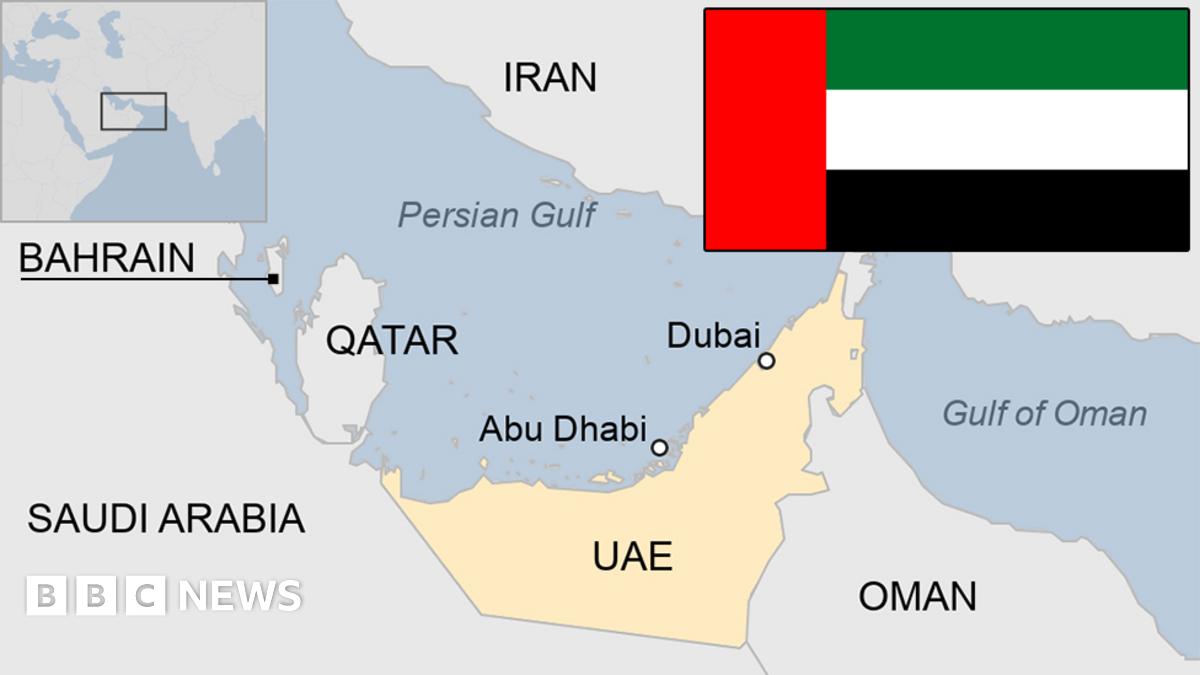
The International Monetary Fund has lifted its projection for the United Arab Emirates’ economic expansion to 4.8 per cent in 2025 and sees 5.0 per cent growth in 2026, citing accelerating non-hydrocarbon activity and a rebound in oil output.

Stronger-than-expected performance in tourism, construction, trade and financial services is underpinning the upward revision. The IMF attributes resilience to the country’s diversified strategy and structural reforms such as enhanced trade agreements and sustained investment in infrastructure.

Analysts say the revision contrasts sharply with broader regional downgrades. The IMF now expects growth across the Middle East and North Africa to expand by only 2.6 per cent in 2025, constrained by policy uncertainty, volatile energy markets and geopolitical tensions.

Within the UAE, central bank data reinforce the narrative of dual expansion. The non-hydrocarbon sector is forecast to grow by around 4.5 per cent annually in both 2025 and 2026, while the hydrocarbon segment is expected to rebound more sharply—by 5.8 per cent in 2025 and 6.5 per cent in 2026—on increased output as OPEC+ quotas are relaxed.

When IMF staff visited the UAE in January 2025, they noted that domestic demand remained robust amid modest oil production, forecasting real GDP growth at about 4 per cent for the year. They projected that fiscal and external surpluses would remain comfortable, helped by elevated non-oil revenues and cautious fiscal management.

Still, risks linger. The UAE’s banking sector, while well capitalised, faces exposure to real estate, and high house prices pose concerns for asset quality. In mid-2025, exposure to property in banks’ portfolios stood at around 18 to 19 per cent of risk-weighted assets. A sudden shift in investor sentiment or capital flows could test the stability of credit markets.

On the external front, the current account surplus is projected at about 7.5 per cent of GDP, supported by stronger non-oil exports and moderating import growth. Liquidity buffers remain healthy, with international reserves covering more than eight months of imports.

VISHNU RAJA
RYO YAMADA
HITORI GOTOH
IKUYO KITA