Just in:
Ousted top Kochi cop gets IG post // Cloudflare unveils Zero Wire vulnerability intelligence service // The “1st Greater Bay Area Health and Longevity Summit & Awards Ceremony” concludes successfully in Macao // Meraas showcases five residential zones at Dubai Design Week // APT29-linked campaign exploits outdated Apple and Android software // Dubai boat show confirms international shipyard line-up for November // e-Crime Bureau Signs Cybersecurity Partnership With Smart Africa, Reinforcing Its Global Expansion // Middle East governments assess Iran war after US vote // Ta’ziz finalises $1.39bn funding for Ruwais industrial facilities // Kochi police detain two actors over bid to honey trap doctor // Oil and chip shares retreat after Democratic victories // TVM –Mangaluru Vande Bharat claims top spot // UK air traffic outage inflicted £33m financial losses // OpenAI identifies 948 Linux privilege escalation flaws using AI // CR Longdation Aethereal Cybersecurity × Global Cybersecurity Alliance (GCSA) Join Hands to Establish the “AI and Cybersecurity Research Centre” // After Reaching 7 Million Users in the Philippines, Skyro Launches Transparent Cash Loans in Malaysia // ADIA and partners establish $1.4 billion aviation venture // Private varsities bill all set to face the axe // Asia Left Behind: Ten international companies have yet to report delivering on their cage-free egg pledges across the region // Xi Jinping Preparing For A Trilateral Summit With Trump And Putin At APEC Summit On Nov 18-19 //

News related to
business

Huawei Cloud has undertaken a significant overhaul of its leadership team in a strategic move aimed at bolstering its position in the increasingly competitive artificial intelligence sector. This reshuffle comes as the company faces intensified rivalry from global tech giants and seeks to solidify its standing in a rapidly evolving market. The recent leadership changes at Huawei Cloud are part of a broader effort to enhance the […]

The Emirates Development Bank (EDB) has introduced the AGRIX Accelerator, a pivotal initiative designed to revolutionize the agricultural sector in the UAE. This flagship program aligns with the UAE’s National Food Security Strategy 2051, aiming to enhance food security by providing farmers, agribusinesses, and tech innovators with targeted financial support and advanced agricultural technologies.

Spanning a 20-week duration, the AGRIX Accelerator program offers a comprehensive package that includes funding, mentorship, and access to state-of-the-art agri-tech tools. The initiative is crafted to address the evolving needs of the agricultural sector, ensuring participants are equipped to meet the challenges of modern farming and agribusiness.

Central to the AGRIX Accelerator’s mission is its emphasis on integrating cutting-edge technology with traditional farming practices. The program will facilitate the adoption of innovative agri-tech solutions, such as precision agriculture, smart irrigation systems, and data analytics platforms. These technologies are expected to optimize resource use, increase crop yields, and improve overall efficiency in the sector.

Financial backing is a cornerstone of the AGRIX Accelerator. Participants will have the opportunity to access specialized financial solutions tailored to the unique requirements of the agricultural industry. This support aims to alleviate some of the financial barriers that often impede the adoption of new technologies and practices.

The program is structured into several phases, each focusing on different aspects of agricultural innovation. Initial stages will include workshops and training sessions led by industry experts, covering topics from advanced farming techniques to effective business management. Following these educational components, participants will receive hands-on experience with the latest agri-tech tools and solutions.

One of the key features of the AGRIX Accelerator is its mentorship component. Participants will benefit from guidance and insights provided by experienced professionals and thought leaders in the agricultural and technology sectors. This mentorship is designed to help participants navigate the complexities of integrating new technologies and developing sustainable business models.

The AGRIX Accelerator also emphasizes collaboration among stakeholders. By bringing together farmers, agribusinesses, and technology providers, the program fosters a collaborative environment where ideas can be shared, partnerships can be formed, and innovations can be developed. This collaborative approach is expected to drive significant advancements in the agricultural sector and contribute to the UAE’s broader food security goals.

The launch of the AGRIX Accelerator comes at a time when the UAE is making substantial investments in its agricultural sector to ensure long-term food security. As part of its National Food Security Strategy 2051, the UAE is focusing on enhancing domestic food production capabilities and reducing reliance on food imports. The AGRIX Accelerator is a critical component of this strategy, providing the necessary resources and support to drive innovation and sustainability in agriculture.

The program’s impact will be closely monitored throughout its duration. Success will be measured by the achievements of participating businesses and the advancements made in agricultural technology and practices. The AGRIX Accelerator aims to create a ripple effect in the sector, encouraging more farmers and agribusinesses to embrace innovative solutions and contribute to the UAE’s food security objectives.

Union Coop, the UAE’s largest consumer cooperative, has introduced a new electronic wallet feature on its Smart App and website, aiming to streamline and enhance the shopping experience for its customers. This initiative allows shoppers to create and manage their own digital wallets, providing a more flexible payment method across all 27 cooperative outlets throughout Dubai.

The electronic wallet feature is designed to integrate seamlessly with Union Coop’s existing digital platforms. By linking the wallet to their accounts, users can add funds, view transaction histories, and make payments directly through the Smart App or website. This new capability is expected to facilitate quicker and more convenient transactions, reducing the need for physical cash or cards.

Dr. Suhail Al Bastaki, Community Engagement Director at Union Coop, highlighted the strategic importance of this launch. He noted that the introduction of the electronic wallet aligns with Union Coop’s ongoing efforts to embrace digital transformation and enhance customer convenience. Al Bastaki emphasized that this initiative is part of a broader strategy to integrate innovative solutions that meet the evolving needs of consumers in the digital age.

The electronic wallet will support various payment options, including bank transfers and card payments, making it versatile for different user preferences. This functionality not only simplifies the purchasing process but also integrates with Union Coop’s loyalty programs, allowing customers to earn and redeem rewards more efficiently.

This development is part of a larger trend within the retail sector, where many companies are adopting digital solutions to improve customer experiences. As consumers increasingly turn to online shopping and digital payments, businesses are investing in technologies that provide seamless and secure payment options.

The UAE’s retail market has seen a significant shift towards digitalization in recent years. The introduction of electronic wallets by Union Coop reflects this broader trend, as more retailers and service providers in the region explore ways to enhance their digital offerings. The move is expected to set a new standard in the retail sector, encouraging other businesses to follow suit in adopting similar technologies.

Union Coop’s digital strategy also includes ongoing enhancements to its Smart App and website, with plans to incorporate additional features aimed at improving user experience and operational efficiency. The cooperative’s focus on technological advancement underscores its commitment to staying at the forefront of retail innovation.

The launch of the electronic wallet is anticipated to have a substantial impact on Union Coop’s customer base. By offering a modern and efficient payment solution, the cooperative aims to attract more tech-savvy shoppers and foster greater customer loyalty. This initiative is expected to boost customer satisfaction by providing a more streamlined and user-friendly shopping experience.

As the retail landscape continues to evolve, Union Coop’s adoption of the electronic wallet represents a proactive approach to meeting the needs of a changing market. The cooperative’s investment in digital technology is a testament to its dedication to improving service delivery and enhancing the overall shopping experience for its customers.

China will permit foreign investors to establish wholly-owned hospitals in major cities and regions, including Beijing, Shanghai, and several others, according to a recent announcement by the Ministry of Commerce. This move marks a significant shift in China’s healthcare investment landscape and aligns with the country’s broader strategy to enhance its healthcare sector by integrating international expertise. Under the new policy, foreign entities can set up entirely […]

Generative AI is rapidly shifting from a novel innovation to a critical driver for businesses looking to enhance efficiency and accelerate digital transformation. At the forefront of this technological evolution is TCS, with its AI.Cloud platform spearheading enterprise AI adoption. Siva Ganesan, the global head of TCS AI.Cloud, has outlined the company’s strategy, which focuses on embedding AI into various business processes, allowing organisations to harness the […]

Beijing’s Future Science City is hosting the 2024 Global Energy Transition Conference, which began on September 7 in the Changping District. This annual event, now in its sixth year, serves as a pivotal platform for global discourse on energy transformation and sustainability. The conference is attracting attention from leading figures in the energy sector, including policymakers, industry executives, and academic researchers. This year’s agenda emphasizes the accelerating […]

The next leap in telecommunications, 6G, is poised to redefine connectivity by 2030, according to Andreas Müller, Project Director for 6G at Bosch. Addressing attendees at IFA 2023, Müller unveiled the transformative potential of 6G, a technology expected to surpass the capabilities of 5G by integrating advanced technologies and enabling unprecedented innovations.

Müller explained that while 5G primarily focused on enhancing Internet of Things (IoT) capabilities, 6G will offer a much broader spectrum of functionalities. The upcoming generation is anticipated to deliver not only faster and more reliable connections but also to introduce new paradigms such as environmental sensing, digital twinning, and immersive experiences within the metaverse. These advancements aim to create a more interconnected and intelligent world.

A key aspect of 6G’s development is its emphasis on collaboration across various industries. Müller stressed that achieving the full potential of 6G will require partnerships between technology providers, researchers, and industry leaders. This collaborative approach will facilitate the integration of diverse technologies and applications, ultimately driving innovation and unlocking new possibilities.

One of the groundbreaking features of 6G is its ability to support advanced environmental sensing. By leveraging sophisticated sensors and communication technologies, 6G will enable real-time monitoring and analysis of environmental conditions. This capability is expected to have significant implications for fields such as disaster management, climate monitoring, and urban planning.

Digital twinning, another pivotal aspect of 6G, involves creating virtual replicas of physical objects or systems. These digital twins will allow for more precise simulations and analyses, enhancing decision-making processes across various sectors. For instance, in manufacturing, digital twins can be used to optimize production processes and predict maintenance needs, leading to increased efficiency and reduced downtime.

The metaverse, a concept gaining traction in the digital space, will also benefit from 6G’s capabilities. Müller highlighted that 6G’s high-speed and low-latency connectivity will enable more immersive and interactive experiences within the metaverse. This includes enhanced virtual reality (VR) and augmented reality (AR) applications, which are expected to revolutionize fields such as gaming, education, and remote collaboration.

As 6G technology continues to evolve, its integration with artificial intelligence (AI) will play a crucial role. Müller pointed out that AI-driven innovations will be a significant driver of 6G’s development, facilitating smarter and more adaptive networks. AI algorithms will enable more efficient network management, predictive maintenance, and personalized user experiences, further enhancing the overall connectivity experience.

The development of 6G is also expected to impact the global economy by creating new market opportunities and driving growth in various sectors. The technology’s ability to support advanced applications and services will open up new avenues for businesses and entrepreneurs, fostering economic development and technological advancement.

Despite the excitement surrounding 6G, Müller acknowledged the challenges that lie ahead. The implementation of such advanced technology requires substantial investment in research and development, infrastructure, and regulatory frameworks. Additionally, ensuring interoperability and addressing security concerns will be critical for the successful deployment of 6G networks.

Advertisements

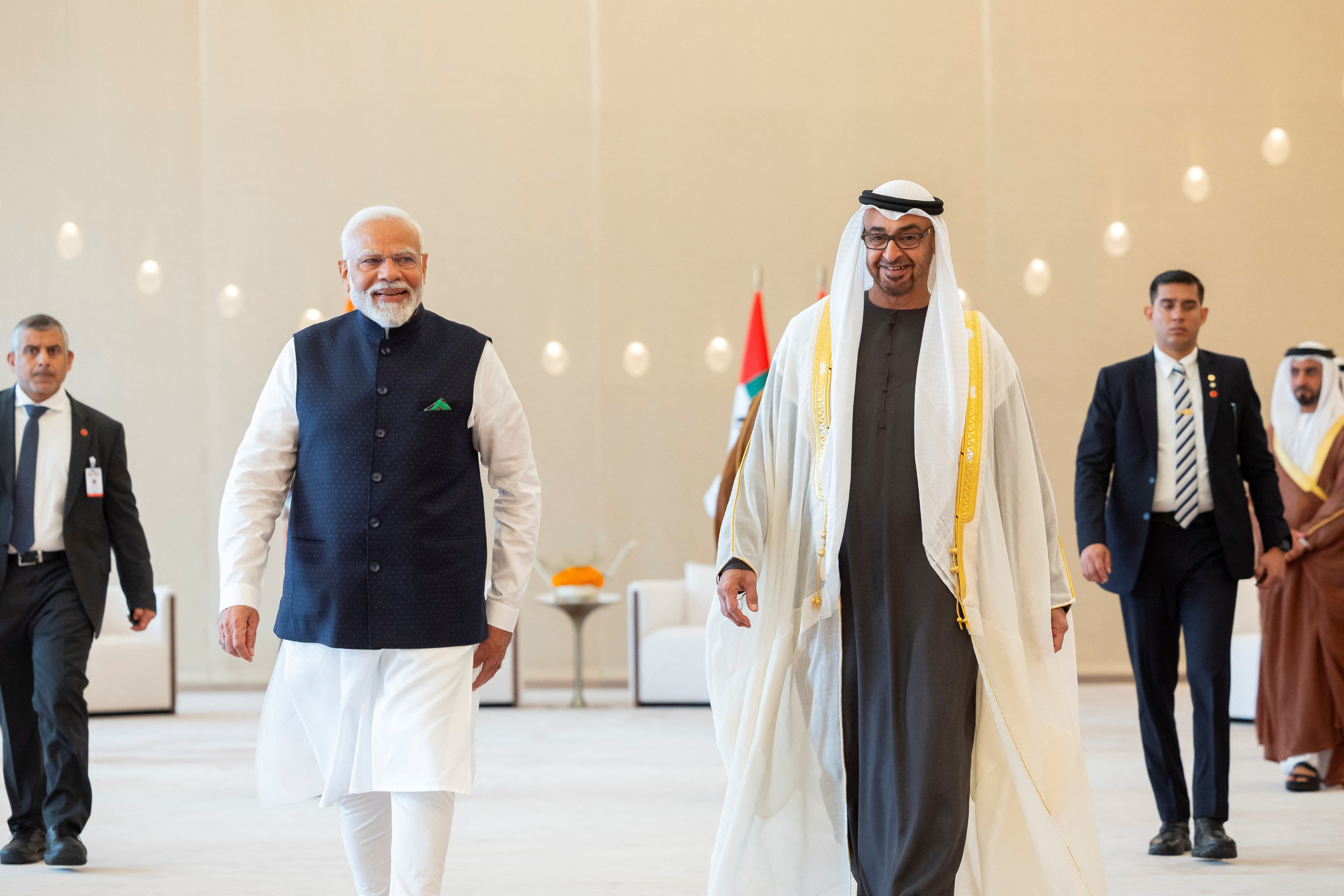
India and the United Arab Emirates (UAE) are poised to reexamine their existing trade agreement this week, according to informed sources. This strategic review is part of a broader effort by both nations to enhance economic ties and address any gaps in their trade relations.

The bilateral trade agreement, which was initially signed in 2022, has been a cornerstone of the economic partnership between India and the UAE. Over the past two years, the agreement has facilitated significant trade flows, with the UAE emerging as one of India’s key trading partners. However, both governments recognize the need to update the terms of the agreement to reflect the evolving economic landscape and emerging trade dynamics.

The discussions are expected to focus on several key areas. First, there will be a review of tariff schedules and trade barriers to ensure that they align with current market conditions. Both India and the UAE aim to reduce trade impediments and enhance market access for businesses in both countries. Additionally, the review will likely address issues related to customs procedures and regulatory practices to streamline trade processes and minimize delays.

Another significant aspect of the review will be the exploration of new sectors for cooperation. As global trade patterns shift, both nations are keen on diversifying their economic engagements. The UAE, known for its strategic location and advanced infrastructure, is looking to bolster investments in sectors such as technology, renewable energy, and infrastructure development. India, with its burgeoning market and technological expertise, is seen as a valuable partner in these areas.

The discussions are also anticipated to cover the impact of recent global economic trends on bilateral trade. Factors such as fluctuations in commodity prices, supply chain disruptions, and geopolitical developments have influenced trade dynamics globally. Both India and the UAE are expected to evaluate how these factors have affected their trade and explore ways to mitigate potential challenges.

In preparation for the review, both governments have been engaging with industry stakeholders to gather insights and feedback. This consultative approach aims to ensure that the revised agreement addresses the needs and concerns of businesses operating in both countries. The input from various sectors will be crucial in shaping the final terms of the agreement and fostering a mutually beneficial trade environment.

The trade review comes at a time when global trade agreements are under increasing scrutiny. Countries around the world are reassessing their trade policies to adapt to changing economic conditions and to safeguard their national interests. For India and the UAE, this review represents an opportunity to reaffirm their commitment to a strong economic partnership and to position themselves strategically in the evolving global trade landscape.

India and the UAE have a history of collaborative efforts beyond trade. The two nations have worked together on several initiatives, including joint ventures and strategic investments. This review of their trade agreement is expected to further strengthen their economic ties and pave the way for new areas of cooperation.

SocialFi platforms like Farcaster, Lens, and Friend.Tech, which once promised to revolutionize social interactions through decentralization, have experienced a significant decline in user engagement in the latter half of 2024. The platforms, heralded as the next frontier in digital communication, now face a stark reality as their user bases shrink and activity dwindles.

Farcaster, launched with high hopes for a decentralized social experience, aimed to offer a more user-controlled environment compared to traditional social media giants. However, recent metrics reveal a steep drop in active users and engagement. According to internal data and blockchain analytics, Farcaster’s daily active users have plummeted by over 60% since mid-2024. Despite efforts to re-engage users through updates and feature enhancements, the platform’s growth trajectory has reversed sharply.

Lens, another major player in the SocialFi space, envisioned itself as a decentralized alternative to mainstream social networks, with an emphasis on content ownership and monetization. The platform initially attracted attention for its innovative approach to user data and content control. Nevertheless, Lens has struggled with declining user interaction, attributed to a combination of technical issues, limited mainstream appeal, and competition from more established social platforms. Analytics suggest that Lens’s user engagement has decreased by approximately 50% over the past few months.

Friend.Tech, which aimed to integrate social interactions with cryptocurrency incentives, has also witnessed a significant downturn. The platform’s unique selling proposition was to blend social networking with financial benefits through its native token. Despite early enthusiasm and initial investment, Friend.Tech’s user activity has suffered due to a combination of fluctuating token values, regulatory uncertainty, and a lack of sustained interest from the broader community. Current data shows that the platform’s active user base has contracted by nearly 70% since the peak of its popularity.

The decline of these SocialFi platforms can be attributed to several factors. Initially, the promise of decentralization and control over personal data attracted a substantial user base. However, as the novelty wore off, many users returned to established social media networks that offer greater functionality, familiarity, and convenience. The challenges inherent in building a robust decentralized social network, including user experience issues, scalability, and regulatory hurdles, have further contributed to the platforms’ struggles.

Moreover, the broader market sentiment towards decentralized technologies has shifted. The rapid evolution of blockchain and cryptocurrency technologies has led to a saturation of projects and platforms, making it difficult for any single initiative to stand out. The SocialFi sector, in particular, has faced scrutiny over the sustainability of its business models and the long-term viability of its decentralized approach.

Emaar the Economic City (Emaar EC), the developer behind the ambitious King Abdullah Economic City (KAEC) project, has announced a comprehensive capital optimisation strategy valued at 8.7 billion Saudi riyals ($2.32 billion). The plan, which includes restructuring existing debt and reducing the company’s capital, aims to improve the company’s financial standing as it navigates the complexities of developing one of the region’s largest economic hubs. Emaar EC’s […]

BANGKOK, THAILAND – Media OutReach Newswire – 9 September 2024 – In celebration of Frieze Seoul, JAI by ONESIAM, Siam Piwat Group’s cutting edge community platform for luxury and influential communities, hosted its second global event outside of Bangkok at the iconic Korea Furniture Museum in Seoul. JAI by ONESIAM Guests enjoying 6 hands culinary journey at Korea Furniture Museum JAI by ONESIAM allow its members access […]

TAIPEI, TAIWAN – Media OutReach Newswire – 9 September 2024 – Innovenx is pleased to announce that Chylyng Co., Ltd. has deployed its MQloud platform as an integrated multi-cloud management solution for its Internet of Things (IoT) systems. This collaboration helps Chylyng integrate resources across different cloud environments, effectively manage increasingly complex IoT multi- cloud architectures, and vastly improve operational efficiency and information security. The proliferation of […]

By Arun Srivastava The election for Jharkhand state assembly scheduled to be held in December this year is going to big challenge for the RSS, especially its chief Mohan Bhagwat. A win for BJP would help refurbish the image of Narendra Modi and boost his bargaining power, which he desperately needs to raise his declining […]

Emaar The Economic City (EEC), the master developer behind King Abdullah Economic City (KAEC), has unveiled a comprehensive capital optimization plan aimed at revitalizing the city’s growth and operational efficiency. This new strategy, recently approved by EEC’s board, marks a significant shift in the company’s approach to achieving financial stability and enhancing long-term sustainability.

The plan focuses on several key areas, including debt restructuring, asset management, and operational efficiencies. By recalibrating its financial strategy, EEC aims to reduce its overall debt burden and allocate resources more effectively. The company’s leadership believes this will not only improve liquidity but also enhance investor confidence.

Central to EEC’s new strategy is a detailed debt reduction initiative. The company plans to renegotiate existing loan terms and seek refinancing options to lower interest rates and extend repayment periods. This move is designed to ease the financial pressures that have been mounting due to previous economic challenges and market fluctuations.

In addition to financial restructuring, EEC is also placing a strong emphasis on optimizing its asset portfolio. This includes reviewing and potentially divesting non-core assets to focus on more strategic investments. The company aims to enhance the value of its core assets by improving operational efficiencies and leveraging technology to drive better outcomes.

The operational side of the plan involves a thorough review of existing processes and systems to identify areas where efficiency can be improved. EEC is investing in advanced technologies and innovative solutions to streamline operations, reduce costs, and increase overall productivity. This includes the adoption of smart city technologies that align with the broader vision of transforming KAEC into a leading global business hub.

Moreover, the capital optimization plan outlines a commitment to sustainable development practices. EEC is integrating sustainability into its strategic initiatives, focusing on reducing the environmental impact of its projects and promoting green building standards. This approach not only supports global sustainability goals but also enhances the appeal of KAEC to environmentally-conscious investors and businesses.

The announcement comes at a time when EEC faces growing competition from other economic zones in the region. By implementing this comprehensive turnaround plan, EEC seeks to strengthen its position and attract new investment opportunities. The company’s leadership is optimistic that these strategic moves will create a more resilient and competitive economic city, capable of driving future growth and development.

Emaar The Economic City’s updated strategy has been met with positive responses from market analysts and investors. Many view the plan as a necessary step toward stabilizing the company’s financial footing and positioning KAEC as a prime destination for international business and investment. The next few quarters will be critical in assessing the effectiveness of these strategic changes and their impact on the company’s performance.

Haltia.AI has introduced ASIMOV, an advanced AI platform designed to transform enterprise and government operations. The platform, unveiled today, promises to deliver cutting-edge capabilities to enhance efficiency and decision-making across sectors. This launch positions Haltia.AI as a significant player in the burgeoning UAE AI industry. ASIMOV stands out with its sophisticated technology stack, featuring machine learning algorithms, natural language processing, and data analytics tools. The platform aims […]

Australia’s Treasurer, Jim Chalmers, is scheduled to visit China later this month, marking the first such trip by an Australian treasurer since 2017. This significant diplomatic gesture comes amid ongoing geopolitical tensions and a challenging global economic landscape. The upcoming visit is expected to be a crucial opportunity for both nations to address a range of bilateral issues, including trade relations, economic cooperation, and regional security. The […]

The UAE’s financial sector has achieved a notable milestone as the market capitalization of its top 20 companies surged to AED 2.8 trillion ($762 billion). This achievement underscores the country’s expanding economic footprint and growing investor confidence.

The remarkable growth in market capitalization reflects a robust performance in the UAE’s equity markets, driven by diverse sectors including banking, real estate, and telecommunications. Dubai’s stock exchange, in particular, has seen significant activity, bolstered by increased foreign investment and strong corporate earnings.

Among the leading companies contributing to this milestone are major players such as Emirates NBD, Etisalat, and Dubai Investments. These firms have shown impressive financial results and strategic growth initiatives, solidifying their positions in both regional and global markets. Emirates NBD, for instance, has been pivotal in enhancing the financial infrastructure of the UAE, while Etisalat’s technological advancements have played a crucial role in expanding the digital economy.

The UAE’s continued focus on economic diversification and infrastructure development has further fueled this growth. Government initiatives, including the Dubai Economic Agenda and Abu Dhabi Vision 2030, aim to transform the UAE into a global hub for trade, finance, and innovation. These strategic plans are designed to attract more foreign direct investment and boost the country’s economic resilience.

Furthermore, the UAE’s financial markets have benefited from favorable regulatory changes and improved market liquidity. The introduction of more transparent and investor-friendly policies has enhanced the attractiveness of the UAE’s stock exchanges to international investors. The Financial Services Regulatory Authority (FSRA) and the Securities and Commodities Authority (SCA) have played pivotal roles in ensuring market stability and promoting investor confidence.

The surge in market capitalization also highlights the growing prominence of UAE-based companies on the global stage. The country’s financial markets are increasingly seen as a viable investment destination, with many international firms looking to enter or expand their presence in the UAE. This influx of global capital not only supports local businesses but also contributes to the overall economic growth of the region.

In addition to financial performance, the UAE’s real estate sector has been a significant contributor to the increased market capitalization. Major real estate developers such as Emaar Properties and Aldar Properties have seen substantial growth, driven by strong demand for residential and commercial properties. Their successful project launches and strategic developments have played a key role in enhancing the market value of the UAE’s leading companies.

The UAE’s ambitious growth plans are expected to continue driving market expansion in the coming years. The country’s leadership remains committed to fostering an environment conducive to business growth and innovation. Initiatives such as the Dubai Expo 2020 and Abu Dhabi’s ongoing infrastructure projects are anticipated to further boost investor sentiment and economic activity.

Donald Trump has unveiled a bold new strategy to safeguard the dominance of the US dollar on the global stage. During a recent rally, Trump announced his plan to impose a staggering 100% tariff on goods from countries that choose to abandon the dollar in their international transactions. This move, part of his broader economic policy platform, aims to reinforce the dollar’s status as the world’s primary reserve currency.

Trump’s declaration represents a significant escalation in his approach to trade policy. The former president’s proposal is grounded in the belief that the dollar’s supremacy is vital to US economic security and geopolitical influence. By threatening such severe tariffs, Trump intends to deter nations from adopting alternative currencies in their trade dealings.

The implications of Trump’s threat are multifaceted. On one hand, it underscores the importance of the US dollar in global finance, as it currently accounts for the majority of international trade and investment. The US dollar’s dominance is supported by its widespread use in global reserves, trade transactions, and as the primary currency for commodities such as oil and gold.

However, Trump’s tariff proposal also highlights growing concerns among some countries about over-reliance on the dollar. Nations such as China and Russia have been actively pursuing strategies to reduce their dependence on the US currency, promoting alternatives like the Chinese yuan or regional currencies in trade agreements. The aim is to mitigate the risks associated with the volatility and political influence of the dollar.

China, in particular, has been making strides in internationalizing the yuan. The country has increased its efforts to encourage the use of the yuan in trade with its partners and has set up swap lines with various central banks. Additionally, the Shanghai International Energy Exchange has launched oil futures contracts priced in yuan, a move that represents a challenge to the dollar’s dominance in the global oil market.

Russia, under Western sanctions, has also sought to reduce its dependency on the dollar. The Russian central bank has diversified its reserves away from dollar assets and has encouraged the use of the ruble in trade with countries in its sphere of influence. Russia’s efforts are part of a broader strategy to counterbalance Western economic pressures and assert greater economic sovereignty.

The threat of a 100% tariff could have far-reaching consequences for international trade. Countries considering alternatives to the dollar may view Trump’s proposal as a coercive tactic that could disrupt their economic planning. Such an extreme measure could also strain diplomatic relations, as countries may perceive it as an aggressive attempt to maintain US economic hegemony.

Economists and trade analysts are debating the potential effects of Trump’s tariff plan. Some argue that the threat could backfire, accelerating efforts by other countries to reduce their dollar exposure. The imposition of a 100% tariff might not only prompt countries to seek alternatives but could also lead to retaliatory measures that could impact US exports and global trade dynamics.

The proposal also raises questions about the effectiveness of such a policy. While tariffs can influence trade patterns, their impact on currency preferences and reserve holdings is less direct. The global financial system is complex, and countries may continue to seek diversification of their currency reserves despite the threat of high tariffs.

Trump’s proposal is part of a broader trend of using economic policy tools to achieve strategic objectives. The current geopolitical landscape is marked by increasing competition among major economies, with countries leveraging economic measures to assert their influence and secure their interests.

The announcement has elicited mixed reactions from policymakers and business leaders. Some view it as a necessary measure to protect the dollar’s role in global finance, while others criticize it as an overly aggressive strategy that could undermine US economic interests in the long run.

The combined market capitalisation of the UAE’s 20 largest companies has soared to AED 2.8 trillion ($762 billion), marking a significant milestone for the country’s local stock exchanges. These companies, listed on the Abu Dhabi Securities Exchange (ADX) and the Dubai Financial Market (DFM), now represent 77.6% of the total market capitalisation across UAE markets, which stands at AED 3.59 trillion. This achievement comes as the UAE continues to pursue an ambitious strategy to double its overall market value to AED 6 trillion in the coming years.

The top performer, International Holding Company (IHC), dominates the UAE market with a staggering market capitalisation of over AED 912.3 billion, accounting for 25.4% of the local stock markets. Following IHC is Abu Dhabi National Energy Company (Taqa), which holds a market value of AED 296.8 billion. These two firms exemplify the UAE’s growing prowess in sectors such as energy, infrastructure, and diversified investments.

Several other major players have also solidified their positions in the financial landscape. Adnoc Gas has secured a market value of AED 240.2 billion, while Etisalat by e& and First Abu Dhabi Bank (FAB) follow closely with market capitalisations of AED 161.5 billion and AED 147.6 billion, respectively. Companies like Emirates NBD and Dubai Electricity and Water Authority (DEWA) are also notable contributors to the UAE’s market strength, alongside real estate giants such as Emaar Properties and Aldar Properties.

Industry experts point to the UAE’s pro-business environment and its strategic initiatives to attract foreign investment as key factors driving the exponential growth of the stock market. The UAE government has committed to fostering economic diversification, furthering innovation, and implementing financial reforms that facilitate this expansion.

HONG KONG SAR – Media OutReach Newswire – 5 September 2024 – Businesses across Hong Kong are actively seeking to attract talent to enhance competitiveness. As a vital economic pillar, the retail sector is committed to developing the next generation of professionals. Following the success of last year’s inaugural “Retail Internship Programme,” DFI Retail Group (DFI) has recently concluded its second edition, successfully recruiting over 120 secondary […]

AvanStrate Inc. will chart new growth path with high-tech display products across industries to meet increasing global demand. MUMBAI, INDIA – Media OutReach Newswire – 5 September 2024 – Vedanta Limited announced that the display glass business is set to grow 10x after consolidating its holding in AvanStrate Inc. (ASI), a Japanese display glass manufacturer, to 98%, following the acquisition of 46.57% equity from Hoya Corporation. ASI […]

Guests can experience the latest Courtyard Premier rooms, refreshed Junior Suites and even a staycation for pet owners and their fur-kids SINGAPORE – Media OutReach Newswire – 5 September 2024 – Oasia Resort Sentosa by Far East Hospitality unveils a new room category, Courtyard Premier, alongside the hotel’s refreshed Junior Suites. A testament to the resort’s commitment to being a leading wellness destination, the new offerings will […]

PHNOM PENH, CAMBODIA – Media OutReach Newswire – 6 September 2024 – The Bay of Lights, a transformative USD 16 billion coastal township development project, took center stage at the inaugural Singapore Business Expo 2024, coinciding with Singapore’s 59th Independence Day celebrations. Showcased as the groundbreaking project, the Bay of Lights is poised to transform Cambodia’s coastal economy and create ripple effects across the Southeast Asia region. […]

Bahrain’s Economic Development Board (EDB) is set to embark on a multi-city tour across India, aiming to deepen bilateral ties and strengthen economic collaboration. The initiative, scheduled for September 9-14, comes as part of Bahrain’s broader efforts to attract investments and enhance partnerships across key sectors. Spearheaded by Noor bint Ali Al Khulaif, Bahrain’s Minister of Sustainable Development and Chief Executive of the EDB, the delegation will engage with top Indian business leaders, investors, and policymakers in Mumbai, New Delhi, Bengaluru, and Hyderabad.

Bahrain’s move to engage directly with India underscores the increasing significance of bilateral relations between the two countries. India, a rapidly growing economy and a key player in global trade, has been identified as a strategic partner for Bahrain’s economic ambitions. The tour is expected to showcase the Gulf nation’s business-friendly environment, investment opportunities, and the diverse sectors open to collaboration, including finance, manufacturing, technology, and logistics.

The Bahrain Economic Development Board, responsible for promoting investment in the Kingdom, has been working to position Bahrain as a hub for international businesses seeking a foothold in the Middle East and North Africa (MENA) region. By targeting India, Bahrain aims to tap into one of the world’s largest consumer markets and the fast-developing Indian economy, which is increasingly driven by innovation, technology, and industrial growth.

Bahrain’s strategic geographical location, coupled with its investor-friendly regulatory environment, is likely to be a focal point of discussions during the India tour. The Kingdom offers 100% foreign ownership in many sectors, low operational costs, and access to the Gulf Cooperation Council (GCC) market of over 50 million consumers. These advantages are expected to appeal to Indian companies looking to expand their presence in the Gulf region, particularly those involved in sectors such as financial services, logistics, ICT, and manufacturing.

The India visit also marks a significant opportunity for both nations to explore new areas of collaboration, particularly in emerging technologies. Bahrain has positioned itself as a leader in fintech, having launched a number of initiatives in recent years to support the sector. The Kingdom’s regulatory sandbox for fintech startups has attracted numerous international firms, and there is considerable scope for Indian technology companies to collaborate with Bahrain on financial innovation and digital services.

Moreover, Bahrain has been keen to bolster its manufacturing sector, especially in fields such as chemicals, food processing, and aluminum production. India’s robust manufacturing base makes it a natural partner for collaboration in these industries. The visit will likely focus on building synergies in these areas, with discussions centered on how Indian businesses can leverage Bahrain’s competitive edge as a production hub for the GCC market.

The tour will also provide a platform for discussions on sustainable development and climate change. Bahrain, through its Vision 2030 economic plan, has placed sustainability at the heart of its development strategy. Minister Noor bint Ali Al Khulaif, a key proponent of sustainable economic growth, is expected to highlight Bahrain’s initiatives in this area, which align with India’s own commitment to sustainable development. Both countries are signatories to the Paris Agreement and are looking to collaborate on green technologies, renewable energy, and sustainable infrastructure projects.

The Bahrain-India relationship is not limited to trade and investment. The two nations share a long history of cultural and diplomatic ties, with a sizable Indian expatriate community living in Bahrain. These deep-rooted connections are likely to be emphasized during the tour, as both sides seek to build on their historical relationship and foster stronger people-to-people ties.

On the economic front, bilateral trade between Bahrain and India has shown steady growth. According to the latest data, total trade between the two countries stood at around $1.4 billion in 2022. India is among Bahrain’s top trading partners, and there is potential for further expansion in sectors such as hydrocarbons, engineering goods, pharmaceuticals, and food products. Bahrain is also home to several prominent Indian companies, and the EDB’s tour is expected to explore new avenues for Indian firms to increase their presence in the Kingdom.

In addition to meetings with business leaders and investors, the Bahrain delegation is expected to hold discussions with Indian government officials on strengthening bilateral relations. These talks could pave the way for future cooperation agreements in areas such as trade, investment, and technology transfer. The tour aligns with India’s own foreign policy objectives of enhancing relations with Gulf countries, which have become critical economic partners for New Delhi in recent years.

The timing of Bahrain’s outreach to India is also notable, coming at a time when global economic dynamics are shifting. Both nations are looking to diversify their economies and reduce dependence on traditional industries, such as oil and gas. For Bahrain, India represents a key partner in its efforts to modernize and diversify its economic base, while for India, Bahrain provides access to the GCC and MENA markets, which are crucial for India’s energy security and trade.


VISHNU RAJA
RYO YAMADA
HITORI GOTOH
IKUYO KITA
Just in:
CR Longdation Aethereal Cybersecurity × Global Cybersecurity Alliance (GCSA) Join Hands to Establish the “AI and Cybersecurity Research Centre” // OpenAI identifies 948 Linux privilege escalation flaws using AI // Miss Universe Hong Kong Jen Zhou Departs for Puerto Rico to Compete in the 75th Miss Universe World Final // APT29-linked campaign exploits outdated Apple and Android software // Oil and chip shares retreat after Democratic victories // After Reaching 7 Million Users in the Philippines, Skyro Launches Transparent Cash Loans in Malaysia // Fast Just Got Fastest: STING Energy Boost™ Celebrates Kimi Antonelli’s Formula 1® World Championship and the Fan Energy Behind It // The “1st Greater Bay Area Health and Longevity Summit & Awards Ceremony” concludes successfully in Macao // Oil advances towards $100 as tanker attacks persist // Kochi police detain two actors over bid to honey trap doctor // Millions Of Indians May Soon Be Deprived Of Government Assistance // Trump’s Iran War Has A Share Of Contribution To His Midterm Debacle // Emaar approves Development buyout ahead of planned delisting // UK air traffic outage inflicted £33m financial losses // Ousted top Kochi cop gets IG post // Ta’ziz finalises $1.39bn funding for Ruwais industrial facilities // Asia Left Behind: Ten international companies have yet to report delivering on their cage-free egg pledges across the region // Private varsities bill all set to face the axe // ADIA and partners establish $1.4 billion aviation venture // Cloudflare unveils Zero Wire vulnerability intelligence service //