News related to
chip

Apple’s Vision Pro headset is set to receive a significant AI upgrade, marking a new chapter in the development of the company’s first wearable device. This update, expected to launch soon, is poised to enhance the device’s performance, introducing cutting-edge artificial intelligence features that promise to revolutionise user interaction and functionality. The Vision Pro, which was introduced as Apple’s foray into the mixed-reality space, has drawn significant […]

The JETOUR T2, a mid-size SUV introduced in September 2023, has recently demonstrated its resilience by conquering the Arctic’s harsh -30°C conditions. This feat underscores the vehicle’s robust engineering and adaptability to severe climates. Designed under the guidance of former Porsche designer Hakan Saracoglu, the JETOUR T2 combines rugged aesthetics with advanced functionality. Built on Jetour’s Kunlun architecture, the SUV features a unibody chassis, ensuring both durability […]

Samsung has initiated the rollout of the first software update for its Galaxy S25 series, targeting T-Mobile users in the United States. This update introduces seamless background installations, significantly reducing device downtime during the update process. The update, approximately 585 MB in size, also includes the February 2025 security patch, addressing over 40 vulnerabilities. Additionally, it resolves issues such as image banding in low-light photography and enhances […]

Silicon Valley-based AI chip manufacturer Groq has secured a $1.5 billion investment from Saudi Arabia to enhance its AI inference infrastructure within the Kingdom. This significant commitment, announced at the LEAP 2025 technology conference, underscores Saudi Arabia’s strategic push to position itself as a global leader in artificial intelligence. Groq, founded by former Alphabet engineer Jonathan Ross, specializes in AI inference chips designed to optimize the speed […]

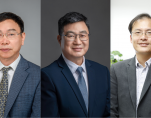
MACAU SAR – Media OutReach Newswire – 13 February 2025 – The University of Macau (UM) has strengthened its position as a leading research institution through multiple strategies, including the recruitment of high-calibre scholars from around the world. The groundbreaking scientific discoveries made by these distinguished scholars and their teams have greatly advanced the university’s global influence and Macao’s development as an innovation hub. From left to […]

MANILA, PHILIPPINES – Media OutReach Newswire – 13 February 2025 – Aon plc (NYSE: AON), a leading global professional services firm, today released results from its 2025 Human Capital Employee Sentiment Study. The global study of more than 9,000 employees across 23 geographies, including the U.S., China, India and Japan, found that a majority of workers in the Philippines are looking at their next move and seek […]

Apple is poised to unveil the fourth-generation iPhone SE, introducing significant design and feature enhancements that align it more closely with the flagship iPhone lineup. The forthcoming model is anticipated to feature an all-display design, eliminating the traditional Home button in favor of Face ID, marking a departure from its predecessors. The device is expected to sport a 6.1-inch OLED display with a notch, mirroring the aesthetics […]

Advertisements
By K Raveendran Prime Minister Narendra Modi’s call for greater emphasis on the Global South in the evolving world order shaped by artificial intelligence is a strategic proposition. With AI becoming the most critical technological force of the 21st century, it is imperative that developing nations, particularly those in the Global South, have a role […]

Salience Labs, a company specialising in photonic solutions for AI data centre connectivity, has secured $30 million in Series A funding. This investment aims to advance the development of their optical switches, designed to enhance large-scale AI infrastructure.

The funding round was led by Cambridge Innovation Capital and Oxford Science Enterprises, with participation from Oxford Investment Consultants, former Dialog Semiconductor CEO Jalal Bagherli, Silicon Catalyst, the Goh Family Office in Singapore, and Arm-backed Deeptech Labs.

Salience Labs, founded in 2021 as a spin-out from the University of Oxford and the University of Münster, is developing an ultra high-speed multi-chip processor that integrates a photonics chip with standard electronics. This technology is scalable, capable of stacking up to 64 vectors into a beam of light, delivering massively parallel processing performance within a given power envelope.

The company’s proprietary amplitude-based approach to photonics results in dense computing chips operating at tens of gigahertz. This, combined with massively parallel performance, aims to enable exascale computing in a wide array of AI processes and applications.

Salience Labs employs a multi-chip design, with the photonic processing mapping directly on top of the Static Random Access Memory . This novel ‘on-memory compute’ architecture is inherently faster and can be adapted to the application-specific requirements of different market verticals, making it suitable for AI use-cases in communications, robotics, vision systems, healthcare, and other data workloads.

The technology has been designed from first principles for volume manufacture and is currently being fabricated with production-level foundries using standard CMOS processes.

Ian Lane, Partner at Cambridge Innovation Capital, stated that Salience Labs brings together deep domain expertise in photonics, electronics, and CMOS manufacture. He noted that their unique approach to photonics delivers an exceedingly dense computing chip without having to scale the photonics chip to large sizes.

Alexis Zervoglos, Partner at Oxford Science Enterprises, commented that Salience Labs offers a pioneering yet pragmatic solution to the widening gap between AI processing demand and semiconductor industry supply. By leveraging photonics in a novel way, the company is set to make unprecedented advances in computing, transforming existing AI applications and opening up new addressable horizons.

Jalal Bagherli, investor and former CEO of Dialog Semiconductor, remarked that the team at Salience Labs is world-class, combining commercial and technical acumen with a disruptive market vision. He highlighted their unique ‘on-memory compute’ architecture as ground-breaking, with the potential for breakthrough performance and power capability beyond what the established CMOS roadmap offers.

Vaysh Kewada, CEO and co-founder of Salience Labs, emphasized the increasing demand for faster chips to grow AI capability, noting that the semiconductor industry cannot keep pace with this demand. She explained that their proprietary ‘on-memory compute’ architecture combines the ultra-fast speed of photonics, the flexibility of electronics, and the manufacturability of CMOS, ushering in a new era of processing where supercompute AI becomes ubiquitous.

Salience Labs is headquartered in Oxford, UK, and funded by a portfolio of investors including Cambridge Innovation Capital, Oxford Science Enterprises, Oxford Investment Consultants, Silicon Catalyst, Deeptech Labs, and leaders from the global semiconductor industry, including former Dialog Semiconductor CEO Jalal Bagherli and the Goh Family Office in Singapore.

The company’s mission is to build photonic switches for AI infrastructure, solving fundamental networking bottlenecks and enabling high bandwidth, low latency connectivity for improved AI model performance. Their optical circuit switch keeps the payload fully optical while directing data to where it needs to go, eliminating the need for expensive transceivers.

Salience Labs’ photonic switch enables all-optical, multi-hop large cluster connectivity, addressing the flexibility and control required in next-generation AI infrastructure. The switch allows for resizing and provisioning networks quickly and on the fly, with fast reconfiguration, novel flow routing, and synchronization technologies.

The company’s technology is the result of over 10 years of research into silicon photonics. Salience Labs’ switch is built for AI and focuses on compatibility, reliability, and manufacturability. The team comprises experts in photonics, electronics, embedded software, and machine learning, working together to shape the future of optical networking.

Salience Labs’ board and advisors include industry leaders such as Daniel Armbrust, Chairman; Dr. Bill Jeffrey, Board Member; Jack Edmondson, Board Member; Jalal Bagherli, Investor and Advisor; and Prof. Wolfram Pernice, Co-Founder and Advisor.


Chinese startup DeepSeek has rapidly emerged as a formidable player in the artificial intelligence sector, challenging established norms with its cost-effective AI model. Founded in 2021 by hedge fund manager Liang Wenfeng, DeepSeek developed its R1 model in just two months, utilizing Nvidia’s H800 chips and investing under $6 million—a stark contrast to the substantial budgets typically associated with AI development. citeturn0search3

The R1 model’s launch has had significant global repercussions. Downloads of DeepSeek’s app have surpassed those of OpenAI’s ChatGPT on Apple’s App Store, indicating a swift rise in user adoption. The model’s performance and affordability have prompted a reevaluation of AI development strategies worldwide, challenging the notion that advanced AI requires substantial financial and computational resources. citeturn0search0

In India, DeepSeek’s success has ignited discussions about the nation’s position in the AI landscape. Information Technology Minister Ashwini Vaishnaw praised DeepSeek’s frugal innovation, drawing parallels to India’s own AI ambitions. In March 2024, the government announced the IndiaAI mission, committing $1.25 billion to fund AI startups and develop indigenous AI infrastructure. Vaishnaw emphasized the importance of strategic investment and innovation, stating, “Some people question the amount of investments the government has committed in [the IndiaAI mission]. You have seen what DeepSeek has done? $5.5 million and a very very powerful model. Because, the use of brain.” citeturn0search0

Despite these initiatives, industry experts highlight challenges that may impede India’s ability to replicate DeepSeek’s achievements. Structural issues in education, limited funding for research and development, and a cautious investment culture are cited as significant barriers. Entrepreneur GDP noted, “You need to be able to walk before you can run. There is no protected market to practice your craft in early days. You will get replaced by American service providers as they are cheaper and better every single time.” citeturn0search5

To bridge this gap, there are calls for the establishment of a government-backed fund dedicated to AI research. GDP proposed creating an Indian equivalent of the Defense Advanced Research Projects Agency , suggesting a national program with a $3 billion budget over three years to support AI teams without immediate revenue expectations. This approach aims to foster innovation and allow for the development of competitive AI models. citeturn0search5

The global AI community is closely monitoring DeepSeek’s impact on the market. The company’s approach has not only challenged established players but also demonstrated that significant advancements in AI can be achieved with strategic investment and efficient resource utilization. As nations like India seek to bolster their AI capabilities, DeepSeek’s model offers both inspiration and a benchmark for what can be accomplished with focused effort and innovation.

IBM has unveiled an ambitious plan to develop a 4,000-qubit quantum processor by 2025, marking a significant leap from its current 127-qubit ‘Eagle’ processor. This initiative underscores IBM’s commitment to advancing quantum computing capabilities and addressing the challenges inherent in scaling up quantum systems. The company’s roadmap outlines a progression through intermediate processors, including the 1,121-qubit ‘Condor’ slated for 2023 and the 1,386-qubit ‘Flamingo’ expected in 2024. […]

Bain Capital is in the final stages of negotiations to acquire Mitsubishi Chemical Group’s pharmaceutical subsidiary, Mitsubishi Tanabe Pharma, for over 500 billion yen . This move aligns with Mitsubishi Chemical’s strategy to streamline its operations and concentrate on core sectors such as vehicle electrification, semiconductor manufacturing, and food production.

Established over 90 years ago in Osaka, Mitsubishi Tanabe Pharma specializes in developing treatments for central nervous system disorders, immuno-inflammation, and oncology. The company has a global presence, with operations spanning multiple continents. Notably, its drug Radicava, used in the treatment of amyotrophic lateral sclerosis , has been a significant contributor to its revenue growth.

In the first half of the fiscal year ending March 2025, Mitsubishi Chemical’s pharmaceutical segment reported a 6% increase in sales revenue, reaching 232.5 billion yen, and a 28% rise in core operating income to 41.4 billion yen. Despite these positive figures, Mitsubishi Chemical has been reassessing its business portfolio to focus on areas with higher growth potential. The potential divestiture of its pharmaceutical unit is part of this broader strategy.

Bain Capital has been granted preferential negotiation rights, indicating its position as the leading candidate to finalize the acquisition. This development follows earlier reports that both Bain Capital and Blackstone were among the final bidders for Mitsubishi Tanabe Pharma, with valuations estimated between $3 billion and $3.5 billion. Local private equity firm Japan Industrial Partners was also reported to be in the bidding process.

This prospective acquisition is part of a broader trend of increased mergers and acquisitions activity in Japan. Bain Capital has been particularly active in the Japanese market, having previously led the acquisition of Kioxia Holdings, a prominent chipmaker. The firm’s interest in Mitsubishi Tanabe Pharma underscores its strategy to invest in sectors with strong growth prospects and innovative capabilities.

Mitsubishi Chemical has not provided specific comments on the ongoing negotiations but has stated that it is continuously reviewing its business portfolio, considering all options, including potential divestitures, to optimize its operations and focus on strategic areas. The company aims to better align its resources and capabilities to meet evolving market demands and technological advancements.

SINGAPORE – Media OutReach Newswire – 5 February 2025 – Coopers Hill, an international consultancy specialising in landscape architecture, urban design and masterplanning, today announced its acquisition of Scape Design UK, Europe’s premier hospitality and luxury lifestyle landscape architects. With its new London studio, Coopers Hill establishes its first European office marking the firm’s seventh international office following its Dubai opening in 2023. With a 40-year legacy […]

Markets flourish with predictability. Companies require consistency to strategize effectively. However, the current US administration’s erratic approach to trade is fostering the opposite environment. Donald Trump’s eleventh-hour decision to postpone sweeping tariffs on Mexico and Canada provides temporary relief but does not address the core issue: the United States is becoming an increasingly erratic economic ally. Investors are already experiencing the repercussions. This latest suspension is the […]

MediaTek has announced significant improvements in its design workflow efficiency, thanks to its adoption of Cadence Virtuoso Studio and Spectre Simulation on Nvidia’s accelerated computing platform. The collaboration is set to propel MediaTek’s ability to meet the demands of advanced semiconductor technologies, particularly as the company prepares for 2nm process node designs in the future. The integration of these tools, which leverage artificial intelligence , promises to […]

The South Korean won has plunged to its lowest value against the U.S. dollar in 2025, reflecting growing concerns about global economic challenges and domestic market dynamics. As of Monday morning, the won was trading at 1,471.35 per dollar, a drop of 13.3 won from the previous session. This marks the weakest performance for the currency this year, signaling a potential shift in the financial landscape of the region.

Several factors are contributing to the depreciation of the Korean won, primarily the U.S. Federal Reserve’s tightening of monetary policy. With interest rates in the United States remaining high, capital flows are increasingly favoring the dollar, leaving emerging market currencies like the won under pressure. As the U.S. economy maintains its growth trajectory, the dollar’s strength has increased, putting further downward pressure on the won. Analysts predict this trend could continue if the Fed’s policies remain unchanged in the near term.

The fluctuation of the won is closely tied to South Korea’s economic performance, particularly its trade balance. Exports, a critical component of South Korea’s economy, have been struggling due to reduced global demand, particularly from China, one of the country’s largest trading partners. South Korea’s semiconductor exports, once a pillar of its economy, have experienced a significant slowdown, a trend exacerbated by a global semiconductor oversupply and tightening chip export controls from neighboring countries.

While South Korea’s central bank, the Bank of Korea , has attempted to stabilize the won through currency interventions, these efforts have not been enough to reverse the trend. The BOK’s decision to keep interest rates steady for most of last year, alongside its cautious approach to monetary easing, has raised concerns about its ability to support the won in the face of external pressures. This has led to increased speculation about future rate cuts, which could further weaken the won.

Domestic economic concerns also contribute to the currency’s poor performance. Consumer confidence has taken a hit amid rising living costs and a struggling job market. Youth unemployment, in particular, remains a challenge, and inflation, though moderate, has been persistent. These factors have kept domestic demand subdued, affecting the broader economic outlook and fueling fears of stagnation.

The won’s dip also reflects wider regional trends. Many other Asian currencies, including the Japanese yen and the Chinese yuan, have also faced downward pressure as the global economic environment remains volatile. However, the won’s sharp decline is drawing more attention, particularly given the importance of South Korea’s exports to the global technology supply chain. As a major exporter of semiconductors, displays, and other electronic components, the health of the South Korean economy is critical to the global tech sector.

The Korean government is under increasing pressure to address the weakening won. President Yoon Suk-yeol’s administration has faced criticism for not taking decisive action to support the currency. Financial experts have called for more robust measures, including potential interventions in the currency market or revising fiscal policies to stimulate economic growth. However, any intervention risks further destabilizing the economy, particularly in the face of persistent global inflation and supply chain disruptions.

For investors and businesses in South Korea, the weakening of the won presents both risks and opportunities. Importers, particularly those reliant on raw materials priced in U.S. dollars, are likely to see increased costs, further squeezing their margins. On the other hand, exporters may benefit from the weaker won as their products become more competitive in global markets. However, this potential upside for exporters is tempered by the ongoing global economic slowdown and the uncertainty surrounding future demand for South Korean goods.

The decline in the won also raises questions about South Korea’s broader economic strategy. Some experts argue that the government needs to adopt a more flexible monetary policy, potentially focusing on greater fiscal stimulus to support domestic demand and alleviate the burden on businesses. The government could also look at diversifying its trade partners and finding new markets for its exports, particularly in regions less affected by global economic fluctuations.

On the international stage, the won’s depreciation could complicate South Korea’s relationships with key partners, particularly the U.S. and China. A weak currency can make trade more challenging, potentially raising the cost of South Korean exports and creating diplomatic tensions. South Korea’s geopolitical position, as a key player in both the U.S.-led security alliance and its economic relationship with China, makes currency fluctuations a sensitive issue in global diplomacy.

If you blinked, you might have missed the absolute market carnage Nvidia endured this week. A 17% plunge erased a staggering $589 billion in value in a single day, only for the stock to roar back almost 9% the next session. The culprit? A Chinese AI start-up, DeepSeek, that sent Silicon Valley into full-on existential crisis mode. Let’s break down the four major takeaways from this AI-fuelled […]

By K Raveendran The Chinese AI startup DeepSeek has brought down the market crashing, but it has done even more damaging things to the United States. Apart from challenging Silicon Valley’s technology dominance, the Chinese have exposed the limits of Trump’s tariffs, challenging Washington’s ability to restrain China’s technological advance. The Chinese breakthrough undermines one […]

Matein Khalid The ghost of Austrian School economist Joseph Schumpeter must be turning in his grave since his theory of creative destruction in capitalist societies just got vindicated with the vengeance by the meteoric impact of Chinese AI start up DeepSeek, whose competitive threat has triggered a trillion dollar plus bloodbath on Nasdaq as futures are down a 1,000 points, the Volatility Index is up a ghastly […]

Emirati billionaire Hussain Sajwani has pledged to invest $20 billion in the U.S. data center industry, a move announced alongside President-elect Donald Trump at his Mar-a-Lago residence in Palm Beach, Florida.

Sajwani, chairman of Dubai-based DAMAC Properties, expressed his intention to potentially exceed the $20 billion investment, contingent upon favorable market conditions. This substantial commitment underscores the growing demand for data infrastructure to support advancements in artificial intelligence and cloud services.

DAMAC Properties, under Sajwani’s leadership, has a history of collaboration with the Trump Organization, notably developing the Trump International Golf Club in Dubai, which opened in 2017. Sajwani’s relationship with Trump has been well-documented, with the two families sharing both business and personal ties.

The announcement comes amid a surge in investments in AI technology and the necessary infrastructure to support it. Since the introduction of OpenAI’s ChatGPT in late 2022, there has been a significant increase in funding directed toward generative AI technology and the infrastructure required to support it. For instance, Microsoft announced plans to invest approximately $80 billion this fiscal year to expand its AI capacity.

President-elect Trump has emphasized his commitment to bolstering domestic industries and attracting foreign investment. During his campaign, he proposed higher tariffs on Chinese goods to limit China’s access to advanced data center technology. The announcement of Sajwani’s investment aligns with Trump’s economic agenda, aiming to stimulate job creation and technological advancement within the United States.

However, it’s worth noting that not all previously announced investments have come to fruition. Early in his first term, Trump announced a $10 billion investment by Foxconn in a Wisconsin factory, which promised thousands of jobs but was largely abandoned. Despite such precedents, the current investment climate, particularly in AI and data infrastructure, appears more robust, with multiple tech giants committing substantial funds to expand their capabilities.

Sajwani’s investment is expected to focus on the construction of data centers across various U.S. states, including Texas, Arizona, Oklahoma, Ohio, Illinois, Louisiana, Michigan, and Indiana. These facilities will play a crucial role in supporting the growing demands of AI applications and cloud computing services.

The U.S. data center industry has been experiencing significant growth, with estimates suggesting that the country could attract up to $1 trillion in data center investments over the next five years. Sajwani’s commitment represents a notable contribution to this expanding sector, highlighting the increasing importance of data infrastructure in the digital economy.

In addition to his ventures in real estate and data centers, Sajwani has diversified his business interests through his private investment firm, which acquired Italian fashion group Roberto Cavalli in 2019. He has also invested in luxury developments in London, including the Versace-branded DAMAC Tower in Nine Elms.

The collaboration between Sajwani and Trump has not been without scrutiny. Their business dealings have raised questions about potential conflicts of interest, given Trump’s political position and the international scope of their ventures. Nonetheless, both parties have maintained that their relationship is strictly professional, centered around mutually beneficial business opportunities.

As the U.S. continues to tighten restrictions on the export of AI chips to China, investments like Sajwani’s are seen as strategic moves to bolster domestic technological infrastructure. The Biden administration had previously implemented measures to limit China’s access to advanced AI technology, a stance that President-elect Trump appears poised to continue with key appointments in his administration.

Sajwani’s commitment to investing in U.S. data centers reflects a broader trend of international investors recognizing the potential of the American technology sector. With the increasing integration of AI and cloud services into various industries, the demand for robust data infrastructure is set to rise, making such investments both timely and strategically significant.

The announcement has been met with optimism from industry analysts, who view it as a positive indicator of continued growth and innovation in the U.S. technology sector. As these data centers become operational, they are expected to create numerous job opportunities and contribute to the advancement of AI and cloud computing technologies.

While the full impact of Sajwani’s investment will unfold over the coming years, its alignment with current technological trends and economic policies suggests a significant boost to the U.S. data center industry. As the digital economy expands, the importance of such infrastructure investments cannot be overstated, positioning the United States as a continued leader in technological innovation.

LAS VEGAS – Media OutReach Newswire – 6 January 2025 – Innolux will showcase its latest, most innovative product technologies in Las Vegas, U.S.A. from January 7 to 9 under the theme “Driving New Possibilities”. James Yang, President of Innolux, said that Innolux has added yet more value to its display field, created outstanding innovative technologies, and crafted comprehensive scenario-tailored service solutions, exporting these boons to overseas […]

By Nantoo Banerjee The slump in India’s GDP growth rate is understandable. Contrary to the government claims, the job market is down. The income growth, in general, is shrinking. A vast section of consumers are not spending enough, except for wage goods or daily dire necessities, as their real income is not growing. The FMCG […]

By P. Sudhir The year 2024, which has ended, has been a tumultuous one both nationally and internationally. In India, the year began with the State-sponsored installation of the idol at the newly-built but incomplete Ram temple at Ayodhya, a signal from the BJP rulers that the era of Hindutva raj has begun. This was […]


Matein Khalid It is an ironic twist of history that the world’s largest Muslim country, an archipelago of 18,000 islands, whose ancient Sumatran kings once funded countless monasteries/temples at Nalanda, the Harvard/Oxford of Vedic India two millennia ago. Sumatra was then known as the kingdom of Srivijaya when Mauryan India’s ruler was Ashoka, imperator of the Magadan superstate. Fast forward 22 centuries and the two best performing […]

VISHNU RAJA
RYO YAMADA
HITORI GOTOH
IKUYO KITA