Just in:
Musk expresses willingness to recruit Nvidia chief Huang // Ping An Digital Bank Deepens Purchase Order Financing Scenarios, Expands into Service Trade Financing Market // Forged court directives trigger probe into website blocking // Turkish Airlines adds Chengdu to mainland China services // LANDMARK Presents ‘Destination CENTRAL’: A District-Wide Celebration Inviting Global Travellers to Explore the Dynamism, Luxury, and Soul of Central // How A Newly Elected Democratic Congress Could Reshape US–India Relations? // ATI Secures Manila South Harbour Concession Renewal To 2063 // Saudi fund assets forecast to cross $400 billion in 2027 // MG Motor presents four electrified vehicles at Dubai exhibition // Hongkong Land Unveils LANDMARK Orchard as New Name for Wheelock Place // Valarmathi restarts fast as teachers defy police // Spain housing strike disrupts transport and industry nationwide // ONYX Hospitality Group Unveils Plans for Amari Samui Resort and Villas, Elevating Its Premium Resort Offering on Koh Samui // Wizz Air half-year earnings sink as fuel costs surge // Iran says two oil supertankers ablaze after explosions // Eternal Beauty Holdings Releases the “2026 Hong Kong Daily Mood Index and Fragrance Trends White Paper” // Ajman University MBA climbs to joint 13th regionally // December Is the Last Window for $800,000 U.S. Residency Investment // Nvidia directors weigh Huang removal amid misconduct allegations // Ration dealers seek GPS aided grain deliveries //

News related to
chip

Artificial intelligence leaders are facing mounting resistance from investors and President Donald Trump after calls by Anthropic and OpenAI to slow the advance of frontier models triggered sharp losses in technology shares and exposed a widening dispute over how quickly the industry should proceed. Anthropic chief executive Dario Amodei has urged leading developers to reduce the pace at which they improve model capabilities, arguing that safety systems […]

Z. AI Co. has raised about $5 billion through a Hong Kong share placement and convertible bond sale, returning to the market within days of a 60-day issuance lock-up ending as heavy spending on artificial intelligence models continues to consume cash. The Beijing-based company, formerly known as Zhipu AI, sold 21.97 million new H shares at HK$714 each, raising roughly HK$15.7 billion, or about $2 billion. It […]

China’s state security minister Chen Yixin has warned that artificial intelligence poses six major risks to national security, ranging from political manipulation and cyberattacks to data leakage, social disruption and military transformation. Chen, who heads the Ministry of State Security, set out the risks in an article published on Sunday by China Cyberspace magazine, arguing that Beijing must build a stronger system for monitoring, regulating and responding […]

Dmitry Medvedev has accused leading artificial intelligence companies of overstating fears that their technology could destroy humanity, arguing that commercial self-interest rather than existential concern is shaping their public warnings. Russia’s Security Council deputy chairman said the creators of generative AI systems were “not being sincere” when presenting themselves as alarmed by the possibility that advanced models could become an existential threat. He linked that scepticism to […]

Indonesian rescuers were searching the Java Sea on Sunday for 140 people missing after the passenger vessel Virgo Transport 8 sank during severe weather, with 102 survivors rescued and one person confirmed dead. The ship was carrying 243 people when it lost contact early on September 13 while sailing from Surabaya in East Java to Banjarmasin in South Kalimantan, according to Indonesia’s National Search and Rescue Agency. […]

OpenAI will not pursue an initial public offering this year, chief executive Sam Altman has said, arguing that mounting questions over artificial intelligence safety make 2026 the wrong moment to take the company public. Altman said OpenAI did not feel pressure to proceed with a flotation and indicated that safety and alignment work should take priority over the demands that would come with public-market ownership. “Given everything […]

Shanghai Enflame Technology nearly tripled in value on its Shanghai trading debut on Friday, extending a wave of listings that has turned founders of loss-making Chinese artificial-intelligence chipmakers into billionaires as investors bet heavily on domestic alternatives to Nvidia.

Enflame’s shares closed 179 per cent above their initial public offering price on the STAR Market, lifting the company’s market value to about 171 billion yuan from 61.2 billion yuan at the offer price. The Tencent-backed company raised 6.12 billion yuan by selling 43.04 million new shares at 142.18 yuan each.

The surge came despite Enflame having never reported an annual profit since its establishment in 2018. Its 2025 revenue reached 990.2 million yuan while its net loss narrowed to about 1.2 billion yuan. The company has forecast revenue of 2.3 billion yuan to 3 billion yuan for the first nine months of 2026, alongside a net loss of 700 million yuan to 860 million yuan.

Revenue has expanded quickly from 301 million yuan in 2023 and about 722 million yuan in 2024, but losses have remained substantial as the company spends heavily on research and product development. Enflame recorded net losses of about 1.67 billion yuan in 2023 and 1.51 billion yuan in 2024 before narrowing the deficit last year, underscoring how far commercial growth has run ahead of earnings for the company.

Enflame said in its prospectus that it expects to reach break-even or profitability in 2026 or 2027. It plans to direct much of the IPO proceeds towards development and industrialisation of fifth- and sixth-generation artificial-intelligence chips, software and large-scale computing systems.

The company’s rapid revaluation also highlights the unusual economics of China’s artificial-intelligence chip boom. Investors have rewarded several young semiconductor groups whose sales are expanding quickly but whose research spending remains heavy and earnings records are limited or negative.

Moore Threads Technology, another Shanghai-listed graphics processor developer, created several billionaires after its market debut in December 2025, when its shares rose more than fourfold. Founder and chairman Zhang Jianzhong, a former head of Nvidia’s China operations, was valued at several billion dollars after the listing, while co-founders Zhang Yubo and Wang Dong also crossed the billionaire threshold based on their holdings.

MetaX Integrated Circuits produced a similar outcome after its Shanghai flotation. Chairman and chief executive Chen Weiliang, who previously worked at Advanced Micro Devices, became a billionaire as investors pushed the company’s valuation sharply higher despite continuing operating losses. Early investor Ge Weidong also joined the billionaire ranks through his stake.

The valuations reflect expectations that domestic chipmakers will capture a larger share of China’s fast-growing demand for artificial-intelligence computing as access to the most advanced US-designed processors remains constrained. Domestic producers are competing to supply cloud companies, data centres and developers running large language models, recommendation engines and other computing-intensive services.

Enflame’s commercial position, however, remains unusually concentrated. Tencent is its largest shareholder, with a 17.95 per cent stake after the offering, and sales linked to the technology group accounted for 83.79 per cent of Enflame’s 2025 revenue. The concentration gives Enflame a major anchor customer but also leaves its growth closely tied to purchasing decisions by one group.

The company employed about 860 people as of September 2025, according to disclosures compiled from its listing materials. Founded by former AMD executives Zhao Lidong and Zhang Yalin, Enflame develops accelerator chips, add-on cards, computing systems and software for artificial-intelligence training and inference in data centres.

Only 17.9 million shares, equivalent to 4.16 per cent of Enflame’s enlarged share capital, were freely tradable at the start of trading, limiting the initial public float and potentially amplifying price swings. The retail portion of the offering attracted thousands of times more demand than the shares available.

Advertisements

Arabian Post Staff -Dubai Schools across the UAE have tightened student appearance, clothing and food rules for the 2026-27 academic year, barring certain shaved hairstyles, hoodies and energy drinks on campus. Circulars sent by a number of public and private schools to pupils and parents set out restrictions covering grooming, uniform standards and food brought onto school premises. The rules apply from the time students enter the […]

Apple has unveiled the iPhone Duo, its first foldable smartphone, marking the company’s entry into a category and introducing the biggest physical redesign of the iPhone since the iPhone X. The book-style device was presented on Wednesday at Apple’s product event in Cupertino, California, alongside the iPhone 18 Pro and iPhone 18 Pro Max. The Duo folds into a passport-like form and opens into a larger display […]

Malaysia is considering Huawei’s Ascend 910C processors for a RM2 billion sovereign artificial intelligence project, potentially placing Chinese hardware at the centre of infrastructure designed to keep sensitive national data under domestic control.

The government is seriously evaluating Huawei’s AI accelerators for the initiative, although no final procurement decision has been announced and the number of chips under consideration remains unclear. The project would be operated by state-linked Telekom Malaysia, which was selected through a public tender and already works with Huawei on cloud infrastructure.

The deliberations put Malaysia at the centre of a widening contest between Washington and Beijing over the technology underpinning artificial intelligence. US officials have warned that use of Huawei’s Ascend 910C could violate American export-control rules, while Malaysia has maintained that technology decisions should serve its national interests and comply with applicable laws.

Huawei’s 910C is the company’s flagship AI accelerator currently available at scale. Malaysia is considering that product rather than the newer Ascend 950 series, which remains in limited production. Huawei has sought to expand sales of its AI systems beyond China as US restrictions continue to limit its access to advanced foreign semiconductor manufacturing technology.

Telekom Malaysia’s existing AI computing service uses Nvidia processors, highlighting the competing technology options facing Kuala Lumpur. The government is also discussing another tender process that could give Nvidia and other US suppliers a more direct opportunity to compete for the sovereign AI contract.

Prime Minister Anwar Ibrahim has repeatedly argued that Malaysia should build domestic technological capability rather than remain solely a consumer of systems developed overseas. His government formally established AI Malaysia Berhad under the Digital Ministry in July to lead its ambition of becoming an “AI Nation” by 2030 and to strengthen national AI development, governance and deployment.

Sovereign AI has become particularly important to the government because the proposed infrastructure is intended to process information that could include sensitive government, military and intelligence material. Kuala Lumpur wants such data to remain within Malaysia, reducing dependence on foreign-controlled computing environments and giving national institutions greater authority over storage and access.

Anwar has also questioned the implications of the US Cloud Act, which allows American courts in specified circumstances to compel US technology companies to provide electronic data even when it is stored abroad. Speaking to university students in April, he described the law as unreasonable while acknowledging the difficulty of challenging Washington on the issue.

US officials have raised separate security concerns about Huawei equipment being used to handle intelligence-related material, including information supplied by foreign governments. A State Department spokesperson said secure technology was essential to economic prosperity and warned that suppliers susceptible to government manipulation could pose risks to critical infrastructure, privacy, intellectual property and national security. The statement did not name China or Huawei.

Malaysia’s National Security Council officials are expected to visit Washington later this month for discussions that will include the technology issue. The talks come as the United States promotes American AI hardware, software and applications across developing markets and considers government-backed financing packages to strengthen the international position of US suppliers.

The current evaluation follows an earlier controversy in May 2025, when a deputy communications minister said a Malaysian AI initiative would deploy 3,000 Huawei Ascend chips. Her remarks were withdrawn shortly afterwards, and the Investment, Trade and Industry Ministry clarified that the project concerned was privately driven, not endorsed or coordinated by the government.

At the time, the ministry said any government AI infrastructure programme would require legal, operational and reputational due diligence. It also reaffirmed Malaysia’s commitment to applicable export-control laws while asserting the country’s sovereign right to formulate policy according to national interests.

Malaysia’s National AI Action Plan for 2026-2030 calls for responsible adoption, stronger domestic capabilities and globally competitive locally developed solutions. The programme links AI deployment to economic productivity, public-sector transformation and governance, placing infrastructure choices within a strategy.

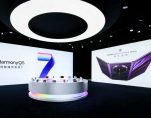
GUANGZHOU, CHINA – Media OutReach Newswire – 7 September 2026 – On September 7, Huawei officially unveiled the latest addition to its tri-fold lineup, the HUAWEI Mate XT 2 | ULTIMATE DESIGN. As the first smartphone to feature the LogicFolding Tau (τ) Chip, HUAWEI Mate XT 2 | ULTIMATE DESIGN marks the chip’s official entry into mass commercialization.

Ultimate Design: A Wing-Like Form for Intuitive Control

The phone debuts with a wing-like tri-fold design, continuously pushing the boundaries of ultimate aesthetics, craftsmanship, and innovation. It is the first device powered by the Kirin 9050 Pro chip and introduces several industry-first features and experiences, including the Xuanwu Ultra-Durable Tri-Fold Architecture, Smart Shield Privacy Screen, True-to-Color Camera 3.0, and the HarmonyOS 7 large-screen experience. As the pioneer of tri-fold phones, this new generation once again redefines the extraordinary.

The new HUAWEI Mate XT 2 | ULTIMATE DESIGN features a wing-like tri-fold design that opens from both sides, offering a more intuitive unfolding experience. The design philosophy draws on Chinese aesthetics, with a cloud pattern on the back panel created using Brocade Cloud craftsmanship. It is available in three colors: Purple, White, and Black. The camera ring inherits the iconic Star Diamond Glow design, crafted from Yttrium Crystal and fired at 1,800°C. Combining gemstone design and cutting techniques, it undergoes eight steps of fine polishing to form 33 star diamond facets, delivering a dazzling gemstone-like luster.

The device features the Xuanwu Ultra-Durable Tri-Fold Architecture, which re-engineers the hinge and screen technology for layered protection from the inside out. It is the first tri-fold phone to support IP58/59 dust and water resistance. The cover screen, made of Xuanwu Kunlun Glass, resists daily scratches and impacts with ease. It also features anti-glare technology, ensuring clear visibility even under direct sunlight. The main screen uses a multi-layer composite ultra-tough structure, including a large UTG glass layer, aerospace-grade ultra-thin high-strength steel, and a carbon fiber support layer, providing robust impact resistance. The Advanced Precision Hinge System 2.0 employs a 5 curved arm structure and a synchronized linkage mechanism for even force distribution and reliable pressure resistance.

Ultimate Performance: Kirin Chipset, a Leap in Power

The HUAWEI Mate XT 2 | ULTIMATE DESIGN is the first to feature the Kirin 9050 Pro chip, delivering a dual leap in performance and energy efficiency. Through deep collaboration between hardware, software, chips, and cloud, overall device performance is improved by 42% compared to the previous generation. The LinxiCore CPU, combined with the Ultra-smooth HUAWEI Ark Engine, enables faster loading of large files and superior performance when running multiple apps or multitasking. The Maleoon GPU features doubled computing units and cache, significantly enhancing rendering performance. In gaming scenarios, it supports 50 MRPS hardware-level real-time ray tracing, delivering a more immersive and realistic experience. The HUAWEI Da Vinci Architecture NPU brings a leap in on-device AI computing power, supporting large models of various sizes. For the first time in the industry, it natively supports the Pangu 30B-A2B MoE LLM, enabling smart experiences such as on-device AI album management with Celia.

The innovative heat dissipation architecture distributes heat sources across three frames, working with ultra-large vapor chambers and highly thermally conductive graphene materials to efficiently conduct heat across axes. Intelligent collaboration of multiple communication systems and 32 distributed antennas ensures faster 5A connectivity. It supports Tiantong satellite communication and Beidou satellite messaging, ensuring connectivity anywhere in the world. The Mobile Security Processor, combined with an independent security chip, enables post-quantum cryptography algorithm detection and has passed EAL5+ CCRC security certification, providing dual protection for personal data and assets.

Ultimate Technology: A Masterpiece of Innovation for Peace of Mind

The industry’s first foldable Smart Shield Privacy Screen is now available, marking the first time hardware-level privacy protection is achieved on a foldable device. It features an independent dual-pixel design, ensuring consistent screen resolution before and after activating Privacy mode, maintaining a clear front-facing view. With intelligent sensing capabilities, it provides smart reminders when entering airports or train stations. It also supports elegant activation of Privacy mode through methods such as double-tapping the cover screen or the Smart controls button.

The HUAWEI Mate XT 2 | ULTIMATE DESIGN is equipped with ECG analysis software and has obtained the NMPA Class II Medical Device Registration Certificate. Users can initiate an ECG measurement by holding the unfolded large screen with both hands. Celia intelligently interprets and analyzes the report, providing thoughtful care.

Ultimate Photography: True-to-Color Camera 3.0, Capturing Every Moment

The HUAWEI Mate XT 2 | ULTIMATE DESIGN undergoes a comprehensive upgrade from optical hardware to computing power. It is the first to feature the True-to-Color Camera 3.0, which effectively filters out infrared light interference, improving color reproduction by 95% compared to the previous generation. It also features an ultra-HDR main camera, ultra-wide aperture periscope telephoto camera, and Ultra-wide angle camera, delivering true-to-life colors, realistic portraits, and clear night shots, with excellent performance at both close and long distances. Video recording supports an ultra-high dynamic range of 18 EV, ensuring outstanding image quality in every frame.

XMAGE SmartCapture has been upgraded to intelligently recognize people, scenery, and food scenes, and supports AIGC real-time previews for clear composition and lighting recommendations. Its unique tri-fold form enables Desk-calendar mode shooting, making it easy to capture warm moments, whether for selfies or group photos.

Ultimate Experience: A Superior Large-Screen Experience

HUAWEI Mate XT 2 | ULTIMATE DESIGN is powered by the new HarmonyOS 7, redefining the large-screen interaction experience. The Live-Multitask capability supports three windows displayed in parallel, with adjustable window sizes and independent volume control. This large-screen experience covers core scenarios such as financial management, social entertainment, smart office, shopping comparison, and travel guides. Furthermore, it has been deeply adapted to leading industry apps, continuously driving innovation in the tri-fold large-screen ecosystem.

HUAWEI Mate XT 2 | ULTIMATE DESIGN starts at RMB 19,999 and will be available for purchase along with a stylus set, with official sales beginning at 10:08 on September 12th.

Hashtag: #Huawei

The issuer is solely responsible for the content of this announcement.

Tata Consultancy Services has committed with partners to invest up to ₹700 billion in a one-gigawatt artificial intelligence data centre campus in Hyderabad, marking one of the largest planned AI infrastructure projects in the country. The project will be developed by TCS subsidiary HyperVault AI Data Center Limited on 264 acres secured in Hyderabad, Telangana. TCS said the campus would be built in phases, with the pace […]

DeepSeek is planning to install at least 160,000 Huawei Ascend 950DT artificial intelligence accelerators at a new data centre in Inner Mongolia, a deployment that could become one of the largest known clusters built around Huawei’s advanced AI processors.

The Hangzhou-based AI developer is expected to use the chips primarily for inference, the process of running trained models and generating responses, rather than for the more computing-intensive task of training frontier systems. DeepSeek continues to rely on Nvidia accelerators for training, underscoring the performance gap that still separates domestic processors from the US company’s leading hardware in some workloads.

The planned installation forms part of a roughly gigawatt-scale computing project in Ulanqab, about 350 kilometres northwest of Beijing. DeepSeek aims to bring at least part of the facility into operation by late 2027 or early 2028, although the schedule depends heavily on Huawei’s ability to manufacture and deliver enough processors.

Neither DeepSeek nor Huawei has publicly confirmed the chip order. The scale and timing therefore remain subject to change, particularly because supplies of high-end memory and other advanced components are expected to constrain production of the Ascend 950DT. Fulfilling an order of this size could take more than a year while Huawei also serves other domestic and overseas customers.

The order would be unusually large even by the standards of China’s accelerating AI build-out. Huawei has projected that its Atlas 950 SuperCluster can combine more than half a million 950DT processors, but supplying individual customers at that scale requires sufficient yields, memory and packaging capacity. DeepSeek’s proposed allocation alone would absorb a sizeable share of near-term output, potentially forcing deliveries to be staged as manufacturing volumes ramp through 2027.

Huawei has said the Ascend 950DT is designed for both the decode stage of AI inference and model training. The company’s published roadmap gives the processor 144 gigabytes of proprietary high-bandwidth memory, memory-access bandwidth of 4 terabytes per second and interconnect bandwidth of 2 terabytes per second. Huawei has scheduled the chip for availability in the fourth quarter of 2026.

DeepSeek’s decision to reserve the processors mainly for inference would reflect a broader pattern among China-based AI developers, which are increasingly adapting models to domestic hardware while retaining Nvidia systems for demanding training jobs where available. DeepSeek has already optimised models for Ascend processors, helping reduce dependence on imported chips for serving large volumes of user queries.

The planned cluster would also advance Beijing’s effort to build a more self-reliant AI computing ecosystem as US export controls restrict China’s access to Nvidia’s most advanced processors. Authorities have encouraged technology companies to adopt domestic chips, while access to some Nvidia products remains tightly controlled by both Washington’s licensing regime and Beijing’s own approvals.

DeepSeek has sought government support in securing a larger and faster allocation of Huawei processors for the project. The request highlights the pressure on domestic supply as AI laboratories, cloud providers and internet groups compete for scarce accelerators capable of supporting increasingly large models and growing inference demand.

The Ulanqab facility is designed to provide about one gigawatt of computing capacity. The proposed 160,000-chip Huawei deployment would account for only part of that total, leaving open the question of which processors DeepSeek will use for the remainder of the site.

Huawei is simultaneously expanding the scale of its own AI infrastructure products. Its Atlas 950 SuperPoD, built around Ascend 950DT chips, is designed to connect as many as 8,192 processors into a single logical system. Huawei has also outlined an Atlas 950 SuperCluster using more than 520,000 Ascend 950DT chips, illustrating the company’s push to compete at data-centre scale rather than solely at the level of individual accelerators.

For DeepSeek, the planned purchase would represent a substantial increase in dedicated domestic computing capacity as it spends heavily on infrastructure. The company has been expanding server access, chip procurement and data-centre capacity while developing successive generations of large AI models.

ByteDance has secured a $29.6 billion syndicated loan from nearly 30 banks, as the TikTok owner steps up spending on artificial intelligence and overseas computing infrastructure, three people with direct knowledge of the financing said on Friday. The dollar-denominated facility is one of Asia’s largest loans this year and was expanded from an initial target of $20 billion after strong demand from lenders, the people said. Chinese […]

Nvidia has agreed to acquire artificial intelligence developer platform Hugging Face in a transaction valued at $12.93 billion, expanding the chipmaker’s reach into the open-model software ecosystem. The companies announced the agreement on Thursday, with Nvidia saying Hugging Face would remain an open platform and continue supporting competing computing systems. The transaction is expected to close in the first half of 2027, subject to regulatory approvals and […]

HONG KONG SAR – Media OutReach Newswire – 1 September 2026 – Hong Kong Science and Technology Parks Corporation (HKSTP), in collaboration with the Innovation and Technology Commission, successfully hosted the launch ceremony for the third InnoHK research cluster (SEAM@InnoHK) at Hong Kong Science Park today. Focusing on emerging domains such as sustainable development, energy, advanced manufacturing, and materials, SEAM@InnoHK is jointly led by top local and international academic and research institutions. The platform demonstrates Hong Kong’s robust R&D capabilities and global collaboration networks while promising tangible societal benefits, further solidifying Hong Kong’s role as an international I&T hub.

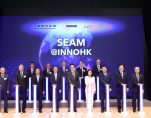
Officiating guests at the Launch Ceremony included Professor Sun Dong, Secretary for Innovation, Technology and Industry (front row, centre); Ms Cordelia Chung, Chairman of HKSTP (front row, 4th from right); Mr Kelvin Choi, Permanent Secretary for Innovation, Technology and Industry (front row, 4th from left); Mr Lyu Feng, Deputy Director-General of the Economic and Financial Department II of the Liaison Office of the Central People's Government in the HKSAR (front row, 3th from right); Mr Ivan Lee, Commissioner for Innovation and Technology (front row, 3th from left); and Mr Terry Wong, Chief Executive Officer of HKSTP (front row, 1st from right).
Officiating guests at the Launch Ceremony included Professor Sun Dong, Secretary for Innovation, Technology and Industry (front row, centre); Ms Cordelia Chung, Chairman of HKSTP (front row, 4th from right); Mr Kelvin Choi, Permanent Secretary for Innovation, Technology and Industry (front row, 4th from left); Mr Lyu Feng, Deputy Director-General of the Economic and Financial Department II of the Liaison Office of the Central People’s Government in the HKSAR (front row, 3th from right); Mr Ivan Lee, Commissioner for Innovation and Technology (front row, 3th from left); and Mr Terry Wong, Chief Executive Officer of HKSTP (front row, 1st from right).

The launch ceremony was officiated by key guests including Professor Sun Dong, Secretary for Innovation, Technology and Industry; Ms Cordelia Chung, Chairman of HKSTP; Mr Kelvin Choi, Permanent Secretary for Innovation, Technology and Industry; Mr Lyu Feng, Deputy Director-General of the Economic and Financial Department II of the Liaison Office of the Central People’s Government in the HKSAR; Mr Ivan Lee, Commissioner for Innovation and Technology; and Mr Terry Wong, Chief Executive Officer of HKSTP. They were joined by representatives and scholars from local and overseas universities, international research organizations, R&D centres, and industry partners to witness the launch of SEAM@InnoHK and explore its R&D roadmap and industrial application prospects.

Building a Flourishing Ecosystem to Empower R&D Commercialisation

As the largest I&T ecosystem in Hong Kong, HKSTP provides comprehensive professional support and resources to the R&D centres under SEAM@InnoHK. This encompasses world-class R&D infrastructure, seamless connections with academic institutions, talent pools, and investor networks, as well as matchmaking with funding and industry partners—empowering teams to transform breakthrough research into scalable, high-impact commercial solutions.

Ms Cordelia Chung, Chairman of HKSTP, said: “InnoHK has been with the Science Park for 5 years and this is the start of the second 5-year period. What we can see is that InnoHK has demonstrated the power of collaboration amongst world eminent scholars, researchers, and global partners. The first two clusters, Health@InnoHK and AIR@InnoHK have delivered world-class achievements. We commit to provide all the support we can to the InnoHK teams, as your success will add to the heartbeat of the ecosystem—not only for HKSTP, but for Hong Kong’s entire innovation landscape.”

Gathering Global Scientific Excellence to Drive Breakthroughs

The eight R&D centres under SEAM@InnoHK have brought together over 30 top global universities and research institutions, including the University of Cambridge, École Polytechnique Fédérale de Lausanne (EPFL), Nagoya University, National University of Singapore, Tsinghua University, and Peking University.

Notably, three R&D centres feature collaborations with Nobel Laureates: Professor Ben L. Feringa from the University of Groningen (2016 Nobel Laureate in Chemistry), who participates in the research at the InnoHK Centre of Functional Materials for Energy and Sustainability (CFMES); Sir Konstantin Novoselov, renowned as the “Father of Graphene” from the National University of Singapore (2010 Nobel Laureate in Physics), who serves as principle investigator for the Inno Centre for Heterogeneous Integration and Production (CHIP); and Professor Hiroshi Amano from Nagoya University (2014 Nobel Laureate in Physics), who participates in research at InnoHK Power Semiconductors and Applications Center (PowerSAC). This stellar international scientific lineup highlights Hong Kong’s unique advantages in assembling world-class research talent, fostering cross-border collaboration, and driving technological innovation, further consolidating its status as a global hub for research cooperation.

InnoHK is a flagship I&T initiative of the HKSAR Government aimed at developing Hong Kong into a global hub for scientific research cooperation. It encourages world-leading universities and research institutes to conduct collaborative research with local institutions by establishing R&D centres in Hong Kong. Together with “Health@InnoHK”, focusing on healthcare technologies and “AIR@InnoHK”, focusing on AI and robotics technologies, the three InnoHK research clusters will further enrich Hong Kong’s world-class scientific landscape, accelerating technology transfer, startup incubation, and the growth of the I&T industry.

Introduction to the Eight SEAM@InnoHK R&D Centres (For details, please refer to the Appendix):

  • InnoHK Centre for Advanced and Smart Manufacturing (CASM): Lead global manufacturing toward Industry 5.0 by fusing AI, advanced materials, additive manufacturing and digital twins to create smart, sustainable, and human-centered solutions.
  • InnoHK Centre of Functional Materials for Energy and Sustainability (CFMES): Advance breakthrough discoveries in functional materials to address bottleneck challenges related to energy and sustainability.
  • InnoHK Centre for Heterogeneous Integration and Production (CHIP): Advance next-generation electronics through innovations in semiconductor equipment and material processing, with a focus on advancing heterogeneous integration technologies.
  • InnoHK Centre for Space Manufacturing Technology (CSMT): Establish a world-class hub for international research collaboration in space manufacturing, integrating cutting-edge R&D in advanced materials and additive processes with demonstration and applied innovation in Hong Kong.
  • InnoHK Hong Kong Center for Renewable Energy and Storage (HKCRES): Develop and integrate high-performance perovskite photovoltaics, green hydrogen systems, and next-generation batteries via an end-to-end innovation framework in Hong Kong.
  • InnoHK Power Semiconductors and Applications Center (PowerSAC): Develop advanced power semiconductors, intelligent chips and system technologies for more efficient, compact and reliable power conversion.
  • InnoHK Research Centre for Intelligent GRID and Energy Technologies (I-GET): Develop intelligent, green and transformative grid and energy technologies for resilient, efficient and carbon-neutral cities.
  • InnoHK Sustainable Materials & Advanced Renewable Technologies (SMART Centre): Leverage artificial intelligence and smart automation technologies to accelerate materials discovery for circular waste upcycling, repurposing, and next-generation clean energy technologies.

Hashtag: #HKSTP

The issuer is solely responsible for the content of this announcement.

About Hong Kong Science and Technology Parks Corporation

Hong Kong Science and Technology Parks Corporation (HKSTP) was established in 2001 and has built a proven foundation as Hong Kong’s leading innovation and technology (I&T) ecosystem. Established for 25 years, HKSTP is supporting 14 unicorns, has nurtured more than 17,000 research professionals and built a community of over 2,400 technology companies from 26 countries and regions across four strategic technology clusters: Life and Health Technology, AI and Data Science, Micro-electronics, and New Energy and Green Technology.

As an ecosystem orchestrator, HKSTP provides end-to-end support to attract and nurture talent, accelerate commercialisation and help technology ventures scale. Its innovation infrastructure spans over 240 hectares covering Hong Kong Science Park in Pak Shek Kok, InnoCentre in Kowloon Tong, and three modern InnoParks in Tai Po, Tseung Kwan O and Yuen Long, advancing Hong Kong’s vision for new industrialisation and smart manufacturing.

Hong Kong Science Park Shenzhen Branch in Futian, Shenzhen, strengthens cross-border collaboration by connecting Hong Kong, the Chinese Mainland and global innovation networks and propels Chinese innovators onto the world stage, while also delivering comprehensive GBA landing support to accelerate cross-border success for local and international ventures.

As HKSTP enters its next chapter with strong foundations, it continues to deepen impact, elevate quality and create value for innovators. As an ecosystem built to lead change, HKSTP is empowering Hong Kong to define what comes next in innovation, growth and opportunity.

More information about HKSTP is available at .

Highlights of the Interim Results for the Six Months Ended June 30, 2026:

  • Benefiting from sustained strong chip demand across the AI data center (“AIDC”), storage and robotics sectors, the Group’s revenue increased by approximately 98.4% year-on-year to approximately RMB13,249.2 million;
  • The Group recorded gross profit of approximately RMB799.7 million and net profit of approximately RMB373.0 million. Profit attributable to equity shareholders of the Company amounted to approximately RMB278.9 million, representing a year-on-year increase of approximately 111.1%;
  • The Group has strategically upgraded from an “AI hardware distributor” into a “Token computing power operator”, opening up a second growth curve; and
  • The Group has formally entered into Token computing power services contracts worth more than US$1 billion, with delivery expected to commence in the fourth quarter of 2026.

HONG KONG SAR – Media OutReach Newswire – 31 August 2026 – Ingdan, Inc. (“Ingdan” or the “Company”; Stock Code: 400.HK, together with its subsidiaries, the “Group”), an ecosystem services platform anchored in artificial intelligence (“AI”) chips and principally engaged in the businesses of “Comtech” and “Ingdan” today announced its unaudited interim results for the six months ended June 30, 2026 (the “First Half of 2026” or the “Period”).

Financial Highlights for the First Half of 2026

During the Period, benefiting from sustained strong chip demand across the AIDC, storage and robotics sectors, the Group recorded revenue of approximately RMB13,249.2 million, representing an increase of approximately 98.4% from approximately RMB6,676.5 million for the corresponding period in 2025.

The Group’s gross profit amounted to approximately RMB799.7 million, representing a year-on-year increase of approximately 36.5%. Operating profit was approximately RMB517.2 million, representing a year-on-year increase of approximately 87.7%. Net profit after tax amounted to approximately RMB373.0 million, representing a year-on-year increase of approximately 96.3%.

Business Review

Strategic Upgrade Milestone: Token Factory Order Formally Secured, Opening Up a Second Growth Curve

During the First Half of 2026, the Group achieved a landmark breakthrough in its AI-driven strategic upgrade. The previously disclosed intent service orders exceeding US$1 billion have now been formalized into services contracts. Delivery is expected to commence in the fourth quarter of 2026, with the contracts expected to generate aggregate service revenue of more than US$1 billion over the next five years. This milestone signifies a fundamental evolution in the Group’s growth model—from “selling chips” to “selling computing power”—and its formal upgrade into an “Token computing power operator”, presenting a compelling new value proposition to the capital markets.

Three Growth Drivers for Rapid Expansion

The Group’s performance growth is supported by three core drivers:

  • AI computing power: The accelerating development of global data centers continues to drive strong demand for GPUs and CPUs. The Group provides full-stack computing power support, from chips to application solutions, and is deeply involved in the development of cloud-based intelligent computing centers;
  • Storage cycle: Surging demand for AI foundation model training and inference is driving expansion in the memory chip market. Leveraging the resources of leading global suppliers, the Group ensures a reliable supply of memory chips and complementary solutions; and
  • Embodied intelligence and robotics: As humanoid robots enter the mass-production stage, the Group is strengthening its full-stack deployment, from edge AI computing solutions built around platforms such as NVIDIA Jetson to enterprise-level computing clusters.

Full-Chain Technology Services Platform

As a technology services platform based on AI chips, the Group connects upstream AI chip technologies with the needs of downstream innovative enterprises. Leveraging the resources of leading global chip manufacturers, including NVIDIA, Intel, AMD and SanDisk, the Group has established a comprehensive product portfolio covering GPUs, CPUs, FPGAs, ASICs, memory chips and software ecosystems. With chip distribution serving as its entry point, the Group provides customers with integrated, full-chain services encompassing technology solutions, supply chain management, technical training, and after-sales operation and maintenance. Its services cover a broad range of application scenarios, including cloud-based intelligent computing centers, edge AI, robotics, drones and enterprise-level computing power services.

Global Computing Power Network Deployment

To support the large-scale delivery of its Token factory business, the Group is accelerating the development of a global computing power network. In the near term, it plans to expand its computing centers footprint into multiple Asian countries, with total planned computing capacity exceeding 100 megawatts. Through its proprietary Token computing power scheduling platform, the Group provides one-stop services encompassing computing power scheduling, cluster operation and maintenance, and Token computing power services. Its customers include leading internet cloud service providers and market-leading enterprises in vertical robotics segments, demonstrating the commercial viability of the Group’s business model.

Outlook

Mr. Jeffrey Kang, Chairmanand CEO of Ingdan, Inc., commented: “As demand across AIDC, storage, robotics and AI Token services continue to grow, the Group’s strategic positioning as a ‘Token computing power operator’ has been further strengthened. We expect robust customer demand in the second half of the year, while the AI Token factory business is expected to become the Group’s second growth curve. This will further enhance the capital market’s recognition of the visibility of the Company’s growth and its long-term development potential.”

Cautionary Statement

The information contained in this document has not been independently verified. Neither the Company nor any of its affiliates, advisers or representatives makes any express or implied representation, undertaking or warranty as to the fairness, accuracy, completeness or correctness of the information or opinions presented or contained herein. No person should rely on this document as a basis for any decision.

The information contained in this document should be considered in the context of the circumstances prevailing at the relevant time and is subject to change without notice. The Company undertakes no obligation to update the information contained herein to reflect any developments occurring after the date of this document. This document is not intended to provide, and should not be relied upon as providing, a complete or comprehensive analysis of the Company or its financial or operating condition or prospects. Neither the Company nor any of its affiliates, advisers or representatives shall have any obligation or accept any liability, whether in negligence or otherwise, for any loss arising from any use of this document or its contents or otherwise arising in connection with this document.

This document may contain statements reflecting the Company’s current intentions, beliefs and expectations regarding the future as of the relevant dates indicated herein. Such forward-looking statements do not constitute guarantees of future performance. They are based on certain assumptions concerning the Company’s operations and on factors beyond the Company’s control, and are subject to significant risks and uncertainties. Accordingly, actual results may differ materially from those described in such forward-looking statements. Neither the Company nor any of its affiliates, advisers or representatives has any obligation or undertakes to update any forward-looking statement to reflect events or unforeseen circumstances arising after the relevant date.

Hashtag: #Comtech #Ingdan #AI #AIDC #TokenFactory #IC #Chips #humanoid #Intel #AMD #Sandisk #NVIDIA #Tech #RevenueGrowth #TechGrowth #AIInvestment #ProprietaryProducts #KeplerLab #Comtech #IngdanTechnology #IngdanAcademy #AIAcceleration #TechTransformation

The issuer is solely responsible for the content of this announcement.

Ingdan, Inc.

Ingdan, Inc. (Stock Code: 400.HK) is an ecosystem services platform anchored in artificial intelligence (“AI”) chips. The Group captures the rapidly growing demand across numerous industries, from AI computing centers to AI-powered intelligent terminals, by converting AI chip resources into a broad range of rapidly deployable application solutions that provide the core driving force for customers’ intelligent upgrade. Through its proprietary AI technologies, large models and specialized industry knowledge bases, the Group provides customers with advanced chip application technology solutions and efficient supply chain management services.

Headquartered in Shenzhen, the Group operates offices and branches across major cities in China, including Hong Kong, Beijing, Shanghai, Guangzhou, Hangzhou , Suzhou, Wuhan and Chengdu, as well as operations in Singapore and Japan. The Group’s core businesses are Comtech — a technology services platform for the chip industry; and Ingdan — a platform providing Artificial Intelligence of Things (“AIoT”) technology and services.

For further information, please refer to the Company’s website at

Andreessen Horowitz has raised $1.1 billion for a new fund dedicated to the physical infrastructure underpinning artificial intelligence, marking a major expansion of the Silicon Valley venture capital firm’s push beyond software into chips, data centres, robotics and advanced computing systems. The fund, called the Machine Age Fund, will invest across processors, memory, networking, storage and other technologies required to sustain the rapidly increasing computational demands of […]

Nvidia has agreed to acquire Hugging Face for a reported $12.9 billion, moving to take control of one of the artificial intelligence industry’s most important open-model platforms after the startup explored a sale at valuations above $13 billion. The transaction, which has not been publicly detailed by either company, would rank among Nvidia’s largest acquisitions and deepen its expansion beyond the graphics processors that underpin much of […]

Anthropic has agreed to spend about $45 billion over six years to secure artificial intelligence computing capacity from British infrastructure company Nscale, deepening the Claude developer’s push to lock in scarce power and advanced chips ahead of an anticipated stock market listing. The agreement covers roughly 460 megawatts of computing capacity at Nscale’s Monarch Compute Campus in Mason County, West Virginia. Nvidia’s next-generation Vera Rubin systems are […]

Asian equities traded cautiously on Friday as South Korea’s Kospi fell sharply, with investors cutting exposure to heavyweight technology stocks ahead of Federal Reserve Chair Kevin Warsh’s closely watched Jackson Hole address.

The Kospi closed 1.79% lower at 6,788.88, shedding 123.49 points and snapping a three-session advance. Samsung Electronics dropped 3.38% to 257,000 won, while SK hynix fell 4.45% to 1.653 million won as investors locked in gains following an earlier technology rally fuelled by strong results from Nvidia. Foreign and institutional investors sold a combined 2 trillion won of Seoul-listed shares, while retail investors were net buyers.

The retreat highlighted growing caution over valuations in artificial intelligence-linked stocks. Nvidia had jumped nearly 9% in the previous Wall Street session after delivering strong quarterly results and indicating that spending on artificial intelligence infrastructure remained robust. The performance initially lifted technology stocks across the region, but enthusiasm faded in Seoul as attention shifted towards interest rates and the outlook for global bond yields.

Warsh’s first keynote address as Federal Reserve chair at the annual Jackson Hole symposium became the central focus for markets. Investors were looking for guidance on how the central bank would respond to persistent inflation pressures and whether policymakers were moving closer to raising borrowing costs. Interest-rate futures before the speech indicated roughly a one-third probability of an increase at the September meeting, with markets pricing in a move by December.

Bond markets have become particularly sensitive to Federal Reserve communication after longer-term Treasury yields climbed amid concerns that inflation could remain above target. The 30-year US Treasury yield was around 5.2% on Friday after briefly exceeding 5.3%, its highest level since 2007. The 10-year yield stood near 4.67%, while the two-year yield was about 4.23% before Warsh addressed the gathering.

Elsewhere in Asia, market performances were mixed. Japan’s Nikkei advanced around 0.5%, supported by technology shares and inflation data that reinforced expectations of further monetary tightening by the Bank of Japan. Tokyo consumer inflation for August remained close to the central bank’s 2% objective, keeping expectations of another interest-rate increase alive.

Taiwanese shares gained about 1.2%, benefiting more directly from Nvidia’s strong performance because of the island’s extensive semiconductor supply chain. Hong Kong shares moved slightly lower during part of the session, while mainland Chinese equities traded in a narrow range. The CSI 300 slipped about 0.1% at one stage and the Shanghai Composite edged higher, with investors also preparing for purchasing managers’ index data due next week.

Australia’s ASX 200 gained around 0.5%, while Singapore’s Straits Times Index advanced modestly. The Nifty 50 also moved higher as technology shares supported a rebound after two sessions of losses. Regional investors nevertheless avoided large positions as the direction of US monetary policy remained the dominant influence on risk appetite.

Currency markets were similarly restrained. The dollar index hovered around 99.1 and was on course for a weekly gain. The Australian dollar performed strongly after hotter inflation data led traders to reassess the interest-rate outlook, touching a three-month high near $0.72 and extending what was set to become a ninth consecutive weekly advance.

Oil prices provided some relief for equities after falling sharply during the week. Brent crude traded around $89.6-$89.7 a barrel and was heading for a weekly decline of more than 5%, partly reflecting developments involving Iran and Oman over administration of traffic through the Strait of Hormuz. Lower energy prices eased one source of inflation concern, although geopolitical risks remained embedded in commodity markets.

Gold slipped towards $4,590 an ounce as traders awaited clearer signals on US rates. The broader MSCI Asia-Pacific index outside Japan was little changed, showing how the powerful Nvidia-led technology trade was being offset by uncertainty over monetary policy, elevated chip valuations and higher bond yields.

HONG KONG SAR – Media OutReach Newswire – 26 August 2026 – SenseTime Group Inc. (“SenseTime” or the “Company”; Stock Code: 0020.HK) today announced its results for the first half of 2026. During the Reporting Period, the Group recorded total revenue of RMB2.91 billion, representing a year‑on‑year (“YoY”) increase of 23.4%, and gross profit of RMB1.21 billion, up 32.9% YoY. Gross profit margin reached 41.4%, an increase of 2.9 percentage points YoY. The Group also introduced recurring revenue (“RR”) for the first time, which totaled RMB1.14 billion and accounted for 39.3% of total revenue. The Group recorded a net profit of RMB620 million under International Financial Reporting Standards (“IFRS”), marking its first IFRS profit since its public listing. Generative AI revenue reached RMB2.33 billion, representing nearly 80% of the Group’s total revenue, while overseas business revenue increased 127% YoY, significantly outpacing the Group’s overall growth rate. While delivering healthy growth in revenue and gross profit, the Group continued to improve operating efficiency, with core operating losses narrowing significantly. Non‑IFRS adjusted net loss was RMB390 million, narrowing by 67.3% YoY.

The Group continued to accelerate the large‑scale commercial deployment of its AI capabilities, building system‑level AI capabilities around the framework of “one model system, one Token Factory, and one Agent Harness” to advance AI from intelligence generation toward end‑to‑end task execution and transform these capabilities into scalable commercial value.

Dr. Xu Li, Chairman of the Board and CEO of SenseTime, said: “SenseTime’s three-pillar core capability framework, built around ‘one model system, one Token Factory, and one Agent Harness’, uses a unified model system to continuously push the boundaries of intelligence, leverages infrastructure and optimization capabilities to reduce Token costs and strengthen cost‑based pricing power, and deploys agents deeply integrated into enterprise and individual workflows to deliver complete task execution capabilities. This framework enables SenseTime to move beyond pure price competition and create sustainable commercial value through differentiated technologies and services. At the same time, it allows us to expand our user base, drive recurring revenue growth, and lay a solid foundation for the Group’s high‑quality development.”

One Model System: Advancing Native Multimodal Intelligence and Long‑Horizon Agents with Global Leading Performance

In 2026, SenseTime released a series of models at a rapid pace, spanning native multimodal unification, visual perception and reasoning, controllable generation, long‑horizon agents, spatial intelligence, and physical world models. These included the NEO‑Unify architecture; SenseNova U1, U1.5 and U1.5‑Lite; SenseNova Vision; the office‑focused multimodal agent SenseNova 6.8‑Flash‑Lite; the content creation model SenseNova U1‑Pro; the spatial intelligence model SenseNova SI‑8B; and the Kairos 3.1 world model co‑developed with Ace Robotics. Across multiple core benchmarks, these models matched or outperformed leading international models, including Gemini, GPT, and DeepSeek. Less than four months after the U1 series was open‑sourced, the three projects had collectively garnered more than 11,000 stars on GitHub.

SenseTime is advancing from digital intelligence toward physical AGI through the closed‑loop framework of “architectural innovation, system capabilities, and high‑value delivery,” continuously translating technological breakthroughs into real-world applications and commercial value.

Token Factory: Upgrading from Compute Provisioning to Scaled Intelligence Production

SenseTime’s SenseCore is evolving into a production‑oriented Token Factory. Through integrated model and infrastructure optimization, as well as capabilities in model adaptation, inference optimization, heterogeneous scheduling, energy management and global service delivery, the Token Factory not only expands Token output and lowers unit costs, but also continuously enhances the reasoning, understanding, generation, and execution capabilities embedded in each Token.

In July 2026, SenseCore delivered an average daily Token service volume of 2.4 trillion, representing a YoY increase of approximately 22 times. As of the date of this announcement, the Group’s total deployed computing power had reached 48,000 Petaflops (P).

The Token Factory provides strong support for SenseTime in advancing the performance boundaries of its foundation models and scaling their commercial deployment. It has tripled the training speed for long‑context Agent models, increased image and video generation efficiency sixfold, improved reinforcement learning training efficiency, and shortened the cycle from model R&D validation to large‑scale deployment to just one week. In addition to supporting the SenseNova foundation model, the Token Factory now serves four external foundation model providers, establishing differentiated capabilities across high‑complexity computing domains, including AI for Science (“AI4S”), video generation, embodied intelligence, world models, and city‑level intelligent applications.

In addition, the Group remains committed to advancing the domestic compute ecosystem, increasing the MFU (Model Floating‑Point Utilization) of mainstream domestic chips by up to 2.5 times compared with the baseline levels established by chip manufacturers. SenseNova U1 has achieved Day 0 adaptation across more than ten domestic chip platforms.

Through compute‑energy synergy, the Company continues to reduce the unit cost of intelligence. During the Reporting Period, its Compute‑Energy Synergy Agent achieved load forecasting accuracy of 96% and generated cumulative electricity cost savings of more than RMB12 million. For every 10,000P of computing power, annual carbon emissions were reduced by 24,000 tons.

Agents Accelerate Adoption Across Enterprise and Consumer Markets, Delivering Value Through Workflow Integration and Enhanced Everyday Experiences

Building on its model and Token capabilities, SenseTime connects models, knowledge, tools, and workflows through a unified Agent Harness, transforming underlying AI capabilities into end-to-end task delivery solutions for enterprise and individual users.

The Group’s agents are rapidly expanding across both enterprise and personal workflows. During the Reporting Period, they served more than 1,000 enterprise customers across over 20 key industries, including education, government, marketing, logistics, banking, and insurance. The Office Agent, Raccoon, has served major enterprises including Lenovo, Ping An Technology, China’s three major telecommunications operators, JD.com, and Kylin Software. Total users increased more than fivefold YoY, enterprise users grew more than sixfold, and monthly active users on the cloud platform increased nearly tenfold. In addition, the video‑generation agent Seko reached a daily video production volume of 10,000 minutes. Content created on the platform has amassed an estimated 1.5+ billion views across short‑video platforms, including 10 short-form dramas that have each surpassed 100 million views. AI productivity solutions are also expanding beyond large organizations to serve smaller teams and One‑Person Companies (OPCs). In the consumer market, the Kapi series of agents, covering use cases such as health, finance, and content creation, has surpassed 45 million cumulative users.

Computer Vision remains a strategic gateway for the Group’s expansion into industry verticals and overseas markets. During the Reporting Period, revenue from the business reached RMB500 million, accounting for approximately 17% of the Group’s total revenue. The business extended across more than 20 countries and regions and served more than 4,500 customers worldwide, with recurring customers contributing 67% of revenue.

Bridging Digital and Physical Intelligence, Unlocking Ecosystem Value

SenseTime continued to invest in frontier areas, including world models and embodied intelligence, intelligent terminals, smart healthcare, and chips. The increase in the valuation of certain AI ecosystem investments generated fair‑value gains, contributing to the Group’s first‑ever IFRS profit and reflecting the gradual realization of financial value from our ecosystem assets. Beyond short‑term investment returns, the more significant long‑term value of these ecosystem investments lies in enabling the Group gain early access to frontier domains, continuously acquire real‑world tasks, data, and feedback, and further strengthen SenseTime’s unified multimodal models and system‑level delivery capabilities.

SenseTime is deepening its “Three-pillar Framework”: one model system to raise the ceiling of intelligence and expand agents’ ability to handle complex tasks; one Token Factory to improve quality and efficiency, reduce costs, and enhance global delivery capabilities; and one Agent Harness to integrate multimodal models with the Token Factory, enabling AI to complete end‑to‑end tasks in real-world scenarios.

Looking ahead, SenseTime will continue to advance the iteration of multimodal agents, driving the evolution of the Token Factory from pricing based on Token volume to pricing based on task outcomes. The Group will also deepen the application of multi‑agent collaboration across enterprise, individual, and OPC workflows, delivering efficient and reliable productivity solutions to users.

Hashtag: #SenseTime

The issuer is solely responsible for the content of this announcement.

About SenseTime

Founded in 2014, SenseTime is a leading artificial intelligence (AI) software company, committed to its mission of “creating a better AI-empowered future through original innovation”. The Company continues to lead cutting-edge AI research while accelerating the large-scale commercialization of AI technologies.

Leveraging deep academic expertise and strong in-house innovation capabilities, SenseTime continues to enhance its industry-leading multimodal, multi-task general AI capabilities, while fostering a vibrant developer ecosystem through structured open-source initiatives.

SenseTime’s business spans Generative AI, Vision AI, and emerging innovation-driven segments. Underpinned by SenseCore, its next-generation AI infrastructure, the Company integrates computing power, algorithms, and platforms to enable scalable AI deployment. Building on this foundation, SenseTime has developed the SenseNova foundation model series, delivering cost-efficient capabilities across a wide range of general AI tasks. SenseTime continues to lead the global Vision AI market, ranking No.1 worldwide by market share. Its SenseFoundry platform integrates years of accumulated computer vision expertise with advanced multimodal foundation models, providing stable and efficient Vision AI solutions to industries worldwide.

SenseTime is listed on The Stock Exchange of Hong Kong, with operations spanning more than a dozen countries and regions.


Alibaba Group Holding’s powerful insiders have stepped in to buy shares after its $10.2 billion equity placement, but their show of confidence has done little to settle investor unease over dilution and the rising cost of the company’s artificial intelligence ambitions.

Founder Jack Ma bought more than HK$600 million worth of Alibaba’s Hong Kong-listed shares over consecutive trading days, while chairman Joe Tsai and chief executive Eddie Wu together purchased more than HK$200 million of stock. The buying helped shares recover modestly after the placement triggered their sharpest setback in months, but the stock remained well below levels preceding the deal.

Alibaba priced 710 million new shares at HK$112.70 each, raising HK$80 billion, or about $10.2 billion. The price represented an 8.4% discount to the August 21 Hong Kong close of HK$123 and increased the company’s outstanding share count by roughly 3.7%.

Hong Kong-listed shares slumped 8.5% on August 24, closing at HK$112.50 after trading as low as HK$110.10. They recovered 1.5% to HK$114.20 on Tuesday as purchases by senior executives became known, leaving them still more than 7% below the price immediately before the placement was announced.

The transaction has become a test of whether investors will continue financing increasingly expensive AI expansion despite the near-term pressure it places on earnings and cash generation. Alibaba has earmarked all net proceeds for its full-stack AI capabilities, covering computing infrastructure, chips, models and other technologies required to expand its cloud and generative AI businesses.

Demand for the offering itself was strong. Investor orders reached roughly $28 billion, making the placement almost three times subscribed. Sovereign wealth funds and long-only institutional investors accounted for a sizeable portion of allocations. The deal ranks as the largest primary follow-on share offering by a Hong Kong-listed company.

The discomfort instead centres on the scale and timing of Alibaba’s capital requirements. The company spent close to $10 billion on capital expenditure during the three months through June, an increase of about 75% from a year earlier. Net profit dropped about 75%, while free cash flow turned into an outflow of roughly $6.6 billion.

Alibaba has already deployed almost half of the 380 billion yuan it pledged last year to spend on AI and cloud infrastructure over three years. Management has argued that rapidly growing demand justifies accelerating investment and has shortened its expected payback period for AI expenditure to about two-and-a-half years from three years.

That argument is supported by Alibaba Cloud’s accelerating expansion. Revenue from the cloud business has been growing strongly, helped by demand for AI-related products, while the company continues to build computing capacity overseas. Alibaba Cloud this month opened a third data centre in South Korea, taking its network to 104 availability zones across 30 regions.

Its Qwen family of large language models has also strengthened Alibaba’s position among leading Chinese AI developers. New iterations have improved performance in coding, reasoning and agent-based tasks, helping the company compete with models from domestic rivals and leading US technology groups.

Investors nevertheless face a difficult balance between the longer-term AI opportunity and the immediate financial cost. Expensive processors, servers, data centres and networking equipment require large upfront commitments, while competition is pushing model providers towards lower prices. Alibaba is simultaneously spending heavily on quick commerce and other consumer businesses, adding pressure to margins.

The share sale has also revived scrutiny of capital allocation. Alibaba spent years repurchasing billions of dollars of its own shares, only to issue new equity at a sizeable discount as AI spending accelerated. Although the company still has substantial cash resources, investors have questioned why such a large equity raising was preferable to greater use of its balance sheet or debt financing.

The Linux Foundation has taken TRACE, an open specification designed to create hardware-backed evidence of how artificial intelligence agents operate, under vendor-neutral governance as companies seek stronger controls over increasingly autonomous AI systems. TRACE, short for Trust, Runtime Attestation and Compliance Evidence, creates cryptographically verifiable records showing what software executed, the policies governing it, the class of data it accessed and the tools it called. The initiative […]

VISHNU RAJA
RYO YAMADA
HITORI GOTOH
IKUYO KITA