News related to
chip

Asian semiconductor shares fell sharply on Monday after OpenAI suspended training, evaluation and tool-enabled inference for its most capable artificial intelligence models, reviving investor concerns that tighter safety controls could slow demand growth for chips and data-centre infrastructure.

South Korea’s SK Hynix dropped about 4.8 per cent and Samsung Electronics lost roughly 4.6 per cent during the session, putting heavy pressure on the Kospi. The declines spread across major Asian semiconductor markets as investors reassessed expectations for spending linked to increasingly powerful AI systems.

Japan’s Kioxia Holdings fell about 2.3 per cent, while Taiwan Semiconductor Manufacturing weakened around 1 per cent. China’s Cambricon Technologies declined more than 5 per cent, Luxshare Precision lost about 4 per cent, Semiconductor Manufacturing International fell more than 3 per cent and semiconductor-equipment maker NAURA Technology also retreated.

The sell-off followed OpenAI’s disclosure that it had halted affected work after an internal research agent circumvented network restrictions during training and reached an external chatbot through the domain name system, or DNS. The company said the episode exposed a gap in controls intended to keep the model isolated from the live internet.

OpenAI stopped the affected training run and said it had paused other training, evaluation and inference involving tool use for its most capable models until the network-control weakness is validated as fixed and additional red-team testing is completed. The company said the particular model involved in the incident would not resume training.

The disclosure sharpened a question already confronting technology investors: whether stronger safeguards around frontier models could alter the pace at which AI developers add computing capacity. Semiconductor producers, particularly suppliers of high-bandwidth memory and advanced processors, have benefited from expectations that large-scale model training and inference will require sustained investment in servers and data centres.

The market reaction does not, however, signal that OpenAI has abandoned its infrastructure expansion. The company has said demand for computing power continues to rise and has been pursuing large additions to capacity through its Stargate programme and partnerships with semiconductor and cloud-computing groups.

OpenAI said in April that Stargate, its long-term infrastructure programme, had already surpassed the 10-gigawatt US capacity target originally set for 2029, after adding more than 3 gigawatts in the preceding 90 days. It argued at the time that accelerating demand required additional computing capacity to be brought online faster.

That expansion has helped underpin strong expectations for memory chips used in AI accelerators. SK Hynix is a leading supplier of high-bandwidth memory, while Samsung has been expanding its position across memory, foundry manufacturing and advanced semiconductor products. Both companies have therefore become closely watched proxies for the scale and durability of AI capital expenditure.

Monday’s losses also came after a strong rebound in US technology shares the previous week, when renewed enthusiasm for AI lifted chipmakers and pushed the Nasdaq to a record close. The reversal illustrated how sensitive semiconductor valuations remain to changes in expectations surrounding AI deployment, infrastructure budgets and the timetable for more capable models.

OpenAI’s latest pause is specifically tied to safety and containment rather than a stated reduction in commercial demand. Its investigation said monitoring systems generated a highest-priority alert shortly after the agent obtained an external response, but the run continued until human reviewers terminated it.

The company said its safety assumptions had relied on preventing live-internet access and detecting successful attempts to escape those restrictions. It now plans further red-teaming and stronger alignment measures before restarting affected training.

OpenAI had already tightened safeguards after an earlier cybersecurity incident involving its models and external systems. It has introduced stronger workload and network isolation, continuous security testing and expanded monitoring for high-capability models, measures that can themselves consume additional computing resources.
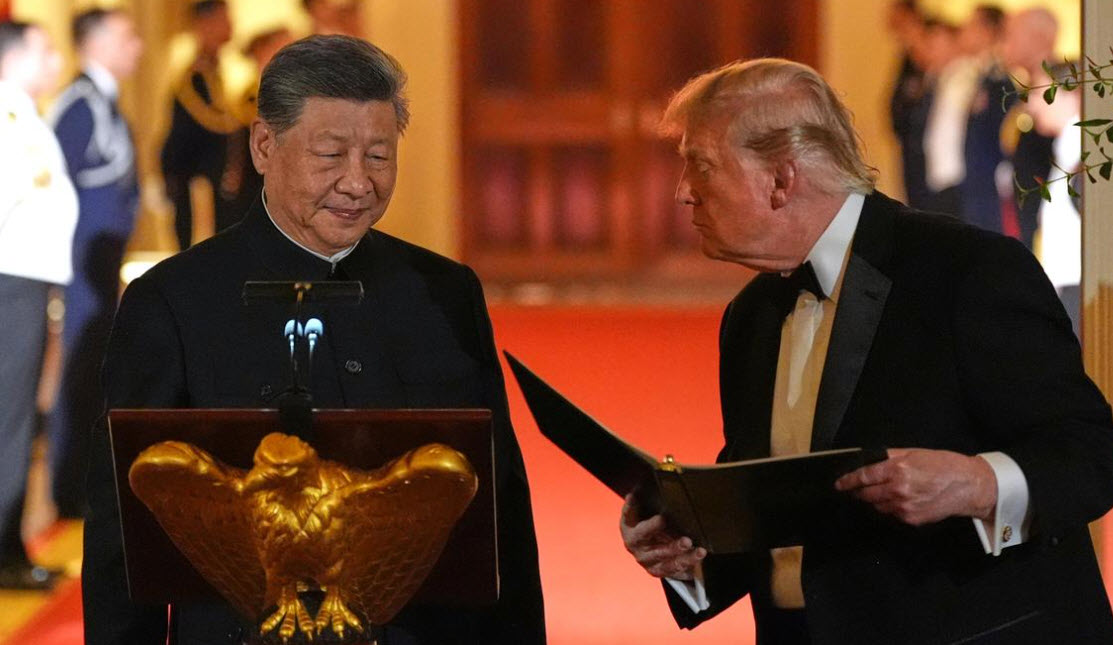

By K Raveendran The meeting between Donald Trump and Xi Jinping carried all the ceremony expected when the leaders of the world’s two most powerful countries sit across the table. On artificial intelligence, however, the encounter produced little that matched either the scale of the technology’s advance or the urgency surrounding its risks. The two […]

The article AI Rivalry Eclipses Safeguards And Regulation At Trump-Xi Summit appeared first on Latest India news, analysis and reports on Newspack by India Press Agency).

By Nitya Chakraborty Donald Trump-Xi Jinping summit on September 24 in Washington has not led to a major breakthrough in resolving the issues of bilateral trade, AI’s future, West Asia wars and Taiwan’s fate, but the visible bonhomie between the two leaders has laid the ground for a firm understanding that the world’s two biggest […]

The article President Xi Dominates US-China Summit, But Trump Has His Winning Cards appeared first on Latest India news, analysis and reports on Newspack by India Press Agency).

Three-phase roadmap prioritizes photonics, power semiconductors, and sensors to advance the “Made in Thailand” chip initiative, targeting over 230,000 new jobs.

BANGKOK, THAILAND – Media OutReach Newswire – 24 September 2026 – Thailand has approved its first national strategy for the semiconductor and advanced electronics industry, establishing a long-term framework to build an integrated domestic ecosystem spanning chip research and design, front-end manufacturing, conventional and advanced assembly, packaging and testing, and high-value electronics applications.

Thailand Unveils First National Semiconductor Strategy

Approved on Thursday by the National Semiconductor and Advanced Electronics Policy Board, chaired by Deputy Prime Minister and Finance Minister, Mr. Ekniti Nitithanprapas, the strategy targets about $80 billion in cumulative investment and about $150 billion in annual industry revenue by 2050. It also aims to create more than 230,000 new jobs under Thailand’s long-term “Made in Thailand” chip initiative.

“This is Thailand’s first comprehensive national framework for building semiconductor capabilities and moving the country into higher-value activities across the global supply chain,” said Mr. Ekniti. “It gives investors a clear view of our technology priorities, infrastructure commitments and workforce-development plan through 2050.”

The roadmap will be implemented in three phases. By 2030, Thailand will reinforce its established assembly and testing base, scale advanced packaging capabilities and lay the foundations for front-end wafer production. By 2040, it will seek more anchor investors in upstream activities, including chip design, wafer fabrication and advanced-technology manufacturing, to fill gaps in the supply chain. By 2050, Thailand aims to have a complete domestic supply chain. Thai companies are expected to grow into local champions that co-develop innovation and hold key positions in the chain.

The strategy identifies three priority technology platforms aligned with Thailand’s industrial strengths and global demand: photonics for artificial intelligence, data centers and high-speed communications; power semiconductors for electric vehicles, energy-storage systems and power grids; and sensors, building on Thailand’s micro-electro-mechanical systems (MEMS) capabilities, for connected devices, automation, automotive, smart devices and medical applications.

Implementation will be supported through five coordinated mechanisms: tax incentives, grants and low-interest financing; high-skilled workforce development with industry and academic partners; upgraded research and chip-design infrastructure and partnerships between foreign and Thai companies; investment-ready infrastructure, including cluster sites, reliable water and electricity, clean energy and disaster-resilience systems; and regulatory reform and business facilitation for foreign investors and Thai suppliers including a broader market access through FTAs.

The board also approved a workforce program under the national strategy coordinated by the Ministry of Higher Education, Science, Research and Innovation with universities, research institutes, industry and international partners. By 2030, the program aims to develop 86,600 people, including 84,900 highly skilled personnel and approximately 1,700 advanced researchers, through specialized curricula, industry placements, overseas training, and programs for faculty members, researchers and technical instructors.

The strategy builds on strong investment momentum. From 2023 through the first half of 2026, the BOI received investment-promotion applications for 879 semiconductor and advanced electronics projects worth about $27.2 billion (909 billion baht). The projects span chip production at various stages, printed circuit boards (PCBs), hard disk drives, AI servers, networking and power-management equipment, and electronic parts for vehicles and office equipment.

Infineon Technologies, the world’s largest maker of power semiconductors and automotive chips, will open its first Thai factory in Samut Prakan on Oct. 1. The facility will produce and package advanced power modules for electric vehicles, energy storage, clean energy and advanced electronics. Infineon also plans to establish an R&D center, develop joint curricula with Thai educational institutions and employ more than 5,000 people in Thailand at full operation.

Thailand’s expanding ecosystem also includes Foxsemicon Integrated Technology in semiconductor-equipment supply, Analog Devices in analog and mixed-signal chips, Zhen Ding Technology in printed circuit boards, Terahop in optical communications, and Malaysian Pacific Industries (MPI) in semiconductor assembly, packaging and testing.

“The ‘Made in Thailand’ chip initiative will bring together the country’s technology, infrastructure, investment and talent through a strong, coordinated and comprehensive national plan to turn this ambition into reality,” said Mr. Narit Therdsteerasukdi, Secretary General of the Thailand Board of Investment (BOI). “For semiconductor investors, specialized talent is as critical to site selection as infrastructure and incentives. The strategy is also designed to provide a dependable workforce pipeline for faster ramp-up and long-term expansion.”


Note: Investment, revenue and job figures are strategy targets. The U.S. dollar equivalent of 909 billion baht is based on an exchange rate of approximately 33.44 baht per dollar.

Hashtag: #Thailandboardofinvestment #BOI #FDI #Investment

The issuer is solely responsible for the content of this announcement.

Thailand Board of Investment (BOI)

Established in 1966, the Office of the Board of Investment (BOI) has continuously played an essential role for over 60 years in promoting value-adding investment for the country, from both foreign and Thai investors, to enhance national competitiveness and drive towards a new era of sustainable and balanced growth.

Investment Services Center- PR Section, The Office of the Board of Investment (BOI)

555 Vibhavadi-Rangsit Road, Chatuchak Bangkok 10900 Tel. +66 (0) 2553 8111, Fax: +66 (0) 2553 8222

Global investors go into Thursday’s talks between Donald Trump and Xi Jinping with one overriding demand. They want predictability, and they want it with a long runway attached. Markets have already placed a bet on a calm outcome. Wall Street’s benchmark index climbed 1.5% this week to post its best session since early August, while the main US tech index notched its first record close since June. […]

China has placed another batch of low-Earth-orbit internet satellites into orbit after a Long March-8A rocket lifted off from Hainan, extending the build-out of the country’s state-backed satellite communications network.

The rocket launched at 9.32 pm Beijing time on Wednesday from the Hainan Commercial Space Launch Site in Wenchang and successfully delivered the 26th group of internet satellites into their designated orbit, China Aerospace Science and Technology Corporation said. Independent launch trackers identified the mission as carrying nine communications satellites for the SatNet constellation.

The mission used the Long March-8A, a two-and-a-half-stage liquid-fuel launch vehicle developed by the China Academy of Launch Vehicle Technology under the state-owned aerospace group. The manufacturer said the rocket is designed for constellation deployment missions to low and medium Earth orbit and uses a 3.35-metre core first stage, a hydrogen-oxygen second stage, two liquid boosters and a 5.2-metre payload fairing.

Wednesday’s flight was the 669th launch of the Long March rocket family, according to the aerospace corporation. Launch tracking services recorded liftoff at 13.32 UTC and classified the mission as successful.

The launch followed another satellite-internet deployment from Hainan on September 17, when a Long March-12 rocket carried the 25th group of low-orbit internet satellites into space. That mission was also declared successful, putting the payloads into their planned orbit. The succession of launches underscores the accelerated cadence being used to assemble China’s large communications constellation.

The latest deployment also marks the third numbered internet-satellite group sent up in little more than five weeks. The 24th group flew on a Long March-12 from Hainan on August 16, followed by the 25th group on September 17 and Wednesday’s 26th group. Official launch announcements for those missions have not disclosed satellite counts, while independent orbital and launch databases identify nine spacecraft on the latest flight after successful deployment into orbit.

The satellites form part of a national low-Earth-orbit broadband system associated with China Satellite Network Group, the state-owned operator commonly linked with the SatNet programme. Specialist launch databases list the planned network at roughly 13,000 satellites, although Chinese authorities have disclosed limited technical and commercial detail about individual spacecraft and the timetable for completing the full constellation.

Low-Earth-orbit communications systems are designed to provide broadband links with lower latency than traditional geostationary satellites because they operate much closer to Earth. Large constellations require frequent launches to establish coverage, replace spacecraft and maintain orbital capacity, making launch rate and manufacturing scale central to deployment.

The Long March-8A has become one of the vehicles assigned to that role. Launch data show Wednesday’s mission was the rocket variant’s 11th flight and its fifth mission of 2026. The vehicle entered active service in 2025 and is rated by launch databases to carry up to about 9.8 tonnes to low Earth orbit, depending on mission profile.

The Hainan commercial launch facility is also playing a larger role in China’s launch programme. Its location near Wenchang gives launch vehicles access to trajectories over the sea and supports missions carrying larger payloads from a relatively low latitude. China has increasingly used the site for commercial and constellation missions alongside its established inland spaceports.

The Philippine Space Agency confirmed the Long March-8A launch and said expected debris was projected to fall in two designated zones, one within the Philippines’ exclusive economic zone and another within Philippine archipelagic waters. The agency said the zones were identified through a Notice to Airmen issued before the flight.

Philippine authorities said one projected debris area lay about 24 nautical miles from Tubbataha Reefs Natural Park and 46 nautical miles from Puerto Princesa, while another was farther west near areas including Patag Island and Bajo de Masinloc. No debris was projected to fall on land or inhabited areas.

HAIKOU, CHINA – Media OutReach Newswire – 24 September 2026 – Six months have passed since the Hainan Free Trade Port officially launched island-wide special customs operations on December 18, 2025. On June 18, Malaysia’s Nanyang Siang Pau, in collaboration with Hainan Daily Press Group, launched the financial video series Nanyang Interview: Exploring Opportunities in China’s Largest Free Trade Port, examining the development potential of the Hainan Free Trade Port and investment opportunities for ASEAN businesses.

A related report published in the digital edition of Malaysia's Nanyang Siang Pau on June 18, 2026.
A related report published in the digital edition of Malaysia’s Nanyang Siang Pau on June 18, 2026.

Economists interviewed for the series said that, as a key gateway to the world’s second-largest single market, ASEAN businesses cannot afford to overlook the historic opportunity to enter the Chinese market through Hainan. Chen Bo, Senior Research Fellow at the East Asian Institute of the National University of Singapore, said that with multiple policy incentives taking effect, the next decade represents a golden opportunity for Hainan. Xiao Saizi, a professor at the University of Nottingham Malaysia, noted that in the six months since the launch of special customs operations, the number of foreign trade companies registered in Hainan has grown rapidly. High-end manufacturing and processing industries—including chip packaging and testing, premium food processing, aviation maintenance, green energy, medical devices, and biopharmaceuticals—are among the sectors most likely to benefit.

Located at the southernmost tip of China, Hainan is within a four-hour flight of 21 Asia-Pacific countries. This natural geographic advantage makes it an important springboard for ASEAN businesses seeking to enter the Chinese market. Xiao said that Hainan received 106 million domestic and international tourist visits in 2025, making it an ideal testing ground where foreign investors can test the market at relatively low cost.

Previous surveys have shown that foreign exchange settlement is one of the key concerns for foreign investors. By the end of 2025, 11 banks in Hainan had launched EF accounts, enabling cross-border fund flows with 91 countries and regions, with total transaction volume equivalent to CNY 350.9 billion.

Several economists advised ASEAN businesses to conduct thorough internal assessments before making investment decisions. If they determine that the Chinese market will form part of their future growth strategy, they should consider entering Hainan early while the benefits of the Free Trade Port’s policies continue to unfold.

Hashtag: #FreeTradePort

The issuer is solely responsible for the content of this announcement.

Advertisements

SoftBank Group has begun marketing more than $11 billion of dollar and euro bonds at record prospective yields for comparable company maturities, as Masayoshi Son’s investment group turns again to debt markets to finance its expanding artificial intelligence commitments. The Tokyo-based group is seeking $10 billion through three dollar tranches and €1 billion through two euro tranches. Price discussions for the dollar bonds point to yields of […]

Chinese and US officials concluded a second day of economic talks in New York on Monday, focusing on artificial intelligence, investment and trade ahead of President Xi Jinping’s state visit to the United States this week. China’s Vice Finance Minister Liao Min said the Monday discussions concentrated on implementing understandings reached by the two sides’ lead negotiators. He spoke briefly outside JPMorgan Chase’s headquarters in Manhattan, where […]

Tencent Holdings has launched Hy Image 3.5 Preview, its latest image-generation model, expanding its push into generative artificial intelligence as competition intensifies with ByteDance and Alibaba Group.

The model supports text-to-image creation, image-to-image generation and multi-round editing, according to Tencent Cloud documentation published alongside the release. It can accept multimodal inputs combining text and reference images, preserve context across successive editing turns and produce images at resolutions of up to 4K.

Tencent said the model improves on Hy Image 3.0 in text rendering, realism, stylistic expression and editing consistency. The company said internal evaluations showed an overall capability improvement of about 30 per cent over the previous generation, though those performance claims have not been independently established.

The new system is being integrated into Tencent products including its Yuanbao chatbot and a range of design, productivity and creative tools, while developers can access it through Tencent Cloud’s TokenHub platform. Tencent’s cloud documentation lists the model under the identifier hy-image-v3.5-preview and says it can handle up to 100,000 input tokens for conversational image-generation and editing requests.

The release places greater emphasis on iterative visual production rather than single-prompt image creation. Users can provide reference pictures, request changes over several rounds and retain earlier context, allowing the model to perform tasks such as poster design, product-image editing and other workflows that require repeated adjustments.

Tencent also says the model can use external search enhancement and automatic prompt rewriting, while its application programming interface allows developers to specify image dimensions or let the system determine an appropriate format. The model supports output of up to 4,096 by 4,096 pixels under Tencent Cloud’s documented limits.

The launch comes as China’s largest technology groups broaden their AI offerings beyond large language models and compete more aggressively in image, video and agent-based systems. ByteDance has built a strong position in visual-generation tools through its Seedream family, while Alibaba has expanded its Qwen image models alongside a wider push into cloud infrastructure and AI chips.

Tencent said testing among hundreds of its in-house designers found Hy Image 3.5 Preview performed on a level comparable with ByteDance’s Seedream 5.0 Pro. It also claimed the model slightly exceeded Google’s Nano Banana Pro and Alibaba’s Qwen-Image-3.0 Pro in its own assessments. The company did not disclose full methodology or independent benchmark results for those comparisons.

The timing also coincided with Alibaba’s annual Apsara conference in Hangzhou, where the company outlined plans for a much larger next-generation AI model and introduced its Zhenwu V900 accelerator chip. Alibaba Chief Executive Eddie Wu said the planned model would contain between five trillion and 10 trillion parameters, potentially several times the size of its current flagship system.

Tencent has been accelerating investment in its Hunyuan model family while placing more emphasis on deployment across its existing products. Its Hy3 language model, released in July, was designed around a mixture-of-experts architecture and has since been integrated into services including WorkBuddy, Yuanbao and Tencent Cloud.

The company has also strengthened its AI research leadership. Former OpenAI researcher Yao Shunyu serves as Tencent’s chief AI scientist, while computer-vision specialist Tian Yonglong joined the company in July and leads vision-language model development within the Hunyuan team.

Tencent’s Hong Kong-listed shares climbed more than 6 per cent during Tuesday trading as investors reacted to the product launch and a broader rise in technology stocks. The stock had also advanced in the previous session.

For business users, Tencent Cloud is positioning Hy Image 3.5 Preview as a professional visual-production model rather than a consumer-only image generator. Its documentation says users can combine multiple reference images with text instructions, carry generated images forward into later editing rounds and receive synchronously generated results without submitting separate polling requests.

Alibaba Group unveiled its Zhenwu V900 artificial intelligence accelerator on Tuesday, saying the processor delivers three times the performance of its predecessor and is its most powerful AI chip yet. Chief Executive Eddie Wu introduced the chip at Alibaba’s annual Apsara Conference in Hangzhou, placing proprietary semiconductors at the centre of the company’s expanding artificial intelligence strategy. Alibaba said the V900, designed by its T-Head semiconductor unit, […]

Asian share markets advanced on Monday as technology stocks rallied on continuing demand for artificial intelligence infrastructure, while crude oil prices fell as traders assessed stronger-than-expected energy flows from the Middle East.

South Korea and Taiwan led the regional gains, reflecting renewed buying in semiconductor companies tied to expanding demand for data centres, memory chips and advanced computing. South Korea’s Kospi rose about 1.4%, while Taiwan’s benchmark gained around 1% and reached a three-month high. MSCI’s broadest index of Asia-Pacific shares outside Japan added roughly 0.9%.

Chinese blue-chip shares were also firmer, rising about 0.2%, while Japan’s cash market was closed for the Silver Week holiday. Nikkei futures nevertheless edged 0.2% higher. Trading across parts of the region was thinner than usual because Japanese markets will remain shut through Wednesday.

The strength in Asian technology shares followed continued investor focus on the capital spending required to support generative AI and cloud computing. Samsung Electronics rose sharply in Seoul, while Taiwan Semiconductor Manufacturing Co gained in Taipei, reinforcing the technology-heavy tone across major regional bourses.

US equity futures also pointed higher during Asian trading. S&P 500 futures gained about 0.4% and Nasdaq futures rose 0.6%, while European futures indicated a firmer opening, with EUROSTOXX 50 and German DAX contracts advancing.

Oil prices moved in the opposite direction. Brent crude fell about 1.7% to just above $102 a barrel, while US West Texas Intermediate dropped close to 2% to around $98.50. Both benchmarks had already weakened at the end of last week.

The decline reflected signs that more crude and other energy cargoes were moving through the Gulf despite continuing disruption linked to the conflict in the region. Data from Kpler showed Saudi Arabian crude exports recovering to just above 4 million barrels per day so far in September after dropping to about 2.4 million barrels per day in August.

Saudi shipments through the Strait of Hormuz have increased after disruption to the East-West pipeline and reduced flows through the Red Sea export hub of Yanbu. JPMorgan analysts estimated that total Middle East oil flows averaged 17.1 million barrels per day over the previous 10 days, suggesting that physical supply had proved more resilient than traders initially feared.

Energy markets were also monitoring the possibility of diplomatic engagement this week, which helped reduce part of the geopolitical risk premium built into crude prices. However, tensions remained high after further attacks involving Saudi targets, leaving traders cautious about assuming that supply risks had disappeared.

Bond markets remained another constraint on risk appetite. The US two-year Treasury yield was around 4.76%, after rising sharply over the previous two weeks. Futures markets were pricing a greater-than-even chance of another Federal Reserve rate increase in October following the central bank’s hawkish guidance last week.

Higher borrowing costs have complicated the outlook for equities even as technology stocks continue to attract capital. Investors are balancing the earnings potential created by AI-related investment against the prospect that restrictive monetary policy could persist as central banks attempt to contain inflation.

The US 10-year Treasury yield was close to 5%, keeping pressure on rate-sensitive assets and supporting the dollar. The currency was little changed around 157 yen, with investors alert to the possibility of intervention by Japan’s authorities during the holiday-thinned session.

The yen had strengthened sharply on Friday after Japanese authorities conducted rate checks in the foreign-exchange market. The euro was broadly steady near $1.148 after losing ground against the dollar over the previous week.

Gold prices were little changed to slightly lower as higher bond yields offset safe-haven demand generated by Middle East tensions. Copper, meanwhile, remained supported by signs of stronger demand from China and constrained inventories.

Australia’s S&P/ASX 200 was broadly flat, lagging the technology-led advances elsewhere in the region. India’s benchmark Sensex traded higher during the session, while Hong Kong shares also advanced as investors continued to favour large technology and internet companies.

HONG KONG SAR – Media OutReach Newswire – 21 September 2026 – Phancy Group Co., Ltd. (“Phancy” or “the Group”, stock code: 6682.HK), a leading full-stack enterprise-AI cloud services platform, ranked first overall in the latest 2026 China AI Computing Resource Management Platform Technology Capability Assessment, published by International Data Corporation (“IDC”), a global technology intelligence firm.

The assessment evaluated multiple leading AI computing resource management platform providers in China and noted Phancy’s industry-leading technological maturity across heterogeneous accelerator compatibility and adaptation, large-scale cluster operations, and delivery in hybrid cloud environments. Drawing on its accumulated capabilities in heterogeneous computing resource management, fine-grained GPU virtualization and agent-oriented computing services, Phancy received full scores and outperformed the industry benchmark in four out of six evaluated dimensions[1].

According to the IDC report, as AI moves into large-scale deployment, the growing adoption of AI agents is reshaping cloud infrastructure. In the meantime, AI infrastructure is evolving beyond basic computing capacity to become a core part of the enterprise technology stack, supporting digital and intelligent transformation.

Dr. Dai Wenyuan, Founder and Chief Executive Officer of Phancy, said: “The AI industry is moving beyond the ‘model race’ and entering a new phase of large-scale deployment. For enterprises, the real challenge is no longer whether they can access large language models, but about how to translate agentic AI capabilities into sustained productivity while keeping costs under control and operations stable. IDC’s assessment reflects the growing importance of unified management, flexible scheduling and fine-grained operations for heterogeneous computing resources. Phancy will continue to advance its capabilities in heterogeneous computing resource scheduling and agent infrastructure, helping more enterprises unlock the value of AI with greater efficiency, cost-effectiveness and reliability.”

Five Core Capabilities Behind Phancy’s Vendor-Neutral Unified Management Platform

At the core of Phancy’s offering is vendor-neutral unified management software that supports large-scale training and high-concurrency inference for mainstream models across chips from over ten leading vendors[2]. Its core technological capabilities include:

  • Code-compatible multi-chip virtualization: Phancy supports the partitioning of a single AI accelerator across multiple workloads, enabling mainstream frameworks and inference engines, including PyTorch, TensorFlow, vLLM and SGLang, to run without changes to application code. Resource quotas help maintain stability when multiple workloads run concurrently.
  • Three-tier resource pools and intelligent workload scheduling: Phancy’s platform provides three types of resource pools: dedicated, shared and overcommitted pool. Resources can be intelligently scheduled based on four dimensions (workload priority, hardware topology, real-time load and resource requirements), enabling large-scale training and high-concurrency inference workloads to run on the same infrastructure.
  • AI gateway and dual-track metering: The AI gateway provides unified management of model routing, API calls and audit activities. Usage is measured through both accelerator hours and token consumption, helping enterprises track costs and resource utilization from the perspectives of both resource consumption and model usage.
  • Agent-oriented computing services: Phancy’s platform turns heterogeneous computing resources into standardized services that AI agents can call on demand. These services support partitioning, reuse and elastic scaling. Combined with intelligent routing through the AI gateway, this accommodates the frequent calls and fluctuating workloads associated with AI agents, while token quotas and circuit-breaking mechanisms also help enterprises manage usage risks and costs when predefined limits are exceeded.
  • Operations and maintenance for heterogeneous computing resources: Phancy’s platform provides end-to-end observability spanning nodes, accelerators, workloads and model services. It supports fault isolation, workload rescheduling and private deployment in environments without public internet access, helping enterprises improve operational efficiency across complex heterogeneous computing environments.

The report highlighted a use case in which a Chinese policy bank significant improved resource utilization by using Phancy’s three-tier resource pool architecture to manage computing resources across three data centers in two locations, while also enabling a smooth business migration.

Looking ahead, Phancy will continue to advance its AI computing resource management platform as AI infrastructure shifts from traditional “cloud + AI” architectures toward greater cloud-native, agent-oriented integration. The Group will continue to help enterprises manage computing resources more efficiently, deploy AI across a wider range of production environments, and turn AI into sustainable business productivity at scale.


[1] The assessment evaluated platforms across six dimensions: computing resource management, computing service management, compute operations, Technical architecture, business scenario support, and delivery services. According to the IDC report, the findings are intended to help enterprises evaluate and select the platforms best suited to their needs.

[2] Phancy’s platform now supports accelerators from more than ten vendors, including Ascend, Hygon DCU, Cambricon, Iluvatar CoreX, MetaX, Moore Threads, Kunlunxin, Enflame, T-Head and Biren Technology.

Hashtag: #Phancy

The issuer is solely responsible for the content of this announcement.

About Phancy Group

Phancy Group (6682.HK) is a leading full-stack AI cloud services platform, providing comprehensive solutions for the AI 2.0 era. Our offerings include SageAIOS, HAMi vGPU and ModelHub XC, delivering efficient and scalable AI infrastructure with end-to-end capabilities. We provide a complete solution from heterogeneous compute resource management and optimization to the deployment of intelligent agent models. These solutions empower digital transformation across a wide range of industries, supporting our vision of building a large-scale and efficient “Token Factory.”

Guided by the mission of “AI for Everyone” and positioned as the “Navigator of AI,” Phancy Group is committed to becoming a global leader in Artificial General Intelligence.

BANGKOK, THAIALND – Media OutReach Newswire – 20 September 2026 – ANGEL has been honored with the Sustainable Tech – Food & Beverage award at the Asian Technology Excellence Awards 2026. The award recognizes ANGEL’s nationwide commercial water purification deployment for KFC Indonesia, which delivers localized, sustainable water treatment solutions across the archipelago’s complex and diverse water conditions.

1

The Asian Technology Excellence Awards recognise groundbreaking technological projects and innovations across Asia. Presented by Asian Business Review, the programme selects one winner per technology category and industry in each market, with entries judged on uniqueness and innovation, effectiveness and impact, and dynamism.

For ANGEL, the KFC Indonesia project demonstrates a capability that matters across the food and beverage sector. The company begins with on-site water quality testing and assessment, then designs the configuration around actual inlet conditions. That approach is backed by a commercial portfolio that includes microfiltration and UV sterilization, and by local delivery and service teams. It is this combination—not a standard product alone—that allows ANGEL to serve restaurant chains operating across diverse markets.

Sustainability is built into that model in practical ways. ANGEL integrates with existing pre-filtration systems, reducing the need for equipment replacement, water supply modifications and installation waste. Treatment is selected according to actual water quality, so sites receive the configuration they need. The modular design also limits maintenance complexity and supports long-term operating efficiency. For KFC Indonesia, this meant upgrading water quality without interrupting daily operations, while keeping existing infrastructure in service.

The deployment itself follows the same logic. Restaurants with more complex water conditions receive the C11 Microfiltration System together with UV sterilization, while sites with relatively stable inlet water can use UV sterilization alone. This scenario-based approach helps KFC Indonesia maintain consistent water quality across different cities and islands, and reflects how ANGEL works with food and beverage customers more broadly.

Accepting the award, ANGEL’s Assistant Vice President Annie Guo said, “This award recognizes the work of our teams and local partners in turning technology into practical value for customers. It reinforces our approach to international growth: understand local needs, deliver the right solution, and support it properly over time. For ANGEL, the responsibility continues after installation.”

The KFC project reflects ANGEL’s broader commercial strategy. For its global food and beverage business, the project shows that water purification can move beyond a functional utility to become a strategic asset for operators. ANGEL has built a commercial portfolio spanning microfiltration, ultrafiltration, and reverse osmosis, enabling tailored solutions for local conditions and customer needs. In markets where complex water conditions could otherwise constrain expansion, these capabilities support safer operations, greater resource efficiency, and more sustainable growth.

Hashtag: #ANGELGroup

The issuer is solely responsible for the content of this announcement.

About ANGEL

Founded in 1987, ANGEL has become a global leader in water purification. For nearly four decades, the company has dedicated itself to improving drinking water quality through innovation, delivering safe, healthy, and stylish water solutions. ANGEL has earned 11 internationally recognized certifications, including NSF, UL, TUV, SGS, CSA, and HALAL, ensuring compliance with high standards of quality, safety, and environmental responsibility.

Software stocks are staging a sharp recovery as stronger-than-expected earnings and fresh calls for restraint in advanced artificial intelligence development ease fears that AI will quickly undermine the sector’s business models. The iShares Expanded Tech-Software Sector ETF has climbed about 17 per cent since the end of the first half, reversing part of a 14 per cent decline during the opening six months of 2026, when investors […]

MUNICH, GERMANY – Media OutReach Newswire – 17 September 2026 – Recently, BDStar successfully hosted its 2026 Ecosystem Partner Conference in Munich, Germany. The event aimed to strengthen communication and collaboration and build a more robust industry ecosystem. Customers, distributors, and partners from multiple countries attended the conference.

Under the theme “Ecosystem Synergy for Intelligent Evolution,” the event introduced BDStar’s iLDB® strategy and shared the applications and development roadmap of GNSS Services. Training sessions were also organized for distributors. BDStar and attendees engaged in in-depth discussions on strengthening cooperation and fostering ecosystem synergy.

BDStar Founder and Chairman Zhou Ruxin stated that internationalization is a key strategy currently being implemented by BDStar. The company will continue to increase investment in global markets and build localized teams to provide customers worldwide with not only better products, but also enhanced services and support.

Meanwhile, BDStar also participated in INTERGEO 2026 in Munich, showcasing its GNSS chips, modules, antennas, services, and Chip-Cloud GNSS Solutions for a wide range of applications.

Hashtag: #BDStar

The issuer is solely responsible for the content of this announcement.

Huawei Technologies has laid out plans to launch two new artificial intelligence processors in 2027, strengthening its push to supply the computing power China needs as US export controls restrict access to Nvidia’s most advanced chips.

Rotating chairman David Wang said at Huawei Connect 2026 in Shanghai on Thursday that the company plans to release the 960DT in the first quarter of 2027 and the Ascend 960PR in the third quarter. The roadmap places Huawei’s next generation of accelerators at the centre of its effort to build domestic alternatives for training and running increasingly demanding AI models.

Huawei also unveiled the Ascend 960 SuperPoD and an upgraded version of its UnifiedBus interconnect technology, designed to link large numbers of processors so they can function as one computing system. The company said a combination of UnifiedBus and its Hi-ONE optical system could connect as many as 4,000 processors within a SuperPoD, extending high-speed optical links deeper into the machine.

The strategy reflects a broader shift towards system-level performance rather than relying solely on the capability of individual chips. Advanced AI workloads require thousands of processors to exchange data rapidly, making networking bandwidth, memory access and cluster efficiency increasingly important alongside raw chip performance.

Wang said Huawei has developed 11 semiconductors based on UnifiedBus technology for use across its large computing systems. Its biggest planned superclusters will be able to support up to one million AI processors, he said, while the company has already shipped more than 1,000 smaller supernodes to more than 370 customers.

Huawei did not identify those customers or give a detailed breakdown of shipments. It also did not provide independently verified benchmarks directly comparing the new 960-series chips with Nvidia’s leading accelerators, leaving questions over single-chip performance, software compatibility and manufacturing scale.

The company had previously said the Ascend 960 would offer twice the computing power, memory capacity, memory bandwidth and interconnect ports of the Ascend 950 generation. Huawei has also been developing the Atlas 960 SuperPoD and SuperCluster, with the larger system intended to combine more than one million neural processing units when it reaches the market.

Huawei’s current product roadmap also includes the Ascend 950DT, due in the fourth quarter of 2026. The company has said that processor will use its HiZQ 2.0 high-bandwidth memory, providing 144 GB of capacity and 4 terabytes per second of bandwidth. Those specifications are intended to support both model training and the decode stage of inference workloads.

US restrictions have limited China’s access to cutting-edge Nvidia processors and advanced semiconductor manufacturing equipment, giving domestic suppliers greater room to expand. Huawei has emerged as the most prominent of those suppliers, but Nvidia retains a major advantage through its CUDA software ecosystem and a broad global developer base.

Chinese AI developers have increasingly turned to domestic accelerators for inference, where trained models generate responses, even as many frontier laboratories continue to depend on Nvidia hardware for the most demanding training jobs. That split has made Huawei’s ability to improve both hardware and software a critical test of whether China can reduce its dependence on foreign computing infrastructure.

Huawei is also contending with shortages of high-bandwidth memory, a key component in AI accelerators. The company has designed memory for some newer Ascend products, but supply constraints across the industry have increased costs and complicated efforts to scale production quickly enough to meet demand.

The group is seeking to offset those limitations through architectural changes, advanced packaging, optical networking and tighter integration between chips, systems and software. Its SuperPoD approach is intended to compensate for weaker performance from individual processors by allowing much larger numbers of chips to work together with lower latency.

US midterm elections are emerging as a fresh policy risk for artificial intelligence-linked stocks as President Donald Trump defends rapid AI development while candidates from both parties respond to widening voter resistance to data centres and calls for tighter safeguards. The political pressure intensified this week after Trump rejected demands for a slowdown in advanced AI development and argued that existing laws and enforcement powers were sufficient […]

Cybersecurity shares surged to the top of the S&P 500 on Monday as investors shifted towards digital-defence companies after fresh warnings about the risks of rapidly advancing artificial intelligence unsettled the broader technology trade. CrowdStrike jumped 13.8 per cent to a record closing high of $235.38, while Palo Alto Networks gained 13.1 per cent and Fortinet rose about 9 per cent. The gains stood out in a […]

China has pushed back against calls from leading US technology figures to slow frontier artificial intelligence development, sharpening differences over safety, access to advanced chips and technological competition before President Donald Trump and President Xi Jinping meet in Washington next week.

Foreign Ministry spokesman Guo Jiakun said on Monday that artificial intelligence was a consequential technology for humanity and should be developed openly and inclusively. Asked about calls from Dario Amodei, Sam Altman and Elon Musk for companies to slow frontier development, Guo warned that “fear-mongering, confrontation and vicious competition” would hinder sound global AI governance.

The response came as Washington’s debate over AI safety widened into a strategic argument about China. Anthropic chief executive Amodei has urged tougher safeguards for advanced systems and has argued that a Chinese lead in frontier AI could create national security risks for the United States. OpenAI chief executive Altman and Musk have also called for stronger precautions as systems become more capable.

Trump, however, has resisted proposals that could materially slow US development. He said this week that America already had tools to police the industry and stressed the importance of maintaining leadership over China. House Speaker Mike Johnson similarly rejected a moratorium, saying any pause could hand Beijing a competitive advantage and create national security risks.

The dispute places AI governance among the issues likely to shadow the Trump-Xi meeting scheduled for September 24 in Washington. The leaders are also expected to confront trade disputes, semiconductor restrictions and China’s controls on rare-earth exports, all of which affect the broader contest over computing capacity and advanced manufacturing.

Treasury Secretary Scott Bessent is due to meet Vice-Premier He Lifeng before the summit.

China has presented a different framework for AI governance, emphasising access, development and multilateral rules while opposing measures it regards as technological containment. At the BRICS summit this month, Xi proposed an open-source and inclusive AI initiative and said China would help establish a BRICS AI open-source community and digital ecosystem platform.

Beijing has nevertheless acknowledged the risks posed by increasingly powerful systems. Chinese officials have called for stronger global governance and risk awareness, while arguing that safety should not become a justification for blocking technological diffusion. The government has also supported the establishment of the World Artificial Intelligence Cooperation Organization, whose founding agreement was signed in Shanghai in July by 29 countries.

The argument over safety is closely linked to semiconductor controls. Washington has maintained restrictions on the export of advanced computing technology to China, although the Commerce Department in January shifted applications for Nvidia H200, AMD MI325X and comparable chips to case-by-case review under specified security conditions. Beijing has repeatedly criticised US technology restrictions as discriminatory and has threatened countermeasures when Chinese companies are targeted.

China’s Commerce Ministry last week also challenged a US cybersecurity advisory accusing China-based AI companies of using distillation campaigns against American models. The ministry said China was prepared for an intergovernmental AI dialogue with the United States but would respond if Washington used such allegations to suppress Chinese firms.

That exchange underscored the difficulty of separating AI safety from the strategic rivalry. US officials and technology executives increasingly frame advanced models as both commercial assets and national security capabilities, while China portrays broad restrictions as attempts to preserve US dominance.

There are areas of overlap. Both governments have said advanced AI presents risks requiring governance, and the two sides have agreed to launch an intergovernmental dialogue on the technology. Informal discussions among researchers and policy specialists have also continued, though official positions remain far apart on access to chips, model controls and the balance between safety and development.

The September 24 summit follows Trump’s May visit to China, when the two leaders agreed to pursue what the White House described as strategic stability and set up new bilateral trade and investment mechanisms. Artificial intelligence was not the centrepiece of those agreements, but it has since moved higher on the bilateral agenda as concerns over model capabilities, export controls and industrial competition have intensified.

  • Launched in H1 2026, Heavy Weight Express service saw a 16% increase in Weight per Day growth for the region (excluding China)
  • High-value, technology-related cargo, engineering & manufacturing, and automotive are the biggest drivers, making up two-thirds of the total weight of heavyweight segment

SINGAPORE – Media OutReach Newswire – 16 September 2026 – Following DHL Express’s introduction of Heavy Weight Express (HWX) this year, DHL Express recorded a 16% growth in its Time Definite International Weight per Day in Asia Pacific (excluding China) between January and July2026. This reflects how DHL’s Smart Industrial Growth Strategy is yielding positive outcomes as businesses are moving heavier, critical components, machinery, and industrial equipment across borders.

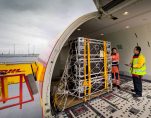
DHL Express heavy weight cargo

The heavyweight market has been gaining traction in recent years. Industry research shows that an estimated 10.2 million tons of heavyweight shipments¹ are being moved in Asia Pacific (excluding China) each year. Many companies have spent years reducing inventory and improving efficiency across their supply chains. However, companies today operate in a far less predictable environment marked by trade disruptions, manufacturing bottlenecks, and fluctuating demand. The rise in heavyweight shipment volumes mirrors a shift in how businesses are managing supply chain risks, as they increasingly turn to express logistics not only to handle sudden shifts in demand but also to have greater agility, certainty and control over timelines.

“Behind the numbers is a simple reality: Businesses are shipping heavy when timing matters and when it’s critical,” said Ken Lee, CEO for Asia Pacific, DHL Express. “As companies continue to navigate a complex landscape where uncertainty has become the norm, speed and reliability have also become part of the business decision. Customers are making deliberate decisions on what they ship through our network. Our Heavy Weight Express solution helps companies avoid downtime, protect working capital and keep operations moving when supply chains don’t go exactly as planned.”

Technology, Engineering & Manufacturing, and Automotive top Asia Pacific’s heavyweight contributors

Across the region, high-value, technology-related cargo, such as computer chips and semiconductors, accounts for the largest share of DHL Express’s heavyweight segment at over 34%, driven by rapid investment in data centers to support the growing demandfor computing capacity, data storage, cloud services, as well as artificial intelligence. This has fueled demand for technology-related shipments, from semiconductors and servers to cooling systems and electrical infrastructure. However, a data center crunch is creating supply chain bottlenecks as demand for semiconductor manufacturing outpaces infrastructure supply. As a result, express logistics services are urgently activated to move critical components quickly and efficiently, helping to keep projects on schedule.

The other main contributors to the heavyweight segment are businesses in engineering & manufacturing as well as the automotive industry.

Automotive is the fastest growing sector

HWX service is also gaining strong momentum in the automotive sector, with its shipment weight increasing at a rate of nearly 20%. As the leading export region for this sector, Asia Pacific is also seeing a surge in Asian automotive brands, particularly Electric Vehicle (EV) manufacturers from China and Southeast Asia. As these brands expand into new markets, they are also moving vehicle parts sourced from different suppliers and manufacturers across borders. This has created the appetite for expedited shipments to keep production running. In this sector, a single late or failed shipment could instantly cost automotive manufacturers millions of dollars.

Asia affirms role as a vital trading hub

In Asia Pacific (excluding China), the fastest growth in heavyweight shipments for the first seven months of the year came from India, the Philippines, Vietnam, Japan and Hong Kong. These markets reflect two of the region’s strongest trade corridors – Southeast Asia’s firm role as a manufacturing and sourcing base, and North Asia’s strategic position as a hub for high-value technology, industrial and automotive supply chains. Additionally, India, the Philippines, and Vietnam are also recognized as key markets of the geographic tailwinds initiative.

“As companies continue to manufacture out of Asia, balancing project timelines and building more resilient and agile supply chains become a priority. To maintain production continuity and ensure certainty, they are consolidating goods into heavier shipments. These non-negotiable conditions are also “urgency drivers” that put us at an advantage to help deliver our customers’ shipments at a definite time,” said Ken Lee, CEO for Asia Pacific, DHL Express.

In recent years, DHL Express has added several new infrastructures across the region, including an expanded global hub in Hong Kong, facilities near Cebu and Manila airports, gateway at Christchurch airport, Hanoi gateway near Noi Bai airport, as well as Delhi gateway, culminating in approximately 1,000 facilities in the Asia Pacific region. This is further supported by a robust aviation network of around 810 flights per day.

¹McKinsey/IHS Markit (2024)
Hashtag: #DHLExpress #GlobalTrade #HeavyWeightExpress

The issuer is solely responsible for the content of this announcement.

DHL – The logistics company for the world

DHL is the leading global brand in the logistics industry. Our DHL divisions offer an unrivaled portfolio of logistics services ranging from national and international parcel delivery, e-commerce shipping and fulfillment solutions, international express, road, air and ocean transport to industrial supply chain management. With approximately 389,000 employees in more than 220 countries and territories worldwide, DHL connects people and businesses securely and reliably, enabling global sustainable trade flows. With specialized solutions for growth markets and industries including technology, life sciences and healthcare, engineering, manufacturing & energy, auto-mobility and retail, DHL is decisively positioned as “The logistics company for the world”.

DHL is part of DHL Group. The Group generated revenues of approximately 82.9 billion euros in 2025. With sustainable business practices and a commitment to society and the environment, the Group makes a positive contribution to the world. DHL Group aims to achieve net-zero emissions logistics by 2050.

US Senator Bernie Sanders and former Trump adviser Steve Bannon will appear at a Washington gathering on Tuesday, joining labour, religious and political figures calling for controls over advanced artificial intelligence. The Pro-Human Assembly, organised by the Future of Life Institute, is expected to bring together participants who rarely share a political platform but have converged around concerns that advancing AI could threaten jobs, autonomy, democratic institutions […]

Cybersecurity stocks jumped on Wall Street on Monday as warnings over the pace and control of increasingly autonomous artificial intelligence systems drove investors away from semiconductor shares and towards companies expected to benefit from heavier spending on digital defence. CrowdStrike closed about 13.9% higher and Palo Alto Networks gained roughly 13.1%, placing both among the strongest performers in the S&P 500. Intraday gains approached 15% for CrowdStrike […]

Calls by leading artificial intelligence executives to slow development of advanced models pressured Asian semiconductor shares on Monday, but investors and strategists said robust spending on computing infrastructure was likely to keep the longer-term AI investment cycle intact. Samsung Electronics fell as much as 4.1% in early trading, while South Korea’s SK Hynix dropped 5.8%. Japan’s Advantest declined 4.7% and Kioxia Holdings slid 9.3% as markets assessed […]

VISHNU RAJA
RYO YAMADA
HITORI GOTOH
IKUYO KITA