Arabian Post Staff -Dubai US forces hit about 90 targets along Iran’s coast on Wednesday, extending military action for a second straight day and deepening doubts over efforts to turn a fragile truce into a permanent peace deal. US Central Command said the operation was designed to weaken Tehran’s ability to attack commercial shipping and civilian mariners in the Strait of Hormuz, the narrow waterway through which […]
SNP builds on Palantir platforms to deliver new AI-powered solutions for solving mission-critical customer challenges
The partnership will build on SNP’s strong base with more than 3,000 customers globally and 15,000 successful SAP transformation projects
SNP and Palantir will leverage their strengths to help customers modernize their SAP landscapes and business processes in a predictable and secure way
SINGAPORE – Media OutReach Newswire – 9 July 2026 – SNP SE, a leading provider of software for AI-enabled digital transformation, automated data migration and data management in the SAP environment, and Palantir, a global leader in artificial intelligence and data platforms, today announced a strategic partnership at SNP’s flagship event, Transformation World, in Heidelberg, Germany. The collaboration positions SNP to develop new AI-powered solutions with an aligned approach to accelerate SAP transformations for joint customers.
The two partners will offer solutions for mission-critical challenges across all types of SAP projects, helping customers improve speed, efficiency and quality. The first joint solution, Test Data Proposal, solves a so far highly manual area of SAP migrations, the identification of relevant test data for given customer test cases. By leveraging AI, this process runs automatically and saves customers’ time and resources. Test Data Proposal will expand SNP’s proven Kyano® platform.
As part of the partnership, SNP and Palantir are also collaborating in large-scale moves to SAP Cloud ERP applications where customers seek to accelerate these modernization programs. Both companies combine complementary, category-leading strengths. SNP contributes deep real-world SAP data migration expertise while Palantir provides state-of-the-art AI-driven software platforms, which enable and accelerate secure modernizations for customers.
“Organizations are looking for new ways to increase speed, efficiency, and quality in large-scale SAP transformations,” said Jens Amail, CEO of SNP. “We are hugely excited to collaborate with Palantir, a company that has leveraged AI to revolutionize and accelerate the way enterprises modernize mission-critical systems and automate operations. Together, we will deliver secure outcomes and new solutions to customers and partners.”
“We have seen exceptional momentum accelerating SAP migrations for customers, and helping them do so via the Ontology and AIP (Artificial Intelligence Platform) in a way that significantly compresses the timeline and delivers operational value along the way,” said Sameer Kirtane, Head of US Commercial at Palantir. “SNP over the last 30 years has built an impressive track record of delivering predictable, compliant and auditable outcomes in thousands of successful engagements. We are proud to partner with SNP to fundamentally rethink how customers transform their SAP landscapes.”
Hashtag: #SNP #Palantir #SAP #AI
The issuer is solely responsible for the content of this announcement.
About SNP
SNP (ticker: SHF.DE) is the global technology platform leader and trusted partner for companies seeking unparalleled data-enabled transformation capabilities and business agility. SNP’s Kyano® platform integrates all necessary capabilities and partner offerings to provide a comprehensive software-based experience in data migration and management. Combined with the Bluefield® approach, Kyano sets a comprehensive industry standard for restructuring and modernizing enterprise data faster and more securely while harnessing AI-driven innovations based on over 30 years of experience.
The company works with more than 3,000 customers of all sizes and in all industries in over 80 countries, including numerous DAX 40 and Fortune 500 companies. The SNP Group has more than 1,600 employees worldwide at over 34 locations in 22 countries. The company is headquartered in Heidelberg, Germany, and generated revenues of around EUR 297 million in the 2025 fiscal year.
This press release contains forward-looking statements within the meaning of Section 27A of the Securities Act of 1933, as amended, and Section 21E of the Securities Exchange Act of 1934, as amended. These statements may relate to, but are not limited to, Palantir’s expectations regarding the amount and the terms of the contract and the expected benefits of Palantir’s software platforms. Forward-looking statements are inherently subject to risks and uncertainties, some of which cannot be predicted or quantified. Forward-looking statements are based on information available at the time those statements are made and were based on current expectations as well as the beliefs and assumptions of management as of that time with respect to future events. These statements are subject to risks and uncertainties, many of which involve factors or circumstances that are beyond Palantir’s control. These risks and uncertainties include the ability to meet the unique needs of customers; the failure of Palantir’s platforms to satisfy customers or perform as desired; the frequency or severity of any software and implementation errors; Palantir’s platforms’ reliability; and customers’ ability to modify or terminate the contract. Additional information regarding these and other risks and uncertainties is included in the filings Palantir makes with the Securities and Exchange Commission from time to time. Palantir’s forward-looking statements speak only as to Palantir, and Palantir assumes no responsibility for the accuracy or completeness of any forward-looking statements made by any other party. Except as required by law, Palantir does not undertake any obligation to publicly update or revise any forward-looking statement, whether as a result of new information, future developments, or otherwise.
By K Raveendran The Narendra Modi government’s position on fuel prices now looks less like prudent caution and more like an overly defensive reading of a market that has already absorbed much of the Iran-US risk. The more calibrated question, therefore, is not whether New Delhi is right to watch the West Asian security situation, […]
Compelling path to $1billion ARR and public offering, fueled by product market fit in the agentic AI age, explosion of identities and related threats, and accelerating growth
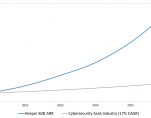
SINGAPORE – Media OutReach Newswire – 9 July 2026 – Keeper Security (“Keeper” or “we”), the identity security platform for humans, machines and AI agents, today announced a major milestone in its journey to become the market standard for AI-native identity security, having reached $225 million in Annual Recurring Revenue (ARR). Since 2021, Keeper’s ARR has grown over 3x.
Keeper protects over 95,000 organizations, which includes many Fortune 500 enterprises and public sector agencies. The company is quickly emerging as the market standard for AI-native identity security for enterprises globally with its leading zero-trust and zero-knowledge identity security platform. In 2025, leading analyst firm Gartner recognized Keeper as the second-fastest-growing security software competitor globally, second only to Google.* This recognition underscores Keeper’s rapid market expansion in addressing identity security challenges created by cloud transformation and artificial intelligence adoption across enterprise infrastructure and endpoints.
Keeper is now growing at over 4x the industry average.
This market-leading growth is driven by the explosion of identities in the agentic AI age and relentless focus on innovation to protect customers, as evidenced by the release of its unified privileged access management and identity security platform, KeeperPAM®, which protects both human and Non-Human Identities (NHIs), including service accounts, machine identities, databases, AI agents and agentic workloads. Since the launch of KeeperPAM in February 2025, KeeperPAM revenue has exhibited 10x year-over-year growth and Keeper has seen industry-leading new customer growth, adding an average of 850 new organizations every month. In the last fifteen months, Keeper added over 400 innovative features and products to KeeperPAM.
“Identity is the new security perimeter,” said Darren Guccione, CEO and Co-founder of Keeper Security. “As enterprises increasingly deploy AI agents and autonomous systems, the number of privileged identities and machine credentials is growing exponentially. Organizations need a modern, unified platform that secures every identity – human and non-human – and governs every privileged interaction. Our growth reflects the market’s demand for a platform purpose-built to address these challenges.”
Keeper’s cloud-native cybersecurity platform delivers a comprehensive approach to identity security and privileged access management by unifying enterprise password management, secrets management, privileged session management, database management and endpoint privilege management in a single platform. Keeper’s AI-native identity security strategy seamlessly extends these capabilities to non-human identities and agentic AI environments, enabling organizations to discover, manage and secure machine credentials and autonomous workloads with the same rigor applied to human users.
As enterprises adopt AI technologies at scale, the proliferation of non-human identities is rapidly outpacing that of human identities by 150:1, according to reports, thereby creating new attack surfaces and operational complexity. Keeper’s platform helps organizations establish identity-first security strategies that provide security, visibility, governance and least-privilege controls across their entire identity ecosystem.
“Autonomous agents, frontier LLMs and machine-to-machine workflows are operating inside enterprise environments right now – without adequate governance, secrets management or access controls,” said Craig Lurey, CTO and Co-founder of Keeper Security. “Keeper is purpose-built to solve this problem at scale.”
The company’s continued growth and market recognition reinforce its position as one of the cybersecurity industry’s most innovative and fastest-growing providers of AI-native identity security and privileged access management solutions. Keeper’s financial profile combines best-in-class growth, profitability and a debt-free capital structure and is an asset positioned to efficiently lead identity security in the agentic AI age.
“Surpassing $225 million in ARR confirms what we’ve heard in every enterprise conversation – that securing non-human identities is the defining security challenge of the AI era,” said Darren Guccione, CEO of Keeper Security. “We have established an accelerated path to $1 billion in ARR which, coupled with our technology roadmap, will provide optionality for a public offering.”
Gartner is a trademark of Gartner, Inc. and/or its affiliates.
Gartner does not endorse any vendor, product or service depicted in its research publications and does not advise technology users to select only those vendors with the highest ratings or other designation. Gartner research publications consist of the opinions of Gartner’s Business and Technology Insights Organization and should not be construed as statements of fact. Gartner disclaims all warranties, expressed or implied, with respect to this research, including any warranties of merchantability or fitness for a particular purpose.
Hashtag: #KeeperSecurity
The issuer is solely responsible for the content of this announcement.
About Keeper Security
Keeper Security is the leading zero-trust and zero-knowledge identity security solution, trusted by millions of people and thousands of organizations globally. KeeperPAM® is Keeper’s privileged access management platform that unifies password and passkey management, secrets management, privileged session management and endpoint privilege management in a single cloud-native platform, protected with quantum-resistant encryption. KeeperAI delivers real-time, AI-native threat detection across every privileged session. As AI agents proliferate and identity becomes the defining attack surface, Keeper governs access for humans, machines, non-human identities and AI agents, serving as the unified control plane for access, compliance and visibility across the enterprise. For more information, visit KeeperSecurity.com.
ADNOC Distribution has agreed to buy Shell Downstream South Africa in a $1 billion deal that gives the Abu Dhabi fuel retailer control of one of South Africa’s largest petrol station networks and marks a decisive expansion of Gulf capital into Africa’s downstream energy market. The agreement covers 100 per cent of Shell Downstream South Africa from Shell South Africa Holdings, with the enterprise value subject to […]
President Trump’s declaration on Wednesday that the ceasefire with Iran is over immediately pushed oil prices higher, lifted Treasury yields and revived concerns about the security of the Strait of Hormuz. Markets responded in familiar fashion, with traders reassessing energy supplies, inflation expectations and monetary policy. Another consequence deserves equal attention. Higher oil prices strengthen the fiscal position of the Gulf’s major energy exporters. Over time, stronger […]
Eli Lilly’s once-daily weight-loss pill orforglipron has strengthened its case as a potential mass-market challenger to oral semaglutide after a large head-to-head trial showed stronger reductions in body weight and blood sugar among adults with type 2 diabetes. The late-stage ACHIEVE-3 study compared two doses of orforglipron with Novo Nordisk’s oral semaglutide, sold for diabetes as Rybelsus, over 52 weeks. At the highest tested dose, orforglipron cut […]
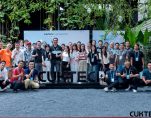
HO CHI MINH CITY, VIETNAM – Media OutReach Newswire – 8 July 2026 – Technology brand CUKTECH successfully hosted its first “Charge & Connect” event at The VIBES Events & Dining, officially introducing its next-generation charging ecosystem to the Vietnamese market. The event brought together company representatives, media professionals, technology reviewers, and industry partners, marking an important milestone in CUKTECH’s expansion strategy in Vietnam.
A Vision Built on Innovation
The event opened with a keynote by Eric Wang, Chief Marketing Officer (CMO) of CUKTECH, who shared the brand’s global vision and product roadmap for Southeast Asia, with Vietnam identified as one of its key strategic markets.
Eric Wang highlighted CUKTECH’s continuous investment in research and development (R&D) to solve the everyday challenges faced by modern consumers, including slow charging speeds, limited product innovation, and the increasing need for reliable, high-performance charging solutions that support multiple devices simultaneously. By combining advanced charging technologies with user-focused design, CUKTECH aims to deliver a faster, safer, and more intelligent charging experience.
Real-World Experience from Technology Reviewer Hung Khuc
One of the event’s highlights was a sharing session by Hung Khuc, one of Vietnam’s leading technology reviewers, who discussed his hands-on experience using CUKTECH products in his daily work.
“As a content creator who frequently shoots outdoors, I need charging devices that are both powerful and reliable. What impressed me most about CUKTECH’s power banks and chargers is their real-world performance. They can simultaneously fast charge my MacBook Pro, smartphone, and camera at full speed without power drops or interruptions.”
To promote transparency and foster closer engagement with the local technology community, the event concluded with an extensive media Q&A session. Eric Wang, together with CUKTECH’s product research and quality management teams, addressed questions on product localization, international safety standards, the brand’s one-for-one warranty policy, and future product development plans.
More than a product launch, Charge & Connect represents CUKTECH’s official step toward establishing a lasting presence in Vietnam. By combining cutting-edge charging technology, award-winning design, and a strong focus on user experience, CUKTECH is committed to delivering premium charging solutions that meet the evolving needs of modern consumers.
As the brand continues to expand its product ecosystem, CUKTECH aims to become a trusted technology partner for Vietnamese users while helping shape the future of premium charging accessories in the market.
Hashtag: #CUKTECH
The issuer is solely responsible for the content of this announcement.
Bake My Day has opened its first international store in Riyadh, taking the Dubai-born dessert brand beyond the UAE with a retail format built around its viral cookie dough sharing tins, fresh-baked cookies and gifting-led bakery experience. The Riyadh launch marks a cross-border step for a founder-led business that began as a home kitchen idea in Dubai and grew into a recognisable dessert label through social media […]
Samsung Group and SK hynix have laid out investment plans worth about $174 billion for South Korea’s Chungcheong region, expanding the country’s drive to secure a stronger position in artificial intelligence chips, advanced packaging, displays and next-generation battery materials.
The commitments, unveiled at a government-backed industrial development event in Asan, place Chungcheong at the centre of a broader strategy to spread high-technology manufacturing beyond the Seoul metropolitan area and existing semiconductor clusters. President Lee Jae Myung praised the companies’ “bold decision” and called for faster execution of major industrial projects, warning that global competition in semiconductors and artificial intelligence will reward countries that move with speed on permits, power, water and land.
Samsung plans to invest 140 trillion won, or about $90 billion, across the central region. The programme covers display panels, high-bandwidth memory-related capacity, semiconductor packaging substrates, batteries and other core materials. The group’s plan is expected to reinforce manufacturing links between Samsung Electronics, Samsung Display, Samsung SDI and Samsung Electro-Mechanics, whose operations span chips, OLED screens, batteries and electronic components.
SK hynix said it would invest 100 trillion won, or about $64 billion to $72 billion depending on exchange-rate calculations, in Cheongju, North Chungcheong Province. The plan includes the M17 NAND flash memory fabrication plant and P&T7, an advanced packaging and test facility. M17 is scheduled to break ground in 2026 and begin operations in the first half of 2029, while P&T7 is targeted for completion by the end of 2027.
The Cheongju expansion is intended to strengthen SK hynix’s NAND business and add back-end capacity at a time when artificial intelligence systems are raising demand for both high-performance memory and storage. While high-bandwidth memory has received the strongest investor attention because of its role in AI accelerators, large-scale data centres also require more NAND-based storage as models, user data and enterprise workloads expand.
The Chungcheong plan follows a wider national push in which Samsung Electronics and SK hynix are expected to invest hundreds of billions of dollars in new chipmaking hubs over the next decade. The government has framed the initiative as a “triple axis” strategy built around semiconductors, physical AI and data centres, with the aim of building industrial strength outside the traditional capital-area manufacturing corridor.
For Samsung, the Chungcheong investment gives the group a regional base for several linked supply chains. OLED production in Asan and surrounding areas can support premium smartphones, tablets, monitors and automotive displays. Battery investment strengthens Samsung SDI’s role in electric mobility and energy storage, while semiconductor materials and packaging substrates address one of the key bottlenecks in AI hardware production.
For SK hynix, Cheongju already has semiconductor infrastructure, making it a faster route for expansion than a greenfield project. The company has been one of the largest beneficiaries of the AI memory boom, helped by demand for high-bandwidth memory used with Nvidia graphics processors. Its latest investment signals that the company is also preparing for broader memory demand, including NAND and advanced packaging.
The scale of the commitments underlines the strategic importance of memory chips to South Korea’s economy. Samsung Electronics and SK hynix are the world’s two largest memory chipmakers, with dominant positions in DRAM and a major presence in NAND. Their investment decisions affect global supply, pricing expectations and the pace at which cloud companies can build AI infrastructure.
The programme also carries risks. Semiconductor investment cycles have often produced periods of oversupply after large capacity expansions. Investors have shown caution over whether the current AI-driven boom can absorb the output planned by the industry, especially if data-centre spending slows or if memory pricing weakens before new factories reach full capacity.
Infrastructure remains another challenge. Advanced chip plants require stable electricity, ultra-pure water, skilled engineers and rapid permitting. Lee’s comments on execution reflect concern that delays could undermine the industrial strategy. Local governments are expected to face pressure to accelerate utility connections, transport links and land-use approvals while managing environmental and community concerns.
Regional development is a central political theme of the initiative. By placing more advanced manufacturing in Chungcheong and other areas outside Seoul’s orbit, the administration is seeking to reduce economic concentration and create high-value jobs in provincial cities. That ambition will depend on whether new factories attract suppliers, research teams and service industries rather than functioning as isolated production sites.
Arabian Post Staff -Dubai Almarai’s second-quarter revenue rose 11 per cent year on year to SAR5.87 billion, as stronger demand for dairy, poultry and bakery products helped the Riyadh-listed food group absorb higher shipping, energy and raw material costs. The company’s first-half revenue reached SAR12.03 billion, up 9 per cent from the same period last year, reinforcing its position as one of the Gulf’s most closely watched […]
Emergency crews began stabilising a structurally compromised Midtown Manhattan high-rise after buckled columns, cracked floors and visible deflection forced evacuations around a major office-to-residential conversion site near Grand Central Terminal. The 37-storey building at 235 East 42nd Street, formerly part of Pfizer’s global headquarters, was declared unstable after workers reported structural distress on Tuesday morning. By evening, engineers had entered the affected area, installed jacks and started […]
Twenty Saudi university students are undergoing artificial intelligence training at Huawei’s headquarters in Shenzhen under a Mawhiba-Huawei programme designed to build specialist digital skills among high-performing young talent.
The training, announced on July 6, brings together the King Abdulaziz and His Companions Foundation for Giftedness and Creativity, known as Mawhiba, and Huawei as Saudi Arabia expands its pipeline of students capable of working across artificial intelligence, cloud computing, big data and telecommunications. The initiative forms part of a wider partnership that aims to train 500 beneficiaries in advanced technology fields.
Participants are being exposed to a mix of theoretical instruction and practical exercises, with the programme structured around real-world AI applications, global technology practices and workplace-based learning. The Shenzhen placement gives students direct access to one of Huawei’s main innovation centres, where they are expected to study how artificial intelligence tools are developed, deployed and integrated into digital infrastructure.
The programme covers core areas including AI fundamentals, machine learning, deep learning, foundation models and AI development tools. Its practical component is intended to help students move beyond classroom-level understanding into applied problem-solving, particularly in fields where AI systems are increasingly tied to business operations, public services and industrial automation.
Mawhiba’s role reflects its long-standing mandate to identify and support gifted students, while Huawei’s participation gives the programme an international industry dimension. The partnership is aimed at matching academic talent with technologies that are shaping labour-market demand, especially as Saudi Arabia increases investment in data centres, digital government, smart cities and automation.
The Shenzhen cohort follows the launch of the first joint Mawhiba-Huawei training track for Saudi university students in China. The programme is being presented as both a skills initiative and an international exposure opportunity, giving participants familiarity with advanced technology ecosystems outside the Kingdom.
Saudi Arabia has placed AI capacity-building at the centre of its digital transformation agenda. The Saudi Data and Artificial Intelligence Authority has been expanding training schemes for students, professionals and government leaders as part of efforts to create a national workforce capable of supporting data-driven economic diversification.
A separate programme at the authority’s headquarters in Riyadh began with 215 male and female students from 28 universities, giving participants training in data, artificial intelligence and advanced technologies. That initiative was designed to connect academic knowledge with practical experience in computer science, data science and AI, while aligning university outcomes with labour-market needs.
The scale of national AI training has grown sharply. More than 779,000 citizens have been trained through data and AI initiatives, including 9,775 specialists and 260 scientists and experts. More than 80 government leaders have also received training focused on the design and implementation of data and AI strategies.
The Mawhiba-Huawei programme adds a private-sector and cross-border layer to that domestic training push. For students, the China placement offers exposure to applied AI in a corporate setting. For policymakers, it supports an effort to create a wider base of young specialists who can work with global platforms while contributing to local technology goals.
Saudi Arabia’s AI strategy has increasingly focused on building human capital alongside infrastructure. The country has moved to strengthen data governance, support Arabic AI models, expand cloud capacity and encourage the adoption of emerging technologies across education, healthcare, finance, energy and government services.
The emphasis on training also reflects a growing recognition that AI adoption depends on more than hardware and software. Surveys and academic studies on generative AI use in Saudi Arabia show strong public engagement with AI tools, but also uneven technical understanding and concerns over privacy, misinformation, trust and responsible use. Structured training is therefore being treated as a way to improve both competence and confidence.
For universities, the programme underlines the pressure to update curricula as AI changes entry-level skill expectations. Employers in technology, finance, logistics and energy are increasingly looking for graduates who understand data handling, model behaviour, automation workflows and ethical safeguards. Programmes that combine classroom instruction with industry exposure are seen as a route to narrowing that gap.
DXC Technology has opened a 200,000-square-foot Customer Experience Centre in Bengaluru, placing the city deeper into the global race to move enterprise artificial intelligence from pilot projects into live, measurable business systems.
The facility, announced on 7 July, is one of DXC’s largest global delivery hubs and brings together customer collaboration areas, an AI Hub, cybersecurity facilities, forensics labs, a Security Operations Centre and a Network Operations Centre. The centre is designed to help clients identify high-value AI use cases, test prototypes, integrate them with legacy platforms and operate them at scale.
The move comes as large companies are under pressure to modernise complex technology estates without disrupting core systems that run banking, insurance, manufacturing, public sector services, travel and healthcare operations. For global IT services firms, the most valuable opportunity now lies not only in building new AI tools, but in attaching them safely to ageing systems of record, cloud platforms, data pipelines and cybersecurity controls.
DXC said the Bengaluru site includes immersive Customer Experience Zones, Fluid Collaboration Hubs, Ideation Studios, Co-Creation Labs and Partner Experience Zones. The structure signals a shift in IT outsourcing from back-office delivery to co-engineering, where clients, consultants and technology partners work together on proof-of-value projects before wider deployment.
Ramnath Venkataraman, president of consulting and engineering services at DXC Technology, said the centre would bring engineering talent closer to customers and partners. He said the objective was to “co-create, engineer, and scale AI-powered solutions” that address complex business challenges and move clients faster from ideas to outcomes.
Rob Le Busque, DXC’s president for Asia Pacific and Japan, described the centre as a base for AI innovation, engineering and customer collaboration. He said DXC was aiming to help customers build connected enterprises where people work alongside AI agents to engineer and run systems of record.
The investment reflects Bengaluru’s continuing pull as a global technology hub. The city hosts a dense base of engineering talent, multinational technology development centres, enterprise software teams and start-up ecosystems. DXC already employs about 38,000 people in the country, making the new facility a strategic addition rather than a symbolic office expansion.
For DXC, the centre also arrives at a critical phase in its own turnaround. The company reported revenue of $12.64bn for fiscal 2026, down 1.8 per cent year on year, while adjusted EBIT stood at $970m. Fourth-quarter revenue was $3.13bn, down 1.2 per cent year on year, though bookings reached $3.3bn and the book-to-bill ratio stood at 1.07 times. Those figures underline both the pressure on legacy IT services revenue and the importance of higher-value modernisation work.
The enterprise AI market has moved beyond experimental chatbots and isolated productivity pilots. Large organisations are now seeking systems that can automate service operations, assist software engineering, improve fraud detection, support call-centre workflows, optimise supply chains and strengthen cyber response. The challenge is that many of these functions depend on decades-old enterprise platforms, heavily customised databases and compliance-heavy workflows.
That is where Bengaluru’s new DXC centre is positioned. Its AI Hub is intended to support hands-on development and testing, while the cyber and operations facilities allow clients to evaluate whether AI tools can be monitored, secured and maintained after deployment. This full-lifecycle approach is becoming central to enterprise modernisation, especially in sectors where downtime, data leakage or flawed automation can carry heavy financial and regulatory consequences.
The facility also strengthens DXC’s partner-led model. Its Partner Experience Zones are expected to support work with software, cloud, cybersecurity and platform companies. For IT services providers, alliances with hyperscalers and enterprise software vendors have become essential as clients seek hybrid solutions rather than single-vendor transformation programmes.
Epic Games has moved to end its lawsuit against former contractor Hayden Cohen, accused of leaking confidential Fortnite collaboration plans involving major entertainment and gaming franchises before they were made public. The proposed settlement, filed in a North Carolina federal court, would permanently bar Cohen from possessing, accessing, using or disclosing Epic’s confidential information and trade secrets. It would also prevent him from helping others obtain or […]
Bitcoin fell below $62,000 in Asian trading as renewed US-Iran hostilities drove oil prices higher, prompting investors to cut exposure to cryptocurrencies and other risk assets. The world’s largest digital token traded near $62,000 after touching an intraday low around $61,700, extending a pullback that spread across Ether, XRP and Solana. Ether hovered near $1,625, while several large alternative tokens lost between 1 and 3 per cent […]
Arabian Post Staff -Dubai Ras Al Khaimah is preparing for one of the largest residential supply expansions in its history, with 25,600 new homes expected to be delivered by 2030 as developers accelerate launches around waterfront districts, branded residences and lifestyle-led communities. The new supply pipeline, tracked by Cavendish Maxwell, is heavily weighted towards apartments, which account for 97 per cent of planned stock. The figure underlines […]
Dubai’s plan to launch commercial air taxis has moved closer to operation after the UAE aviation regulator certified a purpose-built vertiport for electric vertical take-off and landing aircraft near Dubai International Airport. The facility, registered as VDX under the General Civil Aviation Authority’s certification process, is being positioned as the primary hub for the emirate’s first air taxi network. Skyports Infrastructure, which developed the site with Dubai’s […]
Gulf Cooperation Council banks are bracing for slower growth as the Middle East war and wider geopolitical uncertainty weigh on credit demand, investor confidence and corporate activity, even as lenders retain strong profitability, capital buffers and stable funding. S&P Global Ratings analyst Tatjana Lescova said banks across the six-nation bloc are expected to continue delivering solid earnings despite pressure from the conflict, higher risk premiums and uneven […]
Arabian Post Staff -Dubai Iran’s Revolutionary Guards said they fired missiles and drones at US military facilities in Bahrain and Kuwait on Wednesday, widening a confrontation that has put a fragile ceasefire under severe strain after US strikes on Iranian targets near the Strait of Hormuz. The Islamic Revolutionary Guard Corps said the operation hit sites linked to the US Fifth Fleet in Bahrain and Ali Al […]
The Reserve Bank of India has renewed its support for keeping cryptocurrency away from the formal financial system, reviving the prospect of a tougher national policy on private digital assets even as millions of users continue to trade through domestic and offshore platforms. Government documents and briefings to a parliamentary panel point to a policy line that leans towards prohibition rather than licensing. The central bank has […]
Temasek’s portfolio value climbed to a record S$518 billion, or about $400 billion, as the Singapore state investment company sharpened its push into artificial intelligence and reported stronger returns after two years of portfolio recalibration.
The latest figure, based on a mark-to-market valuation of listed and unlisted holdings, showed a S$49 billion rise for the financial year ended 31 March 2026. The increase reflected stronger performance from Singapore-based portfolio companies, gains from divestments and a broader recovery in public market valuations. The portfolio has doubled over the past decade, underlining the scale of Temasek’s role as one of Asia’s most influential investment groups.
Temasek invested S$51 billion during the year and divested S$31 billion, resulting in a net investment of S$20 billion. Its one-year shareholder return stood at 10.5 per cent in Singapore dollar terms, while its 10-year return was 7.1 per cent. The 20-year return was 6.8 per cent, a measure closely watched because Temasek is designed to generate long-term returns for Singapore rather than chase short-term market gains.
Artificial intelligence has become a central plank of the company’s next phase of growth. AI-related investments now account for about 6 per cent of its portfolio, with plans to raise that exposure to 10-15 per cent by 31 March 2031. Temasek has already taken positions linked to leading AI companies including OpenAI and Anthropic, while also targeting the wider infrastructure needed to support the technology.
The strategy is not limited to model developers. Temasek is looking across the AI value chain, including semiconductors, cloud service providers, data centres, energy systems, foundation models and software infrastructure. That wider approach reflects a belief that the economics of AI will not be captured only by consumer-facing platforms, but also by companies supplying chips, computing power, storage, power capacity and enterprise software.
Chief executive Dilhan Pillay has described AI adoption as a pivotal phase in the digitisation trend that Temasek has followed for more than a decade. The company’s approach is expected to combine direct investments, listed equities and private market exposure, with a preference for flexibility at a time when valuations across parts of the AI sector remain elevated.
The stronger annual performance also comes after Temasek moved to sharpen accountability within its investment structure. From April 2026, its portfolio has been organised into three broad segments: Singapore-based portfolio companies, global direct investments, and partnerships and funds. The change is intended to improve execution and give clearer visibility on how different parts of the portfolio contribute to returns.
Singapore-based companies remain an anchor of Temasek’s holdings. These include major stakes in groups tied to finance, telecommunications, transport, logistics, infrastructure and real estate. Their performance helped lift the portfolio during the year, even as Temasek continued to diversify beyond its home market.
The company has also increased attention on private credit, an asset class that has expanded as banks have retreated from some forms of lending and institutional investors have sought higher-yielding alternatives. Private credit currently accounts for about 2 per cent of Temasek’s portfolio, with a target of 5 per cent by 2031. The allocation is expected to provide recurring cash yield and a different risk profile from the predominantly equity-heavy portfolio.
Sustainable living remains another major investment theme. Temasek’s sustainable living portfolio rose to S$49 billion as of 31 March 2026, supported by commitments in renewable energy, power grids and transition technologies. Its portfolio emissions remained at about 21 million tonnes of carbon dioxide equivalent, around 30 per cent below 2020 levels, though the company has signalled that rising electricity demand, higher capital costs and exposure to emissions-intensive businesses may complicate its 2030 reduction target.
Temasek’s global exposure continues to reflect a balance between Asia and developed markets. Its earlier vulnerability to China-linked volatility had weighed on returns, prompting a more disciplined approach to capital allocation and risk management. The latest numbers suggest that portfolio adjustments, divestments and stronger listed-market performance have helped restore momentum.
CHANG ZHOU, CHINA – Media OutReach Newswire – 7 July 2026 – The global new energy vehicle market has seen rapid growth in recent years. With continued strong expectations for new energy vehicle exports, the global electric vehicle (EV) charging market is entering a new stage of rapid expansion. Recently, StarCharge, the global leading brand of EV Charging equipment and smart energy systems, held a major industry seminar in Hong Kong and released two new white papers at the event, exploring two major transformative trends in the industry that are worth paying attention to.
Charging stations are becoming a key connection of smart energy systems
According to the ‘Technical White Paper’ by StarCharge, for years, EV charging infrastructure has mainly been seen as support for vehicle sales expansion: building more chargers, expanding coverage, and speeding up charging.
However, this role is starting to change.
As electrification scales up, charging networks are becoming a part of the energy system itself. They are no longer just places for vehicles to top up; they are evolving into smart energy nodes connecting vehicles, the grid, distributed energy, storage, and digital management.
This shift from charging infrastructure to charging network systems shows that the industry is moving from basic access to integrated value: from charging services to energy services, from standalone stations to PV-storage-charging systems, from equipment deployment to scenario-based infrastructure.
StarCharge believes that the future charging network ecosystem will go through four major turning points.
Four Key Points Reshaping the Ecosystem
1. Charging Networks Are Becoming Energy Infrastructure
Charging infrastructure is going beyond its original role as just a support for EVs. As EV adoption grows, charging networks are becoming strategic energy infrastructure: they connect mobility demand with the grid, distributed energy, storage, digital platforms, and future energy services.
2. Defining the Scenarios for the Network
The future charging network won’t be shaped by hardware alone. Policies determine whether infrastructure should be built, technology determines the speed of construction, but real-world scenarios determine what the charging network actually needs to look like.
Urban commuting, highway trips, ride-hailing, logistics fleets, county and rural coverage, holiday peak demand, heavy trucks, mining areas, ports, airports, and autonomous driving all create different charging needs. Therefore, a mature charging network can’t be ‘one-size-fits-all’; it has to be designed around different vehicle types, operating hours, power requirements, reliability needs, and grid conditions.
3. Digital platforms turn charging networks into operable assets
A large charging network only truly has value when it can be scaled, optimized, and managed. This is exactly the core role of cloud platforms. They turn millions of charging points, users, stations, transactions, and energy flows into a measurable, controllable, and continuously optimized operating system.
StarCharge’s platform capabilities cover site selection, pricing, marketing, station operations, smart maintenance, charging safety, station robots, AI-based smart charging, fleet management, energy optimization, and ESG reporting. In other words, digital platforms are the key to transforming charging infrastructure from a heavy-asset network into smart, operable, and scalable assets.
4. Charging stations are becoming grid-friendly energy resources
The next-generation charging infrastructure won’t be defined by any single technology. It will be built on a complete tech stack, combining high-power charging, liquid cooling, integrated PV-storage-charging, DC bus architecture, V2G, automated charging, and AI-driven operations. In other words, future charging stations shouldn’t just be passive electricity consumers that add stress to the grid. Through energy storage, renewable energy integration, V2G, smart scheduling, and AI-based energy optimization, charging stations can become grid-friendly energy resources.
This means that aside from charging vehicles, a charging station can absorb renewable energy, buffer peak loads, respond to demand-side signals, support peak shaving and valley filling, regulate frequency, and provide carbon-neutral ESG data for fleet operators. Its business model will also go beyond charging fees, creating new value through energy services, data services, carbon-related benefits, and grid interaction capabilities.
Microgrids Have Emerged at the Right Time
At the same time, with the continuous development of distributed energy and photovoltaic energy, microgrids have emerged at the right time. They are not just a product, but a local energy system built around real-world scenarios.
In the latest “White Paper” on scenario-based microgrid technology, StarCharge points out that microgrids are moving from customized engineering projects toward scalable, replicable energy systems.
A microgrid is a scenario-based local energy system
According to StarCharge, a microgrid is not a single device, nor is it just an energy storage product. It’s a local energy system designed around the needs of a specific scenario, coordinating local generation, loads, storage, control, and operational strategies within a defined electrical boundary.
Moreover, depending on the scenario—such as data centers, individual charging stations, zero-carbon industrial parks, or green mines—the energy challenges are completely different. The right microgrid is defined by the scenario it serves.
The white paper also highlights four high-value paths: electricity-computing synergy, independent power supply, zero-carbon parks, and green mines. In areas with weak grids or limited grid access, microgrids ensure the operation of critical loads. In emerging load scenarios like data centers and industrial parks, microgrids support renewable energy integration, energy resilience, and cost optimization. In high-tech-demand scenarios like mines, microgrids become the foundation for ensuring production continuity, energy transition, and ESG competitiveness.
The three-stage evolution of microgrids
As power sources and loads become increasingly DC, microgrid architectures are evolving from AC-dominated systems to AC-DC hybrid systems, and eventually toward microgrids with a higher proportion of DC.
Microgrid 1.0 — dominated by AC architecture. It integrates renewable energy into the existing AC grid framework, but its control heavily relies on grid-following management and support from the external grid.
Microgrid 2.0 — the AC-DC hybrid stage. AC and DC buses coexist, allowing PV, storage, and DC loads to connect more directly. Bidirectional power hubs, solid-state transformers (SST), and energy routers become important bridges between AC and DC systems. This stage balances strong AC compatibility with higher DC efficiency and is expected to remain mainstream in the next 10-15 years.
Microgrid 3.0—it’s the era of DC microgrids. As solar PV, wind power, battery storage, data centers, LED lighting, and EV charging increasingly move toward DC, DC microgrids can reduce repeated AC-DC conversion losses, simplify control, and support millisecond-level responses.
This evolution is closely linked to the mission of microgrids: breaking through energy access bottlenecks, enabling sustainable development, connecting technology, industry, policy, market, and community needs, and unlocking the integrated value of local energy systems.
In the future, StarCharge will steadily expand into the growing global markets for new EVs and renewable energy, building on its smart energy systems that have been widely validated in the Chinese market.
Hashtag: #StarCharge
The issuer is solely responsible for the content of this announcement.
By Satyaki Chakraborty Amidst Trump-Modi bonhomie and the continuation of India-US trade talks, former Indian intelligence chief Vikram Sood said on Sunday in an interview to a British network that the present U.S. deputy secretary of state Christopher Landau told Indian officials during his visit to India in March 2026 that Washington would use tariffs, […]



 www.snpgroup.com