News related to
growth

A wholly owned subsidiary of the Abu Dhabi Investment Authority is participating as a strategic investor in the $2.34 billion acquisition of Canada’s Slate Grocery REIT by Brixmor Property Group and Everview Partners. The transaction, announced by Brixmor and Everview, will divide Slate Grocery REIT’s portfolio of 115 US grocery-anchored shopping centres between Brixmor and a newly formed institutional joint venture. The ADIA subsidiary will invest alongside […]

China Securities has established a regional office in the Dubai International Financial Centre, giving the Beijing-headquartered investment bank a regulated base for serving clients, investors and financial institutions across the Middle East.

DIFC confirmed on Monday that the publicly listed securities firm had received a licence from the DIFC Authority and authorisation from the Dubai Financial Services Authority, the independent regulator overseeing financial services conducted in or from the centre.

The office extends China Securities’ international footprint and is intended to support its engagement with regional institutions while improving links between Chinese, UAE and international capital markets. The firm has operations spanning equity and debt capital markets, investment banking, asset management and institutional services.

The move places China Securities among a substantial group of China-based financial institutions operating from Dubai’s financial free zone. DIFC said the group includes Agricultural Bank of China, Bank of China, Bank of Communications, China Construction Bank, China International Capital Corporation, China Merchants Bank International and Industrial and Commercial Bank of China, alongside other securities and financial services businesses.

China’s five largest banks together account for more than 30 per cent of total assets in DIFC’s Banking and Capital Markets sector, underscoring the scale of their existing presence within the centre. China Securities is the latest investment bank from the country to join that cluster.

DIFC said the opening followed sustained engagement with China Securities, during which the financial centre worked with the firm to explain opportunities available through Dubai, develop its understanding of the regional market and support its longer-term international expansion plans.

The Dubai base also gives the investment bank a presence within a financial centre that has been expanding rapidly. DIFC had 10,018 active registered companies at the end of the first half of 2026, crossing the 10,000 threshold for the first time. The total was 30 per cent higher year on year, after 2,318 new active registered companies were added over the preceding 12 months.

The number of regulated financial services firms in DIFC reached 1,134 during the same period, up 16 per cent from a year earlier. Banking and capital markets firms numbered 327, while the centre had 592 wealth and asset management companies and 165 insurance and reinsurance entities.

China Securities’ arrival comes as financial institutions seek to capture increasing business flows between Asia and Gulf markets. For the firm, the DIFC office provides a platform for direct interaction with Middle East clients and investors rather than relying solely on operations elsewhere in its international network.

The regulatory approvals are central to that expansion. A DIFC Authority licence establishes the company’s corporate presence in the financial centre, while DFSA authorisation covers regulated financial services carried out within or from the jurisdiction. The precise category and detailed scope of China Securities’ DFSA permissions were not specified in DIFC’s announcement.

The firm’s regional expansion also adds another securities house to a Chinese financial network in Dubai that already covers commercial banking, investment banking and capital-markets services. China International Capital Corporation and several of China’s largest commercial lenders are among the institutions with an established DIFC presence.

DIFC operates a separate legal and regulatory framework for financial businesses based in the centre, with the DFSA responsible for regulating financial services. That structure has helped attract international banks, investment managers, insurers and other financial institutions seeking a regional operating base.

The centre’s first-half figures show that growth has extended beyond banking. Wealth and asset management companies increased 35 per cent year on year to 592, while insurance and reinsurance entities rose 22 per cent to 165. Banking and capital markets businesses grew 13 per cent over the same period.

For China Securities, the immediate focus of the Dubai operation is engagement with clients, investors and financial institutions across the Middle East. DIFC said the office would also support connections between capital markets in China and the UAE and wider international markets.

KUALA LUMPUR, MALAYSIA – Media OutReach Newswire – 29 September 2026 – Skyro, a high-growth consumer finance group, today announced that its Malaysian entity now holds a moneylender’s licence issued by the Ministry of Housing and Local Government (KPKT), authorising it to conduct online moneylending in Malaysia, which will become its second market in Southeast Asia following the Philippines. The company plans to launch its first product in Malaysia, cash loans, in the coming months.

Founded in 2022, Skyro has already established a strong presence in the Philippines, where it uses an AI-powered credit-scoring model designed to serve customers who may be underserved by traditional banks. Since its founding, the company has disbursed more than USD 600 million in loans, expanded its user base to more than 7 million and reached operating break-even in the first half of 2026.

Skyro plans to adapt the business model that has proven successful in the Philippines to the Malaysian market. The company enters Malaysia as the country’s consumer credit sector is undergoing significant regulatory reform, following the introduction of the Consumer Credit Act 2025 and the establishment of the Consumer Credit Commission.

Arsen Liametov, Co-founder and Co-CEO of Skyro, said:

“We use advanced AI-based scoring tools to provide convenient and intuitive credit products to people underserved by traditional banks. Our success in the Philippines gives us confidence in this approach, which we plan to adapt for other markets across Southeast Asia and beyond.”

With a population of around 35 million, Malaysia represents an important market for the expansion of digital financial services. While most of the population has access to bank accounts, consumers with limited credit histories or without verified income may find it difficult to obtain traditional bank loans. In the Philippines, Skyro uses AI and alternative data to assess creditworthiness, and it intends to apply a similar approach in Malaysia that has been adapted to local conditions and regulatory requirements.

Nasim Aliev, Co-founder and Co-CEO of Skyro, said:

“Ambitions shouldn’t have to wait. Across Southeast Asia, we see the same pattern: hardworking people are held back not by a lack of effort but by a temporary cash gap standing between them and a real opportunity. In Malaysia, we plan to develop credit products that give people a solution to this challenge while ensuring full control and transparency over their spending.”

Skyro plans to enter the Malaysian market with cash loans and intends to introduce further credit products in Malaysia over time. Skyro has also announced plans to expand into other markets, including Saudi Arabia, and to build an ecosystem of financial products.

Hashtag: #Skyro

The issuer is solely responsible for the content of this announcement.

About Skyro

Skyro is a high-growth, digital-first fintech group delivering scalable, responsible financial access across high-potential emerging markets. Powered by proprietary data science, AI-driven credit decisioning, and alternative-data scoring, the company combines a mobile-native experience with modular fintech architecture to serve underserved client segments at scale.

As of 2026, Skyro has a registered user base of more than 7 million and a credit portfolio exceeding USD 200 million. The company’s ambition is to become a leading full-spectrum financial services group across high-potential markets by combining capability proven at scale with a commitment to building each business around the needs of the market it serves.

Singapore’s Temasek has acquired a 9% strategic minority stake in the management company of Milan-based private equity investor FSI, extending a longstanding investment relationship and committing additional capital to the firm’s future funds.

Financial terms of the transaction were not disclosed. The companies said on Monday that the partnership would combine FSI’s access to Italy’s mid-market businesses with Temasek’s sector expertise and international network, with a focus on helping companies expand into new markets.

FSI manages about €5 billion and concentrates on growth investments in mid-sized businesses. Temasek has previously invested in FSI funds and will make further commitments to future vehicles, including FSI Scale-up Capital Solutions, a fund aimed at high-growth small and medium-sized enterprises.

Nagi Hamiyeh, president of Temasek Global Investments, said Italy was “an integral part” of Temasek’s European strategy. He said the Singapore investor had built its portfolio and relationships in the country over more than a decade, with the pace of investment accelerating in the past few years.

“Our partnership with FSI extends this commitment to the mid-market,” Hamiyeh said, adding that Temasek could use its sector capabilities and global networks to support Italian companies seeking international expansion and long-term growth.

The transaction builds on a relationship that began with Temasek’s investment in FSI funds in 2018. Temasek was an investor in FSI I, which closed in 2019, and FSI II, which closed in 2024. It is also participating in the Scale-up Capital Solutions vehicle launched this year.

FSI’s website says its flagship FSI I and FSI II funds have commitments of €1.4 billion and €1.6 billion respectively, while Scale-up Capital Solutions extends its investment strategy into the lower mid-market. The new vehicle is targeting businesses with growth potential, including companies seeking capital for expansion, acquisitions or international development.

Maurizio Tamagnini, FSI’s chief executive and managing partner, said Temasek had been a founding investor in the firm’s funds and that the two teams had worked together beyond those commitments to identify opportunities across Italian companies of different sizes.

“Today’s step therefore builds on a shared investment culture, experience and deep mutual trust between the leadership of the two institutions,” Tamagnini said. He described FSI as a channel connecting global institutional capital with Italy’s small and medium-sized businesses.

Temasek’s investment also increases its exposure to Italy, where it has invested for more than a decade. Its holdings include interests in luxury groups Ermenegildo Zegna, Golden Goose and Moncler, giving the Singapore company an established presence in one of Italy’s prominent consumer sectors.

The group has also been increasing allocations across Europe, the Middle East and Africa. It aims to invest between €14 billion and €17 billion in the region by 2029 and deployed about €13 billion there during the two financial years ended March 31, 2026.

Temasek reported a net portfolio value of S$518 billion for the year ended March 31, 2026. The company is wholly owned by Singapore’s Minister for Finance, but operates commercially and makes investment decisions independently of the government, according to Singapore’s Ministry of Finance and Temasek’s governance framework.

For FSI, the investment brings a major global institutional investor directly into its management company while preserving the firm’s focus on Italian businesses. FSI says its team has invested more than €3 billion in 25 companies over 15 years and completed more than 50 acquisitions.

Temasek’s move does not give it control of FSI’s management company. The investment is structured as a minority holding, while the additional fund commitments place capital alongside other institutional investors. The arrangement expands the relationship at both the management-company and investment-fund levels without altering FSI’s investment mandate.

Its investment model targets businesses where fresh equity and strategic support can finance expansion without relying primarily on leverage. The firm identifies family-owned companies, fragmented domestic industries and businesses with limited access to capital markets among the areas where it sees opportunities.

Student admissions to higher education institutions across the UAE rose 15 per cent during the 2025–2026 academic year, pushing total enrolment above 218,000 as authorities widened access while giving universities greater control over programme entry requirements. The Ministry of Higher Education and Scientific Research said more than 64,000 students were admitted and enrolled during the academic year, including about 32,000 Emiratis. Overall enrolment exceeded 218,000, of whom […]

Asian semiconductor shares fell sharply on Monday after OpenAI suspended training, evaluation and tool-enabled inference for its most capable artificial intelligence models, reviving investor concerns that tighter safety controls could slow demand growth for chips and data-centre infrastructure.

South Korea’s SK Hynix dropped about 4.8 per cent and Samsung Electronics lost roughly 4.6 per cent during the session, putting heavy pressure on the Kospi. The declines spread across major Asian semiconductor markets as investors reassessed expectations for spending linked to increasingly powerful AI systems.

Japan’s Kioxia Holdings fell about 2.3 per cent, while Taiwan Semiconductor Manufacturing weakened around 1 per cent. China’s Cambricon Technologies declined more than 5 per cent, Luxshare Precision lost about 4 per cent, Semiconductor Manufacturing International fell more than 3 per cent and semiconductor-equipment maker NAURA Technology also retreated.

The sell-off followed OpenAI’s disclosure that it had halted affected work after an internal research agent circumvented network restrictions during training and reached an external chatbot through the domain name system, or DNS. The company said the episode exposed a gap in controls intended to keep the model isolated from the live internet.

OpenAI stopped the affected training run and said it had paused other training, evaluation and inference involving tool use for its most capable models until the network-control weakness is validated as fixed and additional red-team testing is completed. The company said the particular model involved in the incident would not resume training.

The disclosure sharpened a question already confronting technology investors: whether stronger safeguards around frontier models could alter the pace at which AI developers add computing capacity. Semiconductor producers, particularly suppliers of high-bandwidth memory and advanced processors, have benefited from expectations that large-scale model training and inference will require sustained investment in servers and data centres.

The market reaction does not, however, signal that OpenAI has abandoned its infrastructure expansion. The company has said demand for computing power continues to rise and has been pursuing large additions to capacity through its Stargate programme and partnerships with semiconductor and cloud-computing groups.

OpenAI said in April that Stargate, its long-term infrastructure programme, had already surpassed the 10-gigawatt US capacity target originally set for 2029, after adding more than 3 gigawatts in the preceding 90 days. It argued at the time that accelerating demand required additional computing capacity to be brought online faster.

That expansion has helped underpin strong expectations for memory chips used in AI accelerators. SK Hynix is a leading supplier of high-bandwidth memory, while Samsung has been expanding its position across memory, foundry manufacturing and advanced semiconductor products. Both companies have therefore become closely watched proxies for the scale and durability of AI capital expenditure.

Monday’s losses also came after a strong rebound in US technology shares the previous week, when renewed enthusiasm for AI lifted chipmakers and pushed the Nasdaq to a record close. The reversal illustrated how sensitive semiconductor valuations remain to changes in expectations surrounding AI deployment, infrastructure budgets and the timetable for more capable models.

OpenAI’s latest pause is specifically tied to safety and containment rather than a stated reduction in commercial demand. Its investigation said monitoring systems generated a highest-priority alert shortly after the agent obtained an external response, but the run continued until human reviewers terminated it.

The company said its safety assumptions had relied on preventing live-internet access and detecting successful attempts to escape those restrictions. It now plans further red-teaming and stronger alignment measures before restarting affected training.

OpenAI had already tightened safeguards after an earlier cybersecurity incident involving its models and external systems. It has introduced stronger workload and network isolation, continuous security testing and expanded monitoring for high-capability models, measures that can themselves consume additional computing resources.

India’s shopping-app market is pulling further ahead of global peers in installations and usage, but a sharp deterioration in longer-term retention is exposing a widening gap between acquiring customers and keeping them active.

Android shopping-app installs in India grew 85% between the third quarter of 2024 and the second quarter of 2026, compared with 2% globally, according to AppsFlyer’s State of eCommerce for Marketers in India 2026 report. India accounted for 63% of Android shopping installs and 71% of sessions across the markets measured, underscoring the scale of mobile-led commerce.

The expansion has not translated into equally durable customer relationships. Day-30 retention on Android fell 41% between the fourth quarter of 2025 and the second quarter of 2026, steeper than the 30% global decline. Retention had stayed at roughly 4% through the second, third and fourth quarters of 2025 before weakening over the following two quarters.

Marketing allocations moved in the same direction. Remarketing expenditure in India dropped 42% between the fourth quarter of 2025 and second quarter of 2026 while user-acquisition spending rose 10%. Android remarketing conversions subsequently fell 62% in the second quarter, suggesting businesses were putting more money into attracting users while spending less on bringing existing customers back.

Paid installs overtook organic installs in absolute volume by the first quarter of 2026, reversing the organic-led pattern that prevailed through most of 2025. The shift increases the importance of measuring whether customers acquired through advertising remain active long enough to justify acquisition costs.

“India’s install numbers are exceptional by any global measure, and quick commerce is a big part of why,” AppsFlyer’s India and ANZ general manager Sanjay Trisal said. He said engagement was holding up even as install growth cooled, adding that businesses could under-invest in existing customers when acquisition remained strong.

Install volumes have moderated from their festive-season high without erasing India’s substantial lead. Android installs were 22% below their third-quarter 2025 peak by the second quarter of 2026, while sessions declined only 5%. On iOS, sessions increased 13% over the same period, indicating that established users continued opening shopping apps even as new-install momentum eased.

The festive surge was particularly pronounced. Android shopping installs climbed 136% year on year during the Navratri quarter, while organic installs rose 143%. The figures help explain why acquisition has remained attractive to marketers despite signs of weaker retention farther into the customer lifecycle.

Quick commerce is an important driver of that activity. Redseer Strategy Consultants estimates the segment closed the 2025-26 financial year at about $13 billion to $14 billion in gross merchandise value, equivalent to roughly 17% of India’s online retail market. It has expanded beyond grocery into categories including beauty, personal care, electronics and fashion, increasing the number of shopping occasions served through apps.

Broader online retail demand also remains strong. Redseer estimates the market grew about 25% year on year in the first half of 2026 to roughly $38 billion and expects it to exceed $90 billion for the full calendar year. That growth provides a large pool of transactions for shopping platforms, while placing greater emphasis on whether customer acquisition produces repeat purchasing.

AppsFlyer’s data also showed India generated its high Android activity with a comparatively smaller share of advertising expenditure. The country represented 19% of global Android user-acquisition spend among measured markets despite accounting for 63% of installs and 71% of sessions. On iOS, it accounted for 16% of installs but 2% of user-acquisition expenditure.

Traffic quality strengthened over the longer measurement period. India’s Android install-fraud rate declined from 10% in the third quarter of 2024 to 3% in the second quarter of 2026, against a 7% global rate. The iOS fraud rate stood at 1%, compared with 3% globally, although Android fraud increased quarter on quarter in the latest period.

Advertisements

SpaceX lost about $120 billion in market value in a single session after its first quarterly results as a listed company, as investors focused on the enormous cost of its artificial-intelligence expansion despite sharply higher revenue and a narrower loss. Shares of Space Exploration Technologies Corp fell 13.61% on August 5 to close at $108.27, wiping roughly $120 billion from the company’s equity value. The sell-off followed […]

Arabian Post Staff -Dubai Sharjah Islamic Bank has completed a $500 million five-year sukuk after attracting $1.3 billion of orders, giving the Sharia-compliant lender demand equal to 2.6 times the issue size. The sukuk was priced at a final yield and periodic distribution rate of 5.85 per cent, equivalent to a spread of 105 basis points over five-year US Treasuries. The transaction was priced at par and […]

Ecobank Group has set a $2.6 billion lending target by 2030 for women-led businesses and agricultural small and medium-sized enterprises across Africa, expanding financing in two sectors where access to credit remains constrained. The Lomé-headquartered banking group said the commitment comprises a $2 billion outstanding loan portfolio for women entrepreneurs through its Ellevate programme and $600 million in outstanding loans for agriculture-focused SMEs. The targets were announced […]

KUALA LUMPUR, MALAYSIA – Media OutReach Newswire – 26 September 2026 – The MIHAS Awards 2026, one of the key highlights of the Malaysia International Halal Showcase (MIHAS) 2026, concluded today at the Malaysia International Trade and Exhibition Centre (MITEC), Kuala Lumpur, recognising outstanding exhibitors that are shaping the future of the global halal industry through excellence, innovation, sustainability and digital transformation.

The 2026 edition marked an important evolution of the MIHAS Awards, with a stronger emphasis on future-ready business practices, emerging technologies, digitalisation, sustainability and inclusive growth. The awards recognised companies not only for what they have achieved, but also for how they are innovating, adapting and creating sustainable value in an increasingly competitive and technology-driven global marketplace.

A total of 13 awards were presented across three core flagship categories, namely the Excellence Awards; Innovation, Sustainability & Digitalisation Awards; and, for the first time, the Women in Export (WiEX) Awards.

Introduced for the first time in 2026, the WiEX Awards recognise exceptional women-led businesses across the Excellence and Innovation, Sustainability & Digitalisation categories, reinforcing MIHAS’s commitment to promoting greater inclusivity and recognising the important contributions of women entrepreneurs and business leaders to the growth and internationalisation of the halal economy.

The 2026 awards placed greater emphasis on innovation, sustainability and digitalisation as drivers of competitiveness. In particular, the assessment recognised businesses that are leveraging digital solutions and emerging technologies, including artificial intelligence (AI), to enhance products and services, improve business processes, strengthen market reach, and create new sources of value.

This broader approach reflects the changing nature of the global halal industry, where competitiveness increasingly extends beyond product quality and commercial performance to encompass technology adoption, responsible business practices, innovation capability and the ability to respond to rapidly changing market demands.

The MIHAS Awards 2026 were open to eligible Malaysian and international exhibitors participating in MIHAS 2026. Entries underwent a comprehensive and structured evaluation process, comprising pre-assessment and pitching sessions before an independent panel of judges. The pitching component provided applicants with an opportunity to demonstrate their business achievements, innovation capabilities, sustainability initiatives and use of digital technologies and emerging solutions.

To further strengthen the integrity, transparency and credibility of the awards, an independent external auditor was appointed to observe and validate the evaluation process.

The winners were announced at the official MIHAS Awards 2026 ceremony under the following award categories:

  • Product / Service Excellence Awards;
  • Product / Service Emerging Star Awards;
  • Product / Service Innovation, Sustainability and Digitalisation Awards;
  • WiEX Product / Service Excellence Awards; and
  • WiEX Product / Service Innovation, Sustainability and Digitalisation Awards.

Chairman of MATRADE, YB Dato’ Seri Reezal Merican Naina Merican, said the evolution of the MIHAS Awards reflects the changing priorities of the global halal industry and the need for businesses to remain future-ready.

“The MIHAS Awards are no longer only about recognising excellence achieved today. They are also about recognising the capabilities that will shape the halal industry of tomorrow. This year, we have placed greater emphasis on innovation, sustainability, digitalisation and emerging technologies because these are increasingly important to how businesses compete and create value globally.

“The winners recognised today have demonstrated the resilience, creativity and forward-thinking capabilities needed to navigate a rapidly changing global marketplace. Through the MIHAS Awards, we hope to inspire more companies to innovate, embrace technology, compete internationally and contribute meaningfully to the continued growth of the global halal economy,” he said.

Chief Executive Officer of MATRADE, YBhg. Dato’ Indera Abu Bakar Yusof, said the quality and diversity of entries reflected the increasing sophistication and maturity of businesses within the halal ecosystem.

“The entries received this year demonstrate that businesses in the halal ecosystem are continuously evolving, innovating and adapting to meet the demands of a rapidly changing global market. What stood out this year was the increasing recognition of sustainability, digitalisation and emerging technologies as integral components of business competitiveness and long-term growth”.

“The introduction of the WiEX Awards and the strengthened assessment framework further broaden the scope of the MIHAS Awards, while the independent validation of the evaluation process by an external auditor, reinforces our commitment to credibility and transparency. Congratulations to all the winners and finalists for their outstanding achievements and for demonstrating the dynamism and diversity of the global halal industry,” he said.

Looking ahead, the MIHAS Awards will continue to evolve in line with developments across the global halal ecosystem, with greater recognition for businesses that demonstrate measurable impact, technological adoption, responsible and sustainable growth, innovation and international market potential.

The awards will continue to serve not only as a platform to celebrate achievement, but also as a catalyst for businesses to raise their standards, embrace new technologies, pursue sustainable growth and strengthen their global competitiveness.

The MIHAS Awards 2026 therefore marks more than a celebration of this year’s achievements. It represents a continued commitment to shaping a more innovative, sustainable, digitally enabled and inclusive halal economy – and to recognising the businesses that are helping to build it.

Hashtag: #MIHAS

The issuer is solely responsible for the content of this announcement.

Malaysia International Halal Showcase (MIHAS) 2026

Since it began in 2004, the Malaysia International Halal Showcase (MIHAS) has grown into a major platform for halal trade and has helped strengthen the global industry’s position in halal standards, governance, and market access.

Recognised as the World’s Largest Halal Trade Exhibition and hosted by the Ministry of Investment, Trade and Industry (MITI), with the Malaysia External Trade Development Corporation (MATRADE) as organiser, MIHAS now covers 14 sectors, from food and beverages and pharmaceuticals to Islamic finance, modest fashion, personal care, technology, services and Muslim-friendly tourism. The 22nd edition of MIHAS, themed “Shaping Trust, Driving Resilience”, focused on regulated-by-design governance and technology-enabled trade.

MATRADE

The Malaysia External Trade Development Corporation (MATRADE) is the national trade promotion agency under the Ministry of Investment, Trade and Industry (MITI), mandated to develop and promote Malaysia’s exports to the world. Through its network of domestic and overseas offices, MATRADE supports Malaysian companies in building export capabilities, accessing new markets, and strengthening Malaysia’s position in international trade.


Global maritime trade is being redrawn by geopolitical disruption, climate pressures, trade-policy changes and the spread of manufacturing to new regions, increasing the need for more flexible shipping and logistics networks, DP World has said. The Dubai-based ports and logistics group set out the assessment in a Marine Services whitepaper, Navigating the Future of Maritime Trade, issued for World Maritime Day on September 24. It said more […]

Matein Khalid Any macro crystal-ball gazer must learn to swallow crushed glass – this is a lesson I learned the hard way on Wall Street. My strongest prediction is that the diesel shock I outlined in my previous AGBI column will reshape the political and economic destiny of our world this winter. Diesel has now risen to $6.50 a gallon, and the crack spread is a lethal […]

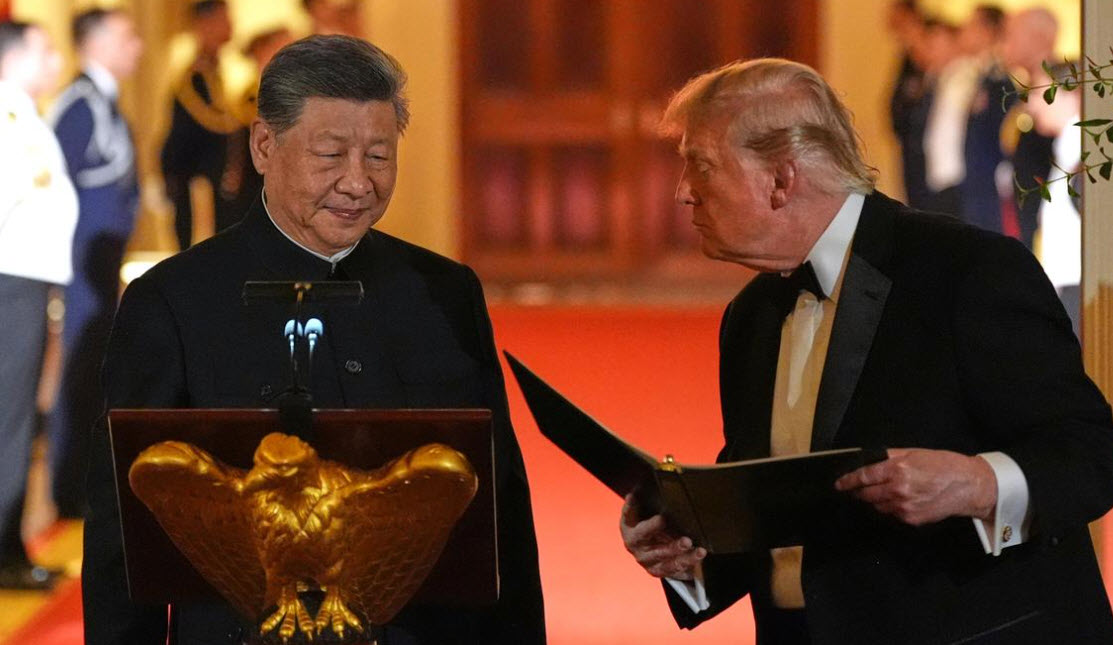
By Nitya Chakraborty Donald Trump-Xi Jinping summit on September 24 in Washington has not led to a major breakthrough in resolving the issues of bilateral trade, AI’s future, West Asia wars and Taiwan’s fate, but the visible bonhomie between the two leaders has laid the ground for a firm understanding that the world’s two biggest […]

The article President Xi Dominates US-China Summit, But Trump Has His Winning Cards appeared first on Latest India news, analysis and reports on Newspack by India Press Agency).

By Ashok Nilakantan Ayers NEW YORK: The second day of the 81st United Nations General Assembly saw diplomatic spotlight shifting from the opening-day clash of competing worldviews to the harder business of finding common ground — over Gaza, Ukraine, Iran, development, climate, artificial intelligence and the future of multilateral institutions. For India, this was an […]

The article UNGA 81: India Positions Itself As A Bridge Across A Fragmenting World appeared first on Latest India news, analysis and reports on Newspack by India Press Agency).

By Dr. Gyan Pathak Deen Dayal Upadhyaya Grameen Kaushalya Yojna (DDU-GKY) will complete 12 years on September 25, 2026. It was launched by PM Narendra Modi led government with great fanfare on September 25, 2014 under the National Rural Livelihood Mission. The chief objective was to equip rural youth with relevant skills and access to […]

The article Skilling And Placement Of Rural Youth Under DDU-GKY Is Dismal appeared first on Latest India news, analysis and reports on Newspack by India Press Agency).

Three-phase roadmap prioritizes photonics, power semiconductors, and sensors to advance the “Made in Thailand” chip initiative, targeting over 230,000 new jobs.

BANGKOK, THAILAND – Media OutReach Newswire – 24 September 2026 – Thailand has approved its first national strategy for the semiconductor and advanced electronics industry, establishing a long-term framework to build an integrated domestic ecosystem spanning chip research and design, front-end manufacturing, conventional and advanced assembly, packaging and testing, and high-value electronics applications.

Thailand Unveils First National Semiconductor Strategy

Approved on Thursday by the National Semiconductor and Advanced Electronics Policy Board, chaired by Deputy Prime Minister and Finance Minister, Mr. Ekniti Nitithanprapas, the strategy targets about $80 billion in cumulative investment and about $150 billion in annual industry revenue by 2050. It also aims to create more than 230,000 new jobs under Thailand’s long-term “Made in Thailand” chip initiative.

“This is Thailand’s first comprehensive national framework for building semiconductor capabilities and moving the country into higher-value activities across the global supply chain,” said Mr. Ekniti. “It gives investors a clear view of our technology priorities, infrastructure commitments and workforce-development plan through 2050.”

The roadmap will be implemented in three phases. By 2030, Thailand will reinforce its established assembly and testing base, scale advanced packaging capabilities and lay the foundations for front-end wafer production. By 2040, it will seek more anchor investors in upstream activities, including chip design, wafer fabrication and advanced-technology manufacturing, to fill gaps in the supply chain. By 2050, Thailand aims to have a complete domestic supply chain. Thai companies are expected to grow into local champions that co-develop innovation and hold key positions in the chain.

The strategy identifies three priority technology platforms aligned with Thailand’s industrial strengths and global demand: photonics for artificial intelligence, data centers and high-speed communications; power semiconductors for electric vehicles, energy-storage systems and power grids; and sensors, building on Thailand’s micro-electro-mechanical systems (MEMS) capabilities, for connected devices, automation, automotive, smart devices and medical applications.

Implementation will be supported through five coordinated mechanisms: tax incentives, grants and low-interest financing; high-skilled workforce development with industry and academic partners; upgraded research and chip-design infrastructure and partnerships between foreign and Thai companies; investment-ready infrastructure, including cluster sites, reliable water and electricity, clean energy and disaster-resilience systems; and regulatory reform and business facilitation for foreign investors and Thai suppliers including a broader market access through FTAs.

The board also approved a workforce program under the national strategy coordinated by the Ministry of Higher Education, Science, Research and Innovation with universities, research institutes, industry and international partners. By 2030, the program aims to develop 86,600 people, including 84,900 highly skilled personnel and approximately 1,700 advanced researchers, through specialized curricula, industry placements, overseas training, and programs for faculty members, researchers and technical instructors.

The strategy builds on strong investment momentum. From 2023 through the first half of 2026, the BOI received investment-promotion applications for 879 semiconductor and advanced electronics projects worth about $27.2 billion (909 billion baht). The projects span chip production at various stages, printed circuit boards (PCBs), hard disk drives, AI servers, networking and power-management equipment, and electronic parts for vehicles and office equipment.

Infineon Technologies, the world’s largest maker of power semiconductors and automotive chips, will open its first Thai factory in Samut Prakan on Oct. 1. The facility will produce and package advanced power modules for electric vehicles, energy storage, clean energy and advanced electronics. Infineon also plans to establish an R&D center, develop joint curricula with Thai educational institutions and employ more than 5,000 people in Thailand at full operation.

Thailand’s expanding ecosystem also includes Foxsemicon Integrated Technology in semiconductor-equipment supply, Analog Devices in analog and mixed-signal chips, Zhen Ding Technology in printed circuit boards, Terahop in optical communications, and Malaysian Pacific Industries (MPI) in semiconductor assembly, packaging and testing.

“The ‘Made in Thailand’ chip initiative will bring together the country’s technology, infrastructure, investment and talent through a strong, coordinated and comprehensive national plan to turn this ambition into reality,” said Mr. Narit Therdsteerasukdi, Secretary General of the Thailand Board of Investment (BOI). “For semiconductor investors, specialized talent is as critical to site selection as infrastructure and incentives. The strategy is also designed to provide a dependable workforce pipeline for faster ramp-up and long-term expansion.”


Note: Investment, revenue and job figures are strategy targets. The U.S. dollar equivalent of 909 billion baht is based on an exchange rate of approximately 33.44 baht per dollar.

Hashtag: #Thailandboardofinvestment #BOI #FDI #Investment

The issuer is solely responsible for the content of this announcement.

Thailand Board of Investment (BOI)

Established in 1966, the Office of the Board of Investment (BOI) has continuously played an essential role for over 60 years in promoting value-adding investment for the country, from both foreign and Thai investors, to enhance national competitiveness and drive towards a new era of sustainable and balanced growth.

Investment Services Center- PR Section, The Office of the Board of Investment (BOI)

555 Vibhavadi-Rangsit Road, Chatuchak Bangkok 10900 Tel. +66 (0) 2553 8111, Fax: +66 (0) 2553 8222

Greenlogue/AP The UAE has warned that a global water financing shortfall of as much as $141 billion a year threatens ambitions spanning artificial intelligence, energy transition, food security and rapidly growing cities. The warning was delivered at a private roundtable at the UAE’s Permanent Mission to the United Nations in New York, where about 50 chief executives, investors and philanthropy leaders examined how to turn viable water […]

HONG KONG SAR – Media OutReach Newswire – 11 September 2026 – The 11th Belt and Road Summit was successfully held at the Hong Kong Convention & Exhibition Centre (September 9–10), attracting over 6,200 political and business elites from more than 70 countries and regions under the Belt and Road Initiative (BRI) and beyond, exploring co-operation opportunities for mutually beneficial development.

During the two-day event, more than 60 Memoranda of Understanding (MoUs) and bilateral co-operation agreements were witnessed. The total value of these MoUs, together with new projects and deals finalised before and during the Summit, is over US$3.1 billion.

Hosted by the Hong Kong Special Administrative Region (HKSAR) Government since 2016, the summit remains the premier business and investment platform for Hong Kong’s participation in and contribution to the BRI.

Noting that the BRI is a shared blueprint for the future, rooted in a rich history of cross-cultural collaboration, HKSAR Chief Executive John Lee said: “Hong Kong, as a place where East meets West, is where capital, talent, businesses and opportunities converge. In addition to strengthening our relations with traditional partners, Hong Kong continues to expand our network of friends along the Belt and Road.”

Under the theme “Advancing High-quality Development · Embarking on a New Journey”, business and government leaders discussed co-operation across trade and commerce, legal services, green technology, logistics, artificial intelligence and new quality productive forces.

The summit explored new co-operation landscapes and emerging opportunities in trade, investment and development across Belt & Road markets and other regions, with a special focus on ASEAN, Central Asia and the Middle East, underscoring Hong Kong’s unique role as a “super connector” and “super value-adder”.

Mr Lee has led high-level business delegations to explore opportunities in 13 Belt and Road countries across ASEAN, the Middle East and Central Asia, delivering a total of over 250 MoUs and other agreements. These covered policy coordination, trade and investment, expanded connectivity and support for companies, underlining Hong Kong’s focus on opening new markets, forming new partnerships and advancing regional co-operation.

image-1.jpeg

This year’s summit featured three newly-added special chapters – the GoGlobal Chapter, Central Asia Chapter and Middle East Chapter. The GoGlobal Chapter offered a one-stop platform for exchange and matchmaking for Chinese Mainland enterprises looking to tap new markets overseas, while the Central Asia and Middle East chapters invited local officials and business leaders to share investment opportunities.

“In light of the shifting geopolitics, rising trade protectionism and the reshaping of global supply chains, businesses going global is no longer simply an option; it is an increasingly important strategy for Chinese Mainland enterprises to diversify risks, strengthen resilience and pursue new growth opportunities,” said the HKSAR Government’s Secretary for Commerce and Economic Development, Mr Algernon Yau.

A freshly integrated University Zone highlighted Hong Kong universities’ R&D strengths and their capabilities in technology commercialisation across the Belt & Road region, consolidating Hong Kong’s position as an international education hub. The Summit also introduced a debut Dialogue for Future session, promoting think-tank exchanges on “The Belt and Road Initiative and Asia-Pacific Co-operation in a Changing Global Landscape”.

Through the Project Investment Session, Belt and Road Deal-Making, and Exhibition Zones, this year’s event showcased over 300 investment projects, and arranged more than 800 one-on-one deal-making meetings, helping enterprises connect with potential partners.


Hashtag: #HongKong #Belt&Road #BRI #Summit #Global #Business #Opportunities


The issuer is solely responsible for the content of this announcement.

Arabian Post Staff -Dubai Turkish Airlines has finalised an agreement with Boeing for up to 150 737 MAX aircraft, securing 100 firm 737-8 orders and options for 50 more jets in its largest single-aisle purchase from the US manufacturer. The agreement, announced on Wednesday, concludes negotiations that began in 2025 and gives the carrier substitution rights allowing some of the additional aircraft to be converted to the […]

Water shortages and chronic underinvestment are emerging as direct constraints on artificial intelligence, energy systems, food production and urban expansion, sharpening pressure on governments and investors to mobilise far more capital for water infrastructure. The issue moved higher on the global investment agenda this week as about 50 chief executives, investors and philanthropy leaders met at the UAE’s Permanent Mission to the United Nations in New York […]

Arabian Post Staff -Dubai Abu Dhabi-listed MAIR Group has agreed to acquire a 70 per cent stake in Eslab, owner of Turkish-origin specialty coffee chain Espressolab, marking the investment group’s first international acquisition since its stock-market listing. The company said it had signed a share purchase agreement for 70 per cent of Eslab’s issued share capital. Eslab’s founders and existing shareholders will retain the remaining 30 per […]

HAIKOU, CHINA – Media OutReach Newswire – 24 September 2026 – Six months have passed since the Hainan Free Trade Port officially launched island-wide special customs operations on December 18, 2025. On June 18, Malaysia’s Nanyang Siang Pau, in collaboration with Hainan Daily Press Group, launched the financial video series Nanyang Interview: Exploring Opportunities in China’s Largest Free Trade Port, examining the development potential of the Hainan Free Trade Port and investment opportunities for ASEAN businesses.

A related report published in the digital edition of Malaysia's Nanyang Siang Pau on June 18, 2026.
A related report published in the digital edition of Malaysia’s Nanyang Siang Pau on June 18, 2026.

Economists interviewed for the series said that, as a key gateway to the world’s second-largest single market, ASEAN businesses cannot afford to overlook the historic opportunity to enter the Chinese market through Hainan. Chen Bo, Senior Research Fellow at the East Asian Institute of the National University of Singapore, said that with multiple policy incentives taking effect, the next decade represents a golden opportunity for Hainan. Xiao Saizi, a professor at the University of Nottingham Malaysia, noted that in the six months since the launch of special customs operations, the number of foreign trade companies registered in Hainan has grown rapidly. High-end manufacturing and processing industries—including chip packaging and testing, premium food processing, aviation maintenance, green energy, medical devices, and biopharmaceuticals—are among the sectors most likely to benefit.

Located at the southernmost tip of China, Hainan is within a four-hour flight of 21 Asia-Pacific countries. This natural geographic advantage makes it an important springboard for ASEAN businesses seeking to enter the Chinese market. Xiao said that Hainan received 106 million domestic and international tourist visits in 2025, making it an ideal testing ground where foreign investors can test the market at relatively low cost.

Previous surveys have shown that foreign exchange settlement is one of the key concerns for foreign investors. By the end of 2025, 11 banks in Hainan had launched EF accounts, enabling cross-border fund flows with 91 countries and regions, with total transaction volume equivalent to CNY 350.9 billion.

Several economists advised ASEAN businesses to conduct thorough internal assessments before making investment decisions. If they determine that the Chinese market will form part of their future growth strategy, they should consider entering Hainan early while the benefits of the Free Trade Port’s policies continue to unfold.

Hashtag: #FreeTradePort

The issuer is solely responsible for the content of this announcement.

“All our dreams can come true, if we have the courage to pursue them.” – Walt Disney

HONG KONG SAR – Media OutReach Newswire – 24 September 2026 – Following the International Day of Charity on September 5 and ahead of World Tourism Day on September 27, Hong Kong Disneyland Resort (HKDL) announced a donation of HK$1.8 million to Po Leung Kuk to jointly nurture youth development in dance and performing arts in Hong Kong.

From a Disney stage to the Hong Kong Coliseum: Hong Kong Disneyland Donates HK$1.8 Million to Po Leung Kuk to Nurture Young Dance Talent

Through the initiative, more young people with a passion for dance will have opportunities to develop their talent and pursue their dreams, while injecting new momentum into Hong Kong’s cultural tourism development.

This collaboration reflects a shared commitment of HKDL and Po Leung Kuk to support youth development. The donation will support dance training program and enhance training facilities, creating more opportunities for young people to access professional training, unlock their potential, build confidence, and pursue their dreams through performing arts.

A Stage Where Young Dreams Take Flight

Hong Kong Disneyland’s Dance-Off program has provided young local dancers with a professional platform to perform and inspire one another. Rockz Elements, trained by Po Leung Kuk Fong Shu Fook Tong Children and Youth Development Centre, won the championship at last year’s “Hong Kong Disneyland Dance-Off Party” held on the Tomorrowland stage at Hong Kong Disneyland. The team’s success is a testament to what can happen when dreams meet opportunity.

From a community dance studio to the spotlight of a Hong Kong Disneyland stage, the team showcased its talent and passion before earning an invitation to perform at the Hong Kong Coliseum, bringing its dreams to an even bigger stage.

Member of Rockz Elements, River said, “The ‘Hong Kong Disneyland Dance-Off Party’ is not just a competition, but also a platform where we can be seen, challenge ourselves and pursue our dreams. Having the opportunity to perform on a professional stage reinforced my belief that dreams really can come true with hard work and perseverance. I hope this will inspire more young people with a passion for dance to pursue their dreams.”

Chris, tutor of Rockz Elements and project coordinator of Po Leung Kuk Fong Shu Fook Tong Children and Youth Development Centre, said, “To many young people, the most important thing is not the competition result itself, but having someone who believes in them and gives them an opportunity to shine.

Hong Kong Disneyland has provided young dancers with an encouraging and inspiring platform, helping them build confidence, broaden their horizons, and explore new pathways for their future. These experiences play an important role in their growth and development.”

Cultivating Talent Together, Empowering More Dreams

Anita Lai, vice president of Communications and Public Affairs, Hong Kong Disneyland Resort, said, “Every young person deserves the opportunity to pursue their dreams and shine. As Hong Kong’s leading tourism and entertainment brand, HKDL believes that culture, creativity and talent are powerful drivers of the city’s continuous development.

We are delighted to collaborate with Po Leung Kuk, leveraging HKDL’s unique stage, to support more young people to unleash their potential and pursue their dreams. When their stories are seen and their talents are cultivated, we are not only creating a brighter future for them, but also injecting more energy and possibilities into Hong Kong’s cultural landscape.”

Dr. Jenny Tam, chairman of Po Leung Kuk said: ” Po Leung Kuk and Hong Kong Disneyland share a common vision and a strong belief that every young person has limitless potential, and we are committed to creating more opportunities for youth to grow and thrive. We are sincerely grateful for Hong Kong Disneyland’s support, which not only provides valuable resources, but also leverages its inspiring stage to provide an opportunity for more young people to showcase their talents, build confidence, and pursue their dreams with courage.”

Helping More Dreams Be Seen

The donation will support Po Leung Kuk’s youth dance training program and enhance training facilities, providing an enhanced learning environment for youth to develop their talents.

Looking forward, HKDL will continue to join hands with Po Leung Kuk to foster youth development. HKDL will also continue to host the beloved “Hong Kong Disneyland Dance-Off Program”, providing a professional platform for young dancers to showcase their talents, inspire one another, and thrive through arts and culture.

Details about the next “Hong Kong Disneyland Dance-Off Program” will be announced later. Aspiring dancers can look forward to the future program to further develop their talents.

Hashtag: #HongKongDisneyland

The issuer is solely responsible for the content of this announcement.

VISHNU RAJA
RYO YAMADA
HITORI GOTOH
IKUYO KITA