Arabian Post Staff -Dubai Gold prices are projected to climb to $6,300 an ounce by the end of 2026 as sustained buying by central banks and steady investor demand reinforce a longer-running shift away from paper assets, according to fresh market forecasts that underline the metal’s renewed strategic role in global portfolios. The outlook, set out by J. P. Morgan in a client note, points to central […]
KUALA LUMPUR, MALAYSIA – Media OutReach Newswire – 30 January 2026 – In an era where investors are more selective than ever, SMEs can no longer rely on vision, passion, or static pitch decks alone. The new rule of fundraising is clear: No Data, No Talk.
Participants of the Data Fundraising Masterclass gather on Day 3 of the programme in Kuala Lumpur, where SME owners presented investor-ready pitch decks built using CapitalOS, BizPal’s data-driven corporate finance platform.
This message took centre stage at the Data Fundraising Masterclass (12–14 December 2025) organised by BizPal by Simplyfi™, where close to 80 SME owners, founders, and senior leaders gathered to learn how technology, branding, and corporate finance must be integrated into a single, data-driven narrative to unlock capital and sustainable growth.
The three-day masterclass was designed to help SMEs move beyond siloed decision-making. Participants were guided through structuring their business models, identifying value drivers, and translating strategy into investor-ready financial narratives using CapitalOS— BizPal’s data-driven corporate finance platform that consolidates operational, strategic, and financial data into a coherent dashboard designed to speak the language of investors. “I thank the team for their tireless preparation for the masterclass. Our mission is simple — SMEs should never walk into a funding conversation unsure of their numbers,” said Ms. Anya Tan, CEO of BizPal by Simplyfi™.
Rather than treating technology, brand, and finance as separate initiatives, CapitalOS demonstrated how these elements work together to form one credible, measurable story of enterprise value.
Technology as a Measurable Growth Strategy As part of the programme, guest speaker Mr. Chris Teng, Sales Director of FSBM Holdings Berhad, shared insights on the role of technology in enterprise scalability. “Every business today needs a clear technology blueprint — not just to operate efficiently, but to attract investors. Technology is the foundation of scalability. When you can demonstrate how your tech investments drive data, efficiency, and market access, your enterprise value naturally grows.”
This session reinforced a core principle of data fundraising: technology only creates value when it produces measurable outcomes. Within CapitalOS, participants learned how technology investments can be translated into operational metrics and long-term financial impact — moving technology from a backend function to a valuation driver.
Turning Brand and IP into Recognised Assets In another session, Mr. Tee Lin Yik, CEO and Co-founder of Tee IP Sdn Bhd, addressed the growing importance of brand and intellectual property (IP) valuation in fundraising.
“Your marketing, design, and digital assets are not just expenses — they represent intangible value. When structured properly, these can be recognised as brand assets, contributing directly to enterprise valuation.” Participants explored how branding and IP, when properly documented and governed, can be captured within CapitalOS as value-creating assets, strengthening credibility during fundraising discussions and due diligence.
Finance, Governance, and the Investor Lens Concluding Day 2, Mr. Dylan Woon, Director of Sparta Haus, highlighted the importance of live data, governance, and transparency from an investor’s perspective.
“In the modern business environment, static reports are no longer enough. Investors expect live dashboards and clear governance trails. Platforms like CapitalOS help SMEs manage and present their data dynamically — aligning business strategy with financial credibility.”
Through guided exercises, participants learned to view their businesses from an investor’s lens — understanding how data consistency, governance discipline, and financial clarity directly influence valuation and funding decisions.
From Learning to Real Conversations Beyond theory, the programme delivered tangible outcomes. Participants were guided to develop investor-ready pitch decks using AI-assisted tools, with many completing their decks during the three-day programme.
Several selected participants presented their pitch decks to investors and judging panelists on Day 3, leading to follow-up discussions and early expressions of interest.
Soft Launch of Global Mentorship Exchange (GMx) Wrapping up Day 3 of the Data Fundraising Masterclass, BizPal also announced the soft launch of the Global Mentorship Exchange (GMx), a strategic ecosystem initiative designed to complement CapitalOS by connecting experienced business leaders with high-potential entrepreneurs.
BizPal Head of Innovation, Wayne, announcing the soft launch of the Global Mentorship Exchange (GMx) alongside Dato’ Jacky of Asia Success Media Group during Day 3 of the Data Fundraising Masterclass in Kuala Lumpur.
The initiative is built on a central premise: the greatest untapped resource in business is experience. GMx aims to make this experience more accessible by providing a structured platform where mentors, entrepreneurs, and investors can engage through data-backed evaluation, technology-enabled assessment, and transparent benchmarking.
GMx is positioned as a global exchange where experienced founders and industry leaders support emerging businesses not only through guidance, but through measurable insights aligned with investor expectations. By integrating mentorship with structured evaluation frameworks, GMx seeks to help high-potential SMEs gain visibility, credibility, and readiness for the global stage.
According to the organisers, the soft launch marks the first phase of a broader effort to formalise mentorship, recognition, and capital access into a single ecosystem — enabling experience, data, and technology to work together in supporting sustainable enterprise growth.
Validated by Participants The impact of the masterclass was reflected in post-programme feedback:
Over 80% of respondents rated their likelihood to recommend the programme 8–10 on the Net Promoter Score (NPS) scale
Participants rated the programme an average of 4.52 out of 5 stars for value received relative to investment
The results highlight strong validation from SME owners on the programme’s relevance, practicality, and return on learning
Beyond the Masterclass To ensure continuity and execution beyond the workshop, all participants have been invited to an upcoming online coaching session, where they will further strengthen their teams’ hands-on capability in using CapitalOS. For SMEs interested in joining future cohorts, BizPal by Simplyfi™ is accepting early expressions of interest for upcoming Data Fundraising programmes in 2026. Interested businesses can: – Register interest for 2026 programmes: [email protected] – Schedule a complimentary CapitalOS consultation: [email protected]
One System, One Story The masterclass demonstrated a clear framework:
Technology generates data
Brand amplifies enterprise value
Corporate finance translates strategy into investor language
CapitalOS ties these elements together, enabling SMEs to move from intuition-led decision-making to data-backed, investor-ready positioning.
Through its CapitalOS methodology, BizPal by Simplyfi™ is helping canvASEAN SMEs transition from intuition-led decision-making to data-backed, investor-ready businesses — proving that in today’s capital market, the conversation begins with data, or it doesn’t begin at all.
The issuer is solely responsible for the content of this announcement.
About BizPal by Simplyfi™
BizPal by Simplyfi™ empowers ASEAN SMEs to become investor-ready through data-driven corporate finance solutions. Its flagship platform, CapitalOS, consolidates operational, strategic, and financial data into a unified system that speaks the language of investors. By integrating technology, brand, and finance into one measurable narrative, BizPal helps SMEs transition from intuition-led decision-making to data-backed growth strategies.
A UAE-based investment firm has acquired a 49% holding in World Liberty Financial, the cryptocurrency platform linked to Donald Trump, in a transaction that values the venture at about $500 million and places foreign capital at the heart of a politically sensitive digital-asset business. The investment, disclosed through corporate filings and confirmed by people familiar with the transaction, gives the Gulf investor a near-equal stake in a […]
Arabian Post Staff -Dubai Abu Dhabi’s sovereign wealth fund is arranging a sizeable Australian dollar loan backed by a clutch of local assets, underscoring the depth of global appetite for infrastructure-linked credit tied to long-term institutional owners. People familiar with the matter said the AD Investment Authority is seeking an A$3.75 billion facility secured against four Australian assets held by a wholly owned subsidiary. The borrowing is […]
BitMine Immersion Technologies, the crypto treasury vehicle closely associated with veteran market strategist Tom Lee, is bearing the brunt of a sharp downturn in ether prices as its vast token stash registers more than $6 billion in unrealised losses, underscoring the hazards of concentrated digital-asset holdings on corporate balance sheets. This loss equates to a significant drawdown on the company’s roughly 4.2 million ETH position as the […]
Bitcoin could reach $6.5 million within two decades, according to Matt Hougan, the chief investment officer at Bitwise, who argues that the asset’s structural supply limits and expanding institutional demand outweigh cyclical volatility. Hougan’s outlook lands after a punishing year for digital assets in 2025, when tighter financial conditions, regulatory uncertainty and a cooling risk appetite weighed on prices. He expects a period of sideways trading to […]
Arabian Post Staff -Dubai Abu Dhabi has approved the consolidation of Abu Dhabi Developmental Holding Group’s portfolio under a newly created sovereign investor, L’IMAD, a move designed to sharpen capital allocation and scale the emirate’s investment reach across strategic sectors. The decision was issued by the Supreme Council for Financial and Economic Affairs, the body that sets public policy on finance, investment, the economy, petroleum and natural […]
Abu Dhabi has begun consolidating its $263 billion wealth fund ADQ under the umbrella of a newly established sovereign entity, L’imad Holding Co., marking one of the most significant restructurings of the emirate’s investment architecture in years. The move adds another heavyweight to a capital ecosystem already dominated by state-backed investors controlling assets estimated at close to $2 trillion, underscoring the emirate’s push to sharpen coordination […]
Arabian Post Staff -Dubai Dubai has begun opening its high-value property market to smaller global investors by allowing completed homes to be bought and sold in fractional digital shares through blockchain-based platforms, a move that could reshape how international capital enters the emirate’s real estate sector. The approach, known as real-estate tokenisation, allows a finished apartment or villa to be divided into hundreds of digital units, each […]
Hong Kong’s first exchange-traded fund directly tracking physical gold prices posted a sharp rise on its trading debut on Thursday, underscoring renewed investor appetite for safe-haven assets as bullion climbed to a fresh all-time high in international markets.
The Hang Seng Gold ETF gained more than 9% within hours of listing, according to exchange data, drawing robust turnover from institutional and retail investors seeking exposure to gold without holding the metal outright. The launch coincided with spot gold touching a record level just below $2,500 an ounce, driven by a combination of monetary policy expectations, geopolitical uncertainty and sustained central bank demand.
Market participants said the strength of the debut reflected pent-up demand in Hong Kong for simple, exchange-based gold products that track global prices more closely. While futures-linked and commodity-basket funds have existed for years, the new ETF is structured to mirror spot prices using physical gold holdings, reducing tracking error and rollover costs.
Gold’s advance has been underpinned by expectations that major central banks are approaching an inflection point in interest-rate policy. Slowing inflation in the United States and Europe has reinforced the view that rate cuts could come later this year, weakening the dollar and lowering the opportunity cost of holding non-yielding assets such as gold. The metal has also benefited from persistent buying by central banks seeking to diversify reserves amid currency volatility and sanctions-related risks.
In Hong Kong, the ETF’s issuer said the product was designed to meet demand from investors who view gold as both a hedge against macroeconomic shocks and a portfolio diversifier. The fund allows trading in local currency during market hours, offering an alternative to offshore accounts or over-the-counter bullion purchases.
Analysts noted that the timing of the launch proved advantageous. Global gold prices have risen by more than 20% over the past year, supported by strong inflows into bullion-backed products in Asia and the Middle East. In contrast, flows into some gold ETFs listed in North America had been uneven earlier in the cycle, reflecting higher real yields and competition from cash-like instruments. That pattern has shifted as expectations around policy easing firmed.
Hong Kong’s exchange has been seeking to broaden its commodity and currency-linked offerings to attract regional capital, particularly from mainland investors using cross-border trading channels. Although access rules vary by product, fund managers said interest from family offices and private banks was a key driver of early demand for the gold ETF.
Spot gold’s climb to record territory has also been fuelled by geopolitical tensions spanning Eastern Europe and the Middle East, alongside concerns about sovereign debt sustainability in several advanced economies. Such factors have reinforced gold’s role as a store of value during periods of heightened uncertainty.
Bullion dealers in Asia reported steady physical demand from jewellery manufacturers and investors, even as higher prices tempered buying in some price-sensitive markets. Premiums in major trading hubs narrowed but remained positive, signalling underlying support rather than speculative excess.
The strong opening performance of the Hang Seng Gold ETF contrasts with more subdued debuts for some equity-linked funds in the city this year, highlighting the divergence between defensive assets and riskier sectors. Equity markets in the region have faced headwinds from uneven growth prospects and regulatory uncertainty, pushing some investors to rebalance portfolios towards commodities and hard assets.
Industry observers cautioned that gold prices can be volatile in the short term, particularly if inflation data or central bank guidance shifts market expectations. A stronger-than-expected rebound in growth or a delay in policy easing could trigger profit-taking after the metal’s sharp run-up. Even so, many strategists maintain that structural factors, including reserve diversification by monetary authorities and long-term fiscal pressures, provide a supportive backdrop.
Arabian Post Staff -Dubai Saudi-listed Saudi Arabian Refineries Company has moved to expand its property footprint after confirming the acquisition of a commercial land parcel in Riyadh for SAR 33 million, equivalent to about $8.8 million, following a successful public auction. The transaction places the capital’s commercial real estate market back in focus as listed companies selectively add assets aligned with long-term development and diversification strategies. The […]
Dollar-pegged digital tokens are moving from trading desks into everyday payments, payrolls and cross-border transfers as financial institutions and consumer apps expand support for stablecoins, reshaping how value is stored and moved in the crypto economy. Stablecoins now account for a growing share of on-chain activity, reflecting demand for price stability amid swings in other digital assets. Market capitalisation has climbed sharply over the past year, crossing […]
Bitcoin slipped below a widely watched technical support zone as BlackRock moved to expand its digital-asset line-up with a filing for a premium income exchange-traded fund linked to the world’s largest cryptocurrency, underscoring how product innovation is accelerating even as prices wobble. Market charts showed Bitcoin breaking beneath the lower boundary of an inverted flag formation, a pattern traders often read as a pause before a continuation […]
HONG KONG SAR – Media OutReach Newswire – 27 January 2026 – YesAsia Holdings Limited (“YesAsia Holdings”, and together with its subsidiaries, the “Group”) (02209.HK), a leading e-commerce platform operator recognized for its expertise in curating Asian beauty and lifestyle products, has issued a positive profit alert for the year ended 31 December 2025 (the “Reporting Year”).
As disclosed, the Group expects to record unaudited consolidated revenue of approximately US$500.0 million for the Reporting Year, an increase of 44.1% (or approximately US$152.9 million) compared to revenue of US$347.1 million[1] for the year ended 31 December 2024 (the “Prior Year”). The growth was mainly driven by the continuous market diversification efforts for the B2C platform, YesStyle, and an increase in the number of new customers of the B2B platform, AsianBeautyWholesale (ABW), for both online and offline channels.
The Group made several strategic investments to match its commercial growth and strengthen its foundation for future success, including increasing its efforts in marketing, as well as commencing operations at two new logistics facilities, the Mapletree Warehouse in Hong Kong and a warehouse in South Korea, among others. Consequently, the Group expects to report an unaudited consolidated net profit of not less than US$22.0 million for the Reporting Year, representing an increase of approximately 15.8% (or approximately US$3.0 million) over the Prior Year’s net profit.
Further details of the Annual Results will be disclosed in accordance with the requirements of the Listing Rules by the end of March 2026, which shall prevail over the information contained herein. For more information, please refer to the full announcement: https://www1.hkexnews.hk/listedco/listconews/sehk/2026/0127/2026012701175.pdf
[1] Restated to conform to the Reporting Year’s presentation.
Hashtag: #YesAsiaHoldings
The issuer is solely responsible for the content of this announcement.
About YesAsia Holdings Limited (02209.HK)
Established in 1997, YesAsia Holdings is a leading e-commerce platform operator recognized for its expertise in identifying and procuring quality Asian beauty, fashion, lifestyle and entertainment products. Headquartered in Hong Kong, the Group deliver products promptly and efficiently to a global audience through its strong ties with over 400 leading Asian beauty brand and supplier partners. The Group operates three major e-commerce platforms: YesStyle, an e-commerce B2C platform for serving the increasingly popular Asian beauty, fashion and lifestyle products, particularly Korean beauty products; AsianBeautyWholesale, a B2B platform for Asian beauty products; and YesAsia, an e-commerce retail platform for entertainment products. YesAsia Holdings is a constituent of the MSCI Hong Kong Micro Cap Index.
Mubadala Investment Company has sold its minority holding in Arcadia Consumer Healthcare, completing its exit from the United States-based consumer health and wellness platform alongside the company’s acquisition by funds managed by Bansk Group. The transaction marks a change in ownership for Arcadia and reflects shifting investment strategies across the global consumer health sector, where private equity interest has intensified amid consolidation and portfolio reshaping. Arcadia, headquartered […]
Arabian Post Staff -Dubai Gold surged beyond the $5,000-an-ounce mark on Monday, setting a fresh record as investors moved decisively into the traditional safe haven amid heightened geopolitical tensions and expectations that monetary policy in major economies will stay supportive. The rally gathered pace in early Asian trading, with spot prices climbing 1.79% to $5,071.96 an ounce by 0159 GMT after touching an intraday peak of […]
GameStop has moved bitcoin valued at about $420 million to Coinbase Prime, triggering market speculation over whether the videogame retailer is preparing to sell part of its digital asset holdings or repositioning them for custody and treasury management. Blockchain tracking firms flagged the transfer after a series of transactions shifted thousands of bitcoins from wallets associated with GameStop into addresses linked to Coinbase Prime, the institutional platform […]
China’s yuan strengthened against the U. S. dollar after the central bank set its daily trading midpoint on the stronger side of 7 per dollar for the first time since 2023, a move widely read by markets as a calibrated signal of policy confidence amid shifting global currency dynamics. In onshore trading, the yuan edged towards a level not seen in nearly 32 months, while the […]
HONG KONG SAR – Media OutReach Newswire – 22 January 2026 – This news release is made by Johnson Electric Holdings Limited (“Johnson Electric” or the “Company” and together with its subsidiaries, the “Group”) for the business operations and selected unaudited financial information of the Group for the nine months ended 31 December 2025.
The Group’s sales for the nine months ended 31 December 2025 were US$2,726 million compared to US$2,730 million for the same period in the previous financial year, a decrease of approximately US$4 million. Exchange rate movements had a favourable impact of US$40 million on the Group’s sales during the period.
Sales of Automotive Products Group (“APG”)
APG’s sales for the nine months ended 31 December 2025 were US$2,301 million, a decrease of US$14 million or 1% compared to the same period in financial year 24/25. Excluding currency effects, APG’s sales decreased by US$49 million or 2%.
The division’s sales changes by region, excluding currency effects, were as follows:
Nine months ended 31 December 2025
Asia-Pacific
6%
Decrease
Europe, the Middle East and Africa
1%
Decrease
Americas
1%
Increase
Total
2%
Decrease
In Asia-Pacific, sales decreased by 6%, driven by pricing adjustments implemented to remain competitive and weaker demand for non-domestic car brands in China, which has historically been a strong market for APG. This was partially offset by growth in sales to domestic car brands. Sales of products for thermal management, steering and closure applications, together with oil pumps decreased, partially offset by increased sales of products for braking, vision and transmission applications.
In Europe, the Middle East and Africa (“EMEA”), sales decreased by 1%. Sales of products for closure, vision and thermal management applications decreased, mitigated by increased sales of oil pumps, powder metal components and other products for transmission applications.
In the Americas, sales increased by 1%. Sales of powder metal components, oil pumps and products for thermal management applications increased, largely offset by decreased sales of products for braking and engine and fuel management applications due to the phasing out of certain programs.
Sales of Industry Products Group (“IPG”)
IPG’s sales for the nine months ended 31 December 2025 were US$425 million, an increase of US$10 million or 2% compared to the same period in the previous financial year. Excluding currency effects, IPG’s sales increased by US$5 million or 1%. The overall performance reflects a mixed regional picture, shaped by varying market and customer dynamics.
The division’s sales changes by region, excluding currency effects, were as follows:
Nine months ended 31 December 2025
Asia-Pacific
1%
Decrease
Europe, the Middle East and Africa
6%
Increase
Americas
2%
Decrease
Total
1%
Increase
In Asia-Pacific, sales decreased by 1%, primarily due to significant price competition affecting both IPG and some of its customers in certain product segments. Consequently, sales of products for food and beverage, floor care and printer applications decreased. This was largely offset by increased sales for lawn and garden, medical and data centre cooling applications.
In EMEA, sales increased by 6%, driven by a combination of inventory replenishment by certain customers following their consumption of previous inventory surpluses, as well as the launch of new products. This resulted in increased sales of products for lawn and garden, and heating applications and flexible printed circuits. This was partially offset by a decrease in sales of products for beverage applications.
In the Americas, sales decreased by 2% mainly due to the combined effects of reduced demand from certain customers and some programs reaching end of life. This resulted in decreased sales of products for ventilation and surgical applications. This was partially offset by stronger sales of piezo motors and piezo motion subsystems, which benefited from strong demand for high-precision equipment for semiconductor manufacturing and medical drug-dosing systems.
Chairman’s Comments on Sales Performance and Outlook
Commenting on the Group’s sales performance and near-term outlook, Dr. Patrick Shui-Chung Wang, Chairman and Chief Executive, said: “Johnson Electric’s sales for the financial year to date have remained stable, reflecting generally subdued macroeconomic conditions and high levels of uncertainty related to geopolitics and US trade policies. Based on current trading conditions and customer orders, full-year Group sales are expected to be broadly similar to the prior year. In this environment, Johnson Electric remains focused on executing its strategy to deliver long-term value through innovation, operational excellence, and a resilient global supply chain.”
Cautionary Statement
Shareholders and potential investors in the Company are reminded that the information provided in this news release, including information related to the expected outlook for the full year, is based on the Group’s unaudited internal records and management accounts. This information has not been reviewed or audited by the Company’s auditors.
Shareholders and potential investors should exercise caution when dealing or investing in the shares of the Company.
Hashtag: #JohnsonElectric
The issuer is solely responsible for the content of this announcement.
About Johnson Electric Group
The Johnson Electric Group is a global leader in electric motors, actuators, motion subsystems and related electro-mechanical components. It serves a broad range of industries including Automotive, Liquid Cooling, Robotic Joints, Smart Metering, Business Equipment, Ventilation, Home Automation, Large Appliances, Power Tools, Medical Devices and Lawn & Garden Equipment. The Group is headquartered in Hong Kong and employs over 30,000 individuals in over 20 countries worldwide. Johnson Electric Holdings Limited is listed on The Stock Exchange of Hong Kong Limited (Stock Code: 179). For further information, please visit: www.johnsonelectric.com.
A landmark judicial ruling on the taxation of foreign investments routed through Mauritius has sent ripples across global financial markets, unsettling investors who have long relied on the island nation as a preferred gateway into India. The decision, delivered by the Supreme Court of India, upholds the government’s right to tax certain capital gains arising from indirect transfers and treaty-based structures, reinforcing a tougher stance on what authorities describe as aggressive tax planning.
India’s decisive stand on Mauritius-linked investments has revived debate over the balance between sovereign tax powers and investor certainty. Government data underline the scale of what is at stake. Over the 23 years leading up to 2023, cumulative foreign direct investment routed from Mauritius amounted to about $171 billion, making it the single largest source of inflows. For decades, the India–Mauritius Double Taxation Avoidance Agreement enabled investors to claim capital gains tax exemptions, helping fuel equity investment, private equity deals and strategic acquisitions.
The court’s ruling addresses disputes that intensified after New Delhi amended tax laws and renegotiated treaties to curb what it saw as treaty abuse. While the revised tax treaty signed in 2016 had already limited exemptions for new investments, the judgment clarifies that authorities may scrutinise older structures if they lack commercial substance. Tax officials argue the decision closes loopholes without violating treaty commitments, while investors warn it introduces uncertainty for legacy holdings.
Officials from the finance ministry maintain that the ruling aligns with international norms promoted by the Organisation for Economic Co-operation and Development, particularly the Base Erosion and Profit Shifting framework. They stress that genuine investors with demonstrable economic substance in Mauritius have little to fear. However, fund managers say the practical test will lie in how tax authorities interpret “substance” and whether retrospective demands emerge through reassessments.
Market reaction has been cautious. Legal advisers report a spike in queries from foreign portfolio investors and multinational corporations reassessing exposure to India-linked assets held through Mauritius vehicles. Some funds have begun exploring alternative jurisdictions such as Singapore or the Netherlands, though treaty benefits in those routes have also narrowed over time. The broader concern is not a single treaty, but a pattern of assertive tax enforcement that could complicate exit planning.
Mauritius itself faces strategic implications. The island has worked to reposition its financial sector beyond treaty advantages, emphasising regulatory credibility, compliance standards and links to African markets. Authorities in Port Louis have reiterated that the country remains committed to transparency and cooperation, noting that the revised treaty framework already reflects shared objectives with New Delhi.
Economists note that India’s investment landscape has changed markedly since the era when Mauritius structures dominated. Domestic capital markets are deeper, startup funding has diversified, and manufacturing-linked incentives are attracting strategic investors less dependent on tax arbitrage. Even so, foreign capital remains critical for sectors such as infrastructure, renewable energy and technology, making predictability in tax policy a sensitive issue.
Corporate leaders caution that while sovereign governments have the right to protect revenues, abrupt shifts can affect perceptions of stability. Several high-profile disputes in the past decade, including cases involving telecom and energy companies, continue to shape investor memory. The latest ruling, they say, reinforces the need for clear administrative guidance to avoid prolonged litigation.
From the government’s perspective, the judgment strengthens its hand in ongoing tax assessments and signals continuity in policy direction. Officials argue that aligning domestic law with treaty intent ultimately supports fair competition and long-term growth. They also point to dispute resolution mechanisms and advance rulings as safeguards for investors seeking clarity.
SINGAPORE – Media OutReach Newswire – 15 January 2026 – Franchising & Licensing Asia (FLAsia), Asia’s leading franchising and licensing trade event, will return from 13–15 August 2026 at Sands Expo and Convention Centre, Singapore.
Organised by MP Singapore, and presented by the Franchising & Licensing Association (Singapore), FLAsia 2026 marks a new chapter for the long-running industry event as it enters its 21st edition under a new organiser partnership. The appointment of MP Singapore brings expanded regional reach, deeper industry engagement and a strengthened focus on business outcomes for exhibitors and visitors across Asia.
FLAsia 2026 is expected to welcome more than 7,000 trade visitors and over 250 exhibiting brands from franchising, licensing, character IP, retail concepts and emerging business models. The event will continue to serve as a central marketplace for brand owners, franchisors, licensors, investors and entrepreneurs to connect, explore partnerships and identify expansion opportunities across regional and international markets.
Building on the momentum from previous edition, the Brand Licensing Village will return in 2026. The dedicated zone will spotlight locally developed intellectual property that has already been successfully commercialised, offering visitors a focused platform to discover market-ready IP, connect with licensing experts and explore collaboration opportunities across categories. The Licensing Village reinforces FLAsia’s role in supporting IP growth and brand extension within the region’s licensing ecosystem.
On the franchising front, the Chinese Franchise Conference will make a return, reflecting continued interest from Chinese brands and investors seeking expansion opportunities across Southeast Asia and beyond. Curated in collaboration with key industry stakeholders, the conference will provide targeted insights, market perspectives and networking opportunities for Chinese franchise brands and regional partners.
FLAsia 2026 will also feature international pavilions and brand participation from key markets, with brands from Korea, Thailand and other regional economies expected to be present, further strengthening the show’s international profile. Alongside the exhibition showcase, the event will include curated business sessions, industry sharing, talent and career touchpoints, and dedicated zones highlighting innovation, IP development and brand growth, reinforcing FLAsia’s position as a leading gateway for franchising and licensing opportunities in Asia.
“Partnering with MP Singapore marks a dynamic leap forward for FLAsia. Together, we’re amplifying the event’s influence and reach, ensuring the franchising and licensing community thrives as the industry surges across Asia.” Mr Gan Shee Wen, President, Franchising & Licensing Association (Singapore).
“FLAsia is a well-established platform with strong industry trust, and we are pleased to be organising the event for the first time. By leveraging on MP’s global network, we will connect brands, partners and stakeholders in a way that will foster an environment that encourages collaboration, supports quality participation and drives tangible outcomes for both exhibitors and visitors. We are excited to grow FLAsia alongside the industry in the years ahead.” Jason Ng, Managing Director of MP Group.
Franchising & Licensing Asia has, over the years, established itself as a key business platform for brands seeking growth, market entry and partnership opportunities in Asia. With Singapore as its springboard, the event continues to attract regional and international participation, reinforcing its role as a gateway to Asian markets.
The issuer is solely responsible for the content of this announcement.
About FLAsia
Franchising & Licensing Asia (FLAsia) – 21st Edition – Asia’s leading marketplace for franchising and licensing, FLAsia brings together reputable brand owners, business leaders, investors, and entrepreneurs to create a dynamic platform for accelerating business growth, expanding professional networks, and increasing brand visibility across the vibrant Asian market. FLAsia provides the chance for exhibitors to showcase unique business concepts, engage in face-to-face meetings with high quality visitors and create meaningful business connections. Visitors get to connect directly with brand owners, franchisors, licensors, industry experts, and like-minded leaders, attend insightful conferences, and access high quality business opportunities.
About Franchising and Licensing Association (Singapore)
Franchising and Licensing Association (FLA Singapore), one of the founding members of the World Franchise Council, was established in 1993 with the mission to nurture and develop Singapore’s franchising industry. An essential component of Singapore’s knowledge-based economy, FLA Singapore promotes and facilitates the use of franchising, licensing and branding as a growth strategy for Singapore enterprises, thus contributing to turning Singapore into a regional franchise and license hub.
Through its partnership with Singapore government agencies and international franchise and license bodies, FLA Singapore also assists its members in their international development programmes. With an active growing membership of close to 150 companies, representing more than 250 strong brands, FLA (Singapore) is led and managed by a dedicated team of advisors, committee members and a full-time secretariat with the goal of supporting Singapore companies to expand internationally.
About MP Singapore
The MP Singapore (MP) is a global full-service agency that specialises in connecting and building eco-systems, industry engagement, events management and marketing. Established since 1987, MP embodies more than a quarter century of event building, marketing and management experience in both Eastern and Western cultures, practices, and business philosophies. We bring world-class talent, industry expertise, and incredible enthusiasm into the design and management of extraordinary online-to-offline experiences for your organisation.
MP is part of Pico Group, a global group of agencies specialising in engaging people, creating experiences and activating brands for businesses, institutions and governments. As part of the Pico group, MP has unlimited access to a wide network of industry contacts and resources. Pico Far East Holdings has been listed on the Hong Kong Stock Exchange since 1992.
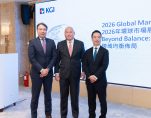
HONG KONG SAR – Media OutReach Newswire – 13 January 2026 – Today, KGI has released its 2026 Global Market Outlook, covering markets in the US, Mainland China, Hong Kong, Taiwan, and Singapore.
(From left) James Chu, Chairman at KGI Securities Investment Advisory; James Wey, Head of International Wealth Management at KGI; Cusson Leung, Chief Investment Officer at KGI
After a turbulent year of trade disruptions and policy uncertainty under President Trump, investors face new questions. China has unveiled its 15th Five-Year Plan, as policymakers aim to support domestic growth amid global challenges. The market outlook for 2026 is shaped by interest rate decisions, economic resilience, and shifting international dynamics.
Under this backdrop, we propose the “LEAD” strategy for 2026:
Liquidity Shift
Earnings Focused
Adding Credit
Diversified Assets
Cusson Leung, Chief Investment Officer at KGI, says: “Looking ahead to 2026, investors can adopt a LEAD strategy: L stands for Liquidity Shift, benefiting from a weakening US dollar and interest rate cuts, with funds expected to flow to non-US dollar and Asian currencies; E stands for Earnings Focused, focusing on earnings growth to support valuations and allocating to US, European, and Japanese stocks; A stands for Adding Credit, locking in the credit of leading companies and increasing holdings of A-rated investment grade bonds; and D stands for Diversified Assets, responding to the upward trend in both stocks and bonds by including alternative assets to optimize asset allocation.”
Macro & US Markets The US economy will experience a more pronounced downturn in 4Q25, which will extend into 1H26, and this will have a negative impact on consumption, slowing investment activity. Nevertheless, AI-driven productivity gains should provide some support, with US GDP growth in 2026 forecast at 2.2%. The eurozone will see moderate growth, with Germany benefiting significantly from fiscal expansion and economic improvement. Japan’s economy will strengthen on domestic demand, aided by additional fiscal stimulus. China has demonstrated resilience under trade protectionism in 2025. With inflation risks easing and labor market risks rising, the US Fed cut the interest rates in September 2025, with a total reduction of 75 bps in 2025, followed by an additional 50-75 bps in 2026.
Regarding US stocks, AI-driven productivity gains and cost reductions should sustain solid profitability, with S&P 500 earnings projected to grow by 13.55% year-on-year (YoY) in 2026. However, higher risk premiums may cap valuation upside, leading us to project a year-end target of 7,650 points. Market performance will reflect risk-driven declines in 1Q26, stabilize and recover in 2Q26, and rally significantly around the midterm elections in 4Q26. By sector, among AI-related themes we favor technology, semiconductors, utilities (on higher power demand), machinery for advanced manufacturing, and industrial REITs. Non-AI beneficiaries include aerospace and defense (on higher military spending), pharmaceuticals (on tariff benefits), and capital market segments (supported by active investment banking). As for fixed income, US economic weakness and Fed rate cuts will drive Treasury yields lower, with 10-year yields expected to fall to 3.5-3.7% by 2Q26. We recommend allocating to US Treasuries or high-rated investment-grade corporate bonds in 1H26, then rotating into high-yield bonds in 2H26 as policy rates and economic conditions reach a bottom.
James Chu, Chairman at KGI Securities Investment Advisory, says:“AI is triggering a new productivity revolution, supporting economic growth and strengthening corporate earnings. While the US economy is expected to slow, a recession remains unlikely, and the short-term impact of tariff policies should gradually fade by the first quarter of 2026. Although the Fed may shift from cutting rates at every meeting to cutting at alternating meetings, the overall environment remains a rate-cutting cycle. In a non-recession backdrop, lower interest rates should continue to support equity market performance.”
Mainland China and Hong Kong Markets In terms of the macroeconomy, with the conclusion of trade agreements among many countries, risks have subsided. However, due to external drag, China’s GDP growth is expected to slow slightly to 4.6% in 2026. In 2026, investors should focus on four key areas for Hong Kong and mainland China markets: (1) In the consumption sector, domestic demand continued to be the core growth driver, contributing more than half of GDP. As the “trade-in” effect diminishes, the central government is expected to implement the “15th Five-Year Plan” and economic conference plans, launching a new round of subsidies covering culture, entertainment, and sports to continuously boost consumer spending. (2) In the financial market, risk appetite has increased. Given the narrowing spread between bond yields and fixed deposit rates, large amounts of savings are flowing into the capital market seeking returns. The fundamentals of the banking and insurance industries have bottomed out, and the credit structure is accelerating its shift from real estate to supporting the real economy. (3) Regarding the issue of “anti-involution,” the PPI remains weak, and capacity reduction has become a focus. Compared to 2015, this round involves more downstream private enterprises and needs to consider employment, presenting greater challenges. While industry consolidation is expected to be lengthy, the impact is controllable and beneficial for long-term healthy development. (4) Regarding new quality productive forces, this will replace real estate and infrastructure as the main investment focus. Digital infrastructure supports AI and embodied intelligence, and humanoid robots are expected to see commercialization in 2026, “iPhone moment.” Leading companies with core technological autonomy in innovative drugs will enjoy higher valuation premiums.
Overall, we are optimistic on Hang Seng Index. We expect the Federal Reserve’s interest rate cuts to drive fund inflows to the Hong Kong and mainland stock markets. Based on an upward revision of the forward PE ratio to 13.5x and 8% earnings growth, we set a target of 30,000 points for the Hang Seng Index by the end of 2026, representing a potential upside of approximately 14%. As confidence recovers, the investment style is expected to shift from defensive to growth stocks. Recommended 12 stocks: XPeng Motors (9868), UBTECH (9880), Tencent Holdings (700), Alibaba (9988), China Hongqiao (1378), AIA Group (1299), Ping An Insurance (2318), China Merchants Bank (3968), Akeso Biopharma (9926), Pop Mart (9992), Tencent Music (1698), and Sino Land (83).
Cusson Leung, Chief Investment Officer at KGI, says: “2026 marks a crucial turning point for the Chinese economy. While the market anticipates GDP growth to slow to 4.6%, “new quality productive forces,” resembling humanoid robots, is taking over as a new growth engine. The most critical signal in the market is the “awakening” of idle cash—massive savings are flowing from low-interest fixed deposits to the capital market seeking returns. With risk appetite returning and policy support intensifying, now is the time to shift investment strategies from “defensive” to “growth.” Driven by both valuation repair and earnings growth, we are optimistic that the Hang Seng Index will reach 30,000 points, and the allocation value of Hong Kong and mainland China stocks has reappeared.”
Taiwan Market Compared to the dot-com era bull run, which lasted almost five years, the current AI frenzy has been around for about three years, suggesting that the uptrend is still in its middle phase and could extend through 2026.
AI plays are trading at high PEs, such valuations are backed by strong fundamentals. In fact, the PEG ratio of Taiwan’s AI supply chain has yet to surpass 1x. We estimate that aggregate earnings of AI plays will grow by 21% YoY in 2026, following impressive upticks of 35% in 2024 and 43% in 2025. AI stocks now account for more than 60% of TAIEX earnings, and with the ongoing AI arms race, overall TAIEX earnings growth is projected to accelerate from 14% in 2025F to 20% in 2026.
Although the AI frenzy should keep the bull market intact, volatility will rise in tandem due to: (1) substantial cumulative gains, and the fact that valuations are approaching historic highs; (2) policy and political uncertainty surrounding the US midterm elections; and (3) potential changes in the US Fed’s rate-cut pace. We expect the TAIEX to repeat a “smile-curve” pattern, featuring continued strength in 1Q26, followed by healthy corrections in 2Q-3Q26 before closing the year with a renewed upswing.
We think investors need to pay attention to two major themes. The first is a broad-based product spec upgrade trend across the AI supply chain, which will drive the industry into a new growth phase, with beneficiaries including foundries, GPU and ASIC designers, advanced packaging (such as CoWoS), and ODMs, as well as testing interfaces, memory, thermal solutions, CCL, ABF substrates, PCBs, switches, and power component suppliers amid strong AI computing demand and ongoing GPU platform upgrades. The second is diversification and defensive asset allocation. Innovations in consumer electronics, such as foldable iPhones and smart wearables, will provide growth opportunities, while companies with resilient domestic demand and stable high dividend yields offer a balanced strategy combining growth and income. Overall, investors should strike a balance between growth and resilience against volatility in their portfolios, in the face of market fluctuations.
James Chu, Chairman at KGI Securities Investment Advisory, says:“The solid earnings growth driven by AI and still reasonable valuations form a strong foundation for the ongoing bull market in Taiwanese equities. With AI adoption accelerating across enterprises and consumers, demand for computing power is rising rapidly. Yet supply remains constrained by chip and power bottlenecks, meaning hardware suppliers are likely to face continued shortages through 2026. Taiwan’s AI supply chain is set to remain a key beneficiary, particularly those tied to next-generation specification upgrades.”
Singapore Market In 9M25, the overall performance of Singapore’s economy was better than expected as the global trade tensions eased after the US pivoted on its reciprocal tariffs and reached deals with its major trading partners. The manufacturing, wholesale trade and finance & insurance sectors remained the growth pillars of the Singapore economy, and each sector delivered decent growth. In particular, manufacturing’s growth has been robust, driven by the electronics, transport engineering and biomedical manufacturing clusters. The full year outlook is upbeat, as the growth momentum shall continue till the end of the year.
Looking ahead, the global economic outlook for 2026 suggests slower GDP growth for most of Singapore’s key trading partners, including China and the Eurozone, largely due to the impact of US tariffs, which will temper demand for Southeast Asian exports, though US growth is expected to remain resilient from AI investment. Consequently, Singapore’s outward-oriented sectors, particularly manufacturing and trade-related services, are projected to expand at a slower pace than in 2025, although the electronics and related sectors will benefit from AI demand, while some precision engineering and biomedical output may moderate domestically, the construction sector is set to grow, but consumer-facing sectors are likely to remain subdued. However, the relatively low interest rates and continuous government support shall buffer the impact of the slowdown, and the capital market will still benefit from the upward re-rating catalysts.
Chen Guangzhi, Head of Research at KGI Singapore, says: “Thanks to trade de-escalation and the AI wave, Singapore experienced significant economic expansion in 2025. Proactive government initiatives turbo-charged the equity bull run, and this strong momentum is expected to deliver an optimistic economic outlook for 2026.” Hashtag: #KGI #MarketOutlook
The issuer is solely responsible for the content of this announcement.
KGI
KGI* has been a leading financial institution in Asia since 1997. Our scope of business encompasses wealth management, brokerage, fixed income, and asset management. We are committed to offering a comprehensive range of financial products and services to corporate, institutional, and individual clients throughout Asia. Backed by KGI Financial Group, we have a robust footprint in Asia, covering Taiwan, Hong Kong, Singapore, Indonesia, and Thailand^.
*KGI refers to KGI Asia Limited and its affiliates. ^an investee enterprise of KGI Securities, not a subsidiary.
DISCLAIMER
All the information contained in this document is not intended for use by persons or entities located in or residing in jurisdictions which restrict the distribution of this document by KGI Asia Limited (“KGI”), or any other affiliates of KGI. Such information shall not constitute investment advice, or an offer to sell, or an invitation, solicitation or recommendation to subscribe for or invest in any securities, insurance or other investment products or services nor a distribution of information for any such purpose in any jurisdiction. In particular, the information herein is not for distribution and does not constitute an offer to sell or the solicitation of any offer to buy any securities in the United States of America, or to or for the benefit of United States persons (being residents of the United States of America or partnerships or corporations organised under the laws of the United States of America or any state, territory or possession thereof). All the information contained in this document is for general information and reference purpose only without taking into account of any particular investor’s objectives, financial situation or needs and may not be redistributed, reproduced or published (in whole or in part) by any means or for any purpose without the prior written consent of KGI. Such information is not intended to provide any legal, financial, tax or other professional advice and should not be relied upon in that regard.
All investments involve risks. The prices of securities fluctuate, sometimes dramatically. The price of a security may move up or down, and may become valueless. It is as likely that losses will be incurred rather than profit made as a result of buying and selling securities.
Bond investment is NOT equivalent to a time deposit. It is NOT protected under the Hong Kong Deposit Protection Scheme. Bondholders are exposed to a variety of risks, including but not limited to: (i) Credit risk – The issuer is responsible for payment of interest and repayment of principal of bonds. If the issuer defaults, the holder of bonds may not be able to receive interest and get back the principal. It should also be noted that credit ratings assigned by credit rating agencies do not guarantee the creditworthiness of the issuer; (ii) Liquidity risk – some bonds may not have active secondary markets and it would be difficult or impossible for investors to sell the bond before its maturity; (iii) Interest rate risk – When the interest rate rises, the price of a fixed rate bond will normally drop, and vice versa. If you want to sell your bond before it matures, you may get less than your purchase price. Do not invest in bond unless you fully understand and are willing to assume the risks associated with it. Please seek independent advice if you are unsure.
You are advised to exercise caution and undertake your own independent review, and you should seek independent professional advice before making any investment decision. You should carefully consider whether investment is suitable in light of your own risk tolerance, financial situation, investment experience, investment objectives, investment horizon and investment knowledge.
No representation or warranty is given, whether express or implied, on the accuracy, adequacy or completeness of information provided herein. In all cases, anyone proposing to rely on or use the information contained herein should independently verify and check the accuracy, completeness, reliability and suitability of the information. Simulations, past and projected performance may not necessarily be indicative of future results.
Information including the figures stated herein may not necessarily have been independently verified, and such information should not be relied upon in making investment decisions. None of KGI, its affiliates or their respective directors, officers, employees and representatives will be liable for any loss or damage of any kind (whether direct, indirect or consequential losses or other economic loss of any kind) suffered or incurred by any person or entity due to any omission, error, inaccuracy, incompleteness or otherwise, or any reliance on such information. Furthermore, none of KGI, its affiliates or their respective directors, officers, employees and representatives shall be liable for the content of information provided by or quoted from third parties.
Members of the KGI group and their affiliates may provide services to any companies and affiliates of such companies mentioned herein. Members of the KGI group, their affiliates and their directors, officers, employees and representatives may from time to time have a position in any securities mentioned herein.
Asset manager VanEck has outlined a long-range capital market assumptions model that positions bitcoin as a potential multi-million-dollar asset by 2050, citing structural adoption as a settlement currency and reserve asset as key drivers of value. Under the firm’s base-case scenario, which assumes a compound annual growth rate of around 15 per cent through to mid-century, one bitcoin could be worth approximately $2.9 million, a dramatic elevation […]
Changpeng Zhao, the former chief executive of Binance, has drawn attention to what he describes as a widening divide in the Bitcoin market, with large United States banks and institutional players accumulating the cryptocurrency while many retail investors sell amid price volatility and regulatory uncertainty. His remarks, circulated widely across market circles, have intensified debate about whether another structural shift is under way in the digital […]






 https://simplyfi.co/
 https://www.linkedin.com/company/simplyfi-co/
 https://www.facebook.com/simplyfi.sg
 https://www.instagram.com/simplyfi.co