Russia has moved closer to opening a regulated cryptocurrency market while Washington struggles to complete its own digital-asset framework, creating a sharp contrast between state-controlled certainty in Moscow and political deadlock in the United States. The State Duma approved legislation governing cryptocurrency trading in its second and third readings on July 21. The measure must complete the remaining constitutional steps, including consideration by the Federation Council and […]
The following announcement was issued today to a Regulatory Information Service approved by the Financial Conduct Authority in the United Kingdom.
DFI RETAIL GROUP HOLDINGS LIMITED
HALF-YEAR RESULTS FOR THE SIX MONTHS ENDED 30 JUNE 2026
Highlights
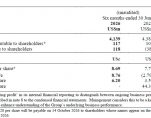
Underlying profit from continuing businesses1 grew 44% to US$117 million
Reported profit was US$118 million, compared to a US$38 million loss in the prior year period
Like-for-like (LFL) subsidiary sales growth from continuing businesses2 improved to 3%
Health & Beauty sustained strong LFL sales; Convenience and Home Furnishings returned to growth
E-commerce and DFIQ Media contributed to approximately 35% of sales growth
Return on capital employed improved to 12%, up from 9% as of December 2025
Interim dividend of US¢6.20 per share, up 77% year-on-year. Maintain full-year dividend payout of 70%
Raised full-year organic revenue3 growth guidance to be between 3.0% and 4.0%, and underlying profit to be between US$285 million and US$305 million
Announced 100% interest acquisition of Cody Hong Kong (Cody HK), one of the leading outdoor advertising solution providers in Hong Kong
HONG KONG SAR – Media OutReach Newswire – 28 July 2026 – “Our first-half performance, with underlying profit1 growth of 44% and a consistently improving LFL subsidiary sales trend, reflects the strength of our strategy in action – a sharper value for customers, a strong focus on returns and execution with discipline. This was supported by sustained momentum in Health & Beauty, as well as strong recovery in Convenience and Home Furnishings segments. Our acquisition of Cody HK’s extensive outdoor media portfolio, together with its experienced leadership team, strengthens our capability to deliver full-funnel, omnichannel advertising solutions while accelerating the growth of DFIQ Media. As we continue to deepen customer engagement and build new profit pools through the DFI Omni Platform, we are well-positioned to deliver sustainable long-term value with greater earnings resilience.”
Scott Price
Group Chief Executive
DFI RETAIL GROUP HOLDINGS LIMITED
HALF-YEAR RESULTS FOR THE SIX MONTHS ENDED 30 JUNE 2026
OVERVIEW
The Group delivered strong performance in an evolving macroeconomic climate, underpinned by disciplined execution and a focus on driving higher returns. A portfolio built on everyday essentials, combined with a strong value proposition with convenience, continues to resonate with customers against the backdrop of oil price volatility. For the first half of 2026, subsidiary LFL sales growth from continuing businesses4 further improved to 3%. This was driven by sustained strong momentum in the Health & Beauty segment, as well as a return to growth in both the Convenience and Home Furnishings businesses. Price reinvestment, supported by a reset in sourcing strategy, drove Food volume growth with Wellcome’s basket price now trading at a discount relative to the Greater Bay Area5, compared to a premium in the prior year.
The Group’s commitment to retail excellence, a lean overhead structure and expanded omnichannel touchpoints enables us to serve our customers with better pricing and better experience. The DFI Omni Platform further strengthens this by seamlessly integrating our extensive store network with digital capabilities, delivering greater convenience and personalisation while unlocking new value pools through rich, cross-format data insights. Developing and scaling high-margin revenue streams, including retail media (DFIQ Media) and insights monetisation (DFIQ Insights), will diversify our profit base and support long-term value creation.
To enhance operational efficiency and improve productivity of team members, the Group introduced GenAI-powered tools in the first half of 2026, with plans to scale deployment across operating markets in the coming months. In parallel, AI capabilities are increasingly embedded across core retail functions, including assortment optimisation, promotion planning and demand forecasting, to drive better, more data-driven decisions.
The Group undertook a thorough review of the cost structure with the aim of driving sustainable savings and improving long-term cost efficiency. This has led to a reallocation of resources and costs toward format-level operations, driving greater agility and responsiveness to evolving market conditions, while continuing to reduce central selling, general and administrative (SG&A) costs through overhead optimisation. Combined with improving digital economics, underlying operating profit from continuing businesses6 grew 14% year-on-year in the first half of 2026. Improved operating performance and lower financing costs contributed to an 11% increase in underlying profit attributable to shareholders, or 44% from continuing businesses7 only.
The Group maintained a healthy balance sheet with a net debt position of US$22 million as of 30 June 2026. Return on capital employed further improved to 12%, up from 9% as of December 2025.
The Group declared an interim dividend of US¢6.20 per share, representing a significant increase of 77% compared to the same period last year. This enhanced interim dividend distribution underscored the Board’s confidence in the Group’s underlying business momentum and strong cash flow generation, while ensuring sufficient capital for future growth in line with our 70% payout policy.
OPERATING PERFORMANCE
Overall For the first half of 2026, underlying subsidiary revenue from continuing businesses6 was US$4.1 billion, up 4% year-on-year and 3% on a LFL basis. The growth was driven by strong performance in the Health & Beauty division, as well as a return to growth in the Convenience and Home Furnishings segments. Total revenue, including Maxim’s, was US$5.6 billion. Excluding divestments7, total revenue increased by approximately 4%.
Overall underlying profit attributable to shareholders from continuing businesses7 grew 44% year-on-year to US$117 million, primarily driven by improved operating profit and lower financing costs.
Underlying subsidiary profit from continuing businesses6 was US$101 million, reflecting a 49% year-on-year increase, primarily driven by earnings recovery in the Home Furnishings and Food segment with lower SG&A expenses as a result of overhead reduction.
Underlying profit from associates was US$16 million, down from US$30 million in the prior comparable period, which included share of profits from Robinsons Retail ahead of its disposal. Excluding this, profit contribution from associates was up 22% year-on-year due to robust sales growth and effective cost optimisation at Maxim’s.
The Group reported operating cash flow after lease payments of US$178 million, 16% higher than the prior year period, driven by underlying operating profit growth. Free cash flow for the period was a net inflow of US$85 million, down 5% year-on-year, due to increased capex investment in priorities that will further strengthen the Group’s competitive position while driving long-term value for shareholders.
Digital Capturing a significant share of daily essential customer missions in Hong Kong, the DFI Omni Platform – powered by yuu – enables deeper customer engagement across offline and online touchpoints, maximises data capture and unlocks incremental margin opportunities beyond core retail through DFIQ Media and DFIQ Insights. Overall digital turned profitable, with e-commerce and DFIQ Media contributing to approximately 35% of total revenue growth in the first half of 2026. This was supported by improved underlying e-commerce economics, a rising online sales penetration8 to 6.9% and 3 times in DFIQ Media revenue compared to first half of 2025. As of June 2026, more than 10,000 digital media-ready screens were available across DFI outlets.
Subsidiaries Sales for the Health & Beauty division were US$1.4 billion, up 8% year-on-year from continuing businesses9, 7% in constant currency, or 6% on a LFL basis, with continued market share gains across key operating markets. Mannings and Guardian deepened their leadership as the trusted advisors for wellness through an enhanced, wellness-focused assortment and continued roll-out of skin and scalp assessment services across a wider store network. The recently announced exclusive distribution partnership with Holland & Barrett, a leading UK health and wellness retailer, will further expand customer access to trusted wellness solutions in Hong Kong and Singapore, followed by a broader rollout across selected Asia markets in the coming years. In Hong Kong and Macau, Mannings delivered 5% LFL sales growth, driven by increased basket size and robust tourist store sales amid higher visitor arrivals. In Southeast Asia, Guardian achieved strong LFL sales growth of 9%, supported by higher basket sizes and improved promotional efficiency, with Indonesia and Vietnam delivering close to 20% LFL growth. Excluding the impact of cost reallocation and closure of Mannings China offline stores, divisional profit increased moderately by 2% to US$109 million. Margin declined primarily due to increased strategic promotions to drive stronger sales and market share in Southeast Asia, particularly in Malaysia where health & beauty retailers did not benefit from the SARA Cash Aid Programme.
Total Convenience sales were US$1.2 billion, up 4% year-on-year or 2% on a LFL basis, as continued growth in higher-margin categories, including ready-to-eat (RTE) and exclusive collectibles, more than offset the decline in lower-margin cigarette volumes. Hong Kong LFL sales returned to growth in the second quarter following ten consecutive quarters of decline, supported by RTE and an expanded non-food assortment, including limited-edition collectibles and K-pop merchandise. Excluding cigarettes, LFL sales were up 3% for the period. In Singapore, effective promotional campaigns and collectible product launches drove strong LFL sales growth of 8%. In South China, continued store network expansion through a capex-light franchise model – including a net addition of 112 stores since June 2025 to nearly 1,980 locations – contributed to 12% sales growth year-on-year or 6% on constant currency basis. LFL sales were 1% higher compared to the prior year period, driven by the successful launch of Own Brand in key categories of frozen products and packaged drinks. The team remains focused on driving footfall and sales through further expansion of the RTE offering across both offline and online channels. This includes a broader rollout of the Food Bar to 453 stores as of June 2026, up from 325 at year-end 2025, and strong overall online sales growth of more than 35%. Excluding cost reallocation impact, profit for the division increased by 2% to reach US$37 million.
Reported sales for the Food division from continuing businesses10 were US$1.1 billion, up 1% year-on-year. LFL sales returned to positive growth of 0.5% in the second quarter of 2026. In Hong Kong, investment in reduced pricing on core basket items, a stronger fresh proposition, and Own Brand offering drove 2% increase in total volume and 0.5% LFL sales growth in the first half of 2026. As of June 2026, Wellcome’s “Everyday Value” range has expanded to nearly 500 items, offering savings of up to 40%, bringing its basket price down from a premium to a discount relative to the Greater Bay Area. The team also accelerated omnichannel growth with more than 35% growth in online order volume. In Cambodia, Lucky reported strong double-digit sales growth, with profit more than doubling year-on-year. The plan to open 50 new stores over the next few years remains on track. Macau Food sales remained challenging as a result of cross-border grocery shopping. Excluding the impact of cost reallocation and the divestment of Singapore Food, overall divisional profit increased by 27% year-on-year to US$17 million.
The Home Furnishings division delivered strong recovery in performance during the first half of 2026, with LFL sales growth of 4%, compared to a decline of 6% in the prior year period. Price reinvestment in core value SKUs, a stronger focus on locally relevant ranges and IKEA Food innovation drove increased footfall and items per baskets, resulting in a 3% LFL sales growth in Hong Kong and 5% in Taiwan. IKEA Food remains a critical traffic and revenue driver, accounting for 15% of total sales. In Indonesia, while offline sales momentum remained soft, LFL sales trend improved on a strengthening IKEA’s omnichannel proposition with online sales penetration reaching 24%. Sales recovery and effective cost optimisation measures contributed to 85% growth in overall divisional profit, excluding cost reallocation impact.
Associates The Group’s share of Maxim’s underlying profits was US$16 million for the first half of 2026, up 15% year-on-year, underpinned by continued cost optimisation and operational efficiency measures. Sales for the period increased by 4%, driven by strong restaurant performance in Southeast Asia and a return to growth in the Chinese mainland, partially offset by weaker sales in Hong Kong.
RECENT BUSINESS DEVELOPMENTS
On 30 June 2026, the Group announced the acquisition of 100% interest in Cody Hong Kong (Cody HK), one of the leading outdoor advertising solution providers in Hong Kong, for a cash consideration of HK$30.2 million (approximately US$3.8 million) from ARN Media Network Limited (ASX: A1N), subject to customary adjustments.
The acquisition advances DFI’s strategy to build a full-funnel advertising solution in Hong Kong through DFIQ Media. By integrating Cody HK’s strategic assets – including multi-year exclusive advertising rights with Kowloon Motor Bus (KMB) and Hong Kong Tramways (HKT) – with DFI’s extensive store network, growing online user base, and closed-loop measurement capabilities, DFIQ Media strengthens its ability to deliver high-impact advertising solutions to a broader advertiser base across online, in-store, and outdoor channels.
Subject to satisfaction of third-party consents, the transaction is expected to complete in the second half of 2026.
PEOPLE
On 6 July 2026, the Group announced four senior leadership appointments effective from 1 August 2026. These moves reflect the Group’s continued focus on strengthening its leadership pipeline and driving the next phase of growth with experienced, proven leaders.
Andrew Wong will be appointed Chief Executive Officer, DFI IKEA. Formerly CEO of Health & Beauty, Andrew brings extensive experience in driving customer-led growth, operational discipline and in-store digitalisation across multiple markets. His earlier leadership of franchise operations at Jardine Restaurant Group positions him well to lead the IKEA business into its next phase of development.
Curtis Liu, having most recently served as Chief Executive Officer of Food, will be appointed Chief Executive Officer, Health & Beauty. His proven leadership in driving customer value repositioning in Hong Kong, combined with deep operational retail knowledge and digital experience at JD.com, positions him well to drive continued momentum and omnichannel growth in Health & Beauty.
Tom van der Lee will be appointed Chief Executive Officer, Food. Tom has played an instrumental role as Group Chief Financial Officer, driving financial discipline and supporting key strategic decisions across the Group. His prior experience at FrieslandCampina, a global food company, and his broad financial leadership across DFI banners in Southeast Asia supported his strong commercial grounding to lead the Food business.
Kaizhi Wu will succeed Tom as Group Chief Financial Officer. Kaizhi currently serves as Group Finance Director, Planning & Reporting, based in Hong Kong. Prior to joining DFI, he served as Executive Vice President and Chief Financial Officer of Yonghui Superstores Co., and earlier held senior roles at Jardine Matheson, Fosun Group and PwC in London. Kaizhi will join the Group’s Management Committee upon assuming his new role.
OUTLOOK
The Group remains confident in our ability to navigate the evolving trading environment, supported by sharpened business priorities, a strong balance sheet and low-cost operating model. Financial outlook outlined at the Investor Day in December 2025 remains intact as DFI continues to execute our multi-year strategic initiatives that are critical to driving sustainable revenue and earnings growth. These initiatives include strengthening our value proposition, strategically expanding store network, enhancing omnichannel capabilities and accelerating digital asset monetisation through data-driven insights. In particular, the growing DFI Omni Platform will deepen our customer engagement, further reinforce our core retail strength and enhance overall earnings resilience in the long term.
Despite an elevated oil price outlook for the remainder of the year, the Group expects to deliver stronger profitability supported by enhanced operational efficiency. As a result, the Group revises up its full-year organic revenue growth11 outlook to be between 3.0% and 4.0% (up from previously 2.0% to 3.0%), and underlying profit attributable to shareholders to be between US$285 million and US$305 million (up from previously US$270 million and US$300 million).
Scott Price Group Chief Executive
—————– 1 Excluding impacts of divestment of Singapore Food business, closure of Mannings China and disposal of minority stake of Robinsons Retail 2 Excluding impacts of divestment of Singapore Food business and closure of Mannings China 3 Excluding Singapore Food and Mannings China 4 Excluding impacts of divestment of Singapore Food business and closure of Mannings China 5 Based on a third-party assured price comparison of a 200-item comparable basket between DFI and Shenzhen 6 Excluding impacts of divestment of Singapore Food business and closure of Mannings China 7 Excluding impacts of divestment of Singapore Food business, closure of Mannings China and disposal of minority stake of Robinsons Retail 8 Excluding cigarettes under Convenience and IKEA Food 9 Excluding Mannings China 10 Excluding Singapore Food business 11 Excluding Singapore Food and Mannings China Hashtag: #DFIRetailGroup #Mannings #Guardian #7-Eleven #Wellcome #MarketPlace #IKEA #yuu #Maxim’s
The issuer is solely responsible for the content of this announcement.
DFI Retail Group
DFI Retail Group (the Group) is a leading Asian retailer, driven by its purpose to ‘Sustainably Serve Asia for Generations with Everyday Moments’.
At 30 June 2026, the Group and its associates operated 7,659 outlets across 12 markets, of which 5,593 stores were operated by subsidiaries. The Group, together with its associates, employed over 81,000 people, with more than 43,000 people employed by subsidiaries. The Group had reported revenue of US$8.9 billion in 2025.
The Group is committed to delivering quality, value and service to consumers across the region through trusted brands, strong local market positions, and a broad retail ecosystem supported by extensive store networks, digital capabilities and efficient supply chains.
The Group and its associates operate a portfolio of well-known brands across five key divisions. The principal brands are:
Health and Beauty
Mannings in Hong Kong and Macau S.A.R.; Guardian in Brunei, Indonesia, Malaysia, Singapore and Vietnam.
Convenience
7-Eleven in Hong Kong and Macau S.A.R., Singapore and Southern China.
Food
Wellcome and Market Place in Hong Kong S.A.R.; San Miu in Macau S.A.R.; Lucky in Cambodia.
Home Furnishings
IKEA in Hong Kong and Macau S.A.R., Indonesia and Taiwan.
Restaurants
Hong Kong Maxim’s group on the Chinese mainland, Hong Kong and Macau S.A.R., Cambodia, Laos, Malaysia, Singapore, Thailand and Vietnam.
The Group’s parent company, DFI Retail Group Holdings Limited, is incorporated in Bermuda and has a primary listing in the equity shares (transition) category of the London Stock Exchange, with secondary listings in Bermuda and Singapore. The Group’s businesses are managed from Hong Kong. DFI Retail Group is a member of the Jardine Matheson group.
Singapore’s central bank has warned that any sharp pullback in artificial intelligence investment could weaken global growth, disrupt semiconductor demand and trigger turbulence across financial markets.
The Monetary Authority of Singapore said uncertainty over whether companies can sustain vast spending on data centres, advanced chips and computing infrastructure has become a significant risk to the economic outlook. The warning reflects growing scrutiny of whether revenue generated by AI services can justify the scale of capital committed by technology groups.
MAS Managing Director Chia Der Jiun said the global economy should continue to benefit from AI-related expenditure in the near term, but the longer-term impact remains difficult to assess. A sudden reduction in investment could affect manufacturing, trade and financial asset prices, particularly in economies closely linked to electronics supply chains.
The assessment carries particular significance for Singapore, where technology-related production has driven much of the economic expansion this year. The economy grew by about 6 per cent during the first half of 2026, while AI-linked electronics accounted for more than 70 per cent of export growth. Semiconductor production, data-centre equipment and related services have helped offset pressure from trade restrictions, higher energy costs and geopolitical instability.
MAS expects economic activity to remain firm during the second half of the year, supported by technology, construction and financial services. However, it cautioned that tighter global financing conditions or a reversal in AI expenditure could undermine the durability of that growth and ease inflation more rapidly than expected.
The warning comes as the world’s largest technology companies raise spending on processors, servers, power systems and data centres. Capital expenditure by major AI-linked companies is projected to rise by more than 75 per cent to around $700 billion in 2026. Large technology groups are also turning increasingly to debt markets to finance the buildout, strengthening the connection between AI investment, credit conditions and the wider economy.
Fitch Ratings has identified an AI market correction as an emerging global credit risk, citing elevated valuations, concentrated investment and uncertainty over future returns. Amazon and Alphabet are among companies whose combined bond issuance has reached about $182 billion, underlining the growing role of borrowed funds in supporting infrastructure spending.
Supporters of the investment surge argue that generative AI could raise productivity, reduce costs and create new markets comparable to earlier technological transformations. Demand for advanced chips and cloud capacity remains strong, while business investment data continue to show momentum. US orders for core capital goods rose 0.9 per cent in June, and shipments increased 1.9 per cent, their strongest gain in four and a half years, helped by spending on computers and electronic equipment.
Questions persist over how quickly that spending will generate sustainable profits. Data centres require large quantities of electricity, specialised chips and cooling infrastructure, while rapid improvements in computing equipment can shorten replacement cycles. Companies may face pressure to keep investing even before earlier projects achieve their expected returns.
Academic research indicates that the AI boom combines strong technological foundations with pockets of speculative vulnerability. Enterprise adoption, revenue growth and productivity improvements support parts of the valuation expansion, but investment has outpaced monetisation in some segments. Private-market valuations are also concentrated among a limited number of companies, increasing the risk that a reassessment of growth expectations could spread rapidly.
Global equity markets are already showing greater sensitivity to concerns about returns from AI spending. Semiconductor shares have faced selling pressure, while technology indices have retreated from earlier peaks. Investors are closely examining earnings from leading cloud and chip companies for evidence that demand remains strong enough to support infrastructure budgets.
Singapore is vulnerable to such shifts because of its position in global electronics, finance and trade networks. A decline in chip orders could affect factory output and exports, while a fall in technology valuations could weaken investment sentiment and household wealth. Financial institutions could also face losses through corporate lending, bond holdings and market exposure.
MAS has separately highlighted cybersecurity threats arising from AI and quantum-computing advances. AI tools can improve fraud detection and network monitoring, but they can also make phishing, impersonation and hacking attempts more convincing. The authority has established an industry task force to help financial institutions strengthen their defences as technology-driven risks become more sophisticated.
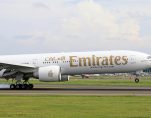
Arabian Post Staff -Dubai Emirates has launched Crypto. com Pay across its website and mobile application, allowing eligible UAE residents to purchase flight tickets using cryptocurrency while the airline receives settlement in UAE dirhams. The new payment option is available for bookings priced and settled in dirhams. Customers must hold a verified Crypto. com account and complete the transaction through the platform’s application. The rollout turns a […]
Prime Minister Sanae Takaichi’s falling public support is sharpening investor concern that her government may respond with tax cuts and heavier spending, adding pressure on the yen and Japan’s government bond market.
A July poll showed approval for Takaichi’s Cabinet dropping to 57% from 69% in June, as households grew more dissatisfied with rising living costs. Other surveys have also pointed to weakening support, though the level varies considerably among polling organisations.
The decline has placed greater scrutiny on the government’s economic strategy. Takaichi has defended an expansionary programme built around public and private investment in strategic industries, arguing that stronger productivity and economic growth will ultimately restore confidence in the currency.
Market strategists see a growing risk that weaker ratings could push the administration towards measures offering faster political relief. These could include reductions in consumption taxes, expanded subsidies or additional spending aimed at cushioning households from food and energy inflation.
Such steps may prove popular with voters but could unsettle investors unless the government provides a credible funding plan. Japan already carries one of the world’s largest public debt burdens, exceeding twice the size of its economy, while higher interest rates are raising the cost of servicing that debt.
The yen has been trading near 160 to the dollar, increasing the price of imported fuel, food and industrial materials. Its weakness has become a political problem because the benefits to exporters and tourism are being offset by pressure on household purchasing power.
Takaichi has rejected the argument that government policy alone determines exchange rates. She has said stronger investment, competitiveness and economic expansion are essential to rebuilding market trust, while acknowledging that currency movements reflect a range of domestic and international factors.
Investors remain sensitive to any indication that the government could pursue fiscal expansion while discouraging tighter monetary policy. The Bank of Japan raised its benchmark rate to 1% in June, the highest level in more than three decades, and economists expect another increase before the end of 2026 if inflation or yen weakness intensifies.
The central bank is expected to keep rates unchanged at its next policy meeting while signalling that further tightening remains possible. Its challenge is to contain import-driven inflation without weakening an economy facing demographic pressures, soft consumption and a heavy public debt load.
More than four-fifths of economists surveyed this month expect the policy rate to reach 1.25% by December. A rise could support the yen by narrowing the interest-rate gap with the United States, but it would also put upward pressure on government borrowing costs.
Long-dated government bond yields have already climbed to levels not seen for decades. Traders are demanding higher returns as the central bank reduces its dominance of the bond market and investors reassess the sustainability of fiscal policy in an inflationary environment.
Takaichi’s growth blueprint envisages about ¥370 trillion in public and private investment through 2040 across 17 strategic sectors. Artificial intelligence, semiconductors, defence, energy security and advanced manufacturing are among the areas targeted for support.
The government says the programme will raise productivity, reduce vulnerabilities in critical supply chains and lift Japan’s underlying growth rate. Critics argue that its scale and financing remain insufficiently defined, increasing the possibility of additional bond issuance or pressure for higher taxes later.
A proposed temporary suspension of the consumption tax on food has emerged as a particularly sensitive issue. The measure could ease household costs but would also reduce government revenue unless accompanied by spending cuts or alternative funding.
Political pressure is building inside the ruling Liberal Democratic Party as lawmakers consider how to reverse the erosion in public confidence. Speculation about a Cabinet reshuffle has increased, although Takaichi has given no indication that she plans to retreat from her investment-led strategy.
Her political position remains stronger than the approval figures alone suggest. The Liberal Democratic Party secured a commanding majority in the February election, giving the government substantial room to pass legislation. However, falling popularity could make lawmakers less willing to support policies seen as worsening inflation or market instability.
Foreign-exchange traders are watching whether the government steps up verbal warnings or direct intervention to support the yen. Previous interventions have produced only temporary gains when they were not backed by a sustained change in interest-rate expectations or fiscal policy.
Japan’s large pool of domestic savings and the substantial holdings of government debt by local institutions continue to provide stability. The country also possesses sizeable foreign reserves and remains a major external creditor.
SoftBank Group’s $40 billion bridge loan linked to its expanding investment in OpenAI has attracted 21 additional lenders, widening the financing’s risk distribution as banks increase their exposure to the capital-intensive artificial intelligence sector. The new participants joined during a broader syndication phase for the one-year facility, which was initially arranged by JPMorgan Chase, Goldman Sachs, Mizuho Bank, Sumitomo Mitsui Banking Corporation and MUFG Bank. The loan […]
The team behind the Official Trump meme coin has transferred about $16.9 million of TRUMP tokens to three custody addresses linked to Fireblocks, drawing fresh attention to the asset’s concentrated ownership and prolonged price decline. Blockchain records indicate that roughly 10.8 million tokens were moved on July 25, based on the market price at the time. The receiving addresses have handled TRUMP before, with some holdings later […]
Louvre Abu Dhabi has placed Pierre-Auguste Renoir’s celebrated double portrait of Berthe Morisot and her daughter Julie Manet on display for a year, bringing one of the Abu Dhabi Collection’s most significant Impressionist works into the museum’s permanent galleries. Painted in 1894, the oil-on-canvas work depicts Morisot, a founding figure of Impressionism, seated closely beside her teenage daughter. The portrait combines the intimacy of a family image […]
XRP traded in a narrow range after a turbulent week as smaller holders continued reducing their exposure while large wallets accumulated hundreds of millions of tokens, widening a divide between retail caution and longer-term institutional positioning. The cryptocurrency hovered near $1.10 during Thursday’s session, struggling to sustain advances after repeated attempts to recover from a sharp market-wide correction. XRP remained below several closely watched moving averages, while […]
A single country raising tariffs dents that country’s exporters. Sixty countries absorbing new US duties on the same day is a different animal entirely, and currency and bond markets have far more reason to be nervous about it than most equity investors currently seem to grasp. The new rates land between 10% and 12.5%, and the split between those two bands is where this gets interesting. Japan […]
Mirae Asset Group has completed its acquisition of Korbit, placing South Korea’s first cryptocurrency exchange under the control of one of the country’s largest financial conglomerates and accelerating the convergence of traditional finance and digital assets. Mirae Asset Consulting became Korbit’s largest shareholder after completing regulatory and transaction procedures. The deal gives the group control of more than 90 per cent of the exchange, following an agreement […]
HONG KONG SAR – Media OutReach Newswire – 23 July 2026 – Watsons, the flagship health and beauty brand of AS Watson, today announced the launch of Watsons Evergreen, as part of AS Watson’s 185th anniversary celebrations. To elevate its significance and create a consistent and credible expression across markets, Watsons partnered with the Pantone Color Institute™, the world’s leading authority on colour. Combining Watsons’ rich heritage with Pantone’s expertise, the collaboration helped define and articulate a global brand asset that captures the essence of Watsons and its vision for the future.
A Colour That Brings the Brand to Life Watsons Evergreen is a vibrant blue-green hue that symbolises everyday vitality, care and reassurance, reflecting Watsons’ purpose of helping customers LOOK GOOD, DO GOOD, FEEL GREAT every day. As a distinctive visual identity, it creates a shared language that connects Watsons markets worldwide.
From Watsons’ logo and store design to merchandising displays, digital channels and Own Brand products, Watsons Evergreen has long been a familiar presence across customer touchpoints. The Watsons Evergreen campaign will roll out across 16 markets, including Asia, Europe and the Middle-East, through a series of customer and community activations, as well as a curated range of products, reinforcing the brand’s long-standing connection with customers and communities around the world.
Celebrating a Heritage of Trusted Care At the heart of the initiative is a simple belief: Watsons has always been there for customers and will continue to be for generations to come.
For 185 years, Watsons has supported customers in their everyday health needs, beauty routines and wellbeing moments, whether in-store or online. Watsons Evergreen reflects this enduring relationship, serving as a symbol of consistency, trust and care in an ever-evolving world.
Jared DeGuzman, Customer Director of Watsons International, said, “For 185 years, Watsons has helped customers feel healthier, happier and more confident in their daily lives. Watsons Evergreen captures that role in a simple yet powerful way. By partnering with Pantone, we’ve transformed our iconic brand colour into a global symbol of vitality, care and wellbeing that will connect customers across every Watsons market.”
Laurie Pressman, Vice President of the Pantone Color Institute™, added, “Watsons Evergreen captures the essence of a brand that has stood the test of time while continuing to grow and evolve. It is a colour that speaks of vitality and longevity, and of a deep, lasting connection to the customers and communities Watsons has served for generations.”
As Watsons marks this milestone anniversary, Watsons Evergreen stands as both a reflection of its rich heritage and a symbol of its forward-looking vision – uniting past and future in one distinctive expression of the brand.
Hashtag: #ASWatson
The issuer is solely responsible for the content of this announcement.
About Watsons
Watsons is the leading O+O (Offline plus Online) health and beauty retailer in Asia, currently operating 8,000 stores and more than 1,500 pharmacies in 16 Asian, European and Middle-East markets.
Watsons is named as the No.1 Personal Care and Beauty retailer in Asia*, providing personalised advice and counselling in health, beauty and personal care on top of its market-leading product range, making customers LOOK GOOD, DO GOOD, FEEL GREAT every day. Watsons is the flagship health and beauty brand of AS Watson Group.
Launched in 2019, Watsons’ Asia One Pass rewards our customers with local-member privileges and enables them earn points when they shop with Watsons in ten markets in Asia including Chinese Mainland, Hong Kong, Macau, Taiwan, Singapore, Malaysia, Thailand, Indonesia, Türkiye and the Philippines.
*Campaign Asia-Pacific’s Top 50 Brands survey with 10,000 respondentsacross 6 Asian countries
About AS Watson Group
Established in 1841, AS Watson Group is one of the world’s longest-standing and most recognised retail companies with roots in Asia. Today, the company operates over 17,000 stores across 12 retail brands in 31 markets, employing 130,000 people globally. This makes AS Watson Group the largest international health and beauty retailer in the world.
In the fiscal year 2025, AS Watson Group reported revenue of over US$26 billion. The company’s technology-enabled O+O (Offline plus Online) platforms serve over 6 billion shoppers annually, seamlessly integrating physical and digital retail experiences.
AS Watson Group supported over 180 charitable and non-profit organisations every year, dedicating over 40,000 hours of volunteer work to serve over 370,000 people in need in our operating markets.
AS Watson Group is also a member of the world-renowned multinational conglomerate CK Hutchison Holdings Limited, which has four core businesses – ports and related services, retail, infrastructure and telecommunications in over 50 countries.
SpaceX is approaching its first major post-listing share release, with stock worth about $116 billion becoming eligible for sale after the rocket and satellite group publishes its maiden quarterly results as a public company. The release could sharply expand the number of SpaceX shares available to investors and test demand following a volatile first month on the Nasdaq. Employees and some early shareholders will be permitted to […]
Arabian Post Staff -Dubai ExxonMobil has signed on as a Gold Sponsor of Angola Oil & Gas 2026, strengthening its position in the country as Luanda seeks billions of dollars in investment to sustain crude production and revive exploration. The conference will be held in Luanda on 9 and 10 September, bringing together energy companies, investors, financiers, service providers and policymakers. Angola is promoting an upstream investment […]
Milestone reflects Malaysians’ growing demand for quality grab-and-go food and coffee, with KLIA café bringing greater convenience to millions of travellers
KUALA LUMPUR, MALAYSIA – Media OutReach Newswire – 20 July 2026 – As Malaysians increasingly embrace grab-and-go lifestyles and quality coffee on the move, 7-Eleven Malaysia today marked a major milestone with the opening of its 1,000th CAFé by 7-Eleven outlet at Kuala Lumpur International Airport (KLIA) Terminal 1, reinforcing its commitment to making quality food and beverages more accessible wherever customers are.
From left to right: Mr. Wong Wai Keong, Co-CEOs of 7-Eleven Malaysia Sdn. Bhd., Ms. Hani Ezra Hussin, Senior General Manager – Commercial Services of Malaysian Airport Holdings Berhad, Mr. Tan U-Ming, Co-CEOs of 7-Eleven Malaysia Sdn. Bhd., Mr. Zulhikam Ahmad, General Manager – Commercial (Business Performance & Growth) of Malaysian Airport Holdings Berhad, Jim Girard – Senior Regional Director of 7-Eleven International and Estaban Velasquez, Senior Director and Controller of 7-Eleven International officiating the opening of the 1,000th CAFé by 7-Eleven store at KLIA Terminal 1.
Located at Level 5, next to the Domestic Departure Gate at KLIA Terminal 1, the milestone café places freshly brewed coffee, hot meals and ready-to-eat favourites within easy reach of one of Malaysia’s busiest transport hubs. KLIA Terminal 1 serves approximately 28 to 30 million passengers annually, with around 13,000 to 14,000 departing and arriving travellers each day. During peak operating hours, the terminal can accommodate nearly 6,800 passengers per hour, while festive travel periods see passenger volumes surge significantly.
More than just another store opening, the milestone reflects how CAFé by 7-Eleven has evolved into an integral part of Malaysians’ daily routines, serving everyone from busy professionals grabbing their morning coffee to students on the go, families travelling home, and holidaymakers beginning their next adventure.
With more Malaysians seeking convenient, quality food and coffee throughout the day, CAFé by 7-Eleven has steadily expanded to meet evolving consumer lifestyles. The opening of its 1,000th outlet at KLIA marks another milestone in bringing that convenience to one of Malaysia’s busiest travel gateways.
The choice of KLIA for this milestone reflects 7-Eleven Malaysia’s strategy of expanding into high-traffic locations where convenience matters most. As consumer lifestyles become increasingly mobile, transport hubs have become key destinations for quick, quality food and beverage solutions, allowing CAFé by 7-Eleven to better serve travellers at every stage of their journey.
Commenting on the milestone, Mr. Wong Wai Keong, Co-CEO of 7-Eleven Malaysia Sdn. Bhd., said the opening of the company’s 1,000th CAFé by 7-Eleven represents more than a numerical milestone. It reflects how consumer expectations and lifestyles have evolved over the years.
“Today’s customers expect quality coffee, fresh meals and convenience wherever they are, whether they’re heading to work, commuting across town or catching a flight. Over the years, we’ve transformed CAFéby 7-Eleven into a destination that fits naturally into those everyday moments. Convenience today is no longer just about being nearby. It’s about being exactly where customers need us most, whether that’s in neighbourhoods, commercial districts or one of the country’s busiest airports.”
“There is no better place to celebrate this milestone than KLIA, one of Malaysia’s busiest travel gateways. Millions of passengers pass through the airport every year, making it the ideal location for us to demonstrate how convenience retail can better serve today’s increasingly mobile consumers. Whether they’re catching an early morning flight, returning home or travelling for business, we want CAFéby 7-Eleven to be part of that journey.”
As one of Malaysia’s largest convenience retailers, 7-Eleven continues to evolve beyond traditional retail by expanding CAFé by 7-Eleven across neighbourhoods, commercial districts, hospitals, transport hubs and major travel gateways. Offering an expanding range of food, beverages and ready-to-enjoy meal options, the growing network reflects the company’s commitment to making quality food and beverages more accessible wherever customers need them.
The KLIA outlet represents another step in that strategy, enhancing the travel experience by ensuring customers can conveniently enjoy fresh food and beverages before departure without compromising on quality or speed.
Today, with more than 2,700 stores nationwide and 1,000 CAFéby 7-Eleven outlets, the company continues to strengthen its position as Malaysia’s leading convenience retailer by adapting to evolving consumer expectations through innovation, accessibility and everyday convenience.
As Malaysians continue to embrace increasingly mobile lifestyles and seek greater convenience in their daily routines, 7-Eleven Malaysia remains committed to expanding CAFé by 7-Eleven into locations where quality food and beverages are needed most. Guided by its promise of “Always There For You”, the company will continue bringing greater convenience to customers wherever life takes them.
Hashtag: #7eleven
The issuer is solely responsible for the content of this announcement.
About 7-Eleven Malaysia
7-Eleven Malaysia Holdings Berhad through its subsidiary 7-Eleven Malaysia Sdn. Bhd. is the owner and operator of 7-Eleven stores in Malaysia. Incorporated on 4 June 1984, 7-Eleven Malaysia has made its mark in the retailing scene and has been a prominent icon for over 40 years. 7-Eleven Malaysia is the pioneer and largest 24-hour standalone convenience store operator in Malaysia with over 2,700 outlets nationwide and serves more than 1 million customers daily. 7-Eleven stores can be found across bustling commercial districts to serene suburban residential compounds throughout Malaysia, from petrol stations and LRT stations to shopping malls and medical institutions. My7E loyalty app boasted an impressive membership of 3.7 million users. As we forge ahead, our commitment remains steadfast in enriching the experience for our valued members, offering an array of rewards that enhance their journey as My7E enthusiasts. 7-Eleven is Always There For You. To learn more, please visit our website at www.7eleven.com.my
Sultan Ahmed Bin Sulayem has taken direct charge of MMC Port Holdings following the immediate departure of group chief executive Azman Shah Mohd Yusof, placing Malaysia’s largest port operator under the control of its Emirati executive chairman. An internal company memorandum dated July 12 instructed employees to direct matters previously handled by the group chief executive to Bin Sulayem’s office. It did not explain Azman Shah’s departure […]
Dubai Investments has agreed to acquire the remaining 80 per cent of Clemenceau Medical Center in Dubai, placing the specialist hospital under the full ownership of the diversified investment group. The transaction will be completed through Dubai Investments Industries LLC, a wholly owned subsidiary, under a non-cash arrangement with the medical centre’s two other shareholders. Khansaheb Investment LLC will transfer its 55 per cent holding, while Clemenceau […]
BlackRock’s spot Bitcoin exchange-traded fund held about 733,500 tokens valued at more than $47.5 billion on July 15, cementing its position as the dominant regulated Bitcoin investment product in the United States. The latest official portfolio data differs slightly from a widely circulated social media claim that the iShares Bitcoin Trust held 734,762 Bitcoin worth $47.1 billion. Holdings change each trading day as authorised participants create or […]
Arabian Post Staff -Dubai Dealing. com has secured a Guinness World Records title after making 24,343 tokenised stocks available for trading on a single investment platform, placing the Dubai-linked service at the centre of efforts to widen access to global securities through blockchain infrastructure. The title for the “Most Tokenised Stocks Available for Trading on a Single Platform” was presented to Tajinder Virk, co-founder and chief executive […]
Shein Global Holdings is preparing to raise as much as $3 billion through a Hong Kong initial public offering that could begin as early as August, after securing a long-awaited clearance from China’s securities regulator.
The online fashion retailer is considering an offer of between $2 billion and $3 billion, although the final size will depend on its valuation, investor demand and prevailing market conditions. The timetable could also change as the company completes the remaining stages of Hong Kong’s listing process.
Shein is scheduled to face the Hong Kong Stock Exchange’s listing committee this week. Approval at the hearing would allow the company and its advisers to move towards investor presentations, price discovery and bookbuilding.
Some people involved in the process expect the shares to begin trading in September or October rather than August, reflecting the time required to complete regulatory documentation and market the offer to institutional investors. A successful listing would rank among Hong Kong’s largest consumer-sector flotations in years.
China’s securities regulator has approved the proposed sale of up to 341.6 million H shares. The clearance removed one of the biggest obstacles confronting Shein, which submitted confidential listing documents in Hong Kong about a year ago after encountering difficulties in New York and London.
The company could seek a valuation of between $40 billion and $50 billion. That would represent a sharp retreat from the $100 billion valuation achieved during a private funding round in 2022, when pandemic-era online shopping growth and investor enthusiasm for digital retail pushed its value above several established fashion groups.
Shein was valued at about $66 billion in 2023. The lower range being discussed for the Hong Kong offer reflects tighter investor scrutiny, greater competition, changing customs rules and concern over the durability of its low-cost cross-border business model.
The retailer, founded in Nanjing in 2012 by entrepreneur Sky Xu and now headquartered in Singapore, sells inexpensive clothing and lifestyle products across roughly 150 markets. Its data-driven system tests products in small batches, measures consumer demand and orders additional stock when items gain traction.
That model has helped Shein respond rapidly to fashion trends while limiting unsold inventory. It has also placed pressure on traditional retailers and brought intense scrutiny of production volumes, environmental impact, working conditions and supplier oversight.
Although Shein has positioned itself as a global company, much of its manufacturing network remains concentrated in China, particularly around Guangzhou and other parts of Guangdong province. That dependence brought the company within the scope of China’s overseas-listing review system despite the relocation of its corporate headquarters.
Shein previously pursued a New York flotation but faced political resistance and demands for deeper examination of its supply chain, data practices and alleged exposure to forced labour in Xinjiang. The company has said it maintains a zero-tolerance policy towards forced labour and requires suppliers to comply with its sourcing standards.
A subsequent attempt to list in London also stalled. Britain’s financial regulator had cleared the company’s prospectus, but the transaction could not proceed without approval from Beijing. Disagreements surrounding disclosures about supply-chain risks complicated the process.
Hong Kong offers Shein a venue closer to its manufacturing base and within a regulatory framework more acceptable to Beijing. The city’s market, however, may produce a lower valuation than the company once expected from New York or London, where international consumer and technology companies have traditionally attracted broader investor coverage.
The proposed offer comes during a strong period for Hong Kong listings. Companies raised about HK$209.9 billion across 85 new flotations during the first half of 2026, the market’s best first-half performance in five years. A pipeline of hundreds of applicants has strengthened expectations that the city could remain among the world’s leading fundraising centres this year.
Shein’s leadership is also changing as the listing approaches. Executive chairman Donald Tang is expected to step down and continue as a senior adviser. Tang played a central role in the company’s engagement with governments, regulators and investors during its attempts to secure a Western listing.
Xu is expected to take a leading role in presenting the investment case to prospective shareholders. Investors are likely to examine Shein’s growth prospects, profit margins and ability to adapt to customs changes, particularly the removal of duty-free treatment for low-value packages entering the United States from China and Hong Kong.
SBI Holdings and the Solana Foundation have formed a strategic partnership to develop an on-chain financial market centred on Japan, spanning stablecoins, tokenised securities, institutional services and cross-border settlement infrastructure. The collaboration will involve the Solana Foundation acquiring a stake in SBI R3 Japan, a blockchain-focused company jointly backed by SBI Holdings and Sumitomo Mitsui Financial Group. SBI R3 Japan is set to be renamed SBI Solana […]
President Donald Trump has sharpened his public embrace of Bitcoin, calling cryptocurrency “very powerful” and saying the scale of Bitcoin use is still not fully understood, remarks that have placed digital assets back at the centre of Washington’s financial policy debate. The comments, made during a CNBC interview at the White House, marked another shift for a president who once dismissed Bitcoin as a threat to the […]
ADNOC Distribution has agreed to buy Shell Downstream South Africa in a $1 billion deal that gives the Abu Dhabi fuel retailer control of one of South Africa’s largest petrol station networks and marks a decisive expansion of Gulf capital into Africa’s downstream energy market. The agreement covers 100 per cent of Shell Downstream South Africa from Shell South Africa Holdings, with the enterprise value subject to […]
The Reserve Bank of India has renewed its support for keeping cryptocurrency away from the formal financial system, reviving the prospect of a tougher national policy on private digital assets even as millions of users continue to trade through domestic and offshore platforms. Government documents and briefings to a parliamentary panel point to a policy line that leans towards prohibition rather than licensing. The central bank has […]






 www.aswatson.com/our-company/o-and-o-strategy/