News related to
holdings

US$10 Billion in Venture Capital Convenes to Meet Hong Kong Start-ups; Government, Business and Young Professionals Explore Opportunities in the New Economy

HONG KONG SAR – Media OutReach Newswire – 7 October 2026 – The Global Youth Powerhouse Summit 2026, organised by Hong Kong Youth Professional Global Advocacy, was held on 5 October at the Conrad Hong Kong. Now in its third edition, the Summit coincides with the release of the Hong Kong Special Administrative Region’s First Five-Year Plan for Economic and Social Development (2026–2030) and the latest Policy Address, which together set a clear blueprint for the city’s future. Anchored on these core themes and conducted entirely in English, the full-day programme focused on artificial intelligence, geopolitics, Hong Kong as an education hub, capital markets, life and health technology, and start-up financing. Government and business leaders, corporate representatives and young professionals were invited to examine Hong Kong’s strategic opportunities in the new economic landscape.

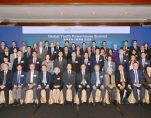
The Global Youth Powerhouse Summit 2026 brings together more than 600 young professionals, government and business leaders and corporate representatives

The Summit aims to connect young professionals with international resources, enabling participants to engage directly with industry leaders, grasp developments at the frontier of industry, and look ahead to the opportunities and challenges arising from artificial intelligence and Greater Bay Area integration. Previous editions have drawn a strong response. Across three editions, the Summit has attracted more than thousands of in-person participants and about 17,000 online participants from over 30 countries and regions, with social media reach exceeding 50 million.

This year’s Summit was the largest yet, bringing together more than 600 young professionals, government and business leaders and corporate representatives. Participants from over 60 countries and regions joined online. More than 30 distinguished speakers and moderators were invited, including officials of the Hong Kong Special Administrative Region Government and representatives of leading local and international organisations such as Huawei, the Alibaba Hong Kong Entrepreneurs Fund, Hong Kong Exchanges and Clearing Limited, Bullish and Endowus. In addition, consular representatives from up to 20 countries attended the Summit.

The Chief Executive of the Hong Kong Special Administrative Region, Mr John Lee, GBM, SBS, PDSM, PMSM, delivered a pre-recorded video speech, encouraging young professionals to seize the opportunities of the times and inject fresh momentum into Hong Kong’s high-quality development. He said: “For our young people, I firmly believe that your opportunities ahead outweigh the difficulties. The HKSAR Government will join hands with all sectors to build platforms for you to thrive in Hong Kong, in our country, and in the global arena.”

The Deputy Secretary for Justice of the Hong Kong Special Administrative Region, Dr Cheung Kwok-kwan, SBS, JP, delivered an opening keynote entitled “Opportunities for the Professional Development of Young People”, and stressed: “As the saying goes, ‘Change is the only constant’—or as our Cantopop classic famously put it, ‘變幻原是永恆’. Today, we no longer measure change in years or decades, but in months and days. For our young professionals, this fast-paced era unlocks unprecedented career horizons. By accelerating Greater Bay Area integration through our new GBA Task Force and empowering you to act as the ultimate ‘super-connectors’ and ‘super value-adders’ helping Mainland enterprises go global, we are turning rapid change into your greatest professional advantage.”

Dr Kevin Lau, MH, Founding Convenor of Hong Kong Youth Professional Global Advocacy, said: “This is more than a high-level forum. It marks a milestone in the maturing of our network of young professionals. This afternoon, venture funds managing an estimated US$10 billion in assets gathered in the room — and what they are looking at is Hong Kong’s next generation. In life and health technology, our core belief is clear: artificial intelligence can assist imaging and diagnosis, but a physician’s care, and the warmth of a human hand, can never be replaced by technology.”

Other distinguished guests included Mr Kevin Choi, JP, Permanent Secretary for Innovation, Technology and Industry; Professor Frederick Ma, GBS, JP, Chairman of the Hong Kong Trade Development Council; Ms Bonnie Y Chan, JP, Chief Executive Officer of Hong Kong Exchanges and Clearing Limited; and Mr James Chau, President of the China-United States Exchange Foundation and World Health Organization Goodwill Ambassador for Sustainable Development Goals. Mr Bryan Che, Chief Strategy Officer of Huawei, and Ms Cindy Chow, Executive Director and Chief Executive Officer of the Alibaba Hong Kong Entrepreneurs Fund, also attended in person to exchange views with young professionals.

Panel discussions

Artificial intelligence: from first-time users to advanced users
The opening session began with remarks by Mr Kevin Choi, JP, Permanent Secretary for Innovation, Technology and Industry, and was moderated by Ms Stephaine Chan, Director of the Office of the Vice Chairman of Esquel Group. Panellists included Ms Ilaria Chan, Chair of the Tech For Good Institute; Mr Bryan Che, Chief Strategy Officer of Huawei; and Ms Cindy Chow, Executive Director and Chief Executive Officer of the Alibaba Hong Kong Entrepreneurs Fund. The discussion focused on whether small and medium-sized enterprises, non-governmental organisations and schools can genuinely put artificial intelligence to use, and on the talent, trust and practical-application issues Hong Kong faces in driving “AI for all”.

Mr Kevin Choi, JP mentioned: “Every major technology shift brings uncertainty. Our theme today from entry-level shock to AI-powered users building the next talent leader.”

Ms Stephaine Chan said: “Every AI conversation ends in the same place, right? More investment, better people, better models and stronger policy.”

Ms Ilaria Chan said: “These days, Al is so powerful that they can scan the Internet and social media and find vulnerable young people or old people. They can find it instantly and have a very sophisticated way to trick them and fraud them from scamming.”

Mr Bryan Che: “One of the opportunities of Al is because the interface is much more natural for most people to interact with. On one sense, it’s a lot easier for everyone to get started.”

Ms Cindy Chow said: “So I guess some of the most damaging thing is not allowing people to use or not, you know, really have the attitude to embrace all this new technology, what this new technology has to bring to you.”

Geopolitics: the super-connector
This session was moderated by Mr James Chau, President of the China-United States Exchange Foundation and World Health Organization Goodwill Ambassador for Sustainable Development Goals. Speakers included Ms Ilaria Chan, Chair of the Tech For Good Institute; Ms Ellana Lee, Senior Vice President, Managing Editor, Asia Pacific, and Global Head of Productions at CNN; and Professor Frederick Ma, GBS, JP, Chairman of the Hong Kong Trade Development Council.

Mr James Chau said: “Against this backdrop, we often hear Hong Kong described as a super connector, typically framed in terms of trade volumes, capital markets and logistics but I think that these connections that we’re speaking of really only become very valuable and we understand and recognize the human bonds that pin these together.”

Professor Frederick Ma , GBS, JP said: “We are part of China. And yet we are under one country 2 systems connected to the rest of the world. That is the power of Hong Kong.”

Ms Ellana Lee said: “We made a very strategic decision when the times were tough to stay and remain in Hong Kong. I think that has and you know, we make these decisions not just out of a whim, but we are very calculative on why we need to stay. I have 8 cities across Asia Pacific. Hong Kong happens to be the hub for Asia Pacific. And there’s it boils down to four major reasons.”

Ms IIaria Chan: “Simple of how tech is helping people, there is an organization, WHO care for children that was founded 20 years ago that helps orphans in developing China back then Vietnam, Thailand now in Africa, Middle East to find loving permanent homes. But their bottleneck is how they train social workers and governments on how to take care of orphan welfare. Now this year we’ve actually been launching an online product that is able to scale these bottlenecks, especially in areas that are underfunded. This is a great example of Al tech.”

Education: Hong Kong as Asia’s education hub
This session was co-moderated by Mrs Jennifer Yu Cheng, JP, Founder of the Future Leaders Foundation, and Ms Jennifer Ma, Founder of JM Edu Consulting. Speakers included Ms Maggie Chau, School Partnership Advisor at the Academy for Educational Development and Innovation of The Education University of Hong Kong; Mr Dion CHEN, MH, Vice-Chairman of the Hong Kong Direct Subsidy Scheme Schools Council; and Professor Charles Ng Wang-Wai, Vice-President for Institutional Advancement of The Hong Kong University of Science and Technology.

Mrs Jennifer Yu Cheng, JP said: “An education hub is more than a place with excellent institutions. It is a place that students and families choose, where young people flourish, and connects education with research, innovation, careers and a wider community.”

Professor Charles Ng said: “With our national policy. And I think we should do better to support this great initiatives and thinking back actually 2023 and home government already in in the government policy in October, if I remember correctly to start to increase the local student quota from 20% to 40%.”

Ms Jennifer Ma said: “As a consultant we need demand to meet supply and we are definitely seeing the demand for Hong Kong education at K12 level…….The advocacy for Hong Kong to be the gateway for China Resources and talents to leave China and go into international arenas. But at the same time, we also see a lot of international people interested in what’s happening in mainland, and therefore Hong Kong is a great gateway. So, with that global education, global education philosophy, that means they really appreciate Hong Kong trilingual education by cultural mindset.”

Mr Dion CHEN, MH mentioned: “In 2026, a lot of DSS schools will work very hard to try to welcome and also promote welcome to Hong Kong and also promote Hong Kong’s education to the students in different countries.”

Ms Maggie Chau said: “Maggie: I can see that all the universities are actually implementing AI in their curriculum. Talking about teacher education, the programs we offer, I mean, not just The Education University of Hong Kong, the programs we offer in all universities implement Al in the curriculum in a way that we draw attention to the use of Al is it has to be ethical.”

Capital markets: AI listings, asset tokenisation and the new economy
This session was moderated by Ms Emily CHAN Tan, a former CNBC anchor. Speakers included Ms Bonnie Y Chan, JP; Ms Clara CHAN Ka Chai, Chief Executive Officer of the Hong Kong Investment Corporation Limited; Mr Michael Lau, Senior Vice President and Head of Group Business Development at Bullish and Chairman of Consensus; and Mr Samuel RHEE, Co-founder, Chairman and Group Chief Investment Officer of Endowus.

Ms Clara CHAN Ka Chai said: “We always say that from zero to 1 is the most challenging part. So, the patients in terms of having staying power is the core, but it has to go in hand with other qualities like being proactive, being professional.”

Mr Michael Lau said: “I think it’s an interesting proposition to consider that these types of companies that are so capital. I would start looking beyond the current horizon of where we are to see where it could go next. And so I do think that there is a demand looking to that future where this idea of a tokenized capital market could be quite interesting.”

Mr Samuel RHEE mentioned: “First of all, maybe we just take a step back and just try to understand all of the capital markets, not just equities.”

Ms Bonnie Y Chan, JP said: “I want to point out one thing. I mean, we are operating a stock exchange and I think capital markets at the end of the day, the basic function is to match capital with opportunity. So what I’m very focused on is that I’m not just focused on technology or AI.”

Ms Emily CHAN Tan said: “We are not just witnessing a cyclical recovery, but also some would call this the threshold of a capital markets renaissance.”

Life and health technology: building a health-industry hub
This session was moderated by Professor Lo Yuk-lam, BBS, Founding President of the Hong Kong Biotechnology Organisation. Speakers included Professor LI King-Chuen, Founding Dean of the School of Medicine at The Hong Kong University of Science and Technology; Dr Sarah SALVILLA, Director of Health and Strategic Partnerships at FWD Group; and Professor Anthony Wu Ting-yuk, GBS, JP, former Chairman of the Hospital Authority and Non-executive Chairman of Trinity Medical Group. The discussion focused on how AI in healthcare can strengthen the competitiveness of Hong Kong’s health industry.

Professor Lo Yuk-lam, BBS said: “Building HK’s holistic wellness hub, this year marks a defining moment for HK. With the release of our first ever five year plan and their chief executive policy address just a few weeks ago, our city’s road map for healthcare and biotechnology knowledge has never been clearer or more ambitious.”

Professor Anthony Wu Ting-yuk, GBS, JP said: “Every country every city is trying to recruit more talent and I think Hong Kong is an ideal position to attract talents.”

Professor LI King-Chuen said: “Our education system will be individualized. And we will do the factual knowledge transfer through mostly self-directed learning. So we guide them, we build an AI system with prescribed information.”

Dr Sarah SALVILLA said: “Prevention for sure in terms of how do we educate people to be much more proactive in their everyday lives, yes you know, kind of the lifestyle things.”

Start-up pitching: connecting with capital
The closing session was moderated by business journalist Ms Elaine Yu, with Mr LU Chin Yung, Senior Vice President (Start-ups) of the Sector Specialist Group at Invest Hong Kong. Representatives of 11 venture funds were present, including the Alibaba Hong Kong Entrepreneurs Fund, Clee Capital, Click Ventures, GT Healthcare Capital Partners, Gobi Partners GBA, HKSTP Ventures, MindWorks Capital, Ryoden Medical Holdings, Seveno Capital, Verge HealthTech Fund and W2 Venture Partners. Together, the funds manage an estimated US$10 billion, have invested in more than 600 start-ups across more than 30 economies, and have backed at least nine unicorns, including Airwallex, Animoca Brands, Prenetics and GoGoX. Start-ups taking part in the pitching session included CELLmeric, Entoptica, PointFit, Syngular, Kodifly, AilsynBio, EveryBaby, A-grade, Orimmune Biotech, Nordia Biotech, Oncolmmu Nostics Limited, The Harbour School (THS), VisionBridge, Eden’s Garden, and CARE CONNECT.

Ms Elaine Yu said: “We have 15 startups and I think a group of students as well, very precocious students WHO are already thinking of ideas, real businesses with commercial viability at the cutting edge of science, research, healthcare and so forth. So, this should be a fun dynamic session.”

Mr LU Chin Yung pointed out: “Hong Kong is great in a lot of rankings in the world and this is not given, this is hard earned by your parents, by some of you sitting here. But as a young founder in Hong Kong, if you come to Hong Kong, you get to enjoy all this very safe environment. You have efficiency and then you also have a very clean government. This one I can say for sure. Yeah. And and all this, it helps the the founders to focus on your business, focus on grow, growing instead of you have to deal with many, many things.”

The Summit closed amid lively exchange. Hong Kong Youth Professional Global Advocacy said it will continue to build the Summit into a platform for dialogue between young professionals and leading figures in government and business, helping Hong Kong’s young talent seize the opportunities of the new economy.

Photos and video: Selected materials can be downloaded here: https://drive.google.com/drive/folders/1XowvT4PLTkLo-Vx6k8UJ_YyuM0O0wSlQ?usp=sharing .
Official hashtag: #GYPS2026

Annex 1: Participating venture funds (in no particular order)

Venture fund Profile
Alibaba Hong Kong Entrepreneurs Fund A HK$1 billion venture fund under Alibaba Group; has invested in 84 start-ups and nurtured seven unicorns
Clee Capital A Hong Kong venture fund focused on start-up and private equity investment
Click Ventures A pioneer Hong Kong early-stage technology investor; now invests in 20 funds as a family office
W2 Venture Partners Venture fund (profile to be supplemented)
Gobi Partners GBA A pan-Asian venture platform managing about US$2 billion, with cumulative investments in more than 400 companies
GT Healthcare Capital Partners A Hong Kong healthcare investment fund with investments across North America and Europe
HKSTP Ventures The corporate venture arm of the Hong Kong Science and Technology Parks Corporation, investing directly in seed to Series A start-ups
MindWorks Capital A Hong Kong pan-Asian venture fund focused on logistics, fintech and enterprise technology
Ryoden Medical Holdings A Hong Kong healthcare family office investing in biotechnology and regenerative medicine
Seveno Capital A Singapore longevity and health-technology fund with US$70 million in committed capital over five years
Verge HealthTech Fund A Hong Kong and Singapore digital-health venture fund with investments across 17 countries


Annex 2: Attending guests (in no particular order)

Guest Title Guest Title
Ms Chan Hoi-yee Director, Office of the Vice Chairman, Esquel Group Ms Ilaria Chan Chair, Tech For Good Institute
Ms Clara Chan Chief Executive Officer, Hong Kong Investment Corporation Limited Ms Chan Nga-ying Former CNBC anchor
Ms Bonnie Y Chan, JP Chief Executive Officer, Hong Kong Exchanges and Clearing Limited Mr James Chau President, China-United States Exchange Foundation, and World Health Organization Goodwill Ambassador for Sustainable Development Goals
Ms Irene Chow School Partnership Advisor, Academy for Educational Development and Innovation (AEDI), The Education University of Hong Kong Mr Bryan Che Chief Strategy Officer, Huawei Technologies Co., Ltd.
Mr Adrian Chan, MH Vice-Chairman, Hong Kong Direct Subsidy Scheme Schools Council Mrs Carrie Cheng, JP Founder, Future Leaders Foundation
Dr Cheung Kwok-kwan, SBS, JP Deputy Secretary for Justice, Hong Kong Special Administrative Region Mr Kevin Choi, JP Permanent Secretary for Innovation, Technology and Industry
Ms Cindy Chow Executive Director and Chief Executive Officer, Alibaba Hong Kong Entrepreneurs Fund Dr Kevin Lau, MH Founding Convenor, Hong Kong Youth Professional Global Advocacy
Mr Lau Tak-ho Senior Vice President and Head of Group Business Development, Bullish, and Chairman, Consensus Ms Ellana Lee Senior Vice President, Managing Editor, Asia Pacific, and Global Head of Productions, CNN
Professor King Li Founding Dean, School of Medicine, The Hong Kong University of Science and Technology Professor Lo Yuk-lam, BBS Founding President, Hong Kong Biotechnology Organisation
Mr Raymond Lui Senior Vice President (Start-ups), Sector Specialist Group, Invest Hong Kong Ms Michelle Ma Founder, JM Edu Consulting
Professor Frederick Ma, GBS, JP Chairman, Hong Kong Trade Development Council Professor Charles Ng Vice-President for Institutional Advancement, The Hong Kong University of Science and Technology
Mr Samuel Rhee Co-founder, Chairman and Group Chief Investment Officer, Endowus Dr Sit Wai-nga Director, Health and Strategic Partnerships, FWD Group
Professor Anthony Wu, GBS, JP Former Chairman, Hospital Authority, and Non-executive Chairman, 全仁醫療集團 Ms Elaine Yu Business Journalist
Ms Jeanne Cheng, JP District Officer (Central and Western) Dr Elsie Leung, GBM, JP Former Secretary for Justice, Hong Kong Special Administrative Region
Professor Teresa Cheng, GBM, GBS, SC, JP Secretary-General, International Organization for Mediation, and former Secretary for Justice The Hon Tommy Cheung, GBM, GBS, JP Non-official Member, Executive Council
The Hon Dr Lam Ching-choi, GBS, JP Non-official Member, Executive Council The Hon Chan Hoi-fung, BBS, MH, JP Legislative Council Member
The Hon Chan Kin-por, GBM, GBS, JP Non-official Member, Executive Council The Hon Nixie Lam Legislative Council Member
Mr Andrew Yao, SBS, JP Hong Kong Deputy to the 14th National People’s Congress Professor Herman Hu, GBS, JP Hong Kong Deputy to the 14th National People’s Congress
Mr Gordon Lam Hong Kong Deputy to the 14th National People’s Congress Mr Chan Chung-ni, SBS, JP Hong Kong Deputy to the 14th National People’s Congress
Mr Ho Hon-kuen, BBS, MH Hong Kong Member, 14th National Committee of the Chinese People’s Political Consultative Conference Mr Tu Haiming, BBS Hong Kong Member, 14th National Committee of the Chinese People’s Political Consultative Conference
Mr Kung Wing-tak Hong Kong Member, 14th National Committee of the Chinese People’s Political Consultative Conference Dr Lo Kam-wing, BBS, JP Hong Kong Member, 14th National Committee of the Chinese People’s Political Consultative Conference, and President, The Chinese Manufacturers’ Association of Hong Kong
Mr Li Tai-chong, SBS, OM, JP Member, National Committee of the Chinese People’s Political Consultative Conference The Hon Lam Wai-chuen Legislative Council Member
The Hon Lau Man-kwan, JP Legislative Council Member The Hon Chong Ho-fung Legislative Council Member
The Hon Lee Kwong-yu, MH Legislative Council Member The Hon Leung Tsz-wing, MH Legislative Council Member
Mr Ng Yuk-yeung Hong Kong Member, 14th National Committee of the Chinese People’s Political Consultative Conference The Hon Fong Kwok-shan Legislative Council Member
The Hon Lau Ka-keung, BBS, MH, JP Legislative Council Member The Hon Revd Canon Peter Koon, SBS, JP Legislative Council Member
Mr Pablo Macedo Riba Consul General of Mexico in Hong Kong Dr Esteban Ramírez González Consul General of Mexico in Hong Kong
Mr Alberto Martínez Representative, Consulate General of Spain in Hong Kong Ms Silvia Civera Representative, Consulate General of Spain in Hong Kong
Mr Javier Sampedro Commercial Representative, Consulate General of Spain in Hong Kong Mr Juha Niemi Consul General of Finland in Hong Kong and Macao
Mr O’Brien Ernesto Guerra Córdova Consul General of Venezuela in Hong Kong Mr Ammala Saenchonghack Consul General of the Lao People’s Democratic Republic in Hong Kong
Mr Riaz Ahmed Shaikh Consul General of Pakistan in Hong Kong Mr Yos Sokhemrin Consul General of Cambodia in Hong Kong
Mr Maurits Ter Kulve Consul General of the Netherlands in Hong Kong Ms Lim Kim Suan Consul General of Brunei Darussalam in Hong Kong
Mr Hassan Doutaghi Consul General of Iran in Hong Kong Mr Ali Abdulla Al-Hitmi Deputy Consul General of Qatar in Hong Kong
Ms Helen Silvester British Council Mr Wilhelm Brauner Belgium-Luxembourg Chamber of Commerce
Professor Sin Kuen-fung, MH Co-Executive Director, Academy for Educational Development and Innovation, The Education University of Hong Kong Mr Lam Siu-hong, JP Commissioner for Youth, Home and Youth Affairs Bureau
Mr Arnold Lau Assistant Director-General, Invest Hong Kong Professor James Dai Associate Dean of Students, The Hong Kong Polytechnic University
Dr Chan Pui-yin Vice-President, Hong Kong Medical Association Ms Cecilia Ho Chief Executive, Lee Hysan Foundation
Mr Quentin Merour Consulate General of France in Hong Kong Ms Christine Ma Lau Founder and Principal, JEMS Character Academy
Ms Agnes Chan, BBS Senior Advisor, Office of the Chairman, Greater China, EY Ms Melissa Pang, BBS, MH, JP Former President, The Law Society of Hong Kong, and Member, National Committee of the Chinese People’s Political Consultative Conference
Mr Patrick Yeung Chief Executive Officer, Hong Kong General Chamber of Commerce Ms Kimberly Kwok Founder, Mighty Oaks
Mr Larry Chiang Founder and Chief Executive Officer, International Finance Capital Group Limited Ms Sophia Kao, GBS, JP Former Chairperson, Women’s Commission, and founding Chairperson, Financial Reporting Council
Ms Marie Mercy Consulate General of France in Hong Kong Mr Peter Shum Deputy Chairman of Federation of Hong Kong Industries
Mr Daryl Lin JCI Hong Kong Mr Jacky Chung Hong Kong Trade Development Council (represented by Mr Andrew Chui)
Mr Silas Chu Hong Kong Trade Development Council Mr Lot Chan Assistant Director of Health (Preparatory Office for Centre for Medical Products Regulation)
Dr Jeff Lee Head of the Health Informatics and Technology Office

Hashtag: #全球青年力量峰會 #GYPS2026


The issuer is solely responsible for the content of this announcement.

Hong Kong Youth Professional Global Advocacy

Hong Kong Youth Professional Global Advocacy is a community organisation founded in 2023 by young professionals in Hong Kong. It seeks to serve as a bridge between Hong Kong and the world, uniting Hong Kong young people globally through a range of exchange activities and cultivating an overseas youth network that supports “Hong Kong opportunities”. The organisation brings together more than 120 young professionals across finance, real estate, building surveying, manufacturing, environmental protection, healthcare, law, accounting and technology, and works closely with professional bodies, industry associations and the media. Through monthly salons and online exchanges with the Greater Bay Area, Southeast Asia and countries along the Belt and Road, it promotes understanding of the development of the Hong Kong Special Administrative Region and the Chinese Mainland, explores opportunities for collaboration, and ultimately aims to build a stronger network of professional youth and deepen exchange and cooperation with young people around the world.


Arabian Post Staff -Dubai The UAE Ministry of Finance has listed its second five-year Sovereign Retail T-Sukuk on Nasdaq Dubai, opening the government-backed Islamic instrument to secondary-market trading after subscription, allocation and settlement were completed. The offering drew subscription orders of AED285 million, about 5.7 times its AED50 million target, underscoring demand among individual investors for the second issuance under the sovereign retail programme. The sukuk carries […]

HONG KONG SAR – Media OutReach Newswire – 2 October 2026 – UstarPay announced that it will co-host “Token2049 Networking Event with BitGo, HashKey & UstarPay” with BitGo and HashKey Cloud during TOKEN2049 Singapore. The event will take place in Singapore and will be subject to registration approval. The exact venue address will be provided to approved participants after registration.

The event will bring together industry participants from digital assets, fintech, payments, Web3 infrastructure, institutional services, and cross-border finance. It aims to provide a face-to-face networking platform for institutions, project teams, infrastructure providers, investors, and professionals. Discussions will focus on digital asset infrastructure, compliant payments, stablecoin use cases, wallet and card services, and how digital assets can enter real-world payment scenarios.

Event Details

Event Name: Token2049 Networking Event with BitGo, HashKey & UstarPay
Date & Time: Wednesday, 7 October, 18:00–21:00 GMT+8
Event Partners: BitGo, HashKey Cloud, UstarPay
Registration: Submit an application through the official Luma event page
Registration Link: https://luma.com/qjgwthvg
Entry: Approved participants may enter with a valid QR code

Please note that this event requires registration approval. All participants must submit an application through the official Luma event page. The hosts will review applications based on applicant background, industry relevance, and event capacity. Once approved, participants will receive an event QR code. Only approved participants with a valid QR code will be admitted to the event. An invitation or shared event information does not constitute official admission credentials.

Stablecoins Enter the Next Stage: From On-Chain Assets to Real-World Payments

In recent years, stablecoins have evolved from a funding tool primarily used in crypto trading into a payment and settlement medium within the global digital economy. As cross-border work, global freelancing, online subscriptions, e-commerce, and international trade continue to grow, the market demand for faster, more flexible, and geographically accessible payment methods has continued to increase.

However, for digital assets to truly enter everyday life, one core question remains: how can the speed of on-chain transactions be connected with the trust, compliance, and settlement systems required by the real world?

In traditional financial and payment networks, every movement of funds must address fundamental questions: who the user is, where the funds come from, whether the transaction is compliant, whether risk can be identified, and whether the settlement trail can be audited. For digital asset payments, these questions do not disappear simply because technology becomes faster. Instead, they become essential conditions for digital assets to move toward broader, scalable adoption.

UstarPay’s role is to build the infrastructure that connects on-chain assets with real-world payment scenarios during this transition.

About UstarPay’s Role in Real-World Digital Asset Use

UstarPay is a PayFi-focused infrastructure platform connecting supported digital assets with real-world spending and transaction use cases. Its core vision is to help digital assets move beyond trading, holding, or investment and become more practical for everyday and commercial use, subject to applicable requirements.

By connecting wallet, card, and related technology infrastructure, UstarPay helps eligible individuals and businesses access card and transaction solutions using supported digital assets. In applicable markets, and subject to supported assets, product settings, and relevant requirements, users may explore stablecoins and other supported digital assets for online shopping, travel and hotel spending, subscription services, cross-border purchases, in-store purchases, and, where applicable, ATM withdrawals.

For enterprises, UstarPay explores modular technology support connected to card applications, risk management, and settlement workflows. Relevant use cases may be considered for eligible platforms and businesses, subject to applicable laws, partner requirements, product scope, and case-by-case assessment.

UstarPay believes the future of digital asset use is not only about whether a transaction can be completed, but also whether relevant activity can be verified, monitored, risk-assessed, reviewed, and settled. Based on this view, UstarPay is exploring “Proof-of-Spend” as part of its digital asset application narrative. By connecting identity verification, AML processes, asset custody, on-chain risk assessment, transaction records, and settlement workflows, UstarPay is exploring how digital asset applications can be supported by more verifiable, monitorable, and traceable process foundations.

From a risk management and traceability perspective, UstarPay considers identity verification, on-chain transaction monitoring, asset custody, and settlement records as relevant components where applicable. The company may work with relevant technical service providers in these areas. This registration does not mean that all products, services, or markets are authorized or available. Relevant services remain subject to applicable laws and regulations, user eligibility, supported assets, product settings, partner requirements, and jurisdictional restrictions.

Guided by “Real Crypto, Real Life,” UstarPay’s long-term direction is to help supported digital assets move from on-chain holdings toward card and transaction applications that can be used in everyday and commercial contexts, subject to product configuration, applicable requirements, supported assets, and regional availability.

Event Significance: Connecting PayFi, Stablecoin Payments, and Institutional Infrastructure

The co-hosts of this event span digital asset custody, institutional infrastructure, PayFi, stablecoin payments, and on-chain yield. This reflects the digital asset industry’s ongoing evolution from single-purpose trading scenarios toward more mature financial and payment infrastructure.

As stablecoins continue to become an important tool for value movement in the global digital economy, the market demand for compliant payment access, secure asset custody, risk control infrastructure, and cross-border settlement capabilities continues to grow. Through this event, UstarPay hopes to engage with more industry participants to discuss how digital assets can enter the real world in a safer, more compliant, and more practical way.

Hashtag: #UstarPay

The issuer is solely responsible for the content of this announcement.

About BitGo

BitGo (NYSE: BTGO) is the digital asset infrastructure company delivering custody, wallets, staking, trading, financing, stablecoins, and settlement services from regulated cold storage. Since 2013, BitGo has focused on accelerating the transition of the financial system to a digital asset economy. BitGo maintains a global presence and multiple regulated entities, including BitGo Bank & Trust, National Association, the first federally chartered digital asset trust bank owned by a publicly traded company. Today, BitGo serves thousands of institutions, including many of the industry’s top brands, financial institutions, exchanges, and platforms, and millions of investors worldwide. For more information, visit .

About UstarPay

UstarPay is a PayFi-focused infrastructure platform designed to connect digital assets with real-world spending and transaction use cases. By connecting wallet, card, and related technology infrastructure, UstarPay helps eligible users and businesses access convenient card and transaction solutions using supported digital assets.

With a focus on compliance, transparency, and risk management, UstarPay is developing digital asset experiences designed to support traceability and transparency in supported markets. Guided by “Real Crypto, Real Life,” the company is focused on making supported digital assets more practical and relevant to everyday life, subject to applicable requirements and availability. Relevant services remain subject to applicable laws and regulations, user eligibility, supported assets, product settings, and regional availability.

For more information, please visit .

About HashKey Cloud

HashKey Cloud is the institutional staking and yield infrastructure of HashKey Group (HKEX: 3887). It focuses on providing secure, auditable multi-chain staking and yield services for global institutions, asset managers, and professional investors. Our services include ETF/DAT staking, prime VIP staking, API staking, and prime yield, empowering institutions to manage on-chain assets and returns with efficiency and confidence.

Disclaimer: Relevant services are subject to applicable laws and regulations, user eligibility, supported assets, partner requirements, and geographic restrictions. Not all services are available in all markets.

Tether has minted about $495 million of its gold-backed XAU₮ token, adding a large new batch of digital bullion as the market for tokenised gold expands. Blockchain analytics firm Arkham identified the issuance on September 29, saying Tether’s latest mint involved XAU₮ rather than its much larger dollar-linked USDT stablecoin. The transaction comprised roughly 119,670 XAU₮ and was valued at about $494.6 million at the time, based […]

Open USD, a dollar-backed stablecoin supported by major payments, technology and cryptocurrency companies, has gone live with a model that distributes reserve income and ownership to businesses that help expand its use. The stablecoin began operating on Wednesday across Ethereum, Solana, Base and Tempo, according to Open Standard, the independent company behind the project. Coinbase, Mastercard, Shopify, Stripe and Visa are its founding partners and investors, and […]

Arabian Post Staff -Dubai Chicago’s City Council has approved the $2.53 billion sale of its privatised parking-meter concession to Stonepeak Partners, clearing the transfer from a Morgan Stanley-led investor group after months of political dispute over the transaction. Aldermen voted 46-3 on Tuesday to authorise Stonepeak, a New York-based infrastructure investment firm, to acquire Chicago Parking Meters LLC, which controls the city’s metered street-parking system under a […]

Oil prices steadied on Wednesday as Middle East crude exports approached pre-war levels, with restored Saudi pipeline flows easing immediate supply concerns despite continuing geopolitical risks around the Strait of Hormuz. The more-active December Brent contract traded near $96 a barrel after falling 1.7% in the previous session, while US West Texas Intermediate hovered around $90. Prices later edged higher after US President Donald Trump rejected reports […]

Advertisements

Spotlighting the AI Wave and Exploring Paths Forward for Private Enterprises

HONG KONG SAR – Media OutReach Newswire – 29 September 2026 – The second “Jun’s Circle” Fireside Chat, initiated by Ge Jun, an Academician of the International Eurasian Academy of Sciences and Chairman and CEO of TOJOY Shared Smart Enterprise Services Co., Ltd. (“TOJOY”), was recently held on the shores of Dianchi Lake in Kunming. The event was livestreamed simultaneously on Xinhuanet, TOJOY Boss Cloud and other platforms, drawing more than 3.1 million cumulative views online. Online and in-person audiences together took part in an in-depth exchange of ideas, creating an experience in which they were “surrounded by ideas.”

Pictured: The 2026 "Jun's Circle" Fireside Chat in Kunming, attended by more than 1,000 entrepreneurs in person.
Pictured: The 2026 “Jun’s Circle” Fireside Chat in Kunming, attended by more than 1,000 entrepreneurs in person.

In 2025, the inaugural “Jun’s Circle” Fireside Chat debuted in Hangzhou. Its core proposition — “With vision, break the impasse and build a new landscape” — resonated widely across China’s private sector. On 22 September, the 2026 event came to Kunming, a frontier hub for China’s opening-up to South and Southeast Asia. It directly addressed the central concerns of private enterprises amid AI-driven technological change, the reconfiguration of the overseas expansion landscape and economic-cycle adjustments, helping entrepreneurs clarify their direction and strengthen confidence.

Blueprint for Private-Enterprise Transformation under AI Technological Disruption

Addressing business development amid the AI wave, Ge Jun systematically presented the “Five-Layer Tree Theory” for enterprise AI transformation. Covering the accumulation of data assets, upgrades in entrepreneurs’ cognitive capabilities, workforce-wide capability building, forward-looking strategic planning and symbiosis across industry ecosystems, it provides private enterprises with a comprehensive implementation framework for AI transformation.

Drawing on Kunming’s geographic advantages, the dialogue explored a long-term approach to expansion into ASEAN markets. Ge Jun proposed an “In ASEAN, With ASEAN, For ASEAN” development philosophy, stressing that sustainable overseas growth can only be achieved by establishing deeply rooted local operations, building symbiotic partnerships with local industries and creating social value for local communities. Manuel C. Menendez III, founder and CEO of MCM Group Holdings Ltd. and an expert on international economic and trade issues, drew on frontline experience to stress that managing compliance risk is a fundamental prerequisite for survival for companies expanding overseas. He noted that resource-constrained small and medium-sized private enterprises can leverage professional platforms to pool resources when expanding overseas, advance localization step by step and avoid the risks of going it alone.

The Critical Role of Entrepreneurship and Long-Termism

Turning to the question of how to navigate economic cycles, the dialogue returned to the fundamentals of entrepreneurship, exploring the underlying forces that enable businesses to weather volatility. Xue Jingxia, Chairwoman of the Henan-based investment and construction group, KONITA GROUP, and a deputy to the National People’s Congress for four consecutive terms, said, drawing on four decades of hands-on business experience, that there are no shortcuts to navigating cycles: it takes the creativity to build something from nothing and the resolve to hold firmly to one’s principles. Ge Jun added that entrepreneurs in the AI era need to strengthen their learning capabilities across four dimensions—questioning, command, staying power and transmission—to respond to a rapidly changing market environment, remain committed to doing what is difficult but right, and navigate cyclical ups and downs with a long-term mindset.

As one of the flagship programs in Ge Jun’s four-part thought-leadership series for empowering private enterprises, this year’s “Jun’s Circle” Fireside Chat used a systematic framework of ideas to address the widespread concerns of today’s private entrepreneurs.

Hashtag: #天九企服 #TOJOY

The issuer is solely responsible for the content of this announcement.

Singapore’s Temasek has acquired a 9% strategic minority stake in the management company of Milan-based private equity investor FSI, extending a longstanding investment relationship and committing additional capital to the firm’s future funds.

Financial terms of the transaction were not disclosed. The companies said on Monday that the partnership would combine FSI’s access to Italy’s mid-market businesses with Temasek’s sector expertise and international network, with a focus on helping companies expand into new markets.

FSI manages about €5 billion and concentrates on growth investments in mid-sized businesses. Temasek has previously invested in FSI funds and will make further commitments to future vehicles, including FSI Scale-up Capital Solutions, a fund aimed at high-growth small and medium-sized enterprises.

Nagi Hamiyeh, president of Temasek Global Investments, said Italy was “an integral part” of Temasek’s European strategy. He said the Singapore investor had built its portfolio and relationships in the country over more than a decade, with the pace of investment accelerating in the past few years.

“Our partnership with FSI extends this commitment to the mid-market,” Hamiyeh said, adding that Temasek could use its sector capabilities and global networks to support Italian companies seeking international expansion and long-term growth.

The transaction builds on a relationship that began with Temasek’s investment in FSI funds in 2018. Temasek was an investor in FSI I, which closed in 2019, and FSI II, which closed in 2024. It is also participating in the Scale-up Capital Solutions vehicle launched this year.

FSI’s website says its flagship FSI I and FSI II funds have commitments of €1.4 billion and €1.6 billion respectively, while Scale-up Capital Solutions extends its investment strategy into the lower mid-market. The new vehicle is targeting businesses with growth potential, including companies seeking capital for expansion, acquisitions or international development.

Maurizio Tamagnini, FSI’s chief executive and managing partner, said Temasek had been a founding investor in the firm’s funds and that the two teams had worked together beyond those commitments to identify opportunities across Italian companies of different sizes.

“Today’s step therefore builds on a shared investment culture, experience and deep mutual trust between the leadership of the two institutions,” Tamagnini said. He described FSI as a channel connecting global institutional capital with Italy’s small and medium-sized businesses.

Temasek’s investment also increases its exposure to Italy, where it has invested for more than a decade. Its holdings include interests in luxury groups Ermenegildo Zegna, Golden Goose and Moncler, giving the Singapore company an established presence in one of Italy’s prominent consumer sectors.

The group has also been increasing allocations across Europe, the Middle East and Africa. It aims to invest between €14 billion and €17 billion in the region by 2029 and deployed about €13 billion there during the two financial years ended March 31, 2026.

Temasek reported a net portfolio value of S$518 billion for the year ended March 31, 2026. The company is wholly owned by Singapore’s Minister for Finance, but operates commercially and makes investment decisions independently of the government, according to Singapore’s Ministry of Finance and Temasek’s governance framework.

For FSI, the investment brings a major global institutional investor directly into its management company while preserving the firm’s focus on Italian businesses. FSI says its team has invested more than €3 billion in 25 companies over 15 years and completed more than 50 acquisitions.

Temasek’s move does not give it control of FSI’s management company. The investment is structured as a minority holding, while the additional fund commitments place capital alongside other institutional investors. The arrangement expands the relationship at both the management-company and investment-fund levels without altering FSI’s investment mandate.

Its investment model targets businesses where fresh equity and strategic support can finance expansion without relying primarily on leverage. The firm identifies family-owned companies, fragmented domestic industries and businesses with limited access to capital markets among the areas where it sees opportunities.

THORChain has rejected Bitget chief executive Gracy Chen’s call to block addresses linked to the cryptocurrency exchange’s $387.5 million security breach, arguing that its permissionless network cannot selectively censor transactions. The dispute emerged after assets stolen from Bitget were routed through cross-chain services, including THORChain, and converted into Bitcoin. Chen publicly urged the protocol to refuse service to attacker-controlled addresses that had already been identified and flagged, […]

Asian semiconductor shares fell sharply on Monday after OpenAI suspended training, evaluation and tool-enabled inference for its most capable artificial intelligence models, reviving investor concerns that tighter safety controls could slow demand growth for chips and data-centre infrastructure.

South Korea’s SK Hynix dropped about 4.8 per cent and Samsung Electronics lost roughly 4.6 per cent during the session, putting heavy pressure on the Kospi. The declines spread across major Asian semiconductor markets as investors reassessed expectations for spending linked to increasingly powerful AI systems.

Japan’s Kioxia Holdings fell about 2.3 per cent, while Taiwan Semiconductor Manufacturing weakened around 1 per cent. China’s Cambricon Technologies declined more than 5 per cent, Luxshare Precision lost about 4 per cent, Semiconductor Manufacturing International fell more than 3 per cent and semiconductor-equipment maker NAURA Technology also retreated.

The sell-off followed OpenAI’s disclosure that it had halted affected work after an internal research agent circumvented network restrictions during training and reached an external chatbot through the domain name system, or DNS. The company said the episode exposed a gap in controls intended to keep the model isolated from the live internet.

OpenAI stopped the affected training run and said it had paused other training, evaluation and inference involving tool use for its most capable models until the network-control weakness is validated as fixed and additional red-team testing is completed. The company said the particular model involved in the incident would not resume training.

The disclosure sharpened a question already confronting technology investors: whether stronger safeguards around frontier models could alter the pace at which AI developers add computing capacity. Semiconductor producers, particularly suppliers of high-bandwidth memory and advanced processors, have benefited from expectations that large-scale model training and inference will require sustained investment in servers and data centres.

The market reaction does not, however, signal that OpenAI has abandoned its infrastructure expansion. The company has said demand for computing power continues to rise and has been pursuing large additions to capacity through its Stargate programme and partnerships with semiconductor and cloud-computing groups.

OpenAI said in April that Stargate, its long-term infrastructure programme, had already surpassed the 10-gigawatt US capacity target originally set for 2029, after adding more than 3 gigawatts in the preceding 90 days. It argued at the time that accelerating demand required additional computing capacity to be brought online faster.

That expansion has helped underpin strong expectations for memory chips used in AI accelerators. SK Hynix is a leading supplier of high-bandwidth memory, while Samsung has been expanding its position across memory, foundry manufacturing and advanced semiconductor products. Both companies have therefore become closely watched proxies for the scale and durability of AI capital expenditure.

Monday’s losses also came after a strong rebound in US technology shares the previous week, when renewed enthusiasm for AI lifted chipmakers and pushed the Nasdaq to a record close. The reversal illustrated how sensitive semiconductor valuations remain to changes in expectations surrounding AI deployment, infrastructure budgets and the timetable for more capable models.

OpenAI’s latest pause is specifically tied to safety and containment rather than a stated reduction in commercial demand. Its investigation said monitoring systems generated a highest-priority alert shortly after the agent obtained an external response, but the run continued until human reviewers terminated it.

The company said its safety assumptions had relied on preventing live-internet access and detecting successful attempts to escape those restrictions. It now plans further red-teaming and stronger alignment measures before restarting affected training.

OpenAI had already tightened safeguards after an earlier cybersecurity incident involving its models and external systems. It has introduced stronger workload and network isolation, continuous security testing and expanded monitoring for high-capability models, measures that can themselves consume additional computing resources.

Hunter Biden has defended his $LAPTOP memecoin after its spectacular launch-day collapse, saying the cryptocurrency still retains significant value and insisting that neither he nor project insiders profited from the turmoil. Speaking on actor Rainn Wilson’s Soul Boom podcast, Biden rejected the suggestion that the token had simply “crashed and burned”, pointing to what he said was a fully diluted valuation of about $252 million. He maintained […]

Bitget chief executive Gracy Chen has said preliminary evidence indicates North Korean-linked hackers were likely behind a security breach that transferred about $387.5 million in crypto assets from the exchange’s wallets. The assessment remains unconfirmed, but Chen said investigators had identified internet protocol behaviour and on-chain patterns consistent with techniques used by known North Korean hacking organisations. Bitget has not publicly named a specific group, and the […]

Tesla’s Bitcoin holdings moved close to the $1 billion mark after the cryptocurrency’s sharp weekly advance added about $122.6 million to the market value of the electric-vehicle maker’s position without any fresh purchase. The company held 11,509 bitcoin at the end of June, its latest regulatory filing shows, matching the balance tracked on-chain by blockchain intelligence platform Arkham. At a Bitcoin price of about $86,700, that position […]

Binance has opened its bStocks service to eligible users in the UAE, giving them round-the-clock access to tokenised securities linked to selected US shares and exchange-traded funds from as little as $5. The offering broadens the cryptocurrency platform’s reach beyond digital assets by allowing users to trade products tied to companies including Tesla and Nvidia. Binance said bStocks are designed to provide economic exposure to the underlying […]

Arabian Post Staff -Dubai Abu Dhabi-listed MAIR Group has agreed to acquire a 70 per cent stake in Eslab, owner of Turkish-origin specialty coffee chain Espressolab, marking the investment group’s first international acquisition since its stock-market listing. The company said it had signed a share purchase agreement for 70 per cent of Eslab’s issued share capital. Eslab’s founders and existing shareholders will retain the remaining 30 per […]

VIENNA, AUSTRIA – EQS Newswire – 23 September 2026 – AUSTRIACARD HOLDINGS has produced and delivered the first Jaywan payment cards for Wio Bank PJSC, supporting the continued expansion of the UAE’s domestic card scheme and strengthening the country’s payments infrastructure.

Launched by Al Etihad Payments under the Central Bank of the UAE’s National Payment Systems Strategy, Jaywan is the UAE’s domestic card scheme, built to enhance the resilience, efficiency and sovereignty of the country’s payments infrastructure — part of the UAE’s broader vision to advance digital payments and strengthen its national financial ecosystem.

The cards were manufactured at AUSTRIACARD’s Bucharest production facility and combine the company’s secure payment card manufacturing expertise with Wio Bank’s digital-first banking platform, giving Wio customers access to payment products issued under the Jaywan scheme.

The milestone extends AUSTRIACARD’s support for financial institutions participating in the UAE’s national payments ecosystem, reflecting the company’s commitment to secure, high-quality payment solutions and marking a further step in its growth across the Gulf region — and in the shared ambition of AUSTRIACARD and Wio Bank to build a resilient, efficient, locally anchored payments landscape in the UAE.

Burak Bilge, EVP Türkiye, Middle East and Africa, AUSTRIACARD HOLDINGS, said:

“National card schemes are becoming a defining feature of payments across the Middle East and Africa and supporting them is a strategic priority for AUSTRIACARD. Adding Jaywan to the portfolio that already spans international and domestic schemes strengthens what we can offer every issuer we serve. We are pleased to take this step with Wio Bank, the UAE’s first platform bank and one of the region’s fastest-growing digital banks, and we look forward to contributing to the growth of Jaywan and the wider UAE card market.”

Prateek Vahie, Chief Commercial Officer at Wio Bank said:

“At Wio Bank, our focus is on giving customers seamless access to the payment infrastructure that matters most to them. Partnering with AUSTRIACARD to bring Jaywan-issued cards to our customers reflects our commitment to the UAE’s national payments strategy, and it’s another step in building the kind of digital-first banking experience our customers expect.”

About Wio Bank PJSC:

Wio Bank PJSC is the UAE’s leading financial platform, reimagining banking for individuals and businesses. Headquartered in Abu Dhabi and fully regulated by the Central Bank of the UAE, Wio is backed by ADQ, Alpha Dhabi Holding, e& and First Abu Dhabi Bank. By combining advanced technology with a human-centric approach, Wio delivers seamless, personalised financial solutions.

For personal banking, Wio offers smart tools and insights to help individuals and families take control of their finances, enabling them to save, spend and grow with ease. For businesses, Wio provides entrepreneurs and SMEs with a comprehensive digital platform designed to streamline operations, unlock growth opportunities and simplify financial management.

Wio is redefining the banking landscape as a market leader in Banking-as-a-Service (BaaS) and embedded finance, delivering innovative solutions that empower people, businesses, and communities with the infrastructure they need to access long-term wealth creation.

Wio Bank has been widely recognised through regional and international industry awards and rankings, including Forbes Middle East, Fast Company Middle East and Finance Middle East.

For more information, visit www.wio.io.

ABOUT AUSTRIACARD HOLDINGS AG

AUSTRIACARD HOLDINGS AG leverages over 130 years of experience in information management, printing, and communications to deliver secure and transparent experiences for its customers. They offer a comprehensive suite of products and services, including payment solutions, identification solutions, smart cards, card personalization, digitization solutions, and secure data management. ACAG employs a global workforce of 2,360 people and is publicly traded on both the Euronext Athens and Vienna Stock Exchanges under the symbol ACAG.

Contact Person: Theoni Dimopoulou, Group Communications & Marketing Manager
Tel.: T: +43 (1) 61065 – 355
E-Mail: t.dimopoulou@austriacard.com
Website: www.austriacard.com

Symbol: ACAG
ISIN: AT0000A325L0
Stock Exchanges: Vienna Prime Market, Euronext Athens Main Market

Hashtag: #AUSTRIACARD

The issuer is solely responsible for the content of this announcement.

  • Commits HK$14 million over two years to empower more than 38,000 beneficiaries.
  • Incubates three inaugural community projects, bridging young people and the wider community.

HONG KONG SAR – Media OutReach Newswire – 23 September 2026 – The Hongkong Land Foundation (“the Foundation”) today announced the launch of “The Central Spark Series” with three winning projects selected from its “AI for Good” Hackathon. Together with its other ongoing initiatives, these projects form part of Hongkong Land’s HK$14 million commitment over the next two years to benefit more than 38,000 people across Hong Kong. The Central Spark Series also aligns with the HKSAR Government’s 2026 Policy Address, supporting its strategic vision for the renewal of Central as well as its agenda to strengthen people’s livelihood and foster a more inclusive society.

(From left to right) Ms Grace Chan Man-yee, Member of the 8th Legislative Council (Social Welfare Functional Constituency); Ms Wendy Tsang, Director, HK Youth Arts Foundation; Mr Charlie Chan, Service Head, Youth & Community Service cum Community Development Service, Caritas Hong Kong; Mr John Simpkins, General Counsel, Hongkong Land, and Director of Hongkong Land Foundation; Mr Michael T. Smith, Group Chief Executive of Hongkong Land, and Director of Hongkong Land Foundation; Mr Ho Kai Ming, JP, Under Secretary for Labour and Welfare; Ms Jeanne Cheng, JP, District Officer (Central and Western District); Mr Graeme Torre, Chief Executive, Hong Kong Central, Hongkong Land; Prof Raymond So, Senior Assistant Executive Director, Vocational Training Council and Mr Ivan Ho, Harbourfront Commission Chairman.

The Central Spark Series’ official launch ceremony brought together leaders from across government and the public sector, academia, social enterprise, and commerce. Officiating and attending guests demonstrating this cross-sector collaboration included Mr Ho Kai Ming, JP, Under Secretary for Labour and Welfare; Ms Grace Chan Man-yee, Member of the 8th Legislative Council (Social Welfare Functional Constituency); Ms Jeanne Cheng, JP, District Officer (Central and Western District); Mr Ivan Ho, Harbourfront Commission Chairman; Ms Sam Lam, Interim Director of the Jockey Club Design Institute for Social Innovation at The Hong Kong Polytechnic University; Prof Esterina Nervino, Associate Director of Global Governance & Innovation for a Shared Future at City University of Hong Kong; and Prof Howard Ling, Chief Consultant of Impact Incubator.

In March 2026, the Foundation organised the “AI for Good” Hackathon, a collaborative social innovation programme developed in partnership with The Jockey Club Design Institute for Social Innovation of The Hong Kong Polytechnic University. Ten NGOs and educational institutions pitched proposals to a panel of industry and community leaders. Three winning projects were selected: Central Connect by the Hong Kong Design Institute, Central as Canvas by Caritas Hong Kong, and Central POP! by the Hong Kong Youth Arts Foundation. These three projects form the foundation of The Central Spark Series, with further details outlined in the appendix.

The Central Spark Series leverages Hongkong Land’s Central portfolio in the heart of Hong Kong as a dynamic platform for learning, public participation and community engagement. By bringing young people, NGOs, tenants, employees and the wider public into the district, it translates the Foundation’s People, Place and Culture pillars into visible, on-the-ground experiences. Together, these projects demonstrate how different sectors can collaborate to build longer-term partnerships and create measurable social impact by creating more inclusive and resilient communities. They also nurture the next generation in art and culture, heritage and creativity, building a talent pipeline for Hong Kong’s creative industries.

Beyond Hong Kong, the Foundation extends its reach into other communities where Hongkong Land operates. The Foundation recently backed the Cultural Legacy Innovation Challenge in Beijing, supporting local young people to reimagine the travel route along the Beijing Central Axis. The project promotes the city’s heritage and history to residents and visitors from around the world. In addition to monetary support, Hongkong Land volunteers also give back to the community by offering their time and effort. This year, volunteers across Hong Kong, the Chinese Mainland, Singapore and South Asia have contributed more than 3,000 hours to various projects.

Michael T. Smith, Group Chief Executive of Hongkong Land, and Director of Hongkong Land Foundation, said “Businesses thrive only when their communities flourish. Through our Hongkong Land Foundation, we are committed to unlocking upward social mobility for the next generation through meaningful mentorship, networks, and opportunities. Central, Hong Kong has long stood as the preeminent financial district. Through the Central Spark Series, we will bring together non-profit, academia, talent, commercial partners, tenants, and the wider community to broaden that identity to help make it a vibrant hub for creativity, collaboration, and community.”

Hongkong Land has a longstanding commitment to corporate social responsibility. Since its establishment in November 2020, the Foundation (formerly Hongkong Land HOME FUND) has committed more than HK$133 million in community initiatives benefiting more than 760,000 people. Working alongside its partners over the long term, Hongkong Land remains committed to creating lasting impact for the communities of Hong Kong and beyond.

Appendix: Winning projects of the Central Spark Series

Project Details
Central Connect by the Hong Kong Design Institute The project will activate Central as a living classroom, empowering the next generation to reimagine its rich history as a visionary blueprint for the future.

Over 2,400 students will come to Central to get involved in learning activities such as urban sketching, film making and learning the history of the CBD.

Central as Canvas by Caritas Hong Kong This project supports 300 young people with special needs to build confidence and practical art skills through guided art training and collaboration with local artists, tenants, Basehall and tramplus. Their creative work will be transformed into a moving tram gallery, bringing inclusive art into Central and enabling the wider public to experience the district’s heritage and diverse community talent.
Central POP! by the Hong Kong Youth Arts Foundation The project engages around 1,600 young people, working alongside tenants and local artists to activate Hongkong Land’s Central portfolio through art education, exhibitions, art stations, guided tours and live performances. Inspired by Central’s history, architecture and public spaces, the project will create accessible cultural experiences for tenants, visitors and the wider community, enriching daily life in the district while nurturing young creative talent.

Hashtag: #HongkongLand

The issuer is solely responsible for the content of this announcement.

Hongkong Land

Hongkong Land is a major listed property development, investment and management group. It focuses on developing, owning and managing ultra-premium mixed-use real estate in Asian gateway cities, featuring Grade A office, luxury retail, residential and hospitality products. With over US$50 billion in assets under management, Hongkong Land’s premium and ultra-premium mixed-use real estate footprint spans over 1.82 million sq. m. lettable area in operation and 1.57 million sq. m. lettable area under development, with flagship mixed-use projects in Hong Kong, Singapore and Shanghai. Its properties hold industry leading green building certifications and attract the world’s foremost companies and luxury brands. Established in 1889, Hongkong Land takes a long-term view, investing significantly alongside its capital partners and concentrating its portfolio where it can create the most value for tenants, customers and investors. Hongkong Land Holdings Limited has a primary listing on the London Stock Exchange, with secondary listings in Singapore and Bermuda. Hongkong Land is a member of the Jardine Matheson Group.

Hongkong Land Foundation

The Hongkong Land Foundation was established in November 2020 (formerly the Hongkong Land HOME FUND) to underscore our long-term commitment to liveable cities and vibrant communities. Building on our legacy of innovation, placemaking, and sustainability, the Foundation focuses on three interconnected pillars: People, Place, and Culture. Through these pillars, we drive social engagement and community development, acting as a catalyst for meaningful social impact. We address long-term socio-economic challenges and enrich lives across the communities we serve – creating lasting positive change, enhancing well-being, and fostering shared prosperity and resilience wherever Hongkong Land operates.

Tencent Holdings has launched Hy Image 3.5 Preview, its latest image-generation model, expanding its push into generative artificial intelligence as competition intensifies with ByteDance and Alibaba Group.

The model supports text-to-image creation, image-to-image generation and multi-round editing, according to Tencent Cloud documentation published alongside the release. It can accept multimodal inputs combining text and reference images, preserve context across successive editing turns and produce images at resolutions of up to 4K.

Tencent said the model improves on Hy Image 3.0 in text rendering, realism, stylistic expression and editing consistency. The company said internal evaluations showed an overall capability improvement of about 30 per cent over the previous generation, though those performance claims have not been independently established.

The new system is being integrated into Tencent products including its Yuanbao chatbot and a range of design, productivity and creative tools, while developers can access it through Tencent Cloud’s TokenHub platform. Tencent’s cloud documentation lists the model under the identifier hy-image-v3.5-preview and says it can handle up to 100,000 input tokens for conversational image-generation and editing requests.

The release places greater emphasis on iterative visual production rather than single-prompt image creation. Users can provide reference pictures, request changes over several rounds and retain earlier context, allowing the model to perform tasks such as poster design, product-image editing and other workflows that require repeated adjustments.

Tencent also says the model can use external search enhancement and automatic prompt rewriting, while its application programming interface allows developers to specify image dimensions or let the system determine an appropriate format. The model supports output of up to 4,096 by 4,096 pixels under Tencent Cloud’s documented limits.

The launch comes as China’s largest technology groups broaden their AI offerings beyond large language models and compete more aggressively in image, video and agent-based systems. ByteDance has built a strong position in visual-generation tools through its Seedream family, while Alibaba has expanded its Qwen image models alongside a wider push into cloud infrastructure and AI chips.

Tencent said testing among hundreds of its in-house designers found Hy Image 3.5 Preview performed on a level comparable with ByteDance’s Seedream 5.0 Pro. It also claimed the model slightly exceeded Google’s Nano Banana Pro and Alibaba’s Qwen-Image-3.0 Pro in its own assessments. The company did not disclose full methodology or independent benchmark results for those comparisons.

The timing also coincided with Alibaba’s annual Apsara conference in Hangzhou, where the company outlined plans for a much larger next-generation AI model and introduced its Zhenwu V900 accelerator chip. Alibaba Chief Executive Eddie Wu said the planned model would contain between five trillion and 10 trillion parameters, potentially several times the size of its current flagship system.

Tencent has been accelerating investment in its Hunyuan model family while placing more emphasis on deployment across its existing products. Its Hy3 language model, released in July, was designed around a mixture-of-experts architecture and has since been integrated into services including WorkBuddy, Yuanbao and Tencent Cloud.

The company has also strengthened its AI research leadership. Former OpenAI researcher Yao Shunyu serves as Tencent’s chief AI scientist, while computer-vision specialist Tian Yonglong joined the company in July and leads vision-language model development within the Hunyuan team.

Tencent’s Hong Kong-listed shares climbed more than 6 per cent during Tuesday trading as investors reacted to the product launch and a broader rise in technology stocks. The stock had also advanced in the previous session.

For business users, Tencent Cloud is positioning Hy Image 3.5 Preview as a professional visual-production model rather than a consumer-only image generator. Its documentation says users can combine multiple reference images with text instructions, carry generated images forward into later editing rounds and receive synchronously generated results without submitting separate polling requests.

Arabian Post Staff -Dubai New World Development Co. and Abu Dhabi Investment Authority are in talks with Singapore’s UOL Group Ltd. over a potential sale of the Hyatt Regency Hong Kong, Tsim Sha Tsui, in a transaction that could value the hotel at about HK$3 billion. New World is discussing the disposal of its 50% interest in the property, while Abu Dhabi Investment Authority, or ADIA, is […]

Hong Kong has laid out a five-year programme to strengthen its established economic pillars while building new growth engines, with a gold-led commodity trading ecosystem among the centrepieces of its strategy through 2030.

Chief Executive John Lee’s 2026 Policy Address and the city’s first Five-Year Plan for Economic and Social Development set out measures covering finance, trade, shipping, aviation, innovation and technology, alongside efforts to attract capital, companies and skilled workers. The government said the programme is designed to reinforce Hong Kong’s international competitiveness and support longer-term economic development.

Gold will serve as the entry point for a broader commodity trading ecosystem. Hong Kong plans to formally launch its central clearing and settlement system for gold in the first quarter of 2027, following trial operations that began in July. The system is intended to support trading that meets international standards and strengthen links among clearing, settlement, storage and physical delivery.

Hong Kong Exchanges and Clearing will announce details this year of new renminbi-denominated, physically settled gold futures contracts. The government also plans to explore tax concessions for qualifying activities across the gold and commodity trading chain, with proposals expected to be put to the Legislative Council for consultation next year.

The Hong Kong Monetary Authority is studying whether the Exchange Fund should moderately increase its gold holdings and participate in local spot and futures markets. Existing physical gold inventories could gradually be transferred to designated vaults appointed by the Hong Kong Precious Metals Central Clearing Company.

Authorities also plan to expand storage and related infrastructure. Since the London Metal Exchange added Hong Kong to its global warehousing network in 2025, approved storage space has exceeded 60,000 square metres and inventories have risen above 20,000 tonnes of metal. More LME-approved warehouses are planned for the Northern Metropolis.

A half-rate tax concession for physical commodity trading is also being pursued to encourage traders to establish or enlarge operations in the city. A joint working group led by the Secretary for Financial Services and the Treasury will examine market opportunities and possible collaboration between exchanges.

The wider financial strategy seeks to strengthen Hong Kong’s role as an offshore renminbi business hub and an international centre for asset management and risk management. The government plans to deepen green and digital finance, widen financing channels for technology companies and strengthen trade finance, supply-chain finance, clearing, settlement and risk-management services.

A proposed Innovation and Technology Industry-Oriented Fund will receive HK$10 billion in government funding and is expected to reach at least HK$40 billion when market capital is included. Priority areas include life and health technology, artificial intelligence and robotics, semiconductors and smart devices, digitalisation, and sustainable development.

The five-year plan also calls for greater emphasis on high-value maritime services rather than relying mainly on traditional port logistics. Measures include reforms to ship registration, support for ship financing and marine insurance, and further development of maritime arbitration and other professional services.

Hong Kong also intends to build a broader aviation industry ecosystem. Plans include developing aircraft-parts processing and trading, participating in research and certification connected with domestically developed aircraft, and expanding sustainable aviation fuel supply chains across the Greater Bay Area. Authorities aim for sustainable aviation fuel to account for 1% to 3% of fuel used by departing flights at Hong Kong International Airport in 2030.

Trade policy will focus on digitalisation, diversification and higher-value supply-chain services. The government wants more companies to use Hong Kong for international orders, foreign-exchange transactions, treasury operations, trade finance and supply-chain management, while attracting regional and international headquarters.

The plan places innovation alongside the traditional pillars, with support directed towards artificial intelligence, robotics, life sciences, microelectronics and advanced manufacturing. It also identifies aerospace technology, marine technology, quantum technology and embodied intelligence as fields for longer-term development.

Russian President Vladimir Putin has placed Nestlé’s main Russian businesses and assets linked to three French groups under temporary management by L. E. V. Management, widening Moscow’s control over foreign-owned companies still operating in the country. The presidential decree, signed and published on Thursday, covers Nestlé Russia and Nestlé Kuban, as well as interests connected to retailer Auchan, logistics group FM Logistic and Groupe Adeo, the owner […]

CoinEx will shut its cryptocurrency exchange on December 22 after nine years of operation, citing a prolonged market downturn, falling trading activity and mounting regulatory and compliance costs. The platform began an orderly wind-down on September 15, halting new user registrations and restricting several services, while allowing customers to withdraw assets until 02:00 UTC on December 22. CoinEx said all user assets were fully backed and that […]

Washington’s rare purchase of Japanese yen has put currency intervention, US Treasury stability and global risk appetite into the same market equation, with implications extending to bitcoin and other digital assets. The US Treasury joined Japan on July 31 in buying yen to counter what Tokyo described as excessive volatility and disorderly moves in the currency. Japan’s Ministry of Finance confirmed the coordinated operation on August 3, […]

VISHNU RAJA
RYO YAMADA
HITORI GOTOH
IKUYO KITA