Circle is preparing to enter approximately 40 emerging and developing markets as demand for dollar-backed digital currencies accelerates, chief executive and chairman Jeremy Allaire said. The expansion will target economies across Southeast Asia, Latin America, Africa and the Middle East, where individuals and businesses are increasingly using stablecoins for payments and access to digital financial services. Allaire outlined the plans during the International Monetary Fund and World […]
Arabian Post Staff -Dubai Dubai’s Government Media Office has opened discussions with Shenzhen News Group on expanding media cooperation, strengthening institutional links and increasing coverage of the emirate across Chinese news platforms. The meeting took place in Shenzhen during the Dubai Business Forum – China, organised by Dubai Chambers, bringing together representatives of both organisations to examine opportunities for content development, professional exchanges and collaboration in digital […]
Adobe is confronting its weakest analyst sentiment on record as Wall Street grows increasingly concerned that artificial intelligence could undermine its established creative software business. A succession of downgrades has pushed the proportion of analysts recommending Adobe shares to buy towards historic lows, reflecting doubts about the company’s ability to sustain growth, protect subscription revenues and defend its position against emerging AI-powered competitors. Only 29% of analysts […]
Xiaomi has begun distributing the stable version of HyperOS 4 to selected smartphones and tablets in China, introducing changes to memory management, application performance and the underlying software architecture. The rollout started on October 15, following a beta programme launched in August, and is being conducted in batches rather than through a simultaneous release to every eligible device. Owners may therefore receive the update on different dates […]
Arabian Post Staff -Dubai Saudi Arabia’s next Media Forum will take place in Riyadh from February 1 to 3, 2027, under the patronage of King Salman bin Abdulaziz Al Saud, organisers have confirmed. Mohammed bin Fahad Al-Harthi, president of the Saudi Media Forum, reiterated the dates during a reception on the sidelines of MIPCOM, the international television and entertainment industry market in Cannes, France. The gathering brought […]
India’s software stocks have recorded their strongest weekly rally in 18 years, sharply outperforming global semiconductor shares as investors reassess artificial intelligence valuations and respond to improving earnings from major technology services companies.
The Nifty IT index climbed 11.7% during the week ended Friday, October 16, its biggest weekly advance since 2008. Meanwhile, an MSCI index tracking global semiconductor companies had fallen approximately 7.4% during the week, putting software exporters on course for their widest relative outperformance since 2004.
The divergence reflects a significant change in investor sentiment towards technology businesses. Semiconductor manufacturers, previously among the biggest beneficiaries of enthusiasm surrounding artificial intelligence, have faced selling pressure amid concerns about infrastructure spending, financing costs and the sustainability of earnings growth.
Software services companies, meanwhile, have attracted renewed interest following quarterly results that suggested corporate technology expenditure was stabilising. Investors have also responded to comparatively modest valuations after a prolonged period of weakness in the sector.
HCL Technologies helped initiate the recovery after reporting stronger quarterly performance and raising its full-year revenue growth guidance. Its shares surged 8.4% on Tuesday, their biggest single-session advance in more than six years, while the broader technology index gained 5.2%.
The company reported quarterly net profit of approximately Rs51.32 billion, representing growth of 10.9%. Revenue increased 2.3% sequentially to Rs356.2 billion, supported partly by demand for engineering and research services.
HCL Technologies also disclosed advanced artificial intelligence revenue of $219 million, indicating that established outsourcing companies are beginning to generate identifiable income from technology that investors had previously viewed principally as a competitive threat.
Tech Mahindra reinforced the positive sentiment with quarterly revenue growth of 2.4%, reaching approximately Rs161.8 billion. Net profit rose 8.3% to Rs16.1 billion, supported by improvements in its communications business.
Wipro shares also advanced after the company reported quarterly revenue of Rs247.53 billion, exceeding market expectations. However, its deal bookings declined 45% from a year earlier to $2.6 billion, highlighting continued uncertainty surrounding demand for outsourcing contracts.
Wipro projected constant-currency revenue growth ranging from a decline of 1.5% to an increase of 0.5% for the following quarter. Management indicated that two delayed large contracts could be finalised, although their completion remains uncertain.
The contrasting figures illustrate why analysts remain cautious about treating the market recovery as evidence of a sustained improvement across the entire technology services industry.
Investors have nevertheless become increasingly sensitive to the valuation differences between software exporters and semiconductor manufacturers. Shares linked to artificial intelligence infrastructure had commanded substantial premiums based on expectations of expanding demand for processors, memory and computing capacity.
Those assumptions have come under pressure as investors question whether technology companies can generate sufficient returns from enormous commitments to data centres and related infrastructure.
Higher bond yields have compounded those concerns by increasing financing costs for capital-intensive businesses. Inflation pressures in the United States have also revived expectations that monetary policy could remain restrictive, reducing enthusiasm for highly valued growth stocks.
Semiconductor companies including Nvidia, Broadcom and Advanced Micro Devices have faced broader selling pressure, alongside memory manufacturers and businesses supplying artificial intelligence infrastructure.
However, the reversal does not necessarily indicate deteriorating demand for computing hardware. Analysts distinguish between concerns about share valuations and the underlying commercial requirements for advanced processors.
Software exporters face different challenges. Generative artificial intelligence could automate programming, testing and customer support functions, potentially reducing the labour-intensive contracts underpinning traditional outsourcing revenues.
At the same time, businesses adopting artificial intelligence require integration, cybersecurity, cloud management and technology consulting services, creating opportunities for established providers.
The balance between these competing forces remains important for revenue forecasts and profitability expectations.
Friday’s trading demonstrated the strength of the rotation. The Nifty IT index rose 3.9% to close around 31,924 points, while the broader Nifty 50 gained approximately 0.7% to 23,146.
The Sensex finished at 74,729, contributing to the benchmark indices’ strongest weekly performance in six months.
Despite the rebound, technology shares remain below their earlier peaks. Wipro had lost nearly 32% during the year before Friday’s close, compared with a decline of approximately 17% for the broader technology index before the week’s recovery.
Cybersecurity researchers have identified more than 20,000 Cloudflare Pages subdomains used by a longstanding operation that redirects internet users to fraudulent technical support centres. Infoblox said its investigation, published on Thursday, linked the Help Traffic Distribution System, or Help TDS, to Hotejka, a Russian-language affiliate programme believed to be a successor to the previously exposed ROI777 network. The assessment rests on historical domain records, shared infrastructure, persistent […]
Federal Reserve chairman Kevin Warsh reinforced expectations of an October pause in US interest rates on Friday, declining to signal another increase despite inflation remaining above the central bank’s target. Speaking during the International Monetary Fund and World Bank annual meetings in Bangkok, Warsh said policymakers remained committed to price stability but would not announce their decisions before the Federal Open Market Committee meets on 27 and […]
Facebook is introducing artificial intelligence controls that allow users to tell its recommendation system which subjects they want to see more or less often across Feed and Reels. The new feature, called Your Algorithm, allows people to enter their interests in ordinary language rather than relying solely on their viewing habits, reactions and comments to influence the content appearing on their screens. Meta Platforms announced the rollout […]
BMC Helix will bring enterprise technology executives, customers and industry partners together in Dubai on October 22 to examine how artificial intelligence and automation can improve IT operations and service management. The company’s annual roadshow, scheduled at the Museum of the Future, will focus on practical applications of AI-powered ServiceOps, including incident management, workflow automation and the integration of intelligent systems into existing enterprise technology environments. Senior […]
Microsoft and cybersecurity partners have disrupted a global phishing network linked to more than one billion fraudulent messages, targeting infrastructure supplied through the Chinese-language YAM Store marketplace. The operation, announced on Wednesday, involved the seizure and redirection of internet domains supporting YAM Store and two associated phishing services, CoGUI and Iron Man. Microsoft and Health-ISAC obtained an order from the United States District Court for the Southern […]
Japan and the United States have agreed on a semiconductor manufacturing project in New York that could attract up to $21 billion in Japanese investment, with GlobalFoundries selected to operate two new factories.
Japan’s foreign ministry confirmed on Thursday that the initial project would cost approximately $10 billion, with construction scheduled to begin before the end of 2026. Expansion of production facilities could eventually raise the total investment to about $21 billion, although the second factory remains conditional.
The agreement forms part of a $550 billion Japanese investment commitment negotiated with President Donald Trump’s administration in 2025, alongside a reduction in American tariffs on Japanese vehicles and other imports to 15 per cent.
GlobalFoundries said the first manufacturing plant at its existing Malta campus would begin production in 2029. An additional investment of approximately $10 billion would finance a second facility, with a decision on that expansion expected before the end of 2028.
Japan will supply the investment capital, while GlobalFoundries will provide manufacturing technology, technical expertise and operational management. The factories will be jointly owned by American and Japanese interests under an arrangement intended to expand semiconductor output without requiring the company to finance construction itself.
The first plant is expected to produce approximately 900,000 silicon wafers measuring 300 millimetres annually when fully operational. A second plant would add comparable capacity, substantially increasing the company’s manufacturing footprint in upstate New York.
GlobalFoundries estimates that the initiative will support approximately 27,000 construction and associated supply-chain jobs, alongside more than 1,000 skilled manufacturing positions in New York’s Capital Region. Those figures are projections rather than employment already created.
The US Commerce Department will separately receive an equity interest of approximately four per cent in GlobalFoundries. Chief executive Tim Breen said the transaction would raise the government’s overall holding to about seven per cent. The company is majority owned by Abu Dhabi’s Mubadala Investment Company.
GlobalFoundries shares advanced after the announcement, reflecting investor interest in an expansion model that could increase manufacturing capacity while limiting construction expenditure.
The ownership arrangements distinguish the investment from conventional private-sector semiconductor expansion. Japanese financing will underpin the factories, while the American government will gain a larger financial interest in the operator and participate in the broader manufacturing initiative.
GlobalFoundries also agreed with the Commerce Department to revise an existing award under the CHIPS and Science Act, reallocating $955 million towards investments in silicon photonics, silicon-germanium technology and advanced packaging at facilities in Malta and Burlington, Vermont.
These technologies are used in communications systems and data centres, where manufacturers are seeking faster connections and more efficient processing of large volumes of information. The separate funding revision does not represent an additional Japanese commitment to the two factories.
Japan’s foreign ministry described the New York project as the first semiconductor investment under the bilateral Strategic Investment Initiative announced in September 2025. It said the initiative was intended to strengthen supplies of mature-node chips used in automobiles, industrial machinery, smartphones and artificial intelligence data centres.
Although attention has focused heavily on advanced processors for artificial intelligence, mature-node semiconductors remain essential components in vehicles, industrial equipment and connected devices. Their availability is important to manufacturers seeking more geographically diversified supply chains.
The first facility will be built at an established semiconductor manufacturing location, allowing the investment to draw on existing industrial infrastructure and a local workforce. However, the announced timetable does not mean projected production capacity will be available immediately when operations begin.
Breen said GlobalFoundries had been chosen because large fabrication projects required manufacturing expertise and operational capabilities alongside financing. US Commerce Secretary Howard Lutnick welcomed the investment as a contribution to domestic manufacturing and employment.
The Japanese government expects the project to create commercial opportunities for its semiconductor equipment and materials suppliers. Tokyo Electron and SCREEN Holdings have expressed interest in supplying manufacturing equipment, while Tokyo Ohka Kogyo has indicated interest in materials and components.
Renesas Electronics, a major Japanese chipmaker supplying automotive and industrial customers, has expressed interest in purchasing output from the proposed facilities. Its participation could provide an important customer relationship as production plans advance.
Japan’s foreign ministry also identified smaller suppliers, including Fujikin and Kusakawa Seiki, as potential participants in the equipment and materials supply chain. Their involvement remains prospective, rather than a confirmed allocation of orders.
Arabian Post Staff -Dubai Governments and state-backed borrowers are increasingly exploring bonds denominated in currencies other than the US dollar as competition for capital drives up financing costs, a senior Citigroup banker said on Thursday. Stephanie von Friedeburg, Citi’s global head of the public sector group, said demand for financing from governments and private companies was placing pressure on available investment capital, with artificial intelligence infrastructure attracting […]
SINGAPORE – Media OutReach Newswire – 15 October 2026 – Held on 11 October 2026 at Shangri-La Rasa Sentosa in Singapore, AIMCONNECT 2026 gathered industry leaders from 11 countries under the theme “Where Mobility Meets the Future.” Organised by X Star Technology and Aimotion, the event welcomed representatives from more than 100 automotive organisations, over 60 financial institutions and around 20 technology companies to explore how collaboration across industries can create a more connected mobility ecosystem.
The event was opened by Tin Pei Ling, Member of Parliament, and Dato’ Tony Khor Chong Boon, President of the Federation of Motor and Credit Companies Associations of Malaysia (FMCCAM). Through keynote presentations, panel discussions and live technology demonstrations, participants examined how AI-driven solutions can improve customer experiences while ensuring transparency, security and responsible decision-making.
AIMCONNECT 2026 Highlights the Shift Towards Connected Mobility
During the keynote address, “The Next Mobility Economy: Intelligence, Connection, Trust,” X Star Technology CEO Shawn Yang highlighted the growing gap between consumers’ digital engagement and completed automotive transactions.
Shawn Yang noted that consumers increasingly begin their vehicle purchase journey online, with research showing strong demand for AI-supported decision-making. According to figures shared during the keynote, 90% of car buyers conduct online research before visiting dealerships, 63% expect to use AI during their next vehicle purchase and 67% believe AI will influence their financing decisions.
However, the automotive journey remains fragmented. Customers often move between dealerships, financing providers and multiple systems, creating unnecessary friction during purchasing and ownership processes.
“Customers are not lost in one stage; they are lost to the friction between them,” Yang said. Yang said. The CEO explained that the next stage of mobility innovation requires closer cooperation between automotive companies, financial institutions and technology providers. Rather than improving isolated parts of the journey, the industry must create connected experiences that allow information, decisions and services to move more efficiently between stakeholders.
During AIMCONNECT 2026, technology demonstrations showcased emerging solutions designed to address these challenges. X Star Technology presented its Xport platform, demonstrating one-click lead-to-loan matching and real-time approval capabilities. Aimotion, MStar, AI Wingman and MK.X also introduced their latest innovations, highlighting the potential of AI-enabled tools across the automotive value chain.
Building Trust as AI Takes a Greater Role in Decision-Making
A key theme throughout AIMCONNECT 2026 was the importance of trust as artificial intelligence becomes increasingly involved in customer-facing processes.
While AI can improve speed and efficiency, industry leaders emphasised that technology must operate within clear boundaries. Decisions involving financing, customer eligibility and financial commitments require transparency, human oversight and accountability.
Yang introduced X Star Technology’s proprietary Harness framework, which combines AI operating boundaries, human supervision and traceable data management. The framework is designed to ensure that AI systems operate within authorised parameters while allowing complex cases to be escalated for human review.
“In auto finance, a single flawed decision risks customer harm and regulatory non-compliance. For AI to operate across the customer journey with true autonomy, trust cannot be an afterthought; it must be engineered into the architecture from day one,” Yang said.
The discussions also highlighted the importance of balancing personalisation with privacy. While consumers increasingly expect services tailored to their needs, excessive automation or unnecessary intervention may reduce trust. Effective AI solutions must therefore combine intelligence with appropriate restraint.
Strengthening Connections Across the Auto Finance Ecosystem
Another major discussion at AIMCONNECT 2026 focused on how stronger collaboration between automotive companies, financial institutions and technology providers can create a more efficient and trusted financing experience.
During the panel discussion “Building a Connected Auto Finance Ecosystem,” moderated by MStar CEO Zhang Peng, industry representatives explored the role of data connectivity, cybersecurity and responsible technology adoption in shaping the future of automotive finance.
Speakers from Deloitte, Deutsche Bank, The CEO Circle and JWT Bespoke examined how financial institutions and mobility businesses can use technology to improve decision-making while maintaining customer confidence.
“Better data infrastructure and connectivity can help the industry make more informed financing decisions, but technology must go hand in hand with trust,” Zhang said.
The discussion emphasised that connectivity is not simply about collecting more data. A truly integrated ecosystem requires organisations to establish clear principles for how information is shared, protected and used. Customers must also understand what information they provide and how it contributes to a better service experience.
Matthew Duncan, Director and CEO of JWT Bespoke, highlighted the importance of balancing innovation with consumer protection, drawing from Australia’s experience in automotive and financial regulation.
“Regulation works best when it protects customers and still gives the industry room to improve how people buy and finance their cars,” Duncan said.
Exploring the Future of Vehicle Ownership
Beyond financing and transactions, AIMCONNECT 2026 also examined a broader question facing the mobility industry: how will consumers define vehicle ownership in the future?
The rise of leasing, subscription services, car-sharing and ride-hailing has expanded consumer choices, creating new possibilities beyond traditional ownership models.
During the panel “The Future of Owning a Car,” moderated by Shawn Yang, industry leaders discussed how changing consumer expectations may influence future mobility behaviour.
An audience poll showed a closely divided perspective. While 54% of participants believed flexible mobility solutions could become the preferred choice within the next decade, 46% expected vehicle ownership to remain the dominant preference.
The result reflected the complexity of future mobility trends. Rather than replacing ownership completely, emerging mobility models may provide consumers with more options depending on their lifestyle, financial situation and travel needs.
James Ng, Managing Director of BYD Singapore and President of BYD Philippines, shared insights into BYD’s technology development journey.
“BYD’s first phase was electrification, delivering performance. The second phase is intelligence, using AI to enhance the customer experience. The third phase will focus on integration,” Ng said.
Xiao Ting, CEO of MK.X, noted that increasingly capable AI assistants could change how consumers approach mobility decisions.
“The decision may increasingly be less about owning a car and more about finding the right mobility solution for each journey,” noted the CEO.
Ng also highlighted the broader applications of BYD’s technology beyond vehicles, including Battery Energy Storage Systems (BESS) and renewable energy solutions that contribute to a wider technology ecosystem.
These developments suggest that the future mobility landscape will involve not only automakers, but also dealers, financial institutions and technology platforms adapting their services to meet changing consumer expectations.
AI Is Expanding the Vehicle Experience Beyond the Point of Sale
The role of artificial intelligence throughout the vehicle ownership lifecycle was another key focus at AIMCONNECT 2026.
During the panel “How Is AI Reshaping Mobility?” moderated by X Star Chief Technology Officer Michael Jia, industry experts discussed how AI can support consumers beyond vehicle selection and purchase.
Panel participants included Carson Zhang of Aimotion, Connor Liu of Google Cloud, Dr Harold Teng of MK.X Technology and Bryan Tan of Carro.
When delegates were asked where AI would create the greatest impact, personalised ownership services ranked ahead of vehicle selection, automotive financing and in-car intelligence. The results suggested that industry participants see significant opportunities in improving the ownership experience after purchase.
Bryan Tan, Chief Scientist at Carro Group and CEO of Carro Indonesia, explained that vehicle value assessment is becoming increasingly influenced by new data sources. For electric vehicles, factors such as battery condition and charging history are becoming important considerations alongside traditional indicators such as mileage.
Tan also noted that markets such as Singapore have unique considerations, including the impact of the Certificate of Entitlement (COE) system on vehicle value.
These examples demonstrate how advances in automotive technology are influencing areas beyond driving performance, extending into finance, resale value and long-term ownership decisions.
However, industry leaders agreed that AI adoption must remain focused on practical benefits.
“The focus must remain on delivering practical benefits, enhancing safety and making mobility more intuitive for consumers,” Dr Teng said.
Collaboration Will Define the Next Stage of Mobility Innovation
Across the discussions at AIMCONNECT 2026, one common message emerged: the future of mobility will be shaped by collaboration.
Automotive manufacturers and dealers must better understand customer needs and reduce unnecessary friction throughout the ownership journey. Financial institutions must improve efficiency while maintaining responsible lending practices. Technology providers must develop solutions that meet operational, regulatory and customer expectations.
For policymakers and industry stakeholders, the challenge will be encouraging innovation while maintaining public confidence.
“No single company can transform the entire mobility journey on its own,” Xiao Ting said.
Zhang highlighted that the success of future mobility solutions should be measured not only by speed and efficiency, but also by how effectively the industry works together to serve customers.
“Progress should be measured not only by how quickly a loan can be approved, but by how well the industry works together to serve the customer,” Zhang said.
AIMCONNECT 2026 demonstrated that artificial intelligence will play an increasingly important role in mobility, but technology alone will not define the future. The next phase of automotive transformation will depend on building systems that are intelligent, transparent and connected — supported by stronger partnerships across the mobility ecosystem.
Hashtag: #XStar
The issuer is solely responsible for the content of this announcement.
About AIMCONNECT 2026
AIMCONNECT 2026 brings together automotive leaders, dealers, original equipment manufacturers (OEMs), financial institutions, technology innovators and industry decision-makers to explore the future of automotive commerce and mobility.
Through industry dialogue, thought leadership sessions and live technology demonstrations, AIMCONNECT provides a platform for stakeholders to exchange insights and collaborate on the next generation of connected mobility solutions.
Australia has unveiled draft legislation requiring cryptocurrency platforms to report transactions involving Australian residents to tax authorities from July 2027, alongside measures enabling international exchanges of financial information. The Treasury released the proposed legislation on October 15, opening public consultation until October 28. The measures would introduce the Organisation for Economic Co-operation and Development’s Crypto-Asset Reporting Framework into Australian law and establish domestic reporting requirements for digital […]
HANOI, VIETNAM – Media OutReach Newswire – 15 October 2026 – Vingroup officially announces the establishment of VERTA International School, a new K-12 educational model built on a U.S.-oriented educational approach and designed for a generation growing up in an age when artificial intelligence is transforming how we learn, work and create. Guided by the philosophy Learn. Make. Matter., VERTA aims to develop students with strong academic foundations, independent thinking, and the ability to harness AI and technology to expand what they can do, solve problems and create value for others.
VERTA is a K-12 school system for Vietnamese and international students, located at 148 Giang Vo, Hanoi, and is scheduled to open in August 2027. The school will have a maximum capacity of approximately 800–1,000 students. Admissions for its first academic year will begin in October 2026, welcoming approximately 400 students from Grades 1 to 11.
As a new education brand developed by Vingroup alongside Vinschool, Brighton College Vietnam, Vin Nexus Center and VinUniversity, VERTA aims to nurture a generation growing up in the age of AI with the depth of knowledge, independent thinking, and strength of character to shape their own futures and create meaningful value.
VERTA’s educational philosophy is built around three guiding principles: Learn. Make. Matter.
LEARN – Build knowledge to think independently. Students develop strong academic foundations while being encouraged to take initiative, explore and learn through experience. The VERTA curriculum provides depth in mathematics, science, languages, social studies and the arts. In the upper grades, it expands to include AI and Advanced Computing, Engineering, Biomedical Science, Entrepreneurship and Advanced Placement (AP) courses. Learning is also designed to be interdisciplinary, enabling students to connect knowledge across different fields, consider problems from multiple perspectives and draw on what they have learned to address them with increasing independence and ownership.
MAKE – Turn understanding into capability. Students apply what they learn to create tangible outcomes that can be tested, challenged and improved.They learn to move from questions to ideas, from ideas to design, and then through a process of building, testing, receiving feedback and refinement. VERTA aims to develop not only students’ ability to create, but more importantly the thinking that enables them to create purposeful solutions and products.
MATTER – Apply capability to create value. Students are encouraged to use their knowledge and capabilities to address meaningful problems and create value by connecting learning with the real world.This includes bringing real-world problems, authentic data, experts, and people who can use or critically evaluate students’ work into the learning experience.Vingroup’s wider ecosystem – spanning higher education, research, healthcare, technology, industry, green mobility and urban development – provides distinctive opportunities to connect learning at school with the world beyond the classroom.
Ms. Phan Ha Thuy, Chairwoman of VS Company, the Vingroup entity developing the VERTA Education System, said: “VERTA aims to equip students with the strong academic foundations needed to pursue demanding university pathways, while developing their ability to conduct research, reason, design and turn ideas into tangible outcomes; use AI and technology to extend their thinking; and tackle problems without predefined solutions. More importantly, by the time students leave VERTA, they should be able to learn new things independently, form their own judgments and take responsibility for their decisions.”
VERTA’s program will be taught in English, following a U.S.-oriented educational approach. In the early years, teachers will take a more active role in building students’ knowledge, learning habits and approaches to learning. As students mature and develop stronger foundations, they will gradually take greater ownership of their learning, exploring their strengths, selecting advanced courses, identifying questions they want to investigate and pursuing longer-term projects.
The school will be led by Dr. Tarek Razik, an international educator with more than 35 years of experience, who previously led Jakarta Intercultural School and the International School of Beijing. VERTA’s international teaching team will be selected based on professional qualifications and experience aligned with the school’s educational program.
With its emphasis on academic depth, AI and technology, and the ability to apply knowledge in real-world contexts, VERTA offers a new educational option for Vietnamese students and families, while providing a learning environment built on a U.S.-oriented educational approach for international families living in Hanoi and surrounding areas.
ADMISSIONS INFORMATION
Parents can learn more and register for admissions at https://admissions.verta.edu.vn/or contact the VERTA Admissions Team via hotline 1800 9499.
Hashtag: #Vingroup
The issuer is solely responsible for the content of this announcement.
US cybersecurity shares have surrendered part of September’s gains as investors weigh growing demand for artificial intelligence protection against the possibility that AI developers could become competitors to established security companies. Shares in leading vendors fell on Wednesday, 14 October, amid speculation that OpenAI was exploring an acquisition of security specialist Trail of Bits. No transaction had been announced, and the possibility of a deal did not […]
Dell Technologies shares plunged more than 11% on Wednesday after Barclays downgraded the computer and server manufacturer, citing stretched valuations and uncertainty over the sustainability of enterprise artificial intelligence spending. The stock closed at approximately $508, marking one of its steepest daily declines in more than a year. The sell-off followed Barclays analyst Tim Long’s decision to lower Dell’s investment rating from overweight to equal weight and […]
Google DeepMind and Singapore’s Government Technology Agency have developed an artificial intelligence system designed to identify scams within private smartphone conversations without sending messages to external servers.
The technology, announced on Wednesday at Singapore International Cyber Week, uses a customised version of Google’s Gemma model to recognise manipulation in conversations and warn users before they transfer money or disclose sensitive information.
The partners have not announced a public release date, named supported messaging applications or published independent accuracy figures. Their announcement describes a model that messaging platforms and operating system developers could integrate, rather than a scam detection application already available for general download.
The initiative forms part of the National AI Partnership between Google DeepMind and Singapore’s government. It addresses fraud schemes that unfold through extended conversations, rather than relying exclusively on suspicious links, keywords or individual messages.
Google DeepMind said the model had been adapted using examples of scams involving impersonation of banks, public institutions and prominent local figures. Its training also covered regional fraud patterns intended to make fraudulent exchanges appear credible to Singaporean users.
The system operates through two stages to limit the processing demands placed on smartphones. A lightweight classifier initially examines incoming messages for possible threats, consuming relatively little computing power. Messages considered suspicious then undergo a more detailed assessment using the fine tuned Gemma model.
During the second stage, the AI examines a broader section of the conversation to assess whether the exchange displays patterns of manipulation. This contextual approach is intended to distinguish ordinary conversations from attempts to build trust before requesting payments, passwords or other confidential details.
Where the model identifies potentially fraudulent behaviour, it generates a warning on the handset, encouraging the recipient to pause and exercise caution. The alert is designed to intervene before a person acts on a scammer’s instructions, although the organisations have not disclosed measured reductions in fraud losses from using the system.
A central feature is that the analysis takes place locally. Conversations do not need to be uploaded for cloud based examination, an important distinction for messaging services that use end to end encryption to prevent intermediaries from reading message contents.
Mark Chen, director of trust and safety at GovTech Singapore, said the collaboration sought to identify targeted local scams in real time while keeping personal communications private. The partners present local processing as a way of reconciling fraud prevention with confidentiality.
The privacy safeguards also extend to development. Google DeepMind said the model was fine tuned inside a government managed Google Cloud environment described as a sovereign sandbox, where training material remained isolated.
According to the company, private citizen conversations and personally identifiable information were excluded from training. Instead, developers used anonymised datasets derived from scam reports and intelligence feeds. Testing included synthetic conversations and local material covering different scam categories and changing impersonation methods.
Those measures describe the development process and proposed operation, rather than an independent assessment of the finished product. The partners have not released detailed public benchmarks showing false positive rates, missed scams, battery consumption or performance across different smartphone models.
Singapore has strong reasons to pursue additional protections. Google DeepMind said scams account for more than half of crimes reported in the country, while cumulative losses since 2019 exceed S$4 billion. It estimated that social engineering schemes account for as much as 80 per cent of scam losses.
Such schemes often depend on prolonged interaction, with perpetrators establishing apparent relationships or authority before introducing requests for money. Detecting suspicious intent across multiple messages therefore presents a different technical challenge from blocking known fraudulent websites or telephone numbers.
The announcement comes alongside separate Android security enhancements unveiled by Google, including optional cloud assisted analysis in Google Messages. That service uses a protected computing environment, whereas the Singapore collaboration specifically centres on keeping conversation analysis on the handset.
The distinction is significant because the two approaches involve different arrangements for processing private communications. The Singapore model is designed to assess message content without transmitting conversations externally, although its practical privacy protections will also depend on how individual applications implement the technology.
Google DeepMind said its model was optimised for smartphones commonly used in Singapore. It has not specified the minimum hardware requirements, participating mobile manufacturers or whether the technology will eventually support additional languages and markets.
Asia-Pacific economic growth is expected to slow over the next two years despite a powerful boost from artificial intelligence investment, the International Monetary Fund warned on Thursday.
The IMF forecast regional expansion of 4.8 per cent in 2026, compared with 5 per cent last year, followed by a further slowdown to 4.4 per cent in 2027. Its latest estimate for this year nevertheless represents a substantial upgrade from the 4.4 per cent projected in April.
The revised outlook reflects sharply contrasting pressures across Asia. Demand for semiconductors, data centres and other technology equipment has strengthened exports and investment, while higher energy costs linked to the Middle East conflict have squeezed economies dependent on imported fuel.
The fund warned that a reversal in AI investment or technology share valuations could undermine growth disproportionately because Asian manufacturers occupy central positions in global electronics supply chains. Higher sovereign borrowing costs and prolonged disruption to energy supplies present additional threats.
Emerging and developing Asian economies are projected to grow 5.1 per cent this year, down from 5.6 per cent in 2025, before slowing to 4.9 per cent next year. Advanced regional economies are expected to expand 3.2 per cent in 2026, compared with 2.5 per cent last year, then moderate to 2 per cent in 2027.
The IMF upgraded forecasts for South Korea, Taiwan and Hong Kong, where demand linked to AI infrastructure has lifted manufacturing and exports. China and India also received upward revisions, although countries facing higher inflation without equivalent technology gains have experienced weaker growth projections.
Krishna Srinivasan, director of the IMF’s Asia and Pacific Department, said at the fund’s annual meetings in Bangkok that technology exports had accelerated sharply during the first half of 2026. Demand for chips and investment in data centres were important contributors, alongside stronger trade within the region.
He said economies had responded to energy disruptions by diversifying fuel suppliers, reducing consumption, increasing alternative energy use and drawing down inventories. Governments had also introduced measures intended to contain inflation, protect incomes and prevent supply shortages.
Those adjustments have not eliminated the unequal effects of the energy shock. Bangladesh, Cambodia and Laos are among the fuel-importing economies with limited direct exposure to the AI investment boom and comparatively restricted financial resources to absorb further pressure.
The IMF urged monetary authorities to maintain price stability as expensive energy threatens to push inflation expectations higher. It cautioned that central banks could face difficult decisions if weaker growth coincides with persistent price pressures, particularly where currencies and capital flows respond to changes in global interest rates.
Fiscal policy should focus on vulnerable households and businesses rather than costly blanket subsidies, the fund indicated. Elevated public debt and higher bond yields reduce governments’ ability to sustain broad support programmes without increasing financial risks.
The regional assessment comes as investors reassess the durability of spending on AI infrastructure. Asian technology shares suffered steep losses on Thursday, with South Korea’s benchmark stock index falling nearly 8 per cent and Japan’s Nikkei dropping about 5 per cent amid concerns over US inflation and borrowing costs.
The fund also identified concentrated stock market valuations and increased investor leverage as potential sources of instability. A sharp repricing could affect financing conditions and confidence even in economies where orders for technology products remain comparatively strong.
Separately, the IMF expects China’s growth to slow from 5 per cent in 2025 to 4.5 per cent this year and 4 per cent in 2027. It has called for stronger domestic demand and fiscal measures to counter deflationary pressures, rather than continued reliance on external sales.
Beyond financial markets, the fund highlighted employment challenges associated with technological change. Srinivasan said its research found employer demand for jobs more exposed to AI had declined by 10 per cent, although that effect appeared to have stabilised as employers sought workers with relevant skills.
The IMF recommended addressing youth unemployment and skills mismatches, strengthening social protection and improving energy security through diversification and renewable supplies. It also supported deeper regional trade integration as governments seek to preserve access to markets despite tariff barriers.
The regional outlook additionally identified a severe El Niño episode as a potential disruption to agriculture, fisheries and hydropower generation, with possible consequences for food and electricity prices across vulnerable economies, particularly in countries heavily reliant on imported energy.
Artificial intelligence played a role in 84% of ransomware attacks experienced by surveyed organisations, while 87% reported attacks targeting identity infrastructure, according to a global cybersecurity study published on Wednesday. The 2026 Ransomware Risk Report, released by cybersecurity company Semperis, surveyed 1,200 IT and security professionals across nine countries and eight industry sectors, exposing significant weaknesses in corporate identity protection and recovery capabilities. The findings indicate that […]
Google has made its new frontier artificial intelligence model, Gemini 4 Argon, available through Google AI Studio, expanding developers’ access to advanced reasoning, software engineering and autonomous task execution capabilities. The global rollout, announced on October 13, extends access to developers and enterprises through the Gemini API, with the company positioning Argon as its most capable model for complex professional and scientific workloads. Google said the model […]
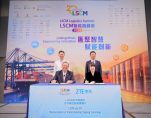
The MoU was signed at the LSCM Logistics Summit 2026 at Hong Kong Science Park
The two parties will collaborate on ICT infrastructure, AI, general computing, operating systems and cyber resilience
HONG KONG, CHINA – Media OutReach Newswire – 15 October 2026 – ZTE Corporation (0763.HK / 000063.SZ), a global leading provider of integrated information and communication technology solutions, announced that its wholly owned subsidiary ZTE (Hong Kong) Limited (“ZTE Hong Kong”) and The Logistics and Supply Chain MultiTech R&D Centre (“LSCM”) today officially signed a Memorandum of Understanding (MoU) at Hong Kong Science Park during the LSCM Logistics Summit 2026.
The signing ceremony was attended by representatives of both parties. Ir Prof Alan Lam, Chairman of the Board of Directors of LSCM, and Mr. Mei Zhonghua, Senior Vice President of ZTE, jointly witnessed the signing; Mr. Simon Wong, Chief Executive Officer of LSCM, and Ms. Wang Huan, Managing Director of ZTE Hong Kong Representative Office, signed the MoU on behalf of both parties..
In accordance with the principles of complementary strengths, equality and mutual benefit, and win-win cooperation, both parties reached a consensus on cooperation focusing on Hong Kong’s digital and intelligent development, enhancing e-government information services, and promoting the local application of secure and reliable diversified technologies in Hong Kong. They also agreed to jointly cultivate a digital and intelligent industry ecosystem suited to Hong Kong’s actual needs.
The Logistics and Supply Chain MultiTech R&D Centre (LSCM) was established in 2006 with funding from the Innovation and Technology Fund of the Hong Kong Special Administrative Region Government. Since its establishment, LSCM has been committed to researching and developing various technologies that promote the development of industries related to logistics and supply chains, and to assisting industries across Hong Kong and mainland China in adopting relevant technologies.
ZTE (Hong Kong) Limited was incorporated in Hong Kong in 2000 and is a wholly-owned subsidiary of ZTE Corporation. ZTE Hong Kong has been deeply rooted in the Hong Kong market for many years, serving local operators over the long term. It has a strong localized service team and delivery capability, enabling it to respond quickly to customer needs, as well as full-stack locally developed products and IT application innovation solutions, which have been widely implemented. With a deep understanding of the Hong Kong market and rich project experience, ZTE Hong Kong has achieved breakthroughs and established a presence in key industries such as the public sector and finance, providing safe and reliable ICT solutions to customers across various industries. In the future, ZTE Hong Kong will continue to leverage its localized service advantages to support the digital transformation of industries in Hong Kong.
Under the MoU, cooperation between the two parties covers areas including ICT infrastructure, artificial intelligence, general computing, operating systems, and cybersecurity. Both parties will also actively promote technology and talent exchange, fully leverage their respective R&D strengths, comprehensively carry out joint innovation in areas such as general computing and artificial intelligence, and jointly develop and incubate a digital and intelligent ecosystem suited to Hong Kong. Focusing on the C86 next-generation computing platform, the two parties will carry out in-depth cooperation in areas such as locally developed computing infrastructure development and the digital transformation of government and enterprises, jointly promoting the high-quality development of industries in Hong Kong and the Greater Bay Area.
The signing of this MoU marks the official launch of the strategic cooperation between the two parties in promoting Hong Kong’s digital and intelligent development and the application of secure and reliable technologies. Both parties will take this opportunity to deepen cooperation and complement each other’s strengths, jointly contributing to Hong Kong’s innovation and technology development and enhancements in trusted public-sector digital capabilities.
Hashtag: #ZTE
The issuer is solely responsible for the content of this announcement.
Artificial intelligence agents are being deployed to challenge investment proposals at an Abu Dhabi sovereign wealth fund, while businesses are extending the technology into procurement processes under human supervision, executives told Sharjah Investment Forum 2026. Maria Sanchez, senior vice-president of AI product delivery at G42’s Inception, disclosed the investment application during a panel on Wednesday, describing a system that examines proposed deals and produces arguments against proceeding […]