Crypto markets were hit by a sharp wave of forced selling as about $155 million in leveraged long positions were liquidated within 60 minutes, deepening a broader sell-off that pushed Bitcoin and major tokens lower and exposed the risk built up across perpetual futures and margin trading platforms. The liquidation burst reflected a rapid unwinding of bullish bets after prices broke through key support levels, leaving heavily […]
Synology used COMPUTEX 2026 in Taipei to set out a wider enterprise data strategy built around the next generation of DiskStation Manager, AI-assisted administration, expanded backup appliances and a larger surveillance and private cloud portfolio, positioning the company more directly in the market for secure, on-premises data intelligence. The showcase, held at Taipei Nangang Exhibition Centre from June 2 to 5, placed DSM at the centre of […]
Japan is preparing to replace as many as 14 ageing nuclear reactors by the 2050s, marking one of its clearest moves yet towards restoring atomic power as a central pillar of national energy security after more than a decade of post-Fukushima restraint.
The Ministry of Economy, Trade and Industry has set out a policy proposal calling for the rebuilding of between two and five reactors by the 2040s and up to 14 by the 2050s. The plan would add about 16 gigawatts of nuclear capacity, helping the country meet rising electricity demand from artificial intelligence, data centres, advanced manufacturing and wider electrification.
The proposal reflects a major shift in Japan’s energy strategy. After the Fukushima Daiichi disaster in March 2011, Japan shut all 54 operating reactors, leaving the world’s third-largest economy more dependent on imported liquefied natural gas, coal and oil. Only 15 of the 33 remaining operable reactors have returned to service, while many units face retirement pressure as they approach or exceed their permitted 60-year operating life.
Tokyo’s latest energy plan targets nuclear power at around 20 per cent of electricity generation by fiscal 2040, while renewables are expected to provide 40 to 50 per cent. Thermal power, which still accounts for a large share of supply, is expected to decline but remain important for grid stability and emergency backup. The policy removes earlier language about reducing reliance on nuclear power, replacing it with a call to maximise the use of both renewables and atomic energy.
The renewed push is driven by a combination of economic and geopolitical pressures. Japan imports most of its energy, leaving households and industry exposed to volatile fuel prices, shipping risks and currency swings. The war in Ukraine, instability in the Middle East and tighter global gas markets have strengthened the case within government for expanding domestic low-carbon baseload power.
Electricity demand, which had been broadly flat for years, is also expected to turn higher. The spread of AI computing, semiconductor plants, battery factories and digital infrastructure has increased concern that inadequate power supply could weaken Japan’s ability to attract investment. Officials view nuclear energy as a way to provide stable, large-scale electricity without increasing carbon emissions.
The plan is likely to benefit major utilities including Tokyo Electric Power, Kansai Electric Power, Kyushu Electric Power and Chubu Electric Power, although the sector still faces high regulatory, financial and social hurdles. Reactor replacement requires local consent, safety approval, heavy capital spending and long construction timelines. Japan has not built a new reactor since before Fukushima, and public trust remains fragile.
Safety concerns remain the central political obstacle. The Fukushima disaster, triggered by the March 2011 earthquake and tsunami, forced mass evacuations and left deep scepticism about official oversight of the nuclear industry. Questions over seismic risk, evacuation planning, spent fuel storage and operator transparency continue to shape public debate, particularly in communities near existing plants.
Controversies have added to the challenge. Chubu Electric has faced scrutiny over falsified seismic risk assessment data at the Hamaoka nuclear plant, a facility long viewed as sensitive because of its location in an earthquake-prone area. Incidents of that kind reinforce concerns among critics who argue that Japan should prioritise renewables, storage, grid upgrades and efficiency rather than committing to another generation of nuclear infrastructure.
Supporters counter that renewables alone will not meet Japan’s industrial needs quickly enough, given land constraints, permitting delays and the intermittency of solar and wind power. Offshore wind has long-term potential, while next-generation solar technologies such as perovskite cells are being promoted, but large-scale deployment will take time. Nuclear advocates argue that replacing old reactors with advanced designs could improve safety and reliability while supporting climate targets.
The government’s approach is to rebuild reactors at existing or decommissioned nuclear sites rather than open entirely new locations, a strategy designed to reduce political resistance and use established grid infrastructure. Next-generation reactors are expected to incorporate stronger passive safety systems and improved resilience against natural disasters, although costs and construction schedules remain uncertain.
Washington has moved to close a sensitive gap in its China technology controls after Trump administration officials concluded that overseas units of Chinese companies may have been able to buy Nvidia’s most advanced artificial intelligence chips without the export licences required for direct shipments to China. The Commerce Department’s Bureau of Industry and Security issued guidance on 31 May clarifying that licence requirements for advanced computing items […]
Jersey is facing a defining test over whether its finance-led prosperity can keep pace with faster, technology-driven rivals without eroding the small-island character that has long set it apart. The British Crown Dependency, once widely labelled a tax haven, has spent decades recasting itself as a regulated international financial centre. That shift has helped turn a 45-square-mile island of just over 100,000 people into one of the […]
Microsoft’s unveiling of its Majorana 2 quantum chip has intensified debate over how quickly Bitcoin and other digital assets must prepare for a post-quantum security era. The chip, presented at the company’s Build conference in San Francisco, marks the next stage of Microsoft’s long-running push to develop a fault-tolerant quantum computer based on topological qubits. Microsoft says the new processor delivers a sharp improvement over Majorana 1, […]
A China-linked cyber-espionage group tracked as VerdantBamboo has been tied to a BRICKSTORM malware operation targeting Linux-based virtual appliances, firewalls and enterprise infrastructure, sharpening concerns over the security of systems that often sit outside mainstream endpoint monitoring. The activity came to light after suspicious traffic was detected from a Linux-based virtual machine appliance during an incident response investigation. The inquiry found that attackers had used stolen administrative […]
Kairos-HomeWorld is purpose built for embodied intelligence and represents the first unified framework capable of generating a complete, fully interactive home environment from a single text prompt. Extending indoor scene generation beyond individual rooms, it enables whole-home simulation in which every object is fully manipulable within an integrated simulation engine.
Kairos-HomeWorld employs a four-stage hierarchical architecture encompassing floorplan generation, 2D-to-3D lifting, recursive refinement, and manipulable object placement. This approach enables the production of globally coherent, physically accurate, and simulation-ready scenes. Each environment contains more than 15 manipulable objects and achieves a Footprint Object Density of 4.16, the highest among compared methods.
The accompanying open-source dataset is purpose-built for Chinese households, pairing 300,000 real residential floor plans with 5,000 fully furnished, simulation-ready homes and 50,000 physics-enabled interactive object assets. Already deployed in ACE ROBOTICS’ daily robot training, it significantly accelerates the simulation-to-reality transfer cycle.
SHANGHAI, CHINA – Media OutReach Newswire – 5 June 2026 – ACE ROBOTICS, in collaboration with the Multimedia Laboratory at The Chinese University of Hong Kong (CUHK) and Shenzhen Loop Area Institute, today announced the open-source release of Kairos-HomeWorld, the industry’s first unified World Model framework capable of generating full home-scale, object-level interactive 3D environments from a single text prompt. The solution addresses longstanding limitations in indoor scene generation, which has typically been restricted to single-room outputs with weak global consistency and limited interactivity. Kairos-HomeWorld overcomes these constraints by delivering structurally coherent, physically plausible, and functionally complete residential environments. These high-fidelity, large-scale simulations provide a robust foundation for advancing embodied intelligence applications and accelerating real-world robot training.
The long-term vision for embodied intelligence is the home environment. However, residential settings are inherently diverse and highly personalized, requiring robots to be trained across a broad range of realistic and differentiated scenarios before they can reliably operate in even a single household. High-fidelity simulation offers the most practical pathway to achieving this at scale, yet existing approaches typically involve a trade-off: synthetic environments lack realism, while scanned real-world scenes offer limited interactivity. Kairos-HomeWorld, together with its accompanying dataset, is designed to bridge this gap, delivering both realistic and interactive environments within a unified framework.
A four-stage architecture for whole-home, object-level generation Conventional approaches to indoor scene generation remain constrained to single-room outputs, often exhibiting weak global consistency, frequent physical inaccuracies, and limited or no interactivity. Kairos-HomeWorld takes a fundamentally different approach. It decomposes whole-home generation into a structured, four-stage process, redefining the underlying architectural paradigm from the ground up.
Stage 1 — Floor Plan Generation. A K-D tree-based approach translates real-world floor plans into a hierarchical text representation that can be efficiently processed by large language models (LLMs). This method mitigates common issues in conventional layout generation, including room overlaps and fragmented topologies, resulting in more coherent and structurally consistent spatial configurations.
Stage 2 — 2D-to-3D Lifting & Furniture Layout Generation. A “top-down global initialization combined with a first-person detail walkthrough” approach anchors the process to the 3D building shell generated in Stage 1. This methodology mitigates the geometric drift commonly associated with conventional 2D-to-3D lifting techniques, enabling more stable and spatially consistent scene generation.
Stage 3 — Recursive Refinement. A fine-tuned vision-language model performs iterative validation and correction, automatically identifying and resolving physical inconsistencies, such as obstructed doorways or object collisions. This recursive process materially reduces spatial errors, achieving among the lowest reported furniture-collision rates in the industry.
Stage 4 — Manipulable Object Placement. A surface-centric placement algorithm assigns each object detailed physical properties, including material composition, density, friction, and structural support relationships. Each generated scene incorporates an average of more than 15 manipulable objects and achieves a Footprint Object Density (FOD) of 4.16, a metric reflecting the concentration of items across furniture surfaces. All objects are natively compatible with simulation engines, enabling direct interaction for tasks such as grasping, movement, and stacking.
The resulting environments move beyond “viewable but not actionable” outputs. Their coherent spatial structure enables seamless, continuous navigation across multiple rooms, while objects embedded with realistic physical properties allow robots to simulate complex household tasks end-to-end. Taken together, this approach addresses key limitations in existing data pipelines, resolving the scarcity of high-quality 3D simulation data, the lack of realism in synthetic environments, and the limited interactivity of scanned scenes within a single unified framework.
The dataset: 300,000 real floor plans, 5,000 fully interactive homes, built for Chinese households ACE ROBOTICS and CUHK are open-sourcing a dataset of 300,000 structurally annotated residential floor plans, sourced from real-world listings and processed through a multi-stage automated pipeline. The pipeline vectorizes and labels key spatial elements, including door and window positions, room geometry, functional zoning, and connectivity. By comparison, widely used benchmarks such as RPLAN and ResPlan contain approximately 80,000 and 17,000 floor plans, respectively, underscoring the scale and comprehensiveness of the Kairos-HomeWorld dataset.
Building on this foundation, the dataset also includes 5,000 fully furnished residential environments, each featuring a complete furniture layout and an average of more than 15 physics-enabled, manipulable objects, powered by the PhysX-Omni model. All assets are sim-ready and can be directly imported into a simulation engine, enabling immediate use in interactive training scenarios.
Most existing open indoor-scene datasets are centered on North American and European residential formats, typically featuring open-plan kitchens, the absence of service balconies, and layouts and design elements that capture only a narrow segment of global housing. As a result, robots trained on these datasets often exhibit limited transferability when deployed in environments outside their scope. Kairos-HomeWorld ‘s dataset is purpose-built for Chinese households, with deliberate coverage of historically under-represented housing typologies. It spans a wide range of unit sizes, from approximately 30 m² (around 320 sq ft) studio apartments to residences exceeding 200 m² (approximately 2,150 sq ft). The dataset accurately reflects key architectural features common in these settings, including north-south cross-ventilated layouts, enclosed kitchens, dedicated service balconies, wet-and-dry-separated bathrooms, and entryway storage, as well as the irregular room configurations often found in older housing stock.
The dataset is being openly released to both academic and industry communities. Going forward, the team plans to expand its scope to include additional regions, interior styles, and interaction scenarios, further lowering barriers to real-world-ready training for embodied intelligence.
See it in action: one prompt to a fully interactive home Kairos-HomeWorld runs the full end-to-end pipeline, from initial text input to a fully interactive home environment, delivering global spatial consistency, physical realism, and seamless interactivity from a single prompt.
The system begins with a single-line prompt: “Generate a 90 m² (approximately 970 sq ft) two-bedroom apartment in neo-Chinese style.” Leveraging real floor plan data and its K-D tree representation, Kairos-HomeWorld first constructs an empty spatial layout aligned with real-world living patterns, incorporating cross-ventilation and well-defined functional zoning. Building on this foundation, a hierarchical “global layout plus first-person detail” approach furnishes the environment with stylistic coherence, while a PhysX-Omni rendering pass assigns full physical properties to all surfaces and objects, including articulated behavior, ensuring the scene is fully interactive and sim-ready.
A single natural-language instruction, “tidy the whole home”, is decomposed by the robot into a variety of discrete sub-tasks, executed sequentially along a complete navigation path spanning the living room, bedrooms, kitchen, bathroom, and dining area. The robot recognizes objects, plans efficient routes, and performs precise manipulation tasks, including articulated-object interactions for opening refrigerator and cabinet doors, fluid interactions for pouring laundry detergent, soft-body interactions for drawing curtains, irregular-object interactions for grasping apples, and gravity-based physical interactions for placing snacks.
Conventional simulation environments typically support navigation-focused training in isolation. By contrast, Kairos-HomeWorld integrates globally consistent spatial structures with objects that embody realistic physical properties. This enables robots to interact naturally with more than 15 object types, accurately modeling real-world dynamics such as collision, gravity, and friction, and to rehearse the full lifecycle of complex household tasks entirely within a virtual environment.
Across the industry, the same structural bottleneck, the scarcity of home-scale training data, is being addressed through multiple approaches. For example, Figure AI’s collaboration with Brookfield focuses on collecting human activity data across more than 100,000 residential units. Kairos-HomeWorld addresses this challenge through on-demand synthetic generation, delivering scalable training environments enhanced with object-level physical realism, capabilities that real-world data capture alone cannot fully provide.
In contrast, Kairos-HomeWorld delivers significantly lower costs and higher efficiency for household robot training. Powered by its world model, it can programmatically generate diverse Chinese home simulation scenes and physics-enabled interactive objects at scale.
Robots can complete a full range of household tasks training entirely within the virtual environment. New scene generation incurs near-zero marginal cost, eliminating substantial real-world testing expenses such as site operation and maintenance and furniture damage. Meanwhile, unconstrained by the limited stock of physical residential properties, it outperforms real-world data collection approaches in both training efficiency and scalable expansion.
Kairos-HomeWorld is already deployed in ACE ROBOTICS’ embodied intelligence training workflows, enabling full-pipeline simulation of long-horizon household tasks, including cross-room navigation and multi-room tidying. By allowing robots to rehearse complete task sequences in a virtual environment, the platform significantly shortens the simulation-to-reality transfer cycle. This approach lowers barriers to developing embodied intelligence systems and supports the accelerated, large-scale deployment of home robotics, particularly within the Chinese market. Kairos-HomeWorld is now available on GitHub.Hashtag: #ACEROBOTICS
The issuer is solely responsible for the content of this announcement.
About ACE ROBOTICS
Equipping robots with intelligent “brains” and engaging “souls”.
ACE ROBOTICS is a pioneering robotics company dedicated to advancing the field of embodied intelligence. Through breakthrough technological innovations and deep insights into embodied intelligence scenarios, we aim to empower robots with the ability to autonomously understand and explore the physical world, thereby accelerating their commercial implementation.
The company pioneered the ACE R&D paradigm and built a vision-based “environmental data engine, real-world cognition, embodied interaction generalization” technology chain. Using full spatiotemporal and multi-perspective environmental capture as its engine, along with Kairos 3.0 – China’s first open-source and commercially applicable world model – plus the Embodied Foundation Model as its technical backbone, ACE ROBOTICS addresses core industry challenges such as data scarcity, common sense gaps, poor generalization, and limited versatility. Simultaneously, the company unveiled its flagship A1 Embodied Super Brain Module, accelerating the large-scale commercial deployment of embodied intelligence across diverse scenarios.
ACE ROBOTICS is both a technology pioneer and an ecosystem builder. Through strategic cooperation with top hardware manufacturers, cloud service providers, and vertical scenario partners, we have broken through the “model-hardware-scenario” industrial deadlock, providing standardized and customized solutions that are driving the development of China’s embodied intelligence industry.
Thailand’s richest man Sarath Ratanavadi is preparing a 140 billion baht expansion through Gulf Development Pcl over five years, placing data centres, digital infrastructure and power supply at the centre of one of Southeast Asia’s most ambitious corporate bets on artificial intelligence demand.
The plan, worth about $4.3 billion, reflects a sharp turn by Gulf from its traditional base as a power producer into a broader infrastructure group linking electricity generation, telecommunications, cloud services and industrial logistics. The investment push comes as Thailand seeks to position itself as a regional data hub, helped by rising demand for cloud computing, artificial intelligence workloads and data-localisation capacity across Southeast Asia.
Gulf’s strategy is built around a simple commercial premise: AI facilities need vast, reliable and increasingly low-carbon electricity. Data centres are among the most power-intensive assets in the digital economy, and operators are under pressure to secure stable energy supply while meeting sustainability commitments from global technology clients. Gulf’s existing position in gas-fired power, renewable energy and utilities gives it an advantage that pure technology infrastructure firms may struggle to match.
Sarath, Gulf’s chief executive and controlling figure, has spent years reshaping the group from a conventional energy developer into a conglomerate with exposure to telecoms, satellites, digital platforms and cloud infrastructure. The merger of Gulf Energy Development and Intouch Holdings created a larger listed platform linked to Advanced Info Service, Thailand’s biggest mobile operator, and Thaicom, the satellite company. That structure gives Gulf access to telecom traffic, enterprise clients and digital distribution channels that can support its data-centre ambitions.
The investment programme is expected to support new data-centre capacity, related infrastructure and power projects needed to serve hyperscale and enterprise customers. Gulf has already moved into the sector through partnerships involving global technology names and regional operators, while its digital arm has explored cloud and AI services designed for corporate and government clients. The company’s first major data-centre project has become a reference point for its expansion into facilities that can host high-density computing workloads.
Thailand’s broader investment environment has also shifted in Gulf’s favour. Authorities have approved large-scale data infrastructure projects from global technology players, including server and data-processing investments across Bangkok, Samut Prakan and Chachoengsao. Google, Amazon Web Services, Microsoft and ByteDance-linked operations have all announced or pursued major commitments in the country, intensifying competition but also validating Thailand’s role in the regional digital economy.
For Gulf, the opportunity lies not only in renting data-centre capacity but also in selling bundled infrastructure: power, connectivity, cloud access and long-term operational reliability. That model could create recurring income and reduce dependence on regulated returns from power generation. It may also help Gulf deepen its relationship with large technology clients seeking local partners that understand land, energy approvals, grid constraints and domestic regulatory requirements.
The group’s financial position gives it room to move, though the scale of the programme will be closely watched by investors. Gulf reported strong first-quarter earnings for 2026, helped by its energy operations and profit contribution from Advanced Info Service. Revenue growth and core profit gains have strengthened confidence in its ability to finance new projects, but data centres require heavy upfront spending and returns can depend on utilisation rates, long-term contracts and energy costs.
The timing is also sensitive. Across Asia, governments are competing for data-centre investment while confronting pressure on power grids, water use and land availability. Singapore’s cautious approach to new data-centre capacity has encouraged developers to look at Malaysia, Thailand, Indonesia and Vietnam, but each market faces its own constraints. Thailand has industrial land, policy incentives and improving connectivity, yet grid readiness and clean-energy availability remain decisive issues for hyperscale clients.
Gulf’s renewable energy targets are likely to form part of its sales pitch. The company has set out plans to raise the share of renewables in its generation portfolio and reduce carbon intensity, while continuing to rely on gas as a stable baseload fuel. Its long-term LNG supply arrangements also point to a strategy that balances energy security with transition commitments, even as customers demand cleaner electricity for digital operations.
Sarath’s expansion plan underscores how AI is redrawing corporate strategy beyond Silicon Valley. Energy groups, telecom operators and infrastructure funds are increasingly competing for the physical assets behind the digital boom. Gulf’s bet is that Thailand’s AI economy will be shaped as much by power plants, fibre networks and industrial sites as by software models and cloud applications.
MIT and IBM researchers have opened a new front in multimodal artificial intelligence by releasing ChartNet, a large synthetic dataset designed to teach smaller vision-language models how to read, extract and reason from charts with greater accuracy than far larger commercial systems. The dataset, available through Hugging Face, contains 1.7 million richly annotated core chart samples and a broader collection running into millions of synthetic examples. Its […]
Over five years, nearly 9,000 teachers and students have participated in the Fair to drive youth engagement in innovation and technology
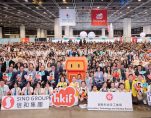
HONG KONG SAR – Media OutReach Newswire – 4 June 2026 – Organised by the Hong Kong Innovation Foundation (‘HKIF’), the Fifth Hong Kong Science Fair (‘Science Fair’) will take place from 27 to 28 June 2026 at the Hong Kong Convention and Exhibition Centre. The event will showcase around 120 shortlisted teams from primary and secondary schools across Hong Kong, presenting creative inventions that integrate artificial intelligence with a diverse range of technology applications. With Sino Group as Principal Patron, the Innovation, Technology and Industry Bureau of the HKSAR Government (ITIB) as the Supporting Bureau, and the Hong Kong Council for Testing and Certification (HKCTC) as Strategic Partner, HKIF is also honoured to have, for the first time, invited the Foundation for the Development of Science and Technology in China as an Advisory Organisation. Representatives from the Foundation will attend the award ceremony to witness the announcement of this year’s winning teams. Consistently a major draw for the community, the Science Fair is now open for online registration with free admission, and the public is warmly invited to attend in person.
Since its launch in 2021, the Science Fair has attracted participation from over 400 local schools, engaging nearly 9,000 students and teachers from Primary 4 to Secondary 6. To date, more than 2,200 creative invention submissions have been received, and the event has established itself as a key platform for youth I&T exchange.
Following Hong Kong’s first astronaut, Dr Lai Ka-ying, into space, the local innovation and technology ecosystem has attracted even greater attention. This year’s Science Fair has specially incorporated aerospace engineering elements, enabling the public to learn about the daily work and challenges of payload specialists, gain insight into the reality of aerospace research and development, and spark greater interest among young people in space exploration. Dr Lai launched aboard the Shenzhou-23 manned spacecraft and is expected to remain in space for approximately six months to conduct space science experiments and maintenance tasks. Visitors can express their support and encouragement by creating message cards for her. In addition, UBTECH Robotics, a globally leading enterprise in embodied AI robotics, will participate in the exhibition, showcasing multiple humanoid robots and offering visitors the opportunity to experience the appeal of embodied intelligence up close.
Professor Sun Dong, JP, Secretary for Innovation, Technology and Industry of the HKSAR Government, stated: ‘The Hong Kong SAR Government is fully committed to developing Hong Kong into an international innovation and technology (I&T) centre, with talent being a key driver of this growth. Now in its fifth edition, the Hong Kong Science Fair – organised by the Hong Kong Innovation Foundation – has become an annual flagship I&T education event. It offers students a valuable platform to turn their innovative ideas into practice, deepen their interest and confidence in I&T, and help bring I&T into schools and the wider community, thereby fostering a more innovation-friendly atmosphere. I look forward to seeing more young people unleash their potential through this platform, pursue careers in I&T, and contribute to the high-quality development of Hong Kong and our nation.’
Mr Daryl Ng, SBS, JP, Chairman of the Hong Kong Innovation Foundation and Chairman of Sino Group, said ‘Innovation and technology are key to Hong Kong’s long-term sustainable development and are integral to the country’s 15th Five-Year Plan. It is vital for Hong Kong to strengthen its I&T capabilities and actively contribute to national development, as underscored by the historic moment when Dr Lai Ka-ying became Hong Kong’s first astronaut. We are encouraged to see growing recognition of I&T opening up new opportunities for young people aspiring to pursue scientific research. As the Hong Kong Science Fair enters its fifth edition, its growth has been made possible by the support of the HKSAR Government, industry partners, tertiary institutions, research organisations, and our panels of judges. This year, we are grateful for the guidance and support of the Foundation for the Development of Science and Technology in China. Moving forward, the Science Fair will remain committed to nurturing talent from an early age, bringing together all sectors to promote I&T and inspire more young people to pursue careers in science and technology.’
Professor Anderson Shum, MH, Chairman of Judging Panel, Hong Kong Science Fair, President of The Hong Kong Young Academy of Sciences, said, ‘The Science Fair adopts the format of “integrating competition with exhibition,” enabling students to translate their learning into tangible and verifiable outcomes. This plays an important role in nurturing Hong Kong’s youth I&T ecosystem. I am delighted to have served as a judge for this major event over the years, witnessing students progressively enhance their presentation skills, build confidence, and broaden their horizons through exchanges with experts, participation in workshops and showcasing their work to the public. The standard of participating projects continues to improve each year, with increasing integration of artificial intelligence and diverse technological applications across different fields. Scientific research is a journey that demands passion and perseverance, and the growth of young scientists often begins with curiosity during their primary and secondary school years. Through these exchanges, we hope to leverage the role-model influence of young scientists, inspiring more students to pursue I&T as their lifelong career. I look forward to seeing our younger generation continue to grow and excel in scientific research and innovation, and officially join the community of scientists in the near future to jointly drive Hong Kong’s I&T development.’
Mr Michael Tam, Chief Brand Officer of UBTECH, said, ‘Humanoid robots are among the most promising real-world embodiments of artificial intelligence, reflecting a future in which intelligent systems are deeply integrated with the physical world. As a global pioneer in humanoid robotics, UBTECH has remained at the forefront of innovation for more than 14 years, with a long-standing commitment to I&T education. The company is dedicated to translating advanced technologies into practical, accessible educational resources. Through collaboration with like-minded partners such as the Hong Kong Innovation Foundation, we aim to inspire greater interest and engagement among both teachers and students in humanoid robotics and artificial intelligence. We are committed to supporting the development of Hong Kong’s I&T education ecosystem, helping to nurture future-ready talent and build a strong, sustainable foundation for long-term growth.’
Since its launch in 2021, the Science Fair has attracted participation from over 400 local schools, engaging nearly 9,000 Primary 4 to Secondary 6 students and their teachers. To date, more than 2,200 creative invention submissions have been received and total attendance has exceeded 120,000 visitors. The Science Fair has gradually established itself as a key platform for youth innovation and technology (‘I&T’) exchange and one of Hong Kong’s most representative I&T education initiatives. This year’s response has been enthusiastic, with over 500 project submissions received. Following preliminary judging, around 120 shortlisted teams took part in a series of workshops and mentorship sessions, and will present their projects at the exhibition in late June to compete for top awards. Gold award-winning teams from each category will have the opportunity to participate in the International Exhibition of Inventions Geneva in Switzerland, fostering idea exchange with global I&T talents.
The Hong Kong Science Fair draws tens of thousands of visitors each year. During the exhibition period, the venue will be transformed into a catalyst for city-wide I&T inspiration. In addition to student showcases, five interactive zones will offer hands-on experiences, including DIY bubble bath bomb workshops, freezer-free slushie making, themed games celebrating the Science Fair’s fifth anniversary, and modified remote-controlled cars made from upcycled household appliances, allowing visitors of all ages to explore science and innovation through engaging and enjoyable activities.
Bulu Bulu Bubble Factory: Blending science with sensory experiences, visitors can mix and mould from scratch to create a delightful ‘bathroom blind box’.
Shake Shake Ice Factory: Applying the principle of freezing point depression, participants will see how temperature can be rapidly lowered using only salt, ice and water to create personalised slushies — all without a freezer.
Scan2Play: Scan the QR Code on your phone to join the themed game celebrating the Hong Kong Science Fair’s Fifth Anniversary.
Racing Homey Kart 2.0: Showcasing the spirit of upcycling and upgrades, visitors can transform old, small household appliances into remote-controlled racing cars and compete on a dedicated track.
UBTECH Robotics Base: Featuring a wide range of robots, this zone provides a comprehensive showcase of the integration of artificial intelligence with mechanical engineering.
To celebrate the Science Fair’s fifth edition, various special experiences will be introduced. The venue will feature a hidden Science Fair character treasure hunt and check-in activity, through which visitors can redeem curated gifts upon completion. Limited-edition souvenirs, including the ‘HKSF-5 Metal Standee Collection’ and the ‘Special Edition Robo K’ blind boxes, will also be available in limited quantities. All proceeds from the HKSF Bazaar, with no deduction, will go directly to charity to support local community technology initiatives.
The Fifth Hong Kong Science Fair Details:
Date: 27 to 28 June 2026 (Saturday and Sunday)
Time: 10:00 am to 6:00 pm
Venue: Hong Kong Convention and Exhibition Centre, Hall 3FG
Admission: Free of Charge (Pre-registration online is required)
Elon Musk will probably get the $86 billion he wants from the SpaceX IPO. The harder question is whether investors will still be as enthusiastic about the company a year from now. Seeking a valuation of $1.78 trillion, SpaceX is attempting something unprecedented. If successful, the offering will become the largest IPO in history and instantly rank among the biggest corporate fundraising events ever seen. Many investors […]
Arabian Post Staff -Dubai UiPath has secured certification from the Dubai Electronic Security Center for its Automation Cloud Commercial UAE region, clearing a key compliance hurdle for wider deployment of its automation and artificial intelligence services across Dubai’s government, semi-government and regulated enterprise sectors. The certification places UiPath’s UAE cloud operations under the DESC Cloud Service Provider Security Standard, a framework required for cloud providers serving Dubai […]
Cybercriminal groups are shifting phishing campaigns from fake login pages to malware-led intrusions that silently extract passwords, browser cookies, session tokens, cryptocurrency wallet data and other sensitive information from infected devices. The change marks a significant turn in online fraud tactics. Classic phishing pages still imitate banks, cloud services, delivery firms and workplace platforms, but attackers are increasingly using emails, search ads, fake software installers, messaging apps […]
Arabian Post Staff -Dubai Microsoft has tested a wearable AI badge for office workers as part of a wider effort to move artificial intelligence agents beyond laptops, phones and traditional software applications. The device was shown at Microsoft Build 2026 in San Francisco under Project Solara, a new chip-to-cloud platform designed for hardware that runs AI agents instead of conventional apps. The badge concept resembles a workplace […]
Collaboration will support efforts to identify and remediate software vulnerabilities using advanced AI capabilities
HONG KONG SAR – Media OutReach Newswire – 4 June 2026 – TrendAI™, the enterprise AI security leader from Trend Micro Incorporated (TYO: 4704; TSE: 4704), today announced its participation in Project Glasswing, an initiative focused on helping organizations identify and address vulnerabilities in critical software systems.
As part of the program, TrendAI™ will use Anthropic’s Claude Mythos Preview to support the review and analysis of software code, helping threat intelligence researchers turn accelerated vulnerability discovery into coordinated disclosure, prioritized remediation, and measurable risk reduction through vulnerability shielding and virtual patching.
AI is dramatically accelerating vulnerability discovery. TrendAI™ views this as a positive signal for the industry – it is part of the broader, collaborative ecosystem TrendAI™ has been actively contributing to for decades alongside organizations like Anthropic.
Rachel Jin, Chief Platform and Business Officer, Head of TrendAI™: “We’re aligned with Anthropic’s goals of using AI to make all software more secure. Organizations increasingly depend on software that operates at tremendous scale and supports critical business functions. Project Glasswing represents an important opportunity to explore how advanced AI can help software providers identify vulnerabilities earlier and improve the security and resilience of the systems customers depend on every day.”
TrendAI™ joins a growing community of organizations participating in Project Glasswing to better understand how frontier and advanced AI models can support defensive security efforts and improve the security of critical software infrastructure.
Insights gained through the program will contribute to informing the broader industry efforts to strengthen the security of the digital ecosystem.
The issuer is solely responsible for the content of this announcement.
About Anthropic
Anthropic is an AI safety and research company dedicated to building reliable, interpretable, and steerable AI systems. Its Claude family of models enables advanced capabilities across a wide range of applications, including code understanding and security analysis.
About TrendAI™
TrendAI™, the global AI security leader and enterprise business unit of Trend Micro, empowers organizations with full AI visibility and consolidated security that inspires confidence, drives innovation, and eliminates risk. Trusted by the largest enterprises and governments across 185 countries, TrendAI™ secures the entire organization, from identities to infrastructure to data. Global Fortune 500 companies rely on TrendAI™ to cut risk and stop threats up to three months earlier, powered by world-leading threat and attack intelligence. Through deep ecosystem partnerships with market leaders like NVIDIA, Anthropic, AWS, Google, and Microsoft, TrendAI™ empowers your organization to securely drive forward at the speed of AI. AI Fearlessly. Learn more at trendaisecurity.com.
Gas engine manufacturer Innio has raised $2.43 billion in a US initial public offering, pricing an upsized share sale at the top of its marketed range as investors continue to chase companies tied to the electricity demands of artificial intelligence. The Munich-based distributed energy group priced 90 million shares at $27 each, above the 75 million shares originally planned and at the upper end of the $24 […]
Bitcoin fell four percent on Wednesday to $64,721.39, its weakest level since 28 February, as pressure from fund withdrawals, leveraged liquidations and shifting macroeconomic signals deepened a broad retreat across digital assets. The slide extended a difficult stretch for the world’s largest cryptocurrency, which has moved sharply lower after failing to hold above key support levels near $70,000. Selling accelerated as investors reduced exposure to risk assets, […]
Bull and Hon Hai Technology Group, better known as Foxconn, will manufacture artificial intelligence and cloud infrastructure in Europe under a strategic partnership designed to strengthen the region’s computing supply chain and reduce dependence on external technology providers. The project will use Foxconn’s manufacturing base in Pardubice in the Czech Republic and Bull’s factory in Angers, France, to produce AI systems and related components for European AI […]
Audible has launched a free loyalty programme that gives paying members discounts, credits and anniversary gifts for listening to audiobooks, marking a broader push by Amazon’s audio unit to make subscription use feel more rewarding beyond monthly credits and catalogue access. The programme, called Audible Rewards, is being rolled out first in the United States for members on Standard and Premium plans. It allows users to earn […]
Anthropic has expanded access to Claude Mythos Preview to about 200 organisations, widening a controlled cybersecurity programme designed to help governments, companies and critical software maintainers find severe vulnerabilities before attackers can exploit them. The San Francisco-based artificial intelligence company is adding around 150 organisations to Project Glasswing, its gated initiative for defensive use of a frontier model that has drawn intense attention from technology companies, banks, […]
Abu Dhabi opened the third International Dialogue of Civilisations and Tolerance Conference 2026 on Wednesday, bringing policymakers, academics, faith leaders, media figures and technology specialists together for a three-day examination of how new media and artificial intelligence are reshaping families and communities. The event, held from 3 to 5 June at Space42 Arena in Al Raha Beach, is being convened under the theme “The Impact of New […]
Cyber espionage operators are using a newly documented Windows backdoor called HazyBeacon to target government networks in Southeast Asia, turning legitimate Amazon Web Services infrastructure into a covert command-and-control channel that can blend into ordinary cloud traffic. The activity, tracked as CL-STA-1020, has been linked to intelligence-gathering operations focused on sensitive state information, including material tied to tariffs, trade disputes and government policy discussions. Security researchers have […]
Abu Dhabi Gaming has signed a strategic partnership with ASPIRE to accelerate AI-led game development, linking the emirate’s interactive entertainment ambitions with advanced research capabilities from one of its key technology institutions. The agreement was formalised during the A2RL Summit at ADNEC Centre Abu Dhabi, where global technology, mobility, autonomy and gaming specialists gathered to examine how artificial intelligence is reshaping industries built around real-time decision-making and […]







 https://www.trendaisecurity.com
 https://www.linkedin.com/company/trendai-security
 https://x.com/trendaisecurity
 https://www.facebook.com/trendaisecurity/