News related to
intelligence

HONG KONG SAR – Media OutReach Newswire – 27 April 2026 – Hong Kong is one of Asia’s most active Copilot markets. At the same time, Hong Kong enterprises are entering a new phase of AI adoption—one that moves beyond pilots and proofs of concept, toward changing how work gets done at scale. At the Microsoft AI Tour in Hong Kong, Microsoft outlined how organizations can achieve Frontier Success: where AI agents become part of everyday operations, delivering real business impact with trust and governance built in. AIA and AS Watson Group are among the early pioneers locally that have already begun their Frontier journey.

Photo1: Judson Althoff, CEO of Microsoft’s Commercial Business, delivers a keynote at the Microsoft AI Tour in Hong Kong, outlining Microsoft’s Frontier Success Framework and how agentic AI is moving from experimentation to enterprise wide impact.

“Across Hong Kong, organizations are rethinking how work gets done with agentic AI—moving beyond experimentation to running operations at scale,” said Judson Althoff, CEO of Microsoft’s Commercial Business. “Frontier Transformation is helping them deliver business impact and measurable outcomes by embedding AI into real workflows, with trust, security, and governance fully integrated throughout.”

Frontier Success Framework: How Microsoft Helps Organizations Scale Agentic AI with Confidence

As AI matures, success is no longer defined by deploying individual tools. At the AI Tour, Microsoft shared its Frontier Success Framework—a practical approach designed to help organizations turn agentic AI into business real, measurable business value. The framework centered on four outcomes: enrich employee experience, reinvest customer engagement, reshape business process, and bend the curve on innovation.

As part of this journey, Microsoft announced that Wave 3 of Microsoft Copilot, delivered through Microsoft 365 E7 (Frontier Suite) will reach general availability in Hong Kong on 1 May 2026. Built on the principles of Intelligence and Trust, Microsoft 365 E7 brings together Microsoft 365 Copilot, Work IQ and Agent 365, alongside enterprise security, identity, and agent governance. By grounding AI in deep work context—understanding how people collaborate, what they work on, and how decisions are made—Work IQ enables Copilot and AI agents to operate with relevance and accuracy. At the same time, Agent 365 provides a centralized control plane to govern agents, while integrated security and governance ensure AI can scale responsibly across the enterprise.

Frontier Success in Action across Hong Kong

Across industries, Hong Kong organizations are already demonstrating what Frontier Success looks like in practice.

AIA –AdvancingAgentic AI Across Its Enterprise: AIA is applying Microsoft’s AI platform to deploy a holistic, agentic AI strategy across its operations. This includes agentic AI supporting product training, lead management and knowledge access, automated claims processing and customer self-service. In addition, a citizen developer program using Copilot Studio to increase productivity. Together, these capabilities enable AIA to reduce manual effort, improve accuracy, and scale operational efficiency while meeting the requirements of a highly regulated industry.

AS Watson Group – Driving Scaled AI‑Powered Personalization Across O+O Retail Channels: AS Watson Group has adopted a wide range of AI tools in its Retail HK businesses, including Microsoft Copilot and its AI capabilities across its O+O (Offline plus Online) platform to enhance productivity and decision‑making. Key use cases include AI‑driven product discovery, AI skin analysis, and in‑store personalization to enhance customer engagement, alongside employee‑focused applications such as AI‑enabled store support and AI‑generated marketing content. By scaling generative AI across operations and customer insight analysis, the Group achieves efficiency, effectiveness and cross-team collaboration in its unique O+O business model.

These examples reflect a broader shift across Hong Kong’s business community: organizations are no longer asking whether AI works, but how it should sit inside the operating model to drive meaningful outcomes.

Looking Ahead: Sustaining Frontier Success Through Continuous, Enterprise‑Grade Trust

Microsoft has been part of Hong Kong’s technology and business community for 35 years, supporting enterprises as the city evolves into a hub for innovation and global impact.

“Over the past 35 years, we have had the privilege of supporting Hong Kong through multiple waves of digital transformation. Today, as this momentum carries Hong Kong into the frontier era of AI, where organizations are not just adopting new technologies, but rethinking operating models across the enterprise,” said Leo Liu, General Manager of Microsoft Hong Kong and Macau. “As this frontier journey accelerates, Microsoft is committed to empowering local customers and partners to get ahead in the age of AI while maintaining strong data governance and enterprise‑grade privacy—ensuring human judgment remains firmly in control and enabling Hong Kong to define what Frontier Success looks like on the global stage.”

As AI adoption accelerates, Microsoft emphasized that Frontier Success is not a single milestone, but a continuous transformation—one that requires clarity of purpose, strong governance, and real-world execution. Through its platform, partners, and ecosystem, Microsoft aims to support Hong Kong organizations as they move from experimentation to sustained, responsible AI driven growth.

Hashtag: #Microsoft #AI #FrontierSuccess

The issuer is solely responsible for the content of this announcement.

About Microsoft

Microsoft (Nasdaq “MSFT” @microsoft) creates platforms and tools powered by AI to deliver innovative solutions that meet the evolving needs of our customers. The technology company is committed to making AI available broadly and doing so responsibly, with a mission to empower every person and every organization on the planet to achieve more.

Arabian Post Staff -Dubai   Qatar’s media-sector push has gained fresh momentum after Media City Qatar and the International Association for MediaTech entered a Platinum Partnership designed to raise the country’s profile as a regional centre for media, technology and content creation. Announced in Doha on 26 April 2026, the agreement gives Media City Qatar wider access to IAMT’s international platforms, industry events, market intelligence and training […]

Arabian Post Staff -Dubai Nokia has chosen Egypt as its support hub for the Middle East and Africa, setting up a centralised operational centre in Cairo to handle regional support activities and customer services across one of the world’s most diverse telecoms markets. The move places Egypt at the centre of Nokia’s service delivery model for operators, enterprises and public-sector customers across the region. The Cairo hub […]

  CNTXT AI has launched Munsit Emirati TTS, a native Arabic text-to-speech model designed to produce real-time, human-like speech in the UAE dialect for enterprise and consumer applications. The Abu Dhabi-based artificial intelligence company is positioning the system as a response to a long-running weakness in global voice technology: the inability of many speech engines to capture Arabic dialects with natural rhythm, pronunciation and cultural nuance. The […]

Arabian Post Staff -Dubai Wall Street climbed to record levels as hopes for renewed US-Iran diplomacy, a stronger-than-expected Intel forecast and reduced uncertainty around Federal Reserve succession combined to fuel a broad risk rally across US assets. S&P 500 gained nearly 1 per cent on Friday, extending its longest weekly advance since 2024 and pushing the benchmark to an all-time high. Nasdaq also advanced, helped by a […]

Arabian Post Staff -Dubai   UAE authorities have launched an ambitious public-sector transformation programme to move half of government sectors, services and operations onto agentic artificial intelligence within two years, marking a major shift from digital service delivery towards autonomous government systems. The initiative was announced by Sheikh Mohammed bin Rashid Al Maktoum, Vice President and Prime Minister of the UAE and Ruler of Dubai, under the […]

Japan has set up a financial-sector task force to assess risks from advanced artificial intelligence systems capable of discovering software flaws at a speed that could outpace existing cyber defences, deepening official concern over the resilience of banks, exchanges and payment infrastructure.

The move follows high-level talks involving the Financial Services Agency, the Bank of Japan, national cyber security officials, Mitsubishi UFJ Financial Group, Sumitomo Mitsui Financial Group, Mizuho Financial Group and Japan Exchange Group. The focus is Anthropic’s Mythos, a powerful AI model developed for defensive cyber security work but now regarded by regulators as a potential systemic risk if similar capabilities reach hostile actors.

Finance Minister Satsuki Katayama has framed the issue as an urgent challenge for core financial institutions, warning that Japan’s highly connected financial system could face cascading disruption if attackers used AI to identify and exploit weaknesses before institutions could repair them. No breach linked to Mythos has been reported, but officials are pressing banks to examine incident response plans, software exposure, vendor dependencies and market-continuity arrangements.

Japan tightens bank defences over Mythos as regulators confront a new cyber security problem: an AI tool built to strengthen software security may also demonstrate how fast the balance between defenders and attackers is shifting. Anthropic has said its Mythos Preview found thousands of high-severity vulnerabilities, including flaws affecting every major operating system and web browser. The company has placed the model under restricted access through Project Glasswing, an effort to use frontier AI for defensive discovery before equivalent capabilities spread more widely.

Security specialists see the financial sector as particularly exposed because banks rely on layered infrastructure that includes legacy systems, cloud services, trading platforms, third-party vendors and customer-facing applications. A vulnerability in one component may not remain isolated. Settlement systems, payment networks and securities markets depend on trust, synchronised data and rapid processing, leaving little tolerance for prolonged outages or uncertainty.

Japan’s top lenders have spent heavily on cyber resilience after a series of global incidents involving ransomware, software supply-chain attacks and attacks on critical infrastructure. Yet regulators remain concerned that AI-enabled vulnerability discovery could compress the time between flaw identification and exploitation. Traditional patch cycles often take days or weeks, while advanced models may help attackers generate working exploit paths far faster.

The task force is expected to coordinate technical assessments, information sharing and emergency procedures across the financial sector. Officials are also likely to examine how institutions verify third-party software, monitor anomalous activity and isolate critical operations during a cyber event. For exchanges and clearing systems, the priority will be maintaining orderly trading and settlement even if parts of the technology stack come under pressure.

The concern extends beyond Japan. Regulators in Asia, Europe and the United States have been urging banks to review their cyber controls as AI systems become more capable of code analysis, vulnerability chaining and automated exploitation. The issue has moved from a narrow technology debate into the domain of financial stability, because a successful attack on a major bank or exchange could quickly affect liquidity, confidence and cross-border transactions.

Anthropic has presented Mythos as a controlled defensive tool rather than a public product. The company says the model is intended to help responsible institutions find and fix vulnerabilities before they are misused. That defence has not removed policy concerns. The same capability that enables security teams to uncover hidden bugs can also lower the barrier for sophisticated offensive activity if access controls fail or comparable models emerge elsewhere.

Japan’s response reflects a broader shift in cyber regulation. Authorities are moving away from treating cyber security as a compliance checklist and towards stress-testing how institutions would cope with fast-moving, AI-assisted threats. Banks may face pressure to shorten patching timelines, improve software inventories and strengthen board-level oversight of technology risk.

For Japan, the issue also intersects with its ambition to modernise finance while promoting digital innovation. The country is expanding fintech services, digital payments and AI adoption across corporate operations, but regulators are signalling that innovation must be matched by stronger safeguards. Financial institutions are being asked to prepare for a threat environment in which attackers may use tools that can scan, reason and adapt at machine speed.

The immediate test for the task force will be whether it can turn concern into operational readiness. That means clear reporting channels, shared technical indicators, realistic crisis drills and faster coordination between banks, regulators, exchanges and cyber agencies. Japan’s financial authorities are seeking to prevent an AI-driven security breakthrough from becoming a market-disrupting event.

Advertisements

Dubai’s advertising market has become the launchpad for a new AI-powered creative intelligence system from Omnicom Advertising and Google, marking the first customised deployment of Google’s ABCD AI detector in the Africa, Middle East and Turkey region and setting up a wider rollout across client markets this year. The system combines Google’s framework for evaluating effective YouTube video creatives with Omnicom’s proprietary creative AI, giving advertisers a […]

Cybersecurity teams running local artificial intelligence models are facing a high-risk exposure after a flaw in Ollama’s model-processing system was found to allow attackers to extract sensitive server memory through a malicious model file. Tracked as CVE-2026-5757, the vulnerability affects the model quantisation engine used by Ollama, an open-source platform widely adopted by developers and enterprises to run large language models on personal computers, workstations and servers. […]

Cyber-attacks on higher and further education institutions jumped 63 per cent over a year, exposing universities and colleges to a sharper wave of ransomware, data theft, hacktivism and state-linked intrusion as digital learning systems become central to academic life. The findings point to 425 recorded incidents across 67 countries in the latest 12-month assessment period, compared with 260 in the preceding year. The rise reflects not only […]

Google Cloud is placing general-purpose Gemini models at the centre of its cybersecurity strategy, betting that broad frontier AI systems paired with specialised agents will outperform narrow models built only for security tasks. The approach, articulated by Francis deSouza, Google Cloud’s chief operating officer and president of security products, signals a deliberate shift in how the company wants enterprises to defend themselves in an era of faster […]

HONG KONG SAR – Media OutReach Newswire – 23 April 2026 – Hong Kong’s small businesses delivered their strongest performance in a decade in 2025, while confidence in the year ahead has climbed to a record high, according to CPA Australia’s latest Asia‑Pacific Small Business Survey 2025–26.

Stable economy and digital transformation power Hong Kong SMEs to decade high performance, CPA Australia survey

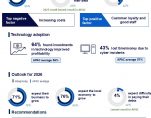
The survey shows that 68 per cent of Hong Kong SMEs recorded growth in 2025, up from 65 per cent in 2024 and marking the highest result on record. This positive momentum is expected to continue this year, with 71 per cent of SMEs expecting their businesses to grow and 76 per cent anticipating growth in the local economy — both at record highs. Customer loyalty and a strong workforce were identified as key drivers behind SMEs’ solid performance last year.

Mr Cliff Ip, Councillor of CPA Australia’s Greater China Divisional Council, said Hong Kong’s improving business environment played a critical role in supporting SME growth. “Hong Kong’s business confidence and economic growth strengthened last year, supported by robust capital markets, a recovery in tourism and consumption, and signs of stabilisation in the property market,” said Mr Ip. “Against this stable and supportive backdrop, small businesses not only benefited from increased business activity, but were also able to expand in a healthy and sustainable manner.”

Looking ahead, Mr Ip noted that while global geopolitical tensions and external uncertainties pose rising challenges, Hong Kong’s underlying strengths remain a key advantage for SMEs. “Rising geopolitical risks are likely to create headwinds for many sectors such as trade and logistics through higher fuel costs and supply chain disruptions. However, I remain confident about Hong Kong’s overall business outlook this year,” he said. “As many regions become more unpredictable or less secure, Hong Kong’s stable and consistent business environment, together with supportive policy settings including the city’s low and simple tax regime stand out as important advantages in attracting international companies and investors.”

Mr Ip added that these developments also present new opportunities for local SMEs, particularly as increased international interest creates scope to build partnerships, expand networks and tap into new markets. “This environment also creates favourable conditions for younger entrepreneurs to explore emerging markets and pursue new business opportunities,” he said.

Improved business performance has strengthened the solvency of many local SMEs. The share of businesses reporting difficulty paying debts fell sharply from 22 per cent in 2024 to just 3 per cent in 2025, while only 4 per cent expect to face difficulties this year, down markedly from 26 per cent previously. As a result, Hong Kong small businesses are now the least likely among the surveyed businesses to report solvency concerns.

Mr Ip said, “The solvency of many SMEs has notably improved, driven by stronger cash flow from improved business growth, a robust capital market and a recovering property market over the past year. This healthier cashflow has both supported easier access to external finance and reduced the need for such finance.”

Hong Kong SMEs have also strengthened their capability to invest in technology that delivers rapid improvements in profitability. In 2025, 64 per cent of SMEs reported that their technology investment in that year helped improve profitability, up from 59 per cent in 2024. Two in five Hong Kong SMEs invested in artificial intelligence (AI) last year, making it the leading technology investment among local SMEs, followed by customer relationship management (CRM) software.

At the same time, cyber protection has improved, with the share of Hong Kong businesses reporting losses from cyber incidents falling sharply from 72 per cent in 2024 to 43 per cent in 2025. However, as digitalisation accelerates, cyber risks remain elevated, with nearly three in five SMEs expecting to face cyber threats this year, above the survey average 42 per cent.

Mr Davy Leung, Deputy Chairperson of CPA Australia’s SME and Entrepreneurship Committee of Greater China, said the growing maturity and availability of AI tools is helping SMEs enhance productivity, reduce operating costs and improve customer experience.

(Left) Mr Davy Leung, Deputy Chairperson of SME and Entrepreneurship Committee 2026 from CPA Australia (Right) Mr Cliff Ip Greater China Divisional Councillor 2025 from CPA Australia

“However, rising digital fraud, wider AI adoption and SMEs’ increasing reliance on digital banking have prompted the Hong Kong Government to significantly strengthen banking security and cybersecurity resilience over the past year. This includes the rollout of low-cost and practical initiatives such as the Cybersec One Programme and the continued implementation of the ‘9+5’ SME support measures. The decline of cyberattack-related losses reported in the survey in part reflects the effectiveness of these measures.

“As cybersecurity threats and digital fraud risks continue to escalate, SMEs should make better use of these available resources, including free website risk assessments and vulnerability identification services, to strengthen their defence capabilities and safeguard business operations.”

Mr Leung also suggested that the Government consider revamping the Technology Voucher Programme to support broader digitalisation efforts, including the adoption of both AI and non-AI technologies. He added that enhanced training support would help SMEs identify and implement modern tools to drive innovation, improve efficiency and strengthen long-term competitiveness.

Rising costs remain a key challenge for Hong Kong SMEs in 2025, with 29 per cent reporting it having a negative impact on their business. However, this was the second‑lowest level among all surveyed markets, underscoring Hong Kong’s relatively low inflationary environment last year. Notably, the share of SMEs citing staff costs as a negative factor rose from 35 per cent to 42 per cent, making it the most significant cost pressure for Hong Kong businesses in 2025. This increase may help explain why the proportion of SMEs hiring additional staff declined from 42 per cent to 38 per cent last year.

Mr Leung said, “Increasing costs remain a significant barrier for many SMEs across Asia‑Pacific region, but Hong Kong’s relatively low inflation has helped cushion the impact on local small businesses,” Mr Leung said.

Mr Leung added that while headcount growth has moderated, overall staff costs have continued to rise as businesses invest in higher‑value talent. “Greater digitalisation and automation have helped ease labour constraints in Hong Kong. When SMEs do add staff, they are increasingly recruiting employees with digital and AI capabilities, or creating new roles to support business transformation. These positions typically command higher salaries, which has contributed to higher overall staff costs despite slower hiring growth.”

The annual survey collected the views of 4,166 small businesses across 11 Asia-Pacific markets, including Singapore, the Chinese Mainland, and Australia, with 305 respondents from Hong Kong.
Hashtag: #CPAAustralia

The issuer is solely responsible for the content of this announcement.

About CPA Australia

CPA Australia is Australia’s leading professional accounting body and one of the largest in the world. We have more than 176,000 members in over 100 countries and regions. Our core services include education, training, technical support and advocacy. CPA Australia provides thought leadership on local, national and international issues affecting the accounting profession and public interest. We engage with governments, regulators and industries to advocate policies that stimulate sustainable economic growth and have positive business and public outcomes. A CPA is a Certified Practising Accountant. More at

Allianz Trade and DBS Hong Kong brief businesses on evolving geopolitical trade risks and the critical need for granular liquidity visibility.

HONG KONG SAR – Media OutReach Newswire – 23 April 2026 – One year after the US Liberation Day, tariffs continue to disrupt global trade and supply chains while many economies and corporates still struggle to find their footing. The broke out of the Middle East conflict has compounded on the effect by driving lower global GDP growth (+2.6% in 2026), higher global inflation (4.3% in 2026) and stronger fiscal pressure. Amid such highly uncertain times, Allianz Trade in Hong Kong partnered with DBS for an exclusive session where industry experts and thought leaders dissected into today’s shifting geopolitical landscape and heightened credit risks, and offered their views on trade opportunities in an increasingly fragmented world.

Management teams of Allianz Trade and DBS Hong Kong pose for a picture.

“The Middle East conflict has added a new layer of shocks to an already fragile environment shaped by tariffs, weakening demand and declining consumer confidence. The good news is that firms have taken operational steps to adapt since the trade war began, with the most common strategies including inventory building, market diversification, sourcing from new suppliers and rerouting through third markets. Asia Pacific has emerged as the clear structural beneficiary of supply chain realignment. Hong Kong, as a major trading and financing hub in the region, continues to play a pivotal role in facilitating trade and investment flows. Together with DBS, we are here to offer our combined intelligence and support to help companies achieve customer and market diversification, better risk selection, and providing them with confidence to trade and grow safely,” states Hassan Omaish, CEO for Hong Kong, South Korea and Taiwan at Allianz Trade.

Jolynn Wong, Managing Director and Head of Global Transaction Services, DBS Hong Kong, says, “We are witnessing a lengthening of cash collection cycles across sectors impacted by trade route and inventory disruptions, leading to a growing proportion of receivables held at extended tenors. In this climate of heightened volatility, the role of trade finance extends beyond mere credit extension; it must now assure corporates of timely critical cash flow realisation and enable strategic suppliers to maintain production amidst disruptions. Leveraging DBS Hong Kong’s robust capital and liquidity, we provide clients with the necessary extended tenors and contingent liquidity to navigate prolonged inventory and shipping cycles, thereby fortifying their resilience. By integrating guarantees, letters of credit, credit insurance, and treasury hedging into a unified architecture through our digital platforms, we empower clients to transform volatile receivables into reliable cash flows and turn disruptions into investable growth opportunities.”

Notes to editors:
To gauge how global exporters fared through tariffs and the Middle East conflict, Allianz Trade recently published its flagship Global Survey, where 6,000 exporters across 13 countries were polled on their export performances over the past year, as well as outlook and coping strategies for the short- to medium-term. The Survey revealed that 75% of exporters expect positive export growth in 2026, which was much more optimistic than the 2025 tariff shock where expectations dropped by -40pp.

Allianz Trade Head of Economic Research Ana Boata.

“For now, the impact of the Middle East conflict seems moderate, but such level of optimism remains fragile and could quickly fade if the conflict drags on. Allianz Trade’s Global Survey revealed that geopolitical and political risks are the leading threat globally for corporates (65%), while supply-related issues, such as bankruptcy of suppliers and shortage of inputs, came at second place (57%). The Middle East conflict has also tightened trade finance conditions. Not only payment cycles are lengthening, 43% of companies expect payment terms to deteriorate further. Pharmaceuticals, construction and computers/telecom are the most exposed sectors, while larger companies face disproportionately longer payment cycles,” says Ana Boata, Head of Economic Research at Allianz Trade.

Hashtag: #allianztrade #dbshongkong


The issuer is solely responsible for the content of this announcement.

About Allianz Trade

Allianz Trade is the global leader in trade credit insurance and a recognized specialist in the areas of surety, collections, structured trade credit and political risk. Our proprietary intelligence network is based on instant access to data of 289 million corporates. We give companies the confidence to trade by securing their payments. We compensate your company in the event of a bad debt, but more importantly, we help you avoid bad debt in the first place. Whenever we provide trade credit insurance or other finance solutions, our priority is predictive protection. But, when the unexpected arrives, our AA credit rating means we have the resources, backed by Allianz to provide compensation to maintain your business. Headquartered in Paris, Allianz Trade is present in over 40 countries with 5,900 employees. In 2025, our consolidated turnover was EUR4 billion and insured global business transactions represented EUR1,400 billion in exposure. For more information, please visit .

About DBS

DBS is a leading financial services group in Asia with a presence in 19 markets. Headquartered and listed in Singapore, DBS is in the three key Asian axes of growth: Greater China, Southeast Asia and South Asia. The bank’s “AA-” and “Aa1” credit ratings are among the highest in the world.

Recognised for its global leadership, DBS has been named by Global Finance, by Euromoney and by The Banker. The bank is at the forefront of leveraging digital technology to shape the future of banking, having been named by Euromoney and the world’s by The Banker. In addition, DBS has been accorded the award by Global Finance for 17 consecutive years from 2009 to 2025.

DBS provides a full range of services in consumer, SME and corporate banking. As a bank born and bred in Asia, DBS understands the intricacies of doing business in the region’s most dynamic markets.

DBS is committed to building lasting relationships with customers, as it banks the Asian way. Through the DBS Foundation, the bank creates impact beyond banking by uplifting lives and livelihoods of those in need. It provides essential needs to the underprivileged, and fosters inclusion by equipping the underserved with financial and digital literacy skills. It also nurtures innovative social enterprises that create positive impact.

With its extensive network of operations in Asia and emphasis on engaging and empowering its staff, DBS presents exciting career opportunities. For more information, please visit .

Phishing emails with no subject line are being used with growing frequency in campaigns aimed at executives and other high-value staff, adding another layer of deception to a threat landscape already shaped by credential theft, business email compromise and AI-assisted social engineering. CyberProof said its threat hunters tracked a marked rise in “null subject” phishing through the first quarter of 2026, with activity climbing from January to […]

BANGKOK, THAILAND – Media OutReach Newswire – 22 April 2026 – Money20/20, the world’s leading fintech show and the place where money does business, is hosting Policy20 as part of Money20/20 Asia in Bangkok happening on April 21-23 at the Queen Sirikit National Convention Center. Policy20 brings together over 80 leading policymakers, regulators, and industry leaders from all across Asia. The summit addresses the rapid convergence of technology, finance, and regulation, and the urgent need for collaborative approaches to navigate this evolving landscape.

Policy20 at Money20/20 Asia 2026: Asia’s Leaders Call for Co-Creation as Finance Enters a New Era of Sovereign Intelligence

A key highlight of the programme was a closed-door Governors’ and Chairs’ Strategic Roundtable on “Sovereign Intelligence,” where senior policy leaders, financial regulators, and central bank governors convened under Chatham House Rule to address the challenge of maintaining national policy autonomy in an era of AI and digital finance.

The session reached consensus on three strategic pillars:

  1. Sovereignty via Strategic Standards: National policy autonomy is best protected through proactive participation in global standards, ensuring our regional values are embedded in the code of the next financial system.
  2. Harmonised Resilience: The future of cross-border financial rails must be built on shared governance protocols that also respect national priorities.
  3. Proactive Oversight: There is a sense of commitment to moving to “Intelligence-Led Governance,” leveraging the same AI and real-time data tools we oversee to safeguard our national financial health.


Ian Fong, VP of Content – Asia, Money20/20, said
: “Today’s consensus signals that the region’s policy and regulatory leaders are moving from observation to production-grade governance. They are not just managing technology; they are defining the blueprint for how sovereign intelligence will safeguard the future of global finance.”

The Shift to Co-Creation & Trust

A dominant theme emerging from Policy20: the future of financial systems in Asia will be built not just on innovation, but on trust, collaboration, and intelligent infrastructure.

One of the most striking insights was the industry-wide shift from traditional regulatory models toward co-creation. Regulators are increasingly positioning themselves as enablers rather than enforcers, working alongside the private sector to design frameworks that evolve in real time with technological advancements. This marks a fundamental move away from static, compliance-led approaches toward dynamic, partnership-driven regulation.

At the same time, trust has become the cornerstone of financial innovation. As digital ecosystems expand, trust is derived from transparent systems, strong governance, and regulatory alignment, particularly as AI and digital assets continue to outpace traditional regulatory cycles.

Infrastructure with Purpose

The discussions also highlighted that innovation without usability is problematic. Discussion points centered on the idea that true financial inclusion in Asia depends on intelligent infrastructure, systems that are not just accessible, but intuitive and affordable enough to remove friction for underserved populations at scale.

A Multi-Rail Future

Looking ahead, Policy20 experts outlined a multi-rail financial ecosystem where tokenised deposits, stablecoins, and traditional banking coexist. The takeaway was clear: the future is not about one dominant model, but achieving seamless interoperability, through shared cross-border standards and frameworks.

Scale vs. Safety

Ultimately, the discussions underscored a regional commitment to balancing speed with safety. While innovation is accelerating, regulators and industry players alike emphasised that growth must not come at the expense of consumer protection, financial stability, or accountability. There was a strong agreement that meaningful adoption, not just access, has become the ultimate measure of success, with a focus on whether financial innovation is genuinely improving lives.

As Policy20 continues, one message is clear: Asia is no longer just adapting to the digital age; it is defining the global blueprint for responsible regulation.

Hashtag: #money20/20 #fintech #bangkok

The issuer is solely responsible for the content of this announcement.

  Britain is confronting what its cyber defence chief has described as a “perfect storm”, with fast-moving technological change colliding with rising geopolitical tension and exposing companies, public bodies and critical infrastructure to a more dangerous class of digital attack. The warning, delivered at the CYBERUK 2026 conference in Glasgow, signals a sharper threat environment in which ransomware remains widespread but the gravest strategic risks are increasingly […]

The AI Compute Continuum: from intelligent endpoints to advanced AI workloads

SINGAPORE – Media OutReach Newswire – 22 April 2026 – Dell Technologies (NYSE: DELL) today outlined how enterprise AI adoption across Asia Pacific (APAC) is moving from experimentation to implementation, with 48% of organisations with more than 500 employees in the region already deploying AI PCs and 95% expecting workstations to play a critical or important role in AI initiatives over the next two years. Together, these trends point to a more distributed AI environment – one that brings intelligence closer to users while supporting increasingly complex and compute-intensive workloads.

Two IDC InfoBriefs, commissioned by Dell Technologies and Intel reinforce this shift – Future-Ready Workforce: The Strategic Case for AI PC Adoption and Powering Future-Ready Computing with Workstations: Built for AI. Built for You. The research highlights growing enterprise momentum behind both intelligent endpoints and higher-performance systems as organisations shape the next phase of AI adoption.

For Dell, this shift reflects a broader industry trend toward aligning the right compute resources with specific workload requirements, as organisations balance intelligent endpoints for everyday productivity with high-performance systems designed for advanced AI and professional use cases. Enterprise AI deployments are increasingly spanning client devices, edge environments and the data centre, reflecting a more distributed approach across the IT environment.

AI PCs: Bringing intelligence closer to everyday work

AI PCs are becoming a core component of the modern workplace, enabling AI workloads to run directly on the device to deliver faster, more responsive user experiences while reducing reliance on continuous cloud connectivity. This approach also supports enhanced data privacy and security, provides IT teams with greater control over deployment and management across device fleets, and enables more consistent scaling of AI capabilities across the workforce.

The IDC research commissioned by Dell Technologies and Intel underscores this momentum. As AI becomes embedded in day-to-day work, device strategy is shifting accordingly. 89% of APAC organisations now consider AI capabilities a very important factor in future PC purchasing decisions.

In Singapore, 54% of organisations have already deployed AI PCs – 12% higher than the regional average – highlighting strong early adoption momentum. Southeast Asia’s AI PC adoption is outpacing the regional average by 6%, driven by the ability to adopt new technologies without legacy constraints, strong infrastructure in markets like Singapore, favourable market conditions and supportive government initiatives.

APAC Organisations with over 50% AI PCs in their fleet report saving 2.17 hours per employee per day, a 30% productivity increase compared to using AI on traditional PCs. AI PCs are enabling a new class of enterprise use cases – from real-time collaboration and report generation to natural language search and content creation – delivering tangible productivity gains.

In practical terms, this can translate into faster proposal turnaround for sales teams, quicker analysis cycles for finance and operations, streamlined drafting for HR, faster document review for engineering teams, and more responsive support for customer-facing employees. As organisations prepare for more autonomous and agentic AI in hybrid work environments, AI PCs are increasingly becoming the governed way to scale intelligent experiences across the workforce – safely, consistently, and with clearer business impact.

Four out of five APAC organisations expect AI PCs to drive adoption of agentic AI, with the same proportion agreeing they enhance control and security for these applications. The broader momentum is clear: within APAC, 84% of organisations expect AI PCs to increase employee productivity, while 78% cite security benefits and 77% highlight cost advantages of running AI locally.

This shift is leading to a tangible investment. Across APAC, 65% of organisations are willing to pay a premium of 10% or more for AI PCs, reflecting their role as core infrastructure for enterprise AI.

Workstations: Powering advanced AI and specialised workloads

While AI PCs distribute intelligence across the workforce, workstations continue to serve as the performance backbone for more demanding workloads – particularly as organisations shift more AI development on-premise. Developers, engineers, designers, and data teams rely on workstation-class systems for AI model development, simulation, rendering, data preparation, and other compute-intensive activities that require reliability, low latency, and sustained performance.

The IDC research on workstations reflects this reality. 95% of organisations across APAC expect workstations to play a critical or important role in AI initiatives over the next two years, while 50% would choose a workstation as their preferred device for AI development, and 97% of organisations agree workstations are high-performance devices that fuel innovation for the organisation by empowering teams to explore cutting-edge technology like AI and Machine Learning models.

Across Southeast Asia, 92% of organisations surveyed reported higher productivity among workstation users, while 52% expect the share of workstations in their fleet to grow over the next five years. Organisations in this part of the region also reported workstation use for data preparation (66%), model fine-tuning (62%), and foundational model training (55%), underscoring the role of high-performance systems in advanced AI and professional workloads.

Use cases vary by sector – from engineering and architecture workflows in manufacturing, to content rendering in media, software development in technology, and risk modelling in financial services. AI has become the top technical computing use case for workstations, supporting the full lifecycle from data preparation (62%) and model training (60%) to fine-tuning (59%), deployment (44%) and inference (29%).

This also shifts the conversation from upfront device price to total cost of ownership – including lifecycle longevity, scalability, performance consistency, and risk reduction. As AI initiatives move closer to production, workstations are increasingly seen as long-term platforms that can scale with evolving workloads, rather than short-term tools for experimentation.

Toward an AI compute continuum that supports the next phase of enterprise AI

Together, AI PCs and workstations form an AI compute continuum, supporting everything from everyday productivity to advanced AI development and professional workloads across the enterprise.

For organisations across Asia Pacific, the next phase of AI will not be defined by a single environment or device category, but by the ability to place the right workload on the right compute. AI PCs are extending AI into everyday workflows, while workstations are helping organisations industrialise more advanced, compute-intensive, and specialised AI use cases. Combined, they give leaders a more practical foundation for scaling AI with greater speed, control, and long-term value.

Perspectives:

“AI is changing where work happens and where intelligence needs to live,” said Jacinta Quah, vice president, client solutions group, Asia Pacific, Japan and Greater China (APJC), Dell Technologies. “AI PCs and workstations are not simply device categories in a refresh cycle – they are foundational platforms built for the next phase of enterprise AI era. AI PCs bring intelligence to everyday workflows, at the fingertips of employees where data is generated. Meanwhile, workstations provide the performance and control needed for more specialised, compute-intensive workloads. Together, they enable organisations to scale AI more effectively, strengthen security and privacy, and drive meaningful business outcomes.”

“AI is placing new demands on compute, requiring both local intelligence and high-performance processing to work seamlessly together,” said Jack Huang, regional sales director, PC client commercial and channel, Asia Pacific and Japan, Intel. “As AI workloads become more diverse, organisations need silicon innovations and platforms that can support both efficient on-device experiences and more demanding workstation use cases. Together with Dell, we are helping to enable the next phase of enterprise AI with technologies built for responsiveness, efficiency and scale.”

“The speed at which AI models are being compressed to run on-device has been remarkably fast,” said Bryan Ma, vice president, client devices, IDC. “In the next year or two, very robust models will run on PCs that far exceed today’s capabilities. At the same time, organisations continue to depend on high-performance workstations for advanced AI development and specialised workloads, reinforcing a more distributed AI environment across the enterprise.”

Research Methodology:
The findings are based on two IDC InfoBriefs:

  • IDC InfoBrief, sponsored by Dell Technologies and Intel, Future-ready Workforce: The Strategic Case for AI PC Adoption, Doc. #AP242547IB, January 2026
  • IDC InfoBrief, sponsored by Dell Technologies and Intel, Powering Future-Ready Computing with Workstations: Built for AI. Built for You, Doc. #AP242550IB, February 2026

Future-ready Workforce: The Strategic Case for AI PC Adoption is based on a survey of 720 IT and business decision-makers across Asia Pacific organisations with more than 500 employees. Powering Future-Ready Computing with Workstations: Built for AI. Built for You surveyed 960 IT and business decision-makers in the region to assess workstation adoption, usage, and their role in enterprise AI strategies.
Hashtag: #DellTechnologies

The issuer is solely responsible for the content of this announcement.

About Dell Technologies

(NYSE: DELL) helps organisations and individuals build their digital future and transform how they work, live and play. The company provides customers with the industry’s broadest and most innovative technology and services portfolio for the AI era.

Blackstone-owned AirTrunk is preparing what could become a landmark financing for Asia-Pacific digital infrastructure, with the data-centre operator seeking to raise at least A$500 million through asset-backed bonds backed by its facilities, according to market reports and company disclosures on its broader funding platform. The move would mark a notable step in bringing securitised debt structures, long familiar in other asset classes, into the region’s fast-growing data-centre […]

Arabian Post Staff -Dubai Commodity trading houses are drawing another surge in earnings as the conflict centred on Iran tears through oil, gas and shipping markets, sending prices higher, widening regional differentials and creating the kind of volatility that large physical merchants have historically turned into outsized gains. The upheaval has hit flows through the Strait of Hormuz, jolted tanker availability, lifted insurance costs and scrambled crude […]

Forza Horizon 6 has reportedly crossed 500,000 pre-sold copies on Steam with about a month still to run before its full launch, a figure that, if borne out, would mark one of the strongest pre-release performances yet for a first-party Xbox racing title on Valve’s platform. The game is officially due on 19 May 2026 for Xbox Series X|S, Xbox on PC, Steam and Game Pass, with […]

Arabian Post Staff -Dubai Dubai International Financial Centre has unveiled plans to remake itself as what it describes as the world’s first AI-native financial centre, tying the ambition to a projected $3.5 billion contribution to Dubai’s economy and the creation of 25,000 jobs as artificial intelligence is woven into regulation, operations, talent development and the district’s built environment. The move marks a step beyond the common industry […]

Reabold Resources has moved to calm a political and environmental backlash after signalling that gas from its West Newton project in East Yorkshire could be used in an initial Bitcoin-mining trial, while insisting the wider field remains focused on domestic energy supply and future data-centre development. The London-listed company said the idea under review is a small-scale power generation facility using early gas flows from the site […]

Nvidia has delivered another blockbuster quarter, posting revenue of $68.1 billion and giving a next-quarter forecast of $78 billion, a result that underlined how aggressively the world’s largest technology groups are still spending on artificial intelligence infrastructure. Data centre sales reached $62.3 billion, up 75 per cent from a year earlier, showing that demand for high-end chips, networking gear and full AI systems remains strong despite growing […]

Grinex, a Kyrgyzstan-based cryptocurrency exchange under Western sanctions, has suspended operations after losing about one billion roubles, or roughly $13.1 million, in what it described as a highly organised cyber attack. The platform said the breach was a targeted operation and alleged that intelligence services from “unfriendly” Western states were behind it, though it did not provide public evidence to support that claim. The theft has drawn […]

VISHNU RAJA
RYO YAMADA
HITORI GOTOH
IKUYO KITA