News related to
intelligence

Amazon Web Services has begun replacing parts of its data centre networking system with a flatter, quasi-random architecture aimed at moving cloud traffic faster while reducing the amount of equipment, electricity and physical cabling needed inside its facilities. The shift marks a notable change in the way one of the world’s largest cloud operators builds the internal networks that connect servers, storage systems and routers across its […]

Nvidia is moving into the Windows laptop processor market with a new chip designed to challenge Intel and AMD at the centre of personal computing, extending its reach beyond graphics processors and data-centre AI accelerators into one of the industry’s most contested hardware segments. The move marks a direct attempt to reshape the premium PC market around artificial intelligence, battery efficiency and on-device processing. Nvidia’s planned Windows […]

HONG KONG SAR – Media OutReach – 28 May 2026 – Eternal Beauty Holdings Limited (Eternal Group; Stock Code: 6883.HK), for over four decades the preeminent strategic gateway for fragrance and beauty brands into China, including Hong Kong SAR and Macao SAR, today announced its official partnership with Esxence and the launch of a dedicated campaign titled “The Eternal Path to China.” Running from 3 to 6 June 2026 at Esxence 2026 in Milan, the campaign presents a comprehensive navigable roadmap for international fragrance brands —from niche artisan perfumers to established luxury heritage brands—seeking to enter or expand within one of the world’s most dynamic and fast-growing fragrance markets.

For details: https://www.eternal.hk/the-eternal-path-to-china/

Downloadable Photo: https://drive.google.com/drive/folders/1awiWHa161_BbmFiJVdW_dE8gIm7imaJV?usp=sharing

A Flagship Seminar with Industry Leaders

The flagship session, “Paving the Way to China Fragrance Market,” will take place on 5 June 2026 from 15:00 to 15:45 (CEST) at the Conference Hall on the Main Stage of Esxence 2026. A distinguished panel of industry experts will examine China’s economic landscape and fragrance market, offering practical and insight-driven perspectives on successful market entry strategies. The confirmed speakers are Mr. Stefano De Paoli, Italy Chief Representative of InvestHK; Mr. Haocong Weng, Director of the Xuelei Fragrance Museum; Ms. Wincy Tang, General Manager of Marketing and Partnership at Experience 11 Limited, and Ms. Cindy Chung, Director of General Affairs of Eternal Group.

Beyond the Seminar: A Full Suite of Brand Resources

Beyond the seminar, Eternal Group has curated a comprehensive suite of resources to equip brands with actionable intelligence and operational guidance. Six industry talks will be held at Business Lounge No. 8 with speakers from Hong Kong Productivity Council, PricewaterhouseCoopers, The Loops Hong Kong, as well as expertise from Eternal Group. Topics will cover regulatory compliance, emerging marketing trends, and brand storytelling tailored for Chinese consumers. One-on-one consultations will offer bespoke advisory sessions with Eternal Group’s senior experts. In addition, attendees will have access to The China Market Entry Blueprint, a proprietary guide featuring market insights and consumer trend analysis, NMPA compliance pathways and formula testing requirements, localization best practices, as well as marketing, PR, and retail channel strategies across shopping malls, pop‑ups, and museums.

“For more than 40 years, Eternal Group has served as a trusted bridge for international fragrance brands navigating the complexities of the China market,” said Ms Wendy Lau, Executive Director of Eternal Group.”With ‘The Eternal Path to China’ at Esxence 2026, we are transforming complexity into clarity—providing strategic insights, trusted partnership and a clear pathway to market success. Whether a brand is taking its first step or strengthening its existing presence, we are here to guide its journey into the China market.”

Registration & Inquiries

You are invited to attend the seminar, industry talks, and exclusive briefings. To register or schedule interviews with speakers or Eternal Group representatives, please contact the PR & Corporate Communication Department at [email protected]. To register for the seminar, please visit: https://bit.ly/3PRfOrM.

Remarks:

To access both the Conference Hall and Business Lounge, please purchase a standard Esxence ticket on VivaTicket.com. The ticket includes exhibition access (first 3 days are open to industry professionals only; the final day is open to the public). Consumers may register by contacting: [email protected].

Hashtag: #EternalGroup

The issuer is solely responsible for the content of this announcement.

About Eternal Beauty Holdings Limited (Stock Code: 6883.HK)

Eternal Beauty Holdings Limited (Eternal Group) is the largest perfume group (apart from brand-owner perfume groups) in China (including Hong Kong and Macao) in terms of retail sales in 2023*. It primarily sells and distributes products procured from third-party brand licensors, and deploys market for these brand licensors, offering such services as brand management, and designing and implementing customized market entry and expansion plans for their brands. The Group boasts large and diversified brand portfolios that include not only perfumes, but also color cosmetics, skincare products, personal care products, eyewear and home fragrances. As at 31 March 2026, it conducted product distribution and market deployment for a total of 75 external brands, including Hermès, Van Cleef & Arpels, Chopard, Albion and Laura Mercier, with products in different pricing tiers and of versatile features that meet the differentiated demands of consumers in Chinese Mainland, Hong Kong and/or Macao. Website:

*Data source: Frost & Sullivan

About Esxence

Esxence – The Art Perfumery Event has been the International Artistic Perfumery Event since 2009, it represents for professionals and enthusiasts the opportunity to meet the real protagonists of this fascinating world of fragrances, where history and tradition combine with innovation and research. An exhibition area dedicated to excellence, together with a rich and interesting calendar of meetings and events, which offer to the public – last edition reached more than 10,000 attendees – a unique and unmissable experience. Website:

Arabian Post Staff -Dubai UAE real gross domestic product expanded 6.2 per cent in 2025 to AED1.9 trillion, underscoring the country’s strongest evidence yet that diversification is becoming the central driver of national output rather than a supporting pillar. The Federal Competitiveness and Statistics Centre said non-oil GDP rose 6.8 per cent to AED1.5 trillion, outpacing headline growth and reinforcing the shift towards trade, finance, construction, manufacturing, […]

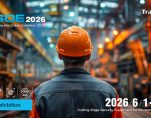
TAIPEI, TAIWAN – Media OutReach Newswire – 1 June 2026 – Asian Safety & Security Online Exhibition 2026 (ASSOE 2026) officially opens today, launching a five-month online exhibition dedicated to the global safety and security industry. Running through October 31, 2026, the exhibition connects international buyers with qualified suppliers across a wide range of safety, security, industrial protection, workplace safety, and smart security sectors.

新聞稿圖片 en 1200x628

Organized jointly by AsianNet and the global B2B marketplace TradeAsia (www.e-tradeasia.com), ASSOE 2026 provides suppliers with long-term international exposure while helping buyers efficiently discover products, compare suppliers, and submit sourcing inquiries online. Through TradeAsia’s B2B matchmaking platform, the exhibition supports cross-border procurement opportunities and strengthens business connections between global buyers and Asian manufacturers.

Expanding International Sourcing Opportunities Through Global Industry Exposure

To increase global visibility and sourcing opportunities, ASSOE 2026 aligns its exhibition period with several major international industry events, including INTERSCHUTZ 2026, Expo Seguridad México, NSC Safety Congress & Expo, SECURITY ESSEN, and FISP. By running alongside major international industry exhibitions, ASSOE 2026 helps increase global exposure for participating suppliers and creates more sourcing opportunities for international buyers.

Through the ASSOE 2026, buyers can review supplier information, browse product catalogs, and directly contact exhibitors for sourcing inquiries. ASSOE 2026 helps suppliers increase global exposure while giving buyers convenient access to qualified manufacturers and a wide range of safety and security solutions.

Comprehensive Product Categories Across the Safety & Security Industry

The exhibition also features a strong lineup of participating suppliers and manufacturers from across Asia’s safety and security industry. International buyers can explore products and sourcing solutions presented by companies including A-BELT-LIN INDUSTRIAL, PAN TAIWAN ENTERPRISE, DORIS INDUSTRIAL, MODERN AUTO, JI JUSTNESS INDUSTRIAL, CLEVER INTELLIGENCE UNITY, PERFECT MEDICAL INDUSTRY, LITEFILM TECH, ET&T TECHNOLOGY, FORMOSA GLOVE INDUSTRIAL, YAU YOUNG AUTO PARTS and HARCO ENTERPRISE.

These exhibitors showcase a diverse range of products and applications covering smart security technologies, industrial safety equipment, protective products, automotive safety solutions, access control systems, and related safety and security applications.

Supporting Global B2B Trade Through Digital Sourcing Solutions

Powered by TradeAsia’s B2B platform, ASSOE 2026 provides exhibitors with online product showcases, supplier profiles, and digital e-catalogs designed to increase international exposure and sourcing opportunities.

International buyers can browse products and communicate with suppliers online regardless of location or time zone, making it easier to compare products, evaluate supplier capabilities, and submit inquiries efficiently. The exhibition’s long-term online format also enables participating companies to maintain continuous visibility throughout the five-month exhibition period.

By integrating online sourcing, digital promotion, and buyer-supplier matchmaking services, ASSOE 2026 creates an efficient environment for global B2B trade and international procurement across the safety and security industry.

Start Sourcing Now

Explore suppliers, discover products, and connect directly with exhibitors through the official ASSOE 2026 online exhibition platform:
https://www.etradeasia.com/online-show/46/Asian-Safety-Security-Online-Exhibition-2026.html

Hashtag: #TradeAsia

The issuer is solely responsible for the content of this announcement.

About TradeAsia

The web-based marketplace located at functions as an essential vehicle for global B2B matchmaking by prioritizing transactional outcomes for procurement professionals and corporate vendors worldwide. This expansive network unifies an extensive audience of millions of registered buyers alongside more than 600,000 active manufacturing entities within a constantly evolving product database. Beyond its digital architecture, the enterprise leverages formal partnerships with hundreds of transnational trade federations and industrial expo organizers. This strategic framework merges cloud-based positioning with on-site promotional operations to optimize international market penetration and drive high-impact marketing results across geopolitical boundaries.

Odisha has secured a proposed $3.3 billion semiconductor substrate project involving Intel Corporation and 3D Glass Solutions Inc., marking one of the largest high-technology manufacturing commitments tied to India’s chipmaking ambitions.

The memorandum of understanding, signed by the Government of Odisha, Intel and 3DGS, covers an advanced packaging glass-core substrate manufacturing facility in the Bhubaneswar-Khurda region. The project is expected to focus on substrates used in next-generation chip packaging, a part of the semiconductor supply chain that has gained strategic importance as artificial intelligence, high-performance computing and advanced data-centre processors demand larger, faster and more power-efficient packages.

The agreement places Odisha in a stronger position within India’s semiconductor map, which has so far been led by assembly, testing, marking and packaging projects, outsourced semiconductor assembly facilities, compound semiconductor proposals and early-stage fabrication investments. The planned plant would add a specialised layer to that ecosystem by targeting glass-core substrates and high-density interconnect technologies, areas that are increasingly viewed as critical for advanced packaging.

Intel’s role is expected to centre on technology know-how, process expertise and ecosystem support, while 3DGS brings specialisation in glass-based integration platforms. 3DGS, a US-based company, has developed glass-centric technologies for radio-frequency, photonics and semiconductor packaging applications. Its involvement gives the Odisha plan a sharper focus than conventional electronics manufacturing projects, as glass-core substrates remain an emerging technology rather than a mature commodity segment.

Glass substrates are attracting industry attention because conventional organic substrates face physical limits as chip packages become larger and denser. Advanced processors now often combine multiple chiplets, memory stacks and interconnect layers in one package. That increases pressure on the base material to carry more power and data connections while reducing warpage, signal loss and thermal stress. Glass offers better dimensional stability, finer interconnect potential and the ability to support larger package sizes, though yield, tooling and commercial-scale production remain challenges.

Intel has publicly positioned glass substrates as a key packaging technology for the second half of this decade. The company has argued that glass could help extend system-level performance gains beyond the limits of transistor scaling, particularly for artificial intelligence accelerators and high-performance computing chips. For India, participation in this segment could move the country beyond back-end assembly into a more advanced part of the global chip supply chain.

The Odisha project is also politically significant. The signing was witnessed by Union electronics and information technology minister Ashwini Vaishnaw and Odisha chief minister Mohan Charan Majhi, alongside senior executives from Intel and 3DGS. The state has been pushing to attract electronics, data centre and semiconductor-linked investments as part of a broader industrial strategy aimed at diversifying beyond metals, mining and ports.

The proposed facility is expected to be developed over several years, with industry estimates placing the build-out period at five to six years. Employment projections point to high-skilled roles across engineering, materials science, process control, quality systems and equipment maintenance, while indirect jobs could emerge through chemicals, gases, logistics, clean-room services and precision component suppliers.

The investment comes as India seeks to reduce dependence on overseas semiconductor supply chains after pandemic-era shortages exposed vulnerabilities in electronics, automotive and defence manufacturing. The Union government’s semiconductor programme has already backed projects by Tata Electronics, Micron Technology, CG Power and Kaynes, while several states are competing to attract design, packaging and manufacturing facilities. Gujarat and Assam have emerged as early beneficiaries, while Odisha’s Intel-3DGS agreement signals a broader geographic spread of the chip ecosystem.

For Intel, the deal fits into a wider effort to strengthen its foundry and advanced packaging credentials at a time when the global chip industry is being reshaped by artificial intelligence demand. The company has been investing in packaging platforms such as EMIB and Foveros, while also promoting glass substrates as a future enabling technology. Its broader turnaround remains under scrutiny because of competitive pressure from Nvidia, AMD, TSMC and Samsung, but advanced packaging offers a route to relevance in custom accelerators and multi-die systems.

The project will still have to pass execution tests before it becomes a production anchor. Semiconductor substrate manufacturing requires tight process control, specialised equipment, stable utilities, skilled technical labour and reliable supply of materials. Glass-core technology also needs commercial validation at scale, as the industry has not yet shifted from established organic substrate supply chains in volume applications.

Samsung Electronics has begun shipping samples of its HBM4E memory chips to global customers, moving faster than rivals in the race to supply the next generation of high-bandwidth memory for artificial intelligence servers. The 12-layer HBM4E product delivers bandwidth of up to 3.6 terabytes per second per stack, with stable pin speeds of 14 gigabits per second and scalability to 16 gigabits per second. The chip is […]

Advertisements

Traffic to DuckDuckGo’s AI-free search page has more than tripled after Google outlined a broader artificial intelligence overhaul of Search, signalling a sharp user reaction against answer-first search tools and strengthening the appeal of services that promise more control over automated summaries. The privacy-focused search company said visits to its No AI page crossed three times their pre-announcement level after Google set out plans to expand AI-powered […]

Seoul’s push to turn humanoid robots into mainstream entertainers moved onto the fashion runway as Galaxy Corporation paired human models with Unitree G1 machines in a staged show of cowboy hats, silk dresses, metallic jackets and 1970s-inspired trousers.

The Mach33: Physical AI Fashion Show, held on 28 May at Galaxy Robot Park in Gangdong District, was presented as more than a novelty catwalk. Galaxy Corporation framed the event as an experiment in coexistence, asking how people and robots might share cultural spaces rather than treating humanoids only as factory tools, laboratory platforms or service machines.

Each model appeared with a shorter humanoid counterpart, often wearing matching or complementary outfits. A tasselled blue Texan-style look, complete with a robot-sized cowboy hat, stood alongside retro silver outerwear, silky dresses fitted to rigid frames and space-age black trousers reminiscent of David Bowie’s 1970s stage style. The styling made the mechanical bodies appear less like exposed prototypes and more like performers entering a commercial entertainment format.

Galaxy Corporation founder and chief executive Choi Yong-ho said the company had realised that robots “need to wear clothes” and argued that robots, like people, should have distinct identities. The company designed the outfits and intends to launch them under the MACH 33 name by the end of the year, positioning robot fashion as a potential extension of its entertainment-technology business.

The event followed the opening phase of Galaxy Robot Park, a 16,500-square-metre venue in eastern Seoul designed around robot concerts, interactive shows, robotic portrait drawing, boxing-style demonstrations and visitor experiences. The park is part of Galaxy Corporation’s effort to create a new live-entertainment category built around “physical AI”, a term used to describe artificial intelligence moving from screens and software into embodied machines operating in shared human spaces.

Galaxy Corporation, known for managing cultural figures including G-Dragon, Taemin and actor Song Kang-ho, has been seeking to merge K-pop spectacle with robotics. Its robot performances have included choreographed dance routines, synchronised stage movement and plans for several shows a day. The company has said it wants to stage more than 1,000 robot performances annually and ultimately take robot-led shows beyond South Korea.

The robot models appeared to be Unitree G1 humanoids, a relatively low-cost platform made by Hangzhou-based Unitree Robotics. The G1 is widely used in demonstrations because of its compact size, balance control, range of motion and comparatively accessible pricing for developers and institutions. Its ability to walk, turn, gesture and respond to programmed choreography makes it suitable for controlled performances, though it remains far from a fully autonomous general-purpose worker.

The show also highlighted the gap between polished presentation and engineering reality. Humanoid robots are becoming more agile, but smooth movement in a runway setting still requires careful staging, reliable control systems and predictable conditions. Research into whole-body teleoperation, motion retargeting and autonomous loco-manipulation continues to point to unresolved challenges, including latency, balance recovery, hand dexterity, human-robot interaction and safe operation in crowded public spaces.

For South Korea’s entertainment sector, the Galaxy event fits a broader pattern of experimentation with virtual idols, AI-generated content, immersive fan platforms and digitally enhanced performances. K-pop’s visual emphasis makes it a natural testing ground for robotic spectacle, but the commercial test will be whether audiences view robot performers as compelling cultural products or as temporary curiosities.

Fashion offers Galaxy a softer route into that debate. Unlike industrial robotics, a runway show does not require humanoids to prove productivity. It asks whether machines can be styled, branded and given a visible role in popular culture. The clothes also conceal some of the awkwardness of exposed mechanical frames, making the robots appear less clinical and more theatrical.

The commercial stakes are growing. Forecasts for humanoid robotics vary widely, but major financial institutions and technology analysts expect the sector to expand sharply over the next two decades as costs fall and AI systems improve. Optimistic projections point to hundreds of millions, or even more than a billion, humanoids by 2050, though adoption is expected to move gradually as companies work through safety, reliability, regulation and public acceptance.

BYD has moved to reassure drivers over assisted-driving safety by pledging to cover some crash-related losses linked to its God’s Eye system, a step that could reshape expectations in China’s fast-moving smart-vehicle market while leaving key liability limits firmly in place. The Shenzhen-based carmaker said users of God’s Eye A, God’s Eye B and God’s Eye 5.0 would receive one year of cover for accidents occurring while […]

Russia-linked cyber operators tracked as GREYVIBE have used generative artificial intelligence tools including ChatGPT and Google Gemini to widen cyber-espionage operations against Ukraine-linked targets, signalling a shift in how lower-skilled threat groups can build lures, malware and infrastructure at speed. The activity, active since at least August 2025, has targeted military, government, civilian and business-related organisations through phishing emails, fake verification pages, fraudulent websites and custom malware. […]

Several Americans were injured and two MQ-9 Reaper drones were badly damaged after an Iranian ballistic missile aimed at Kuwait’s Ali Al Salem Air Base was intercepted by Kuwaiti air defences, sharpening doubts over a fragile US-Iran ceasefire as President Donald Trump weighs whether to extend the truce. The Fateh-110 missile was brought down before reaching its target, but falling debris struck the air base, causing minor […]

Huawei has appointed GAPP as its official cloud solutions distributor in Saudi Arabia, widening access to cloud infrastructure, artificial intelligence tools and disaster recovery services as the kingdom intensifies its push to build a locally anchored digital economy. The strategic partnership gives GAPP’s network of enterprise clients and secondary distributors a formal channel to Huawei Cloud’s portfolio, including cloud-native systems, AI platforms, backup services and business continuity […]

Super Micro Computer Inc. has sought to turn a Taiwan enforcement action into evidence of active cooperation with authorities after three suspects were arrested and 50 servers were seized over an alleged attempt to divert advanced AI hardware towards restricted China-linked markets.

The California-based server maker said the equipment had first been sold through an authorised reseller before being deceptively acquired and targeted for illicit diversion. Its statement framed the case as a successful intervention rather than a failure of internal controls, stressing that it had worked with Taiwan authorities to stop the movement of high-value systems used in artificial intelligence data centres.

The case has drawn attention because Supermicro sits at the centre of the AI infrastructure boom, supplying servers that integrate advanced graphics processors and networking components used to train and run large AI models. Such systems have become strategically sensitive as Washington, Taipei and allied governments tighten oversight of technology flows to mainland China, Hong Kong and Macau.

Taiwan prosecutors have been investigating suspects accused of falsifying export documents for high-end AI servers containing Nvidia chips. The servers were allegedly routed through Japan as part of an attempt to move restricted technology onwards to China-linked buyers. The seizure of 50 systems, though small compared with global AI server demand, is significant because it shows authorities are now pursuing hardware diversions beyond the better-known routes through Southeast Asia.

Supermicro’s response is also shaped by a separate and larger US criminal case that has placed the company under scrutiny. In March, US prosecutors charged three people linked to Super Micro Computer, including co-founder Yih-Shyan “Wally” Liaw, in an alleged conspiracy to divert about $2.5bn worth of AI server technology to China in violation of export controls. Liaw and another defendant were arrested, while a third defendant was listed as a fugitive. Super Micro Computer itself was not named as a defendant.

That case alleged a sophisticated scheme involving shell companies, false shipping documents, repackaging and dummy servers designed to mislead compliance checks. Prosecutors said controlled AI server technology was moved from the United States to Taiwan before being redirected through intermediary locations to reach Chinese customers. The allegations intensified questions over how manufacturers, distributors and resellers monitor the final destination of advanced hardware once it leaves controlled channels.

Supermicro has denied institutional wrongdoing and has said the conduct alleged in the US case violated company policies. The latest Taiwan-linked statement attempts to reinforce that message by presenting the firm as a partner to investigators. It thanked law-enforcement and legal officials, while saying industry and government must work together to strengthen safeguards and improve supply-chain visibility.

The timing matters for investors. Supermicro has been one of the most closely watched hardware suppliers during the AI build-out, benefiting from surging demand for rack-scale servers used by cloud providers, enterprises and sovereign AI projects. That growth has made export-control compliance a material business risk. A single enforcement case can raise concerns about sales screening, reseller audits, customer identification and shipment tracking, even when the company is not accused of direct wrongdoing.

Nvidia’s position adds another layer to the issue. Its most advanced AI processors remain central to global data-centre expansion, and restrictions on sales to China have forced chipmakers and server companies to navigate a shifting regulatory environment. Nvidia has repeatedly said it follows export rules and does not support unlawfully exported products. Its chief executive, Jensen Huang, has also underlined that server vendors must maintain their own compliance standards when handling systems containing restricted chips.

The Taiwan action highlights a broader enforcement shift. Authorities are no longer focused only on chip shipments; fully assembled AI servers are now a priority because they can be more difficult to trace after integration. Servers may contain restricted processors, specialised networking, memory and cooling systems that together create the computing power needed for frontier AI workloads. Once such systems are broken into multiple shipments or passed through resellers, detecting diversion becomes more complex.

OpenRouter has raised $113 million in Series B funding, marking one of the strongest investor endorsements yet for the fast-growing layer of artificial intelligence infrastructure that helps developers and companies route work across competing AI models rather than rely on a single provider. CapitalG, Alphabet’s independent growth fund, led the round, with participation from NVentures, the venture capital arm of NVIDIA, as well as ServiceNow Ventures, MongoDB […]

Bitcoin, ether, XRP and dogecoin lost ground as Wall Street’s strongest winning run in more than two years drew capital towards equities, leaving the largest digital assets struggling to benefit from improved risk appetite across global markets. The divergence sharpened after the S&P 500 completed a ninth consecutive weekly advance, its longest winning streak since 2023, while Brent crude stabilised near $92 a barrel on hopes that […]

China-linked hacking groups have used the Middle East war to intensify cyber-espionage attempts against maritime, energy and political targets across the Gulf, exposing how regional conflict is being turned into an intelligence-gathering opportunity for rival powers. The activity, tracked between October 2025 and March 2026, shows threat actors aligned with Beijing moving quickly around geopolitical shocks, particularly after the escalation involving Iran from late February. Maritime affairs, […]

Paris-based Mistral AI has struck partnerships with BMW and Airbus, marking a significant move by Europe’s best-known artificial intelligence start-up into industrial engineering, aerospace, defence and automotive safety systems. The agreements place Mistral at the centre of a widening European effort to build AI capability around strategic industries rather than relying mainly on US and Chinese technology providers. The company, founded in 2023, is seeking to turn […]

Sea Ltd has created a dedicated investment team to identify artificial intelligence opportunities, marking a deeper push by the Singapore-based technology group to find a new growth engine beyond online retail, gaming and digital financial services.

The unit sits under the president’s office and is evaluating AI start-ups globally, with long-serving executive Zhang Endong leading the effort. The move places investment activity closer to Sea’s top management at a time when the company is trying to convert its scale across Shopee, Garena and Monee into a stronger position in the next phase of consumer internet competition.

The new team is part of a wider internal reorganisation aimed at accelerating AI adoption across Sea’s businesses. Zhang is also involved in projects examining how the technology can be deployed inside the group, from product recommendations and seller tools to game development and financial services. A company spokesperson declined to comment on the investment unit.

The initiative follows a series of signals from chief executive Forrest Li that AI has become central to Sea’s long-term strategy. Li told investors last year that a trillion-dollar market capitalisation could be possible if the company doubled down on artificial intelligence and made the right calls. That ambition is now being tested against tougher operating conditions, heavier competition and investor scrutiny over margins.

Sea’s pivot comes as its core businesses remain sizeable but increasingly contested. Shopee continues to dominate e-commerce across South-east Asia, where price-led competition, live commerce, faster delivery expectations and merchant services have raised both growth potential and operating costs. Rivals including TikTok Shop, Lazada, Amazon and Rakuten are intensifying their own use of AI to personalise shopping, automate seller support and streamline logistics.

Artificial intelligence is already being built into Shopee’s customer and merchant systems. Its applications include recommendation engines, search improvements, advertising tools and seller assistance functions. The strategic logic is straightforward: more effective targeting can increase conversion, better seller tools can deepen merchant loyalty, and automated service functions can reduce costs across markets with different languages, payment habits and logistics infrastructure.

Sea has also expanded its partnership with Google to develop AI-powered tools across e-commerce and gaming. The companies are exploring an agentic shopping prototype for Shopee, designed to move beyond basic search and recommendation functions towards digital assistants capable of helping consumers complete tasks across the shopping journey. Garena is expected to use AI to improve game development productivity, an area where faster content cycles and lower development costs can carry significant commercial value.

Financial performance has given Sea room to invest, though not without pressure. First-quarter revenue rose 46.6 per cent year on year to US$7.1 billion, while gross profit increased 40.7 per cent to US$3.1 billion. Net income reached US$438.2 million, up 6.7 per cent, and adjusted EBITDA rose 9.3 per cent to US$1 billion. The figures showed continued momentum, but also reflected the cost of defending market share and expanding services.

Shopee delivered gross merchandise value of US$37.3 billion in the quarter, up 30.2 per cent from a year earlier, while gross orders climbed 29.3 per cent to 4 billion. Revenue from the e-commerce arm rose 45.1 per cent to US$5.1 billion, though adjusted EBITDA fell to US$223.2 million from US$264.4 million a year earlier, underlining the margin trade-off behind its expansion strategy.

Monee, Sea’s digital financial services unit, has become another pillar of growth. Revenue rose 57.8 per cent to US$1.2 billion, while consumer and small-business loans outstanding reached US$9.9 billion. Non-performing loans more than 90 days past due remained at 1.1 per cent, a key metric as the company expands credit services across emerging markets where risk controls are critical.

Garena, once Sea’s dominant profit engine, also showed stronger momentum. Bookings rose 20.1 per cent to US$931.4 million, while quarterly active users stood at 666.5 million. The unit remains anchored by Free Fire, but Sea’s AI push suggests management sees broader potential in development tools, content generation, player engagement and operational efficiency.

Sea’s AI Centre of Excellence in Singapore adds another layer to the strategy. The centre is intended to strengthen local AI capabilities, support enterprise adoption and develop talent in areas such as engineering, research and product development. Its launch aligns the company with Singapore’s broader ambition to become a regional AI hub and gives Sea a clearer institutional base for experimentation.

The investment team could give Sea access to external innovation at a time when start-ups are moving faster than large platforms in areas such as autonomous commerce, generative game design, fraud detection, credit scoring and AI-enabled logistics. The challenge will be distinguishing durable business models from inflated valuations in a crowded funding environment.

Investors will be watching whether Sea’s AI spending produces measurable gains in revenue growth, user engagement and margin improvement. The company has already shown that it can rebuild profitability after years of expansion-led losses. Its next test is whether AI can become more than an efficiency tool and help create the next major growth curve for one of South-east Asia’s most valuable technology groups.

Meta Platforms has launched paid “Plus” subscriptions for Instagram, Facebook and WhatsApp, marking a wider shift by the social media group towards recurring consumer revenue while keeping the core versions of its apps free. The new plans, announced by Meta head of product Naomi Gleit, add optional premium features across the company’s three biggest consumer services. Instagram Plus and Facebook Plus are priced at $3.99 a month, […]

Arc Raiders secured Nordic Game of the Year at the Nordic Game Awards in Malmö, strengthening Embark Studios’ position as one of the region’s most influential developers after a breakout year for the extraction shooter. The title, developed by the Stockholm-based studio, won the top award at the ceremony held on May 28 during the Nordic Game conference at Slagthuset in Malmö. It also took Best Technology […]

Humanoid robots shared the catwalk with human models in Seoul as Galaxy Corporation turned a fashion show into a test of how artificial intelligence, entertainment and daily life may begin to overlap.

The Mach33 Physical AI Fashion Show, staged on May 28 at Galaxy Robot Park in Gangdong District, placed robots in coordinated outfits beside models wearing matching designs. The display was built around a simple proposition from the company: if robots are moving into public spaces, homes, workplaces and entertainment venues, they may also need a visual identity.

Galaxy Corporation, known for linking entertainment with technology, presented the event as more than a novelty performance. Its founder and chief executive, Choi Yong-ho, has described Mach33 as a marker for a “physical AI” era in which technology is no longer confined to screens but appears in bodies that walk, gesture and interact with people. The runway show sought to show that clothing could become part of that transition, shaping how humans perceive machines and how robots fit into social settings.

The event took place inside Galaxy Robot Park, a 16,500-square-metre venue that opened in eastern Seoul on May 5. The park features humanoid robots performing K-pop routines, mock boxing matches, interactive demonstrations and other entertainment formats. The company has positioned the site as a testing ground for robot-led performance, with ambitions that extend beyond Korea into touring shows and global entertainment products.

The fashion show reflected Galaxy Corporation’s broader attempt to build a cultural brand around robotics. The company manages high-profile entertainment names including G-Dragon and Taemin, while also promoting itself as an “enter-tech” business. That combination of pop culture, stagecraft and robotics has helped it attract attention in a field often dominated by industrial automation, warehouse systems and laboratory prototypes.

The robots that appeared on the runway were not presented as replacements for human models, but as co-performers. Their value lay in the spectacle of synchronisation, movement and visual contrast. Matching outfits reduced the distance between human and machine, while the robots’ mechanical gait reminded audiences that the technology still carries limitations. The result was less a conventional fashion presentation than a staged experiment in public acceptance.

The concept also raised practical questions. Robots designed for hotels, retail, care homes, theme parks or public-facing service roles may require clothing that does more than decorate. Garments may need to allow joint movement, protect sensors, signal function, reduce intimidation and make machines more approachable. Fashion for humanoids could therefore become a niche within industrial design, combining textiles, robotics engineering and brand strategy.

Seoul’s robot catwalk arrives as Korea deepens its push into humanoid robotics. The K-Humanoid Alliance, launched in 2025, brought together major companies, universities and research institutes with the aim of strengthening national capability in AI-driven robots by 2030. Samsung Electronics has increased its stake in Rainbow Robotics to 35 per cent, while Hyundai Motor Group has expanded its work with Boston Dynamics and outlined plans tied to large-scale robot production.

Global competition is also intensifying. Tesla’s Optimus, Figure AI’s humanoid systems, Agility Robotics’ Digit and Boston Dynamics’ Atlas have pushed humanoids into investor presentations, factory trials and public demonstrations. The race is no longer limited to whether robots can walk or lift objects. Companies are now trying to define where robots will be commercially useful, how they will be priced, and how people will respond when machines occupy spaces once reserved for human workers and performers.

Fashion may appear peripheral to that contest, but public trust could become a decisive issue. Humanoids must navigate human environments where appearance, motion and social cues matter. A robot dressed for a hospital will need to project cleanliness and calm. A retail robot may need to look welcoming. A performer may need costume, hair, lighting and choreography as carefully planned as any human act.

Galaxy Corporation’s Seoul event leaned heavily into spectacle, but it also exposed the unsettled state of humanoid design. Robots still move with visible constraints, and the emotional connection that human performers build with audiences remains difficult to reproduce. The company’s bet is that entertainment can accelerate familiarity, making robots less alien before they move into other parts of daily life.

Cybercriminals are shifting from crude misspellings of trusted software packages to more convincing names that appear to belong inside legitimate developer ecosystems, raising fresh concern across open-source security teams and enterprise software supply chains. The change marks a significant evolution in package impersonation attacks. Rather than relying only on a developer mistyping a package name, malicious publishers are creating packages that look like natural extensions, plugins, configuration […]

Bitcoin’s key US demand gauge has stayed under pressure for much of 2026, reinforcing signs that large investors remain selective despite periods of price recovery and continued interest in spot exchange-traded funds. The Coinbase Premium Index, which tracks the price gap between Bitcoin on Coinbase’s dollar market and Binance’s global market, has struggled to hold positive territory since the start of the year. A weak or negative […]

VISHNU RAJA
RYO YAMADA
HITORI GOTOH
IKUYO KITA
Just in:
As AI Reshapes Education, Singapore Convenes Global Dialogue on the Future of Early Childhood Education // BJP’s Aggressive Response Exposes Anxiety Over Opposition Unity // DIP Holding targets Dh1.12 IPO price and $529m proceeds // Democrats capture Senate majority with seven Republican seats // AI trust gap reveals distinct retail priorities: Divergent paths to consumer growth in Hong Kong and the GBA // U.S. Mid Term Result Is A Clear Verdict Against Trump’s Authoritarianism // xCube Access Welcomes Entrust Capital Limited  Expanding Access to Professional Portfolio Management // Vance attributes Republican midterm defeats to Iran conflict // Arrow Electronics showcases technologies advancing intelligent robotics, mobility and digital infrastructure // mamun raises US$3 million to finance cross-border trade between the Gulf and Asia // ADIA and partners establish $1.4 billion aviation venture // Cyberport Venture & Capital Forum 2026 Grand Opening // ADIA and partners establish $1.4 billion aviation venture // Assembly ruckus trial begins after 11 years // Ta’ziz finalises $1.39bn funding for Ruwais industrial facilities // ADIA and partners establish $1.4 billion aviation venture // SC to examine students’ exam plea today // Pinarayi faults UDF over mounting road crashes // ADIA and partners establish $1.4 billion aviation venture // Fast Just Got Fastest: STING Energy Boost™ Celebrates Kimi Antonelli’s Formula 1® World Championship and the Fan Energy Behind It //