Infinix is committed to elevating performance and user experience, beginning with the upcoming NOTE 60 SERIES featuring Snapdragon platforms
HONG KONG SAR – Media OutReach Newswire – 10 February 2026 – Today, Infinix announced its plans to integrate the cutting-edge Snapdragon® platforms from Qualcomm Technologies, Inc. across select smartphones and broader product categories. Through its work with Qualcomm Technologies on system-level optimizations, Infinix aims to achieve deeper integration of chipset capabilities within Infinix’s product portfolio, delivering an enhanced and more seamless user experience.
Select models in the upcoming NOTE 60 SERIES will mark the first time Infinix smartphones are powered by Snapdragon mobile platforms. This launch represents a significant step in Infinix’s core platform strategy and an important milestone for the brand. By integrating the renowned Snapdragon system-on-a-chip solutions into select models, the NOTE 60 SERIES is poised to unlock extraordinary possibilities and deliver a next-level experience to users worldwide.
Strengthening Research and Development Efforts
By combining Qualcomm Technologies’ industry-leading technological expertise with Infinix’s strong capabilities in product design and user experience, the NOTE 60 SERIES focuses on delivering elevated, consistent, and stable performance across core areas, including power efficiency, immersive gaming, advanced imaging, and integrated AI experiences.
Over the past year, Infinix has adopted Snapdragon platforms in its tablet lineup, receiving positive market feedback. This success has laid the groundwork to expand into smartphones and broader product categories. As Infinix continues to advance its premiumization strategy, deepening collaboration with leading technology partners remains a key focus in expanding its product ecosystem and strengthening long-term competitiveness.
“We are excited to collaborate with industry leader Qualcomm Technologies. This important step for Infinix advances our mission for a tailored user experience through in-depth hardware-software integration, utilizing Snapdragon platforms and technologies to deliver greater innovation and quality for customers globally,” says Tony Zhao, CEO of Infinix.
“We are thrilled to collaborate with Infinix as we work together to bring industry-leading Snapdragon technologies to more mobile users worldwide. Expanding Snapdragon integration into Infinix’s mobile portfolio marks an exciting milestone—one that highlights our shared commitment to delivering breakthrough innovation, elevated performance, and more seamless user experiences,” said Chris Patrick, SVP & GM of Mobile Handsets, Qualcomm Technologies, Inc.
With that, Infinix officially announces the upcoming launch of the NOTE 60 SERIES, the brand’s flagship showcase co‑created with leading partners to deliver breakthrough performance, design, imaging, and audio‑visual experiences powered by Snapdragon technology.
Hashtag: #Infinix
The issuer is solely responsible for the content of this announcement.
About Infinix
Established in 2013, Infinix is an innovation-driven brand dedicated to delivering cutting-edge technology, bold design, and outstanding performance. The brand provides smart, enjoyable mobile experiences that enhance everyday life. Beyond smartphones, Infinix has expanded its portfolio to include TWS earbuds, smartwatches, laptops, tablets, smart TVs, and more—building a comprehensive ecosystem of smart devices. Currently, Infinix products are available in over 70 countries and regions worldwide, including Africa, Latin America, the Middle East, South Asia, and Southeast Asia.
Arabian Post Staff -Dubai Rivian Automotive is quietly extending its software footprint beyond the dashboard, with work under way on an Apple Watch companion app that signals a broader push into connected vehicle experiences ahead of its next phase of growth. Code references found within Rivian’s iPhone application point to functionality designed for the Apple Watch, suggesting the electric vehicle maker is preparing to let drivers interact […]
Reddit is no longer just a place for discussion threads and niche communities; it has become a primary search destination for tens of millions of users seeking answers without touching traditional search engines. Platform data and industry tracking show that about 80 million people now search directly on Reddit each month, underscoring a shift in how users navigate the internet for information, advice and recommendations. This behaviour […]
TAIPEI, TAIWAN – Media OutReach Newswire – 10 February 2026 – CyCraft Technology Corporation (TWSE: 7823), Taiwan’s first pure-play AI-native cybersecurity company, has officially listed on the Taiwan Stock Exchange Innovation Board, marking a major milestone for Asia’s emerging AI-driven security leaders.
CyCraft’s founders joined representatives from the Taiwan Stock Exchange, Yuanta Securities, auditors, and legal advisors to celebrate the company’s listing on the TWSE Innovation Board.
CyCraft is forged in one of the world’s most challenging cyber environments. Taiwan faces persistent and large-scale cyber threats from highly-motivated threat actors targeting government, semiconductor supply chains, financial systems, and critical infrastructure. Rather than theorizing about threats, CyCraft has spent years defending against them at national and industry scale.
That experience has produced real-world operational advantages global markets increasingly demand: early-warning intelligence, autonomous machine-speed defense, and field-proven AI automation that cannot be casually replicated.
As generative AI reshapes software development, many SaaS categories face commoditization through “vibe-coding.” Cybersecurity stands apart. Mission-critical defense requires real adversarial data, ultra-low latency, zero-configuration precision, continuous adaptation against sophisticated attacks, and regulatory-grade trust. These capabilities are not synthetic. AI does not replace cyber defense—it amplifies defenders who already operate in real operational environments.
CyCraft’s platform is built around three growth engines:
Enterprise Cyber Resilience.
Its flagship XCockpit AI platform operates over 600K sensors, protecting hundreds of government agencies, financial institutions, and semiconductor leaders across Asia-Pacific. The platform delivers preemptive exposure discovery, automated attack-path simulation, SEMI E187-compliant supply-chain risk mapping, and autonomous triage and response. The shift from reactive protection to preemptive resilience defines CyCraft’s core value proposition.
AI Agent & LLM Security.
As enterprises deploy LLMs and autonomous agents, CyCraft addresses a rapidly emerging risk layer. XecGuard provides ultra-low-latency AI guardrails to detect and prevent prompt injection, jailbreaks, data exfiltration, and tool misuse in real time. Paired with XecART, an automated red-teaming and evaluation platform, CyCraft delivers a scalable, cloud-based and on-prem AI gateway for secure multi-agent orchestration.
The XecGuard and XecART dashboards enable enterprise AI governance with real-time guardrails, automated red teaming, and flexible deployment via on-premises environments or cloud-based APIs.
XecGuard enables enterprise AI governance with real-time guardrails and flexible deployment via on-premises environments or cloud-based APIs.
Unmanned Systems Security.
CyCraft’s XecDefend platform pioneers cyber protection and disruption capabilities for AI-driven anti-drone defense. The solution enables autonomous detection, soft-kill response, and resilient protection for unmanned aerial, maritime, and ground systems—offering software-defined defense for critical infrastructure and defense supply chains.
CyCraft’s credibility is reinforced by third-party validation, including seven appearances in Gartner research, three MITRE ATT&CK evaluations with zero-configuration and zero-latency performance, and the “Next-Big” Award from former Taiwanese President Tsai Ing-wen, recognizing CyCraft as the “TSMC of cybersecurity.”.
In 2025 alone, CyCraft handled multiple critical incidents for Taiwan-listed companies and completed over ten forensic investigations in support of cyber insurance engagements in Japan.
Chairman Benson Wu stated, “In Taiwan, with AI, we help secure the world. This listing accelerates our global expansion through organic growth and strategic M&A. Our goal is to surpass 50% overseas revenue by 2030 and build Asia’s most trusted AI-native cybersecurity brand.”
Disclaimer: The information contained herein does not constitute advice.
The issuer is solely responsible for the content of this announcement.
CyCraft Technology
CyCraft Technology (7823.TW) — Taiwan’s first AI-native cybersecurity company to list on the TWSE Innovation Board — is dedicated to automating cybersecurity with AI, shifting defense from reactive firefighting to proactive, scalable dominance. Delivering protection that is faster, easier, safer — and smarter on cost, CyCraft empowers defenders to scale. With a proven track record serving top-tier government agencies, leading financial institutions, and semiconductor giants, CyCraft is building Asia’s most advanced AI-driven joint defense ecosystem — dramatically shortening dwell time, reducing breach impact, and strengthening enterprise digital resilience worldwide. More information: https://www.cycraft.com/en/about-cycraft
Papio, a global industrial analytics and AI company, has announced the establishment of its Qatari subsidiary and is now officially registered in Qatar under QFC. Steven Jansen, CEO and founder of Papio, shares insights on the company’s global expansion and long-term commitment to supporting industrial organisations with digital transformation initiatives, serving customers better across Qatar and the wider Gulf, while building its footprint in the region. “The Middle East […]
Bitcoin crossed the symbolic threshold of one US dollar 15 years ago, a modest valuation milestone that has since acquired outsized significance as the digital asset evolved from an obscure experiment into a global financial phenomenon influencing markets, regulation, and technology debates. The moment, marked in early February 2011 on a handful of online trading forums and exchanges, is now widely cited as the point at which […]
By Dr. Gyan Pathak The Supreme Court of India ordered extension of time for objections in West Bengal SIR by a week from Feb 14, which in the notified date for publication of the final electoral roll for the state. It has pointed out problem with the “software” that is being used in the Special […]
Bitcoin users have steadily shifted to a quieter but consequential upgrade that cuts fees and improves network efficiency without altering the asset’s core monetary rules. Segregated Witness, commonly known as SegWit, combined with the Bech32 address format, has changed how transaction data is structured and transmitted, allowing more payments to fit into each block and lowering the cost paid by users sending funds across the network. SegWit […]
Abu Dhabi-based technology group G42 has signed a $1bn framework cooperation agreement with a Vietnamese consortium led by FPT Corporation and Viet Thai Group, marking one of the largest cross-border technology collaborations aimed at building sovereign artificial intelligence and cloud infrastructure in Southeast Asia. The agreement sets out a multi-year plan to deploy large-scale cloud capacity across three data centre locations in Vietnam, alongside the development of […]
Samsung Electronics plans to begin mass production of its next-generation high-bandwidth memory chips, HBM4, next month, positioning the company to step up supplies to key artificial intelligence customers led by Nvidia as competition in advanced memory intensifies. The South Korean chipmaker has been racing to finalise yields and qualification for HBM4, a critical component for the latest generation of AI accelerators that demand faster data transfer and […]
Quantum computing is emerging as a strategic lever for India’s ambition to secure a leading role in the global technology order, with Andhra Pradesh Chief Minister N. Chandrababu Naidu arguing that early investments and coordinated policy could reshape the country’s IT and industrial landscape. Speaking in Amaravati, Naidu said quantum technologies had the potential to redefine computing power, cybersecurity, materials science and drug discovery, placing India at a critical juncture as global competition accelerates.
Naidu’s remarks came as Andhra Pradesh positions itself as a focal point for quantum research and commercialisation through its Quantum Valley initiative, which aims to bring together academic institutions, global technology firms and startups on a single platform. The programme is designed to move beyond theoretical research and translate quantum science into deployable applications, an area where many countries are racing to gain first-mover advantage.
Quantum computing differs fundamentally from classical computing by using quantum bits, or qubits, that can exist in multiple states simultaneously. This allows certain calculations to be performed exponentially faster, opening pathways in optimisation problems, climate modelling, financial risk analysis and cryptography that are currently beyond reach. Governments in the United States, China and the European Union have committed billions of dollars to quantum research, viewing it as both an economic and national security priority.
Naidu said India’s strength lay in its deep pool of engineering talent and its established position in information technology services, but warned that relying solely on legacy software models would leave the country vulnerable as the technology cycle shifts. He argued that quantum computing, when combined with artificial intelligence and advanced semiconductors, could create a new technology stack in which India could compete at the highest level rather than remain a downstream adopter.
The Andhra Pradesh government has pitched Quantum Valley as a long-term ecosystem rather than a single project. Plans include dedicated research facilities, incentives for private investment, and partnerships with universities and multinational technology companies working on quantum hardware, algorithms and error correction. Officials involved in the programme say the aim is to create an environment similar to established innovation clusters, where research, talent and capital reinforce one another.
India’s broader policy environment has also begun to align with these ambitions. The national quantum mission, approved by the Union government, outlines funding for quantum computing, communications and sensing over the coming years, with a focus on building indigenous capabilities. Research groups at institutions such as the Indian Institute of Science and several Indian Institutes of Technology are already active in quantum algorithms and materials research, while startups are exploring niche applications in logistics, finance and healthcare.
Industry analysts note that quantum computing remains at an early stage globally, with practical, large-scale systems still years away. Current machines are limited by qubit stability and error rates, and most commercial use cases are experimental. However, the pace of progress has intensified, with steady advances in hardware architectures and hybrid models that combine classical and quantum computing. Countries that invest early in skills and research infrastructure are expected to gain disproportionate benefits once the technology matures.
Naidu acknowledged these challenges, stressing that quantum computing should be approached as a marathon rather than a sprint. He said sustained investment, patient capital and close collaboration between government, academia and industry would be essential to avoid fragmented efforts. He also emphasised the importance of education and workforce development, arguing that quantum science should be integrated into advanced engineering curricula to build a pipeline of specialised talent.
Uber’s push into autonomous vehicles hinges on a complex sensor ecosystem that is increasingly central to how the company positions itself in the future of transportation, even as it pivots from building self-driving systems internally to orchestrating partnerships across the sector. The ability of vehicles to perceive, predict and respond to real-world conditions depends on the performance, redundancy and cost of the sensors that sit at the […]
Big technology groups have entered earnings season facing a sharper set of questions from investors as capital expenditure tied to artificial intelligence accelerates while core cloud businesses show steadier, more measured growth. Quarterly disclosures from the largest United States-based technology companies point to a widening gap between the scale of investment being committed to AI infrastructure and the pace at which that spending is translating into clearly […]
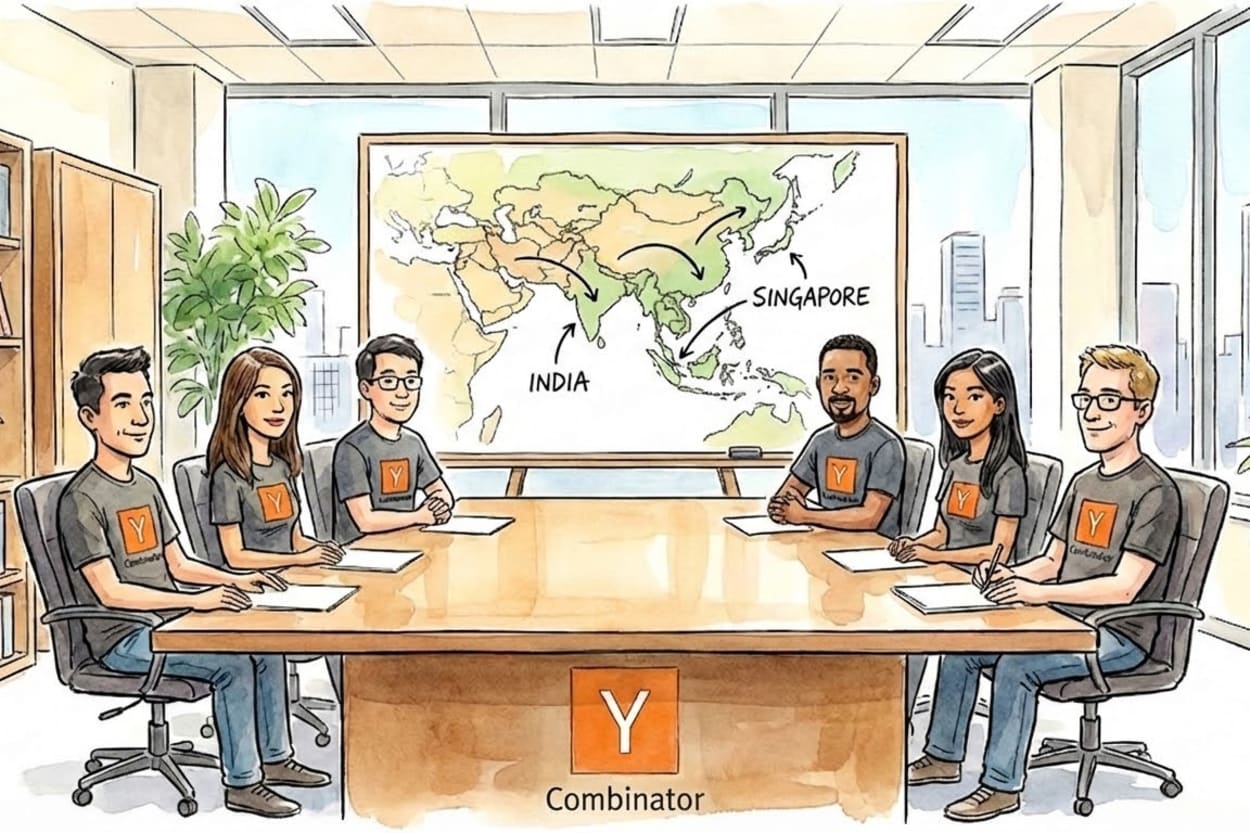
Y Combinator continues to generate outsized returns from companies with roots in India even as its broader influence across Asia shows signs of long-term retreat, reflecting a strategic shift by the world’s best-known startup accelerator amid changing regional dynamics. While founders from Bengaluru, Chennai and Delhi remain visible in its demo days and alumni rosters, the programme no longer shapes Asia’s startup narrative in the way it once did.
Founded in 2005 in Silicon Valley, Y Combinator built its reputation by backing early-stage companies that later became global giants, including Airbnb, Stripe and Dropbox. Its appeal in Asia peaked during the previous decade, when limited access to global capital and mentorship made association with a US-based accelerator especially valuable. India emerged as one of the biggest beneficiaries, with dozens of YC-backed startups securing follow-on funding, overseas market access and high-profile exits.
Companies such as Razorpay, Meesho and Groww, all of which passed through the YC ecosystem in earlier years, became reference points for founders seeking validation from global investors. India’s expanding pool of engineers, rising digital adoption and a large domestic market aligned well with YC’s software-first investment philosophy. These successes continue to deliver financial returns for the accelerator through equity stakes that have appreciated sharply as several firms reached unicorn valuations or prepared for public listings.
Yet the accelerator’s footprint across Asia has narrowed. YC formally closed its China-focused efforts earlier in the decade, citing regulatory complexity and difficulties operating within a tightening policy environment. Activity in Southeast Asia also slowed, with fewer batches featuring startups from Indonesia, Vietnam or Thailand compared with earlier years. The shift reflects not only YC’s internal priorities but also the maturation of Asia’s startup ecosystems, which now offer more local alternatives.
Across Asia, domestic accelerators, corporate venture arms and sovereign-backed funds have stepped in to fill gaps once dominated by Silicon Valley programmes. In India, initiatives backed by large conglomerates, universities and state governments provide capital, mentorship and market access without requiring relocation or deep integration into the US ecosystem. Southeast Asia has followed a similar path, with regional venture firms increasingly willing to lead early rounds.
YC itself has changed. The accelerator has leaned further into its core strengths, focusing on fewer geographies while doubling down on artificial intelligence, developer tools and enterprise software. Its decision to emphasise remote participation during and after the pandemic reduced the symbolic value of spending months in Silicon Valley, a factor that once set YC apart for Asian founders. While remote access broadened participation, it also diluted the sense of exclusivity that helped the programme stand out.
For Indian startups, the relationship with YC has become more transactional. Participation is still seen as a strong signal of quality, especially for companies targeting global markets or US-based customers. However, founders increasingly view YC as one of several possible launchpads rather than a defining milestone. Follow-on funding now depends less on accelerator pedigree and more on unit economics, regulatory clarity and the ability to scale within complex local markets.
Investors tracking Asia’s venture landscape note that YC’s reduced presence does not imply a loss of relevance everywhere. India remains an exception because of its scale, talent depth and ongoing pipeline of software-led startups with global ambitions. YC partners continue to engage with Indian founders, and each batch includes a steady, if smaller, number of companies from the country. Returns from earlier bets ensure that India remains financially meaningful to the accelerator.
At the same time, YC no longer sets the pace for Asia-wide innovation trends. Local accelerators and venture funds are shaping sectors such as fintech, climate technology and logistics, areas where regulatory nuance and on-the-ground execution matter as much as global networks. Governments across the region have also become more involved in startup promotion, offering grants, sandboxes and procurement opportunities that reduce reliance on foreign programmes.
A coordinated cyber-espionage and crime-linked campaign has surfaced that repurposes an obscure Windows feature to gain long-term control of corporate systems, according to multiple security firms tracking the activity. Attackers are distributing Windows screensaver files, identifiable by the. scr extension, through carefully tailored phishing emails and using them to install legitimate remote administration software that blends into enterprise environments. The operation hinges on social engineering rather than […]
Arabian Post Staff -Dubai Jordan-based education technology company Alefredo has acquired United Kingdom tutoring firm Tutor House, marking its formal entry into the UK market and accelerating its push to build a hybrid learning platform spanning Europe, the Middle East and Africa. The deal brings Alefredo a network of more than 30,000 vetted tutors across multiple subjects and age groups, significantly expanding its reach beyond its home […]
I’ve seen enough tech cycles to recognise when markets are merely correcting excess and when they are confronting something more fundamental. What investors are grappling with now belongs firmly in the second category. Close to $1 trillion has been stripped from software and broader tech valuations in days. Speed explains part of the shock and meaning explains the rest. Markets are reassessing whether large parts of the […]
HEIDELBERG, GERMANY – News Aktuell – 5 February 2026 – After nine months of financial year 2025/26 (April 1 to December 31, 2025), developments at Heidelberger Druckmaschinen AG (HEIDELBERG) are in line with expectations. The company has achieved a considerable improvement in its profitability and is also resolutely pressing ahead with its strategic transformation, moving into new areas of business that are enjoying strong growth. Notwithstanding the challenging environment, sales after three quarters climbed to € 1,602 million – some 6.1 percent higher than the previous year’s figure of € 1,509 million – despite negative exchange rate effects amounting to around € 44 million compared with the equivalent period of the previous year. Business in Europe and with packaging and label printing presses saw particularly positive development during this period. At € 617 million, the sales figure for the third quarter was around 4 percent higher than in the equivalent quarter of the previous year and continued the quarter-on-quarter sales growth so far in the current financial year.
The HEIDELBERG Customer Portal is already the digital control center for over 3,000 print shops worldwide – a figure that is set to keep on growing.
The adjusted operating result (EBITDA) after nine months increased significantly to € 114 million (adjusted figure for equivalent period of previous year: € 86 million) and the adjusted EBITDA margin improved considerably to 7.1 percent (equivalent period of previous year: 5.7 percent). Implementation of the personnel and efficiency measures envisaged in the plan for the future is having a clear impact. For example, production costs and total working costs improved compared with the corresponding period of the previous year. The personnel cost ratio was lower than in the first nine months of the previous year, falling to 36 percent (equivalent period of previous year, adjusted for special items: 39 percent). The company is expecting personnel costs as a whole to remain below the previous year’s figure for the rest of financial year 2025/26.
Incoming orders after nine months totaled € 1,628 million (previous year: € 1,823 million). Allowing for the fact that drupa resulted in the previous year being very strong, they were therefore in line with expectations. During the reporting period, the company saw a significant impact from negative exchange rate effects amounting to some € 46 million. Incoming orders in the third quarter stood at € 517 million (corresponding quarter of previous year: € 550 million). The development of incoming orders in the third quarter was particularly positive in the Americas Region, where they were up 17 percent on the equivalent quarter of the previous year.
HEIDELBERG pressing ahead with strategic transformation and tapping into new growth markets
Despite a market environment that remains challenging, HEIDELBERG is consistently pursuing its strategic transformation. Based on its strong industry and systems expertise, the company is systematically tapping into additional markets in the areas of defense, security, energy, charging infrastructure, and industrial system solutions. One key aspect of this process is combining all relevant activities under HD Advanced Technologies GmbH. This strategic further development is building HEIDELBERG a stronger future and opening up long-term growth opportunities.
In the HEIDELBERG Technology segment, sales after nine months totaled € 42 million – slightly higher than the previous year’s figure of € 41 million. Even though the development of sales is moderate at present, the strategic measures that have been initiated provide a basis for HEIDELBERG Technology to potentially make a much bigger contribution to business as a whole. In particular, the continuing strategy of tapping into new industries and the creation of new business models are raising expectations of a positive sales trend in the coming years.
“The measures we have initiated are confirmation of our growth plan,” says Jürgen Otto, CEO of Heidelberger Druckmaschinen AG. “Both strategically and operationally speaking, HEIDELBERG is extremely well positioned to actively hone this plan and leverage additional opportunities in dynamic future markets,” he adds.
Core business lays foundations for transformation
At the same time as new areas of business are being unlocked, the company’s core business is also developing robustly. In the Print & Packaging Equipment segment, HEIDELBERG is benefiting from its strong market position in packaging and label printing. In the reporting period, this segment’s sales increased to € 804 million (previous year’s figure: € 705 million). In the Digital Solutions & Lifecycle segment, the company is further expanding its role as a systems integrator – with hybrid printing, software, and service solutions as part of a digital ecosystem. In this segment, HEIDELBERG achieved nine-month sales of € 755 million (previous year’s figure: € 763 million).
“Our strength lies in the intelligent way we combine presses, software, and service operations,” says Dr. David Schmedding, Chief Technology & Sales Officer. “By specifically expanding our digital printing portfolio and launching new high-performance systems such as the Jetfire 75, we are creating additional growth potential – both in our core business and beyond,” he emphasizes.
The free cash flow of HEIDELBERG after three quarters was € -81 million, an improvement on the previous year (equivalent period of previous year: € -97 million). As expected, however, it was still negative. This is due to the Polar acquisition and restructuring costs in the high single-digit million-euro range. The net result after taxes of € 17 million after nine months represented a significant increase (corresponding period of previous year: € -42 million).
The company is confirming its forecast for financial year 2025/26. A healthy order backlog, the current efficiency measures, and systematic implementation of the strategy are laying the foundations for achieving its targets. In view of macroeconomic developments, taking into account the various opportunities and risks, and assuming the global economy does not see weaker growth than predicted by the relevant institutions, the company is expecting sales of around € 2,350 million in financial year 2025/26 (2024/25: € 2,280 million). In view of the significant exchange rate effects, the continuing weak macroeconomic situation, and the uncertain trade situation, the company is assuming the increase in the adjusted EBITDA margin will be toward the lower end of the predicted range of up to 8 percent (previous year: 7.1 percent).
Image 1: A team from the Hoifu Group, gathered around Chairman Ou Shun Chou (front row, sixth from the left), with HEIDELBERG representatives including Steven Hou, General Manager South China, and Michael Nilges, Managing Director of the Shanghai site (front row, seventh and eighth from the left), during acceptance testing for the 1,000th Speedmaster CX 104 at the HEIDELBERG site in Shanghai.
Image 2: The digital printing line at rubmedia includes a Jetfire 50 and a Versafire LV from HEIDELBERG, as well as the corresponding postpress equipment. The media house can use this line for the complete, industrialized in-house production of personalized and high-quality short runs.
Image 3: The HEIDELBERG Customer Portal is already the digital control center for over 3,000 print shops worldwide – a figure that is set to keep on growing.
This release contains forward-looking statements based on assumptions and estimates by the management of Heidelberger Druckmaschinen Aktiengesellschaft. Even though the management is of the opinion that these assumptions and estimates are accurate, the actual future development and results may deviate substantially from these forward-looking statements due to various factors, such as changes in the overall economic situation, in exchange and interest rates, and within the print media industry. Heidelberger Druckmaschinen Aktiengesellschaft provides no guarantee and assumes no liability for future developments and results deviating from the assumptions and estimates made in this press release. Hashtag: #HEIDELBERGDruckmaschinenAG
The issuer is solely responsible for the content of this announcement.
About HEIDELBERG
Heidelberger Druckmaschinen AG (HEIDELBERG) is a leading technology company that has been standing for innovation, quality, and reliability in mechanical engineering worldwide for 175 years. With a clear focus on growth and as a total solution provider, HEIDELBERG is driving further development in the core areas of packaging and digital printing, software solutions, and lifecycle business with service and consumables so that customers can achieve maximum productivity and efficiency. The company is also focusing on expanding into new business areas such as high-precision plant engineering with integrated control systems, automation technology, robotics, and the growing green technologies sector. With its strong international presence in approximately 170 countries, the creative power and expertise of its roughly 9,500 employees, its own production facilities in Europe, China, and the USA, and one of the largest global sales and service networks, the company is ideally positioned for future growth.
India has set out a strategic roadmap to accelerate domestic capabilities in robotics and physical artificial intelligence, signalling a push to reduce dependence on imported hardware and proprietary software while positioning the country as a competitive global supplier of intelligent machines. The plan, prepared by the Technology Advisory Group for Emerging Technologies, places indigenisation, software sovereignty and sector-focused deployment at the centre of the national approach, with healthcare, manufacturing, logistics, agriculture and media production identified as priority domains.
The roadmap comes as governments worldwide race to translate advances in artificial intelligence into physical systems that can operate autonomously in real-world environments. While software-led AI has seen rapid adoption, policymakers argue that long-term economic and strategic gains will hinge on control over robotics hardware, operating systems and embedded intelligence. India’s proposal reflects concerns that reliance on imported robots and closed platforms could expose critical sectors to supply-chain risks and limit domestic innovation.
At its core, the strategy seeks to build a full-stack robotics ecosystem, spanning sensors, actuators, edge computing, operating software, cloud integration and safety certification. Officials involved in drafting the document have stressed that the objective is not isolation but resilience, with domestic alternatives developed alongside international collaboration. The roadmap calls for common standards and open architectures to prevent vendor lock-in and to allow startups and research institutions to build interoperable systems.
Healthcare has emerged as an early focus area, driven by workforce shortages and rising demand for precision care. The roadmap highlights surgical assistance, rehabilitation devices, hospital logistics robots and elder-care support systems as near-term opportunities. Policymakers note that such applications demand high reliability and ethical safeguards, reinforcing the need for locally controlled software stacks and transparent algorithms. Parallel efforts are proposed to strengthen clinical validation pathways and align regulatory approvals with global benchmarks.
Manufacturing and logistics form another pillar, with the document pointing to collaborative robots, autonomous guided vehicles and smart warehousing as tools to raise productivity and improve workplace safety. India’s manufacturing sector, dominated by small and medium-sized enterprises, has historically lagged in robot adoption due to cost and skills barriers. The roadmap recommends targeted incentives, shared testing facilities and modular designs to lower entry thresholds, alongside large-scale skilling programmes to train technicians, operators and system integrators.
Agriculture features prominently, reflecting policy priorities around food security and rural incomes. The plan outlines the use of robotics for precision spraying, harvesting, soil analysis and post-harvest handling. Developers are encouraged to design systems suited to fragmented landholdings and diverse crops, rather than importing models built for large, mechanised farms elsewhere. Officials argue that domestically developed agricultural robots could also find markets across Asia and Africa, where similar conditions prevail.
An unusual inclusion is the media and creative sector, where robotics and physical AI are seen as enablers of immersive production, automated camera systems and smart broadcasting infrastructure. The roadmap suggests that integrating robotics with virtual production and generative tools could lower costs for newsrooms and studios while enhancing safety in hazardous reporting environments.
Beyond sectoral applications, the strategy places strong emphasis on software sovereignty. It calls for homegrown robotics operating systems, simulation platforms and AI frameworks that can be audited and customised. While global open-source projects are acknowledged as valuable foundations, the document urges sustained public funding to ensure domestic stewardship and long-term maintenance. Data governance and cybersecurity are flagged as critical, particularly for robots deployed in sensitive locations.
Financing and procurement reforms form another strand. The roadmap proposes dedicated funding windows for deep-tech robotics ventures, longer grant cycles to reflect extended development timelines and clearer pathways from research labs to commercial deployment. Public procurement is positioned as a market-shaping tool, with government agencies encouraged to pilot domestically developed robots in hospitals, warehouses and public infrastructure.
The roadmap also addresses ethical and social dimensions, including job displacement concerns and safety standards. Rather than framing robotics as a threat to employment, the document argues that productivity gains can create new roles in design, maintenance and supervision, provided reskilling keeps pace. It recommends national guidelines for human–robot interaction, liability frameworks and continuous monitoring of societal impact.
ChatGPT experienced a service disruption that prompted widespread user complaints, with tracking platforms registering more than 12,000 reports of errors before OpenAI confirmed that systems were being restored. The incident, which affected users across multiple regions, briefly limited access to one of the most widely used generative artificial intelligence tools, raising renewed questions about the resilience of large-scale AI infrastructure as dependence on such services deepens. OpenAI […]
AACHEN, GERMANY – Newsaktuell – 4 February 2026 – Aachen, FEV has teamed up with Daimler Buses to create the first coach with a hydrogen fuel cell drive system. The starting point for the “H₂ Coach” technology demonstrator, which is intended for testing purposes, was a conventional Setra coach. This marks an important step toward locally emission-free long-distance travel: short refueling times, ranges of at least 800 kilometers per tank filling, and quiet operation underscore its practicality.
FEV and Daimler Buses have jointly developed the “H2 Coach”, the first coach with a hydrogen-based fuel cell drive system. Source: Daimler Buses
Daimler Buses and FEV jointly carried out the complete system transformation from diesel drive to fuel cell electric vehicle. After creating the overall vehicle concept, FEV took over the mechanical and E/E integration. One distinguishing feature is that the individual components deployed – including fuel cells, high-voltage components (such as batteries and electric motors), H₂ tank assemblies, control units including software – originate from different technology platforms from Daimler Buses and Daimler Truck. FEV integrated the systems into a functional powertrain in the overall vehicle.
An important factor in the development process was safety. Measures were developed for various crash load cases as well as for functional, high-voltage, and hydrogen safety.
“The ‘H₂ Coach’ impressively demonstrates how complex subsystems can be integrated into a testable, safe complete vehicle when vehicle, powertrain, and E/E expertise come from a single source,” said Klaus Wolff, Vice President Project Management at FEV. “With our one-stop-shop approach, we quickly and efficiently delivered the desired customized solution to our customer – from concept to approval.”
After successful approval by German technical inspection authority TÜV and passing electromagnetic compatibility tests, FEV handed over the vehicle to Daimler Buses in the summer of 2025 after approximately two years of joint project work.
Hashtag: #FEV
The issuer is solely responsible for the content of this announcement.
Python’s packaging ecosystem is under growing strain as development teams move away from pip in production environments, citing performance bottlenecks, fragile dependency resolution and rising operational risk. The shift towards faster tools such as uv reflects more than a search for speed; it exposes structural weaknesses in how Python applications are built, tested and deployed at scale. Pip remains the default package installer bundled with Python, but […]
Apple has rolled out Safari Technology Preview 236, the latest iteration of its experimental browser platform that previews innovations destined for future mainstream releases. The update delivers a broad set of fixes and technical refinements spanning CSS, HTML, image handling, form functionality, media playback, rendering performance, Web API behaviour, scalable vector graphics and real-time communication protocols. It can be downloaded on macOS Sequoia and macOS Tahoe via […]
Crypto firms expanded hiring through 2025, with job openings rising 6% to 1,801, as companies pivoted towards compliance, business development and operations roles, signalling a maturation of the sector beyond its engineering-heavy origins. The increase came despite volatile digital asset prices and tighter oversight across major markets, underscoring how crypto businesses are adapting to regulatory scrutiny and a broader push for institutional credibility. While software engineers and […]




 http://www.infinixmobility.com/


 https://www.linkedin.com/company/cycraft
 https://x.com/cycraft_corp


 By Dr. Gyan Pathak The Supreme Court of India ordered extension of time for objections in West Bengal SIR by a week from Feb 14, which in the notified date for publication of the final electoral roll for the state. It has pointed out problem with the “software” that is being used in the Special […]