OpenClaw has issued security updates for three vulnerabilities in its autonomous AI agent framework, warning administrators that older npm package versions could expose systems to policy bypasses, unauthorised configuration changes and API credential leakage. The flaws affect versions released before 2026.4.20, with one issue limited to versions between 2026.4.5 and 2026.4.20. The patched version tightens how the framework handles trusted operator settings, bundled tools and workspace environment […]
Fake software downloads promoted through YouTube are being used to infect corporate employees with Vidar, an information-stealing malware that harvests passwords, browser data, session cookies and cryptocurrency wallet files before stolen credentials are traded through Russian-language cybercrime markets. The campaign shows how threat actors are shifting from noisy phishing emails to search-driven lures that exploit ordinary workplace behaviour. Employees looking for software tutorials, installers or utilities on […]
Cybercriminals are exploiting tax-season anxiety by circulating fake Income Tax Department notices that push taxpayers and companies towards malware-laden downloads disguised as assessment orders and compliance documents. The campaign uses official-looking emails and cloned tax portals to make recipients believe they are facing scrutiny over alleged violations, including concealment of income or inaccurate filings. Victims are directed to external websites that imitate government communication, where buttons labelled […]
A targeted malware campaign aimed at Pakistan’s government-linked security infrastructure has exposed how threat actors are combining social engineering, obfuscated code and trusted online services to evade conventional cyber defences. The attack was directed at employees of the Punjab Safe Cities Authority and PPIC3, using a spear-phishing email that impersonated an internal consultant and referred to the Safe Jail Project, a theme designed to appear relevant to […]
Arabian Post Staff -Dubai Global equities advanced and crude oil retreated from session highs after Iran offered Washington a proposal to reopen the Strait of Hormuz and move towards ending the war, easing pressure on investors after stalled peace efforts had lifted energy prices. Asian shares rose 1.4 per cent, while the MSCI emerging markets index climbed to a record high as traders reacted to signs that […]
Arabian Post Staff -Dubai Qatar’s media-sector push has gained fresh momentum after Media City Qatar and the International Association for MediaTech entered a Platinum Partnership designed to raise the country’s profile as a regional centre for media, technology and content creation. Announced in Doha on 26 April 2026, the agreement gives Media City Qatar wider access to IAMT’s international platforms, industry events, market intelligence and training […]
Arabian Post Staff -Dubai Nokia has chosen Egypt as its support hub for the Middle East and Africa, setting up a centralised operational centre in Cairo to handle regional support activities and customer services across one of the world’s most diverse telecoms markets. The move places Egypt at the centre of Nokia’s service delivery model for operators, enterprises and public-sector customers across the region. The Cairo hub […]
Anthropic’s Claude Desktop application for macOS is facing scrutiny after a cybersecurity researcher reported that the app installs a Native Messaging bridge into multiple Chromium-based browsers without a clear consent prompt, widening concern over how AI desktop agents gain access to local systems and browser sessions. Privacy researcher Alexander Hanff published his findings on 18 April 2026 after identifying a manifest file named com. anthropic. claudebrowserextension. json […]
OpenAI has opened a GPT-5.5 Bio Bug Bounty programme that invites selected researchers to test whether the company’s latest model can be pushed past safeguards designed to block dangerous biological guidance. The initiative offers a reward of up to $25,000 for the first verified “universal jailbreak” capable of defeating a five-question biosafety challenge from a clean chat without triggering moderation. The model in scope is GPT-5.5 in […]
Hackers have turned a critical React Server Components flaw into a structured exploitation operation, using Telegram bots, automated scanners and AI-assisted tooling to track more than 900 confirmed compromises across internet-facing applications. The campaign centres on React2Shell, tracked as CVE-2025-55182, a maximum-severity remote code execution vulnerability disclosed in December 2025. The flaw affects React 19.0, 19.1.0, 19.1.1 and 19.2.0 through packages including react-server-dom-webpack, react-server-dom-parcel and react-server-dom-turbopack, and […]
Japan has set up a financial-sector task force to assess risks from advanced artificial intelligence systems capable of discovering software flaws at a speed that could outpace existing cyber defences, deepening official concern over the resilience of banks, exchanges and payment infrastructure.
The move follows high-level talks involving the Financial Services Agency, the Bank of Japan, national cyber security officials, Mitsubishi UFJ Financial Group, Sumitomo Mitsui Financial Group, Mizuho Financial Group and Japan Exchange Group. The focus is Anthropic’s Mythos, a powerful AI model developed for defensive cyber security work but now regarded by regulators as a potential systemic risk if similar capabilities reach hostile actors.
Finance Minister Satsuki Katayama has framed the issue as an urgent challenge for core financial institutions, warning that Japan’s highly connected financial system could face cascading disruption if attackers used AI to identify and exploit weaknesses before institutions could repair them. No breach linked to Mythos has been reported, but officials are pressing banks to examine incident response plans, software exposure, vendor dependencies and market-continuity arrangements.
Japan tightens bank defences over Mythos as regulators confront a new cyber security problem: an AI tool built to strengthen software security may also demonstrate how fast the balance between defenders and attackers is shifting. Anthropic has said its Mythos Preview found thousands of high-severity vulnerabilities, including flaws affecting every major operating system and web browser. The company has placed the model under restricted access through Project Glasswing, an effort to use frontier AI for defensive discovery before equivalent capabilities spread more widely.
Security specialists see the financial sector as particularly exposed because banks rely on layered infrastructure that includes legacy systems, cloud services, trading platforms, third-party vendors and customer-facing applications. A vulnerability in one component may not remain isolated. Settlement systems, payment networks and securities markets depend on trust, synchronised data and rapid processing, leaving little tolerance for prolonged outages or uncertainty.
Japan’s top lenders have spent heavily on cyber resilience after a series of global incidents involving ransomware, software supply-chain attacks and attacks on critical infrastructure. Yet regulators remain concerned that AI-enabled vulnerability discovery could compress the time between flaw identification and exploitation. Traditional patch cycles often take days or weeks, while advanced models may help attackers generate working exploit paths far faster.
The task force is expected to coordinate technical assessments, information sharing and emergency procedures across the financial sector. Officials are also likely to examine how institutions verify third-party software, monitor anomalous activity and isolate critical operations during a cyber event. For exchanges and clearing systems, the priority will be maintaining orderly trading and settlement even if parts of the technology stack come under pressure.
The concern extends beyond Japan. Regulators in Asia, Europe and the United States have been urging banks to review their cyber controls as AI systems become more capable of code analysis, vulnerability chaining and automated exploitation. The issue has moved from a narrow technology debate into the domain of financial stability, because a successful attack on a major bank or exchange could quickly affect liquidity, confidence and cross-border transactions.
Anthropic has presented Mythos as a controlled defensive tool rather than a public product. The company says the model is intended to help responsible institutions find and fix vulnerabilities before they are misused. That defence has not removed policy concerns. The same capability that enables security teams to uncover hidden bugs can also lower the barrier for sophisticated offensive activity if access controls fail or comparable models emerge elsewhere.
Japan’s response reflects a broader shift in cyber regulation. Authorities are moving away from treating cyber security as a compliance checklist and towards stress-testing how institutions would cope with fast-moving, AI-assisted threats. Banks may face pressure to shorten patching timelines, improve software inventories and strengthen board-level oversight of technology risk.
For Japan, the issue also intersects with its ambition to modernise finance while promoting digital innovation. The country is expanding fintech services, digital payments and AI adoption across corporate operations, but regulators are signalling that innovation must be matched by stronger safeguards. Financial institutions are being asked to prepare for a threat environment in which attackers may use tools that can scan, reason and adapt at machine speed.
The immediate test for the task force will be whether it can turn concern into operational readiness. That means clear reporting channels, shared technical indicators, realistic crisis drills and faster coordination between banks, regulators, exchanges and cyber agencies. Japan’s financial authorities are seeking to prevent an AI-driven security breakthrough from becoming a market-disrupting event.
I remain strongly positive on AI. The pace of development, the scale of capital flowing into the sector, and the productivity upside it promises are all significant. Equity markets have responded accordingly, with leadership concentrated in semiconductors, cloud platforms, and software. The concentration reflects real earnings power and strong visibility. At the same time, the investment landscape around AI is broadening. The next phase is taking shape, […]
Bitwarden’s command-line interface package was briefly poisoned through npm after attackers abused a GitHub Actions workflow in its software release pipeline, turning a trusted password-management tool into a potential route for stealing developer credentials, cloud secrets and CI/CD tokens. The affected package was @bitwarden/cli version 2026.4.0, distributed through npm between 5:57pm and 7:30pm Eastern Time on 22 April 2026. The compromise did not affect Bitwarden’s core vault […]
Cybersecurity teams running local artificial intelligence models are facing a high-risk exposure after a flaw in Ollama’s model-processing system was found to allow attackers to extract sensitive server memory through a malicious model file. Tracked as CVE-2026-5757, the vulnerability affects the model quantisation engine used by Ollama, an open-source platform widely adopted by developers and enterprises to run large language models on personal computers, workstations and servers. […]
Cyber-attacks on higher and further education institutions jumped 63 per cent over a year, exposing universities and colleges to a sharper wave of ransomware, data theft, hacktivism and state-linked intrusion as digital learning systems become central to academic life. The findings point to 425 recorded incidents across 67 countries in the latest 12-month assessment period, compared with 260 in the preceding year. The rise reflects not only […]
Google has moved to tackle one of enterprise AI’s hardest problems by giving each autonomous software agent its own cryptographic identity, part of a broader Gemini Enterprise Agent Platform unveiled at Cloud Next on 22 April. The idea is straightforward but consequential: every agent action can be tied to a unique, verifiable ID and checked against a defined set of permissions, creating an audit trail designed for […]
HONG KONG SAR – Media OutReach Newswire – 23 April 2026 – Hong Kong’s small businesses delivered their strongest performance in a decade in 2025, while confidence in the year ahead has climbed to a record high, according to CPA Australia’s latest Asia‑Pacific Small Business Survey 2025–26.
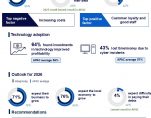
The survey shows that 68 per cent of Hong Kong SMEs recorded growth in 2025, up from 65 per cent in 2024 and marking the highest result on record. This positive momentum is expected to continue this year, with 71 per cent of SMEs expecting their businesses to grow and 76 per cent anticipating growth in the local economy — both at record highs. Customer loyalty and a strong workforce were identified as key drivers behind SMEs’ solid performance last year.
Mr Cliff Ip, Councillor of CPA Australia’s Greater China Divisional Council, said Hong Kong’s improving business environment played a critical role in supporting SME growth. “Hong Kong’s business confidence and economic growth strengthened last year, supported by robust capital markets, a recovery in tourism and consumption, and signs of stabilisation in the property market,” said Mr Ip. “Against this stable and supportive backdrop, small businesses not only benefited from increased business activity, but were also able to expand in a healthy and sustainable manner.”
Looking ahead, Mr Ip noted that while global geopolitical tensions and external uncertainties pose rising challenges, Hong Kong’s underlying strengths remain a key advantage for SMEs. “Rising geopolitical risks are likely to create headwinds for many sectors such as trade and logistics through higher fuel costs and supply chain disruptions. However, I remain confident about Hong Kong’s overall business outlook this year,” he said. “As many regions become more unpredictable or less secure, Hong Kong’s stable and consistent business environment, together with supportive policy settings including the city’s low and simple tax regime stand out as important advantages in attracting international companies and investors.”
Mr Ip added that these developments also present new opportunities for local SMEs, particularly as increased international interest creates scope to build partnerships, expand networks and tap into new markets. “This environment also creates favourable conditions for younger entrepreneurs to explore emerging markets and pursue new business opportunities,” he said.
Improved business performance has strengthened the solvency of many local SMEs. The share of businesses reporting difficulty paying debts fell sharply from 22 per cent in 2024 to just 3 per cent in 2025, while only 4 per cent expect to face difficulties this year, down markedly from 26 per cent previously. As a result, Hong Kong small businesses are now the least likely among the surveyed businesses to report solvency concerns.
Mr Ip said, “The solvency of many SMEs has notably improved, driven by stronger cash flow from improved business growth, a robust capital market and a recovering property market over the past year. This healthier cashflow has both supported easier access to external finance and reduced the need for such finance.”
Hong Kong SMEs have also strengthened their capability to invest in technology that delivers rapid improvements in profitability. In 2025, 64 per cent of SMEs reported that their technology investment in that year helped improve profitability, up from 59 per cent in 2024. Two in five Hong Kong SMEs invested in artificial intelligence (AI) last year, making it the leading technology investment among local SMEs, followed by customer relationship management (CRM) software.
At the same time, cyber protection has improved, with the share of Hong Kong businesses reporting losses from cyber incidents falling sharply from 72 per cent in 2024 to 43 per cent in 2025. However, as digitalisation accelerates, cyber risks remain elevated, with nearly three in five SMEs expecting to face cyber threats this year, above the survey average 42 per cent.
Mr Davy Leung, Deputy Chairperson of CPA Australia’s SME and Entrepreneurship Committee of Greater China, said the growing maturity and availability of AI tools is helping SMEs enhance productivity, reduce operating costs and improve customer experience.
(Left) Mr Davy Leung, Deputy Chairperson of SME and Entrepreneurship Committee 2026 from CPA Australia (Right) Mr Cliff Ip Greater China Divisional Councillor 2025 from CPA Australia
“However, rising digital fraud, wider AI adoption and SMEs’ increasing reliance on digital banking have prompted the Hong Kong Government to significantly strengthen banking security and cybersecurity resilience over the past year. This includes the rollout of low-cost and practical initiatives such as the Cybersec One Programme and the continued implementation of the ‘9+5’ SME support measures. The decline of cyberattack-related losses reported in the survey in part reflects the effectiveness of these measures.
“As cybersecurity threats and digital fraud risks continue to escalate, SMEs should make better use of these available resources, including free website risk assessments and vulnerability identification services, to strengthen their defence capabilities and safeguard business operations.”
Mr Leung also suggested that the Government consider revamping the Technology Voucher Programme to support broader digitalisation efforts, including the adoption of both AI and non-AI technologies. He added that enhanced training support would help SMEs identify and implement modern tools to drive innovation, improve efficiency and strengthen long-term competitiveness.
Rising costs remain a key challenge for Hong Kong SMEs in 2025, with 29 per cent reporting it having a negative impact on their business. However, this was the second‑lowest level among all surveyed markets, underscoring Hong Kong’s relatively low inflationary environment last year. Notably, the share of SMEs citing staff costs as a negative factor rose from 35 per cent to 42 per cent, making it the most significant cost pressure for Hong Kong businesses in 2025. This increase may help explain why the proportion of SMEs hiring additional staff declined from 42 per cent to 38 per cent last year.
Mr Leung said, “Increasing costs remain a significant barrier for many SMEs across Asia‑Pacific region, but Hong Kong’s relatively low inflation has helped cushion the impact on local small businesses,” Mr Leung said.
Mr Leung added that while headcount growth has moderated, overall staff costs have continued to rise as businesses invest in higher‑value talent. “Greater digitalisation and automation have helped ease labour constraints in Hong Kong. When SMEs do add staff, they are increasingly recruiting employees with digital and AI capabilities, or creating new roles to support business transformation. These positions typically command higher salaries, which has contributed to higher overall staff costs despite slower hiring growth.”
The annual survey collected the views of 4,166 small businesses across 11 Asia-Pacific markets, including Singapore, the Chinese Mainland, and Australia, with 305 respondents from Hong Kong. Hashtag: #CPAAustralia
The issuer is solely responsible for the content of this announcement.
About CPA Australia
CPA Australia is Australia’s leading professional accounting body and one of the largest in the world. We have more than 176,000 members in over 100 countries and regions. Our core services include education, training, technical support and advocacy. CPA Australia provides thought leadership on local, national and international issues affecting the accounting profession and public interest. We engage with governments, regulators and industries to advocate policies that stimulate sustainable economic growth and have positive business and public outcomes. A CPA is a Certified Practising Accountant. More at cpaaustralia.com.au
Mozilla has released Firefox 150 with a broad security update that fixes 41 vulnerabilities, including multiple high-impact flaws tied to memory handling, browser components and privilege controls, prompting renewed calls for users and enterprise administrators to move quickly on patching. Mozilla’s advisory for the release was published on April 21, 2026, and classed the overall impact as high. The most serious issues include CVE-2026-6746, a use-after-free flaw […]
Google appears to be edging towards a new chapter in wearables, with leaks pointing to a screen-free fitness band branded as Fitbit Air and a broader push to fold Fitbit more tightly into a wider Google health ecosystem. The device, if launched in the coming weeks as tipped, would mark one of the clearest signals yet that the company sees room for simpler, lower-distraction health hardware alongside […]
Oman’s pavilion drew brisk business traffic at Seafood Expo Global in Barcelona this week as the sultanate used one of the industry’s biggest international marketplaces to deepen export links, court investment and showcase the scale of its fisheries and seafood processing sector. The 32nd edition of the event, running from 21 to 23 April at Fira de Barcelona’s Gran Via venue, is the largest in the expo’s […]
OmniOps has joined Grafana Labs’ partner programme, a move that gives the Riyadh-based infrastructure company a stronger route into Saudi Arabia’s fast-growing market for cloud monitoring, telemetry and data-sovereign digital operations. The step positions OmniOps to sell and implement Grafana-backed observability services for enterprises that want tighter control over metrics, logs, traces and performance data inside the Kingdom’s regulatory and strategic framework. The partnership matters because observability […]
A critical security weakness in Atlassian Bamboo Data Center and Server has exposed a fresh risk for organisations that rely on automated software build and deployment systems, after Atlassian disclosed that an authenticated attacker could remotely execute operating system commands on affected installations. The flaw, tracked as CVE-2026-21571, carries a CVSS 4.0 score of 9.4 and was published in Atlassian’s April 21 security bulletin, which covered dozens […]
A software platform traced to Belarus has been identified as a key enabler of a sprawling SIM-farm ecosystem that investigators say is helping cybercriminal operations run at scale across multiple continents. The platform, known as ProxySmart, was linked to at least 94 SIM-farm locations in 17 countries, with researchers identifying 87 exposed instances of its control panel across 24 proxy providers and 35 mobile carriers. The findings […]
Britain is confronting what its cyber defence chief has described as a “perfect storm”, with fast-moving technological change colliding with rising geopolitical tension and exposing companies, public bodies and critical infrastructure to a more dangerous class of digital attack. The warning, delivered at the CYBERUK 2026 conference in Glasgow, signals a sharper threat environment in which ransomware remains widespread but the gravest strategic risks are increasingly […]







 cpaaustralia.com.au




