Toyota Motor has begun informing key parts suppliers that it expects global vehicle production to exceed 10 million units in 2026, reflecting confidence that demand for its petrol-electric hybrids will remain strong, particularly in the United States, while battery-electric sales grow at a steadier pace. The guidance, shared during routine planning discussions with suppliers, signals that the world’s largest automaker is preparing for volumes that would place […]
IonQ has confirmed plans to deliver a next-generation 100-qubit quantum computing system to South Korea, reinforcing the company’s push into Asia’s accelerating quantum ecosystem and extending a strategic partnership with the Korea Institute of Science and Technology Information. The deployment is positioned as a milestone for the country’s national research infrastructure, giving scientists and industrial users local access to higher-capacity trapped-ion quantum hardware designed for advanced simulations and algorithm development.
The system is scheduled to be installed at facilities operated by Korea Institute of Science and Technology Information, which manages high-performance computing resources for universities, laboratories and government programmes. IonQ said the platform will integrate with existing supercomputing assets, enabling hybrid classical-quantum workflows that are increasingly seen as the most practical near-term use of quantum machines. Officials involved in the project describe the installation as part of a broader effort to ensure domestic capability in a field viewed as strategically significant for science, security and economic competitiveness.
For IonQ, the agreement deepens a relationship that began with earlier access to its systems through cloud services and collaborative research. The 100-qubit platform represents a step up from earlier machines made available to Asian partners, with IonQ highlighting gains in algorithmic performance driven by longer coherence times and high-fidelity gates inherent to its trapped-ion approach. The company argues that these characteristics allow useful problem sizes to be tackled with fewer physical qubits than some rival architectures.
The project comes as South Korea accelerates state-backed investment in quantum science. Government roadmaps call for expanded talent development, dedicated funding lines for hardware and software, and closer links between public laboratories and industry. KISTI’s role as a national computing hub makes it a focal point for these ambitions, with the new system expected to support work ranging from materials discovery and chemistry to optimisation and machine learning. Researchers anticipate that local access will shorten development cycles compared with reliance on overseas cloud resources.
IonQ executives frame the delivery as part of a long-term regional strategy rather than a one-off sale. Asia has become a key battleground for quantum providers as countries seek sovereign capabilities while remaining connected to global research networks. China, Japan and South Korea are all funding large-scale programmes, and regional universities are increasing output in quantum algorithms and error-mitigation techniques. By embedding hardware within national facilities, vendors aim to secure early loyalty among researchers who may later influence commercial adoption.
Competition in the sector is intensifying. Superconducting-qubit systems from established technology firms and photonic approaches backed by start-ups are all vying for attention, each claiming advantages in scalability or manufacturability. IonQ’s bet on trapped ions prioritises precision and stability, though critics note challenges in scaling to very large numbers of qubits. The company counters that its roadmap focuses on algorithmic qubits and error-corrected performance rather than raw counts, a metric increasingly favoured by parts of the research community.
The South Korean installation also reflects a broader trend toward hybrid computing. Rather than replacing classical supercomputers, quantum systems are being linked to them to tackle specific sub-problems where quantum effects offer potential speed-ups. KISTI engineers are working on software layers to manage job scheduling and data movement between systems, an area seen as critical to extracting value from early quantum machines.
Commercial implications are closely watched. South Korean conglomerates in electronics, chemicals and logistics have signalled interest in quantum applications, and access to domestic hardware could encourage pilot projects. Analysts caution that widespread industrial impact remains some distance away, but note that early experimentation helps firms build expertise ahead of future breakthroughs.
Storm scientists warn that the world’s oceans are now fuelling hurricanes and typhoons of a strength that strains the limits of existing classification systems, as deep layers of unusually warm water enable cyclones to intensify far beyond historical norms. Measurements from satellites, autonomous floats and research vessels show that pockets of heat extending hundreds of metres below the ocean surface are becoming more widespread. These subsurface hot […]
Trump Media and Technology Group has moved bitcoin valued at about $174 million following a fresh purchase, signalling a more active approach to managing its digital-asset exposure rather than holding the tokens passively in long-term storage. Blockchain data reviewed by market analysts shows transfers between wallets linked to the company, a pattern that points to internal reallocation rather than liquidation. The movement comes after disclosures that Trump […]
Labour demand across the United Arab Emirates is on course to rise by more than one million roles by the end of the decade, with technology positions accounting for a growing share of new hiring as digital transformation accelerates across government and the private sector. The outlook, drawn from labour market modelling and workforce data cited in a new ServiceNow study, points to sustained growth driven by artificial intelligence adoption, cloud migration, cybersecurity needs and large-scale public investment programmes.
The report estimates that the UAE currently supports about 8.5 million jobs across its economy, of which roughly 169,000 are technology-focused roles. While this represents only a small fraction of total employment, the pace of change is expected to intensify as organisations automate processes, modernise legacy systems and respond to new regulatory and security requirements. Analysts tracking the Gulf labour market say the country’s ambition to position itself as a global hub for digital services, advanced manufacturing and knowledge industries is translating into long-term workforce demand rather than short hiring cycles.
Economic planners have prioritised sectors that combine high productivity with export potential, including financial technology, health technology, clean energy systems, logistics platforms and smart infrastructure. Programmes aligned with national digital strategies are encouraging public bodies and state-linked firms to move services online, adopt AI-enabled decision tools and integrate data across departments. Each of these shifts creates secondary demand for software developers, data engineers, cloud architects and IT service managers, while also reshaping non-technical roles that require digital fluency.
ServiceNow’s analysis suggests that technology roles are expanding faster than overall employment growth, even as traditional sectors such as retail, hospitality and construction continue to add jobs. Employers surveyed for the study reported difficulty filling specialised digital roles, particularly in cybersecurity operations, enterprise platform management and AI workflow design. These shortages are contributing to wage premiums for experienced professionals and increased investment in training pipelines.
Education providers and corporate academies have responded by scaling certification programmes, apprenticeships and mid-career conversion schemes. Universities in the UAE have expanded computer science and engineering intakes, while partnerships with global technology firms aim to align curricula with enterprise needs. Industry observers note that demand is not limited to coders; roles in product management, digital compliance, IT service delivery and change management are growing as organisations seek to embed technology into core operations.
Demographics and migration policy also shape the employment outlook. The UAE’s ability to attract skilled expatriates remains a central factor in meeting talent requirements, particularly for niche technical expertise that takes years to develop. Long-term residency options and sector-specific visas have helped stabilise the workforce, reducing turnover in high-demand roles. At the same time, localisation initiatives encourage employers to invest in training citizens for private-sector technology careers, broadening the domestic talent base.
Beyond pure technology positions, the report highlights a rise in hybrid jobs that combine domain knowledge with digital skills. In banking, compliance specialists increasingly work alongside data analytics teams; in healthcare, clinicians are expected to engage with digital records and AI-assisted diagnostics; in energy and utilities, engineers manage sensor-driven systems and predictive maintenance platforms. This blending of skills expands the effective footprint of the tech workforce beyond headline job titles.
Regional competition for talent is intensifying as neighbouring economies pursue similar diversification strategies. Salaries, quality of life and career progression prospects are key differentiators, according to recruitment firms operating in the Gulf. The UAE’s mature infrastructure, regulatory clarity and concentration of multinational headquarters continue to attract professionals, though employers face pressure to offer flexible working arrangements and clear upskilling pathways.
CachyOS is moving beyond its reputation as a desktop-focused Arch-based Linux distribution by outlining plans for a hardened server image aimed at improving performance, security and operational stability in production environments. The initiative, confirmed by the project’s developers in community briefings and development notes, signals an effort to position CachyOS as a credible option for administrators seeking finely tuned Linux systems without extensive manual optimisation. Known primarily […]
By Dr Arun Mitra The new nuclear bill, titled Sustainable Harnessing and Advancement of Nuclear Energy for Transforming India (SHANTI), passed by Parliament, has received the assent of the President of India, Droupadi Murmu. With this, it has become an Act governing various aspects of nuclear energy in the country. There is a strong push […]
Dealmaking across the Middle East gathered pace through 2025, underscoring a shift from opportunistic transactions to targeted consolidation and long-term strategic bets. Mergers and acquisitions activity in the region posted a sharp rise in value, climbing 260 per cent to about $53 billion during the first nine months of the year compared with the same period in 2024, reflecting renewed confidence among corporate buyers and state-linked investors […]
The UAE has rolled out a broad overhaul of its residency and visa framework, introducing new visit-visa categories and tightening eligibility criteria as part of a wider effort to reinforce its standing as a global destination for talent, business activity and long-term investment. The reforms, approved by the Federal Authority for Identity, Citizenship, Customs and Port Security, standardise durations and sponsorship rules across multiple permit types while […]
BinDawood Holding Company has agreed to acquire a controlling 51% stake in UAE-based Wonder Bakery in a deal valued at 96.9 million dirhams, marking a significant step in the Saudi retailer’s regional expansion strategy and its push into food manufacturing. The Riyadh-listed group said the share purchase agreement will be funded through internal resources alongside existing financing facilities, underlining a balance-sheet-led expansion rather than reliance on new […]
In partnership with SBS, Australia’s multicultural and multilingual public broadcaster, Coca-Cola delivered a 24-hour Christmas Day broadcast of heartfelt carols and messages of gratitude, bringing Filipino families closer to loved ones working in Australia this festive season.
SYDNEY, AUSTRALIA – Media OutReach Newswire – 26 December 2025 –For millions of Overseas Filipino Workers (OFWs), Christmas carries a quiet longing: another year spent celebrating from thousands of miles away. This year, Coca-Cola set out to bring the warmth of home back to them through SoundOfHome.FM, a 24-hour Christmas broadcast that turned Australia’s airwaves into a powerful audio love letter from families in the Philippines, connecting people across thousands of miles.
The holiday season is meant to be joyful, yet for many OFWs, the weight of distance can dim the spirit they work so hard to sustain for others. Grounded in the global Christmas insight that “the pressures of the holidays steal the Christmas spirit from the true givers,” Coca-Cola sought to uplift these unsung heroes in a way that only Coca-Cola could: through the familiar, comforting Sounds of Home.
More than an airwave takeover, SoundOfHome.FM became an emotional conduit, a continuous stream of Caroloke (carol + karaoke), touching dedications, and heartfelt messages of gratitude recorded by families across the Philippines dedicated for the loved ones they miss every day. It allowed love to travel across oceans in the most human way possible.
“This initiative comes from a place of deep respect for the people who give so much of themselves from far away, a recognition of their immense, yet quiet sacrifices,” shared Francis Izon Reyes, Coca-Cola Marketing Director for ASEAN & South Pacific. “We know that during the holidays, the distance and not being with family can feel heavier than ever. With SoundOfHome.FM, we wanted to bring a moment of comfort, a small piece of home to Filipinos overseas – a familiar voice, a favourite carol, something to remind them that their sacrifice, love, and dedication are seen, valued, and deeply appreciated. That is the real spirit of Christmas, and we are honoured to help bring it to life.”
The groundwork started weeks before Christmas Day, where Coca-Cola brought the Philippines together through a nationwide Caroloke Caravan —visiting key cities and major Pasko (Christmas) Festivals to help families record personalised messages and carols. From children singing their parents’ favourite Christmas songs to spouses whispering the ‘thank you’ they’ve held onto all year, each message carried profound emotional weight.
Families also had access to a digital platform where they could upload dedications remotely. A unique notification system ensured OFWs received personalised alerts inviting them to tune in once their family’s message was scheduled to air, guaranteeing the moment would reach its intended recipient.
The 24-hour broadcast went on air from 6pm on Christmas Eve to 6pm on Christmas Day, bringing festive cheer to listeners throughout the broadcast. It was a day of celebration and nostalgia, a reminder that even when ocean separate families, the sound of home can still find a way.
Coca-Cola also released a powerful Christmas film titled, ‘Sound of Home’. Filmed across Australia, it captures real, authentic reactions from OFWs as they hear their families’ voices mid-shift: a mechanic wiping away tears inside a garage, a convenience store clerk stunned into silence, a kitchen hand breaking into a smile that says everything. These moments reveal a simple truth — sometimes, hearing someone you love is enough to feel home again.
Reyes added, “Our simple wish is that with this project, we hope we were able to bring even a moment of warmth to those spending Christmas far from home. If the Sound of Home helped one person feel remembered even for a few seconds, then we’ve done something meaningful this season.”
Nikhil Panjwani, Executive Creative Director Ogilvy @WPP OpenX, the creative agency supporting the campaign, commented, “Christmas is about togetherness, but for millions of OFWs, it’s defined by distance. SoundOfHome.FM was our way of using something as simple as radio to bring families closer — if only for a moment — on a day when it matters most. We couldn’t shorten the distance — but we did close the silence with a 24-hour love letter, in audio form.”
The Sound of Home initiative reinforces the Coca-ColaTM brand’s longstanding belief in the power of human connection. By uplifting those who give so much of themselves during the holidays, Coca-Cola celebrates the real magic of Christmas — the simple yet profound moments that bring us back to one another.
Even when families are oceans apart, the feeling of home can still find its way through.
Watch the Sound of Home film on YouTube or visit SoundOfHome.FM to learn more. Follow us on Facebook and Instagram to get the latest news about the brand.
Hashtag: #Coca-Cola
The issuer is solely responsible for the content of this announcement.
About Coca-Cola ASEAN & South Pacific
The Coca-Cola Company (NYSE: KO) is a total beverage company with products sold in more than 200 countries and territories. Our company’s purpose is to refresh the world and make a difference. The Coca-Cola ASEAN and South Pacific (ASP) operating unit serves 25 diverse countries across Southeast Asia, Australia, New Zealand, and the Pacific Islands. We offer a diverse portfolio of great-tasting beverages including sparkling beverages, water, juices, dairy, nutrition, sports, and tea. We’re constantly transforming our portfolio, from reducing sugar in our drinks to bringing innovative new products to market. We seek to positively impact people’s lives, communities, and the planet through water replenishment, packaging recycling, sustainable sourcing practices, and carbon emissions reductions across our value chain.
Together with our bottling partners, we help bring economic opportunity to local communities across the region.
WPP Open X is a bespoke global agency model created in November 2021 for The Coca-Cola Company that’s integrated at its core and unprecedented in its scale. Our work spans across over 200 brands in 195 countries and provides access to the entire agency network and the best talent, capabilities and resources in and outside of WPP. Combining scale and agility, WPP Open X supercharges creativity and is a multiplier for growth and innovation.
SINGAPORE – Media OutReach Newswire – 26 December 2025– Apical continues to reinforce its commitment to preventing and reducing stunting by prioritising women’s health in Cilincing subdistrict, North Jakarta. Through its business unit, PT Asianagro Agungjaya (PT AAJ), Apical collaborated with the Cilincing Community Health Centre (Puskesmas Cilincing) to implement community-based programmes focused on women’s health and early stunting prevention.
The initiative was launched on 15 December 2025 at the RW 03, RW 09 and RW 10 community offices within the Cilincing public housing complex. Targeting women of reproductive age, the programme was designed as a preventive effort to raise awareness and improve access to essential health services, particularly reproductive health, as a foundation for healthy families and future generations.
Apical’s CSR Manager, Sugiantoro, said the collaboration reflects the company’s long-term, preventive approach to public health. “We believe that healthy women are the pillars of strong families and a key force in shaping healthy communities. Through PT AAJ’s involvement, we aim to create tangible impact by prioritising early prevention, rather than focusing solely on treatment,” he said.
A key focus of the initiative was the early detection of cervical cancer, a serious but largely preventable disease when identified through routine screening and timely intervention. Services provided included IVA screening (visual inspection with acetic acid) and HPV (human papillomavirus) testing.
Dr Kezia Ivana from the Cilincing Community Health Centre explained that IVA and HPV screenings are effective methods for detecting cervical cancer at an early stage.
“Early detection allows us to identify the virus that causes cervical cancer sooner, significantly reducing the risk of disease progression. When detected early, the chances of recovery are very high. However, if left undetected, cervical cancer can lead to severe pain, abnormal bleeding, kidney and urinary tract disorders, swelling of the legs, and fertility problems that may prevent women from having children,” she said.
Apical’s participation in this initiative aligns with the company’s 5Cs philosophy that whatever it does must be good for the Community, Country, Climate and Customer, and only then will it be good for the Company, which underpins its commitment to inclusive and sustainable growth. Through partnerships with local stakeholders, Apical, a member of the RGE group of companies founded by Sukanto Tanoto, continues to support government efforts to address stunting while contributing to improved social and women’s health outcomes, particularly in communities surrounding its operational areas. Hashtag: #RGE #Apical #CSR #Stunting #Indonesia #Women #Health #Communities
The issuer is solely responsible for the content of this announcement.
About Apical
Apical is a leading vegetable oil processor with an expanding global footprint. Our vertically integrated mid-stream refining and value-added downstream processing makes us an integral supplier that supports the needs of various industries namely food, feed, oleochemicals and renewable fuel, including sustainable aviation fuel (SAF) which enables a great reduction of CO2 emissions.
With integrated assets in strategic locations spanning Indonesia, China and Spain, Apical operates numerous refineries, oleochemical plants, renewable fuel plants and kernel crushing plants. Through joint ventures and strategic partnerships, Apical also has processing and distribution operations in Brazil, India, Pakistan, Philippines, Middle East, Africa, USA and Vietnam.
Apical’s growth is built on the foundations of sustainability and transparency, and motivated by our strong belief that we can contribute to a circular economy for a more meaningful impact, even as we continue to grow our business and deliver innovative solutions to our customers.
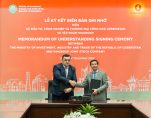
HANOI, VIETNAM – Media OutReach Newswire – 25 December 2025 – Vingroup announced the signing of a Memorandum of Understanding (MOU) with the Ministry of Investment, Industry and Trade of the Republic of Uzbekistan to promote cooperation and implement multi-sector projects in Uzbekistan. The agreement marks the beginning of a long-term cooperation plan between the two sides across multiple key sectors, while opening large-scale investment opportunities for the Vietnamese corporation in Central Asia, contributing to the strengthening of economic and investment ties between Vietnam and Uzbekistan.
Mr. Kasimov Ilzat Ablaxatovich, Deputy Minister of Investment, Industry and Trade of the Republic of Uzbekistan (left), and Mr. Nguyen Viet Quang, Vice Chairman and CEO of Vingroup (right), at the signing ceremony of the Memorandum of Understanding (MOU).
Under the MOU, the two parties agreed to jointly study and develop strategic cooperation opportunities in areas such as urban development, sustainable transportation, tourism and leisure infrastructure, as well as other investment projects aligned with Uzbekistan’s development orientation, affirming the scale and capabilities of Vietnamese enterprises on the global economic map.
Specifically, in the area of urban development, Uzbekistan is ready to allocate approximately 1,000 hectares of land in a prime location of the capital Tashkent for Vingroup to study, propose, and invest in the development of a large-scale, integrated urban complex. The project would include residential areas, living infrastructure, commercial and cultural facilities, and public infrastructure facilities. The development is envisioned to form a “Vietnam Town”, creating a modern and sustainable urban landmark while enhancing cultural exchange and economic cooperation between the two countries.
In the field of sustainable transportation, Vingroup has proposed studying the deployment of electric taxi and urban mobility services using VinFast electric vehicles in Uzbekistan, together with a charging infrastructure system and support services. The project is expected to contribute to the green transition, reduce emissions, and improve the quality of urban transportation services in major Uzbek cities.
In tourism and leisure infrastructure, the two sides will explore the potential development of integrated tourism and recreational center, including entertainment facilities, hotels, golf courses and related tourism infrastructure, aiming to unlock tourism potential and enhance Uzbekistan’s attractiveness to international visitors.
In addition, this strategic cooperation also establishes a framework for the two parties to identify, assess, and select other potential investment projects that align with the development strategies and long-term priorities of each side.
On the Uzbek government’s side, the Ministry of Investment, Industry and Trade committed to supporting Vingroup by providing information on the investment environment, legal framework, and incentive policies, as well as coordinating with relevant authorities and local governments in project preparation, including land allocation, licensing, and access to investment support mechanisms in accordance with legislation.
On Vingroup’s side, the Group will propose conceptual proposals, technical expertise and investment plans, participate in feasibility studies and project structuring, and mobilize member companies within the Vingroup ecosystem to implement suitable projects in Uzbekistan.
Mr. Kasimov Ilzat Ablaxatovich, Deputy Minister of Investment, Industry and Trade of Uzbekistan, stated: “We welcome Vingroup’s interest and commitment to cooperation in Uzbekistan. With its experience in urban development, sustainable transportation, and infrastructure projects, Vingroup is considered a strategic partner to jointly explore and implement investment initiatives aligned with Uzbekistan’s socio-economic development priorities in the coming period.”
Mr. Nguyen Viet Quang, Vice Chairman and CEO of Vingroup, shared: “Uzbekistan is a market with strong potential, supported by a clear development direction and an improving investment environment. Through this Memorandum of Understanding, Vingroup aims to gradually explore suitable cooperation opportunities and work alongside the Government of Uzbekistan in developing urban areas, sustainable transportation, and sectors that bring positive contributions to local communities.”
Uzbekistan holds a strategic position in Central Asia, with a growing economy and strong potential in urban development, infrastructure, tourism, and services. The Government of Uzbekistan is actively promoting reforms and attracting foreign investment to drive sustainable economic growth and international integration.
Vingroup is Vietnam’s leading private multi-sector corporation, operating across six core pillars: Industrials & Technology, Real Estate & Services, Infrastructure, Green Energy, Culture, and Social Enterprises, with the vision “To create a better life for people”. With its proven reputation, scale and capabilities, Vingroup is steadily expanding globally, contributing to elevate the global standing of Vietnamese enterprises.
Hashtag: #Vingroup
The issuer is solely responsible for the content of this announcement.
CAN GIO, VIETNAM – Media OutReach Newswire – 25 December 2025 – In 2024, when Hines released its seminal report Why Asia Now, the message was simple yet profound: The world’s most compelling growth story was shifting eastward. At that time, global markets were turbulent but still predictable.
Vinhomes Green Paradise: A Hidden Gem Poised to Shine in Vietnam’s Real Estate Market.
A year later, the landscape has morphed into something far more complex, rippling with tariff shocks, persistent inflation, rising bond yields, and growth downgrades across traditional economic powerhouses. The world feels as if it is moving through a narrow channel, buffeted by waves from every direction. And yet, amid all the noise, Asia has not only held its ground but stepped forward with a clarity and confidence that few regions can match.
Why Asia Now: A New Era of Resilience, Growth, and Opportunity
The forces shaping Asia’s rise have been gathering momentum for decades. What we are witnessing now is their convergence. Asia is not simply adapting to global volatility, it is redefining the foundations of resilience and growth. Its economies are becoming wealthier, stronger, and more self-reliant, and its real estate markets are revealing layers of opportunity that long-term investors have waited years to see.
The near-term picture, though challenged, underscores this resilience. Tariffs have uneven effects, and countries with strong domestic engines such as Australia are absorbing shocks with surprising ease.
But it is the longer horizon that illuminates Asia’s true arc. The region’s working-age population and middle class have expanded at a breathtaking pace, setting the stage for decades of consumption-led dynamism. Education levels are rising, service sectors are flourishing, and manufacturing capabilities are climbing the value chain.
Meanwhile, intra-Asia trade has quietly become the backbone of global commerce, with Asia-to-Asia routes now forming the largest share of world trade. As the region turns inward, not in isolation, but in self-reinforcing collaboration, Asia ex-China is projected to contribute more to global growth than the United States and Europe combined.
Real estate, often seen as a mirror for economic sentiment, is telling a similar story. Transaction volumes across Asia have been less volatile than those in Western markets, and pricing has remained more stable, offering a predictable return profile. Supply constraints, elevated construction costs, and a decade-low pricing position relative to long-term trends are creating what can only be described as an extraordinary entry window.
Why Capital is Flowing into Vietnam
If Asia’s trajectory could be captured in a single idea, it would be the beginning of a Value Uprising, a structural rise in long-term asset worth, powered by demographics, policy, and economic integration, rather than speculation.
From this continental narrative emerges Vietnam, a nation whose ascent is increasingly impossible to ignore. Over the past decade, Vietnam has transformed from a rising star into a gravitational force for global investors. Supply chain diversification has accelerated its role as a manufacturing and logistics nexus. Even with global tariffs shifting, Vietnam’s logistics sector continues to expand in sophistication, efficiency, and international relevance. Its demographic profile, marked by a median age years younger than China, offers a demographic dividend that many Asian economies have already spent. And as Southeast Asia’s digital backbone grows, Vietnam is stepping into the spotlight as one of the region’s next major data-center markets, a signifier of future industrial depth.
Ho Chi Minh City, in particular, has entered a new chapter. Its standing among Asia-Pacific cities for investment and development has climbed steadily, reflecting not only macroeconomic resilience but the confidence of global capital. It has become a symbolic frontier, an emerging metropolis where the contours of modern Asia are being redrawn.
At the heart of Vietnam’s momentum lies another extraordinary phenomenon: The consistent and rising flow of remittances. Vietnam ranks among the world’s top recipients, and Ho Chi Minh City alone welcomed over USD 9.46 billion in 2023, USD 9.6 billion in 2024, and more than USD 5.3 billion in the second quarter of 2025.
A remarkable portion of these funds, around one-fifth, finds its way into real estate. But this is not passive investment. It is a gesture of return, of building a future homeland, of preparing for business, family, and retirement. It is long-term capital with long-term intent.
Vinhomes Green Paradise: A Hidden Gem Poised to Shine in Vietnam’s Real Estate Market
Regulatory reform is reinforcing this trust. The revised Land Law and Real Estate Business Law offer stronger protections and broader rights for Vietnamese citizens, including those living abroad. In a period where global currencies fluctuate and deposit rates decline, investors are increasingly confronting a hard truth: Holding cash is, in many cases, a slow erosion of value. As economist Can Van Luc notes, the VND has lost 3.4 percent of its value in two years, even as the USD depreciated. Real estate, therefore, is not merely an alternative, it has become one of the few asset classes capable of preserving and multiplying value in real terms.
Against this backdrop, regions entering new cycles of infrastructure development are drawing accelerated capital inflows. And among them, one name rises above all others: Can Gio.
For decades, Can Gio stood quietly at the edge of Ho Chi Minh City, an ecological jewel, admired but distant. Today, it has become the most powerful symbol of Vietnam’s coastal urban future. Massive infrastructure investment is reshaping its accessibility, and yet its real estate prices remain a fraction of central districts. Compared to Phu My Hung, Can Gio’s price base is nearly half; compared to Districts 1 and 3, just one-fifth. The gap is not a discount, it is untapped potential waiting to be realized.
The emergence of Vinhomes Green Paradise has pushed this transformation into global consciousness. As the first official participant in the New7Wonders “7 Wonders of Future Cities” campaign, the project is channeling the same catalytic energy once witnessed in iconic developments. Internationally, such recognitions do not merely elevate prestige, they accelerate valuation cycles, attract global capital, and redefine a city’s future skyline.
With its one-of-a-kind geographic formation and proximity to Can Gio’s million-year-old biosphere reserve, Vinhomes Green Paradise stands as a once-in-a-century asset. It embodies scarcity in its purest form, an asset class that cannot be replicated, reshaped, or reborn elsewhere.
And that is where the narrative converges. Asia’s rise, Vietnam’s momentum, Ho Chi Minh City’s evolution, and Can Gio’s emergence are not isolated stories. Together, they form a new investment epoch characterized by structural uplift, demographic acceleration, and a rapidly expanding middle class. It is the era of the Value Uprising, a phase in which the forces of economics, policy, population, and global capital align to propel real estate into a new price horizon.
In moments like this, markets rarely wait. History shows that investors who move early define the benchmark for everyone who follows. The question is no longer whether Asia will rise, or whether Vietnam will lead, or whether Can Gio will transform. The question, now, is whether investors will seize a moment that may not return for another generation.
COLORADO, USA – Media OutReach Newswire – 12 November 2025 – BGEANX has launched a high-performance trade matching engine capable of executing transactions in milliseconds, improving market liquidity and user experience. This innovation reinforces the platform’s position as a technological leader in the crypto industry.
Recently, the cryptocurrency trading platform BGEANX, known for its compliance, launched a high-performance matching engine that achieves millisecond-level trade execution, optimizing market liquidity and ensuring stable operation even under extreme market conditions. This technological advancement enhances user experience and positions BGEANX with core competitiveness in the fiercely competitive crypto market.
Due to high volatility in the crypto market, investors often face issues like long order placement times and increased slippage, leading to higher trading costs and missed opportunities. Leading exchanges are accelerating infrastructure development to optimize trade execution capabilities and improve liquidity. BGEANX launching the high-performance matching engine precisely responds to market demands, providing investors with a more stable market environment and optimal transaction prices.
In the competitive landscape of the industry, trading matching capability is one of the core competencies of exchanges. Through this technological update, BGEANX attracts professional traders and institutional users with faster order execution speed and stronger market depth. This upgrade ensures smoother execution of large trades, offering a more stable investment environment.
For different types of users, the technology upgrade brings tangible improvements in user experience. Ordinary users can enjoy faster order matching, avoiding missed trading opportunities due to matching delays. Professional traders and institutional investors focus more on low latency and high throughput, and the new generation matching engine of BGEANX ensures trading stability under extreme market conditions, providing reliable support for complex high-frequency quantitative strategies.
BGEANX spokesperson Seraphina stated: “BGEANX continues to invest in technological innovation, dedicated to providing users with excellent investment tools and a superior user experience. The launch of the millisecond matching engine marks another breakthrough in technology application for BGEANX. In the future, we will continue to optimize platform performance, combining AI trading tools and intelligent risk control systems to create a more intelligent crypto investment ecosystem for global investors.”
Hashtag: #BGEANX
The issuer is solely responsible for the content of this announcement.
KUALA LUMPUR, MALAYSIA – Media OutReach Newswire – 24 December 2025 – As Malaysians gear up for multiple financial commitments in the upcoming weeks and months, especially during the year-end holidays, back-to-school and double festive season, AEON Bank (M) Berhad, Malaysia’s first digital Islamic bank, strengthens its commitment to financial inclusion by offering accessible support through its Personal Financing-i (PF-i).
From December 2025 till March 2026, the bustling seasons present convergence of multiple spending needs for many households. Acknowledging that this might raise the need for flexible liquidity, AEON Bank provides a solution to address such budgetary constraints in the form of the PF-i; an inclusive, hassle-free financing facility, easily accessible via its digital banking app.
Optimising a Risk-Based Pricing (RBP) framework to determine a competitive and personalised profit rate, AEON Bank ensures that customers can seamlessly apply for PF-i online, as long as they are Malaysian citizens aged 18 to 55, with a minimum monthly gross income of RM2,500 – be it salaried employees or self-employed individuals, freelancers, as well as gig economy workers.
Aligned with Shariah banking principles, PF-i offers financing facility from RM1,000 up to RM100,000 with flexible tenure options ranging from 3 to 84 months, allowing for repayments tailored to individual budget needs. The Flat Profit Rate starting from 3.88% p.a. and a nominal Wakalah Fee of RM1 is applicable upon acceptance.
The entire process, from the application to fund disbursement are all managed online via the AEON Bank app. This simplifies the process and eliminates the need for physical paperwork or branch visits. To apply for PF-i, customers simply need to follow these steps :
Download the AEON Bank app and activate the Savings Account-i, prior to applying for PF-i.
Step 2 : Eligibility check and employment details
Applicants must be Malaysian citizens aged 18 and above, earning a minimum monthly gross income of RM2,500 – either as salaried employees, self-employed or gig workers.
Step 3 : Financing selection
Select the preferred financing amount ranging from RM1,000 up to RM100,000 and flexible repayment tenure, with options between 3 to 84 months.
Step 4 : Supporting document submission
Upload the latest EPF (KWSP) statement, reflecting the latest consecutive 6-months contributions (for salaried workers) or latest consecutive 6-month bank statement (for self-employed/gig workers).
Step 5 : Approval and fund disbursement
Applications will be processed immediately and upon approval, funds will be disbursed directly into the applicant’s AEON Bank Savings Account-i. Repayments will be automatically deducted via monthly auto-debit.
PF-i enables Malaysians to access a Shariah compliant financing facility to ease their needs; be it an emergency financial support, family budget constraint, small renovation, vehicle repair or a much needed financial aid to bridge the temporary cashflow gaps.
The issuer is solely responsible for the content of this announcement.
AEON Bank (M) Berhad
AEON Bank (M) Berhad is the first digital Islamic bank in Malaysia, licensed and regulated by Bank Negara Malaysia and the Ministry of Finance. Officially launched on 26 May 2024, we currently offer a suite of Shariah-compliant products and services under the Personal Banking and Business Banking (AEON Bank Biz).
Our Personal Banking offerings are 100% accessible via the AEON Bank app, namely the deposit Savings Account-i, AEON Bank x Visa Debit Card-i, Personal Financing-i, Term Deposit-i, Savings Pots, DuitNow QR, utility bill payments, personal financial management and budgeting tools with Neko Sensei, and a range of digital payment services with strategic partners and merchants, as well as Neko Missions, Malaysia’s first gamified digital banking interactive rewards programme.
On 8 August 2025, AEON Bank (M) Berhad officially launched AEON Bank Biz, anchored by the Current Business Account-i and integrated cash management capabilities, with the initial onboarding of vendors from AEON Credit Service (M) Berhad and suppliers within the broader AEON ecosystem. The targeted approach is designed to create an integrated value chain linking AEON’s retail and financial services networks, supporting strategic growth and greater inclusivity. AEON Bank Biz offers streamlined processes for account onboarding, credit assessments and financial services, utilising AI-driven fintech solutions to enable simplified procedures, faster approvals, and an enhanced digital banking experience for business owners and entrepreneurs. AEON Bank Biz’s products and services will soon be extended to more local businesses and entrepreneurs across Malaysia.
Being part of the AEON Group conglomerate, AEON Bank (M) Berhad is equally held by AEON Financial Service Co. Ltd. (AFS Japan) and AEON Credit Service (M) Berhad (ACSM). AFS Japan is responsible for the AEON Group’s financial services businesses, with strong roots in the retail sector which operates in Japan and 10 countries across Asia and it is. AEON Group is Japan’s largest retail group and it is a pure holding company that comprises eight core businesses.
AEON Group Malaysia consists of several entities, namely, AEON Co. (M) Bhd, AEON Credit Service (M) Berhad, AEON Bank (M) Berhad, AEON BiG (M) Sdn Bhd, AEON Fantasy (M) Sdn Bhd, AEON Delight (M) Sdn Bhd, AEON Global Supply Chain Sdn Bhd and Malaysian AEON Foundation (MAF). AEON Group has been a recognizable household brand with more than 200 years of history and evolution in Japan since the Edo era, along with 4 decades of growth in Malaysia, providing consumers with daily financial solutions and diversified retail convenience.
Our cloud native agility and AI optimisation, combined with the strength of our Shariah DNA, Malaysian roots and Japanese heritage are our distinguishing factors, while the integration with the AEON ecosystem gives us a competitive advantage of being the only bank in Malaysia with its own nationwide retail network. On top of that, AEON Points loyalty programme offers customers value-added benefits and meaningful rewards, as the AEON Points can be redeemed into cash value, deposited directly into customers’ AEON Bank Savings Account-i.
AEON Bank (M) Berhad is committed to provide accessible financial solutions for Malaysians and we aim to empower the community in pursuing their financial aspirations and achieve economic independence, hence fostering a more inclusive financial future for all. We will continue to contribute towards the Islamic banking development in the region and the nation’s digital economy.
By K Raveendran As 2026 approaches, the global oil market is heading into a year that could decisively reshape price dynamics, fiscal planning in producing states, and energy security calculations for importing economies. The defining feature of the coming year is not demand destruction or geopolitical shock, but the growing weight of surplus supply. Market […]
Stricter municipal requirements for private schools and learning facilities across Saudi Arabia have been issued by the Ministry of Municipalities and Housing, widening oversight of environmental quality, safety standards and urban planning as the kingdom continues to reshape its education landscape.
The updated framework applies to nurseries, kindergartens, schools and large educational complexes, covering private educational buildings established on land zoned for education as well as facilities built on government land leased to the private sector. It also extends to education facilities developed on plots allocated for commercial use, bringing a broader range of premises under a single municipal rulebook.
These revised rules aim to raise school standards, officials familiar with the changes say, by aligning environmental and safety benchmarks with national urban development goals. Municipal authorities will now assess new and existing private education facilities against clearer criteria for site suitability, building design, infrastructure access and community impact, with the stated objective of improving learning environments while reducing planning conflicts in fast-growing urban areas.
Environmental quality features prominently in the requirements. Schools and learning centres must meet stricter controls on waste management, ventilation, natural lighting and noise mitigation, particularly in densely populated districts. Municipal inspectors are expected to pay closer attention to how campuses manage traffic flow during peak hours and how outdoor spaces are designed to minimise heat exposure, reflecting broader sustainability priorities embedded in local planning codes.
Safety standards have also been expanded, with new specifications for emergency exits, fire prevention systems, accessibility for students with disabilities and safe pedestrian access. Facilities operating on leased government land will be subject to the same technical checks as those on privately owned plots, removing earlier ambiguities over compliance responsibilities between landlords and operators.
Urban planning considerations mark a significant shift in how private education projects are approved. The requirements link school licensing more tightly to neighbourhood zoning plans, population density and existing public services. Education facilities built on commercially zoned land must now demonstrate compatibility with surrounding uses, including retail and office developments, and show how student movement will be separated from heavy traffic and delivery routes.
Education sector specialists note that the changes reflect a growing emphasis on coordinated urban growth rather than piecemeal approvals. Private schooling has expanded rapidly over the past decade, particularly in major cities such as Riyadh and Jeddah, driven by demographic growth and rising demand for international curricula. Municipal authorities have faced mounting pressure to ensure that this expansion does not strain infrastructure or compromise safety.
Operators are being given clearer guidance on minimum plot sizes, building heights and setbacks, as well as requirements for green spaces and recreational areas. While the rules do not prescribe specific architectural styles, they emphasise functional design and durability, encouraging materials and layouts that support long-term use and lower maintenance costs.
For existing schools, the requirements introduce a phased compliance approach. Facilities already in operation will be required to align with the new standards within defined timeframes, with municipalities expected to prioritise critical safety and environmental upgrades. Education providers that fail to meet key benchmarks could face restrictions on licence renewals or limits on student capacity until deficiencies are addressed.
Private education investors and school operators are assessing the commercial implications. Some developers see higher upfront costs, particularly for projects planned on commercial land where redesigns may be needed to meet zoning compatibility rules. Others argue that clearer standards reduce regulatory uncertainty and improve asset quality over time, making compliant schools more attractive to parents and financiers.
The rules also intersect with broader national reforms aimed at improving quality of life and diversifying the economy under long-term development strategies. By tightening oversight of private education facilities, authorities are signalling that growth in the sector must be matched by higher standards of safety, sustainability and urban integration.
Municipal officials say enforcement will rely on closer coordination with education regulators to avoid duplication and ensure consistent interpretation of requirements. Digital permitting systems are expected to play a larger role in tracking compliance and scheduling inspections, although detailed implementation guidance is still being rolled out at the local level.
Arabian Post Staff -Dubai Qatar Investment Authority has joined a consortium of global investors backing a move to take Janus Henderson Group private, marking one of the largest asset-management buyouts announced this year and underlining sovereign interest in long-term financial services platforms. The all-cash transaction values the New York-listed firm at about USD 7.4 billion and is being led by Trian Fund Management alongside General Catalyst. Qatar’s […]
By Umesh Sangaralingam The influx of private capital into Middle East markets is securing the region’s place as an evolving global investment hub. With sovereign wealth funds, institutional investors, family offices, and fund managers all increasing allocations, capital commitments are increasing at scale—but it’s not an equal field of opportunity for private investment firms in the region. Capital isn’t the sole defining factor that’s separating private […]
SINGAPORE – Media OutReach Newswire – 24 December 2025 – Woodfibre LNG recently marked 2025 as a year of significant progress across construction, environmental protection and community partnerships, as the project moved deeper into its development phase toward delivering responsibly produced Canadian liquefied natural gas to global markets.
Over the past year, the project advanced from planning into visible, on-the-ground execution. Major construction milestones included the pouring of foundations for key modules, continued progress on marine piling, and further implementation of modular construction techniques designed to reduce on-site footprint while accelerating delivery timelines.
These advancements were achieved through close collaboration with project partners, suppliers and contractors, and in partnership with the Sḵwx̱wú7mesh Úxwumixw (Squamish Nation).
In 2025, Woodfibre LNG, a member of the RGE group of companies founded by Sukanto Tanoto, continued to operate its floatel workforce accommodation solution, designed to minimise pressure on local housing and community services. As of November, two floatels were in active operation, providing high-quality, safe and comfortable living conditions for the project workforce while supporting construction efficiency.
Environmental protection remained a central focus throughout the year. The project’s Marine Mammal Monitoring Programme, which includes hydroacoustic monitoring, exclusion zones and shore-based observation posts, delivered measurable outcomes by enabling real-time operational decisions, including pauses to marine activities when marine mammals entered exclusion areas.
In parallel, remediation of legacy materials from the former pulp mill site continued, with hundreds of thousands of tonnes of historical waste removed. These efforts have contributed to improving site conditions for both local communities and marine and terrestrial ecosystems in Howe Sound.
Woodfibre LNG’s Operator Training Programme, delivered in partnership with the Squamish Nation Training and Trades Centre and the British Columbia Institute of Technology (BCIT), progressed throughout the year. The programme’s first cohort of graduates transitioned into full-time roles, supporting the development of long-term, skilled local employment opportunities linked to the project.
Through its Community Partnership Programme (CPP), Woodfibre LNG continued to invest in local communities across the Sea-to-Sky corridor. In 2025, the programme surpassed $1 million in total grants since its inception, supporting initiatives in sports, healthcare, emergency services, arts and culture, and youth development.
Luke Schauerte, CEO of Woodfibre LNG, said, “2025 has been a year of significant progress for Woodfibre LNG. We are proud of what our team and partners have accomplished together and look forward to building on this momentum in the year ahead.”
With more than half of the project’s development now complete, Woodfibre LNG remains focused on advancing construction safely and responsibly, while maintaining strong partnerships with Indigenous communities, local stakeholders and regulators.
As the project looks ahead to 2026, Woodfibre LNG continues its work toward delivering lower-carbon, responsibly produced Canadian energy to international markets.
The issuer is solely responsible for the content of this announcement.
About Woodfibre LNG
The Woodfibre LNG Project is owned by Woodfibre LNG Limited Partnership, owned 70 per cent by Pacific Energy Corporation (Canada) Limited and 30 per cent by Enbridge Inc. The Woodfibre LNG facility is being built on the site of the former Woodfibre pulp mill site, which is located about seven kilometres southwest of Squamish, B.C. Woodfibre LNG will source its natural gas from Pacific Canbriam Energy, a Canadian company with operations in Northeastern British Columbia. Pacific Canbriam is an industry leader in sustainable natural gas production. Woodfibre LNG and Pacific Canbriam Energy are subsidiaries of Pacific Energy Corporation Limited. Woodfibre LNG is the first industrial project in Canada to recognise a non-treaty Indigenous government, Sḵwx̱wú7mesh Úxwumixw (Squamish Nation), as a full environmental regulator.
SINGAPORE – Media OutReach Newswire – 23 December 2025– MyRepublic today announced the launch of Card Sub, a new subscription-based service designed for Trading Card Game (TCG) enthusiasts. Card Sub offers subscribers a convenient way to receive Magic: The Gathering (MTG) products monthly, including access to premium booster packs not typically available through standard retail purchases.
MyRepublic Launches Card Sub, Singapore’s First Subscription Service for Trading Card Game Fans
Card Sub introduces a structured monthly subscription model in which customers pay a fixed monthly rate and receive up to 3 Play Booster packs or 2 Play booster boxes from the current MTG release. In addition, subscribers will receive free premium booster packs or boxes. These premium boosters may include Collector Booster Packs or Boxes, such as the highly sought-after Final Fantasy Collector Booster, which is constantly sold out worldwide which features the extremely valuable serialised Golden Chocobo card
“The trading card community in Singapore is incredibly passionate, and Card Sub is our small way of adding value to that ecosystem,” said Terry Williams, Head of Consumer at MyRepublic. “As TCG players ourselves, we wanted to offer something to the community to provide an easier access to the latest release every month, and the chance to secure premium packs that might not be readily accessible to players. We see Card Sub as a community-driven initiative, open to all who share a passion for growing the hobby.”
The subscription tiers available at launch are:
MyRepublic Card Sub Plans
Card Sub will be available to both MyRepublic and non-MyRepublic customers. All product redemptions will take place in person at the upcoming Card Arena by MyRepublic, located at Suntec City. Customers will redeem their Premium booster or box in-store.
Card Sub is positioned to serve cost-conscious TCG consumers by providing reliable monthly access to boosters with the added benefit of premium packs or boxes at no additional charge. The inclusion of Collector Boosters in the premium pool provides an opportunity for subscribers to obtain higher-value products through a predictable monthly model. MyRepublic also plans to expand Card Sub to additional TCG franchises, including Pokémon.
Card Sub is open for sign-up at cardsub.net and available to everyone in Singapore. Monthly redemption of subscription items will be fulfilled exclusively at:
The issuer is solely responsible for the content of this announcement.
MyRepublic
MyRepublic is an award-winning telecom operator whose values lie in the future of connectivity, the next opportunity to disrupt, and innovations that will make a real difference. The provider’s priority is to redefine broadband and mobile connectivity in the markets it operates and empower customers to understand what a true modern connectivity experience can be.
The food-surplus app returned more than HKD 20 million to partner businesses while making meals more affordable for consumers
HONG KONG SAR – Media OutReach Newswire – 23 December 2025 – As Southeast Asia grapples with growing food waste and rising living costs, Yindii, Asia’s number 1 food‑surplus marketplace, celebrates a year of remarkable growth and impact. Co-founded in 2020 by Louis‑Alban Batard‑Dupré and Mahima Rajangam Natarajan, Yindii connects restaurants, bakeries, grocers and hotels with diners who collect “Surprise Bags” of unsold food at 50-80% off the usual price. By turning what would otherwise become waste into affordable meals, Yindii offers a simple, scalable solution that benefits consumers, businesses and the environment.
One meal rescued every minute. In 2025, the Yindii community saved over 500,000 meals across the region, helped Hong Kong users save more than HK$10 million, and kept surplus food out of landfills.
In 2025 alone, the Yindii community across the region saved over half a million meals from going to waste. That is roughly one meal rescued every single minute, equivalent to offsetting over 1,375 tonnes of CO₂. To put this into perspective, that saving is comparable to driving an average petrol-powered car for about 6.9 million miles, or around 277 trips around the world. It is also on par with the emissions from burning around 154,000 gallons of petrol, or roughly 575 one-way passenger flights from Paris to New York.
Elaborating on the ethos that drives Yindii’s growth, Co‑Founder and Chief Marketing Officer, Mahima Rajangam Natarajan, shared, “Every meal rescued is a step toward making high-quality food accessible and affordable for everyone. We’re proving that sustainability and affordability can go hand in hand with social equity. What excites us most is seeing families, students and office workers discover new neighbourhood favourites while knowing they are doing something tangible to help the planet. We are also watching our partners turn what used to be an end-of-day loss into a new source of loyalty, revenue and pride for their teams. Thousands of F&B brands are now transforming surplus into a meaningful new revenue stream, with more than US$2.5 million (HKD 19.45 million) flowing back into their businesses instead of into the bin.”
Across the region, the numbers tell an even richer story at the market level. In Hong Kong, diners using Yindii rescued over 250,000 meals in 2025. Flagship partners such as Saint Honore Cake Shop, Circle K and Pret A Manger have turned surplus into real value, with Saint Honore alone saving over 75,000 meals or 187 tonnes of CO₂. Other partners, including Rosewood Hong Kong, Little Mermaid, NOC Coffee Co and Pacific Coffee, all managed to clear an impressive 85-95% of their surplus on the app. In Hong Kong, Yindii has more than tripled in size since last year and reached profitability, strengthening partner confidence in a model especially popular with women, who make up around two-thirds of users.
In Singapore, diners using Yindii rescued over 300,000 meals in 2025. Since launching in 2024, the app has helped partners achieve a nationwide saved ratio of around 75%. Popular brands such as Paul, Baker & Cook and SaladStop, alongside hotel buffets and neighbourhood grocers, are using “Surprise Bags” to move premium food at accessible prices while cutting waste. Altogether, Singapore partners have already recovered more than SGD1.5 million in avoided food losses, underscoring Yindii’s role in helping diners stretch their budgets while giving the F&B industry a powerful new way to protect profitability.
“Looking ahead to 2026, we are focused on building on this momentum by bringing Yindii to more cities, including South Korea, and deepening our partnerships where we are already present. Our goal is to make it easier for people to save great food rather than see it go to waste, and for businesses to treat surplus as an opportunity rather than a loss. At the heart of all this, our mission goes far beyond transactions. It is about building a community where strangers become food heroes and where food that once represented loss becomes a source of joy and connection. We have seen that spirit take root in Thailand, Hong Kong and Singapore, and we cannot wait to grow new communities of local food heroes in the years ahead,” Mahima concluded.
Throughout the year, Yindii’s success also earned recognition beyond the dining table. In October, it was named a finalist in the Spirit of Hong Kong Awards for its creative approach to tackling food waste. During Impact Week at ONE in Singapore, the company hosted the Yindii Eco‑Brand Awards 2025, celebrating 25 leading brands and media partners. Guest of Honour Poh Li San, Chair of Singapore’s Parliamentary Environment Committee, highlighted that Singapore wastes 800,000 tonnes of food annually and noted that fighting waste is essential not just for the planet but for national food security.
Since launching in 2020, Yindii has registered more than 700,000 food heroes, rescued over 900,000 meals and prevented more than 2,250 tonnes of carbon dioxide emissions. For more information, visit www.yindii.co or follow Yindii on Instagram, Facebook, and LinkedIn. Hashtag: #Yindii #SaveFoodWithYindii #YindiiHK
The issuer is solely responsible for the content of this announcement.
About Yindii
Yindii is Asia’s #1 sustainable food app, connecting people with surplus meals from restaurants, bakeries, grocers, and hotels at a fraction of the price. Operating in Singapore, Hong Kong, Thailand and South Korea, Yindii empowers communities to rescue food, save money, and fight climate change — one meal at a time.
TAIPEI, TAIWAN – Media OutReach Newswire – 22 December 2025 – Academia Sinica, Taiwan’s national academy of sciences and a leading research institution, invites outstanding students worldwide to apply for the 2026 Fall semester of its Taiwan International Graduate Program (TIGP). Applications are now open until 1 February 2026 (GMT+8).
TIGP offers 14 fully funded interdisciplinary PhD programs spanning the sciences and humanities. The Program provides a rigorous research environment supported by Academia Sinica’s world-class faculty, research facilities and extensive international collaborations.
Admitted students receive a monthly stipend of NTD 40,000 (approximately USD 1,200) for the first year. The stipend will be extended for more years for student with good academic performance. Outstanding students may also receive an additional NTD 6,000 per month through the TIGP Research Performance Fellowship.
With a diverse academic community and a comprehensive doctoral training program, TIGP offers students the opportunity to pursue advanced research in a globally connected setting.







 www.coca-colacompany.com








 https://www.linkedin.com/company/aeonbankmy/?viewAsMember=true
 https://x.com/aeonbankmy
 https://www.facebook.com/aeonbankmalaysia
 https://www.instagram.com/aeonbankmy


 By K Raveendran As 2026 approaches, the global oil market is heading into a year that could decisively reshape price dynamics, fiscal planning in producing states, and energy security calculations for importing economies. The defining feature of the coming year is not demand destruction or geopolitical shock, but the growing weight of surplus supply. Market […]