News related to
unit

Shares of Alphabet Inc., the parent company of Google, surged to record territory on Wednesday as investors responded to strong underlying business momentum and easing regulatory concerns. The company’s Class A share climbed above $300 for the first time in intraday trading, a notable milestone for the tech heavyweight. The push upward was driven in part by a standout quarter in which Alphabet reported revenues exceeding $100 […]

Apple Inc’s Chief Executive, Tim Cook, declared his confidence that China will surpass the United States as the company’s leading market, signalling a major strategic shift in the iPhone-maker’s global priorities. In a Beijing meeting with China’s Minister for Industry and Information Technology, Jin Zhuanglong, Cook pledged to deepen Apple’s investment in the country and underscored its significance to the firm’s long-term supply-chain and innovation plans. Cook’s […]

The developer behind the world-famous skyscraper in Dubai has acquired a 12th-century fortress in the rolling hills of Umbria and laid out a vision for one of Europe’s most opulent destination resorts. Mohamed Alabbar, founder of Emaar Properties, confirmed the purchase of Castello di Antognolla for around US $55 million and disclosed plans to invest as much as US $145 million further, bringing the total commitment to […]

Abu Dhabi-based aerospace engineering firm Sanad Aerotech has reported a substantial increase in its order backlog and rapid expansion into new engine platforms as airlines face global supply-chain constraints in engine manufacturing. The company disclosed that its backlog rose by 5 billion UAE dirhams to more than 38 billion dirhams as of end-June, driven by heightened demand from carriers struggling to secure engine availability. Sanad, backed by […]

Dubai – GE Aerospace has secured two high-value engine agreements with Dubai-based carriers Emirates Airline and Group and flydubai at the 2025 Dubai Airshow 2025, underscoring the resilience and expansion of the UAE’s aviation sector. Emirates has committed to 130 additional GE9X engines to power 65 new Boeing 777-9 aircraft, bringing its total order for that engine type to more than 540 units. The contract includes spares and long-term service provisions. At the same time, flydubai has agreed to acquire 60 GEnx-1B engines with full support services for its first wide-body fleet of 30 Boeing 787-9 aircraft.

Emirates’ deal with GE not only affirms its status as the largest global customer for the GE9X engine, but also reinforces its long-standing partnership with Boeing Commercial Airplanes. Emirates’ chairman and chief executive, Sheikh Ahmed bin Saeed Al Maktoum, described the transaction — valued at US$38 billion at list prices — as “a long-term commitment and testament to our partnership with Boeing and GE”. This investment aligns with Dubai’s wider ambition to develop into a major aerospace hub.

On the flydubai front, the selection of the GEnx-1B engine marks a strategic shift for the carrier, which has historically operated a 737-only fleet. The agreement is structured to support the airline’s entry into long-haul operations and buttresses its network expansion into new markets. flydubai’s chief executive, Ghaith Al Ghaith, noted that engine performance, durability and services will play a critical role as the airline moves into wide-body territory amid intensifying competition and growing demand for air travel through Dubai’s gateway.

The significance of these deals extends beyond fleet numbers. For GE Aerospace the twin contracts cement its dominance in the high-thrust engine market, particularly in a region with challenging operating conditions and high growth potential. The GE9X engine — developed exclusively for the Boeing 777X family — boasts a 10 per cent improvement in specific fuel consumption compared with its predecessor, the GE90-115B, and has been certified to run on approved sustainable aviation fuel blends. The GEnx-1B, likewise, powers a majority of the Boeing 787 fleet and is already deployed widely in long-haul service.

For Emirates, the 65 additional 777-9 airframes raise its total 777X orderbook to 270 units, making it Boeing’s largest customer for that aircraft family. With this deal, the airline has options to convert some of the order to the future 777-10 or 777-8 variants, signalling confidence in the production programme despite earlier certification and delivery delays. The carrier expects deliveries of the initial 777-9 aircraft to begin from the second quarter of 2027. Emirates’ fleet strategy centres on operating a young, modern wide-body fleet aligned with Dubai’s infrastructure expansion.

Flydubai’s expansion into wide-body aircraft, powered by GEnx engines, places the carrier at a pivotal juncture in its evolution. Having grown rapidly in point-to-point markets, reserving its primarily single-aisle fleet for short to medium-haul routes, the move to wide-body aircraft reflects a transition towards intercontinental services. The engine order includes spares and a long-term services agreement, highlighting the importance of lifecycle support and operational reliability in emerging growth trajectories.

The UAE’s positioning as a major aviation hub is reinforced by these developments. The engine orders strengthen the supply-chain footprint in the region, benefit maintenance-, repair-and-overhaul infrastructure, and support the country’s ambition to attract high-value aerospace manufacturing and engineering activities. GE Aerospace announced a US$50 million investment in a new “On Wing Support” facility in Dubai South alongside the shows, underscoring its commitment to local presence.

From an industry-perspective the deals reflect broader trends: airlines placing large long-haul orders amid intense competition for slots and access, engine manufacturers capturing value through integrated services and support, and the Middle East remaining a key battleground for aerospace OEMs seeking growth beyond legacy domestic markets. For Emirates and flydubai, the agreements mark purposeful steps in fleet renewal and network expansion, though execution risks remain — notably aircraft delivery timelines, engine certification, and global economic headwinds.

Analysts caution that while the headline order values are striking, actual transaction prices typically fall beneath list values, and aircraft-programme delays can erode carrier scheduling and capacity planning. For Emirates the 777-9 programme has been subject to repeated postponements, while for flydubai the challenge lies in transitioning from narrow-body operations to wide-body logistics, route infrastructure and long-haul network economics.


Global alternative asset manager KKR & Co. has inaugurated a new office within the Abu Dhabi Global Market financial district, marking a significant expansion of its Middle East footprint. The office will be led by Julian Barratt‑Due, Managing Director and Head of Middle East Investing at KKR, with David Petraeus serving as Chairman of KKR Middle East, reinforcing the firm’s commitment to the region.

KKR’s decision underscores its confidence in Abu Dhabi as a gateway for global capital targeting the Gulf region. With assets under management totalling around US$720 billion, the firm already operates hubs in Dubai’s DIFC and Riyadh and views ADGM as a strategic next step.

The Abu Dhabi office aims to enhance KKR’s capacity to serve institutional clients and invest in a range of sectors including infrastructure, technology, and alternative assets across the Gulf. The move aligns with the firm’s broader strategy of partnering for long-duration assets in the region, as evidenced by its acquisition of a minority stake in ADNOC Gas Pipeline Assets LLC and investment commitments in the data centre platform Gulf Data Hub.

Abu Dhabi’s appeal lies in its stable economic foundations, regulatory clarity via ADGM’s common-law framework, and its ambition to become a major global financial centre. ADGM emphasised that KKR’s arrival reflects the city’s expanding role in the global investment ecosystem.

From KKR’s perspective, the firm has stated that the new presence will enable closer collaboration with regional partners and enhance responsiveness to market opportunities. The leadership structure signals that KKR is aiming for a long-term, on-the-ground commitment rather than a passive regional representation.

This move comes amid a broader industry trend of asset managers shifting focus toward the Gulf region. Firms such as PGIM have previously opened offices in ADGM, responding to abundant regional capital, favourable tax regimes, and dynamic infrastructure programmes.

Investors highlight that the Gulf markets are undergoing structural transformation, driven by diversification away from hydrocarbon dependence, growth of digital economies and infrastructure modernisation. KKR’s investments in energy and data-centre platforms illustrate how global managers are aligning with those shifts.

For Abu Dhabi, the addition of a major player like KKR bolsters its ambition to attract global financial services and alternative-capital players. ADGM’s track record of rising company registrations and assets under management suggests the jurisdiction is gaining momentum.

However, experts caution that competition is intensifying: neighbouring hubs such as Dubai and Riyadh are also targeting global managers, meaning KKR and similar firms will need to demonstrate differentiated value-propositions to win deal flow and client mandates. Some analysts note that while large sovereign wealth funds in the region remain dominant allocators, attracting third-party capital remains a challenge.

Operationally, establishing a local hub brings costs, regulatory obligations and talent-acquisition hurdles. While KKR cites its established regional presence and leadership under Petraeus and Barratt-Due as advantages, execution will be scrutinised by investors seeking measurable regional capital deployment and returns.

In the context of broader global asset-management dynamics, the Gulf real-assets market offers long-term, low-yield, inflation-hedged opportunities—an appealing counterbalance to the high-rate, equity-valued portfolios that dominate Europe and North America. KKR appears to be positioning itself to capture that shift, reinforcing its global expansion strategy.

NANJING, CHINA – Media OutReach Newswire – 19 November 2025 – From November 21 to 22, the 2025 Yangtze Culture Forum will be held in Nanjing, China. This gathering will bring together global scholars in river studies, ecological conservation experts, cultural ambassadors, and representatives from international waterfront cities for intercontinental dialogues on topics such as aquatic culture preservation, sustainable water resource utilization, and mutual learning among great […]

Advertisements

Security forces in Myanmar’s border region with Thailand have confiscated roughly 10,000 mobile phones and associated equipment as part of a wide-ranging operation against online fraud networks, the country’s military government announced. The action unfolded in the Myawaddy township of Kayin State, where an internet scam hub known as KK Park was raided, and approximately 346 foreign nationals detained during the sweep. The military accused the ethnic […]

Nairobi-based electric mobility firm Roam Electric Ltd has begun talks to monetise carbon-offset credits generated by its motorcycles while launching a global crowdfunding campaign to raise working capital. Each machine sold by Roam is designed to offset around three tonnes of CO₂ annually; with about 4,000 units currently in circulation, the company estimates roughly 12,000 tonnes of emissions reduction per year—equivalent to the output of some 2,600 […]

The Netherlands has surrendered the state-intervention powers over the chipmaker Nexperia and restored full control to its Chinese owner, marking a shift in the regulatory posture that had threatened global automotive supply chains. The Dutch Economy Minister Vincent Karremans described the move as “a show of goodwill” toward China, as talks between both governments remain ongoing. The intervention had been applied under the Cold War-era Goods Availability […]

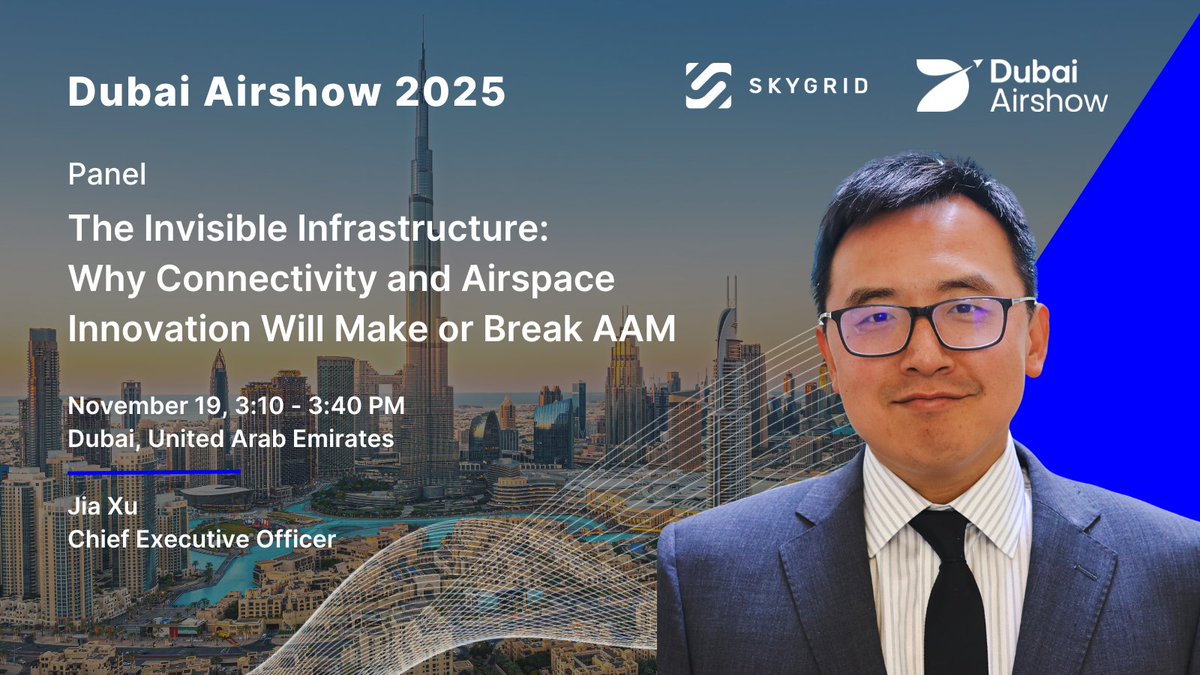
A pact between SkyGrid and High Lander has been signed at the Dubai Airshow 2025 to construct a framework for advanced air-mobility operations in the United Arab Emirates, focusing on integrating crewed and uncrewed aerial vehicles. The memorandum of understanding calls for development of airspace management ecosystems, digital operations for electric vertical take-off and landing aircraft and cargo drones, vertiport planning and cybersecurity protocols. SkyGrid, headquartered in Austin, Texas, acts as a third-party service provider for advanced air mobility operations, while High Lander offers unmanned traffic-management and drone-fleet-management solutions. The deal is part of the UAE’s ambition to position Abu Dhabi as a hub for next-generation aviation services.

Under the agreement the firms will jointly assess “Advanced Air Mobility Supporting Operational Environments” to develop technology road-maps and regulatory frameworks that facilitate scalable AAM operations. The collaboration targets areas including airspace integration, enabling vertiport infrastructure, securing digital operations and ensuring safe coexistence of crewed and uncrewed aircraft. SkyGrid chief executive Jia Xu said the alliance “represents a significant milestone in shaping the digital foundation of Advanced Air Mobility in the UAE and across the Middle East”. High Lander’s chief executive Alon Abelson commented that the environment in the UAE, supported by major aerospace players, constitutes “the perfect environment to demonstrate how automation, data-driven management and cross-industry collaboration can transform the future of air mobility”.

Analysis of this partnership places it amid a broader global push for uncrewed traffic-management systems and urban or regional air-mobility networks. Industry research shows that UTM ecosystems are considered vital for the safe scaling of commercial beyond-visual-line-of-sight drone operations. A 2024 readiness index issued by the Global UTM Association named both companies among participants in task forces shaping digital airspace adoption worldwide. That makes this UAE-based partnership a concrete step from theoretical planning to operational readiness.

The UAE’s Economic Vision 2030 describes diversification into technology, aerospace and transport as key pillars. The SkyGrid–High Lander partnership explicitly links with these goals, signalling industry-scale intentions rather than pilot programmes alone. By creating a unified operational blueprint, regulators and operators in the Gulf region may be asked to adapt their air-space classification, licensing and infrastructure regimes. Implementation will still depend on national aviation regulator approvals, air-traffic-management integrations, and standards alignment with international frameworks.

Despite the ambition, challenges remain. Data-sharing protocols across crewed and uncrewed systems must meet stringent safety and cybersecurity standards. Vertiport infrastructure—dedicated landing and take-off sites for eVTOL vehicles—is still nascent globally and will require investment and spatial planning, especially in congested urban zones. Moreover, global certification regimes for eVTOLs and unmanned systems are evolving; regulatory uncertainty may slow deployment. Analysts caution that while the Gulf region offers less airspace congestion than some metropolitan centres, integration of new aircraft types must still ensure separation from traditional air-traffic flows.

Beijing has initiated sweeping agricultural trade measures targeting the United States, Canada and the European Union as a means to counter duties imposed on Chinese electric vehicles. The move centres on sectors worth billions of dollars in export value and signals a new front in the global tariff standoff as Chinese factories ramp up global auto-sales ambitions.

According to official announcements and industry trackers, China imposed tariffs and import restrictions on major agricultural products including soybeans, pork, canola and cognac after Western governments raised tariffs on Chinese EV imports—some reaching 100 per cent in the US, and up to 35 per cent in the EU. Those duties stemmed from concerns about subsidised manufacturing, imports displacing domestic output and national-security implications tied to EV supply-chains.

One Chinese commercial diplomat told Canadian media that Ottawa’s export restraints on Chinese EVs directly triggered Beijing’s agriculture penalties. Canadian farmers in canola and pulses markets have already seen orders plummet and export corridors shut or taxed heavily. European spirits producers also face duties: cognac exports to China, valued at around $1.7 billion annually, have dropped by about 35 per cent since the levy took effect.

Analysts say the strategy is calculated. While China’s domestic market remains protected from full import competition, its international agriculture import volumes give Beijing leverage. An academic at Peking University noted that “a slight adjustment in China’s import preferences can ripple through farming regions and rural constituencies that carry significant political weight”. By focusing on sectors with concentrated politically-sensitive producers, China increases the pressure on Western governments to reconsider EV levies.

On the Western side, officials are signalling that they are unlikely to surrender their EV-tariff stance. A senior analyst at a Brussels-based think-tank said that the European Commission had “clearly shown that it was not willing to back down from the EV case”, citing China’s rapid auto-industry progress and state-support programmes. With climate targets and supply-chain security on the table, Western capitals view EV tariffs as integral to domestic industry viability.

Yet the backlash in agriculture could be deeper and more enduring than the EV duties themselves. A supply-chain expert explained that new contracts, logistics investments and alternative-buyer relationships developed in response to Chinese import suspensions may lock in shifts for years to come. In concrete terms, U. S. soybean farmers—who sold $12.6 billion worth to China in 2024—have seen export volumes fall to zero for key new-crop shipments, while Canadian producers of rapeseed and pea oil are facing a near-complete market closure under 100 per cent tariffs.

Observers point out that agriculture is an especially potent tool in trade diplomacy because it touches multiple layers of the economy: from regional employment to global commodity markets and corporate finances. By wielding farm-product bans or tariffs, Beijing can inflict political damage in sending countries while avoiding direct escalation of high-tech sectors where Western governments might respond more aggressively.

For Western farm sectors the choices are stark. Some firms are exploring alternative markets in Latin America, Africa or South-East Asia, while others are pressing their governments for compensation or trade-negotiation efforts. Meanwhile, Western trade officials are increasingly emphasising diversification of supply-chains away from China, which may dampen China’s leverage over time.

Global markets are showing the strain after an extended period of exuberance, and the sudden shift in mood has unsettled investors who had come to expect uninterrupted gains across AI and tech, gold, cryptocurrencies, and equities. The turn has been swift. Gold has given back a meaningful portion of its late-October surge, bitcoin has slipped under $90,000, and equity markets worldwide have recorded several sessions of broad […]

SINGAPORE – Media OutReach Newswire – 19 November 2025 – More than 200 doctors from across Asia attended the recent regional webinar “Empowered with Data: Body Contouring with Cryolipolysis: Multisculpting Insights Using Dual Applicator Treatment”, organised by Global Aesthetics Medical Affairs (GAMA) of Allergan Aesthetics. Dr Terence Tan, Medical Director of Halley Body Slimming Clinic, was one of two keynote speakers invited to share findings from a […]

  Papio Consulting recently launched an AI-powered ESG platform. As Steven Jansen, Founder of Papio Consulting, states MENA is one of the fastest-evolving regions for ESG transformation, with a long-term vision where transparent ESG performance becomes a competitive advantage. Governments are increasingly advancing sustainability agendas and innovation, and companies are ready to integrate smart tools. “Our Papio Sustainability Manager helps reduce the time and cost of ESG reporting by up […]

Ukraine’s drone-manufacturer SkyFall unveiled its latest unmanned aerial system, the P1-SUN interceptor, on the opening day of the Dubai Airshow. The P1-SUN marks the company’s first public display outside Ukraine and is designed specifically to neutralise enemy drones such as the Iranian-designed Shahed, a frequent threat in the conflict with Russia. A company representative said production runs into the thousands of units per month.

SkyFall has built a reputation with systems such as the Shrike FPV strike drone and the Vampire rotary-wing model, both widely used by Ukraine’s armed forces. The P1-SUN uses a modular architecture and a 3D-printed airframe, enabling rapid manufacturing and deployment. According to the representative, the ‘plug-and-play’ design allows for quick reconfiguration to meet evolving threats.

The broader context of this launch lies in Ukraine’s intensified efforts to counter drone swarms and asymmetric aerial threats. Ukrainian defence-sector officials estimate that Russian forces have been deploying Shahed-type loitering munitions in high numbers across multiple fronts. Earlier assessments placed the cost of Ukrainian-built interceptor drones at as low as US $300 to US $500 per unit, compared with US $35,000 for some adversary systems. SkyFall’s move thus signals a shift from purely offensive drone designs to dedicated counter-drone capabilities.

At the airshow, SkyFall’s exhibit drew attention from international defence-industry attendees. One senior visitor commented that modular interceptors like the P1-SUN could fill a gap between point-defence systems and networked air-defence layers. Ukraine’s defence-industry consortium has been actively seeking partnerships with foreign firms, and meetings held on the sidelines of the show reportedly included discussions with major aerospace and defence contractors.

While SkyFall did not disclose customers or specific contracts at the event, analysts believe that the demo aims to position Ukraine as a supplier of cost-effective UAV and counter-UAV systems. The company’s advertising emphasises “combat-proven” status in the Ukrainian conflict, enhancing its export appeal. Kiev-based industry sources note that local firms are now transitioning from ad-hoc war-time manufacturing to serial production with export-orientation in mind.

However, challenges remain. Experts caution that scaling production of complex interceptor drones demands robust supply chains, quality assurance and integration into broader air-defence networks. SkyFall’s claim of thousands-per-month output will likely be tested by logistical realities such as 3D-printing capacity, component sourcing in a war-economy and export-licensing hurdles. Additionally, while cost-effective interceptors are attractive, they must be supported by detection and command-and-control systems—which are more costly and slower to deploy.

On the defensive front, Ukraine is not relying solely on lightweight interceptors. Systems such as the Rheinmetall Skyranger 35, a self-propelled anti-aircraft gun system mounted on a Leopard 1 tank chassis, are being delivered to bolster protection across multiple fronts. The combination of high-end systems and low-cost interceptors indicates a layered approach is under development.

Google has introduced Gemini 3 Pro, its next-generation multimodal artificial-intelligence model, marking a significant escalation in the company’s ambitions for large-language models. The new system, which expands multimodal integration across text, image and audio inputs, is being rolled out initially to enterprise and developer channels before wider availability. The model appears underpinned by a “1 million-token” context window—according to leak reports—enabling it to process extensive documents and […]

A substantial shift in sentiment around Alphabet Inc. has taken shape following the firm’s elevation to ‘Buy’ from ‘Hold’ by Loop Capital, with the brokerage raising its price target to $320 from $260. The upgrade underscores a decisive move by Wall Street away from doubts about Alphabet’s core search business toward bullish conviction in its AI-driven future. Loop Capital’s managing director, Rob Sanderson, observed that earlier concerns […]

By T N Ashok When Bangladesh’s ousted prime minister Sheikh Hasina was sentenced to death in absentia on November 17 by a special tribunal in Dhaka, the shock rippled across the region. Yet the most curious reactions came not from Bangladesh—but from India. India’s government, normally swift to comment on developments in a neighbouring country, […]

The article Congress MP Shashi Tharoor Acted As A Test Balloon For PM Modi On Death Sentence To Sheikh Hasina appeared first on Latest India news, analysis and reports on Newspack by India Press Agency).

BEIJING, CHINA – Media OutReach Newswire – 18 November 2025 – On November 12, 2025, the thematic investment promotion event “Synergy Between Beijing and Hong Kong, Connecting the World – Towards a Brighter Future with Chaoyang” was successfully held at the Hong Kong Convention and Exhibition Centre. Jointly hosted by the Chaoyang District People’s Government and the Beijing Investment Promotion Service Center, and organized by the Chaoyang […]

The cryptocurrency futures market experienced a significant wave of forced liquidations, amounting to $1.03 billion over the past 24 hours. A considerable portion of the liquidations occurred in long positions, totaling $725 million, while $305 million worth of short positions were also closed.

The dramatic liquidations were triggered by volatile market movements, which saw sharp price fluctuations across multiple digital assets. These price swings were exacerbated by shifts in market sentiment, which contributed to the rapid unwinding of leveraged positions. The forced liquidations come amid a broader backdrop of market uncertainty, as traders adjust their positions in response to global economic factors and the ongoing regulatory scrutiny of the cryptocurrency sector.

A notable driver of the sell-off was the high level of leverage employed by market participants. Crypto futures markets, particularly those offering derivatives with high leverage, often see sharp price corrections as a result of large liquidation events. When asset prices move against traders’ positions, forced liquidations can amplify the price movements, resulting in cascading effects that further destabilize the market.

This liquidations event reflects the high-risk nature of trading in the cryptocurrency space, especially with the volatile price action witnessed in major tokens such as Bitcoin, Ethereum, and other altcoins. Market analysts note that a significant portion of these liquidations occurred as Bitcoin’s price struggled to maintain momentum, dipping below key support levels. Other altcoins, including Ethereum and Solana, also saw substantial price corrections, which intensified the market’s turmoil.

While the forced liquidations have had a short-term destabilising effect, many market observers suggest that they may serve to recalibrate market positions, potentially clearing out overleveraged traders. However, the long-term implications for the market remain unclear. Crypto futures markets are known for their volatility, which can often result in sudden price movements, leaving traders vulnerable to unexpected liquidations during sharp corrections.

The level of forced liquidations seen in this event underscores the risks associated with high-leverage trading, particularly in a market as volatile as cryptocurrencies. As more traders flock to these markets, seeking greater profits from leveraged positions, such liquidations will likely become a recurring feature in the digital asset landscape.

Despite these liquidations, some analysts argue that the broader trend in the crypto market remains positive, with institutional adoption and growing interest from mainstream investors continuing to support long-term bullish prospects. They point to the increasing recognition of cryptocurrencies as a viable asset class, with traditional financial institutions exploring ways to integrate blockchain technology and crypto assets into their services.

On the other hand, the market faces significant regulatory challenges, particularly in key jurisdictions such as the United States and Europe. Governmental authorities have expressed concerns over the potential for market manipulation, fraud, and the lack of investor protection in the largely unregulated crypto space. These regulatory uncertainties add another layer of complexity to the market, as traders weigh the risks of entering a space with evolving rules and regulations.

At the same time, some proponents of cryptocurrency markets argue that forced liquidations and market volatility are simply part of the growing pains of a maturing market. They note that as liquidity improves and market participants become more sophisticated, the frequency and intensity of these liquidation events may diminish over time.

David Richardson has announced his departure as the acting head of the Federal Emergency Management Agency after just six months in the role. His resignation marks a swift exit for the seasoned public servant, raising questions about the agency’s leadership during a period of heightened national challenges. Richardson, who took over the role in May 2025, following the resignation of the previous administrator, had been tasked with […]

The Video Game History Foundation is making strides in preserving gaming culture by unearthing a trove of out-of-print gaming magazines, including the iconic Game Informer. With the increasing demand for digital archives of media, this initiative aims to provide the gaming community, researchers, and enthusiasts with a valuable glimpse into the evolution of gaming through these historic publications. The Game Informer collection represents decades of gaming history, […]

A significant consultative meeting aimed at addressing Africa’s veterinary medicine regulation challenges is taking place in Nairobi from 17 to 19 November 2025. The event, led by AU-IBAR, AU-PANVAC, GALVmed, the Veterinary Medicines Directorate, and several key partners, has brought together national regulatory authorities, Chief Veterinary Officers, regional bodies, manufacturers, and technical organisations. The central focus of the discussions is the long-standing issues that hinder access to […]

VISHNU RAJA
RYO YAMADA
HITORI GOTOH
IKUYO KITA