News related to
unit

Chinese authorities have agreed to suspend implementation of a new wave of export controls on rare-earth metals and to cease investigations into U. S. semiconductor companies, signalling a de-escalation in trade tensions between the world’s two largest economies. According to a White House fact sheet, the measures to be paused were those announced by People’s Republic of China in October and would have expanded export licences and […]

Greenlogue/AP The decision by the administration of Donald Trump not to send senior representatives to the COP30 climate summit in Belém, Brazil has triggered alarm among international climate officials and reshaped the contours of global environmental diplomacy. The move signals a sharp pivot by the United States away from multilateral climate forums, raising questions about future global cohesion on climate change mitigation. The White House confirmed that […]

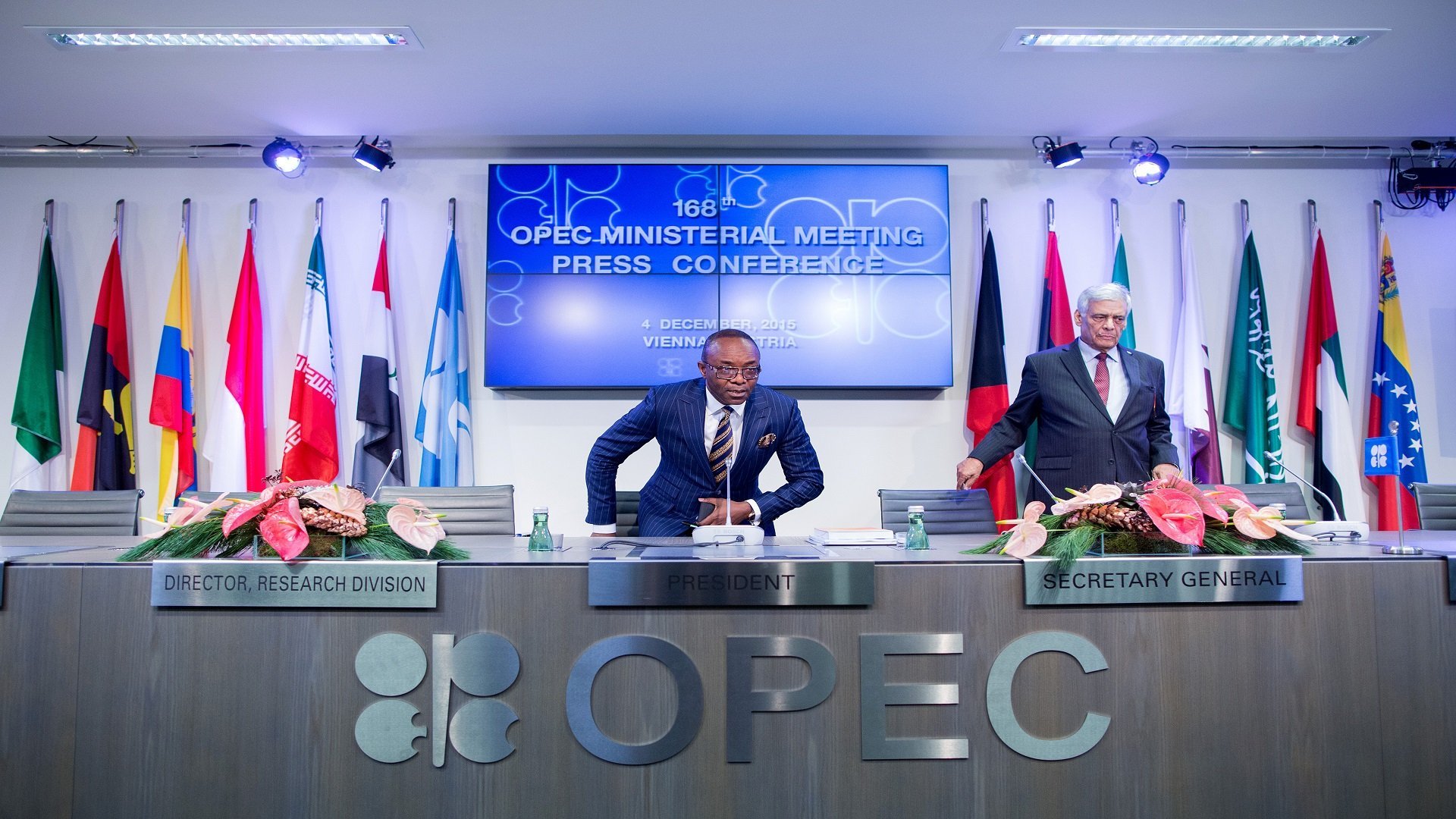
Producers grouped under OPEC+ are preparing to approve a modest rise in oil‐production targets for December, in an effort to balance market share ambitions against signals of oversupply and constrained output growth. Three delegates familiar with the discussions indicated the increase is expected to amount to roughly 137,000 barrels per day, mirroring the size of the hikes seen in both October and November.

The key players in the alliance include Saudi Arabia, Russia, the United Arab Emirates, Iraq, Kuwait, Oman, Kazakhstan and Algeria. The group’s online meeting scheduled for Sunday is expected to formalise the decision.

The incremental increase is part of a broader strategy underway since April, in which OPEC+ has raised output targets by more than 2.7 million barrels per day, amounting to about 2.5 per cent of global supply. However, the pace has been deliberately slowed from earlier months as signs emerge of an excess in global supply pools, including a forecasted surplus of over 3 million barrels per day in the current quarter.

Market analysts, including those at RBC and Rystad, anticipate the 137,000 bpd figure to represent the baseline scenario. Some delegates are also said to be weighing a pause on further hikes if supply conditions deteriorate.

Russia faces particular hurdles in supporting the quota rise, as Western sanctions limit the capacity of the Russian oil sector to boost output rapidly. That constraint is factoring into OPEC+ calculations as it debates whether to add more barrels to the market. Meanwhile, the UAE has been granted a higher production quota through to September 2026, enabling a phased increase of up to 300,000 bpd in its case.

Oil‐price behaviour reflects the tension between supply ambitions and demand concerns. Brent crude dropped to around US$60 a barrel in late October amid oversupply fears and sluggish demand from Asia, but has since climbed back toward the mid‐US$60s on the back of sanctions on Russia and trade optimism.

OPEC+’s cautious approach is informed by concerns about a supply‐demand mismatch next year. The International Energy Agency has flagged that world supplies could outstrip demand by over 3 million bpd in the current quarter, with an even larger gap potentially forming in 2026.

One industry commentator noted that unless there is clear evidence of a disruption to supply, the group is unlikely to commit to a large output hike. That view underscores the balancing act between protecting market share and avoiding a price collapse driven by oversupply.

Compliance remains another pressure point for the alliance. Some OPEC+ members have struggled to lift production to their quotas due to infrastructure, regulatory or investment constraints, diluting the impact of nominal target rises. This has helped temper the immediate effect of output increases even as quotas climb.

A further consideration is the shale oil sector in the United States, where producers are ready to capitalise on any loosening of supply discipline. OPEC+ therefore faces a strategic dilemma: raise output and risk reigniting competition, or hold back and cede ground to non-OPEC supply growth.

For December the decision appears modest, signalling a move to restore barrels cautiously rather than aggressively. The virtual meeting on Sunday will thus act as a critical test of the alliance’s ability to calibrate policy around shifting global demand patterns and geopolitical risk.

Seventeen years after the publication of the nine-page document titled “Bitcoin: A Peer-to-Peer Electronic Cash System,” authored under the pseudonym Satoshi Nakamoto on 31 October 2008, the digital asset known as Bitcoin has evolved from an experimental peer-to-peer payment proposal into a multi-trillion-dollar fixture of global finance.

At its launch, the paper proposed a decentralised network free of financial-institution intermediaries, aiming to avoid double-spending through a proof-of-work mechanism. Over the years the network has grown into a dominant cryptocurrency, and observers say that Bitcoin’s role in financial markets has shifted markedly. A study examining institutional adoption found that Bitcoin’s correlation with major equity indices — once low — rose to as high as 0.87 in 2024, signalling growing integration with mainstream markets.

Institutional interest forms a central pillar of this transformation. Following the approval of spot Bitcoin exchange-traded funds in the United States in January 2024, which drew in more than $50 billion in inflows, traditional asset managers such as BlackRock and Fidelity Investments gained routes for mainstream investors to access Bitcoin. Some corporations have adopted Bitcoin as part of corporate treasury strategy: around 80 companies now hold approximately 3.4 per cent of total Bitcoin supply.

Despite this ascent, some early proponents of Bitcoin’s original vision — that of a decentralised digital cash usable for everyday transactions — argue that the current model leans more toward its status as “digital gold” than as peer-to-peer money. Payment-system advances like the Lightning Network seek to restore that vision, enabling faster and cheaper transactions on-chain. Meanwhile, critics highlight that energy consumption and regulatory uncertainty continue to pose risks to Bitcoin’s wider adoption.

Regulatory momentum also remains uneven. While the United States moves closer to clearer rules through legislation such as the proposed Clarity Act — which analysts estimate has an 80 per cent chance of passing by early 2026 — global approaches vary significantly. Some jurisdictions have embraced crypto frameworks, while others maintain prohibitive stances. The potential for banks and custodial institutions to operate more directly with digital assets is gaining attention.

Technologically, Bitcoin remains foundational. The original protocol, unchanged at its core since its launch, still underpins a thriving ecosystem of wallets, exchanges and blockchain analytics. That continuity has contributed to its brand as the ‘first mover’ in the cryptocurrency space. At the same time, ecosystem participants are attending to scalability challenges, security risks tied to quantum computing and ecosystem fragmentation through forks.

On the macro-economic front, Bitcoin is increasingly viewed as a hedge or alternative asset, though its extreme price volatility continues to limit its suitability for everyday payments for most users. A survey found 63 per cent of Americans did not feel confident investing in or using cryptoassets, and among adults aged 50 or over that figure rose to 71 per cent. At the same time, the asset’s market cap has situationally breached the $2 trillion mark, reflecting its material scale within finance.

The evolution of Bitcoin also reflects a broader shift in financial architecture: decentralised networks and tokenised assets are increasingly challenging traditional models of money, payment and settlement. Analysts argue that the next phase of Bitcoin’s maturation will hinge on regulatory clarity, technological scalability and an enhanced role in everyday commerce, rather than only institutional accumulation.

Fintech firm Afriex has announced a strategic collaboration with payments giant Visa to deliver real-time cross-border transfers to over 160 markets, marking a significant expansion of its global payments network. The platform will integrate with Visa’s “Visa Direct” service through Afriex’s financial institution partner, enabling eligible Visa endpoints to receive funds instantaneously, according to the announcement. Afriex’s chief executive, Tope Alabi, emphasised that “for the millions of […]

Major banks in Nigeria posted solid earnings in the quarter ending September 30 as elevated interest rates and assets repricing lifted income streams, though underlying risks linger. Leading the pack, United Bank for Africa Plc recorded a profit after tax of ₦537.53 billion, up 2.3 per cent from the same period last year. Gross earnings rose 3.0 per cent to ₦2.469 trillion while net interest income climbed […]

US retail giant Walmart has chosen the upper-level of Clearwater Mall in the Strubens Valley area of Roodepoort, Johannesburg, as the site for its first branded store on the African continent. The cornerstone agreement was confirmed by mall owner Hyprop Investments and partner retailer Massmart, signalling a strategic push by Walmart into the broader Africa market. The move brings the hallmark “Every Day Low Prices” shopping model […]

Advertisements

A peculiar and uncontrollable mass movement gripped the city of Strasbourg in the summer of 1518 when dozens of residents began dancing in the streets without any apparent reason or music. Historians estimate that by the peak of the episode between July and September, anywhere from 50 to 400 individuals were participating in this phenomenon known as the “dancing plague”. The event reportedly began when a woman […]

The White House announced a policy that prohibits credentialed reporters from freely entering Room 140, a section of the West Wing known as “Upper Press” housing senior communications staff, unless they first secure an appointment. The directive originates from the National Security Council, which cited the protection of “sensitive material” now routinely handled in that zone. Press Secretary Karoline Leavitt and her deputy Steven Cheung are among […]

Tokyo-based digital forwarder Shippio has secured fresh capital to accelerate its transformation of international trade logistics, signalling a push to capture a major share of cargo flows into and out of Japan and beyond. The company, founded in 2016, has raised a total of approximately ¥3.24 billion in its Series C round, comprising ¥1.87 billion in equity and ¥1.37 billion in debt financing, bringing its lifetime funding to roughly ¥7 billion overall.

Key investors in this round include DNX Ventures as lead investor, along with Suzuyo, New Commerce Ventures and YMFG Capital in the equity portion, and a consortium of financial institutions—such as Shoko Chukin Bank, Japan Finance Corporation, Mizuho Bank, Mitsubishi UFJ Bank and Resona Bank—providing the debt portion. The funds will support Shippio’s goal of capturing a 30 per cent share of Japan’s total cargo volume through product development, customer expansion and mergers and acquisitions.

Japan, as an island economy heavily dependent on imports and exports, has seen a dramatic up-surge in e-commerce and cross-border trade: customs clearance permits have reportedly increased eight-fold between 2016 and 2024. Despite this, many logistics operations remain mired in analog workflows and manual documentation. Shippio aims to plug that gap by deploying a digital platform that offers shipment tracking, cost analysis, invoice management and customs processing. The founder and co-CEO, Takanori Sato, has remarked that the company is building a multi-sided network for importers/exporters and freight forwarders, with an eye on becoming the leading digital forwarder in Asia.

Shippio’s growth trajectory is evident: industry data indicates the company achieved approximately US$1.8 million in revenue in 2024, up from roughly US$590 000 in 2023, representing year-on-year growth of more than 200 per cent. Though earlier funding profiles remain opaque, publicly available records state Shippio underwent a Seed round of ¥190 million in December 2018 and has proceeded through Series A and Series B stages.

The logistics industry in Japan presents both a compelling opportunity and formidable challenge. On one hand, the market is highly fragmented, low margin, and hard-to-digitise—qualities that deter many investors. On the other, digital disruption in freight forwarding is overdue and ripe for those who can execute. In an interview with a logistics-industry podcast, Sato acknowledged the complexity of the space, noting that legacy practices have persisted for decades, and that the challenge lies not simply in building technology but in shifting enterprise behaviour and workflows.

Shippio now aims to expand its platform coverage beyond freight forwarding into wider supply-chain orchestration, including customs brokerage, trucking and warehousing. The company has already opened an office in Ho Chi Minh City to establish a Southeast Asia footprint, recognising that Vietnam and other manufacturing-heavy nations will be key origins for cargo flowing to Japan and other Asian markets. Its ambition to gain 30 per cent share implies a very steep climb: the total Japanese import-export market for logistics services is large, and incumbent players have entrenched relationships.

Industry analysts observe that Shippio’s dual-capital structure—equity plus debt—reflects a hybrid growth model where the company needs forward-looking product development as well as stable working-capital to service logistics networks. The inclusion of major banks suggests confidence in Shippio’s revenue model and risk profile. However, some caution that scaling in freight forwarding entails managing international customs regimes, myriad carriers, modal shifts and often low visibility in cost structures and margins. How well Shippio executes integration of its digital platform with real-world assets and operations will determine whether it can move beyond a niche player into a regional logistics heavyweight.

Chicago futures for soybeans surged as trade diplomacy between the United States and China paved the way for a revival of American oilseed exports. The most-active contract on the Chicago Board of Trade reached the highest level in 15 months and is on track for its largest monthly gain in nearly four years. China’s state-owned enterprise COFCO confirmed the purchase of three cargoes of U. S. soybeans […]

SHENZHEN, CHINA – Media OutReach Newswire – 31 October 2025 – In recent days, the Model (Aviation) Sport of the Mass Participation Events of the 15th National Games (NG) of China has held its finals in Longhua District, Shenzhen, which attracted aviation model enthusiasts from across the country. At the competition venue, players skillfully maneuvered their models between the sky and the ground, setting off a wave […]

Texas has approved a significant $1.1 billion loan for a proposed natural gas-fired power plant in the Permian Basin, marking the largest financial commitment under a state programme designed to secure the state’s energy future. The funding, provided at low interest rates, aims to address the rising demand for electricity driven by both industrial growth and the increasing need for energy to power emerging technologies, including artificial […]

The European Central Bank is moving closer to launching a pilot phase for the digital euro, with the prospect of beginning in 2027, contingent upon the agreement of national governments and the European Parliament on a legal framework next year. The digital euro, a form of central bank digital currency, has been under discussion for several years, with the ECB exploring its potential to complement cash in the digital economy.

As Europe grapples with the rise of cryptocurrencies and the growing trend of digital payments, the digital euro could provide an official, secure alternative to private sector digital currencies. The ECB’s President, Christine Lagarde, has emphasised the need for such a digital currency to support the stability and efficiency of the European financial system, ensuring that the euro remains relevant in the digital age.

The digital euro would function as a central bank liability, meaning it would be fully backed by the ECB. It would be designed to facilitate seamless transactions within the European Union, enhancing the speed and security of payments while reducing the costs associated with cash handling. The move aligns with global trends, as several central banks, including those of China and Sweden, have already made significant progress in developing their own digital currencies.

According to the ECB, the pilot phase of the digital euro will test its usability, privacy measures, and integration with existing payment systems. This will provide invaluable insights into its effectiveness and address potential challenges, such as ensuring the currency’s security against cyber threats and the impact on existing banking systems. A key aspect of the digital euro is that it will be designed to coexist with physical cash, offering citizens the flexibility to choose between digital and traditional forms of payment.

Although the digital euro will be built on blockchain technology, it will differ from cryptocurrencies like Bitcoin. While cryptocurrencies operate on decentralised networks, the digital euro will be centralised, controlled by the ECB. This distinction is important for maintaining monetary control and ensuring that the currency does not fall prey to the volatility often associated with digital assets. The goal is to create a stable digital currency that enhances the European Union’s ability to manage monetary policy, while also improving the payments landscape for consumers and businesses.

The upcoming legal framework is crucial in determining how the digital euro will be implemented and regulated. The European Commission is expected to propose legislation that will outline how the digital currency will be integrated into the broader financial system. National governments and the European Parliament will then need to agree on the proposal, a process that is expected to take several months. The legal framework will address issues such as the protection of personal data, the accessibility of the digital euro to all citizens, and how it will interact with existing digital payment systems.

For the ECB, the digital euro represents a forward-thinking solution to challenges posed by the growing use of digital payment methods and the risk of losing control over the money supply. Central banks around the world are racing to develop their own digital currencies in response to the rapid rise of private sector innovations like stablecoins and cryptocurrencies. The digital euro could potentially safeguard the sovereignty of the eurozone’s monetary system while fostering innovation in payments.

The shift towards a digital currency also holds significant implications for the banking sector. By providing a digital alternative to cash, the ECB could help reduce the reliance on commercial banks for certain types of payments. This could reshape the banking sector, influencing the role of traditional banks and their relationship with consumers. At the same time, the introduction of the digital euro could offer new opportunities for businesses, especially in the area of cross-border payments, where speed and efficiency are essential.

However, the introduction of a central bank digital currency is not without its challenges. Privacy concerns are a major issue, as the digital euro would need to balance transparency with the protection of personal data. The ECB has stated that it will ensure robust privacy protections, but questions remain about the extent to which transactions will be monitored and tracked. Additionally, the potential for disruption to the existing banking and payment systems must be carefully managed to ensure a smooth transition.

Sharjah is set to make its mark at the 2025 World Travel Market in London, continuing its longstanding presence at the prestigious global tourism event. The Sharjah Commerce and Tourism Development Authority will showcase the emirate’s rich cultural heritage and diverse tourism offerings, marking its 22nd consecutive participation. This move underscores Sharjah’s commitment to positioning itself as a top destination for cultural and leisure tourism in the UAE and the broader Middle East.

The WTM London, scheduled for November 2025, serves as one of the largest gatherings of tourism professionals, attracting stakeholders from across the globe. As the event evolves into a key platform for promoting sustainable and innovative travel, Sharjah aims to leverage its booth to reinforce its status as a cultural hub, particularly within the Gulf region.

Sharjah has long been recognised for its dedication to preserving and promoting its heritage. In the last decade, the emirate has invested significantly in expanding its tourism infrastructure, with an emphasis on balancing modern development with cultural preservation. The SCTDA’s participation in WTM London aligns with its broader strategic vision of boosting international awareness of Sharjah’s historical and cultural assets.

This year, the Sharjah delegation will focus on showcasing its wide range of attractions, including the Sharjah Art Foundation, the Sharjah Museum of Islamic Civilisation, and the Al Noor Island, among other cultural landmarks. These destinations reflect the emirate’s efforts to blend its rich Arab heritage with contemporary art and architecture, creating a diverse and engaging experience for visitors.

Sharjah will highlight its eco-tourism initiatives, emphasising sustainable travel practices that align with the global tourism industry’s increasing focus on responsible and ethical travel. The emirate has made strides in promoting natural reserves, like the Khorfakkan Beach, and other eco-friendly tourism options, attracting a growing number of environmentally conscious travellers.

The significance of the WTM platform lies in its ability to facilitate direct interaction between global buyers and sellers in the tourism sector. Sharjah’s participation provides the emirate with an opportunity to forge new partnerships and reinforce existing ones, particularly in the European and Asian markets. This international exposure is crucial for expanding Sharjah’s reach to potential tourists seeking immersive cultural experiences.

Sharjah’s tourism sector has seen steady growth in recent years, with increasing visitor numbers from both regional and international markets. The SCTDA’s ongoing efforts to diversify Sharjah’s tourism offerings—from cultural tourism to family-friendly activities—have contributed to the emirate’s rising profile as a tourist destination. With the emirate’s evolving tourism infrastructure and its strategic partnerships with global tourism stakeholders, Sharjah is poised to continue its upward trajectory in the global tourism industry.

Beyond cultural tourism, Sharjah’s tourism strategy includes a strong focus on education, sports, and events tourism. The emirate has become a key player in the regional sports tourism sector, hosting major events like the Sharjah International Book Fair, the Sharjah International Film Festival, and numerous sporting events that attract visitors from around the world. These events play an integral role in bringing international attention to Sharjah and highlighting its status as a dynamic, culturally rich destination.

Sharjah’s role in shaping the region’s tourism landscape is not confined to the arts and culture alone. The emirate has invested heavily in developing luxury accommodations, leisure facilities, and state-of-the-art infrastructure that meet the needs of modern travellers. With high-end hotels, resorts, and entertainment venues, Sharjah appeals to both the traditional and contemporary tastes of tourists seeking luxury alongside cultural authenticity.

The SCTDA has made significant strides in its marketing efforts, utilising both traditional and digital media to reach potential tourists. Social media campaigns, collaborations with influencers, and targeted promotions in key international markets have all contributed to Sharjah’s growing recognition as a prime destination for both business and leisure travellers.

Dubai-based global terminal operator DP World has pledged an additional $5 billion in investment to strengthen India’s maritime infrastructure, furthering its long-term commitment to the country. The announcement was made during India Maritime Week 2025, marking a significant boost to the nation’s integrated supply chain network that facilitates both exports and domestic trade. This latest financial commitment follows the signing of five Memoranda of Understanding with prominent […]

OPEC+ has defied expectations, continuing its strategy of increasing oil output despite a weaker global oil market and growing concerns that prices could slide further. The cartel’s resolve to raise production reflects its broader strategic priorities, which remain largely unchanged even in the face of declining prices. Oil prices, which are hovering in the mid-$60s per barrel, are still far from triggering a shift in OPEC+ policy. […]

BEIJING, CHINA- Media OutReach Newswire – 31 October 2025 – The Annual Conference of Financial Street Forum 2025 was held in Beijing from October 27 to 30. During the four-day agenda, over 400 financial leaders, policymakers and industry experts from more than 30 countries and regions around the world gathered in Beijing’s Financial Street. The core area of Beijing’s Financial Street, covering an area of 2.59 square […]

Dubai-listed Union Properties has unveiled a major new development in the Motor City master plan, the Mirdad project, which will be valued at 2 billion UAE dirhams. Spanning over 356,931 square feet, the project promises to be a landmark addition to the emirate’s real estate landscape, with construction set to be completed by the fourth quarter of 2028.

The Mirdad development will consist of four residential towers offering a total of 1,087 apartments. Aimed at catering to the growing demand for high-quality living spaces in Dubai, the project has been designed with a focus on both luxury and functionality. The strategic location within Motor City places it at the heart of a thriving district, already home to numerous businesses, entertainment venues, and residential communities.

Union Properties, one of Dubai’s prominent real estate developers, has ensured that the Mirdad project will stand out not just for its scale but for the range of amenities it offers. The development will feature over 26 indoor and outdoor facilities designed to enhance the quality of life for its residents. These amenities include wellness-oriented spaces such as a pocket Zen garden, dedicated yoga lawns, and spas, catering to those seeking tranquility and relaxation. Additionally, the development will have resort-style pools to provide a luxurious and leisurely lifestyle.

The project is also tailored for modern professionals, with coworking hubs integrated into the design. These hubs are intended to support the rising trend of remote and flexible work, offering residents dedicated spaces to work, collaborate, and innovate. The inclusion of multipurpose halls further supports the development’s versatility, making it suitable for both professional gatherings and community events.

Union Properties has made a concerted effort to address the growing demand for integrated lifestyle communities in Dubai. The Mirdad project aims to provide a balanced living experience, where residents can enjoy comfort, convenience, and wellness all in one place. The strategic mix of residential, recreational, and workspaces reflects the changing preferences of modern residents who seek a holistic living environment that supports both personal well-being and professional success.

Construction on the Mirdad project is already underway, with the developer keen to meet its 2028 deadline. The phased completion of the development will ensure that each aspect of the project is meticulously crafted, from the towers themselves to the expansive array of amenities. The development’s focus on sustainability and contemporary design further positions it as a significant addition to Dubai’s ever-expanding skyline.

Dubai’s property market has remained resilient in recent years, buoyed by an influx of international investment and a thriving tourism industry. Union Properties’ Mirdad project is set to capitalize on this momentum, offering both investors and residents an opportunity to be part of a rapidly developing area within the city. As more people seek to live, work, and play within the same community, projects like Mirdad represent the future of urban living in Dubai, where convenience and luxury are seamlessly integrated.

The multimedia framework FFmpeg has been awarded a $100,000 grant by the FLOSS/fund initiative, marking a significant injection of resources into a project that underpins video and audio processing worldwide. The grant is part of the organisation’s second tranche for 2025, delivered by FLOSS/fund—a programme launched by the brokerage firm Zerodha to bolster Free and Open Source Software projects globally.

FFmpeg, which is instrumental in powering platforms from online streaming services to editing suites, has long faced sustainability challenges despite its ubiquity in digital infrastructure. The project’s official handle confirmed receipt of the donation, describing it as “a step forward to a sustainable future for Open Source Software.” Meanwhile, FLOSS/fund’s blog revealed that the second tranche totals $675,000, bringing its total disbursement for the year to $1 million including the $325,000 committed earlier. Among the recipients alongside FFmpeg are notable projects such as Blender, OpenStreetMap and Wireshark.

The decision signals a wider trend in which tech-sovereignty and infrastructure resilience are being framed as strategic priorities. In its anniversary post, FLOSS/fund’s leadership emphasised that the typology of “Mutual Assured Sustenance” will—unlike traditional arms-race logic—apply in software ecosystems: interdependence rather than deterrence. With this context, the fund sees itself as a “global initiative with Indian roots”, citing India’s growing role in open source ecosystems.

Behind the scenes, the mechanics of funding remain complex. The blog post acknowledged that although the full amount has been committed, only $195,000 of the first tranche has been disbursed due to cross-border regulatory and tax paperwork. The timetable from announcement to actual transfer spans four to sixteen weeks, driven by varying jurisdictional requirements. The fund is working on a partnership with GitHub Sponsors to simplify payment flows.

The selection process for recipients is also non-traditional: rather than a formal application, projects publish a “funding. json” manifest detailing their finances and needs. The fund curators review the open-directory listings and pick recipients based on criteria such as “critical technical infrastructure”, adoption, and uniqueness of the project. It noted that diversity of projects—from developer libraries to humanitarian-tech tools—makes comparison difficult but unavoidable.

FFmpeg now joins a cohort of 29 projects selected in this tranche. The fund’s leadership stated that the grant does not “solve the funding problems behind FFmpeg and open source in general”, but underlined its symbolic and practical value. Analysts note that while a single donation will not fundamentally shift open-source economics, the move may prompt other large-scale users of open-source components to follow suit.

Industry observers credit the decision in part to shifting attitudes within the enterprise and government sectors. As digital dependency deepens, the risk of under-funded foundational tools becomes more visible. FLOSS/fund’s commentary suggested that countries such as India would benefit from a sovereign open-source fund administered in collaboration with the community—a concept that remains aspirational but gaining traction.

Corporations that derive value from open-source software may face increasing moral and strategic pressure to contribute back. Zerodha founder Nithin Kamath has publicly stated that “without open source software, there would be no Zerodha” and that supporting open-source infrastructure is in the best interests of both companies and states. That statement underscores the larger narrative at work: that critical digital infrastructure must be supported not just by users, but by the ecosystem as a whole.

The DFA Design for Asia Awards 2025 has opened its submission window for entries, signalling a heightened push to elevate Asian-led design onto the global stage. Organised by the Hong Kong Design Centre in partnership with the Cultural and Creative Industries Development Agency of the Hong Kong Special Administrative Region, the awards target projects that demonstrate innovation, social impact and cross-border relevance. The entry period runs from 1 April to 7 July 2025, allowing participants to apply across six design disciplines and 30 diverse categories.

The competition spans Communication Design, Digital & Motion Design, Fashion & Accessory Design, Product & Industrial Design, Service & Experience Design, and Spatial Design. Eligibility is specified for projects launched in one or more Asian markets between 1 January 2023 and 31 May 2025, signalling a forward-looking emphasis on design influenced by the region’s evolving markets. A 50 per cent early-bird discount on the entry fee is offered for submissions by 30 April, roughly halving the cost to HKD 1,100 from the standard HKD 2,200 per entry.

The competition’s organising body emphasises that submitted projects should go beyond aesthetic appeal to reflect cultural values, social responsibility and human-centred innovation. The awards platform is positioned as a launchpad for designers and companies to gain international recognition, network globally and exhibit work in both online and physical showcases. The judging panel comprises design professionals from across the world, applying rigorous assessment criteria including creativity, usability, sustainability, aesthetic quality, and impact in Asia.

Key strategic shifts in this edition include an extended submission deadline and an expanded suite of benefits for winners, which include trophies, certificates, inclusion in an awards publication, eligibility for exhibitions and an online gallery, as well as invitations to high-profile events such as the Business of Design Week. This broadening of value-added rewards underscores the awards’ intent to deepen its role not merely as a recognition mechanism but as an accelerator of design careers and commercial opportunities.

Emerging design hubs across Asia stand to gain elevated visibility through this platform. Analysts observe that as demand grows for design solutions rooted in local culture yet globally scalable, events like these help bridge creativity with market viability. One jury member from a previous edition noted that a winning spatial design in Hong Kong “interprets what a library should be architecturally” and “brings the outdoor space indoor,” illustrating how design can engage both aesthetic and functional concerns.

Challenges persist for participants, particularly in meeting the criteria of “impact in Asia” while maintaining global relevance. Designers must navigate a competitive field: in the 2024 edition, 215 awardees were recognised across Grand, Gold, Silver, Bronze and Merit levels. The ability to demonstrate both commercial success and societal benefit is increasingly important, underscoring the awards’ focus on real-world outcomes rather than purely conceptual achievements.

Corporate and design-studio entrants will need to align submissions with multiple review dimensions: geographical market launch, human-centred innovation, sustainability credentials, and cultural resonance. A deeper trend is evident in how the awards reflect the evolving design ecosystem in Asia: beyond Hong Kong and major capitals, secondary cities and cross-border design collaborations are gaining traction. The judging criteria explicitly reward cross-market impact and innovation that resonates beyond local boundaries.

For the design industry, participation offers strategic advantages. Winning projects receive global exposure through awards publications and exhibitions, enabling both established studios and emerging talent to secure business leads and partnerships. The inclusion of the online showcase platform ensures that award-winning work reaches a wider audience beyond the physical event footprint. Observers suggest that for design firms seeking to expand internationally, a credential from this awards programme adds credibility in a crowded market.

Financially, the fee structure and early-bird promotion lower barriers to entry, but entrants must commit to a publication and promotion fee if selected as winners. This consideration means designers must evaluate the return on investment in terms of exposure and business potential. The awards’ transparency around deliverables and eligibility criteria signals a mature stage in its evolution since its launch in 2003.

Organisers have emphasised that the awards welcome designs with “deep Asian cultural roots” yet global aspirations, underscoring a dual objective of cultural preservation and market expansion. As the platform attracts entries from across the Asia-Pacific region, this edition could reveal emerging trends in spatial design, sustainable product systems, inclusive services and motion design. The overarching theme is that design is not simply aesthetic but a tool for transformation—economically, socially and culturally. Entrants are therefore expected to present work that balances form and function, local context and global relevance.


The Washington-based media outlet Radio Free Asia announced that it will suspend all editorial content production from Friday, citing critical funding shortfalls triggered by the federal government shutdown and delays in appropriations. The decision marks the first full shutdown of its news services since the broadcaster’s founding in 1996.

Chief Executive Bay Fang explained that the organisation is “forced to suspend all remaining news content production … for the first time in its 29 years of existence” and that operations in several overseas bureaus across Asia will close while staff are formally laid off and severance paid. The organisation reported that many employees have been on unpaid leave since March owing to previous funding cuts.

Analysts say the board’s move underscores a precarious moment for U. S.-backed international broadcasting. Radio Free Asia, which has delivered news in Mandarin, Burmese, Khmer, Korean, Vietnamese and Uyghur since the mid-1990s, has come under mounting pressure from a combination of political directives and fiscal constraints. In March the United States Agency for Global Media terminated its grant under a presidential executive order, prompting legal challenges. Over the following months the service slashed language operations, placed staff on extended leave and shrank its footprint.

The trigger for the complete pause is the failure of Congress to pass a full-year funding resolution, resulting in the federal shutdown beginning October 1 and the impasse over the 2026 fiscal year budget. The shutdown left USAGM unable to disburse new funding, forcing Radio Free Asia to exhaust reserves. The suspension leaves fewer than 30 employees in place, according to internal documents.

Supporters of the broadcaster warn that the shutdown of its services will leave a significant information gap in parts of Asia where independent media are scarce and press freedom is under threat. The outlet has been credited with investigative reporting on China’s Uyghur population, coverage of North Korean defectors and analysis of the 2021 Myanmar coup. Its multilingual services have made it one of the few external voices operating inside closed societies.

Critics of U. S. international broadcasting say that the funding model, which ties outlets to federal grants, is inherently unstable when funding is politicised. They argue that the reliance on appropriations makes such organisations vulnerable to shifts in administration priorities and partisan standoffs. The halt in operations at Radio Free Asia has already been welcomed by governments it has criticised, including Cambodia and China, which view the move as a blow to U. S. soft-power broadcasting efforts.

Industry observers note that other USAGM-funded broadcasters are also under strain. The Radio Free Europe/Radio Liberty has retained legal protection via a court injunction but still faces cash-flow challenges. The broader trend suggests that U. S. international media assets may have thoroughly entered a phase of retreat just as global information competition—particularly from China and Russia—is intensifying.

The implications of the suspension extend beyond media-industry metrics. Some Asian governments that had viewed the broadcaster’s presence as adversarial are already reclaiming influence. Beijing had added state-run radio frequencies in regions formerly served by Radio Free Asia’s Mandarin service, and Phnom Penh’s leadership publicly thanked Washington in March for the cuts, calling them “a major contribution to eliminating fake news” in the region.

A memecoin tied to a golden statue of Changpeng Zhao, founder of Binance, erected near the U. S. Capitol, plunged roughly 99 per cent after he publicly disowned it. The token, dubbed “CZStatue”, surged by more than 27,000 per cent in a single day before crashing from around 17.5 cents to near zero. It recorded approximately $1.2 billion in trading volume during its brief high—raising red flags around market manipulation and the underlying token contract.

Zhao labelled the project a “quick-buck” scheme and urged his followers not to buy the token, writing: “While I want to appreciate the gesture, the fact that there is a meme coin associated with this means the creator probably just wanted to make a quick buck off an interaction from me. This is something I don’t appreciate. Don’t buy the meme.” Analysts say this public warning triggered a swift loss of confidence among retail investors.

Blockchain data reveals the token contract restricted selling only to the creator, effectively creating a honeypot scenario in which buyers were unable to exit their positions. More than 1,100 wallets remain stuck holding near-worthless tokens, prompting concerns of investor harm and potential regulatory scrutiny. One observer remarked that the episode bore the hallmarks of a “pump and dump” disguised as a fan-driven initiative.

The statue, reportedly a four-metre high golden representation of Zhao making his signature “ignore FUD” gesture, was commissioned by his fan community with plans to gift it to Zhao or auction it for his charity project. The token’s launch capitalised on the statue event, tying the hype to Zhao’s personal brand and the physical monument’s publicity. Zhao issued a social-media statement clarifying he had neither authorised the token nor requested the statue, and reaffirmed his disapproval of profit-driven uses of his likeness.

Cryptocurrency analysts warn that this incident spotlights broader vulnerabilities in the memecoin ecosystem: a blend of social-media hype, celebrity association and unregulated token mechanics. One metrics firm noted that more than 80 per cent of new memecoins in 2025 displayed non-standard contract features that favour insiders and restrict liquidity for retail investors. Regulators in several jurisdictions are stepping up monitoring of such tokens, given concerns around investor protection and potential financial losses.

A new wave of digital activity has shifted the balance of the internet as automated bots now account for over half of global web traffic. Cybersecurity data shows that traffic from non-human sources rose to 51 per cent in 2024, overtaking human‐generated traffic for the first time. Behind this shift lies a complex web of generative-AI, automated crawlers and malicious botnets, raising questions about the role of […]

VISHNU RAJA
RYO YAMADA
HITORI GOTOH
IKUYO KITA
Just in: