News related to
unit

Arabian Post Staff -Dubai Chinese automakers have revived a barter-style trade with Iran, sending semi-assembled vehicles in exchange for containers of copper and zinc that feed China’s non-ferrous metals sector. This swap, involving no traditional cash payments, emerges as a creative workaround amid the constraints of sanctions and currency pathways. Every few months, a facility on the Yangtze churns out engines and chassis, which are sent to […]

 by Mahboob Subuhani, Regional Director, IT Solutions – MEA & APAC at Sigma Software Group Dubai stands as a global benchmark for government digitalisation. In 2025, 99.5% of its services are digitised (120+ gov apps), with over 173 million digital transactions processed across 1400+ services, serving 57 million beneficiaries.    Today, Dubai ranks 4th globally in the IMD Smart City Index 2025, and 1st in the GCC, […]

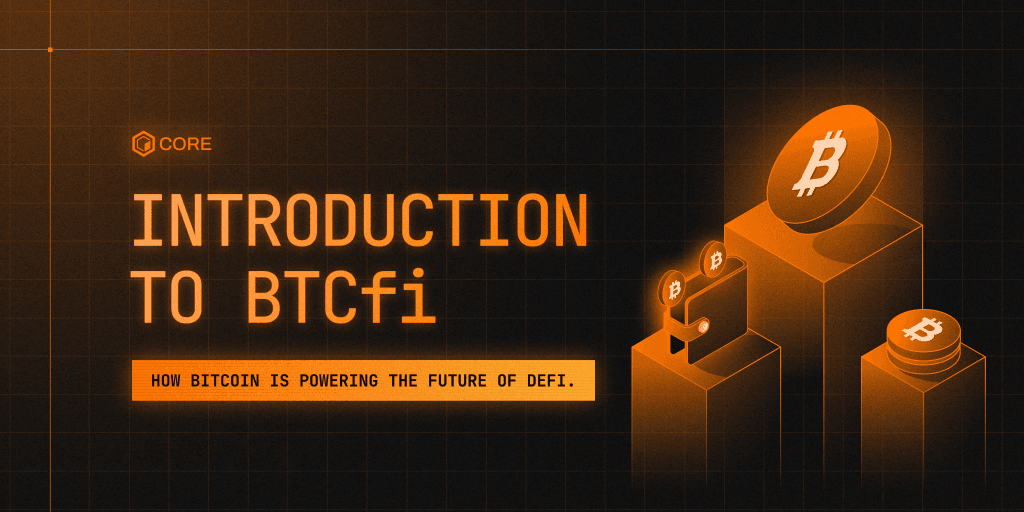
A GoMining-commissioned survey of over 700 Bitcoin holders across North America and Europe reveals that 77 percent of respondents have never engaged with any BTCFi platform. Only around 8 percent say they actively use BTCFi services for lending, staking or yield generation.

The data exposes a striking contradiction: while the BTCFi sector is receiving strong investment and attention, its reach among actual Bitcoin holders remains minimal. Over 65 percent of those surveyed could not name a single BTCFi protocol, pointing to a significant awareness gap in the industry. Roughly 40 percent of respondents say they would allocate less than 20 percent of their Bitcoin to DeFi products—underscoring cautious attitudes steeped in mistrust or lack of comprehension.

GoMining CEO Mark Zalan argues the survey reflects a mismatch in product design: “There’s an enormous appetite for these opportunities, but the industry has built products for crypto natives, not for everyday Bitcoin holders.” He cautions that BTCFi platforms must prioritise simplicity, trust and education over technical sophistication if they are to attract a broader base.

Despite limited adoption, interest in BTCFi is not absent. Some 73 percent of respondents express a desire to earn yield on their Bitcoin through lending or staking, while 42 percent would like access to liquidity without selling. Yet for now those desires largely remain theoretical.

The survey publication coincides with a sharp rise in BTCFi venture capital activity. Data from industry trackers show that in the first half of 2025, funding to Bitcoin-related infrastructure, custody, and DeFi projects reached US$175 million, spread across 32 funding rounds—20 of which targeted consumer-facing applications. Total value locked in BTCFi has also climbed, hitting US$6.6 billion by mid-2025, up from modest levels just a year earlier.

Industry analysts see this as a pivotal moment. BTCFi is theoretically well-positioned: Bitcoin holders collectively control over US$1 trillion in assets, and unlocking even a small portion into yield markets would shift capital flows substantially. But bridging the adoption chasm requires more than protocol robustness—it demands user trust, transparent security models, and intuitive onboarding.

Several projects are experimenting with custodial BTCFi models that reduce user friction, essentially merging decentralised finance with familiar wallet experiences. These hybrids aim to lower the barrier to entry for mainstream holders who are wary of self-custody risks. Others are focusing on streamlined education and marketing campaigns to bring awareness of BTCFi’s value proposition to non-tech audiences, rather than relying exclusively on high-end technical features.

Skeptics argue the reliance on Ethereum’s DeFi archetype may be a poor fit for Bitcoin’s more conservative base. BTCFi protocols often demand bridging, wrapping or interacting with smart contracts—actions that alienate users comfortable with simpler vehicles like ETFs and custodial wallets. A portion of Bitcoin holders remain risk-averse by nature, preferring regulated, custodial holdings and avoiding experimental protocols.

Some in the industry suggest a phased approach: target early adopters first, establish trust metrics, then gradually roll out to mainstream holders. Others urge a revisit to design philosophy itself: ensuring BTCFi can deliver yield, liquidity and composability while behaving in a way Bitcoin users find intuitive and safe.

MUNICH, GERMANY – Media OutReach Newswire – 5 October 2025 – COOFANDY, EKOUAER, and Zeagoo have made a memorable entrance into the German market with their first-ever pop-up event in the country, held during the 2025 Munich Oktoberfest at Substanz Club. More than just a brand activation, the three-day celebration became a cultural moment—drawing in festival-goers, inspiring live coverage from influencers such as @krisstyle_munich_ and @adembayalan, and […]

OPEC+ delegates are weighing two divergent paths for November oil quotas: a modest lift mirroring October’s 137,000 barrels per day increase or a more aggressive jump, possibly two to three times larger. Diplomatic and market pressures appear to be pulling members in different directions.

Ahead of Sunday’s formal meeting, one source familiar with the deliberations described 137,000 bpd as the “base case,” replicating this month’s incremental pace. A second source, speaking on condition of anonymity, indicated that under more aggressive assumptions the group may opt for increases of 280,000 bpd or even 400,000 bpd. Those in favour of larger hikes argue that strengthening demand and constrained Russian output justify a bolder step.

Analysts are aligning with the moderate view. Goldman Sachs, for instance, projects a November quota increase of around 140,000 bpd, citing tight inventory levels in Asia and Europe and declining U. S. crude stockpiles. Pressure for a more substantial increase, however, is mounting given elevated oil prices and a desire among key producers to reclaim or expand market share.

During a meeting of the Joint Ministerial Monitoring Committee this week, OPEC+ emphasised full compliance with output agreements, urging shirking members to compensate for previous breaches. While the JMMC lacks decision-making power on quotas, it retains the ability to summon full OPEC+ sessions if necessary. This move underscores growing unease about cohesion ahead of the upcoming vote.

Market reaction has already shown sensitivity. Oil prices—which had climbed amid tight supply forecasts—slid more than 3 per cent early this week as traders factored in the possibility of an oversupplied market if OPEC+ moves decisively upward. Further pressure arrived as Iraq’s Kurdistan region resumed exports to Turkey, adding to short-term supply. Expectations of a November increase of at least 137,000 bpd have also fed concerns about potential gluts.

Saudi Arabia is anticipated to respond to this industrial backdrop by raising its official selling prices for November crude to Asia. Refining sources suggest increases of 20–40 cents per barrel for Arab Light, and larger bumps for heavier grades—moves intended to optimise returns amid the shifted supply landscape. Observers note, however, that these pricing adjustments may be constrained by growing global volumes and rising freight costs.

Within OPEC+ circles, some major players favour the status quo increment. They caution that a more aggressive hike could undermine prices and strain discipline among reluctant members. Others view a bold move as an opportunity to reshape global oil dynamics—forcing non-allied producers to respond and reasserting the cohesion and influence of the alliance.

Russia is under particular scrutiny. Its output has been running below forecasts, and further declines—coupled with Western sanctions and infrastructure disruptions—are cited by several sources as a justification for a larger quota increase across the group. Still, Moscow’s appetite for more substantial volume gains remains unclear, balancing revenue interests with geopolitical strategy.

Strong demand and constrained inventory have pushed Dubai’s residential rents upward for several years. However, multiple indicators now suggest that 2026 will bring slower growth—perhaps even declines—in many segments of the market.

Headline figures already point to a deceleration. Yearly rental growth across residential properties in Dubai fell to about 8.5 percent by May 2025, down from 14.3 percent at the start of the year and 21.1 percent a year earlier. The long-term rental sector is under pressure as new supply enters the market: in the second quarter of 2025, long-term rental contracts fell 6.3 percent year on year, new contracts dropped nearly 8.9 percent, and overall rents declined 12.9 percent in quarterly comparison.

Analysts attribute the cooling largely to a surge in forthcoming housing supply. Some 150,000 new homes are expected to be completed between 2025 and 2027, representing a stock increase of nearly 20 percent in many parts of the market. Fitch Ratings projects residential property values could pull back by as much as 15 percent during late 2025 and into 2026, citing that the volume of handovers will likely outpace demand.

In the mid- and affordable segments, the impact may be most visible. Experts expect that communities with heavy handovers—such as Jumeirah Village Circle, Al Furjan, Dubai South, and surrounding areas—will experience downward pressure on asking rents. Nevertheless, prime areas like Downtown Dubai and Palm Jumeirah are forecast to continue seeing double-digit rent growth, buoyed by scarcity and sustained demand for luxury housing.

A tale of two markets is emerging. In central, premium sectors, landlords maintain leverage, while suburban and emergence zones will offer more negotiation room for tenants. Springfield Properties’ chief executive, Farooq Syed, observes that the large transaction volume and development pipeline into 2026 will provide tenants greater choice—especially in the apartment segment. Cushman & Wakefield Core’s head of research, Prathyusha Gurrapu, describes the trend as “clear signs of stabilisation,” especially outside the top-tier districts.

Beyond supply and demand dynamics, shifts are occurring in tenant preferences. Short-term and flexible lease arrangements continue to gain popularity, particularly among transient professionals and investors seeking yield. In Q2 2025, short-let occupancy remained strong—AirDXB, a key player in Dubai’s short-term rental market, achieved 90 percent occupancy compared to citywide averages around 63 percent. Technology trends are also creeping into real estate: blockchain-based platforms are being tested to automate rent payments and maintenance workflows.

On the investor side, yields remain attractive. Knight Frank reports residential yields are holding in the 5–7 percent range for apartments and 4.5–6 percent for villas and townhouses. But concerns are rising about overleveraged speculative investment, especially in lower-end segments. The Financial Times recently noted that many flippers—investors hoping to resell properties quickly for a profit—are already struggling to offload unfinished units as competition mounts.

Regulatory efforts may also temper volatility. Dubai’s Real Estate Regulatory Agency continues to push for transparency and consistent valuation practices, while the broader Dubai Land Department is moving toward digital registration and enhanced oversight. For tenants, the requirement to declare all occupants in Ejari contracts—an enforcement step introduced in 2025—tightens accountability in co-living arrangements.

Macro-economic fundamentals still support the market, albeit with caution. The emirate’s population passed 3.8 million in 2025, reflecting steady migration and growth—fuelling housing demand. Moreover, Dubai continues to attract global capital, drawn by tax benefits, infrastructure, economic diversification, and a relatively stable environment across the Gulf region.

Pressures are evident however. UBS’s 2025 index flagged Dubai at “bubble risk,” warning that rapid appreciation may not be sustainable without moderation. If large-scale oversupply hits the market at once, correction cycles may deepen in specific micro-markets.


South African equities climbed to unprecedented levels on Thursday, driven by buoyant momentum in mining and financial sectors. The benchmark FTSE/JSE All-Share Index rose past its prior peak, cementing the capital market’s status as one of the continent’s top performers this year. The rally has been underpinned by a strong commodity backdrop: iron ore, platinum, and gold all posted gains, boosting mining stocks across the board. The […]

Advertisements

Eric S. Raymond, one of the foundational figures behind the Open Source Initiative, has called for a wholesale rejection of codes of conduct in open-source communities, characterising them as counterproductive. His outspoken position has revived a heated debate over governance, community norms and enforcement in open software ecosystems. Raymond argues that codes of conduct, designed to promote civil discourse and inclusion, have become tools for disruption and […]

The Bifrost subsea cable system has been certified as Ready for Service, paving the way for commercial data traffic between Singapore and the western United States.

Stretching more than 20,000 km, Bifrost charts a novel route via Indonesia—across the Java Sea and Celebes Sea—enabling the first direct subsea connection between Singapore and the U. S. West Coast. Its design supports over 260 Tbps of capacity, and the round-trip latency between Singapore and the U. S. is projected at under 165 milliseconds, approximately 10 ms faster than many alternative routes.

Keppel Ltd holds five of the total 12 fibre pairs in Bifrost, through a 40-60 joint venture with private fund co-investors. The cable system’s landing stations include Grover Beach, Winema, Guam, Singapore, and branching units to Jakarta, Manado, and Davao in the Philippines.

Manjot Singh Mann, CEO for Connectivity at Keppel, described Bifrost as a “landmark project” that will “bolster digital connectivity between Southeast Asia and the USA” and reinforce Singapore’s status as a regional digital hub. Alcatel Submarine Networks handled the cable’s construction; its CEO, Alain Biston, noted that reaching readiness reflects “the hard work of ASN teams working hand in hand with our client.”

In the Philippines, Converge ICT serves as the landing party at Davao. Dennis Anthony Uy, Converge’s CEO, said that the cable will “not only boost the company’s international bandwidth capacity, but for the Philippines, it will mean redundancy and diversity in network infrastructure.”

The significance of Bifrost lies not only in its raw capacity and speed but also in route diversification. By crossing via Indonesia, the cable offers an alternate path independent of existing transpacific systems, lowering the risk of congestion or outages on established corridors. Analysts view its timing as aligned with surging demand for bandwidth, driven by growth in AI workloads, real-time applications, cloud services, and digital transformation across Asia.

Bifrost enters a competitive environment of subsea infrastructure expansion. Projects such as Echo, Apricot, Hawaiki Nui, and others vie for roles in connecting Asia with the Americas and the Pacific islands. Echo is expected to link Singapore to Guam and onward to Eureka, California. Apricot, largely intra-Asia in scope, is ramping up deployments across Japan, Taiwan, the Philippines, and Indonesia.

Market commentators point out that Bifrost’s success will hinge on uptake from global cloud providers, telcos, and hyperscalers. Keppel’s stake reflects a confidence in long-term returns. Some financial analyses anticipate internal rates of return exceeding 30 percent, with projected revenue from operational and maintenance fees per fibre pair exceeding S$200 million over 25 years.

Because Keppel and its partners delayed the original launch schedule, the push to achieve RFS signals a resolve to catch up with escalating infrastructure demand.

By K Raveendran It was a week of contradictions for India’s image on the world stage, marked by a curious interplay of critique, affirmation, and manoeuvring. Rahul Gandhi, in his address at Columbia University, painted a picture of India that was dark and distressing, describing the country’s democratic decline in sweeping terms. At the same […]


The article A Week Marking The Worst And Best For India On Global Stage appeared first on Latest India news, analysis and reports on Newspack by India Press Agency).

By Manish Rai In his maiden speech in the United Nations General Assembly, Syria’s interim president, Ahmed al-Sharaa, called for lifting of international sanctions on Syria, becoming the first head of state from Syria to address the gathering in nearly 60 years. This signifies the first appearance of a Syrian president since Nureddin al-Atassi took office in 1967. Syrian President Sharra engaged in a series of bilateral […]

Hamas has announced that it will free the final Israeli hostages taken in its October 2023 assault on Israel, but insisted that other elements of a U. S.-backed 20-point peace plan remain subject to negotiation, leaving the path ahead fraught with uncertainty. President Donald Trump welcomed the announcement, calling for an immediate halt to Israeli bombardment and offering indications that he might allow flexibility on the broader proposal.

Under the deal endorsed by Israel, all hostages—alive and deceased—are to be returned within 72 hours of Israel’s public acceptance, in exchange for the release of around 1,950 Palestinian detainees. The agreement envisages a phased Israeli withdrawal, transfer of Gaza’s administrative functions to apolitical technocrats, and demilitarization of Hamas. But Hamas has declined to commit to disarmament, signalling that parts of the plan will undergo further negotiation.

Trump, in a public message, said Israel “must immediately stop” its bombing of Gaza and asserted that he believed Hamas was “ready for lasting peace.” He also warned that failure to accept the terms by the deadline—Sunday at 6 p. m. Eastern Time—would provoke severe consequences. Israel has given tentative backing to the first phase of the plan, though it maintains reservation about Hamas’s retention of weapons.

Israeli Prime Minister Benjamin Netanyahu has accepted the peace initiative in principle but imposed caveats: Israel’s withdrawal will be partial, and Gaza will remain under strong security oversight. Netanyahu rejected formation of a Palestinian state under this framework, warning that such a move would reward terrorism. He has also suggested that Hamas participants who commit to peaceful transition could be granted amnesty.

Egypt, Qatar and other regional powers are acting as intermediaries to push Hamas toward acceptance. Israeli officials have reportedly reduced ground operations in Gaza City following U. S. pressure, instructing troops to limit activities to defensive operations even as the air campaign continues. Meanwhile, humanitarian groups warn that any ceasefire in name must be accompanied by unimpeded aid delivery and infrastructure repairs.

Some opposition voices in Israel—particularly among far-right coalition partners—view the latest developments as insufficient, demanding continued military pressure. Families of hostages have expressed cautious optimism, although they remain sceptical of open-ended guarantees.

In Hamas’s statement, the group claimed that the hostage release marks a gesture of “good faith,” but stressed that Israel’s withdrawal, guarantees on the safety of Gaza’s population, and the future role of Palestinian governance must be negotiated further. It described disarmament as “off the negotiating table” and refused to accept unconditional terms.

Analysts caution that the hostages’ release, while important, does not resolve deep structural issues: the role of Hamas in governance, security guarantees for Israel, and Gaza’s long-term reconstruction remain unresolved. Regional watchers view the moment as the most significant opening for a potential ceasefire in years—but one that may collapse without strict adherence to implementation timelines and third-party oversight.

International leaders have responded with varying tones. Some support the deal as a rare breakthrough, while others urge caution, calling for clear mechanisms to enforce demilitarization and civilian protections. The United Nations has reiterated its demand for accountability under international law and its role in aid operations.

KUALA LUMPUR, MALAYSIA – Media OutReach Newswire – 4 October 2025 – The importance of gastrointestinal health, or maintaining a healthy digestive system, has become a growing focus for researchers and innovators worldwide. Reflecting this commitment, Monash University Malaysia and Tata Chemicals Limited have entered into a strategic partnership dedicated to advancing research in the gut microbiome and gut health. The collaboration, formally established through a Memorandum […]

Tesla has launched sales of its Cybertruck in Qatar, bolstering its Middle East expansion as the electric carmaker seeks growth beyond saturated U. S. and Chinese markets. The announcement was made via its social media channel on 3 October, following its earlier push into Saudi Arabia this year.

Underlining its Gulf ambitions, Tesla has already made the Cybertruck available in Saudi Arabia and the United Arab Emirates, and now Qatar joins as one of the first markets outside North America to offer the pickup. The company plans to support local sales with online ordering, pop-up showrooms, Supercharger stations, and service centres.

Tesla does not provide regional breakdowns for Cybertruck deliveries, but a U. S. recall filing notes that 46,096 units had been built between November 2023 and early 2025. Analysts say the Qatar move is timely, given Tesla faces weakening demand and intensifying rivalry in its core markets.

Qatar, meanwhile, has signalled ambition in building an EV framework. The country is working toward installing 1,000 public charging stations by 2025 and targeting 4,000 by 2035. A partnership between Tesla, the utility Kahramaa, and real estate projects like Doha Festival City aims to deploy Superchargers capable of delivering 250 kW charging, enabling about 200 miles of range in 15 minutes.

Tesla’s introduction in Qatar is part of a broader Gulf strategy that seeks to replicate its Saudi model—offering multiple variants of the Cybertruck tailored to regional conditions. For example, orders in Saudi Arabia include both All-Wheel Drive and Cyberbeast trims, with the Saudi AWD variant priced starting at around 434,990 Saudi Riyal.

However, Tesla is also reshaping its product line due to weak uptake. It has dropped the standalone rear-wheel-drive Cybertruck variant from its U. S. configurator, leaving only two higher-end models in the lineup. This shift signals that Tesla is consolidating its offerings to better match market demand.

Competition in the Gulf is mounting. Chinese manufacturers BYD and Zeekr are pushing aggressively into the region, and the U. S. EV maker Lucid—backed by Saudi Arabia’s sovereign wealth fund—poses a formidable local rival.

Tesla’s Q3 performance provided a temporary boost: the company reported record global deliveries, partly driven by a rush before the U. S. EV tax credit expired on 30 September. Yet analysts anticipate a steep drop in Q4 sales given the expiration of that incentive.

Tesla’s entry into Qatar underscores its strategic pivot toward markets where expansion potential remains, even as challenges loom in technology adaptation, climate conditions, and consumer uptake.

Valetax, a leading global provider of trading services, is proud to announce its participation as an Elite Sponsor at Forex Expo Dubai 2025, one of the world’s most prestigious financial events. The expo will take place on 6–7 October 2025 at the Dubai World Trade Centre, drawing traders, partners, and industry experts from across the globe. As an Elite Sponsor, Valetax is set to make a remarkable […]

NEW YORK, US – Media OutReach Newswire – 3 October 2025 – NTT DATA, the global leader in IT services, has once again been recognized among the Best Places to Work in the USA and earned the distinction of Best Place to Work for Women for 2025. This marks the second consecutive year the company has achieved both certifications, reflecting its ongoing commitment to creating a workplace […]

Rain, Ekin Cheng, Hins Cheung and other music icons brought on the festival energy as part of Grand Prix™ Season Singapore 2025 SINGAPORE – Media OutReach Newswire – 3 October 2025 – JAM OFF 2025 roared back into Singapore last weekend, igniting Resorts World Sentosa with two unforgettable days of star-studded performances, dynamic competitions, and festival cheer. Organised by Destinations Network Tourism and Leisure Marketing Ltd., a […]

Rock Band 4 will be removed from the PlayStation and Xbox digital stores on 5 October 2025, after the original licences for its base soundtrack reach their ten-year term. Existing players will retain access to their purchased content, but new buyers will lose the ability to acquire the game or its downloadable content. Harmonix confirmed the decision via the game’s Discord channel, where community manager Kyle Wynn […]

Dubai, UAE — 3 October 2025 — Igor Sergeev, founder and CEO of Papa Media, has announced the launch of a new PR marketplace designed to make media access possible in just three clicks. For over 15 years, Papa Media has worked across international markets with corporations, public figures, and opinion leaders. With this latest platform, the company introduces a product that makes media publishing faster, more […]

The non-oil private sector in the United Arab Emirates surged in September, with the S&P Global UAE Purchasing Managers’ Index climbing to 54.2, up from 53.3 in August. This marks the strongest expansion in seven months, as new business inflows rebounded sharply and domestic demand regained traction. Growth across new orders was the standout driver. The new orders sub-index jumped to 57.2 from 53.1, registering its fastest […]

HANOI, VIETNAM – Media OutReach Newswire – 3 October 2025 – Legendary global icon G-DRAGON has officially revealed the details of his much-awaited world tour, G-DRAGON 2025 WORLD TOUR [Übermensch], making his triumphant return to the global stage. In collaboration with Galaxy Corporation and AEG Presents, the tour promises an electrifying experience for fans worldwide. Promoted by AEG Presents, 8Wonder, and ER CMG, G-DRAGON 2025 WORLD TOUR […]

China’s largest state banks have committed over $3.75 billion in debt financing to Saudi Aramco’s Jafurah gas project, while Chinese investment funds have declined to take equity stakes in the venture, sources told Reuters.

The bulk of this funding comes from Bank of China, ICBC and China Construction Bank, each contributing around $1 billion, and Agricultural Bank of China adding roughly $750 million. This debt financing accounts for more than one-third of the total capital sought for what is expected to be the largest shale gas development outside the United States.

Aramco’s deal involves an $11 billion lease-and-leaseback agreement signed in August with a consortium led by Global Infrastructure Partners, an arm of BlackRock. Under the arrangement, a new entity called Jafurah Midstream Gas Company will lease processing assets to Aramco for 20 years. Aramco retains a 51 per cent stake, while the consortium holds the remaining 49 per cent.

Despite the opportunity to join the equity syndicate, several Chinese state-linked funds declined to participate, a move that sources attribute to heightened U. S.–China tensions. Beijing is said to have discouraged fund-level engagement with U. S.-affiliated private capital firms, even when such firms do not have overt U. S. exposure.

The Chinese banks’ decision to provide senior debt but avoid equity signals a calibrated strategic posture: backing the project financially without direct governance alignment with U. S.-linked investors.

Aramco’s broader ambition is to expand its gas production capacity by 60 per cent over 2021 levels by 2030. The Jafurah basin is estimated to contain 229 trillion standard cubic feet of raw gas and 75 billion stock tank barrels of condensate.

The BlackRock-led consortium is also negotiating additional capital of around $10.3 billion with a mix of debt instruments; participants in those talks include JPMorgan and Sumitomo Mitsui Banking Corporation. Those financial structures are intended to support the lease-and-leaseback model without ceding control of core infrastructure assets to external parties.

Within the Gulf, Chinese lenders’ prominent involvement in Jafurah’s financing echoes a broader trend. Analysts note that China is repositioning its role in Gulf energy infrastructure by leveraging its strengths in project debt and export credit rather than co-investment in U. S.-sponsored equity schemes.

Saudi Arabia is concurrently expanding its gas network. It has signed over $25 billion in contracts for the second phase of Jafurah development and further gas-network enhancements, including pipeline extensions of 4,000 km to increase capacity by 3.2 billion standard cubic feet per day. Chinese firms, such as Sinopec, are among the contractors participating in these projects.

For Aramco, the dual approach of securing large-scale debt from Chinese banks while partnering with international investors via the leaseback model helps it mobilise capital without relinquishing decisive control. The arrangement offers investors predictable tariff-based returns.

Chinese banks’ exposure gives them influence over covenant terms, loan pricing and repayment schedules. That leverage, without the burdens or political friction associated with equity, aligns with Beijing’s financial diplomacy toward strategic energy corridors.

The full constellation of debt and equity deals around Jafurah—and the dynamics among Gulf producers, Chinese state capital, and U. S.-linked private investors—will be among the key nodes shaping the next wave of energy infrastructure financing.

Meta has started deploying a new “communities” feature in Threads, allowing users to join dedicated spaces centred on specific interests such as basketball, TV, K-pop or books. These communities, currently live across more than 100 curated topics, build on Threads’ existing topic tags and custom feeds, but now bring a more structured environment for focused conversations. When a user joins a community, it will be pinned to […]

Space42 has issued its Foresight Constellation Viewpoint, a strategic dossier that underscores how Synthetic Aperture Radar satellite systems, when paired with artificial intelligence, can reshape decision making for governments and industries. The viewpoint emphasises the capacity for persistent imaging, all-weather operation and near-instant analytics — capabilities that are becoming mission-critical in an era of intensifying climate, security and infrastructure challenges.

At the heart of the Viewpoint is GIQ, Space42’s AI engine that converts raw SAR data streams into decision-grade intelligence within minutes. The report argues that the combination of high-resolution persistent coverage and AI transforms Earth observation from static imagery into a dynamic intelligence layer for monitoring, planning and emergency response. Launching Foresight-1 in August 2024 and Foresight-2 in January 2025 has already bolstered the UAE’s Earth observation capability.

Space42 frames its approach as not just a technological upgrade, but a sovereign asset: reliance on third-party satellite data leaves states vulnerable to disruptions, but a domestic SAR-analytics ecosystem offers resilience and control. The global SAR market, currently estimated around $5.8 billion, is forecast to nearly double to $9.8 billion by 2030. According to the Viewpoint, deployment of integrated SAR systems can yield cost savings — for instance, reducing predictive maintenance expenses by up to 30 per cent while improving emergency response by as much as 90 per cent.

The technical backbone of this strategy depends on both the satellite constellation and ground systems. Space42 has entered into a joint venture with ICEYE to localise manufacturing of SAR satellites in the UAE, aiming to strengthen supply chains and transfer expertise. The joint venture builds on prior collaboration: ICEYE’s technology underpins the Foresight satellites, and cooperation is intended to deepen over coming years.

Foresight-2 was successfully deployed via a rideshare launch on 14 January 2025, expanding the constellation’s capabilities and reinforcing its ability to revisit areas multiple times per day. With Foresight-1 and 2 in orbit, the full constellation is expected by 2027. The satellites exploit SAR’s unique ability to image through clouds and in darkness — a significant advantage over optical systems, especially in disaster and high-latency environments.

The Viewpoint also positions its narrative with real-world scenarios. It cites the 2023 Turkey earthquake, in which optical systems were hindered by cloud cover, while SAR satellites continued functioning — enabling assessments of a major dam’s structural integrity in crisis conditions. That example supports the argument that SAR ecosystems must be treated not as supplements but as core infrastructure for resilience and security.

Space42 positions itself as a full-stack player: not merely a satellite operator but a systems integrator combining space services, geospatial analytics and AI. Its dual business units—Space Services and Smart Solutions—serve satellite operations and downstream intelligence markets respectively. Among its touted use cases are border surveillance, maritime monitoring, infrastructure health, mobility and disaster management.

Yet challenges remain. Building sovereign SAR ecosystems demands investment in ground infrastructure, antenna networks, data processing centres and skilled personnel. Market competition is increasing: global players—commercial and governmental—are accelerating developments in miniaturised SAR payloads, hybrid optical/SAR systems and edge AI processing. Moreover, the cost dynamics of deploying dense constellations must be managed against returns from clients in defence, environment and infrastructure sectors.

VISHNU RAJA
RYO YAMADA
HITORI GOTOH
IKUYO KITA