News related to
unit

Cushman & Wakefield Experts Share Market Insights at MIPIM Asia Summit HONG KONG SAR – Media OutReach Newswire – 4 December 2025 – China’s Real Estate Investment Trust (C-REIT) market is entering a transformative phase, marked by rapid expansion in issuance size, diversification into emerging asset classes, and rising institutional investor confidence. Since its inception, the market has grown to reach a total issuance scale of RMB207 […]

Seamless Access Across Time Zones with Preferential Brokerage Fee HONG KONG SAR – Media OutReach Newswire – 4 December 2025 – Dah Sing Bank, Limited (“the Bank”) announced the extension of its US stock trading service to 24 hours*, offering investors round-the-clock trading experience. The US equity market remains the largest globally by market capitalisation and continues to be a key focus for investors. In recent years, […]

By Dr. Gyan Pathak When Indian rupee was falling in the Mumbai market against US dollar on Wednesday, December 3, 2023 – sliding past the 90-a-dollar mark for the second day, plumbing a new low of 90.29 in the morning trade after opening flat at 89.96, analysts were pegging the next level for the beleaguered […]

The article CEA’s Calmness Over Steep Fall Of Rupee Ignores Key Risks To India appeared first on Latest India news, analysis and reports on Newspack by India Press Agency).

SINGAPORE – Media OutReach Newswire – 4 December 2025 – Pursuing higher education abroad represents a significant financial commitment. According to a report by The Straits Times, annual tuition fees at top global universities can range from US$30,000 to US$50,000. Total expenditure for a four-year programme, including accommodation and living costs, exceeding S$500,000 in destinations such as the United States, United Kingdom and Australia. In comparison, international […]

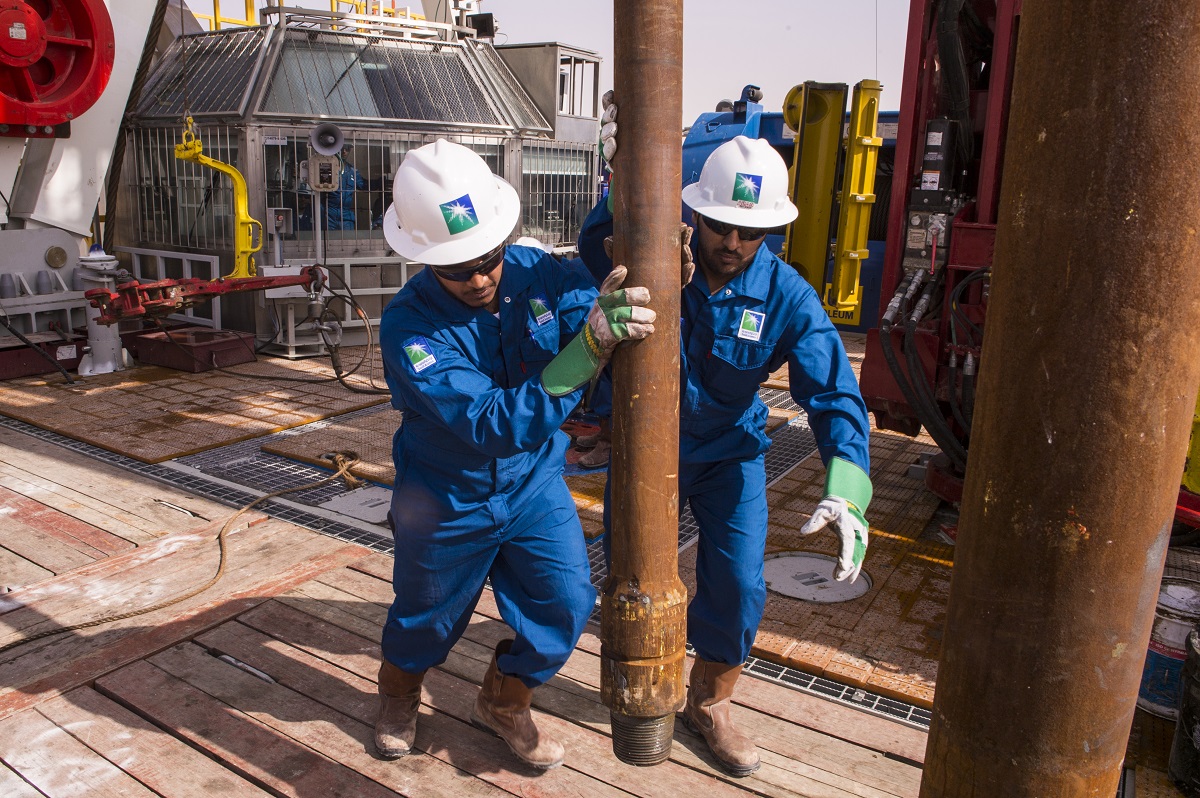
Saudi energy giant Saudi Aramco has begun output from the first phase of its vast Jafurah gas field, signalling a major milestone in the Kingdom’s shift toward natural gas. The project, valued at around $100 billion, has an initial production capacity of 450 million cubic feet per day, according to the Saudi Finance Ministry’s 2026 budget statement.

The field holds an estimated 229 trillion standard cubic feet of raw gas along with 75 billion stock tank barrels of condensate—making Jafurah the largest non-associated gas development in Saudi Arabia and among the largest shale-gas plays outside the United States.

Completion of the first development phase allows Aramco to begin supplying sales gas domestically. The company plans to ramp production gradually and aims to reach a sustainable output of 2 billion cubic feet per day by 2030.

To support its gas-processing infrastructure, Aramco earlier sealed an $11 billion lease-and-leaseback agreement with a consortium led by Global Infrastructure Partners, part of BlackRock. Under the deal, a newly formed subsidiary, Jafurah Midstream Gas Company, will lease the processing and fractionation facilities — which Aramco will then lease back for a 20-year period. Aramco retains majority ownership with a 51% stake, while the investor group holds 49%. The transaction is designed to inject capital without constraining production volumes.

Aramco’s move reflects a broader strategic shift. By ramping up gas production, the company aims to reduce domestic reliance on crude oil for power generation — thereby freeing more crude for export. Gas from Jafurah is expected not only to meet domestic power and utility needs but also to provide feedstock for petrochemicals, hydrogen, and potentially emerging sectors such as AI data-centres.

Analysts view Jafurah as a potential game-changer for both Saudi Arabia and global gas markets. With reserves comparable to major U. S. shale plays and a projected daily output of 2 bcf by 2030, the project could make Saudi Arabia a more prominent natural-gas exporter or LNG player — a significant rebalancing from its traditional role as an oil-dominated supplier.

Through this transformation, Aramco underlines its long-term aim of reinventing its energy portfolio — aligning with efforts to diversify the country’s economy and meet shifting global demand patterns.

An East-meets-West digital fashion experience — uniting Paris Fashion Week insights with local talent in a fun, future-forward showcase for all ages, driving Hong Kong’s digital economy From 22 November – 2 December 2025 at AIRSIDE Gate33 Gallery HONG KONG SAR – Media OutReach Newswire – 4 December 2025 – Organised by the Hong Kong Design Centre (HKDC), curated by digital fashion innovator FabriX, and sponsored by […]

By K Raveendran The steady erosion of trust between political parties and the Election Commission has become one of the more troubling developments in India’s democratic life, revealing an institutional drift that carries implications well beyond a single electoral cycle. The body entrusted with safeguarding the integrity of elections is expected to serve as an […]

The article An Election Commission That Treats Critics As Enemies Has No Place In Democracy appeared first on Latest India news, analysis and reports on Newspack by India Press Agency).

Advertisements

United Kingdom legislation now formally recognises digital assets such as cryptocurrencies and stablecoins as personal property, offering holders protections under established property law. The Property Act 2025 — previously a bill — received royal assent, confirming that digital tokens may be treated as a third category of personal property alongside traditional “things in possession” and “things in action.” This marks a decisive shift from earlier reliance on case-by-case rulings by courts.

Legal recognition ensures that crypto-owners gain enforceable rights in instances of theft, fraud or insolvency, and enables digital assets to be included in estates or bankruptcy proceedings under the same protections afforded to conventional property. The Act does not itself define which digital assets qualify — courts will decide those details over time.

Judicial developments had already begun to lay the groundwork for this change. As early as 2019, the UK Jurisdiction Taskforce concluded that crypto-assets met criteria for property under English law: they could be defined, identified, transferred and treated as assets capable of value retention. A key case, AA v Persons Unknown, saw the High Court of England and Wales recognise Bitcoin provided as ransom in a cyber-attack as property, granting the insurer a proprietary injunction.

Advocates of the law hailed it as providing clarity long sought by individuals and businesses holding crypto-assets. CryptoUK, a leading trade body for digital assets, noted that while courts had already treated crypto as property in some cases, codifying the principle into statute removes uncertainty and streamlines legal protections across theft, insolvency and estate-related scenarios.

Legal experts say the Act reflects the recommendations laid out by the Law Commission in a 2023 report, which urged reform to ensure the law could accommodate emerging digital assets under a flexible yet robust framework. The Commission argued that existing categories of personal property under law were too rigid to account for assets that lacked physical form or contractual rights.

This statutory change arrives as UK regulators concurrently refine the broader regime for crypto-assets. Draft legislation published earlier this year already seeks to amend the Financial Services and Markets Act 2000 to designate certain “qualifying cryptoassets” and “qualifying stablecoins” as regulated investments, bringing market-level rules for trading, custody and compliance under formal oversight.

While the law does not render cryptocurrency a legal tender — meaning it still cannot be used to settle debts in substitute for currency — its classification as property gives holders legal certainty over ownership and enforceable rights. Taxation and regulatory treatment will continue to follow established frameworks, though this legal milestone reduces ambiguity over the status of crypto-assets in private law contexts.

Judges, lawyers and market participants anticipate that the Act will lead to a more stable and predictable legal environment for crypto-asset ownership, enabling individuals and institutions to treat tokens with the same legal respect accorded to traditional assets. As the courts start applying the new law in real cases, the boundaries of which digital assets qualify will grow clearer — and the UK’s position as a regulatory pioneer in digital asset law will be reaffirmed.


SINGAPORE – Media OutReach Newswire – 3 December 2025 – As Singapore’s economy continues to evolve, the pursuit of education is no longer a linear journey. For many learners, choosing between full-time and part-time study has become a pivotal decision, one that shapes long-term career prospects, financial planning, and personal development. At the Singapore Institute of Management (SIM), flexibility is a core commitment. Offering over 140 full-time […]

The government of Mozambique has committed to invest 12 million US dollars to rehabilitate technical and vocational education and training institutions countrywide, a move aimed at expanding capacity and better aligning training with labour market needs. The investment, slated to kick off in 2026, forms part of a broader reform supported by partner organisations. The Secretary of State for Technical and Vocational Education, Leo Jamal, announced the […]

Greenlogue/AP New Murabba, the massive urban redevelopment project in Riyadh, has formalised a partnership with the US Green Building Council to embed global sustainability standards into its design, construction and operations. The memorandum of understanding signed between the two organisations establishes a framework to explore how international systems such as LEED — including its latest LEED v5 as well as LEED for Communities — can be applied […]

Qatar and the United States have moved to cement their military cooperation with high-level commitments that signal a recalibration of regional security dynamics. The Qatari Prime Minister and Foreign Minister, Sheikh Mohammed bin Abdulrahman bin Jassim Al-Thani, met with the Commander of the US Central Command, Admiral Charles Bradford Cooper, to discuss expanding bilateral defence cooperation. The talks pointed to broad agreement on enhancing joint military readiness, intelligence sharing and coordination on regional security challenges.

The defence discussions follow a backdrop of heightened tensions after an airstrike on Qatari territory by Israel targeting Hamas political leaders. The strike led to strong condemnation across Gulf states and sparked a broader reassessment of the security framework anchoring US presence in the Gulf. The United States responded by reaffirming its commitment to Qatar’s sovereignty.

An executive order signed by US leadership has committed Washington to defending Qatari territory and infrastructure if subjected to external attack, including by military means if necessary. This formal guarantee elevates Qatar’s strategic importance in the US security architecture.

Concurrently, Washington and Doha have arranged deeper integration of military infrastructure. An agreement has been finalised to build a facility at a US Air Force base in Idaho to host a contingent of Qatari F-15QA fighter jets and associated personnel. The facility aims to enhance combined training, preparedness and interoperability under US command — though ownership and command remain US-controlled, eliminating concerns about a permanent foreign base on US soil.

These developments follow multiple engagements aimed at strengthening mutual defence ties. The November meeting between the Qatari Prime Minister and CENTCOM’s commander underscored mutual interest in “support and strengthen” shared strategic goals in defence domains.

Observers interpret this phase as part of a broader US strategy to reinforce alliances in a volatile Middle East. The enhanced cooperation offers Qatar increased security assurances and greater leverage in regional diplomacy, while offering the US a more secure and integrated network of partnerships to project influence and stability. Critics, however, warn that such deepening military ties may further entangle Gulf states in US-led strategic rivalry and increase regional polarization.

Targets 11–15% underlying profit CAGR from 2025-28[1], 7–10% online sales mix, and a new dividend policy based on 70% payout, leveraging scale and digital investments to drive shareholder value HONG KONG SAR – Media OutReach Newswire – 3 December 2025 – At its 2025 investor day, DFI Retail Group Holdings Limited (‘DFI’ or the ‘Group’) outlined strategic initiatives for driving sustained profitable growth and enhanced shareholder returns. […]

HONG KONG SAR – Media OutReach Newswire – 2 December 2025 – The Hong Kong Special Administrative Region (HKSAR) Government is going all out to support victims and investigate the cause of a massive fire that engulfed seven out of eight high-rise residential blocks at Wang Fuk Court in Tai Po, Hong Kong, on November 26. The tragedy prompted an outpouring of support from the public and […]

HONG KONG AND SHANGHAI, CHINA – Media OutReach Newswire – 2 December 2025 – Following the recent tragic fire at Wang Fuk Court in Tai Po, Hang Lung Group and Hang Lung Properties (“Hang Lung”) today open the application for rent-free transitional accommodation from their HK$11 million “Tai Po Wang Fuk Court Fire Relief Fund” to provide relief and support for affected residents. The “Kornhill Apartments Transitional […]

Nigeria must generate 27.3 million new formal jobs from 2025 to 2030 if it is to maintain an unemployment rate of 4.3 per cent, according to the Nigerian Economic Summit Group. That works out to roughly 4.55 million net new jobs each year, a target seen as essential to absorb a growing labour force and to gradually formalise a workforce long dominated by informal, low-productivity work. The […]

The Arab Investment & Export Credit Guarantee Corporation reported that the collective gross domestic product of Arab countries rose by 1.7 percent to about US$3.8 trillion in 2025, even as the region grappled with significant geopolitical tensions. The bulk of the growth remained concentrated in a handful of large economies — Saudi Arabia, United Arab Emirates, Egypt, Algeria and Iraq — which together account for nearly 73 […]

OceanX has completed its first research mission in Timor-Leste, carrying out fourteen days of integrated science and exploration across the northern coast and Atauro Island region. Dili, Timor-Leste – Media OutReach Newswire – 2 December 2025 – The mission brought together scientists from KAUST, the University of Florida, the University of Western Australia, and Timorese counterparts to investigate biodiversity, whale ecology, and seafloor structure in one of […]

Smartwatch pioneer Pebble has returned under the stewardship of its original founder, with both software and hardware released as openly available to developers and tinkerers. The relaunch is driven by Eric Migicovsky and his new venture Core Devices, aimed at reviving the once-beloved e-paper wristwear in a more transparent, sustainable form. Migicovsky confirmed that the entire software stack behind modern Pebble devices — including the smartwatch OS, […]

Russian President Vladimir Putin arrived in New Delhi for a two-day visit aimed at reviving and expanding energy and defence cooperation with India. His agenda includes proposals for increased Russian oil exports alongside renewed offers of missile systems and fighter jets, as part of efforts to restore ties challenged by global pressure on Moscow.

The visit coincides with heightened scrutiny of India’s oil and weapon imports from Russia, but also signals Moscow’s determination to deepen the “special and privileged strategic partnership” with New Delhi. Kremlin officials, including Russia’s deputy prime minister overseeing trade, emphasised that the India-Russia forum planned around the summit would explore ways to diversify bilateral trade, extend industrial cooperation and foster joint investments across high-technology and raw-material sectors.

On offer are new arms deals including advanced air-defence platforms and additional batches of combat aircraft. Negotiations are expected to cover the procurement of more units of the S-400 missile system and potential acquisition of fifth-generation Su-57 jets and the next-generation S-500 air-defence shield. Although India has widened its defence procurement sources over recent years, Moscow remains one of its leading suppliers, bolstered by long-standing familiarity and legacy hardware in the armed forces. Analysts note that these proposed arms deals would reaffirm Russia’s influence in India’s defence posture, even as New Delhi attempts to balance Western and Russian dependencies.

Energy cooperation is another key pillar. Russia is offering discounted crude oil supplies under new trade arrangements, including through intermediaries and possibly via joint ventures or extraction projects in Russia’s Far East and Arctic regions. This appears geared toward circumventing Western sanctions on Russian energy exports, while ensuring that India retains access to competitively priced hydrocarbons. At the same time, Indian officials are conscious of growing trade imbalances caused by large-scale Russian imports and have flagged the need to augment Indian exports to Russia, particularly in equipment, raw materials and food products.

Efforts to revive large-scale trade go beyond energy and defence. The India-Russia forum accompanying the summit is expected to chart cooperation in civil nuclear projects, space technology, and high-tech industrial ventures. Signals from the Russian side underscore a long-term vision of a resilient, multifaceted partnership rooted in historical ties. While geopolitical pressures from Western capitals and tariffs on Indian goods pose real challenges, both Moscow and New Delhi appear keen to insulate their bilateral engagement from external strains.

Tesla is advancing a bold push toward delivering unsupervised Full Self-Driving to customers before the end of 2025, riding on technological progress, regulatory shifts and a faster rollout of robotaxi services. CEO Elon Musk recently reiterated the company’s commitment to achieving true autonomy, underpinning Tesla’s ambition to transform mobility globally. The company’s roadmap has gained momentum as its robotaxi programme — launched in June 2025 in Austin, […]

At the third edition of the Saudi International Handicrafts Week, held at Princess Nourah bint Abdulrahman University in Riyadh, veteran craftsperson Wu Jianmei rose to the spotlight as exhibitors and visitors gathered to experience global artistry. Wu Jianmei took a seat in the bright red-themed China pavilion, her fingers deftly guiding a needle in a demonstration of Xiang embroidery — a traditional art form that has earned her acclaim over a career spanning more than four decades. Her calm poise and meticulous stitching drew a steady stream of visitors who paused to watch each slender thread breathe life into the fabric.

Organised by Heritage Commission, Banan has brought together over 400 artisans representing more than 40 countries for 2025. China holds the title of Guest of Honour, a symbolic showcase of its cultural heritage in a pavilion designed to present more than a thousand handmade pieces alongside live craft demonstrations. The pavilion features lacquerware, fan-making, batik techniques and complex embroidery — each presented by skilled heritage bearers chosen to represent China’s rich craft traditions.

China’s role this year coincides with the 35th anniversary of formal diplomatic relations with Saudi Arabia, as well as the designation of 2025 as the Year of Handicrafts in the Kingdom. Officials accompanying the Chinese delegation underscored the ambition to promote cross-cultural understanding and elevate artisanal craftsmanship within a broader creative economy. Among those present was the Chinese ambassador, who visited the China pavilion and praised the global scope of the event and the Kingdom’s support for heritage-driven cultural exchange.

Visitors to Banan were drawn not only to the China pavilion but to a wider tapestry of worldwide craftsmanship. Traditional techniques from Syria, the United Arab Emirates, Egypt, Oman, Bahrain and Jordan featured prominently, alongside booths from European, African, Asian, and Middle Eastern artisans. Demonstrations ranged across wood carving, clay pottery, metalwork, weaving and shadow-puppet craft.

A special interactive zone called “Banan Story” offered families and children an opportunity to engage hands-on with materials and tools under guided supervision, helping younger attendees connect playfully with global craft techniques. This initiative reflects a broader strategy by the Heritage Commission to foster intergenerational appreciation of handcrafts, encouraging younger audiences to explore cultural diversity through creativity.

For many, Wu Jianmei’s presence at Banan served as a powerful cultural bridge. Her Xiang embroidery pieces — delicate and intricate — symbolised a living history: patterns and stitches that carried stories of generations. Locals and expatriates alike watched in quiet admiration as the needle moved, building intricate motifs destined for display or sale. Her work has previously been exhibited in major institutions, a testament to her stature in the heritage-arts community.

Showcasing Tech Innovation Businesses that Address Healthcare, Industrial Production and Environmental Pain Points HONG KONG SAR – Media OutReach Newswire – 2 December 2025 – The University of Hong Kong Techno-Entrepreneurship Core (HKU TEC) will organise 30 developing startups to participate in the HKTDC Entrepreneur Day, an entrepreneurial event to be held on 4th and 5th December 2025 at the Hong Kong Convention and Exhibition Centre. Of […]

Government of India has broadened access to advanced semiconductor design by enabling universities across the country to use industry-grade Electronic Design Automation tools and Multi-Project Wafer fabrication services under the Chips to Start-up Programme. At a handover event at Semiconductor Laboratory, Mohali saw 28 chips—comprising 600 bare dies and 600 packaged units—designed by students from 17 institutions returned to their teams. Officials confirmed that 122 design tape-outs from 46 institutions were processed over the past year through five MPW shuttles, with over 175 lakh hours of EDA usage logged by more than 380 academic and research organisations via the ChipIN Centre.

Union Minister for Electronics & Information Technology, Railways and Information & Broadcasting, Ashwini Vaishnaw, described the effort as a transformation of India’s semiconductor landscape, arguing the shift empowers students and researchers to work with the same tools global chipmakers use and turns campuses into active nodes of chip innovation and design. SCL and ChipIN’s collaboration enables institutions to prototype, validate and manufacture chips under one integrated workflow—from design to wafer fabrication and packaging.

Analysts note that this initiative addresses previous barriers faced by academic institutions seeking to explore integrated circuit design, where lack of access to expensive EDA licences and manufacturing services often made projects unviable. By providing a centralised national facility, the government is effectively building a talent pipeline and offering practical exposure to chip fabrication, potentially reducing India’s reliance on foreign design and fabrication services over time.

The rollout comes against the backdrop of a wider push to develop domestic semiconductor manufacturing capabilities. Plans to upgrade SCL with an injection of ₹4,500 crore aim to expand fabrication capacity nearly hundred-fold and advance manufacturing to smaller nodes, reinforcing the analog and digital production backbone that the academic chip designs will feed into. Combining design empowerment with fabrication capacity creates a rare integrated ecosystem where chip concept can travel from whiteboard to silicone within the country.

Start-ups too are benefitting: institutions under C2S and ChipIN aren’t limited to student projects but include over 90 young companies. These entities logged about 50 lakh hours of EDA use, indicating that the programme serves both academic and commercial ambitions. Sector analysts suggest that with incentives under the broader India Semiconductor Mission—including design-linked and deployment-linked incentives—this could accelerate design work in fields such as 5G, electric vehicles, AI, industrial automation and defence electronics.

VISHNU RAJA
RYO YAMADA
HITORI GOTOH
IKUYO KITA