Just in:
Ukraine faces $32.6 billion financing gap amid legislative delays // Ayara Kamala Reveals a Refreshed Vision for Wellness in Phuket // Mangroves Documentary Premieres, Exploring How Cities and Wetlands Coexist // Fraudsters register brand lookalikes within a day // Row over Sabarimala toilet disruption // First Abu Dhabi Bank proposes AED15 billion share sale // Mexican journalists demand accountability after Acapulco reporter killed // Galaxy Resort Presents: “Plácido Domingo & José Carreras: The Legends United Opera Gala” // Mangroves Documentary Premieres, Exploring How Cities and Wetlands Coexist // JPMorgan restores transactions after banking payments disruption // Bora Group 3Q26: Revenue and Net Income Expansion Continues U.S. Manufacturing and Biologics Footprint Complete; Margin Expansion to Follow as Utilization Improves // Pink Economy report puts equal rights at the heart of Thailand’s road to Bangkok WorldPride 2030 // EU levies definitive duties on five steel suppliers // Mubadala and Centerbridge secure £1.17bn Canaccord wealth agreement // Over 360 electricity distribution professionals meet in Seoul for CIRED’s first major event in the Asia-Pacific region // ASEAN adopts binding pact on regional digital commerce // Govt offers talks to protesting teachers after CM signal // Regulator demands answers on controversial power deal // Hong Kong International Airport Online Shop Winter Festive Offer // Iran claims six-drone operation against US radar in Bahrain //

News related to
unit

Ethereum is currently trading at $2,749.45, reflecting a modest increase of 0.36% over the past 24 hours. This performance is underpinned by a confluence of technical indicators and burgeoning institutional interest, suggesting a potential rally toward the $3,000 mark.

Technical analysis indicates that Ethereum’s price is approaching a critical resistance level at $2,800. A decisive break above this threshold could pave the way for further gains, with analysts projecting potential targets of $3,000 and beyond. Conversely, failure to surpass this resistance may result in a consolidation phase or a retracement toward support levels around $2,600.

Institutional adoption of Ethereum has been accelerating, contributing to its upward trajectory. The approval and subsequent inflows into Ethereum-based exchange-traded funds have played a pivotal role in this trend. Notably, Ethereum ETFs have experienced 17 consecutive days of inflows, now holding a record high of 3.5 million units. This surge in institutional investment underscores the growing confidence in Ethereum’s long-term value proposition.

The recent inauguration of a pro-crypto administration in the United States has further bolstered market sentiment. Analysts anticipate that the new regulatory environment will be more conducive to cryptocurrency innovation and adoption. The potential for clearer guidelines and supportive policies is expected to attract additional institutional participants to the Ethereum ecosystem.

Ethereum’s network fundamentals remain robust. The number of validators on the network has increased by over 30% in the past year, driven by the introduction of staking and liquid staking mechanisms. These developments enhance the network’s security and appeal to institutional investors seeking yield-generating opportunities.

World Liberty Financial, the cryptocurrency venture backed by U.S. President Donald Trump, has made a significant investment in the decentralized finance sector by purchasing 547,990 SEI tokens for $125,000 USDC. This strategic move has led to a notable increase in SEI’s market value, reflecting the growing influence of institutional investments in the cryptocurrency landscape.

The acquisition, executed on February 20, 2025, saw World Liberty Financial acquiring SEI tokens at an average price of $0.228 per token. This transaction was conducted on the Ethereum network, underscoring the platform’s continued prominence in facilitating significant cryptocurrency trades. Following the purchase, SEI’s price experienced an immediate surge, climbing approximately 12% to reach $0.24. This uptick highlights the market’s responsiveness to substantial investments from prominent entities.

World Liberty Financial’s portfolio, now valued at $117.052 million, reflects a 6.439% decrease in profit and loss, amounting to a $56.522 million loss. Despite this downturn, the firm continues to diversify its holdings, with recent acquisitions including 52.07 Wrapped Bitcoin worth $5 million and 2.53 million MOVE tokens valued at $1.14 million. These investments align with the company’s broader strategy to strengthen its position within the DeFi sector.

In addition to World Liberty Financial’s activities, notable movements have been observed among cryptocurrency whales. Two newly created multi-signature wallets, linked to the same creator, have collectively spent $20 million USDC to acquire 400 million WLFI tokens over the past two days. This substantial accumulation indicates a growing confidence among large-scale investors in the potential of WLFI tokens.

The SEI token, designed to enhance decentralized trading experiences, has garnered increased attention due to these high-profile investments. Market analysts suggest that such institutional interest could signal the onset of a bullish trend for SEI, as well as for the broader DeFi ecosystem. The infusion of capital from entities like World Liberty Financial is perceived as a vote of confidence in the viability and future growth of decentralized financial platforms.

World Liberty Financial’s strategic moves are not occurring in isolation. The cryptocurrency market as a whole has been experiencing a resurgence, with various tokens witnessing upward trajectories. The involvement of influential figures and substantial financial commitments are contributing to a renewed optimism within the crypto community.

However, these developments also prompt discussions about the potential implications of such concentrated investments. While the immediate market reactions are positive, questions arise regarding the long-term effects on market stability and the decentralization ethos that underpins the cryptocurrency space. The actions of large entities can significantly sway token valuations, which may lead to increased volatility and influence over decentralized networks.

PACT Protocol has officially launched on the Aptos Network, introducing over $1 billion in on-chain assets to the high-performance blockchain. This strategic move, following nine months of collaboration with the Aptos Foundation, aims to enhance financial inclusion by providing fully on-chain lending and securitization infrastructure for licensed lenders in emerging markets.

The integration enables lenders to originate, securitize, and service loans more efficiently, fostering a transparent and scalable financial environment for borrowers, originators, and institutional investors. As the inaugural participant in the Aptos Foundation’s incubation pilot, PACT Protocol benefits from strategic and technical support provided by Aptos Labs.

On-chain credit infrastructure is revolutionizing global finance, particularly in regions where traditional banking services are inaccessible to approximately 85% of the population. By leveraging Aptos’ sub-second finality and minimal transaction fees, PACT aims to reduce borrowing costs and expand credit access in underserved communities worldwide.

Ash Pampati, Head of Ecosystem at Aptos, expressed enthusiasm about the partnership, stating that it expands financial access to users in emerging markets globally. Solomon Tesfaye, Head of Capital Markets at Aptos Labs, highlighted that PACT’s integration offers a transparent and scalable solution, reducing costs and broadening credit opportunities for underserved communities.

PACT Protocol selected Aptos for its institutional-grade infrastructure, scalability, and adoption within the financial sector. The network’s support for native USDC and USDT, along with its capacity to handle high transaction volumes at low costs, ensures seamless credit flows while maintaining security and reliability through its Move programming language.

President Donald Trump is actively promoting U.S. liquefied natural gas exports to Asian nations, aiming to strengthen economic ties and reduce their dependence on Middle Eastern and Russian energy sources. In a strategic move, Trump and Japanese Prime Minister Shigeru Ishiba have discussed Japan’s potential involvement in an Alaskan LNG project, highlighting the benefits of a direct energy route that bypasses traditional, and often volatile, sea lanes.

The administration’s focus is not solely on Japan. Other Asian countries, including South Korea and Taiwan, are also considering increased imports of U.S. LNG. This initiative is designed to enhance energy security across the region and diminish the influence of China and Russia. Trump’s energy advisor, Doug Burgum, emphasized the strategic advantages of these partnerships, noting that they offer a more stable and secure energy supply chain for U.S. allies in Asia.

In line with this strategy, Sentinel Midstream is advancing its deepwater oil export project, Texas GulfLink. Located approximately 30.5 miles off the coast of Freeport, Texas, the facility aims to fully load supertankers with up to 2 million barrels of oil per day. This capability is currently unique to the Louisiana Offshore Oil Port. Sentinel’s CEO, Jeff Ballard, expressed optimism about the project’s progress, citing the administration’s expedited approval processes as a significant factor in moving forward.

Despite initial market fluctuations following discussions between Trump and Russian President Vladimir Putin regarding the Ukraine conflict, energy markets remain cautious. The anticipated peace has not materialized, and experts suggest that if a resolution were imminent, a more substantial decline in oil and gas prices would be evident. This uncertainty underscores the importance of diversifying energy sources and reducing reliance on regions prone to geopolitical tensions.

Taiwan’s National Security Council head, Joseph Wu, highlighted the robust support from the U.S., noting that Taiwan is exploring increased purchases of American LNG. This move aims to balance trade and address criticisms from Trump regarding trade imbalances and the semiconductor industry’s dynamics. Wu emphasized Taiwan’s transparency in international business and expressed interest in future Alaskan LNG productions due to their quality and logistical advantages.

Denmark’s Prime Minister, Mette Frederiksen, shared insights into a recent intense conversation with President Trump concerning his renewed interest in acquiring Greenland. This discussion has added complexity to U.S.-Denmark relations, especially in the context of global security challenges posed by nations like Russia, Iran, and North Korea. Frederiksen underscored the necessity for Europe to bolster its defense investments and the importance of U.S.-Europe cooperation in addressing these global threats.

Cheniere Energy, a leading U.S. LNG exporter, plans to expand its capacity under the current administration. CEO Jack Fusco announced intentions to pursue new regulatory permits, aligning with Trump’s agenda to boost the U.S. energy sector. This expansion is poised to meet the growing demand from Asian markets seeking reliable and diversified energy sources.

The administration has also established a council dedicated to achieving “energy dominance,” focusing on increasing natural gas exports and offshore drilling. This initiative aims to capitalize on the U.S.’s abundant energy resources, providing allies with alternative energy options and reducing global dependence on adversarial nations.

The significance of U.S. LNG in global energy dynamics is multifaceted. It not only offers economic benefits but also plays a crucial role in the global energy transition. By providing a stable and cleaner energy source, U.S. LNG supports efforts to reduce carbon emissions and offers countries an opportunity to diversify their energy portfolios.

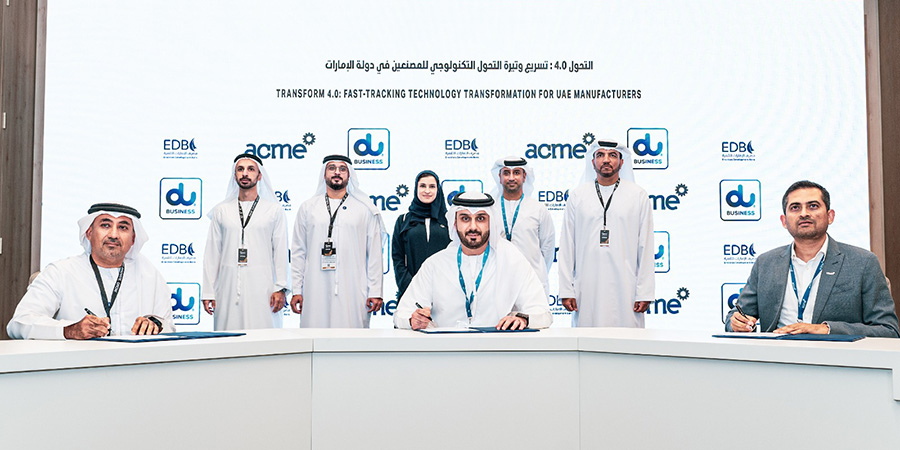
The EDGE Group’s Learning & Innovation Factory and the Ministry of Industry and Advanced Technology have formalised a partnership to accelerate the UAE’s industrial evolution. This collaboration, sealed during the International Defence Exhibition and Conference 2025 at the Abu Dhabi National Exhibition Centre, aims to advance the nation’s Industry 4.0 agenda under the Operation 300bn strategy.

The Memorandum of Understanding was signed by Fatma Essa Al Mheiri, Acting Director of the Technology Adoption and Development Department at MoIAT, and Ahmed Al Khoori, EDGE’s Senior Vice President of Strategy & Excellence. The ceremony was attended by Salama Alawadhi, Assistant Under-Secretary for the Industrial Development Sector at MoIAT, and Hamad Al Marar, EDGE’s Managing Director and Chief Executive Officer.

Under this agreement, LIF will serve as the strategic partner and executor of MoIAT’s Transform 4.0 programme. This initiative is designed to promote the adoption of advanced technologies and establish cutting-edge smart manufacturing facilities across the UAE. The programme’s objective is to support 100 high-potential manufacturers in their digitalisation efforts, fostering a network of Industry 4.0 lighthouses that exemplify excellence in smart manufacturing.

This partnership aligns with the UAE’s broader vision to enhance industrial competitiveness through technological innovation. Launched in 2021, Operation 300bn is a comprehensive 10-year strategy aiming to increase the industrial sector’s contribution to the nation’s GDP from AED 133 billion to AED 300 billion by 2031. The strategy focuses on creating an attractive business environment for investors, supporting the growth of national industries, and stimulating innovation through the adoption of advanced technologies.

The collaboration between EDGE and MoIAT is not their first joint endeavour. In August 2022, both entities signed an MoU to establish the UAE’s first Industry 4.0 Enablement Centre. This centre focuses on raising awareness about Industry 4.0 technologies, upskilling manufacturers through specialised training, and providing a testbed for piloting innovative solutions. The centre’s initiatives aim to enhance factory processes and operations, empowering industry leaders to leverage Fourth Industrial Revolution technologies for improved efficiency and competitiveness.

The UAE’s commitment to industrial advancement is further demonstrated by the Emirates Development Bank’s role in Operation 300bn. EDB has allocated AED 30 billion to support priority industrial sectors over five years, aiming to finance 13,500 small and medium-sized enterprises and create thousands of job opportunities. This financial support underscores the nation’s dedication to fostering a robust and sustainable industrial ecosystem.

The EDGE Group, a prominent technology conglomerate, continues to play a pivotal role in the UAE’s industrial transformation. By collaborating with MoIAT, EDGE leverages its expertise in advanced technology and innovation to drive the nation’s Industry 4.0 agenda forward. The Learning & Innovation Factory serves as a hub for advanced upskilling and technology-driven solutions, enhancing manufacturing excellence and fostering a culture of continuous improvement.

The International Defence Exhibition and Conference 2025 provided an ideal platform for this significant partnership. As one of the largest defence exhibitions globally, IDEX showcases the latest innovations and technologies, facilitating collaborations that drive industrial and technological advancements. The signing of the MoU at this event highlights the strategic importance of the defence sector in the UAE’s broader industrial strategy.

The UAE’s industrial strategy, Operation 300bn, is built upon six primary objectives: creating an attractive business environment for investors, supporting the growth of national industries, stimulating innovation through advanced technology adoption, enhancing the competitiveness of UAE products, ensuring sustainable economic growth, and promoting responsible consumption and production. The partnership between EDGE and MoIAT directly contributes to these objectives by facilitating the digital transformation of the manufacturing sector and promoting the adoption of Industry 4.0 technologies.

The Saudi Red Sea Authority has formalised a partnership with the Ministry of Municipalities and Housing through a memorandum of understanding aimed at advancing the development and management of marinas along the Red Sea coastline. This strategic alliance encompasses the creation of marine vessel maintenance centres, enhancement of beach facilities, and the promotion of coastal tourism destinations, all in alignment with the objectives of Saudi Vision 2030.

The MoU was signed by SRSA’s Chief Executive Officer, Mohammed Al-Nasser, and the Deputy Minister for Licensing and Project Coordination, Mohammed Al-Mulhim. This collaboration underscores SRSA’s commitment to establishing comprehensive regulations and operational standards for marinas, overseeing their development, and ensuring environmental safeguards in marine tourism zones. A key focus is to attract a diverse range of visitors and expand the coastal tourism sector.

Central to the agreement is the utilisation of the Balady platform for processing applications related to the establishment, development, and operation of both onshore and offshore marinas within the designated areas. These facilities will be constructed in accordance with the Saudi Building Code and the approved Marina Planning and Design Code. The partnership also addresses the licensing procedures for commercial operations and the specific requirements for constructing marine fuel stations.

Beyond marina development, the MoU outlines plans for the creation and licensing of marine vessel repair and maintenance centres, providing a regulatory framework for their operations. Additionally, there is a concerted effort to develop and manage beach areas within the specified regions, which includes issuing necessary construction and commercial permits.

The collaboration extends into technological integration, with both entities aiming to enhance coastal monitoring systems and promote coastal tourism destinations. This involves identifying investment opportunities and mapping both tangible and intangible assets along the Red Sea shoreline. A significant aspect of the partnership is the development of policies and initiatives designed to bolster the local workforce in the municipal, housing, and coastal tourism sectors. The agreement also emphasises the advancement of smart marina initiatives, contributing to the development of sustainable coastal cities and improving the overall quality of life.

This MoU is a testament to SRSA’s ongoing efforts to expand strategic partnerships, share expertise, and adopt best practices to fulfil its mission of enhancing coastal tourism. These initiatives are in direct support of the broader goals outlined in Saudi Vision 2030, aiming to create a dynamic and sustainable tourism industry.

Established in November 2021, the Saudi Red Sea Authority serves as the regulatory body for marine and navigational tourism activities within Saudi Arabia’s Red Sea domain. Its responsibilities include issuing necessary licences and permits, formulating policies, and identifying areas suitable for marine tourism, all while ensuring the protection of the marine environment. The authority plays a pivotal role in promoting investment opportunities and enhancing human capital through targeted training programmes.

MACAU SAR – Media OutReach Newswire – 21 February 2025 – Galaxy Macau™, the world-class luxury integrated resort, stands as a premier culinary destination, offering exquisite dishes from around the globe and ensuring that every visit to Macau is vibrant and memorable. Since its opening in 2015, 8½ Otto e Mezzo BOMBANA at Galaxy Macau has garnered numerous accolades, including a Michelin one-star rating for nine consecutive […]

Advertisements

The Pi Network’s long-anticipated mainnet launch on February 20, 2025, has been met with significant challenges, as users report difficulties withdrawing their Pi tokens from various exchanges. This development coincides with notable price fluctuations, with Pi Coin’s value dipping below the $1 mark.

Upon its debut, Pi Coin was listed on multiple prominent cryptocurrency exchanges, including OKX, Gate.io, Bitget, and CoinDCX. Initial trading saw the coin’s price surge to approximately $2.2 on OKX; however, it swiftly declined, trading at $1.50 on OKX and $1.90 on Bitget shortly thereafter. This volatility has raised concerns among investors and traders about the coin’s stability and future prospects.

Concurrently, users have encountered obstacles when attempting to withdraw their Pi tokens. Exchanges such as Bitget have temporarily suspended Pi Coin deposit and withdrawal services, citing node maintenance as the primary reason for the disruption. Similarly, CoinW announced a suspension of PiNetwork deposits and withdrawals due to ongoing node maintenance, further limiting users’ access to their funds.

The Pi Network team has attributed these withdrawal issues to a “surge in traffic,” suggesting that the unexpected influx of activity has overwhelmed their systems. This explanation, however, has been met with skepticism within the Pi community. Some users speculate that the restrictions may be a deliberate strategy to control the market supply and prevent a rapid decline in Pi Coin’s value. The prolonged Know Your Customer verification process, which can take several months, has also been criticized for potentially exacerbating withdrawal delays and limiting liquidity.

Bitcoin’s hashrate growth has decelerated, presenting challenges for smaller mining operations. The latest MinerMag report indicates that after months of rapid expansion, the network’s difficulty experienced its first decline since September. This suggests that while publicly listed companies have continued to increase their hash power, their growth isn’t sufficient to offset the exit of smaller operators.

In January 2025, Bitcoin mining revenue remained steady at $1.4 billion. Notably, public mining companies accounted for approximately 30% of the network’s hashrate during that month. The competition among the top five mining firms has intensified, leading to a more concentrated mining landscape.

The slowdown in hashrate growth can be attributed to several factors. Following a record-setting difficulty adjustment and Bitcoin’s market price dipping below $96,000, the mining hashprice—a measure of revenue per unit of computational power—dropped to $53 per petahash per second. This decline raises concerns about the viability of older-generation mining equipment in an increasingly competitive market.

The Bitcoin hashrate has increased by approximately 29% since the halving in April 2024. This halving epoch is on pace for the lowest increase in difficulty across all epochs. The marginal efficiency gains in ASICs are diminishing, contributing to the slowing hashrate growth.

As more miners join the network, the difficulty of mining each Bitcoin increases, which in turn drives down profitability. This creates a cycle where miners must continuously invest in newer, more powerful equipment to maintain their share of the network, increasing operational costs and reducing margins.

In response to these challenges, some miners are exploring alternative revenue streams. For instance, the convergence of growth trends in Bitcoin and AI/HPC presents opportunities for miners. Miners are at the apex of these converging trends and are in a strong position to benefit from a sustained bull run in Bitcoin price, given the non-linear correlation of operating costs to BTC price. Simultaneously, generative AI has one of the fastest-growing adoption curves of any technology in history.

Despite the current challenges, the cryptocurrency mining market is projected to grow with a CAGR of 7.8% from 2022 to 2029, reaching an estimated value of $2,263.42 million by 2029. This growth is driven by factors such as the flexible and scalable nature of mining operations, allowing individual enthusiasts and small groups to participate and earn crypto rewards according to their hash power. Additionally, no licensing requirements, limited regulatory scrutiny, and the ability to mine from home lower the entry barriers significantly for small players.

However, the increasing competition and rising operational costs pose significant challenges for smaller miners. The flexible and scalable nature of mining operations allows individual enthusiasts and small groups to participate and earn crypto rewards according to their hash power. Furthermore, factors such as no licensing requirements, limited regulatory scrutiny, and the ability to mine from home lower the entry barriers significantly for small players.

In such an environment, it’s challenging for smaller players to compete with large operations that are already positioned to dominate the market. The increasing network hash rate, driven by more miners joining the network, leads to higher mining difficulty and reduced profitability. This necessitates continuous investment in newer, more powerful equipment, further increasing operational costs and reducing margins.

British asset management firm Abrdn is in advanced discussions with CITIC Bank to establish a joint venture in China, aiming to strengthen its presence in the world’s second-largest economy. This strategic move comes as relations between the United Kingdom and China show signs of improvement, contrasting with the trend of Western financial institutions scaling back operations in the region due to economic and geopolitical concerns.

According to individuals familiar with the matter, Abrdn intends to hold a majority stake in the proposed venture, with the remaining shares owned by CITIC Bank’s subsidiary, CITIC Wealth. CITIC Wealth, as of the end of last year, manages assets totaling 2 trillion yuan , positioning it as China’s third-largest bank-owned wealth management entity.

The collaboration between Abrdn and CITIC Bank has been under discussion for the past couple of years, focusing on either establishing a new venture within mainland China or Abrdn acquiring a stake in CITIC Wealth. These negotiations gained momentum following the recent resumption of high-level economic and financial dialogues between China and the UK, which had been on hold for nearly six years.

This development is particularly noteworthy given the backdrop of several Western financial institutions reevaluating their strategies in China. Concerns over the health of the Chinese economy and escalating tensions between Beijing and Washington have led some firms to reduce their workforce or halt expansion plans in the region. In contrast, Abrdn’s initiative reflects a strategic decision to deepen its engagement with the Chinese market, leveraging the extensive client base and local expertise of CITIC Wealth.

The timing of this potential partnership aligns with broader efforts to enhance financial cooperation between the UK and China. Both governments have recently committed to exploring the feasibility of establishing exchange-traded fund and wealth management connect schemes, aiming to link their capital markets more closely. These initiatives are part of a concerted effort to strengthen financial services relations and improve economic ties between the two nations.

While official comments from Abrdn and CITIC Bank are yet to be made, the proposed joint venture signifies a strategic alignment that could offer mutual benefits. For Abrdn, gaining a majority stake in a Chinese asset management entity provides a platform to tap into the growing wealth management market in China. For CITIC Bank, partnering with an established international asset manager like Abrdn could enhance its product offerings and global reach.

SINGAPORE – Media OutReach Newswire – 21 February 2025 – Lussocitta, a luxury bag retailer based in Singapore, announces its partnership with iShopChangi, Changi Airport’s online shopping platform. This collaboration makes Lussocitta the sole multi-brand seller on the platform, offering a selection of brand-name bags at competitive prices, with added customer benefits. Lussocitta is partnering with iShopChangi Exclusive Offerings on iShopChangi Founded in 2009, Lussocitta has built […]

DUBLIN, IRELAND – Media OutReach Newswire – 18 February 2025 – Aon plc (NYSE: AON), a leading global professional services firm, today announced that Jennifer Richards has been selected as CEO of Asia Pacific, effective 1 March. Richards assumes the role from Anne Corona who has recently been named CEO of enterprise clients and global chief commercial officer. She will work alongside the Asia Pacific Executive Committee […]

TrinaTracker, a subsidiary of Trinasolar Co. Ltd and a global leader in smart solar tracking solutions, has inaugurated a manufacturing facility in Saudi Arabia. Located in Jeddah’s 3rd Industrial City, the plant is slated to commence operations in the first quarter of 2025, specializing in the production of the Vanguard series of solar trackers and smart control systems. This development underscores TrinaTracker’s commitment to localization and enhancing […]

Sharjah and Neuchâtel have embarked on a collaborative venture to enhance manufacturing and innovation sectors. A business roundtable, organised by Invest in Sharjah in partnership with the Consulate General of the UAE in Geneva, served as the platform for this initiative. The event aimed to explore synergies and establish robust economic ties between the UAE and Switzerland.

The roundtable witnessed the participation of key stakeholders from both regions, including government officials, industry leaders, and representatives from academic institutions. Discussions centred on potential partnerships, knowledge exchange, and investment opportunities in advanced manufacturing technologies and innovative solutions.

Switzerland, renowned for its precision engineering and technological advancements, presents a valuable model for Sharjah’s burgeoning industrial sector. Conversely, Sharjah offers a strategic gateway to Middle Eastern markets, providing Swiss enterprises with avenues for expansion and collaboration.

The UAE and Switzerland have a history of strong bilateral relations, with the UAE being Switzerland’s most significant trading partner in the Middle East. The annual trade volume between the two nations stands at approximately CHF 15 billion, encompassing sectors such as precious metals, jewellery, and pharmaceuticals. This collaboration seeks to build upon existing ties, fostering economic growth and technological innovation.

Invest in Sharjah, the investment promotion agency of the emirate, has been instrumental in facilitating such international partnerships. By organising events like the business roundtable, the agency aims to position Sharjah as a hub for innovation and industry, attracting foreign investments and fostering a conducive environment for business growth.

The Consulate General of the UAE in Geneva has also played a pivotal role in bridging the gap between Emirati and Swiss entities. Through diplomatic channels and economic forums, the consulate strives to enhance mutual understanding and cooperation, paving the way for successful collaborations.

Participants at the roundtable expressed optimism about the prospects of this partnership. They highlighted the complementary strengths of Sharjah and Neuchâtel, emphasising that combined efforts could lead to significant advancements in manufacturing processes and innovative practices.

This initiative aligns with the UAE’s broader vision of economic diversification and technological advancement. By leveraging international collaborations, the nation aims to reduce its reliance on traditional industries, embracing a knowledge-based economy driven by innovation and sustainability.

As Sharjah and Neuchâtel embark on this collaborative journey, both regions anticipate a fruitful exchange of ideas, resources, and technologies. This partnership not only strengthens economic ties but also fosters cultural and academic exchanges, enriching the social fabric of both communities.

Abu Dhabi National Oil Company has announced plans to sell approximately 3.1 billion shares, equating to a 4% stake, in its subsidiary ADNOC Gas. This strategic move is projected to raise up to $3 billion, marking one of the most significant share sales in the Middle East and North Africa region since Saudi Aramco’s $12.3 billion offering in June of the previous year.

The offering is set to commence immediately and is expected to conclude on Friday, February 21, 2025. It will be open to qualified institutional and other investors across various countries, including the United Arab Emirates. The final number of shares to be placed and the offering price will be determined at the close of the book-building process, in accordance with the Block Trade Rules of the Abu Dhabi Securities Exchange .

ADNOC currently holds a 90% majority stake in ADNOC Gas. At the last closing price of AED 3.58 per share, the offering is valued at approximately AED 11.1 billion . This initiative aligns with ADNOC’s strategic objectives to enhance the liquidity and free float of ADNOC Gas, while providing a pathway to a more diversified shareholder base and potential inclusion in major indices.

Khaled Al Zaabi, Group Chief Financial Officer at ADNOC, stated, “Since its IPO in March 2023, ADNOC Gas has consistently delivered strong growth, robust financial performance, and superior shareholder returns. As a world-class integrated gas processing company, ADNOC Gas is ideally positioned for further expansion.”

The offering will be subject to a customary 180-day lock-up period for both ADNOC and ADNOC Gas, subject to certain exceptions and unless waived by the joint global coordinators. Major financial institutions, including BofA Securities, Citi, EFG-Hermes, First Abu Dhabi Bank, HSBC, and International Securities, are acting as joint global coordinators and joint bookrunners for this offering.

This move follows ADNOC Gas’s initial public offering in March 2023, which raised approximately $2.5 billion, marking one of the region’s largest IPOs at that time. The company was formed earlier that year by consolidating various gas processing operations into a single entity, aiming to streamline operations and enhance efficiency.

In May of the previous year, ADNOC also raised $935 million by selling a 5.5% stake in its drilling unit to institutional investors, reflecting the company’s ongoing strategy to monetize assets and attract foreign investment.

ADNOC Gas operates an extensive network, managing over 3,000 kilometers of pipeline infrastructure and 26 processing trains. The company plays a crucial role in processing and distributing natural gas within the UAE and to international markets. The funds raised from this stake sale are expected to support ADNOC Gas’s ambitious growth plans, including expanding its processing capacities and exploring new markets.

The energy sector in the UAE has seen significant foreign direct investment in recent years. In 2019, ADNOC attracted major investments from U.S. asset managers BlackRock and KKR, as well as Italian firm Eni, collectively bringing in billions of dollars. These investments have been pivotal in expanding ADNOC’s infrastructure and operational capabilities.

The decision to divest a portion of ADNOC Gas aligns with the company’s broader strategy to optimize its portfolio, enhance capital efficiency, and provide attractive opportunities for global investors. As the global energy landscape continues to evolve, ADNOC remains committed to adapting its business model to meet emerging challenges and capitalize on new opportunities.

The Abu Dhabi Investment Office has entered into a strategic partnership with China’s leading financial information services provider, Wind Information, to enhance investment intelligence and deepen economic relations between Abu Dhabi and China. This collaboration was formalized during the Abu Dhabi Investment Forum held in Shanghai, underscoring Abu Dhabi’s commitment to strengthening its economic connections with China’s financial sector.

As part of the agreement, Wind Information will serve as ADIO’s preferred knowledge partner in China, offering investors improved access to the dynamic investment landscapes of both regions. The partnership aims to facilitate the exchange of financial market intelligence and investment insights, providing Chinese investors and family offices with comprehensive research and analysis on key market opportunities. Wind Information will actively link ADIO with prominent investors and financial institutions in China, while ADIO will assist Abu Dhabi-based investors in exploring prospects within the Chinese market. Additionally, both organizations plan to co-host investment forums in the UAE and China to promote opportunities and strengthen bilateral ties.

His Excellency Badr Al Olama, Director-General of ADIO, emphasized the significance of this partnership, stating that it reinforces Abu Dhabi’s dedication to enhancing economic ties with China and creating a seamless investment ecosystem. He highlighted that by providing access to market data and financial insights, Abu Dhabi ensures an environment where investors can thrive, make informed decisions, and contribute to the sustainable growth of both economies.

Li Zhou, Co-Founder of Wind Information, expressed commitment to connecting capital markets and investment opportunities between China and the world. He noted that the collaboration with ADIO would empower investors with data-driven insights, enhancing the investment corridor between China and the UAE.

In a related development, ADIO has also signed a strategic partnership with Fosun International Limited, a global innovation-driven consumer group, to expedite the expansion of Fosun’s subsidiaries into Abu Dhabi and the broader Middle East. This agreement, announced at the same forum in Shanghai, aims to strengthen economic ties and reinforce Abu Dhabi’s position as a global investment hub.

Under this partnership, ADIO will offer tailored investor support, streamlined market access, and strategic guidance to accelerate Fosun’s presence in key growth sectors within Abu Dhabi, including wealth management, fintech, premium residential real estate, and healthcare innovation. Fosun International, with a revenue of approximately $13.4 billion in the first half of 2024 and a global workforce exceeding 110,000 employees, operates across various industries such as pharmaceuticals, healthcare, tourism, insurance, financial services, and intelligent manufacturing. By establishing Abu Dhabi as a regional gateway to the Middle East, Africa, and Southeast Asia, Fosun aims to leverage the emirate’s dynamic business ecosystem and substantial investor base.

ADIO has entered into a strategic partnership with Hejun Group, one of China’s leading consulting firms, to accelerate Chinese investment in Abu Dhabi. This agreement, also announced at the Abu Dhabi Investment Forum in Shanghai, paves the way for high-growth enterprises to expand into Abu Dhabi’s thriving business environment.

Hejun Group, operating both consulting and capital activities under Hejun Capital, manages more than $2 billion in cumulative assets. The firm will introduce Abu Dhabi’s investment opportunities to its network of over 2,000 publicly listed companies and leading private enterprises in China. ADIO will provide dedicated support to these Chinese companies, facilitating their business setup and long-term growth in Abu Dhabi.

The Abu Dhabi Investment Forum in Shanghai, organized by ADIO in partnership with Abu Dhabi Global Market , served as a platform for in-depth discussions on investment opportunities in Abu Dhabi. The forum, themed “Invest with Abu Dhabi,” brought together business leaders and investors to explore the emirate’s growth potential. As one of the fastest-growing economies in the Middle East and North Africa, Abu Dhabi has increasingly become a key destination for international investments.

During the forum, participants engaged in discussions on Abu Dhabi’s role as a global financial, trade, and technology hub. Experts analyzed the emirate’s economic competitiveness and highlighted its strategic position in global capital flows, emphasizing its stable economic environment, flexible regulatory framework, and well-developed financial infrastructure, which make it an attractive destination for investors worldwide.

The discussions also addressed Abu Dhabi’s expanding role in facilitating international trade and strengthening global supply chains. Participants explored the emirate’s rapid advancements in technological innovation, particularly in financial technology, artificial intelligence, blockchain, and digital transformation.


Canadian Retailer Expands to Six ‘Must-See’ Showrooms ALBERTA & ONTARIO, CANADA – Media OutReach Newswire – 20 February 2025 – In a joint agreement that completes today at 11:00 am MST, Barbecue Country, of 5682 75 Street NW, Edmonton, Alberta will officially join the proudly Canadian, Barbecues Galore family. Canadian homeowners have trusted Barbecues Galore since 1979 for expert advice and exceptional services related to luxury patio […]

HONG KONG SAR – Media OutReach Newswire – 20 February 2025 – The Chinese University of Hong Kong (CUHK) has achieved its highest-ever rankings: 44th in the Times Higher Education (THE) World University Rankings 2025 and 36th in the QS World University Rankings 2025. Through its Faculty of Medicine, CUHK demonstrates how academic excellence translates into meaningful improvements in people’s lives. The Faculty of Medicine (CU Medicine), […]

Microsoft Corporation is currently navigating a complex situation involving DeepSeek, a Chinese artificial intelligence startup accused of misappropriating data from OpenAI, a company in which Microsoft holds a significant investment. The controversy centers on allegations that DeepSeek illicitly accessed OpenAI’s proprietary data to develop its own AI models, raising concerns about intellectual property theft and the security of AI technologies. In January 2025, reports emerged that Microsoft […]

Leading figures in the cryptocurrency sector, including Coinbase, a16z, Paradigm, Kraken, and Uniswap, have collectively urged the U.S. Congress to repeal a tax policy introduced by the Internal Revenue Service that mandates decentralized finance brokers to report user information. The coalition contends that this regulation could severely impede DeFi innovation by imposing traditional brokerage data collection and reporting requirements on decentralized platforms.

The IRS finalized this significant digital asset broker rule between Christmas and New Year’s Eve, just days before the transition to President Donald Trump’s administration. The rule aims to subject DeFi brokers to the same information-reporting obligations as traditional securities brokers and exchanges. Critics argue that this approach demonstrates a fundamental misunderstanding of DeFi technology and oversteps regulatory boundaries.

Under the Congressional Review Act, recently approved regulations can be rescinded. Senator Ted Cruz, a Republican from Texas, introduced a resolution last week seeking to nullify the IRS’s DeFi broker rule. In a unified response, the Blockchain Association, alongside industry giants such as Coinbase, a16z, Paradigm, Kraken, Uniswap, Anchorage Digital, and numerous others, submitted a letter to congressional leaders advocating for the adoption of Senator Cruz’s resolution.

The letter asserts that the DeFi broker rule, finalized in the closing days of the Biden administration, represents regulatory overreach, fundamentally misinterprets the technology it seeks to regulate, and disregards congressional intent. The coalition emphasizes that utilizing Congress’s authority to overturn federal agency regulations offers a clear and definitive path to revoke this detrimental rule before it takes effect.

Industry leaders express concern that the rule disproportionately targets U.S.-based companies, imposing stringent requirements that foreign competitors are not obligated to follow when serving American customers. This disparity, they argue, could stifle DeFi innovation within the United States, as domestic firms would face unique compliance burdens not shared by their international counterparts.

The Congressional Review Act serves as a potent mechanism for reversing federal regulations, though its application can have lasting implications. Once a rule is nullified under this act, any future attempt to introduce a similar regulation is effectively barred, potentially complicating efforts to establish more balanced oversight in the same domain.

This collective action by the cryptocurrency industry underscores the escalating tension between innovative financial technologies and existing regulatory frameworks. As DeFi platforms continue to evolve, they challenge traditional notions of financial intermediaries, prompting regulators to adapt their approaches. The outcome of this legislative push could set a significant precedent for how decentralized technologies are governed in the future.

In a related development, venture capital firm a16z Crypto has expressed support for a legal challenge against the IRS’s new DeFi rules. The firm argues that the regulations exceed governmental authority, infringe upon constitutional rights, and could adversely affect the United States’ position in the global digital economy. This lawsuit, backed by the Blockchain Association, DeFi Education Fund, and Texas Blockchain Council, contends that the mandated reporting requirements threaten user privacy and could deter innovation in the DeFi space.

The IRS’s finalized rule stipulates that “front-end” crypto service providers adhere to the same tax reporting standards as traditional securities brokers. This encompasses the collection and reporting of user trading information, a requirement that many in the industry view as incompatible with the decentralized nature of DeFi platforms. Critics contend that enforcing such regulations could drive DeFi activities offshore, where U.S. regulatory reach is limited, thereby diminishing the country’s influence in the burgeoning digital asset sector.

The debate over the IRS’s DeFi broker rule highlights the broader challenge of applying existing regulatory paradigms to emerging technologies that operate outside traditional frameworks. As policymakers grapple with these issues, the balance between fostering innovation and ensuring compliance remains a contentious and evolving discourse.

The cryptocurrency community’s unified stance against the IRS’s reporting mandate reflects a broader concern that ill-fitting regulations could hamper the growth and potential of decentralized financial systems. As this situation unfolds, it will serve as a critical test of how regulatory bodies and innovative industries can navigate the complexities of technological advancement in the financial sector.

The outcome of this legislative and legal challenge may well determine the trajectory of DeFi development in the United States and influence how other jurisdictions approach the regulation of decentralized financial technologies. Stakeholders across the spectrum will be closely monitoring the proceedings, recognizing the profound implications for the future of finance and technology integration.

The cryptocurrency platform Pump.fun has experienced a significant decline in daily trading volume, coinciding with the controversy surrounding Argentine President Javier Milei’s endorsement of the LIBRA memecoin. Data indicates that Pump.fun’s daily trading volume decreased by 27%, falling from $184 million to $134 million, following the promotion of LIBRA on February 14, 2025.

President Milei’s endorsement of LIBRA led to a rapid surge in the token’s market capitalization, reaching approximately $4 billion. However, the token’s value plummeted shortly thereafter, resulting in substantial financial losses for investors. This incident has sparked widespread criticism and calls for President Milei’s impeachment. He has defended his actions, stating that he was not fully informed about the token and acted in good faith.

The LIBRA memecoin was launched on February 14, 2025, with the intention of supporting small and mid-sized businesses in Argentina. President Milei promoted the token on his social media account, describing it as a promising investment opportunity. The token’s value experienced a brief surge before collapsing, leading to allegations of fraud and a significant financial impact on investors.

In the aftermath of the LIBRA incident, Pump.fun’s trading activity has notably declined. The platform’s daily trading volume fell by 27%, from $184 million to $134 million, as of February 19, 2025. This downturn reflects a broader trend of decreased activity in the memecoin market, possibly influenced by the negative publicity surrounding the LIBRA scandal.

Further complicating the situation, blockchain researchers have reported that approximately $99 million worth of cryptocurrency was withdrawn from the LIBRA marketplace by eight digital wallets linked to the token’s creator. These withdrawals have raised questions about the legitimacy of the token and the intentions of its creators.

The LIBRA incident has also prompted legal and political repercussions. Over 100 complaints have been filed against President Milei in Argentina’s supreme court, alleging financial misconduct and fraud. Opposition parties are calling for his impeachment, accusing him of irresponsibly promoting a fraudulent investment scheme. President Milei has denied any wrongdoing, asserting that he did not benefit financially from the promotion and was unaware of the token’s potential risks.

The cryptocurrency market witnessed a significant development as CLANKER, the native token of the tokenbot platform, achieved a market capitalization exceeding $60 million. This surge follows its recent listing on Coinbase, one of the world’s leading cryptocurrency exchanges.

As of February 20, 2025, CLANKER is trading at $61.28, reflecting a substantial increase from its initial market value. The token’s 24-hour trading volume stands at approximately $25.98 million, indicating heightened investor interest and activity. Notably, CLANKER’s price has experienced a 76.47% rise in the past 24 hours, underscoring its growing momentum in the crypto space.

The tokenbot platform, powered by CLANKER, offers an AI-driven solution on the Base network, enabling users to launch ERC-20 tokens seamlessly. By interacting with Clanker on Web3 social platforms like Warpcast or Supercast, users can specify token details, and the system automatically creates a Uniswap V3 pool with an initial market value of $30,000. This streamlined process has contributed to the platform’s rapid adoption and the token’s escalating value.

The recent listing on Coinbase has amplified CLANKER’s visibility and accessibility, attracting a broader spectrum of investors. Coinbase’s rigorous selection process for token listings often serves as a benchmark for credibility within the crypto community. The inclusion of CLANKER on such a prominent platform not only enhances its legitimacy but also provides a gateway for increased liquidity and trading volume.

Market analysts attribute CLANKER’s impressive performance to several factors, including its innovative platform features, strategic exchange listings, and the overall bullish sentiment in the cryptocurrency market. The token’s unique proposition of simplifying token creation through AI integration positions it favorably among both developers and investors seeking efficient solutions in the decentralized finance sector.

Lightchain AI has rapidly distinguished itself by seamlessly integrating blockchain technology with artificial intelligence. During its presale phase, the company has raised over $13.5 million, with tokens priced at $0.005625 each. This significant capital influx underscores strong investor confidence in Lightchain AI’s innovative approach.

The platform’s unique proposition lies in its fusion of blockchain’s decentralized ledger capabilities with AI’s data processing prowess. This combination aims to enhance transaction efficiency, security, and scalability, positioning Lightchain AI as a formidable contender in the tech landscape.

In contrast, established blockchain platforms like Ethereum, Solana, Cardano, and Polkadot have been pivotal in the industry’s evolution. Ethereum, for instance, boasts a robust developer community, with approximately 1,889 full-time developers contributing to its ecosystem. This extensive support has facilitated a wide array of decentralized applications and smart contracts.

Solana, renowned for its high transaction speeds, can process up to 65,000 transactions per second . This capability has attracted numerous projects, although the network has faced challenges due to the proliferation of meme coins, which have, at times, affected its reputation.

Cardano and Polkadot, both aiming for high scalability and performance, have seen varying levels of developer engagement. Cardano, for example, has around 153 full-time developers, while Polkadot has approximately 621. These figures highlight the competitive landscape in which Lightchain AI is emerging.

The recent resurgence of staking services by platforms like Kraken further indicates a dynamic shift in the cryptocurrency ecosystem. Kraken’s decision to reintroduce staking for U.S. customers, after a previous suspension due to regulatory challenges, reflects a changing regulatory environment. This move allows users to stake assets such as Ethereum, Solana, Polkadot, and Cardano, potentially increasing user engagement and network security.

Elon Musk’s artificial intelligence venture, xAI, has introduced its latest AI model, Grok 3, asserting that it surpasses competitors such as OpenAI’s GPT-4o and DeepSeek V3 in benchmarks for mathematics, science, and coding. This development intensifies the ongoing competition in the AI sector, with xAI aiming to position Grok 3 as a leading solution for advanced AI applications. Grok 3 represents a significant advancement over its predecessor, […]

VISHNU RAJA
RYO YAMADA
HITORI GOTOH
IKUYO KITA
Just in:
Ramayana triggers high tourist traffic to Jatayu rock centre // Row over Sabarimala toilet disruption // Galaxy Resort Presents: “Plácido Domingo & José Carreras: The Legends United Opera Gala” // EU levies definitive duties on five steel suppliers // Mubadala and Centerbridge secure £1.17bn Canaccord wealth agreement // Mangroves Documentary Premieres, Exploring How Cities and Wetlands Coexist // Bora Group 3Q26: Revenue and Net Income Expansion Continues U.S. Manufacturing and Biologics Footprint Complete; Margin Expansion to Follow as Utilization Improves // Hong Kong International Airport Online Shop Winter Festive Offer // Dubai airport passenger traffic drops 28.1% amid conflict // Bankrupt Indian Business Barons Mostly Live Life King-Size // Iran claims six-drone operation against US radar in Bahrain // Hong Kong schedules Gulf-Asia investment forum for 2027 // Takaichi exchanges greetings with Chinese minister at Manila summit // Mangroves Documentary Premieres, Exploring How Cities and Wetlands Coexist // Over 360 electricity distribution professionals meet in Seoul for CIRED’s first major event in the Asia-Pacific region // Ayara Kamala Reveals a Refreshed Vision for Wellness in Phuket // UK privacy regulator flags GTA 6 phishing threats // Danone expands consumer insight capabilities to accelerate nutrition innovation through Southeast Asia R&I Application Lab upgrade // Google identifies autonomous AI systems conducting vulnerability attacks // Ukraine faces $32.6 billion financing gap amid legislative delays //