The Africa Women Innovation and Entrepreneurship Forum has named Rania Al-Mashat, Magda Wierzycka and Judy Dlamini as keynote speakers for its 2026 conference in Cape Town, setting the headline line-up for the annual gathering focused on women-led enterprise and economic participation. The two-day Conference, Expo and Awards will take place on November 10 and 11 at the Cape Town International Convention Centre, with organisers expecting more than […]
Dubai has approved an 80-kilometre road corridor linking Abu Dhabi and Sharjah through the emirate, a two-phase project intended to divert through traffic, strengthen freight movement and sharply reduce journey times on key sections of the network. Sheikh Hamdan bin Mohammed bin Rashid Al Maktoum, Crown Prince of Dubai, Deputy Prime Minister and Minister of Defence, approved implementation of the New Fourth Corridor, which will run from […]
The model supports multimodal inputs including text, images and video, and generates high-fidelity 1080p videos of 5 to 20 seconds with natively synchronized audio
BEIJING, CHINA – Media OutReach Newswire – 17 September 2026 – HiDream.ai, an AI company specializing in foundation models and generative AI, announced the launch of HiDream-O1-Video-1.0, or HiDream V1, its native omnimodal video generation model.
Designed around a deeper understanding of creative intent and real-world physics, HiDream V1 supports multimodal inputs including text, images and video. It can generate high-fidelity 1080p videos ranging from 5 to 20 seconds, with enhanced narrative planning, character consistency, physical plausibility and audiovisual synchronization.
In its debut on two independent international benchmarks, HiDream V1 ranked No. 4 globally on the Artificial Analysis Image to Video Leaderboard (With Audio) and No. 8 on the Arena.ai Image-to-Video leaderboard, placing it among the world’s leading video generation models.
A Strong Debut on Two International AI Benchmarks
Artificial Analysis independently evaluates leading AI models through standardized and reproducible benchmark testing. Arena.ai uses anonymous head-to-head comparisons and user voting to assess model outputs. Together, the two platforms provide third-party perspectives on model performance based on both standardized testing and real-world user preferences.
HiDream V1’s results demonstrate its competitiveness across key dimensions including visual quality, prompt adherence, motion quality, narrative coherence and audiovisual coordination.
The global AI video generation market has become increasingly competitive, with models developed by Chinese teams—including Seedance and MiniMax H3—maintaining strong positions on international leaderboards. HiDream V1’s top-tier debut further expands China’s presence among the world’s leading video generation models.
“The next generation of video models will not be defined solely by higher resolution or longer duration,” said Yao Ting, Chief Technology Officer of HiDream.ai. “What matters is whether a model can genuinely understand a creator’s intent and how objects, actions and sounds interact in the real world. HiDream V1 was designed from the outset to represent text, video and audio within a unified framework. Our goal is to move video generation beyond simply looking sharp and moving smoothly toward understanding instructions, sustaining coherent performances and keeping sound aligned with visuals. Its performance on two independent international benchmarks provides encouraging validation of our native omnimodal approach.”
Upgrades in Visual Fidelity, Narrative Coherence and Character Consistency HiDream V1 introduces broad improvements in high-fidelity rendering, narrative continuity and character consistency. Rather than optimizing only for the quality of individual frames, the model is designed to maintain coherence across an entire video sequence.
Once characters, emotions, motivations and physical rules are placed within a continuous sequence, each element can affect the others. HiDream therefore uses a technical framework built around three stages: planning first, followed by joint generation, and then alignment through multimodal reward signals.
Under this approach, the model first plans the narrative and character states at a global level. It then jointly constrains visuals, movement and semantics during generation, before using multimodal reward signals to align visual quality, continuity and physical plausibility.
Native Omnimodal Architecture for Better Intent and Physics Understanding The central challenge in AI video generation is shifting from the quality of individual frames to a broader understanding of complex instructions, continuous motion and the rules governing the physical world.
User prompts often contain multiple layers of information, including characters, actions, settings, camera directions, dialogue and sound. To handle these requirements more effectively, HiDream V1 incorporates multimodal intent understanding and planning. Before generation begins, the model structures the user’s request across elements such as shot duration, setting, character state, movement, facial expression, composition, camera motion, dialogue and ambient sound.
Through this “understand, plan and generate” workflow, HiDream V1 plans narrative development and character states at a global level, while coordinating visuals, motion, semantics and audio during generation. This is designed to improve content completeness, character consistency and continuity between shots.
Physical reasoning is another core capability of HiDream V1. The model incorporates factors such as gravity, inertia, collisions, deformation, materials, lighting and spatial continuity into the generation process. As a result, object movement, character actions and environmental responses can more closely reflect the behavior of the real world.
This approach moves video generation beyond reproducing visual appearances and toward modeling how a dynamic world operates over time.
Content-Adaptive Video Duration Most current video generation models require users to specify a fixed duration in advance, forcing the content to fit within a predetermined time window. This can lead to unnecessary pauses after an action has ended or the use of slow motion to fill the remaining time.
HiDream V1 instead incorporates duration into its narrative planning process. Within a range of 5 to 20 seconds, the model can determine an appropriate video length based on how an event unfolds, how long an action takes to complete and the pacing required by the content.
The capability is not simply a matter of adding or removing frames. It is designed to make duration serve the narrative, producing more natural pacing and more complete sequences. Users can focus on describing the event and intended outcome, while the model plans the corresponding temporal structure.
Joint Modeling of Text, Video and Audio
Conventional AI video generation systems often follow a staged workflow in which visuals are generated first and sound is added afterward. This can lead to mismatches between lip movements, physical actions, ambient sound and sound effects.
HiDream V1 uses a native omnimodal architecture to jointly model text, video and audio signals. The three modalities constrain and inform one another within a single generation process. Visual motion influences sound timing, dialogue and sound effects contribute to the emotional tone of a scene, and text conditions guide the generation process throughout.
This unified approach is designed to improve synchronization across character performance, environmental changes and physical actions.
During post-training, HiDream uses Diffusion Reinforcement Learning and a multimodal reward model aligned with human perception and aesthetic preferences. Generated content is evaluated across multiple dimensions, including visual quality, semantics, motion, physical plausibility and sound, helping improve overall consistency and realism.
Completing HiDream’s Native Omnimodal World Model Portfolio HiDream V1 is not a standalone model. It is a core component of HiDream’s native omnimodal world model strategy.
Built on a unified UiT, or Unified Transformer, foundation, the company’s portfolio now comprises four major model families:
HiDream-O1-Image, for image understanding and generation;
HiDream-O1-Video, for dynamic content generation and temporal storytelling;
HiDream-O1-World, for 3D environment simulation and real-time interaction; and
HiDream-O1-Embodied, for spatial reasoning, action planning and feedback in embodied AI.
Rather than operating as four separate technology stacks, the models are designed to evolve from the same unified architecture. Together, they cover spatial understanding, temporal modeling, 3D interaction and embodied action, creating an integrated system for perceiving, understanding, generating, interacting with and acting upon the physical world.
HiDream’s models have previously achieved leading results on several independent benchmarks. HiDream-O1-Image 1.5, the commercial version of the company’s image model, ranked No. 2 globally and No. 1 among Chinese models on the Artificial Analysis text-to-image leaderboard, while its open-source edition also reached No. 2. HiDream-O1-World ranked No. 1 overall on WBench, a benchmark for interactive world models. HiDream-O1-Embodied achieved first-place results in the disturbance adaptation and spatial reasoning categories of RoboColiseum.
“We are not building four isolated model product lines,” said Dr. Mei Tao, founder and CEO of HiDream.ai. “We are building a native omnimodal system that shares a unified technical foundation and continues to evolve toward a deeper understanding of the real world. Competition among the next generation of foundation models will depend not only on improvements in individual capabilities, but also on whether different modalities can understand, generate and interact within a unified architecture.”
From understanding and generating the world to simulating and acting within it, the launch of HiDream V1 completes a key part of HiDream’s native omnimodal world model portfolio.
HiDream Completes Series C+ Financing
Alongside the launch of HiDream V1, HiDream announced the completion of a Series C+ financing round backed by New Micro Capital, Jiaozi Capital and ICBC Capital. The proceeds will support native omnimodal model research and development, product iteration, AI computing infrastructure and the expansion of industry applications.
New Micro Capital was jointly established by Shanghai New Micro Technology Group, Shanghai Science and Technology Venture Capital Group and its management team. The firm manages nearly RMB 10 billion in assets.
As the corporate venture capital arm of New Micro Technology Group, New Micro Capital is expanding its investments in artificial intelligence. Drawing on the group’s industrial capabilities in specialty integrated-circuit manufacturing, it seeks to advance collaboration across AI infrastructure, model technologies and end-user applications.
Jiaozi Capital is a wholly owned state-backed equity investment platform under Chengdu Jiaozi Financial Holding Group. The firm focuses on artificial intelligence and other strategic technology sectors, using long-term capital and industrial resources to accelerate technology commercialization and ecosystem development.
With the launch of HiDream V1, HiDream’s native omnimodal world model strategy is moving from a technical roadmap toward an integrated system supported by a unified foundation, a coordinated model portfolio and deployable product capabilities.
Availability
HiDream V1 is currently in internal testing and is expected to become available in the near future. Users can learn more at: https://hiharness.ai/
Hashtag: #HiDreamAI
The issuer is solely responsible for the content of this announcement.
About HiDream.ai
HiDream.ai is an artificial intelligence company focused on generative AI and native omnimodal world models. Built on its unified UiT architecture, the company’s model portfolio spans image generation, video generation, interactive world simulation and embodied intelligence. HiDream aims to develop AI systems capable of understanding, generating, simulating and acting upon the real world.
Leaderboard disclaimer: Rankings cited in this release reflect publicly available results at the time of publication and may change as participating models, evaluation data or platform methodologies are updated.
Global oil prices fell as much as 1.2 per cent on Thursday as Saudi Arabia offered additional crude cargoes to Asian refiners through Oman, easing immediate fears of a deeper supply squeeze after attacks forced the kingdom to shut its East-West pipeline. Brent crude dropped $1.24 to $104.59 a barrel in early Asian trading, while US West Texas Intermediate fell $1.14, or 1.1 per cent, to $101.29. […]
Two security flaws in TP-Link Tapo cameras can let attackers bypass authentication, gain administrator access and potentially view live video or stored recordings, security researchers have disclosed. Cybersecurity company OPSWAT said the vulnerabilities, tracked as CVE-2026-15315 and CVE-2026-15316, were identified during research into the Tapo C200 security camera. TP-Link has issued firmware fixes for affected models and urged users to install the latest available updates. The more […]
PayitFast has signed a memorandum of understanding with Dubai-based luxury travel company Zameera to give members access to curated high-end journeys through Verati, its lifestyle and concierge platform. The agreement, announced in Dubai on September 16, brings Zameera’s travel portfolio into the PayitFast ecosystem, extending the digital payments company’s member offering beyond financial services. The companies said the first selection will include a private safari camp in […]
CoinEx will shut its cryptocurrency exchange on December 22 after nine years of operation, citing a prolonged market downturn, falling trading activity and mounting regulatory and compliance costs. The platform began an orderly wind-down on September 15, halting new user registrations and restricting several services, while allowing customers to withdraw assets until 02:00 UTC on December 22. CoinEx said all user assets were fully backed and that […]
Blockstream has refused to pay a ransom for nearly 600 bitcoin still controlled by the actors behind the $320 million exploit of its Liquid Network, saying it will pursue recovery through law enforcement, exchanges and forensic specialists if the funds are not returned. The Bitcoin infrastructure company said on September 11 that it had engaged with those responsible in an effort to recover user assets but would […]
Huawei Technologies has laid out plans to launch two new artificial intelligence processors in 2027, strengthening its push to supply the computing power China needs as US export controls restrict access to Nvidia’s most advanced chips.
Rotating chairman David Wang said at Huawei Connect 2026 in Shanghai on Thursday that the company plans to release the 960DT in the first quarter of 2027 and the Ascend 960PR in the third quarter. The roadmap places Huawei’s next generation of accelerators at the centre of its effort to build domestic alternatives for training and running increasingly demanding AI models.
Huawei also unveiled the Ascend 960 SuperPoD and an upgraded version of its UnifiedBus interconnect technology, designed to link large numbers of processors so they can function as one computing system. The company said a combination of UnifiedBus and its Hi-ONE optical system could connect as many as 4,000 processors within a SuperPoD, extending high-speed optical links deeper into the machine.
The strategy reflects a broader shift towards system-level performance rather than relying solely on the capability of individual chips. Advanced AI workloads require thousands of processors to exchange data rapidly, making networking bandwidth, memory access and cluster efficiency increasingly important alongside raw chip performance.
Wang said Huawei has developed 11 semiconductors based on UnifiedBus technology for use across its large computing systems. Its biggest planned superclusters will be able to support up to one million AI processors, he said, while the company has already shipped more than 1,000 smaller supernodes to more than 370 customers.
Huawei did not identify those customers or give a detailed breakdown of shipments. It also did not provide independently verified benchmarks directly comparing the new 960-series chips with Nvidia’s leading accelerators, leaving questions over single-chip performance, software compatibility and manufacturing scale.
The company had previously said the Ascend 960 would offer twice the computing power, memory capacity, memory bandwidth and interconnect ports of the Ascend 950 generation. Huawei has also been developing the Atlas 960 SuperPoD and SuperCluster, with the larger system intended to combine more than one million neural processing units when it reaches the market.
Huawei’s current product roadmap also includes the Ascend 950DT, due in the fourth quarter of 2026. The company has said that processor will use its HiZQ 2.0 high-bandwidth memory, providing 144 GB of capacity and 4 terabytes per second of bandwidth. Those specifications are intended to support both model training and the decode stage of inference workloads.
US restrictions have limited China’s access to cutting-edge Nvidia processors and advanced semiconductor manufacturing equipment, giving domestic suppliers greater room to expand. Huawei has emerged as the most prominent of those suppliers, but Nvidia retains a major advantage through its CUDA software ecosystem and a broad global developer base.
Chinese AI developers have increasingly turned to domestic accelerators for inference, where trained models generate responses, even as many frontier laboratories continue to depend on Nvidia hardware for the most demanding training jobs. That split has made Huawei’s ability to improve both hardware and software a critical test of whether China can reduce its dependence on foreign computing infrastructure.
Huawei is also contending with shortages of high-bandwidth memory, a key component in AI accelerators. The company has designed memory for some newer Ascend products, but supply constraints across the industry have increased costs and complicated efforts to scale production quickly enough to meet demand.
The group is seeking to offset those limitations through architectural changes, advanced packaging, optical networking and tighter integration between chips, systems and software. Its SuperPoD approach is intended to compensate for weaker performance from individual processors by allowing much larger numbers of chips to work together with lower latency.
Houthi forces in Yemen are experimenting with advanced maritime weapons, including possible “loitering torpedoes”, as evidence points to efforts to expand their arsenal and reduce dependence on imported systems. Conflict Armament Research said investigators had identified navigation modules and propellers that could be used in such torpedoes, technology it has not documented in the possession of any other armed group. The organisation said the components could allow […]
Salesforce has launched AIforce, a new interface layer designed to let workers and artificial intelligence agents use live customer relationship management data, workflows and permissions from tools including Claude, Slack and Amazon Quick without opening the Salesforce application. Unveiled at Dreamforce 2026, AIforce exposes Salesforce data, business logic, semantic context, actions and governance through open interfaces while retaining the access controls already configured by customers. Salesforce said […]
The UAE has highlighted an artificial intelligence system developed by GenBio AI with contributions from Mohamed bin Zayed University of Artificial Intelligence researchers that can simulate human cellular responses to drugs and other interventions. The UAE Embassy in Washington drew attention on Wednesday to AIDO Cell, a virtual-cell “world model” designed to represent biological activity across multiple levels, from DNA and RNA through proteins and whole-cell behaviour. […]
Greenlogue/AP Aldar Properties and Mubadala Investment Company have jointly acquired Masdar City Square for Dh918 million, expanding their income-generating real estate portfolio in Abu Dhabi’s Masdar City to Dh4.7 billion. The acquisition was completed through the real estate joint venture established by the two Abu Dhabi groups in 2024. Masdar City Square comprises more than 47,000 square metres of net leasable space across seven office buildings and […]
Circle has opened its Arc blockchain to the public, bringing a purpose-built network for institutional finance, stablecoin payments and tokenised assets into live production. The New York-based digital finance company said Arc’s public mainnet went live on Wednesday with more than 100 applications and more than 100 institutional and ecosystem builders spanning banks, asset managers, payment networks, exchanges, custodians, decentralised finance protocols, wallets and artificial intelligence platforms. […]
Publicly listed Bitcoin miners fell below cash breakeven as a group in the second quarter, with their weighted average pre-tax production cost reaching about $75,500 per coin against Bitcoin’s quarter-end price of $58,400. The gap of roughly $17,100, or 29%, marked a sharp deterioration in industry economics during the three months to June, according to a new sector review by digital-asset investment group CoinShares. The report said […]
A member of the National Traders’ Welfare Board has urged the Centre to withdraw the new merchant discount rate on higher-value UPI payments, warning that the levy could impede business growth and increase costs for consumers.
Ramesh Khandelwal, who represents Madhya Pradesh on the government-constituted board, said on Wednesday that the 0.4 per cent merchant discount rate, or MDR, on UPI transactions above Rs 2,000 was at odds with the government’s stated emphasis on ease of doing business. The charge is due to take effect on October 15.
Khandelwal said he would raise the issue at the next meeting of the National Traders’ Welfare Board and sought an immediate rollback in the wider interests of merchants and customers. He argued that businesses operating on thin margins could struggle to absorb the additional transaction cost and that some of the burden might ultimately feed into retail prices.
The National Payments Corporation of India has said the revised framework will apply to specified person-to-merchant UPI payments above Rs 2,000. The fee will be borne by merchants rather than consumers and will be capped at Rs 300 for transactions of Rs 75,000 or more.
Person-to-person transfers, including payments between friends and family, will remain free. Merchant transactions up to Rs 2,000 will also continue without MDR, while small merchants receiving up to Rs 1 lakh a month through UPI QR payments are exempt under the framework.
Specified categories including railway tickets, fuel, agriculture, utilities, telecom, insurance, credit-card dues and tax payments will attract a lower flat charge of Rs 5 on eligible transactions above Rs 2,000. The government has also advised banks to ensure that merchants do not directly pass the MDR on to customers.
The opposition from Khandelwal adds to broader concern among traders over the return of merchant charges to UPI after more than six years of a zero-MDR regime. A nationwide LocalCircles survey of more than 32,000 merchants and businesses across 242 districts found that only 17 per cent of respondents were willing to bear a 0.4 per cent MDR on payments above Rs 2,000, while 41 per cent said they were unwilling to pay any such fee.
Merchants have raised particular concerns about sectors where high-value digital payments are common but margins are comparatively narrow. Textile traders in Surat, for example, said the levy could affect smaller businesses and workers who use UPI extensively for salaries, purchases and other routine transactions.
The policy change also marks a significant shift in the economics of the UPI ecosystem. Banks, payment applications and payment aggregators have long argued that the rapid expansion of transaction volumes requires greater spending on infrastructure, fraud prevention, cyber security and system capacity. The new MDR is intended to create a revenue stream to support those costs while keeping small-value and personal transfers outside the charging structure.
UPI has become the dominant retail digital payment system, with billions of transactions processed every month. That scale has increased the cost of maintaining the network even as users have become accustomed to making payments without a visible transaction fee.
The government’s approach seeks to confine the charge to larger commercial payments and to limit the exposure of small merchants and customers. Under the announced structure, a Rs 5,000 eligible merchant payment would carry an MDR of Rs 20, while a Rs 50,000 payment would cost the merchant Rs 200. Payments of Rs 75,000 and above would face the Rs 300 ceiling.
Khandelwal’s intervention puts the focus on whether traders will accept those costs or seek alternatives such as cash, bank transfers or other payment methods. His position is that even a small percentage charge, when repeated across large transaction volumes, can become a meaningful operating expense.
The dispute is likely to centre on merchant margins, enforcement and whether businesses can absorb the levy without changing prices or payment preferences. Traders also want clarity on how exemptions will be identified at the point of payment, particularly where a business accepts UPI through multiple bank accounts, QR codes or payment service providers across different locations.
Petrol pump dealers have asked the Centre to exempt fuel outlets entirely from merchant discount rate charges on UPI payments, arguing that even the concessional ₹5 levy planned for transactions above ₹2,000 would directly erode fixed dealer margins.
The All India Petroleum Dealers Association, led by president Ajay Bansal, made the request in a letter to Finance Minister Nirmala Sitharaman on Wednesday, seeking relief before the revised UPI merchant payment framework takes effect on October 15.
Under the new framework, person-to-merchant UPI payments above ₹2,000 will generally attract an MDR of 0.4 per cent, with the charge capped at ₹300 for transactions of ₹75,000 and above. Fuel, railways, telecommunications, insurance and agricultural inputs have been placed in a separate essential-sector category carrying a flat MDR of ₹5 on payments above ₹2,000.
The Finance Ministry has said person-to-person UPI transfers will remain free regardless of value, while merchant payments of up to ₹2,000 and qualifying small-merchant transactions will also continue without MDR. It estimates that about 96 per cent of merchant UPI transactions will remain unaffected by the change.
AIPDA, however, said petrol pump economics differ from businesses where earnings rise with the value of a sale. Dealer margins are determined by oil marketing companies under the petroleum ministry’s framework and are primarily fixed on a per-litre basis, leaving outlets unable to offset payment-processing costs through higher margins on larger transactions.
“Dealers therefore have no mechanism to increase their earnings in proportion to the value of a transaction,” the association said in its letter.
The dealers’ body said even a flat ₹5 charge could become material because fuel stations handle large transaction volumes every day. It argued that multiplying the fee across thousands of payments would create a recurring cost burden, while applying the general 0.4 per cent rate would be still more difficult for the sector to absorb.
AIPDA asked for an absolute exemption from MDR and associated transaction fees for all UPI payments at retail fuel outlets, irrespective of value. As an alternative, it urged the government to provide a specific exemption for petrol pumps from both percentage-based MDR and fixed per-transaction charges if the ₹2,000 threshold is retained.
The association also warned that imposing the fee could encourage some dealers to discourage or restrict UPI payments above the threshold to protect margins, a development it said would run against the government’s goal of expanding digital payments and improving transaction transparency.
The Finance Ministry, setting out the rationale for the framework, said MDR is not a tax and is not collected by the government or the National Payments Corporation of India. The fee will instead be distributed among banks, payment service providers and UPI application providers to support the operation and expansion of the payment network.
The ministry said the differentiated fee structure was designed to preserve free payments for individuals and small merchants while creating a sustainable revenue stream for the wider UPI ecosystem. The flat ₹5 rate for fuel and other essential services was intended to give businesses in thin-margin sectors greater cost certainty than a percentage-based charge.
Dealers contend that fuel retailing warrants stronger protection because the mode of payment does not change the underlying economics of a petrol or diesel sale. They also cited earlier concessions on card-payment costs as evidence that fuel transactions have previously received distinct treatment within the digital-payment system.
The association said its commissions had not received an upward revision since October 2017 even as expenses including electricity, wages and regulatory compliance had increased. It said discussions with oil marketing companies over dealer earnings had yet to resolve the pressure on operating margins.
The dispute comes as fuel retailers prepare for the October implementation of the revised UPI rules. Dealers’ groups from several states have also approached the finance and petroleum ministries, seeking relief from the new fee and warning that outlets could reconsider accepting higher-value UPI payments if they are required to absorb the charge.
Arabian Post Staff -Dubai Emirates NBD has provided Cars24 Arabia with a digital revolving short-term financing facility to support the used-car platform’s expansion across the UAE and speed access to working capital for eligible dealers and business partners. The Dubai-based bank said the facility is built around an application programming interface, or API, that links its automated lending capabilities directly with Cars24 Arabia’s digital platform. Eligible businesses […]
More than 11.6 million cryptocurrency tokens stopped trading in 2025, an unprecedented annual total that accounted for 86.3% of all failures recorded by CoinGecko’s GeckoTerminal dataset between mid-2021 and the end of last year. The figure marks a steep acceleration from 2024, when 1,382,010 projects were classified as failed, and highlights the fragile economics of a market flooded with easily created tokens, particularly meme coins. CoinGecko counted […]
HONG KONG SAR – Media OutReach Newswire – 16 September 2026 – Hong Kong’s Chief Executive, John Lee, today (September 16) announced his fifth Policy Address, putting forward a series of measures to create development opportunities and enhance the well-being of the people.
“This year marks the opening year of the National 15th Five-Year Plan. In the thick of accelerating global changes not seen in a century, the vibrant momentum driven by our country’s robust strength, enormous market and high-quality development presents Hong Kong with boundless opportunities. We will better develop our economy and boost social well-being, starting a bright new chapter for Hong Kong,” Mr Lee said.
Entitled “A Strategic Vision for a Bright New Era, Driving Reform and Boosting Development, Unleashing Opportunities and Enhancing Livelihood”, the Policy Address takes the First Five-Year Plan for Economic and Social Development of the Hong Kong Special Administrative Region (2026-2030) (Hong Kong’s First Five-Year Plan) as its blueprint, and proposes numerous key measures focusing on five major development opportunities to advance high-quality development.
To attract and retain high-calibre talent, the Hong Kong Special Administrative Region (HKSAR) Government will expedite the development of the Northern Metropolis University Town to strengthen the city’s position as an international education hub. The HKSAR Government will also increase the research postgraduate places by around 30 per cent and the quota for government scholarships by 200, and establish five new major academies for training international talent: the International Clinical Trial Academy, Maritime Academy, Hong Kong International Legal Talents Training Academy, Hong Kong Intellectual Property Academy and Hong Kong International Academy of Policing.
To promote industry development, the Policy Address proposes to accelerate development of an international gold trading market and to explore a proposal to provide tax concessions for qualifying activities within the gold and commodity trading ecosystem. The HKSAR Government will also announce details of the new Renminbi-denominated and physically settled gold futures contracts; explore the possibility of increasing the Exchange Fund’s gold holdings, and gradually transfer its physical gold holdings to designated vaults appointed by the Hong Kong Precious Metals Central Clearing Company Limited.
A number of policies are proposed to promote industry development, including introducing specialty insurance (e.g. commodity, commercial aerospace, etc.); injecting funding into the Artificial Intelligence Subsidy Scheme to support the development of the intelligent computing industry; accelerating the adoption of medical innovation and industry chain development to enable the public to benefit from better and newer drugs; and fostering a new economic landscape for the low-altitude and emerging industries, such as commercial aerospace.
The Government is developing six special industry parks, including the Loop Hong Kong Park, San Tin Technopole, Hung Shui Kiu Industry Park, Sandy Ridge Data Facility Cluster and Hung Shui Kiu/Ha Tsuen modern logistics cluster. Land is also earmarked for building an advanced construction industry park to increase investment opportunities for enterprises.
To attract enterprises to establish a foothold in Hong Kong, tax concessions will be granted on the basis of the value brought by enterprises, instead of solely considering the industry sector. The Government will introduce an amendment bill this year, providing preferential tax rates of 5 per cent, or half-rate, for selected enterprises operating in key sectors such as finance, advanced manufacturing, innovation and technology, as well as research and development, headquarters activities and logistics and supply chain management.
The HKSAR Government will fully support the work of the International Organization for Mediation headquartered in Hong Kong, and build a global capital of mediation. It will also drive the establishment of the International Institute for the Unification of Private Law in Hong Kong, support the Judiciary to advance the development of the International Commercial Court, and establish the “Strategy Committee on Intellectual Property Trading Development” to assist the Government in formulating strategies and support measures for the promotion of intellectual property trading.
Regarding international co-operation, two United Nations (UN) organisations, the centre of excellence on global advanced manufacturing and the Office on Drugs and Crime’s GlobE Network Asia Pacific Regional Bureau, will establish their presence in Hong Kong respectively. Elsewhere, the new WestK Performing Arts Centre, scheduled to open next year, will feature four performance venues built to the highest international theatre standards, while Asian and international sports associations will be encouraged to establish a presence in Hong Kong.
“Today, Hong Kong is at a critical juncture in advancing from stability to prosperity. We are fully aware that formulating a comprehensive, strategic roadmap is integral to our long-term development. The Government has been persistent in mapping our way by driving development through reform. The primary goal of our policies is to enable economic development that can benefit the people of Hong Kong, and meet their aspirations for a better life,” Mr Lee said.
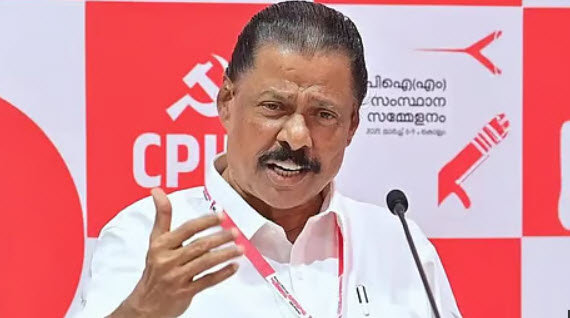
By P. Sreekumaran THIRUVANANTHAPURAM: A big salute to the CPI(M)’s lower-level leaders and the party cadres. For, it was their bold, open and trenchant criticism of the leadership which forced the party to go for a change for the better. The party’s central leadership, ably led by general secretary M. A. Baby, also deserves full […]
HANOVER, GERMANY – Media OutReach Newswire – 16 September 2026 – JAC Motors is making its second appearance at IAA Transportation At Hall 12, Stand C08. The line-up is headlined by the European premiere of the electric van SUNRAY PRO. JAC Motors’ commercial vehicle business is moving beyond vehicle supply to become a partner in Europe’s green logistics ecosystem—supporting the electrification of European commercial fleets and delivering low-carbon, intelligent solutions for urban logistics in Europe.
Press Conference: For Greener Cities, NOW!
On Press Day, 14 September, JAC Motors held a press conference at its booth under the theme “For Greener Cities, NOW!,” presenting four electrified models to the European market. Partners, fleet operators, and trade media from Germany, France, Spain, Italy, Poland, and other countries attended.
At the press conference, Oscar Yu, General Manager of JAC International, stated that Europe is a key market in the company’s global expansion. JAC commercial vehicles are already present in Germany, Spain, France, Norway, Denmark, Sweden, and Switzerland, with a target of full European coverage by 2028. Since IAA Transportation 2024, JAC has established one subsidiary in Europe and built a localised marketing and service system covering 13 countries, including 8 regional strategic partners, over 50 authorised sales outlets, and more than 100 after-sales service outlets. In Spain, JAC holds a 41% market share in the medium-duty electric truck segment, ranking first. (Source: Spanish Directorate-General for Traffic (DGT) registration data, Jan–Jun 2026.)
The solutions JAC offers European customers go beyond the vehicles themselves. JAC’s subsidiary in Italy serves as a regional parts centre, covering warehousing, service and technical support, customer operations, and marketing. On financing, JAC has partnered with Santander and others to offer finance leasing, operating leasing, PCP (Personal Contract Purchase)/TCM (Trade Cycle Management), and flexible instalment plans, covering needs from fleets to individual users. On complete vehicle solutions, JAC works with bodybuilder partners such as Infore Environment to cover refrigerated transport, municipal sanitation, rescue, and other specialist applications.
The press conference also showcased JAC’s progress in Europe: JAC Motors Italy is now operational, the German dealer network is taking shape, and the parts logistics system already covers all of Germany. As JAC’s European business gradually moves from building its footprint to day-to-day operations, the atmosphere of conversations at this year’s booth has changed noticeably compared with 2024. Conversations at the booth now go straight to operations: Is the range enough? How long does charging take? Can this vehicle save the fleet money?
Looking ahead, JAC will continue to advance product introduction and channel expansion, targeting full coverage of the European market by 2028, participating in Europe’s urban green logistics transition with a complete electrified product portfolio and localised service capabilities.
Hashtag: #JACMOTORS
The issuer is solely responsible for the content of this announcement.
Payward, the parent company of cryptocurrency exchange Kraken, is pursuing a route to offer US traders perpetual futures linked to Hyperliquid’s HYPE token, but publicly available regulatory and Kraken product information indicates the proposed expansion has not yet been confirmed as a live US offering. The move would broaden Payward’s regulated derivatives business and give eligible American customers exposure to one of the crypto market’s most actively […]







 https://www.brandhk.gov.hk/
 https://www.linkedin.com/company/brand-hong-kong/
 https://x.com/Brand_HK/
 https://www.facebook.com/brandhk.isd
 https://www.instagram.com/brandhongkong