China has unveiled an artificial intelligence-powered vehicle inspection system capable of scanning more than 1,000 functions within three hours, a move officials say could reshape quality control standards across the automotive sector and accelerate the country’s push towards smart manufacturing. Developed as part of a broader national drive to integrate advanced computing into industrial processes, the system combines machine vision, real-time diagnostics and automated performance testing to […]
BEIJING, CHINA – Media OutReach Newswire – 14 February 2026 – The People’s Daily has launched two seasons of the documentary My China Story, featuring 10 foreigners who have pursued their careers in China. Season one features tech entrepreneur Nikk Mitchell, US zoologist Kevin Messenger, US ceramist Matt Watterson and Argentinian motorcycle designer Rodrigo Álvarez. The newly released season two of the series puts the spotlight on Neil Schmid, a US expert on Buddhist studies and Dunhuang; US martial arts lover and Taoist Jake Pinnick; French spelunker Jean Bottazzi and Russian vlogger Anton Butov, all of whom have shared their distinctive life paths in China.
My China Story gives the world a window into foreign residents who have lived across different regions with a wide range of career choices. This documentary series has gained a significant number of overseas viewers on a variety of social media platforms, including Youtube, Tiktok and X. Among all the episodes, the viewers have shown the most interest in Pinnick, who was born in the 1990s in the US, and came to China following an obsession with Chinese martial arts and Taoism studies. This contrasting background has made viewers more eager to learn why and how he lived in China ‘s Wudang Mountains for over a decade.
2025 marked a remarkable year for Pinnick. In April, he received China’s Foreign Permanent Resident ID Card — the “Five-Star Card” — and in May, he was named an Honorary Citizen of Shiyan City at an inaugural ceremony. These honors stand as powerful testaments to his decade-and-a-half journey of cultural immersion.
Pinnick’s story began in 2010 when, inspired by kung fu movies, the then-20-year-old arrived at the foot of the Wudang Mountains with zero martial arts experience and no knowledge of the Chinese language. He carried only a dictionary and a handwritten note that read, “I want to go to the Wudang Mountains.” Emerging from the morning mist, he found his purpose the moment he saw a master leading disciples in practice.
The path from novice to master has been paved with rigorous discipline. Pinnick mastered Tai Chi and various weapon techniques. Beyond the physical movements, he delved into the spiritual heart of China, studying the Tao Te Ching and learned to play Taoist music. During his toughest moments of exhaustion and homesickness, it was his “kung fu family” that gave him the strength to persevere.
Over the past 16 years, Pinnick has not only transformed personally but also witnessed China’s rapid development. He vividly remembers that reaching Wudang once required a slow train to Yibin; today, the journey is defined by high-speed rail and an expanding airport now welcoming international travelers.
Today, Pinnick serves as a vital cultural bridge. Through social media and live performances, he shares the wisdom of Wudang with a global audience. “I originally came for martial arts,” Pinnick reflects, “but I stayed for the culture and history.” Guided by his master’s philosophy that “Kung fu knows no borders,” Pinnick continues to demonstrate that martial arts is not about conflict, but about inclusivity and connecting a diverse world.
The issuer is solely responsible for the content of this announcement.
Nvidia’s chief executive officer, Jensen Huang, will not attend the India AI Impact Summit scheduled to begin in New Delhi on February 16, the company confirmed over the weekend, citing “unforeseen circumstances” that prevent his planned trip. Nvidia said it remains committed to participating in the five-day event and will instead dispatch a senior leadership delegation to represent its interests at the summit, which is positioned as a global forum on artificial intelligence, semiconductors and technology policy.
Huang’s absence removes one of the most high-profile speakers from a programme that is expected to bring together global leaders, technology executives and policymakers. Nvidia has been at the centre of international attention this year as its graphics processing units and specialised chips have powered significant advances in AI model training and deployment worldwide. Despite his cancellation, the company’s executive vice-president Jay Puri is set to lead Nvidia’s delegation in New Delhi.
The India AI Impact Summit has been framed by its organisers as a strategic platform for discussions on AI’s impact on economies, governance, and society. With over 20 heads of government and multiple chief executives from major technology firms slated to take part, the absence of Nvidia’s CEO is unlikely to derail the summit’s broader agenda but does shift attention to the array of other leaders expected on stage. Summit organisers have emphasised that the event will focus on actionable frameworks for AI governance and international cooperation rather than immediate regulatory commitments.
India’s push to host the summit reflects the growing emphasis placed on its AI ecosystem, both domestically and internationally. The event at Bharat Mandapam is intended to spotlight innovation, human capital and collaborative initiatives that leverage artificial intelligence for economic and social development. Heads of state from Europe, Asia and Africa, as well as senior executives from leading technology companies, are planning to contribute to sessions addressing ethical AI, inclusive growth, and public-private partnerships.
Nvidia’s statement confirmed that Huang will not be able to travel to India at this time, but stopped short of elaborating on the specific reasons for the change in plans. The company’s leadership team reiterated its support for the summit’s objectives and expressed confidence in the delegation’s ability to engage constructively with participants across sectors. Nvidia’s central role in the global AI supply chain — particularly through its GPUs, which underpin much of the world’s AI compute infrastructure — has made its presence significant at forums shaping the future of the industry.
For many tech observers, Huang’s decision underscores the intense demands on executives at the helm of firms that are pivotal to AI’s evolution. As Nvidia continues to navigate a landscape marked by rapid technological change, supply chain pressures and geopolitical scrutiny, its leadership choices are closely watched by investors, partners and policymakers alike. The company has maintained that its strategic focus on AI remains undiminished, even as senior personnel adjust their engagement in global events.
The summit is expected to feature a range of high-level engagements, including discussions on AI’s implications for labour markets, national competitiveness, and regulatory cooperation among nations. Organisers have highlighted sessions aimed at bridging gaps between emerging markets and established technology hubs, while also addressing concerns about safety, privacy and equitable access. Participants will include chief executives from major AI and cloud-computing firms, senior government officials from participating countries, and representatives of international organisations.
Despite the absence of Nvidia’s CEO, interest in the India AI Impact Summit remains strong among industry stakeholders. Discussions are slated to explore how public-sector frameworks can align with the dynamic pace of innovation in the private sector, with particular emphasis on fostering trust and transparency in AI systems. The summit’s agenda also places emphasis on skills development, research collaboration, and the role of AI in addressing societal challenges such as healthcare, climate and education.
Executives attending the summit will face intense scrutiny from delegates keen to understand how technology firms plan to balance commercial imperatives with ethical responsibilities. As governments around the world refine their approaches to AI governance, the outcomes of deliberations at gatherings such as the India AI Impact Summit could inform future policy frameworks and cross-border cooperation on technology standards and norms.
Arabian Post Staff -Dubai Saudi Arabia has stepped up efforts to localise vaccine and pharmaceutical manufacturing, with Industry and Mineral Resources Minister Bandar Alkhorayef holding high-level talks in Lyon aimed at accelerating biopharmaceutical production within the Kingdom. During meetings with Thomas Triomphe, Executive Vice President and Head of Vaccines at Sanofi, the minister explored pathways for industrial collaboration that would anchor advanced vaccine manufacturing in Saudi Arabia. […]
By K Raveendran The unfolding political narrative around the Indo-US trade treaty has done more than spark debate on tariffs, market access and diplomatic alignment: it has reshaped the contours of India’s domestic political landscape, particularly by elevating Rahul Gandhi’s stature as the principal opposition leader. The Modi government has positioned the trade agreement as […]
For 12 days, the Spring Fair transformed VEC into a walkable map of 34 provinces, blending cuisine, culture and commerce inside Southeast Asia’s largest exhibition complex.
HANOI, VIETNAM – Media OutReach Newswire – 14 February 2026 – For nearly two weeks, the Spring Fair 2026 turned the Vietnam Exhibition Center into something few destinations manage to become: a condensed, high-definition portrait of an entire country.
As the fair drew to a close, what remains is not simply a tally of booths or sales figures, but the impression of a place that allowed visitors to move ‘through Vietnam’ at remarkable speed. Within a single afternoon, one could travel from the northern mountains to the Mekong Delta without leaving a 90-hectare venue on the outskirts of Hanoi.
Framed as “A Marketplace of 34 Provinces,” the event gathered regional economies, culinary traditions and cultural performances under one monumental roof. For many international visitors in Hanoi this spring, it became a defining stop on the city’s New Year cultural calendar.
A Country in One Afternoon
The scale was unapologetically large. More than 3,000 standard booths. Around 2,500 enterprises. Participation from 34 provinces and cities across Vietnam. Over 12 continuous days, the fair aimed for direct revenue of 1,000 billion VND and operated at a pace that rarely slowed.
Inside, the exhibition floor was organized into thematic zones such as “Vietnamese Cultural Essence” and “Vietnamese Agricultural Products – Connecting Spring”. The layout encouraged visitors to drift geographically. One moment, they stood in the northern region. Minutes later, they were tasting specialties from the south.
In the section representing Bắc Ninh, trays of bánh phu thê (sticky rice cake filled with mung bean paste, traditionally served at weddings) glowed under warm light. Nearby, vendors rolled out bánh cuốn Mao Điền (thin rice sheets wrapped around seasoned minced pork and wood ear mushrooms), the steam rising gently into the air. Nem chua (fermented pork sausage) was sliced into neat portions, while bundles of mì gạo chũ (sun-dried rice noodles from Bắc Giang) were arranged in pale, orderly stacks.
Further along, the scent shifted. At a booth from Sơn La, strips of thịt trâu gác bếp (smoked buffalo meat) were cut from darkened slabs and dipped into a dense sauce flecked with mắc khén (wild mountain pepper with a citrusy heat). The taste was smoky, slightly sweet and sharply spiced. At another stand, mắm tôm chua (fermented shrimp paste with chili and garlic) from Huế was wrapped with boiled pork belly and green banana slices, layered with fresh herbs to soften its tang.
In the southern cluster, bánh pía (flaky pastry filled with mung bean, salted egg yolk and durian) from Sóc Trăng were sliced while still warm, their layered crust collapsing delicately to reveal a rich interior. The aroma of durian lingered in the air, unmistakable and confident.
“I really liked how the space was designed according to each province’s characteristic… not only products, but also culture – music, people, traditional dress. It clearly shows very thoughtful experiential design,” said an American visitor during the event.
For business delegations, the appeal went beyond atmosphere.
“We came here to find Vietnamese partners for cashew nuts, cacao and coffee,” said Mandel V. Panizares, representative of Green Agricultural Products Trading in the Philippines. “Seeing the products directly and discussing at the booth; this ‘see and touch’ approach helps us evaluate quality and production capacity more clearly than just looking at profiles or images.”
Cultural performance threaded through the marketplace. Visitors found themselves mesmerized watching more than 50 performers in restored Nguyễn-era garments entered the main corridor for the “Hundred Flower Parade”. Gold embroidered nhật bình (formal imperial robes) shimmered beneath the hall’s lights. Ceremonial horses stepped carefully across polished floors as shoppers paused mid-conversation to watch.
“The parade is not just a performance, but a living cultural experience, where traditional Vietnamese attire, rituals, aesthetics and people exist together within the flow of daily life and commerce,” said Nguyen Thanh Nam, a member of the project team.
Across the 12 days, more than 40 cultural programs and hundreds of performances unfolded, including shows by the Vietnam Circus Federation and the Vietnam Puppet Theatre. Music, acrobatics and folk art existed in easy proximity to contract discussions and product demonstrations.
By the final weekend, it was clear that the Spring Fair had evolved into something more than an exhibition. It functioned as a temporary indoor festival city, layered with sound, flavor and movement.
The Platform Powering the Experience
The intensity of the experience was made possible by the Vietnam Exhibition Center itself.
Spanning 90 hectares, VEC is the largest exhibition complex in Southeast Asia and ranks among the top ten globally. At its core stands the Kim Quy Exhibition Hall, a 130,000 square meter column-free structure that provides uninterrupted interior space on a scale rarely seen in the region.
Built in just 10 months by Vingroup, Vietnam’s largest private conglomerate, and officially opened on August 19, 2025, the center welcomed 1.2 million visitors within its first three days of operation. Managing that volume required advanced crowd coordination, robust security systems and integrated logistics capable of operating at metropolitan scale.
The infrastructure extends well beyond the main hall. An 18-hectare parking area accommodates more than 10,000 vehicles. Nearly 1,200 electric vehicle charging ports form the largest EV charging station in Vietnam. Integrated storage zones, transport logistics and modern electronic payment systems allowed thousands of booths to operate simultaneously without visible strain.
VEC is also a member of the Bureau International des Expositions and serves as Vietnam’s official representative at global exhibition events, positioning it within the international exhibition circuit.
“We believe that, building upon this foundation, VEC will continue to thrive and evolve into a premier hub for major regional and international events. When operated at its full potential, VEC will emerge as a new symbol of a connected, prosperous, integrated, innovative, and sustainable Vietnam, thereby elevating our national standing in the country’s new era of ascent.”, said Mr. Tran Le Phuong, Chairman of the Board of Directors, Vietnam Exhibition Fair Center Joint Stock Company (VEFAC JSC).
During the Spring Fair, that capacity was visible in every operational detail. Corridors remained fluid at peak hours. Multiple stages operated without acoustic conflict. International delegations moved seamlessly between provincial booths.
“I highly appreciate the handicraft products of Hue and high-tech agricultural products of Thanh Hoa and Dong Thap,” said Ozasa Haruhiko, Chief Representative of JETRO Hanoi. “The diversity and quality here strengthen my confidence in Japan-Vietnam trade potential.”
As the 2026 edition concludes, the Spring Fair leaves behind more than transactions and photographs. It has demonstrated that Vietnam can stage large-scale exhibitions with cultural depth and operational precision inside world-class infrastructure.
Hashtag: #VEC #Vingroup
The issuer is solely responsible for the content of this announcement.
Arabian Post Staff -Dubai DP World has announced a sweeping leadership change at the helm of its global logistics empire, elevating His Excellency Essa Kazim to chairman of the board and naming Yuvraj Narayan as group chief executive officer, following the resignation of long-time executive Sultan Ahmed bin Sulayem. The appointments signal a strategic reset for the Dubai-based operator amid heightened scrutiny over its governance and reputation […]
OpenAI has launched GPT-5.3-Codex-Spark, an ultra-fast version of its coding artificial intelligence that runs on specialised hardware from Cerebras Systems, marking its first major production deployment outside of the long-dominant Nvidia-based infrastructure. The Codex-Spark release delivers more than 1,000 tokens per second in interactive coding workflows, designed to give developers near-instant responsiveness for editing and iterative tasks while maintaining competitive capabilities for real-world software development. The debut […]
Truth Social Funds, the investment arm linked to Trump Media & Technology Group, has filed registration statements with the U. S. Securities and Exchange Commission for two exchange-traded funds focused on major cryptocurrency assets. The proposed products, if approved, would give investors exposure to Bitcoin and Ether in one fund and to Cronos in a second fund that also seeks to generate yield through network staking rewards. […]
Blackstone’s private equity fund tailored for wealthy investors registered a hefty net 20 per cent return last year, propelled by strategic investments tied to artificial intelligence platforms and infrastructure, according to financial industry figures. The performance marks one of the strongest showings across alternative asset strategies targeting individual high-net-worth portfolios amid a broader industry push to deliver private markets access beyond institutional clients. The Blackstone Private Equity […]
Helping Retail Investors Build Decision-Making Discipline in Volatile Markets
HONG KONG SAR – Media OutReach Newswire – 14 February 2026 – CrazyLive, a platform dedicated to investor education and behavioral finance research, today announced that it will host a free public investment seminar on March 8, 2026 (Sunday) at Hotel ICON in Hong Kong.
Titled “Investor Behavior and Decision-Making Frameworks in High-Volatility Environments,” the seminar is designed for retail investors seeking to improve decision-making discipline amid rising market volatility. The event will explore common cognitive biases and behavioral traps that often lead to emotional investing, and introduce a systematic and repeatable decision-making framework to help participants strengthen consistency, structure, and execution in real-world market conditions.
Warren Wang, Founder of CrazyLive, stated:
“Over the years, I have observed that many retail investors do not underperform because they lack intelligence or information, but because they lack discipline and structure. Volatility is not an exception—it is the market’s normal state. The key is whether investors have a clear and executable framework to reduce emotional interference. This seminar is designed to share practical tools and structured thinking approaches grounded in behavioral finance.”
The seminar will feature three seasoned financial market professionals as keynote speakers:
• Cecilia Kwok — Market Sentiment Specialist at CrazyLive and senior financial news anchor, with over 10 years of hands-on investment and trading experience. • Angel Xu — Wharton School graduate (University of Pennsylvania); former Morgan Stanley (New York) analyst; currently a fund manager; CFA and FRM charterholder. • Jolin Zhu — With over 17 years of experience in financial market research and trading, she has participated in large-scale asset management projects and institutional investment operations. She is a specially appointed lecturer for the National Association of Financial Market Institutional Investors (NAFMII) and an editorial board member of the China Asset Management Industry Development Report. She is also a CFA and FRM charterholder.
Key seminar topics will include behavioral bias analysis, case studies of common decision-making errors, and practical decision-support tools such as a streamlined decision checklist and a cash flow stress-testing framework. The discussion will also incorporate insights from recent market developments and volatility cycles.
CrazyLive emphasized that the seminar will focus strictly on academic framework sharing, market phenomenon analysis, and practical experience exchange. The event will not involve the promotion of any financial products, nor will it provide any return guarantees or investment advice.
Event Details
Date: March 8, 2026 (Sunday) Time: 2:00 PM – 6:00 PM Venue: Function Room 1–3, Hotel ICON, 17 Science Museum Road, Tsim Sha Tsui East, Kowloon, Hong Kong Admission: Free of charge Registration Link:https://crazylivehk.netlify.app/
Hashtag: #CrazyLive
The issuer is solely responsible for the content of this announcement.
About CrazyLive
CrazyLive is a platform dedicated to investor education and behavioral finance research. Founded by Warren Wang, CrazyLive provides global Chinese retail and institutional investors with structured knowledge frameworks and decision-support tools.
Guided by its core philosophy, “Clarity in a Complex World,” CrazyLive aims to help investors build systematic decision-making frameworks that are understandable, executable, and sustainable, enabling them to navigate complex and rapidly evolving financial markets.
Bitcoin surged past 69,000 dollars on major exchanges on Tuesday, regaining a price level that has carried both symbolic and technical weight since the previous market cycle. The move marks a rebound from a bout of volatility that had pulled the world’s largest cryptocurrency below key support zones earlier this quarter, drawing renewed attention from institutional investors and retail traders alike. Data from leading trading platforms […]
First-Ever Attack-Defence Simulation Aligns with Real Corporate Needs Setting a New Benchmark for Local Cybersecurity Competitions
HONG KONG SAR – Media OutReach Newswire – 13 February 2026 – As cyberattacks grow increasingly complex, cybersecurity has become a critical domain of global concern and a talent shortage. According to the latest “Hong Kong Cybersecurity Outlook 2026” released by the Hong Kong Computer Emergency Response Team Coordination Centre (HKCERT) under the Hong Kong Productivity Council (HKPC), nearly 30% of the 622 surveyed enterprises still lack dedicated cybersecurity staff. Specifically, only 26% of SMEs have a dedicated cybersecurity role, significantly lower than the 59% of large enterprises, reflecting a gap in resource allocation and technology adoption among SMEs.
Now in its sixth year, “HKCERT Capture The Flag Challenge” continues to attract top cybersecurity talents from Hong Kong and beyond, showcasing the capability and vitality of the next generation of local and international cybersecurity professionals.
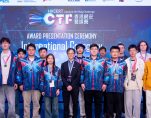
To cultivate practical talent for the cybersecurity sector, the sixth “HKCERT Capture The Flag Challenge 2025” (HKCERT CTF Challenge) was successfully organised by the Digital Policy Office (DPO), HKPC, and HKCERT. This year’s competition was elevated to the first-ever adoption of an attack–defence mode, closely replicating the network setup of real enterprises. Participants experienced first-hand hacking techniques, system vulnerability analysis, threat intelligence gathering, and coordinated response in a simulated real-world environment. Through completing multiple tasks within a limited time, the competition also allowed them to break through the traditional classroom theoretical framework, gain practical experience and build confidence. The event attracted around 1,940 young contestants, an increase of nearly 40% from last year’s 1,385 participants, reaching a record high for the competition. Contestants included teams from Hong Kong, Chinese Mainland, Asia, and Europe, fostering cross-regional exchange and collaboration. In the finals, three local teams and one overseas team were awarded gold prizes in the Secondary School, Tertiary Institution, Open Category, and International Category respectively, while Sing Yin Secondary School received the “Best School Award”. The full list of awardees is available on the event website.
Participants Share Practical Experience Integrating AI into Attack and Defence The competition was well received by contestants for its innovative format and realistic offensive and defensive environment, offering a valuable platform for learning and exchange. The winning team in the International Category, W&M, commented, “Our members are from Shanxi, Guangdong and Beijing. This was our first time competing together in the HKCERT CTF Challenge. The atmosphere and experience of the finals were excellent. The tasks were centred on an attack‑defence simulation, requiring us to find all vulnerabilities while patching our own systems and attacking other teams at the same time. Some vulnerabilities were discovered and exploited by other teams first, which kept the scores very close and made the competition incredibly tense and exciting”.
They added, “During the competition, we also applied lots of AI techniques for assistance, such as applying AI to analyse vulnerabilities and refine attack methods. In the future, AI may play a deeper role in areas like vulnerability detection and code analysis, but for now it cannot be fully relied upon—human oversight is still essential”.
HKCERT CTF Challenge has now been held for six consecutive years, with its scale expanding annually and participants showing continuous growth. Many secondary school students gain their first hands‑on exposure to cybersecurity through the competition and connect with university mentors, helping them shape their academic and career paths. Several past participants have gone on to compete in local and international events, committing to a future in the cybersecurity field. Beyond attracting overseas talent to exchange ideas in Hong Kong, HKCERT continues to build connections between cybersecurity professionals in Hong Kong and Chinese Mainland. Top‑performing teams can gain direct entry into equivalent finals in Chinese Mainland. For example, participants from the previous HKCERT CTF Challenge 2024 advanced directly to the finals of the “Greater Bay Area Cup Cybersecurity Challenge”, where they secured the top four places in the Hong Kong and Macao category. This also provided local contestants with access to world‑class cybersecurity techniques, effectively promoting cross‑regional elite collaboration and talent development.
Finals Format Upgraded: Attack-Defence Mode Mirrors Real Enterprise Operations The finals were comprehensively upgraded this year. In addition to increase the overall technical difficulty, the competition introduced an attack‑defence format for the first time that closely mirrors real enterprise cybersecurity operations. Teams played dual roles—both attackers and defenders—in an environment created with reference to the real-world systems. The tasks simulated incident response and live attack-defence scenarios commonly encountered in the cybersecurity field. Within a limited timeframe, participants had to do penetration testing, exploit vulnerabilities and attack, while patching their own systems and monitoring threats in real time against attacks from other teams. This parallel attack‑defence setup reflects actual workflow patterns in the industry, effectively training participants’ analytical abilities and adaptability under pressure. Through hands‑on practice in a likely enterprise environment, contestants developed multifaceted, industry‑aligned capabilities—laying a solid foundation for their future careers in cybersecurity.
Ms Candy CHAN, Assistant Commissioner (Project Governance and Cybersecurity) of the DPO, highlighted the DPO’s commitment to enhancing Hong Kong’s cyber resilience, with one of its key initiatives being the nurturing of the next generation of cybersecurity professionals. She emphasised that the DPO has been collaborating closely with academia and industry partners to foster a robust talent pipeline and build a safer digital environment in Hong Kong. She noted that this year marks the sixth edition of the HKCERT CTF Challenge, which has grown into one of Hong Kong’s most respected and anticipated cybersecurity competitions over the years. Beyond being a contest of technical prowess, the Challenge serves as a dynamic platform for networking, knowledge exchange and community building among the new generation of cybersecurity experts.
Ir Samson SUEN, General Manager of Digital Trust and Transformation Division of HKPC, stated, “HKCERT CTF Challenge has consistently aimed to build an international platform for technical exchange. Through high-intensity simulated contests, we enhance participants’ cyber defence skills and promote cross-regional interaction among emerging cybersecurity talents. This cultivates a new generation of globally competitive professionals in Hong Kong and strengthens the local talent pipeline. This year’s finals first introduced a simulation of real-world cybersecurity operations, enabling teams to experience both offensive and defensive roles in a recent cybersecurity team. This hands-on approach is crucial for developing practical skills and incident response capabilities”.
Fostering Cybersecurity Awareness Across All Sectors of Society To further enhance cybersecurity awareness across the community, HKCERT has partnered with the DPO and the Cyber Security and Technology Crime Bureau of The Hong Kong Police Force, to launch the “Building a Secure Cyberspace 2026” campaign to promote cybersecurity awareness. The initiative includes various educational activities, such as an “AI-Generated Four-Panel Comic”contest, which encourages the public to make good use of AI tools while strengthening their understanding of cybersecurity. At the corporate governance level, HKCERT will publish a series of practical guidelines addressing emerging risks —such as AI applications and supply chain security—highlighted in the “Hong Kong Cybersecurity Outlook 2026”, to support business in establishing a robust protection framework. In particular for AI governance, the guidelines will offer actionable recommendations covering AI system security assessments, compliance rules for employees using public AI platforms, controls over sensitive data input, and methods for monitoring and defending against AI‑assisted attacks. These resources aim to help enterprises systematically enhance their cyber resilience across governance, technology, and awareness.
As Hong Kong accelerates the development of innovation and technology and advances its digital economy, strengthening cyber defence capabilities has become a key talent need. HKCERT will continue to support businesses and the public through incident response, security guidance, and cybersecurity awareness programmes. The HKCERT CTF Challenge continues to play a vital role in nurturing local talent, fostering cross-regional collaboration, and advancing public education. By enhancing the overall level of protection, the competition contributes to the sustainable development of the digital economy and reinforces Hong Kong’s long‑term competitiveness.
The seventh edition of HKCERT CTF Challenge will be held in November 2026, featuring more innovative attack-defence challenges and continuing to set up an international category to provide local contestants with a platform for technical exchange with top teams from Hong Kong, Chinese Mainland, and overseas. Registration opens in September 2026, with finalists competing in the live finals in February 2027.
Hashtag: #HKCERT
The issuer is solely responsible for the content of this announcement.
About Hong Kong Productivity Council
The Hong Kong Productivity Council (HKPC) is a statutory body established in 1967, dedicated to enhancing the productivity and competitiveness of Hong Kong enterprises through world-class applied R&D, innovative technology services, and integrated manufacturing solutions. As a market-oriented, international R&D organisation, HKPC leverages its deep expertise and extensive industry experience in key areas such as AI, advanced manufacturing, life and health technology, green technology and new energy to drive new industrialisation and support the growth of emerging and future industries.
HKPC focuses on addressing businesses challenges and industrial technology needs, promoting the full integration between technological and industrial innovation. Through technology transfer, product innovation, intellectual property protection and commercialisation of R&D outcomes, the Council fosters collaboration with the local business community as well as top global R&D institutions, delivering added value to industries and advancing the development of new productive forces. HKPC’s world-class R&D achievements have been widely recognised over the years, winning an array of local and overseas accolades, reinforcing Hong Kong’s role as an international innovation and technology centre and a smart city.
To help enterprises capitalise on Hong Kong’s strengths in international connectivity to expand into global markets, HKPC offers comprehensive overseas expansion services tailored to critical areas including product development, technology, manufacturing, and management, enabling businesses to successfully go global from Hong Kong.
HKPC is also committed to providing timely and practical support to SMEs and startups with timely and practical , assisting them in accessing Government funding programmes. Through its FutureSkills training initiatives, HKPC helps both industry and academia stay ahead in latest digital and STEM technologies, nurturing a future-ready talent pool for Hong Kong.
For more information, please visit HKPC’s website: www.hkpc.org/en.
New Delhi has approved a proposal worth about $39 billion to expand the country’s fleet of Rafale fighter aircraft, marking one of the largest defence procurement decisions in its history and signalling a further shift towards advanced Western platforms in its combat air strategy.
The clearance by the defence ministry paves the way for negotiations with France’s Dassault Aviation for additional Rafale jets, building on an earlier $8.7 billion contract for 36 aircraft for the Air Force, deliveries of which were completed in 2024. A separate agreement has also been signed for 26 Rafale-M naval variants intended for deployment aboard aircraft carriers, underscoring a broader push to strengthen maritime air power.
New Delhi pushes major Rafale fleet expansion as it seeks to address concerns over squadron strength and ageing aircraft. The Air Force’s sanctioned strength stands at 42 squadrons, yet operational numbers have hovered well below that benchmark for years, raising debate within strategic circles over preparedness along contested borders with China and Pakistan.
Officials familiar with the procurement process say the new proposal reflects both operational requirements and long-term modernisation goals. India’s fleet still includes a significant number of Soviet-era MiG-21s and other legacy platforms, many of which are due for phased retirement. The Rafale, a 4.5-generation multirole fighter equipped with advanced avionics, electronic warfare systems and long-range precision weapons, has been positioned as a key element in bridging capability gaps.
The initial induction of 36 Rafales was widely viewed as a stopgap measure after the earlier Medium Multi-Role Combat Aircraft tender was scrapped amid cost and contractual disputes. Since their deployment at Ambala and Hasimara air bases, the aircraft have been integrated with India-specific enhancements, including advanced radar and electronic countermeasures. Defence planners argue that expanding the Rafale fleet would provide logistical and training efficiencies compared with diversifying further across multiple foreign platforms.
The naval variant, Rafale-M, has been selected to operate from the INS Vikrant, the country’s first domestically built aircraft carrier, and potentially from INS Vikramaditya. Naval aviation officials have indicated that the twin-engine aircraft meets requirements for carrier-based operations, including ski-jump take-offs and arrested landings, following evaluation trials against competitors such as Boeing’s F/A-18 Super Hornet.
Strategic analysts view the combined air force and naval acquisitions as part of a wider recalibration of procurement policy. Over the past decade, New Delhi has sought to balance self-reliance initiatives with the need for timely capability upgrades. Programmes under the “Atmanirbhar Bharat” framework aim to boost domestic manufacturing, yet complex fighter development remains a long-term endeavour. The Light Combat Aircraft Tejas, produced by Hindustan Aeronautics Limited, has entered service and secured additional orders, but it is not seen as a direct substitute for heavier multirole platforms like the Rafale.
Financial implications are significant. A $39 billion outlay would rank among the largest defence capital expenditures, at a time when the government is managing competing demands from infrastructure, welfare and economic stimulus. Officials have indicated that staggered payments and potential technology transfers could form part of negotiations, with an emphasis on local industry participation.
Previous Rafale contracts were accompanied by offset obligations requiring Dassault and its partners to invest in the domestic aerospace ecosystem. Whether similar provisions will apply to the expanded deal remains a subject of scrutiny, particularly as policymakers seek to deepen supply-chain integration and reduce long-term import dependence.
Diplomatically, the move reinforces defence ties with France, which has emerged as a key security partner in the Indo-Pacific. Bilateral cooperation spans joint exercises, maritime surveillance and submarine technology. Paris has consistently supported India’s strategic autonomy, a factor often cited by policymakers as attractive compared with other major arms suppliers.
Political debate is likely to accompany the procurement, as the earlier Rafale deal became a focal point of parliamentary contestation over pricing and process transparency. Government representatives have maintained that all procedures were followed in accordance with defence acquisition rules, and that operational urgency justified the intergovernmental route adopted at the time.
Air power specialists argue that a larger Rafale fleet would enhance interoperability and deterrence. The aircraft’s ability to carry Meteor beyond-visual-range missiles and SCALP cruise missiles has been highlighted as a force multiplier. Integration with indigenous weapons and network-centric warfare systems is also under way, reflecting a hybrid approach that blends imported hardware with domestic innovation.
Beyond immediate operational considerations, the proposal signals continuity in defence planning that spans successive administrations. India remains among the world’s largest arms importers, yet officials have reiterated ambitions to transition towards greater domestic production capacity over the coming decade. Achieving that balance, while sustaining readiness across land, sea and air domains, presents both fiscal and industrial challenges.
Arabian Post Staff -Dubai Asus has introduced its latest dual-display laptop in the United Arab Emirates, positioning the Zenbook Duo UX8407AA as a flagship productivity device built around Intel’s Core Ultra platform and a redesigned twin-screen form factor. The launch marks a renewed push by the Taiwan-headquartered manufacturer to popularise multi-screen computing beyond niche creative users. The Zenbook Duo features two 14-inch 3K OLED panels branded as […]
A new standard of tropical luxury with panoramic golf, mountain and Andaman Sea views.
PHUKET, THAILAND – Media OutReach Newswire – 13 February 2026 – Banyan Group Residences, Thailand’s leading lifestyle property developer, proudly unveils Angsana Golf Residences Topaz, an exceptional new branded residential development within the iconic Laguna Phuket integrated resort. Designed to reflect the clarity, elegance and rarity of the topaz gemstone, these branded residences combine contemporary design with Phuket’s cultural heritage to deliver an elevated tropical lifestyle.
Comprising three elegantly curved low-rise buildings, each divided into two interconnected blocks, the architecture harmonises with the surrounding landscape. Tropical muted tones and Sino-Portuguese design accents subtly reference Phuket’s heritage, creating a balance of timeless elegance and modern sophistication.
The development offers spacious two- and three-bedroom residences, including exclusive penthouses with private rooftop pools and alfresco dining areas, as well as ground-floor residences with garden access. Inspired by Phuket’s natural contours, the building’s curved façades create a harmonious flow, while expansive terraces connect indoor and outdoor living spaces.
Communal facilities include a signature rooftop ring-shaped pool with panoramic 360-degree views of the golf course, mountains and ocean, alongside a peaceful ground-floor BBQ area set within lush tropical gardens – ideal for relaxation and social gatherings.
Bang Tao Beach: Phuket’s Most Prestigious Address
Located minutes from Bang Tao Beach, at the heart of one of Phuket’s most sought-after coastal destinations, Angsana Golf Residences Topaz offers residents a vibrant community environment, exceptional lifestyle amenities and strong long-term investment appeal.
Spanning over 1,000 acres of parkland, lagoons and 5km of beachfront, Laguna Phuket provides access to the award-winning Laguna Golf Phuket 18-hole course, luxury spas, fine dining establishments, the exclusive new RAVA Beach Club and curated year-round events. A seamless transportation network of shuttle buses and boats ensures convenient connectivity throughout the community.
Exclusive Ownership Benefits
Owners receive complimentary membership to Laguna Golf Phuket and The Sanctuary Club, Banyan Group’s signature programme offering benefits at over 100 luxury properties worldwide, including dining and spa privileges.
Through the Laguna Advantage programme, owners enjoy complimentary first-year property management, free insurance and priority access to leading international schools, as well as healthcare benefits through BDMS Chivawattana membership. Flexible deferred payment plans further enhance this investment opportunity.
Banyan Living: A Rental Management Solution
For owners seeking rental income, Banyan Living provides a comprehensive rental management solution, ensuring professional upkeep alongside strong returns and a worry-free ownership experience.
A Lifestyle of Tropical Elegance
With inspired design, a prime location and resort lifestyle, Angsana Golf Residences Topaz sets a new benchmark for tropical luxury living in Phuket — whether as a primary residence, holiday home or investment property.
Hashtag: #BanyanGroup
The issuer is solely responsible for the content of this announcement.
China’s Z. ai has propelled its artificial intelligence ambitions into the global spotlight with the launch of GLM-5, a 744-billion-parameter open-source large language model that stands toe-to-toe with leading Western counterparts and underscores Beijing’s drive for technological self-sufficiency. Released on 11 February by the company formerly known as Zhipu AI, GLM-5 combines advanced architecture with broad hardware compatibility and permissive licensing, signalling a shift in the global AI landscape.
The GLM-5 model, built on a mixture-of-experts framework and trained on an expanded dataset of roughly 28.5 trillion tokens, is designed for multifaceted tasks including coding, reasoning and agentic operations. Z. ai reports that the model’s performance on internal benchmarks approaches that of leading proprietary systems such as Anthropic’s Claude Opus 4.5, and on certain tests it outperforms Google’s Gemini 3 Pro. Its permissive MIT licence allows unrestricted commercial use and adaptation, making GLM-5 one of the most accessible frontier AI models available to developers and enterprises worldwide.
A standout feature of GLM-5 is its independence from American semiconductor technology. Trained and deployable on domestic Chinese chips from manufacturers like Huawei Ascend, Moore Threads, Cambricon and Kunlunxin, the model sidesteps reliance on high-end Nvidia GPUs that are constrained under US export controls. Z. ai’s use of the MindSpore AI framework further embeds the model within a Chinese software ecosystem, emphasising self-reliant technological development. This strategy exemplifies a broader push within China’s AI sector to mitigate the impact of external trade restrictions and build robust, locally supported infrastructures.
Market reception underscored the impact of GLM-5’s launch: Z. ai’s shares surged nearly 29 per cent on the Hong Kong Stock Exchange following the announcement, reflecting investor optimism about the company’s competitiveness and growth prospects. Industry analysts note that GLM-5’s arrival comes amid an acceleration of model releases and chip optimisation efforts by several Chinese AI firms, signalling more intense competition on both domestic and international fronts.
Benchmarks published by Z. ai highlight GLM-5’s strengths and limitations. On software engineering evaluations, the model achieved a score of 77.8 per cent on the widely referenced SWE-bench Verified suite, trailing slightly behind Claude Opus 4.5’s 80.9 per cent but outperforming other notable systems in agentic and multitask contexts. The architecture’s efficient handling of long-context sequences—up to 200 000 tokens—positions GLM-5 for applications requiring extensive reasoning over lengthy inputs.
GLM-5’s low cost of deployment also enhances its appeal. Analyses of pricing data suggest inference can cost around US $1 per million tokens, a fraction of the fees charged by some proprietary APIs, potentially lowering barriers for startups and research teams seeking cutting-edge language modelling without prohibitive expenditure. The MIT licence further expands this accessibility by granting broad rights to adapt and deploy the underlying model weights in commercial and research settings.
Despite its technical achievements and open licensing, experts caution against over-interpretation of benchmark results as definitive proof of superiority. Performance under controlled test conditions does not always translate to uniformly strong real-world applications, particularly in generative and reasoning tasks where robustness and safety remain critical hurdles. Some observers also warn that differences between self-reported evaluations and independent assessments could emerge as the model is adopted more widely.
GLM-5’s emergence reflects broader trends within China’s AI ecosystem, where domestic firms and chipmakers are increasingly synchronised in advancing cutting-edge technologies. Industry developments suggest that model and hardware optimisation efforts are happening in near tandem, with architecture adaptations and inference support enabling faster incorporation of new Chinese semiconductor products. These developments sit against a backdrop of regulatory frameworks that increasingly emphasise the alignment of AI systems with government objectives, including content governance and cybersecurity considerations.
Nexon Co., Ltd. reported revenue of $3.1 billion for 2025, a 6.5 per cent increase on the previous year, marking its third consecutive year of record-breaking sales as strong performance from key titles, including the much-anticipated Arc Raiders, bolstered earnings. The Tokyo-listed gaming group said operating income also rose year on year, supported by sustained engagement across its core franchises and improved monetisation in overseas markets. Management […]
Russia has moved to block WhatsApp across its territory, citing alleged breaches of domestic legislation, in a decision that signals a sharper turn towards state-aligned digital platforms and tighter control over online communications. Telecoms watchdog Roskomnadzor said access to the Meta-owned messaging service had been restricted following what officials described as repeated failures to comply with data localisation and content moderation rules. The regulator argued that foreign […]
Arabian Post Staff -Dubai Capital is moving with greater intensity between Gulf and Asian debt markets as issuers and investors seek stability and yield in a volatile global environment. Bankers and asset managers say order books for Middle Eastern sovereign and corporate bonds are showing a rising share of allocations to Asia-based funds, while Gulf investors are increasing exposure to Asian credit, particularly China. The shift reflects […]
Arabian Post Staff -Dubai United Arab Emirates authorities have formalised agreements to begin the fourth phase of a sweeping national airspace restructuring programme, a move designed to strengthen capacity, improve safety and support projected growth in passenger and cargo traffic across the federation’s airports. The General Civil Aviation Authority confirmed that the latest phase will refine route structures, optimise sectorisation and deploy advanced air traffic management technologies […]
Coinbase Global’s trading platform is facing widespread disruptions that are preventing a substantial number of users from buying, selling or transferring cryptocurrencies, according to user reports and platform status indicators monitored by independent watchdog sites and the company’s own system dashboard. The outage comes as digital asset markets remain volatile, putting pressure on one of the world’s largest cryptocurrency exchanges to maintain reliable service for retail and […]
Russia has launched a Proton-M carrier rocket carrying a meteorological satellite into orbit, marking a further step in Moscow’s efforts to sustain and upgrade its space-based weather monitoring network amid sweeping international sanctions and technical challenges. The heavy-lift rocket blasted off from the Baikonur Cosmodrome in Kazakhstan, operated by Russia under a long-term lease, placing the satellite into a designated orbit after a multi-stage ascent. Roscosmos, the […]
Security analysts have uncovered a network of 287 Google Chrome browser extensions that siphon off users’ browsing data and send it to external servers, collectively installed on roughly 37.4 million devices worldwide. The discovery has alarmed privacy advocates and highlights ongoing weaknesses in browser extension marketplaces that allow ostensibly benign add-ons to conduct intrusive data collection without clear disclosure. This emergent threat comes amid broader scrutiny of […]






 By K Raveendran The unfolding political narrative around the Indo-US trade treaty has done more than spark debate on tariffs, market access and diplomatic alignment: it has reshaped the contours of India’s domestic political landscape, particularly by elevating Rahul Gandhi’s stature as the principal opposition leader. The Modi government has positioned the trade agreement as […]






 www.hkpc.org/en