Arabian Post Staff -Dubai Dubai has moved to protect its standing as a fast-rising hedge fund centre by giving financial firms more room to handle disruption linked to the Iran war, as market volatility, staffing strains and geopolitical risk test one of the emirate’s most carefully cultivated growth stories. The Dubai Financial Services Authority said on 9 April it would offer temporary, proportionate relief across licensing, governance, […]
United Arab Emirates has won a seat on the World Food Programme’s Executive Board for the 2026–2028 term, giving it a direct role in shaping policy at the UN’s main food assistance agency as conflict, supply disruption and funding pressure deepen the global hunger crisis. The appointment places the country inside the WFP’s top governing structure at a moment when aid agencies are being forced to balance […]
Greenlogue/AP The UAE Ministry of Investment has signed a memorandum of understanding with China’s Jereh Group to develop an integrated clean energy and industrial platform in the Emirates, in a move that aligns industrial expansion with lower-carbon power and deeper commercial ties between Abu Dhabi and Beijing. The agreement was signed by Mohammad Abdulrahman Alhawi, Undersecretary at the Ministry of Investment, and Li Weibin, Executive President of […]
Singapore has rejected a pair of United States trade investigations that question its manufacturing profile and its enforcement against goods linked to forced labour, arguing that Washington’s claims do not fit the data and risk distorting a long-established commercial relationship between the two economies. The pushback, filed with the Office of the United States Trade Representative, has now been reinforced by Singapore’s business community, which says the city-state’s export performance is tied to demand, capital intensity and supply-chain positioning rather than state-backed excess capacity or weak labour controls.
The dispute sits inside a broader U. S. tariff reset. In March, the USTR opened Section 301 investigations into structural excess capacity in manufacturing across 16 economies, including Singapore, and launched another set of probes into whether about 60 economies have failed to prohibit or effectively enforce bans on imports made with forced labour. Reuters reported that the Trump administration moved down this route after a Supreme Court ruling in February struck at the legal basis of a large part of its earlier tariff framework, prompting Washington to search for narrower but still forceful trade instruments. USTR said comments were due by April 15, with hearings on forced labour beginning on April 28 and on overcapacity from May 5.
Singapore’s central argument is that the U. S. portrayal of the bilateral trade balance is flawed. In its submission, the Ministry of Trade and Industry said the United States has run a consistent overall trade surplus with Singapore for more than two decades. Data cited by Singapore from U. S. agencies show America posted a goods trade surplus of US$1.9 billion and a services trade surplus of US$25.1 billion with Singapore in 2024, with those surpluses rising in 2025 to US$3.6 billion and US$29.6 billion respectively. Singapore also said the U. S. recorded sectoral surpluses in semiconductors and electrical equipment as well as petrochemicals, undercutting the suggestion that exports from Singapore into the American market are being fuelled by a broad pattern of manufacturing distortion.
That matters because Washington’s overcapacity inquiry is built around the idea that some trading partners maintain large or persistent surpluses, idle production or both, allowing them to push artificially cheap goods into world markets. Singapore’s reply does not deny that the U. S. is entitled to examine trade imbalances, but it says its own industrial base does not fit that template. Officials pointed to manufacturing-space occupancy holding around 90 per cent over the past five years, which they said is consistent with advanced-economy norms and inconsistent with the claim of large underused capacity. Singapore further argued that, given land scarcity, it would run against policy and economic logic for industrial land to be left substantially idle.
On the labour side, Singapore’s response is equally direct. The government said it does not condone forced labour in supply chains and has legal and enforcement mechanisms to address such practices. Channel NewsAsia reported that Singapore told U. S. investigators it has a comprehensive domestic framework against forced labour and against the importation of goods produced through it. That is an important distinction, because the U. S. probe is not confined to labour abuses inside a country’s own factories; it is also examining whether governments adequately prevent tainted goods from entering their markets and then moving through global trade channels.
The business implications extend beyond Singapore. The U. S. investigations cover major manufacturing and export economies across Asia and Europe, and any eventual remedies could include new duties or other restrictions before temporary tariffs expire in July, according to Reuters and trade-law analyses tracking the dockets. For companies, that raises the prospect of higher compliance costs, closer supply-chain screening and a wider blending of trade policy with labour-rights enforcement. Singapore’s case is being watched because it is a high-value manufacturing and logistics hub with deep exposure to electronics, pharmaceuticals, petrochemicals and re-export trade, sectors where even modest tariff changes can alter sourcing decisions.
Politically, the row is awkward for both sides. Singapore is not only a long-standing U. S. economic partner; its free-trade agreement with Washington remains America’s only such pact with a South-east Asian trading partner. Singapore has said bilateral trade and investment support around 350,000 jobs in the United States, while its direct investment stock there reached US$71.7 billion in 2025. That does not shield it from a more aggressive U. S. trade climate, but it does give Singapore a stronger basis than many others to argue that the relationship is balanced, rules-based and mutually beneficial.
Global growth prospects have darkened after the International Monetary Fund cut its forecasts and warned that the war involving the United States, Israel and Iran has delivered a fresh energy shock just as many economies were regaining stability. The Fund’s latest assessment points to weaker output, firmer inflation and mounting fiscal pressure as oil flows through the Gulf remain disrupted and governments weigh how to shield households […]
China’s economy expanded faster than expected in the first quarter, giving Beijing a firmer platform as it confronts the fallout from the war involving Iran, but the details beneath the headline number pointed to a recovery still leaning heavily on industry and exports while households remain cautious. Official data released on Thursday showed gross domestic product grew 5.0% from a year earlier in January to March, above the 4.8% forecast in a Reuters poll and up from 4.5% in the final quarter of 2025. Quarterly growth came in at 1.3%, slightly ahead of the previous quarter.
The stronger reading suggested that the first shockwaves from the conflict in the Middle East have not yet knocked China off course. Markets took the figures as a sign of resilience. Mainland share indices rose after the release and the yuan held near its strongest levels in three years, reflecting confidence that the world’s second-largest economy has, for now, absorbed higher energy risks better than some had feared.
Yet the composition of growth was less reassuring. March industrial output rose 5.7% from a year earlier, beating expectations, but retail sales slowed to 1.7%, well below forecasts and down from 2.8% in the first two months of the year. Fixed-asset investment in the first quarter rose 1.7%, also missing expectations, while property investment fell 11.2%. Those figures reinforced a pattern that has defined China’s economy for months: factories, infrastructure and technology manufacturing are carrying more of the load than domestic consumption or housing.
That imbalance matters because Beijing has repeatedly signalled that stronger household demand is essential to putting growth on a steadier footing. Economists cited in the reporting on Thursday said the first-quarter strength was driven largely by momentum built in January and February, especially through exports and industrial activity, while March showed signs of softer conditions. The slowdown in shop spending is particularly sensitive because consumer confidence has remained fragile even as policymakers talk up support for incomes, jobs and services-led demand.
The war has complicated that task without yet derailing it. Since hostilities erupted on 28 February, China has faced a familiar vulnerability: it is the world’s largest energy importer and still relies on stable global shipping and manageable oil prices to protect factory margins and household purchasing power. Reuters reported that economists believe China has so far weathered the shock because of large oil reserves, a diversified energy mix and price controls, but they also warned that persistently higher oil costs are beginning to filter through supply chains and squeeze profits.
Evidence of that pressure is already visible. Reuters noted this week that factory-gate prices in March rose for the first time in more than three years, a signal that energy-driven cost increases are feeding into production. Export growth, which had been one of the brighter spots, also lost momentum in March after a very strong start to the year, raising the possibility that manufacturers will find it harder to sustain their pace if shipping costs stay elevated and overseas demand weakens.
Beijing’s response is likely to stay measured unless the conflict worsens. Policymakers have already set a budget deficit of about 4% of GDP for 2026 and planned heavy bond issuance to support activity. Analysts polled by Reuters expect the central bank to keep the one-year loan prime rate steady through the year, with only a modest cut to reserve requirements anticipated later on. A stronger first quarter gives officials more room to avoid large-scale stimulus at this month’s Politburo meeting, though that calculus could change if oil prices climb further or exports weaken more sharply.
The broader international backdrop is not especially forgiving. The IMF said in its April World Economic Outlook material that the Middle East conflict is lowering growth expectations for advanced economies in 2026, even if the aggregate effect is described as modest. For China, that matters less through direct battlefield exposure than through energy costs, shipping uncertainty and the health of major overseas markets. A prolonged conflict would test the durability of China’s export-led strength at the same time as its consumer recovery remains incomplete.
Alibaba Group Holding has unveiled a new artificial intelligence model aimed at building 3D environments and interactive video, widening its challenge to Tencent in one of the most commercially sensitive corners of China’s technology market: games, cloud services and creator tools. The model, called Happy Oyster, was introduced on Thursday as a “world model”, a system designed to generate explorable digital scenes rather than only short clips, […]
Bitcoin’s market backdrop has strengthened sharply, with a closely watched Bull Score Index climbing to its highest reading since October 2025 after several previously weak on-chain signals improved over roughly three days, according to market analytics platforms tracking network activity and investor behaviour. The shift has added momentum to a rebound that has pushed Bitcoin back towards the mid-$70,000 range, even as analysts warn that the move […]
Malaysia is positioning itself as a discreet diplomatic channel between Gulf capitals and Tehran, with Prime Minister Anwar Ibrahim saying leaders from the Arab world have asked Kuala Lumpur to convey their concerns to Iran’s leadership as governments search for ways to contain the Middle East conflict. Anwar made the remarks in Putrajaya on 16 April during a joint appearance with Australian Prime Minister Anthony Albanese, adding a new dimension to Malaysia’s response after it had already secured passage for its vessels through the Strait of Hormuz through direct engagement with Tehran.
The comments suggest Malaysia sees room to act beyond its traditional Southeast Asian brief at a moment when the war-linked shock in the Gulf is reverberating through energy markets, shipping lanes and food supply chains far beyond the region. Anwar’s statement also points to how some Gulf states may be looking for intermediaries that maintain workable ties with Iran while still being able to speak with a broader range of governments. Malaysia has presented itself as a neutral actor, and Anwar has argued that any contact with Tehran should be aimed at de-escalation rather than tactical positioning inside the conflict.
His remarks fit into a chronology that has been building for weeks. On 26 March, Anwar said Iran had agreed to allow Malaysian-flagged vessels to pass through the Strait of Hormuz after he held talks with leaders from Iran, Egypt, Turkey and other regional states. He thanked Iran’s president for facilitating the release of Malaysian oil tankers and their crews, while also acknowledging that Tehran remained wary because of what he described as broken assurances and the lack of firm security guarantees.
That earlier intervention mattered because the Strait has become one of the most sensitive pressure points in the wider confrontation. Iran’s restrictions and the broader conflict have disrupted oil and gas shipments, pushed governments to seek alternative supply arrangements and revived fears over the security of one of the world’s most important maritime corridors. ASEAN foreign ministers, in a virtual meeting on 13 April, urged the United States and Iran to sustain negotiations toward a permanent resolution and called for the restoration of safe and continuous navigation for vessels and aircraft through the Hormuz corridor.
Malaysia’s diplomatic posture is being shaped as much by economic exposure as by political calculation. Reuters reported this week that Kuala Lumpur and Canberra agreed to strengthen energy and trade ties in response to disruption caused by the Middle East conflict, with Anwar saying Petronas would prioritise supplying Australia with excess fuel. That followed reporting on Albanese’s 14-17 April visit to Brunei and Malaysia, where fuel security and fertiliser supply were central themes as Canberra sought to cushion the impact of the Hormuz disruption.
For Malaysia, that means diplomacy cannot be separated from domestic cost pressures. The government has already had to manage the implications of tighter oil and gas supplies, and Anwar said in March that while fuel subsidies would stay, Putrajaya would move to reduce subsidised fuel allocations to contain the fiscal strain. The message was that Malaysia’s outreach to Tehran is not only about foreign policy profile; it is also about protecting shipping, energy flows and household stability at home.
The broader regional setting helps explain why Gulf states might see value in using a country such as Malaysia as a messenger. Several governments in the Gulf are recalibrating how they deal with Tehran after the conflict exposed both their vulnerability to retaliation and the limits of outside security guarantees. At the same time, alternative mediators are emerging. Pakistan’s army chief was in Tehran on 16 April for talks linked to possible new US-Iran negotiations, underscoring how middle powers across Asia are trying to create off-ramps before the ceasefire window narrows further.
Malaysia is unlikely to become a formal broker on its own, and Anwar has not claimed such a mandate. What he has done is signal that Kuala Lumpur is already part of a live diplomatic relay, trusted by some Arab leaders to transmit messages to Tehran and willing to use that access in support of a political settlement. That role may suit all sides precisely because it is informal, low-key and tied to a country that has avoided the sharper alignments defining the conflict.
Arabian Post Staff -Dubai Middle East conflict damage to energy infrastructure could leave the region facing as much as $58 billion in repair costs, according to a sharply revised estimate from Rystad Energy, with oil and gas facilities alone accounting for up to $50 billion and much of the burden falling on complex plants whose restoration may take years rather than months. The research firm said the […]
Iran has floated a proposal that could allow ships to use the Omani side of the Strait of Hormuz without facing attack, according to a person briefed on Tehran’s negotiating position, offering a possible path to ease one of the biggest shocks to global energy trade in modern times if talks with the United States produce a wider settlement. The idea has emerged as the U. […]
Bain Capital has opened an office in Abu Dhabi Global Market, expanding its Middle East presence as the private investment firm seeks closer ties with regional investors, broader support for portfolio companies and a stronger position in sectors that match Abu Dhabi’s economic agenda. The firm said the new base will focus on aviation, healthcare, digital infrastructure and financial technology, and will serve as a regional hub […]
“SIAM PARAGON SUMMERBEATS MUSIC FEST 2026” Captivates Thai and International Tourists
A Resounding Success Merging Tradition, Fashion, Music, and Lifestyle in the Heart of Bangkok
BANGKOK, THAILAND – Media OutReach Newswire – 16 April 2026 – Siam Paragon reaffirms its status as a world-class global destination and a top-of-mind landmark for both Thai and international visitors, celebrating the remarkable success of the “SIAM PARAGON SUMMERBEATS MUSIC FEST 2026.” This grand Songkran festival, held from April 10–15, 2026 at Parc Paragon and throughout the shopping center, attracted an overwhelming number of attendees from around the world. The event’s success highlights Siam Paragon’s ability to deliver extraordinary experiences that seamlessly integrate fashion, music, arts, culture, and lifestyle into one vibrant destination—solidifying its reputation as a world-class experiential hub.
This achievement was made possible through a strong collaboration between Siam Paragon, Kasikornbank Public Company Limited, alongside esteemed partners from both the public and private sectors. Together, they created a vibrant and distinctive contemporary Songkran phenomenon. One of the festival’s standout highlights was the “SUMMERBEATS FASHION SHOW” at Paragon Department Store, showcasing curated looks from Spring/Summer 2026 collections by leading brands. The runway came alive with appearances from renowned celebrities and talents from The Face Men Thailand Season 4, setting the stage for six consecutive days of electrifying performances by top artists.
Beyond fashion, “SIAM PARAGON SUMMERBEATS MUSIC FEST 2026” also gained widespread recognition as a premier urban music festival, featuring over 150 artists including Masu–Tee, DJ Crossthy, DICE, JOEY BOY, Purpeech, Enjoy–June, Khana Bierbood, DJ Chin Chinawut, KT Kratae, LE7EL, Sweezdream, Paradise Bangkok, Tilly Birds, Billy–Babe, SONS, ALTERS, Tattoo Colour, Krit–Phop, 4MIX, Shine Boys, and Pijang Kritsana.
These artists ignited the summer energy throughout the festival, supported by world-class light, sound, and color production. The festive atmosphere became a major “magnet,” drawing people in to celebrate Songkran with unparalleled excitement and creating lasting impressions.
Throughout the festival, Siam Paragon transformed its spaces into a dynamic lifestyle landmark and one of Bangkok’s must-visit check-in destinations. The creative design blended Thai craftsmanship with contemporary aesthetics, offering a diverse range of activities, entertainment, and exclusive experiences tailored to shoppers, tourists, and the new generation alike, reflecting Siam Paragon’s role as a leadership in premium lifestyle experiences.
Another significant highlight was at NEXTOPIA on the 5th and 5A Floors, under the concept “NEXTOPIA: Culture of Tomorrow.” This area showcased a new dimension of Songkran by integrating Thai culture with innovation and sustainability. Through creative workshops and the landmark Crystal Pagoda, visitors actively engaged with the Circular Economy concept. This completed the Songkran vision, balancing entertainment and inspiration with genuine environmental responsibility.
The success of “SIAM PARAGON SUMMERBEATS MUSIC FEST 2026” not only reflects Siam Paragon’s strength in creating world-class magnet events that attract global audiences, but also reinforces its leadership as the premier destination. Siam Paragon remains dedicated to driving Bangkok’s vibrancy during every major festival, delivering extraordinary experiences that remain in the memories of Thai people and tourists from across the globe.
Arabian Post Staff -Dubai Qatar’s finance minister has warned that the world economy faces a far sharper hit from the Middle East conflict than markets have yet absorbed, saying the oil-price surge seen so far is only an early sign of wider damage that could spread through energy, food and industrial supply chains by May or June. Speaking at the IMF and World Bank spring meetings […]
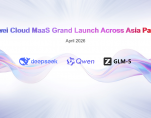
JAKARTA, INDONESIA – Media OutReach Newswire – 15 April 2026 – Huawei Cloud AI Boost Day, themed “Agentic AI Practice”, was successfully held in Jakarta. At the event, Huawei Cloud announced the official launch of its MaaS service in Asia Pacific.
Huawei Cloud MaaS grand launch across Asia Pacific
Following the rollout of AI Compute Service in Hong Kong (China), Thailand, Indonesia, and Singapore in 2025, Huawei Cloud MaaS (Model-as-a-Service) is now available, leveraging Huawei’s in-house acceleration engine to support mainstream models and provide customers with stable and high-quality token services.
Huawei Cloud continues to strengthen its collaboration with high-quality open-source models in the industry. Six models from three categories—GLM, DeepSeek, and Qwen—are the first to be supported by MaaS. These models are designed for two major application scenarios: intelligent Q&A and AI coding. They offer one-click access and out-of-the-box model hosting services, covering the entire lifecycle of model management from deployment to inference, fine-tuning, and evaluation. With elastic compute and pay-per-use billing, enterprises and developers can quickly integrate AI capabilities into their service systems without having to worry about the underlying infrastructure. This makes AI accessible to everyone.
Notably, this release includes support for the latest GLM-5 model. GLM-5 has attained state-of-the-art (SOTA) performance in coding and agent capabilities, making it an ideal general-purpose agent foundation for complex system engineering and long-text agent tasks in enterprise environments.
Huawei Cloud’s long-term strategic investment in AI has resulted in a comprehensive suite of AI solutions, including CloudMatrix AI Infra, MaaS, ModelArts (a model training and inference platform), CodeArts (a coding agent), AgentArts (an agent platform), and DataArts (a data agent).
CodeArts and AgentArts will be launched outside the Chinese mainland in the second half of 2026.
Huawei Cloud has established an optimized cloud infrastructure network in the Asia Pacific region. This network comprises five Regions and 18 availability zones (AZs) located in Singapore, Thailand, Hong Kong (China), Indonesia, and the Philippines, ensuring a 50 ms access latency. Additionally, in Malaysia, Huawei Cloud and partners have jointly built a local cloud.
Huawei Cloud AI Compute Service have helped many Asia Pacific customers elevate their cloud journey from simply migrating to the cloud to using AI well. They have benefited from improved productivity and better adaptation to changing environments.
iFLYTEK, a leading intelligent voice and AI company, selected Singapore as the first destination for its global expansion strategy in 2023, naturally extending its collaboration with Huawei Cloud from China to a global scale. Huawei Cloud AI Compute Service helped iFLYTEK quickly deploy their large language model training resources within two weeks. The training remained stable for 60 days without interruption, ensuring zero faults during the release of major versions.
In Vietnam, Green and Smart Mobility (GSM), an emerging green mobility platform, migrated its core operations platform to Huawei Cloud to reduce costs, enhance efficiency, and achieve multi-cloud flexibility. GSM has developed a comprehensive fleet management platform using AI and IoT. By utilizing Huawei Cloud IoTDA and ModelArts AI technologies, GSM analyzes violations and generates risk alerts to ensure driver and passenger safety, thereby fulfilling its mission of promoting green and safe transportation.
Huawei Cloud will continue to invest in AI innovation and provide a secure, stable, and intelligent cloud foundation to help enterprises in Asia Pacific achieve sustainable business growth in the AI era.
The issuer is solely responsible for the content of this announcement.
About Huawei
Founded in 1987, Huawei is a leading global provider of information and communications technology (ICT) infrastructure and smart devices. We have 207,000 employees and we operate in more than 170 countries and regions, serving more than three billion people around the world.
Our vision and mission is to bring digital to every person, home and organisation for a fully connected, intelligent world. To this end, we will work towards ubiquitous connectivity and inclusive network access, laying the foundation for an intelligent world; providing diversified computing power where you need it, when you need it, to bring cloud and intelligence to all four corners of the earth; build digital platforms to help all industries and organisations become more agile, efficient, and dynamic; and redefine user experience with AI, making it smarter and more personalised for people in all aspects of their life, whether they’re at home, on the go, in the office, having fun, or working out. For more information, please visit Huawei online at www.huawei.com
Scientists are advancing a new way to search for life beyond Earth by looking not for a single decisive signal on one planet, but for recurring patterns across many worlds. The idea, set out in a study published in The Astrophysical Journal, argues that life may reveal itself statistically if it spreads between planets or reshapes planetary environments in ways that leave linked traces across a wider […]
A digitally signed software operation tied to Dragon Boss Solutions LLC has been linked to the disabling of antivirus protections on more than 23,000 endpoints worldwide, raising concerns that what had been treated as aggressive adware was operating much closer to a supply-chain style threat. Security researchers said infected machines were found checking in from 124 countries, with affected systems present in education, government, utilities, healthcare […]
Europe’s cybersecurity agency has moved to strengthen its influence over the global system used to identify and catalogue software flaws, with ENISA no longer merely seeking a bigger role in the Common Vulnerabilities and Exposures programme but already holding Root status in a shift that gives the EU a stronger hand in how vulnerabilities are coordinated across borders. The development matters because the CVE system remains a […]
SINGAPORE – Media OutReach Newswire – 16 April 2026 – EduCareerSG has enhanced its Experiential Career Accelerator (ECA) programme through the integration of AI-enabled monitoring and support tools designed to strengthen trainees’ emotional readiness as they transition into the workforce.
The integration reflects EduCareerSG’s long-held belief that emotional management is not separate from employability, but a critical component of it. By embedding AI capabilities into its existing systems and modules, EduCareerSG is able to detect potential stress signals earlier, enabling faster intervention and more personalised support from its human welfare team.
“Technical skills and qualifications may get someone through the door, but emotional management determines whether they stay, grow, and cope when things get difficult,” said Mike Teo, Founder of EduCareerSG. “We have seen trainees who are capable on paper, but overwhelmed in practice. By integrating AI into our system, we are able to spot early warning signs and intervene sooner. Career readiness isn’t just about competence, it’s about resilience.”
Through structured weekly check-ins and ongoing engagement within the ECA ecosystem, the system helps surface early signs of workplace stress, adjustment challenges, or emotional strain commonly faced by young people entering live work environments. When potential concerns are identified, alerts are routed to EduCareerSG’s welfare team, where trained staff step in to provide direct guidance and counselling support.
Importantly, the AI functions as an assistive layer rather than a replacement for human oversight. The organisation maintains a human-first approach, with welfare officers taking over whenever emotional risk indicators arise.
The enhancement comes at a time when employers increasingly expect “day-one productivity”, while many young workers struggle with the emotional realities of adapting from classroom settings to workplace environments.
Recent Singapore reports have highlighted rising stress levels among employees and early-career professionals, alongside broader conversations around resilience and sustainable employability. Against this backdrop, EduCareerSG’s approach seeks to address not only skills gaps, but the emotional preparedness required to sustain performance in real-world settings.
Initially implemented within EduCareerSG’s ECA trainees in Singapore, the enhanced system forms part of a broader roadmap to continually upgrade the organisation’s training, welfare, and productivity frameworks. EduCareerSG will review performance and feedback over the coming months before assessing potential regional expansion.
By combining sponsored academic pathways, structured workplace immersion, and technology-enabled emotional support, EduCareerSG continues to refine a holistic workforce preparation model, one that recognises productivity, wellbeing, and long-term employability as interconnected pillars of success. Hashtag: #EduCareerSG
The issuer is solely responsible for the content of this announcement.
About EduCareerSG
EduCareerSG is a Singapore-based career development organisation that bridges the gap between academic qualifications and real-world employability through its Experiential Career Accelerator (ECA) programme. By combining sponsored education pathways, structured workplace traineeships, soft skills development, and continuous welfare support, EduCareerSG prepares trainees to enter the workforce with practical experience and professional resilience. Learn more at https://educareersg.com/
Google has issued an emergency-style security update for Chrome after disclosing 31 vulnerabilities in the desktop browser, including five rated critical, in a release that underlines how quickly memory-safety flaws in widely used software can become a serious risk for consumers, businesses and public institutions. The stable desktop channel moved on April 15 to version 147.0.7727.101/102 for Windows and Mac, and 147.0.7727.101 for Linux, with the rollout […]
Arabian Post Staff -Dubai Marine fuel sales at Fujairah fell to a record low in March as the US-Iran conflict upended shipping patterns, strained fuel supply chains and pushed vessels to avoid one of the Gulf’s most important refuelling hubs. Data cited by traders and market reports showed sales at the port dropped to 158,852 cubic metres, down more than 70 per cent from February and from […]
New Delhi is treating the fallout from the Iran war as more than a passing oil shock, with the strain spreading from shipping lanes and fertiliser markets to trade flows and inflation risks. The concern inside government and industry is that even if fighting eases, higher freight, insurance and input costs could leave a long tail for an economy that still depends heavily on imported energy and exposed maritime routes.
Pressure on the economy is already visible in trade and commodity data. Merchandise trade with the Middle East has been hit by shipping disruption linked to the conflict, even as stronger exports to the United States helped keep March’s overall trade deficit lower than expected. At the same time, the fertiliser bill has jumped sharply: urea import offers to Indian Potash Ltd clustered near $1,000 a tonne this week, roughly double the level seen two months ago, raising the prospect of a larger subsidy burden just as the kharif cycle approaches. For policymakers, that combination matters because it hits both external accounts and domestic costs, especially in food production.
Energy remains the central fault line. The Strait of Hormuz handles about a fifth of global oil and gas shipments, and for India it is a vital corridor for roughly half of crude and LPG imports. That vulnerability has been laid bare by delays to vessel movements and the stranding of India-flagged ships in the Gulf. Iran’s envoy in New Delhi has denied any toll demand on tankers, and India has also said no such payments were made, but the broader message from the episode is that the route can no longer be treated as a routine artery for commerce when conflict risk is this high.
Oil traders have taken some comfort from ceasefire diplomacy and indirect talks between Washington and Tehran, yet prices remain elevated because markets do not believe a durable fix is close. Brent crude was still around $95 a barrel on April 16, and analysts say disruptions to flows through Hormuz remain severe. That leaves New Delhi facing a familiar but uncomfortable calculation: protect households from a fuel shock and risk wider fiscal stress, or let higher import costs work their way through the system and accept stronger inflation. The International Monetary Fund and World Bank have both warned that the conflict could scar global growth, raise prices and impose lasting damage even if the battlefield quietens.
Those warnings matter because the shock is broader than petrol and diesel. Wholesale prices are already climbing, and manufacturers are absorbing costlier freight, energy and feedstock. Fertiliser is a particular worry. If elevated urea prices persist, the state may have to spend more to shield farmers, while any squeeze on supply would carry risks for sowing costs and food inflation later in the year. Economists have argued for targeted support rather than broad subsidies, but that is easier said than done in a country where energy and fertiliser costs have immediate political as well as economic consequences.
There are, however, offsets that could soften the blow. March trade numbers showed that stronger shipments to the United States helped compensate for weaker business with the Middle East, and India continues to diversify its energy basket through Russian supplies and other alternatives where pricing works in its favour. A sanctioned LNG cargo from Russia is heading to Dahej, underlining the government’s willingness to prioritise supply security and consumer interests over diplomatic noise around purchasing patterns. That flexibility has given India more room than many pure importers, though it does not erase the strategic dependence on Gulf routes.
Arabian Post Staff -Dubai UAE investors are moving faster than their peers almost anywhere in the world to bring artificial intelligence into investment decision-making, with a new global study by wealth-tech firm BridgeWise placing the country second overall in its AI optimism rankings and first on “momentum”, a measure of how strongly investors intend to replace traditional research methods with AI tools over the next year. The […]
TAIPEI, TAIWAN – Media OutReach Newswire – 16 April 2026 – The Asian Sports and Leisure Online Exhibition 2026 (ASLE 2026) will officially open on April 16, 2026, offering global buyers a one-stop sourcing platform to connect with verified Asian suppliers across the sports, fitness, and leisure industries. Running until August 31, 2026, the exhibition adopts a hybrid online and offline integration model, providing nearly five months of continuous sourcing opportunities and business engagement.
The exhibition focuses on connecting Asian suppliers with global importers and exporters, streamlining cross-border procurement processes, enhancing supply-demand matching efficiency, and enabling businesses to expand into international markets more effectively.
Since its debut in 2022, ASLE, co-organized by AsianNet and TradeAsia (www.e-tradeasia.com), has consistently attracted high-quality international buyers. With strong performance in precise matchmaking, inquiry conversion, and actual order generation, it has become one of Asia’s most representative online B2B trade exhibitions.
Global Exhibition Synergy and Expanded Scale
The 2026 edition will feature a significant scale upgrade and run concurrently with several leading international exhibitions, including the FIBO Germany International Fitness and Wellness Expo, Techtextil Frankfurt, the Outdoor Retailer and Outdoor Design and Innovation Expo in the USA, ISPO USA, and the India International Sports Goods Expo.
By aligning with global exhibition schedules and integrating cross-platform resources, ASLE 2026 consolidates international buyer traffic and enables procurement professionals to efficiently complete supplier selection, product comparison, and sourcing decisions. This approach significantly shortens decision-making cycles and improves procurement accuracy.
Centered on high-efficiency matching, targeted traffic, and conversion-driven results, the exhibition establishes a comprehensive B2B business connection ecosystem. It enhances exhibitors’ global exposure, improves inquiry quality, and effectively drives order conversion and market expansion.
Showcasing Verified Suppliers and Diverse Product Categories
These suppliers will showcase a wide range of products, including fitness equipment, sports gear, functional textiles, outdoor and camping products, and health-related solutions, providing buyers with diverse sourcing options across multiple categories.
ASLE 2026 highlights core sports categories such as Sports and Game Equipment, Sport Ball Equipment and Gear, Fitness and Body Building, Skateboarding and Skating Equipment, and Water Sports Equipment and Supply. The exhibition also features sports accessories, sportswear, and technical textiles, as well as lifestyle segments including Outdoor and Camping Recreation, Sporting and Travel Goods, and Indoor Games and Leisure. Health and Wellness and health food products further extend the exhibition’s cross-industry integration.
By integrating technological innovation with practical applications, ASLE 2026 provides a high-efficiency B2B sourcing environment that enables global buyers and industry partners to expand markets, accelerate procurement decisions, and establish long-term business relationships.
Digital Features Enhancing Efficient Sourcing
The Asian Sports and Leisure Online Exhibition 2026 introduces a range of advanced digital features, including dedicated exhibitor pages, e-catalogs, and integrated online exhibition interfaces. Fully integrated with the TradeAsia platform, these tools significantly enhance supplier visibility and maximize sourcing efficiency.
In addition, the exhibition incorporates an efficient business matching mechanism, enabling buyers to quickly identify suitable suppliers based on their sourcing needs. International buyers can access the exhibition anytime, explore detailed supplier information, and utilize online inquiry functions to accelerate procurement decision-making.
This hybrid model effectively eliminates time and geographical barriers while delivering a cost-efficient and results-driven global sourcing experience.
The issuer is solely responsible for the content of this announcement.
About TradeAsia
TradeAsia (www.e-tradeasia.com) is a leading B2B international trade platform dedicated to delivering high-efficiency, conversion-driven business matching services. The platform connects millions of members, over 600,000 suppliers, and extensive up-to-date product listings, forming a highly active global supply-demand network.
In addition, TradeAsia has established strategic partnerships with hundreds of trade organizations and exhibition entities worldwide, integrating both online and offline marketing resources to maximize international exposure. Exhibitors benefit from stable, high-quality buyer traffic and expanded global reach, enhancing brand visibility and increasing conversion opportunities.








 https://www.huaweicloud.com
 https://www.linkedin.com/company/huaweicloudapac
 https://x.com/huaweicloudapac
 https://www.facebook.com/HuaweiCloudAPAC