Kraken said on April 13 that it is being extorted by a criminal group threatening to publish videos showing parts of its internal systems and limited client data, as the cryptocurrency exchange sought to reassure users that its core platform had not been breached and customer funds remained safe. The company’s public statement said the threat followed unauthorised access tied to a small number of accounts rather […]
Michael Saylor’s Strategy has expanded its Bitcoin stockpile by another $1 billion, buying 13,927 coins between April 6 and April 12 and taking its total holdings to 780,897 Bitcoin, according to a filing lodged on April 13. The latest purchase was made at an average price of $71,902 per coin, while the company’s average cost across its entire treasury now stands at $75,577. Bitcoin treasury push gathers […]
By Nantoo Banerjee The country is experiencing a significant surge in commodity and transportation costs following geopolitical tensions in the Persian Gulf region and a weak Indian Rupee. Retail prices of daily essentials are rising rapidly. The prices of edible oils, pulses and packaged foods, including drinking water, have moved up since last month. Precious […]
Rockstar Games has confirmed that a data breach affected company information, saying a “limited amount of non-material company information” was accessed through a third-party incident and that the episode has had no impact on its operations or players. The disclosure lands at a sensitive moment for one of the world’s most closely watched game developers, with Grand Theft Auto VI still one of the industry’s biggest commercial […]
France and Britain are preparing to convene partner countries for what President Emmanuel Macron described as a peaceful multinational mission to restore freedom of navigation in the Strait of Hormuz, marking a European push to keep one of the world’s most important energy arteries open without joining Washington’s new blockade of Iranian ports. Prime Minister Keir Starmer said Britain would not support the US blockade and insisted […]
South Korea’s exports rose 36.7 per cent from a year earlier in the first 10 days of April, extending a powerful trade run driven by semiconductor demand and offering fresh evidence that the country’s technology cycle remains firmly supported by global spending on artificial intelligence infrastructure. Outbound shipments reached $25.2 billion in the April 1-10 period, the highest ever recorded for the opening 10 days of a month, according to Korea Customs Service data carried by Yonhap on Monday.
The early-April figures reinforce a broader pattern already visible through the first quarter. South Korea, one of the world’s most closely watched export economies because of its central role in memory chips, displays and consumer electronics, has been benefiting from a steep recovery in semiconductor sales after a prolonged industry downturn. Reuters reported at the end of February that the country’s chip exports had jumped 160.9 per cent in that month alone, passing $20 billion for a third straight month as AI investment and stronger memory prices lifted demand.
Semiconductors were again the main engine in the latest 10-day release. Chip exports surged 152 per cent from a year earlier, underscoring how heavily South Korea’s trade performance is now tied to data-centre investment, high-bandwidth memory demand and the wider AI build-out led by large technology firms. That strength has helped offset a less even backdrop in other parts of the economy, where investment, household demand and external policy risks remain more mixed.
The export rebound matters well beyond monthly trade headlines. South Korea’s central bank raised its 2026 growth forecast to 2.0 per cent in February and signalled that a chip-led upswing was giving policymakers more room to hold interest rates steady while watching inflation and financial stability risks. Reuters also reported this month that central bank officials see strong semiconductor exports and an extra budget as factors easing downward pressure on growth, even as won weakness and higher energy costs complicate the inflation outlook.
Factory data has pointed in the same direction. A Reuters report on S&P Global survey findings showed South Korea’s manufacturing activity expanded in January at the fastest pace in nearly a year and a half, helped by stronger export orders from China, North America and Europe. Manufacturers reported improving optimism as orders strengthened in sectors such as autos and semiconductors, indicating that the recovery is not only statistical but also visible in production and order books.
Still, the trade picture is not free of risk. South Korea remains highly exposed to swings in global demand, to US trade policy and to supply disruptions linked to tensions in the Middle East. Reuters polling before the March trade data showed imports rising sharply as higher oil prices pushed up the energy bill, even while exports surged on semiconductor strength. That combination can support headline trade values, but it also leaves the economy vulnerable to a renewed squeeze from commodity inflation and currency volatility.
Another uncertainty lies in concentration. The same chip boom that is lifting exports also raises dependence on a narrow cluster of products and companies. South Korea’s trade resilience is being powered largely by memory and advanced semiconductor demand, especially products linked to AI servers. Investment plans such as SK Hynix’s announcement in February of 21.6 trillion won in new facilities show confidence in long-term demand, but they also underline how central the semiconductor cycle has become to the country’s broader growth model.
For now, the momentum remains hard to ignore. Reuters polling ahead of the March data had already pointed to the fastest export growth in nearly five years, with shipments to the United States and China both showing strong gains alongside the semiconductor surge. Monday’s early-April figures suggest that pace has carried into the second quarter, strengthening the case that South Korea’s exporters are entering another period of outsized performance after a weak stretch in 2025.
TCL Electronics is exploring the sale of a stake in its television manufacturing business in India to local buyers, in a move that could help the Chinese consumer electronics group expand more deeply in one of the world’s fastest-growing electronics production bases, according to people familiar with the matter. Bloomberg reported the company is working with an adviser and is seeking to raise at least $200 million from the proposed stake sale.
The deliberations point to a broader shift in strategy for global electronics groups operating in India, where policy support for domestic manufacturing, supply-chain localisation and greater local participation in ownership are increasingly shaping investment decisions. India approved more than $750 million in projects for electronic component manufacturing at the end of March and has set a target of lifting electronics output to $500 billion by fiscal 2031, up from $125 billion in the year to March 2025.
TCL has spent years building out its industrial footprint in the country. The group’s Tirupati manufacturing base, unveiled as its largest such facility outside China, was designed to produce TV and mobile phone screens at scale. Economic Times reported the plant was built with annual capacity for eight million large-sized TV screens and 30 million small-sized mobile screens.
That industrial push has since been reinforced by TCL CSOT India, the company’s display-panel arm, which said it had completed three production lines with monthly capacity of 1.2 million units and was moving towards full bonding, lamination and assembly operations with capacity reaching two million units a month. The company said the India operation was supplying panel modules to customers including Samsung, underscoring that the business is not only about selling finished televisions under the TCL brand but also about embedding itself in the wider supply chain.
A partial stake sale to domestic investors would therefore carry strategic weight beyond capital raising. It could give TCL stronger local alliances, improve regulatory comfort, and help the company navigate a market where manufacturing, sourcing and ownership are increasingly entwined with industrial policy. It may also position the business more favourably in dealings with state governments, suppliers and large retail channels as competition intensifies across the television segment. The company has not publicly announced any transaction, and the talks may not lead to a deal.
For TCL, India matters not just as a sales market but as a production and export platform. The company’s 2024 annual report showed it shipped 29 million televisions worldwide last year, with global market share by shipments rising to 13.9%, placing it among the top two TV brands globally, according to Omdia data cited by the company. The same report said TCL ranked among the top three in retail sales volume in nearly 20 overseas markets and recorded strong growth across emerging markets, including the Middle East and Africa.
Those figures help explain why TCL may be seeking a structure that allows it to preserve momentum in India while adapting to local realities. India is becoming harder to treat as a simple import destination. Policy incentives are encouraging assembly, component manufacturing and deeper supply-chain integration, while geopolitical tensions and tariff shifts are prompting multinational groups to diversify production beyond a single geography. For television makers, that means scale alone is no longer enough; local manufacturing depth and political acceptability also matter.
The move also reflects a wider pattern among Asian electronics manufacturers, many of whom have expanded capacity in India to reduce dependence on imports and align themselves with official manufacturing goals. Reuters reported in late March that New Delhi’s incentive programmes are aimed at cutting import dependence and strengthening local supply chains. That policy environment has created room for both foreign and domestic investors, but it has also made partnership structures more attractive than wholly externally controlled operations in sensitive or high-volume sectors.
Britain will not back a United States blockade in the Strait of Hormuz, Prime Minister Keir Starmer said on Monday, drawing a firm line between protecting shipping routes and joining a wider military escalation around Iran. His intervention came after Washington announced it would block maritime traffic entering or leaving Iranian ports, while saying vessels transiting between non-Iranian ports could still pass through the strategic waterway. Starmer’s […]
Scientists have identified 37 active subglacial lakes beneath glaciers in the Canadian Arctic, with 35 of them not previously documented, adding a significant new layer to understanding how one of the planet’s fastest-changing cryospheric regions behaves as temperatures climb. The findings, published on 23 March 2026 in The Cryosphere, are based on satellite-derived elevation data collected between 2011 and 2021 and point to a far more dynamic […]
Arabian Post Staff -Dubai Dubai World Trade Centre Free Zone has partnered with Wio Bank to give businesses setting up or operating in the zone faster access to digital banking services, in a move aimed at easing one of the more persistent bottlenecks faced by new companies in the emirate: opening and managing a bank account during the early stages of incorporation. The agreement, announced on April […]
Arabian Post Staff -Dubai Oil vaulted above $100 a barrel and share markets retreated on Monday after President Donald Trump ordered a US naval blockade targeting traffic to and from Iranian ports, sharply escalating tensions around the Strait of Hormuz after weekend talks between Washington and Tehran collapsed in Islamabad. The move revived fears of a wider confrontation across the Gulf and renewed concern over inflation, shipping […]
DIFC Art Nights will return to Gate Village in Dubai from 23 to 26 April, offering free entry to a four-day programme of visual art, performances, panel discussions and workshops as the financial district once again turns part of its public realm into an open-access cultural venue. Organisers have billed the 2026 edition as the 21st staging of the event, with visitors able to attend from 5pm […]
Google has moved to harden Chrome against one of cybercrime’s most effective tactics by making Device Bound Session Credentials publicly available for Windows users in Chrome 146, a step designed to stop attackers reusing stolen session cookies to enter accounts without passwords or multi-factor authentication. The change binds a signed-in web session to the user’s device, meaning a cookie lifted by malware should quickly become unusable on […]
Arabian Post Staff -Dubai Abu Dhabi-based Etihad Airways has unveiled one of its largest single-market expansions in years, adding five mainland China destinations and 28 weekly flights as it deepens its joint venture with China Eastern Airlines and sharpens its focus on a corridor carrying growing weight in trade, tourism and cargo. The move will lift Etihad’s mainland China operation to 35 weekly services across six gateways, […]
Arabian Post Staff -Dubai Central Bank of the UAE has appointed financial software group VERMEG to develop a central securities depository solution, a move that places the monetary authority more directly inside the country’s post-trade market infrastructure and signals a broader push to tighten the links between payments, settlement and capital markets. The announcement was made on 13 April, with CBUAE saying the project is intended to […]
SINGAPORE – Media OutReach Newswire – 10 April 2026 – Modern beauty has a new enemy, and it’s right in our hands: the mobile phone. Endless scrolling keeps us hooked, but it also keeps our heads down. With content so addictive, one ends up spending hours slouching. So, all that main character power and energy vanish—replaced by slumping and hunching. Over time, posture slips, presence shrinks, and bold beauty follows. “Text neck” isn’t just a physical issue; it’s quietly changing how we carry ourselves.
LUX, the iconic global beauty brand, knows true radiance is about how you show up. That effortless “it girl” energy starts with posture. That’s why the brand is launching LUX Chin Up—a digital tool designed to tackle “Text Neck” and help women keep their heads high and their bold beauty even higher. It’s the perfect modern solution for the modern beauty problem.
“LUX always inspires women to boost their presence and own their beauty power,” said Gaurav Datta, Global Brand VP. “Our phones are amazing for self-expression, but there’s a catch. While they elevate our digital selves, they often shrink our real-world presence. That constant downward scroll quietly chips away at posture, poise, and bold beauty. With ‘Chin Up,’ we’re offering a simple way for women to realign, lift up, and step back into their power.”
LUX has a brilliantly simple, tech-forward solution. Forget complicated downloads or wearable tech. LUX Chin Up is a smart web page that taps into your phone’s own motion sensors. When used with the split-screen option, it stays on screen as a small tab, reminding you of the right angle to be maintained while you doomscroll.
The Sweet Spot: The tool encourages you to keep your screen at an optimal 90-degree angle.
The Gentle Nudge: If you start to slouch and the angle drops (and with it your head), the sensor detects it and the screen blinks, prompting you to raise your phone and go chin up.
The Reset: Straighten up, bring your phone back up and carry on scrolling with boldness.
LUX believes this can be an essential modern-day beauty ritual that extends beyond the shower to solve a modern-day problem. By habituating women to hold the right posture, LUX is naturally lifting their chins, opening their posture, and instantly restoring that vibrant, room-commanding presence. It’s a small shift that brings Main Character Beauty to life, on screen and off.
Make LUX Chin Up a habit, try it for a week and improve your posture. Visit lux.com/chinup
Hashtag: #LUXChinUp #LUX
The issuer is solely responsible for the content of this announcement.
About LUX
LUX has been celebrating beauty and femininity since 1925. We uphold beauty that doesn’t blend in. It’s bold, sassy, maximalist. We will continue to support efforts that will help women best express their Main Character Beauty.
About VML
VML is a leading creative company that combines brand experience, customer experience, and commerce, to create connected brands that drive growth. The agency is a leading global marketing and systems integration partner, specializing in creating innovative solutions for business transformation. VML is celebrated for its award-winning work with blue chip client partners including AstraZeneca, Colgate-Palmolive, Dell, Ford, Intel, Microsoft, Nestlé, The Coca-Cola Company, and Wendy’s. The agency is recognized by the Forrester Wave™ Reports, which name WPP a “Leader” in Commerce Services, Global Digital Experience Services, Global Marketing Services and, most recently, Marketing Measurement & Optimization. VML’s global network is powered by 28,000 talented people across 60-plus markets, with principal offices in Kansas City, New York, Detroit, London, São Paulo, Shanghai, Singapore, and Sydney.
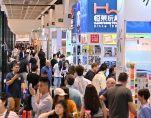
HONG KONG SAR – Media OutReach Newswire – 13 April 2026 – The Hong Kong Trade Development Council (HKTDC) will unite the global lifestyle industry with its seven lifestyle and licensing events from 27 to 30 April 2026. Encompassing gifts, houseware, fashion, printing, packaging, and licensing, these events offer buyers a streamlined and cross-sector sourcing journey. The Hong Kong Gifts & Premium Fair and Home InStyle will be hosted at the Hong Kong Convention and Exhibition Centre, where exhibitors will showcase curated international collection, enabling efficient and diverse sourcing across key lifestyle categories in one central location.
Connecting global suppliers and buyers with trending lifestyle products and innovative ideas.
In 2026, the Hong Kong Gifts & Premium Fair will spotlight four key focuses – personalisation, sustainability, health & wellness, and culture & creativity – guiding buyers to discover products that reflect the latest market trends and consumer preferences.
The fair will once again feature the highly acclaimed Hall of Fine Designs, a convergence point of reputed brands. First time exhibitors include Alpha Art Gifts LLC (United Arab Emirates), known for its unique and high-quality gift solutions; Crown Decor Pvt Ltd (India), a leading manufacturer for premium laminates. And the distinguished Hong Kong brands Camel and RedA will continue showcase their products at the fair. In addition, the Shanxi Pavilion will make its debut at the Hong Kong Gifts & Premium Fair 2026. This year, the Zhejiang Pavilion, for the first time led by the Department of Commerce of Zhejiang Province, will bring a large number of exhibitors. Meanwhile, the Korea Pavilion and Busan Pavilion will return with even greater presence.
Furthermore, the Hong Kong Exporters’ Association will assemble Hong Kong companies to form a pavilion, showcasing the design skills and branding excellence of Hong Kong’s product designers. The Smart Design Global, organised by Hong Kong Exporters’ Association, will also showcase shortlisted entries and signature products from its participating companies at the Gifts & Premium Fair, leveraging the fair as a platform to promote Hong Kong original designs to international markets.
Running concurrently, Home InStyle will focus on new materials, culture & creativity, and gerontechnology for silver‑age living, aligning with emerging lifestyle and consumer trends. The fair completes the sourcing journey by fostering meaningful connections and spark fresh inspiration across the design and lifestyle community.
A key highlight remains the signature Cultural and Creative Avenue, which will showcase distinguished designs from around the world and welcome international brands that blend unique design concepts with cultural heritage. The fair’s collaboration with Pantone will be elevated, with the Colour of the Year 2026 “Cloud Dancer” prominently featured in this zone. Through trend-focused displays and real-life applications, visitors will see the colour brought to life, helping buyers and exhibitors visualise its use in contemporary home and lifestyle products.
Furthermore, funded by the Innovation and Technology Commission, Home InStyle will launch the Gerontech and Innovative Material Pavilion, where nearly 20 local enterprises will present a wide range of innovative technology products and solutions designed for senior living, while highlighting the application of new materials in home spaces.
“Adding to the fair’s design-led highlights, the 2nd MOTIFX – Embracing the Beauty of Chinese Culture exhibition, organised by the Hong Kong Design Institute (HKDI) under the Vocational Training Council (VTC) and sponsored by the Cultural and Creative Industries Development Agency (CCIDA), invites emerging designers to reinterpret traditional Chinese elements for contemporary contexts. The project seamlessly integrating historical components into modern objects, interiors, and lifestyle products while deepening new generations’ engagement with their cultural heritage.”
Home InStyle will also host a selection of international brands known for their craftsmanship and creativity. Highlights include vibrant hand-blown Bohemian glassware, handmade baskets and bags woven from wild grapevines alongside classic bamboo steamers, and licensed DC Comics illuminated signs.
Throughout the fairs, a series of seminars and forums will bring together leading industry experts to share forward-looking insights on key trends and future developments, from creative thinking and the silver economy to sustainability and beyond. These sessions are crafted to foster meaningful dialogue and equip attendees with the latest market intelligence. As a comprehensive one-stop sourcing platform, the fairs unlock exciting business opportunities and deliver a diverse, world-class selection of lifestyle products and services tailored to every buyer’s needs.
Digital platform creates efficient exhibition experience Under the EXHIBITION+ model, the fairs integrate offline and online elements. Buyers can continue searching for products and services on the hktdc.com Sourcing platform and network through the Click2Match smart business-matching platform. During the physical fair, buyers can use the Scan2Match function of the HKTDC Marketplace App to scan exhibitors’ exclusive QR codes, bookmark favourite suppliers, browse product information and continue discussions with exhibitors online during or after the show.
Japan will release an additional 20 days’ worth of oil reserves from May as Tokyo tries to shield domestic fuel supplies from continued disruption in the Middle East and reduce its exposure to shipments that pass through the Strait of Hormuz. Prime Minister Sanae Takaichi told a cabinet meeting on April 10 that the move would come from the public stockpile, adding to emergency releases already under way since mid-March.
The decision marks a further escalation in Japan’s energy contingency response at a time when the Strait of Hormuz remains under severe strain despite a two-week ceasefire between the United States and Iran. The waterway is one of the world’s most important oil chokepoints, and its disruption has hit Japan especially hard because the country depends on the Middle East for about 95% of its oil imports. Takaichi’s government has been racing to prevent shortages, stabilise prices and reassure refiners, transport operators and households that fuel will continue to flow.
Tokyo had already moved ahead on March 16 with the release of reserves equivalent to 50 days of consumption, combining privately held stocks with state reserves and supplies jointly held with producing nations. That initial step was announced before a formal coordinated action by the International Energy Agency, underscoring the urgency felt by Japanese officials as tanker traffic through Hormuz became severely constrained. The new plan adds another layer of insurance rather than replacing the earlier programme, signalling that authorities believe the market shock may last longer than first expected.
Officials say Japan still has considerable room to act. As of April 7, the country held reserves covering 228 days, including 143 days in the public stockpile. That buffer gives policymakers flexibility, but it also reflects the scale of the threat they see. Refiners have already been forced to adjust operations as crude availability tightens, and the government is attempting to manage not only total supply but also how fuel is distributed across the country. Concerns have centred on keeping essential sectors supplied first, particularly healthcare, transport, agriculture, fisheries and livestock production.
Japan’s strategy goes beyond drawing down reserves. Takaichi said the government expects that by May more than half of oil imports will be secured through routes that do not involve the Strait of Hormuz. That shift is central to Tokyo’s effort to avoid becoming hostage to a single maritime corridor while conflict risk remains elevated. Officials have not identified every supplier publicly, but the Ministry of Economy, Trade and Industry has indicated that Japan is seeking alternative barrels from a wide range of countries, including Malaysia, Azerbaijan, Brazil, Nigeria and Angola.
The United States is set to play a larger role in that reshaping of supply. A ministry document cited by Reuters said oil imports from the US in May would be four times higher than a year earlier. Japan imported about 189,000 barrels a day from the US in May last year, equal to roughly 8% of total crude purchases for that month. Tokyo is also drawing on Middle East supplies that can bypass Hormuz, including shipments from Saudi Arabia’s Red Sea outlet at Yanbu and from Fujairah in the United Arab Emirates. Those routes do not eliminate vulnerability, but they reduce reliance on the narrow strait at the centre of the crisis.
Domestic politics and inflation pressures are also shaping the response. Takaichi has paired the reserve releases with fuel price measures meant to keep retail gasoline around a nationwide average of ¥170 a litre, even if crude prices remain elevated. Officials have warned that a prolonged supply shock could otherwise push pump prices much higher and strain households as well as businesses already dealing with cost pressures. Finance Minister Satsuki Katayama has also flagged the fiscal burden of existing subsidy measures, suggesting that energy security is becoming not only a supply issue but a budgetary one.
A frantic hunt for oil cargoes that can be delivered at once has tightened the global crude market, even as headline prices have swung with every turn in the fragile ceasefire around Iran and the Strait of Hormuz. Behind the moves in futures, traders, refiners and state buyers have been competing for physical barrels from the North Sea, West Africa, the United States and anywhere else supplies […]
Two empty supertankers heading towards the Persian Gulf reversed course near the Strait of Hormuz on Sunday, underscoring how quickly shipping sentiment can turn when diplomacy falters in one of the world’s most sensitive energy corridors. The movements came as talks between Washington and Tehran in Islamabad ended without agreement, leaving a fragile ceasefire under strain and traders, shipowners and refiners facing renewed uncertainty over access to […]
Greenlogue/AP Spring rain has reshaped the Aja Mountains in Hail into a greener, water-fed landscape, drawing fresh attention to one of the region’s best-known natural landmarks and reinforcing a wider push to turn northern Saudi Arabia’s scenery into a stronger tourism asset. Official reports on April 9 described vegetation spreading across ravines and valleys after rainfall, with seasonal grasses and wild plants softening the granite terrain […]
Bitcoin and other major cryptocurrencies fell on Saturday after high-level talks between the United States and Iran in Islamabad ended without an agreement, puncturing a bout of market optimism that had followed a temporary ceasefire and hopes of a broader diplomatic settlement. U. S. Vice President J. D. Vance said the American delegation was leaving Pakistan after about 21 hours of negotiations without a breakthrough. Markets reacted […]
By K Raveendran Election regulation in India is trapped in a contradiction that has become harder to defend with each passing cycle. The Election Commission continues to apply old assumptions about influence, persuasion and voter exposure to a media and political environment that has been transformed by technology, scale and the permanent visibility of public […]
Three ransomware operations — Qilin, Akira and DragonForce — were behind 40% of the 672 attacks logged worldwide in March, according to Check Point Research, highlighting how a criminal market that still looks fragmented on the surface is being pulled by a smaller group of high-output players. Check Point said Qilin accounted for 20% of published attacks, Akira 12% and DragonForce 8%, while 47 separate groups were […]











 https://www.hktdc.com/event/hkgiftspremiumfair/en




