News related to
world

China’s electric-arc furnace steelmakers are lifting output at the fastest pace in more than two years, helped by improving margins and a seasonal pickup in construction demand, giving the lower-carbon segment a rare competitive opening in a market still burdened by oversupply and weak property-linked consumption. Industry data showed average capacity utilisation among 94 independent EAF mills rose to 61.2% in the week of March 27 to April 2, the highest level since January 2024 and the fifth straight weekly increase.

The rebound matters because EAF steel has long struggled to gain ground in China despite official support for cleaner production. The route relies mainly on scrap rather than iron ore and coking coal, making it structurally less carbon intensive than the blast furnace-basic oxygen furnace model that still dominates the country’s steel industry. World Steel Association figures show the global production mix is far more tilted towards EAF than China’s, with electric-arc furnaces accounting for 28.6% of world crude steel output, while average carbon intensity for scrap-based EAF steelmaking is markedly below that of the conventional blast furnace route.

For Chinese mills, the immediate story is not only about decarbonisation but about economics. Higher finished-steel prices and steadier demand for construction steel have made it easier for some EAF operators to restart or raise run-rates after a prolonged spell in which many were squeezed by electricity bills, uneven scrap supply and patchy orders. Reuters reported in late February that warmer weather and the resumption of building activity typically support steel demand in March, while temporary production curbs in northern blast-furnace regions also helped firm futures prices. That backdrop has narrowed the gap between scrap-fed mills and traditional producers, even if the advantage remains fragile.

Yet the broader steel market in China remains difficult. Official and consultancy data cited by Reuters show crude steel output in 2025 fell to 960.1 million tonnes, down 4.4% from 2024 and below one billion tonnes for the first time since 2019. That decline reflected a managed effort by Beijing to address overcapacity, but it also underscored softer domestic demand and the long shadow cast by the property downturn. State-backed forecasts cited by Reuters indicate steel demand is expected to slip again in 2026 after contracting sharply in 2025, suggesting that EAF mills are recovering within a shrinking overall market rather than riding a broad-based industrial boom.

That tension helps explain why Beijing continues to press for structural change. The National Development and Reform Commission said in March that China would curb excess capacity in steel and other heavy industries in an orderly way, renewing a campaign that has featured repeatedly in official policy language. The cleaner EAF route fits that policy direction because it uses recycled feedstock and can reduce reliance on imported iron ore, but steelmakers still take their cues from margins first. When profits weaken, producers often retreat to whichever process best matches raw material costs, local power tariffs and available supply chains.

The environmental case for EAF expansion remains strong. Reuters reported last year that China had aimed to raise EAF steel’s share of crude steel production to 15% by 2025 and 20% by the end of the decade, but the actual share had been stuck around 10%. A 2025 review by the Centre for Research on Energy and Clean Air said missing the 15% milestone would add more than 160 million tonnes of carbon dioxide emissions compared with a stronger shift towards cleaner steelmaking, while high electricity costs, unreliable scrap flows and financial strain had kept many EAF operators on the back foot.

China’s steel industry also faces an external pressure point: trade. Even as domestic demand softened, exports climbed to a record 119.02 million tonnes in 2025, up 7.5% from a year earlier, according to Reuters. That export surge helped keep mills running, but it also intensified complaints abroad over cheap supply and raised the risk of more trade barriers. For EAF producers, this creates a mixed picture. Strong export channels can support domestic steel prices and improve mill economics, yet any escalation in trade restrictions would feed back into the entire sector, including the greener producers now regaining confidence.


Oil prices pushed higher on Tuesday as Donald Trump intensified pressure on Iran, sharpening investor anxiety over the fate of the Strait of Hormuz and the risk of a wider supply shock across global energy markets. Brent crude traded above $110 a barrel and US West Texas Intermediate rose past $113, extending a rally driven by fears that a prolonged disruption in the Gulf could squeeze flows […]

Arabian Post Staff -Dubai   Mounting economic damage from the Middle East war is set to push inflation higher and global growth lower, IMF managing director Kristalina Georgieva has warned, as the fund prepares to cut its growth outlook and raise its inflation projections in its World Economic Outlook due on April 14. The warning comes as the conflict has triggered what the International Energy Agency has […]

Arabian Post Staff -Dubai Iran said on Monday it wanted a durable end to the war with the United States and Israel rather than a temporary truce, rejecting pressure to reopen the Strait of Hormuz on Washington’s timetable as President Donald Trump warned the country could be “taken out” if it failed to meet his Tuesday night deadline for a deal. Tehran’s stance underscored how far apart […]

KUALA LUMPUR, MALAYSIA – Media OutReach Newswire – 7 April 2026 – The ACES Institute has officially released its latest comprehensive research publication titled “Doing Things Right, Doing the Right Things: The Scramble for the Soul of an Organisation.” The study provides a rigorous analysis of the modern corporate dilemma between operational efficiency and ethical conviction, introducing a leadership framework designed to help global organizations navigate increasingly fragmented stakeholder expectations.

Ren Li, Founder and CEO of Letright Industrial Corp., Ltd., whose commitment to 'doing the right things' led the company’s pivotal shift toward sustainable materials long before it became an industry standard.
Ren Li, Founder and CEO of Letright Industrial Corp., Ltd., whose commitment to ‘doing the right things’ led the company’s pivotal shift toward sustainable materials long before it became an industry standard.

The research, authored by Research Strategist Ager Freddy, Senior Researcher Timothy Benson, and ACES Institute President Dr. Shanggari Balakrishnan, argues that the phrase “doing the right thing” is frequently invoked in business discourse as a universal moral ideal, yet it is rarely examined through the lens of operational cost and strategic trade-offs. The study identifies that what is considered “right” varies significantly depending on the stakeholder ranging from regulatory compliance for governments and governance standards for investors to fair wages for employees and responsible resource use for environmental advocates.

The 4Cs Framework and Institutional Resilience

Central to the publication is the introduction of the 4Cs leadership framework: Creativity, Conscientiousness, Constancy, and Collaboration. According to the ACES Institute, these four pillars are essential for embedding ethical considerations directly into an organization’s product design, engineering processes, and corporate culture. The researchers suggest that by moving beyond surface-level corporate social responsibility and toward an institutionalized philosophy, companies can build a foundation for long-term differentiation and resilience.

The study acknowledges that this values-driven approach often necessitates difficult decisions that may carry significant short-term costs. Organizations pursuing deep sustainability or ethical strategies may face higher production expenses, skepticism from traditional market analysts, and resistance from consumers who express support for sustainability in theory but remain sensitive to price in practice. Furthermore, the research explores how global economic and political dynamics, such as shifting regulations and differing sustainability standards across international markets, complicate the efforts of leaders to maintain a consistent ethical stance.

Case Study Analysis: Letright Industrial Corp., Ltd.

To provide empirical evidence for these findings, the report examines the multi-decade journey of Letright Industrial Corp., Ltd., a manufacturer of premium outdoor living products. Under the leadership of founder and CEO Ren Li, the company made a pivotal decision in the early 2000s to abandon wood then the dominant material in the industry in favor of recyclable materials such as aluminum. This decision was driven by personal conviction regarding environmental impact rather than immediate market demand or regulatory requirements.

The case study illustrates the “Constancy” pillar of the ACES framework, noting that the move initially triggered significant resistance. During this period, customers continued to prefer traditional materials, employees questioned the strategic shift, and management warned of the financial consequences of declining orders. However, the research highlights that by persisting through this uncertainty, Letright successfully transitioned from an original equipment manufacturer (OEM) to an original design manufacturer (ODM). This shift allowed the company to build its own intellectual property, eventually leading to the development of the Ombra solar smart pergola, which integrates photovoltaic technology for renewable energy generation.

Executive Perspective on Global Leadership

“Organisations today operate in a landscape where expectations rarely align,” stated the authors of the study. “What appears responsible to one group may be viewed as inadequate or even harmful by another. Ultimately, ethical leadership does not mean achieving universal approval or avoiding difficult decisions. Instead, it requires organisations to define their own principles and align strategy, operations, and innovation around those values.”

The publication concludes that while “doing the right things” does not guarantee universal agreement, organizations that clearly define their values and consistently act on them are statistically more likely to build lasting relevance and resilience in an increasingly complex business environment. This research forms a key part of the ACES Institute’s ongoing mission to examine the intersection of leadership, sustainability, and responsible corporate transformation across global industries.
Hashtag: #ACESInstitute #LetrightIndustrial

The issuer is solely responsible for the content of this announcement.

About ACES Institute

ACES Institute is a Kuala Lumpur-based research and thought leadership organisation focused on responsible leadership, sustainability, and organisational transformation. Through industry research, case studies, and strategic insights, the institute works with global companies and experts to explore how organisations can create long-term value while addressing complex economic, social, and environmental challenges.

About Letright Industrial Corp., Ltd. | Ombra Brand

Letright Industrial Corp., Ltd. is a global manufacturer of premium outdoor living solutions, specialising in innovative pergolas, outdoor furniture, and lifestyle products. Headquartered in Hangzhou, China, the company combines design innovation, advanced engineering, and environmentally responsible materials to deliver sustainable outdoor experiences for residential and commercial markets worldwide.

  • Young business owners drive small businesses in Malaysia
  • Technology adoption remains concentrated in front-end activities
  • Improved access to finance needed for deeper digital transformation

KUALA LUMPUR, MALAYSIA – Media OutReach Newswire – 7 April 2026 – Innovation, technology and young entrepreneurs continue to power growth among Malaysian small business, but this has yet to translate into sustained improvements in business performance, according to CPA Australia’s Asia-Pacific Small Business Survey findings.

While half of Malaysian small businesses report improved profitability from their technology investments over the past two years, the proportion generating more than 10 per cent of revenue from online sales declined from 74 per cent in 2024 to 62 per cent in 2025.

Digital payment usage has also declined in 2025 with 74 per cent of small businesses receiving more than 10 per cent of their sales through digital payment platforms such as GrabPay, Touch ‘n Go and Boost, compared to 78 per cent in 2024.

Priya Terumalay, CPA Australia’s Regional Head for Southeast Asia, said while government initiatives have helped support technology adoption, these efforts have yet to drive significant uptake of deeper productivity-enhancing technologies, such as artificial intelligence, process automation, data analytics and systems integration.

“Technology investment remains concentrated in computer hardware and customer-facing functions like mobile apps and payments, while structural constraints continue to limit more transformative approaches,” Priya said.

“With cost pressures remaining a persistent challenge compressing margins, policy priorities should focus on addressing structural constraints such as re-orienting digital support towards automation, systems integration, and data use along with support for productivity-enhancing responses rather than short-term relief.”

Businesses making technology investments must include adequate protection measures to minimise cyber risk exposure as 35 per cent of small businesses lost time or money due to a cyber-attack in 2025.

Only 39 per cent reviewed their cybersecurity protections over a six-month period, the second lowest result among the 11 markets surveyed.

Despite the challenges, business sentiment on the Malaysian economy remains positive with 75 percent of small businesses expecting the economy to grow in 2026.

A strong 77 per cent also anticipate business growth this year, although improved access to effective finance, especially for investment will be important to enable deeper digital transformation and build resilience.

“This is particularly crucial for outward-oriented small businesses navigating global supply chain pressures and trade policy uncertainty that could weigh on growth, especially firms integrated into regional supply chains.” Priya said.

About the survey

CPA Australia’s 17th annual Asia-Pacific Small Business Survey was conducted among small business owners/senior managers during November and December 2025 to identify the characteristics of successful small businesses across the region. The findings for the survey come from 4,166 small businesses in 11 markets. From the commencement of the survey in 2009, we have surveyed over 50,000 small businesses across the region. These include Australia, Mainland China, Hong Kong, India, Indonesia, Malaysia, New Zealand, Philippines, Singapore, Taiwan and Vietnam.
Hashtag: #SmallBusiness #CPAAustralia #MalaysiaBusinesses


The issuer is solely responsible for the content of this announcement.

About CPA Australia

CPA Australia is one of the world’s largest professional accounting bodies, with more than 175,000 members in over 100 countries and regions, including more than 21,000 members in Southeast Asia. As we mark our 140th anniversary, we also celebrate 70 years of presence in Malaysia. With offices in Malaysia, Singapore, Indonesia and Vietnam, we are the largest Australian accounting body in the region providing education, training, technical support and advocacy. CPA Australia provides thought leadership on issues affecting the accounting profession and the public interest. We engage with governments, regulators and industries to advocate policies that stimulate sustainable economic growth and have positive business and public outcomes. A CPA is a Certified Practising Accountant. More at

Polymarket has unveiled what it calls a full exchange upgrade, setting out plans to rebuild the core plumbing of its prediction market, launch a native collateral token and strengthen the systems it uses to turn disputed outcomes into settled trades. The move comes as the company, widely discussed at a roughly $20 billion valuation, positions itself for a broader push into the United States and for a […]

Advertisements

Arabian Post Staff -Dubai Donald Trump has said a Tuesday deadline for Iran to accept a deal remains final, sharpening a crisis that has already pushed energy markets higher, intensified diplomatic pressure and raised fresh concern over the risk of a broader Middle East conflict. Speaking on April 6 at the White House, the US president said Tehran had made what he described as a significant move […]

India has moved to secure 2.5 million tonnes of imported urea ahead of the kharif sowing season, opening one of its largest buying exercises in months as the West Asia war squeezes gas availability, disrupts shipping routes and cuts domestic fertiliser output. State-run Indian Potash Ltd has invited bids for 1.5 million tonnes for west coast ports and 1 million tonnes for east coast ports, with vessels required to sail by 14 June and bids due on 15 April.

The timing reflects pressure building across the farm supply chain just before planting for rice, maize and soybean gathers pace in June. India is the world’s biggest urea importer and remains exposed not only to overseas fertiliser shipments but also to liquefied natural gas supplies from the Gulf, a key feedstock for domestic urea plants. Market disruption linked to the conflict has forced policymakers and import agencies to act earlier and at larger scale than usual to avoid a supply gap during the monsoon cropping cycle.

The tender itself underlines the urgency. Indian Potash’s notice, dated 4 April, shows the company is seeking granular or prilled urea in bulk for agriculture use, with separate pricing required for FOBT and C&FFO terms. The notice also sets the bid opening for 15 April and says offers must remain valid until 23 April. Those details matter because India’s tenders often serve as a benchmark for global trade, influencing price expectations far beyond its own market.

Supply stress has emerged on two fronts. First, disruption around the Gulf has affected fertiliser cargo movements through the Strait of Hormuz, one of the most sensitive trade chokepoints for both natural gas and finished fertiliser. Second, tighter LNG availability has curtailed feedstock for urea manufacturing at home. Reuters reported that the conflict had cut domestic output by about 600,000 to 700,000 tonnes a month, while other reports in the domestic press said production in one month had slipped to about 18 lakh tonnes from around 24 lakh tonnes.

That drop is striking because domestic capacity had been strengthened over the past decade. Official figures released last month said urea production in 2024-25 stood at 306.67 lakh metric tonnes, after touching a record 314.07 lakh metric tonnes in 2023-24. The broader policy effort has been to reduce import dependence through revived plants and brownfield additions, yet the present disruption shows that energy exposure still leaves the sector vulnerable when conflict hits upstream supply and freight corridors.

Trade data had already pointed to a more import-dependent year even before the latest escalation. Fertiliser Association of India data reported in January showed urea imports jumped 120.3 per cent year on year to 7.17 million tonnes in April-November 2024-25. That surge suggested domestic output and demand were already misaligned, leaving little buffer when the external shock arrived. The latest tender therefore looks less like a one-off emergency purchase and more like an attempt to rebuild a thinning pipeline before farm demand accelerates.

The price implications are equally important. Reuters said India’s previous tender had cleared at $418.40 a tonne, and traders now expect the new purchase to test higher levels because global availability has tightened. Argus reported that the war had effectively cut off exports from major Gulf producers including Qatar, Saudi Arabia, the UAE and Bahrain, which together usually account for roughly 1 million tonnes a month, or about a fifth of global urea trade. It also cited Kpler data showing more than 900,000 tonnes on stranded vessels beyond Hormuz.

Officials have also been working on contingency planning outside the tender route. Domestic reports said a task group had been formed to assess global urea sources and prepare import options, while gas supply to fertiliser units has been partially restored through spot purchases and reallocation. That may soften the production hit, but it does not fully remove the risk because any prolonged interruption in Gulf shipping or LNG flows would keep pressure on both landed prices and physical availability.

Indonesia Blockchain Week will return to Jakarta on August 12 and 13 with organisers positioning the 2026 edition as a pivot point for Web3, arguing that the sector is moving beyond pilot projects and speculative narratives towards infrastructure with measurable economic use. Official event channels identify the Jakarta International Convention Center as the venue and carry the theme “Turning Infrastructure into Impact”, framing the gathering as Southeast Asia’s leading institutional-focused blockchain conference.

That message reflects a wider shift in digital assets. After years dominated by token launches, trading cycles and proof-of-concept experiments, the emphasis across much of the industry has moved towards tokenised securities, cross-border settlement, digital identity, compliant custody and blockchain rails for mainstream financial institutions. Reuters has reported that major market infrastructure players are developing tokenised securities platforms, while analysts have projected strong growth in tokenised real-world assets, even as sceptics warn that much of the promise still sits in early-stage back-office applications rather than broad public adoption.

For Indonesia, that debate carries particular weight because the country has spent the past two years reshaping supervision of digital assets. Regulatory oversight of crypto assets and other digital financial assets was formally transferred from commodity futures regulator Bappebti to the Financial Services Authority, or OJK, under the wider financial sector reform framework. That has tightened the link between blockchain activity and mainstream finance, while signalling that the authorities want a more structured regime around licensing, compliance and consumer safeguards.

OJK’s own public updates show that digital financial assets and crypto supervision now sit within a broader integrity and resilience agenda for the financial system, alongside sandbox oversight and enforcement. That regulatory direction matters for a conference such as Indonesia Blockchain Week because institutional investors, banks and enterprises are less likely to engage seriously with Web3 infrastructure unless licensing, governance and disclosure standards are clearer than they were during the sector’s earlier growth phase.

Another strand of the Indonesian story is the state’s interest in sovereign digital infrastructure. Bank Indonesia’s Project Garuda, the central bank’s digital rupiah initiative, has been presented as part of a broader effort to safeguard monetary sovereignty in the digital era. Even though a retail or wholesale digital rupiah remains under development rather than fully launched, the project has become one of the clearest signs that distributed ledger technology is being examined not just by crypto-native firms but by the institutions that underpin payments and currency systems.

That backdrop helps explain why conference organisers are leaning into the language of “impact”. Across Asia, the conversation has become more institutional and more policy-aware. Reuters reported last year that wealthy Asian investors were increasing crypto exposure, while other reporting this year has shown how tokenisation is moving closer to exchanges and regulated financial venues. At the same time, risks remain central to the story: the IMF warned this month that tokenised finance could amplify market stress if regulatory guardrails and crisis-response mechanisms do not keep pace with technology.

That balance between promise and caution is likely to define the Jakarta event. Proponents of tokenisation argue that blockchain-based representations of bonds, funds, property interests and other assets can reduce settlement delays, widen market access and make ownership more divisible. Critics counter that many of these benefits are still more theoretical than proven at scale, and that fragmented standards, legal uncertainty and cybersecurity risks continue to hold the sector back. Reuters’ explainer on tokenisation captured that divide by noting both the liquidity and access arguments advanced by supporters and the unresolved questions over how fast real adoption will follow.

Indonesia Blockchain Week itself appears keen to place the country at the centre of that regional conversation. Organiser material describes the event as a gateway between local innovation and global capital, policy and technology networks. Yet the official website also shows some transitional messaging, with parts of the site still carrying 2025 branding even as other official channels and partner announcements point to the August 2026 summit. That inconsistency does not alter the announced dates, but it does suggest organisers are still in the process of consolidating the event’s next edition across platforms.

By Nantoo Banerjee The Reserve Bank of India and the government may officially deny or even pretend to ignore the adverse impact of the continuous downhill journey of the Indian Rupee against the US Dollar on the economy, the disturbing trend, if not contained, is bound to lead the heavily import-reliant nation to high inflation […]

The article Indian Rupee’s Continuous Downtrend Is A Big Concern appeared first on Latest India news, analysis and reports on Newspack by India Press Agency).

SINGAPORE – Media OutReach Newswire – 6 April 2026 – MyRepublic today announced the launch of MyRepublic Email Guard, a managed email security solution purpose-built to protect Singapore’s small and medium-sized businesses (SMEs) against phishing, malware, business email compromise, and other email-borne cyber threats. The launch is part of MyRepublic’s broader mission to ensure that Singapore’s SME community, the backbone of the local economy, is not left behind in an increasingly hostile cyber landscape.

MyRepublic Email Guard brings enterprise-grade email security to SMEs in Singapore.

Singapore’s SMEs account for 99% of all enterprises and employ nearly 70% of the local workforce, yet many remain chronically underserved in enterprise-grade cybersecurity. Email continues to be one of the most exploited attack vectors, with threat actors increasingly targeting resource-constrained businesses that lack the dedicated IT security teams of larger organisations. MyRepublic Email Guard is designed to close this protection gap, delivering a simple, effective, and locally supported solution that levels the playing field for SMEs without adding operational complexity.

Powered by Check Point, advanced email threat protection technology, MyRepublic Email Guard helps businesses detect and block malicious emails before they reach users’ inboxes. The solution is designed to support businesses using popular email platforms such as Microsoft 365 and Google Workspace, giving customers an additional layer of protection against modern threats.

“Singapore’s SMEs are the heartbeat of our economy, and protecting them from cyber threats is not just a business imperative. It is a national one,” said Lawrence Chan, Managing Director & Chief AI Officer, MyRepublic. “Far too many local businesses remain exposed simply because they cannot access or afford the cybersecurity tools available to larger enterprises. With MyRepublic Email Guard, we are changing that. We bring enterprise-grade protection to businesses that have long been underserved, backed by the local expertise and support they deserve.”

MyRepublic Email Guard combines advanced security technology with managed service support, allowing businesses to benefit from a more streamlined approach to email protection. The service is positioned as an all-in-one offering that includes deployment, ongoing management, and local support, helping customers reduce the burden on internal teams while improving cyber resilience.

“Enterprise-grade cybersecurity has been out of reach for the SMEs that need it most. That has to change,” said Imran Nazi, Head of ICT, MyRepublic. “MyRepublic Email Guard is built specifically for Singapore’s SMEs, where it is designed to be affordable, easy to adopt, and supported by a team that understands the local business environment. We want every SME in Singapore to have access to the same level of protection that large enterprises take for granted, because a safer SME ecosystem means a stronger Singapore.”

The launch of MyRepublic Email Guard marks a significant step in MyRepublic’s commitment to building a more cyber-resilient Singapore. Aligned with national efforts to strengthen digital security across all business segments, MyRepublic is focused on ensuring that SMEs, often the most targeted yet least protected segment, are equipped to defend themselves. By combining world-class technology from Check Point with localised managed service delivery, MyRepublic is bridging the cybersecurity gap for businesses that have historically been underserved.

MyRepublic Email Guard is now available for businesses in Singapore.

Hashtag: #MyRepublic #EmailSecurity #CyberSecurity #SMEs #DigitalSecurity #ManagedServices #EmailGuard


The issuer is solely responsible for the content of this announcement.

MyRepublic Broadband Pte Ltd

MyRepublic is a telecommunications and ICT services provider committed to delivering innovative digital solutions for consumers and businesses. In addition to connectivity services, MyRepublic supports businesses with a growing portfolio of ICT solutions, including cloud, cybersecurity, managed services, and digital enablement offerings.

  Al Hudayriyat Island has emerged as one of Abu Dhabi’s clearest statements of how urban expansion, tourism strategy and lifestyle planning are being fused into a single waterfront destination, as the emirate pushes to raise liveability, broaden its non-oil economy and create new high-value districts beyond its traditional city core. Developed by Modon, the island’s evolution has moved well beyond a beach-and-leisure concept into a much […]

BANGKOK, THAILAND – Media OutReach Newswire – 6 April 2026 – Bangkok is set to strengthen its position as an emerging international education hub in Asia, as Wycombe Abbey, one of the United Kingdom’s most established academic institutions, prepares to launch Wycombe Abbey International School Bangkok, scheduled to open in August 2026.

(From left) Chotchawal Leetrairong, Fiona Angel, and William Vanbergen at the announcement of Wycombe Abbey International School Bangkok, reinforcing Bangkok’s growing role as a regional education hub.

The project is a collaboration between Wycombe Abbey, BE Education, and Rabbit Holdings, a subsidiary of BTS Group Holdings Public Company Limited, reflecting the continued expansion of global education networks into Asia and Thailand’s growing relevance as a destination for international schooling.

Founded in 1896 in Buckinghamshire, Wycombe Abbey is widely recognised for its academic excellence and long-standing reputation for combining rigorous British curricula, including IGCSEs and A Levels, with a holistic approach to student development. The model emphasises intellectual curiosity, leadership, and a global perspective.

Wycombe Abbey also represents a rare example of a historic global institution that has successfully maintained its academic standards while expanding internationally. Its schools in Hong Kong and major cities across China have demonstrated the ability to uphold the same quality of education, driven by close collaboration and strict academic oversight from Wycombe Abbey UK. This approach ensures consistency in teaching standards, student outcomes, and the overall educational experience across its international network.

The school’s entry into Thailand comes amid sustained growth in the country’s international education sector. Thailand currently hosts more than 250 international schools serving approximately 70,000 to 80,000 students. The market is valued at over 80 billion baht and continues to expand at an annual rate of around 10%, driven by rising demand from both Thai and expatriate families seeking globally recognised education pathways.

Bangkok’s appeal as an education destination is supported by its quality of life, safety, regional connectivity, and relatively competitive cost of living, positioning the city as a potential regional hub for international families.

Wycombe Abbey’s international network already spans Hong Kong and multiple cities in China, including Changzhou, Hangzhou, and Nanjing. Bangkok will serve as one of its newest strategic locations, with further expansion planned in Singapore and South Korea, strengthening cross-border academic connections and student mobility within Asia.

William Vanbergen, Founder and Chairman of BE Education and Chairman of the Wycombe Abbey International Advisory Board, said the expansion represents more than a geographic extension.

“Wycombe Abbey isn’t just expanding. It is bringing one of the UK’s most respected educational traditions into Asia, while creating a multi-campus network that connects students across locations through shared experiences and collaboration,” he said.

Chotchawal Leetrairong, representing BTS Group Holdings and serving as financial advisor, said the investment aligns with a broader vision of urban development.

“World-class education is a fundamental component of a global city. Our investment reflects a long-term commitment to strengthening Bangkok’s position by supporting international education, talent attraction, and economic development,” he said.

Fiona Angel, Founding Executive Headteacher of Wycombe Abbey International School Bangkok, said the school will focus on developing well-rounded students equipped for a rapidly evolving global environment.

The school will offer a continuous 15-year education pathway from Nursery to Year 13 (ages 2–18), with both day and boarding options. Boarding will remain a central element of the educational model, designed to foster independence, responsibility, and leadership within a structured learning community.

Located near Thana City on Bangna-Trad Road, the campus will span over 66 acres, positioning it among the largest international school campuses in Bangkok. Facilities will include an Olympic-standard swimming pool, FIFA-standard football field, tennis and golf facilities, basketball courts, a full athletics track, and a 1,000-seat stadium, supporting both academic and co-curricular development.

The combination of Wycombe Abbey’s academic reputation and the school’s strategic location is expected to further strengthen Bangkok’s position as an emerging Asian education hub. Situated just 10 minutes from Suvarnabhumi Airport, the campus offers convenient regional access for international families, while its high-quality boarding facilities are designed to meet the needs of students and parents across Asia. This positioning is expected to attract a growing number of families seeking world-class education within the region.

Wycombe Abbey has consistently delivered strong academic outcomes. Over the past decade, 28% of its graduates have secured places at Oxford and Cambridge, with many progressing to leading universities worldwide. Across its international network, 38% of students in its Hong Kong and China campuses have been admitted to QS Top 10 universities, while 74% have gained entry to QS Top 50 institutions globally.

With its established academic track record, international network, and large-scale campus, Wycombe Abbey International School Bangkok aims to position itself as a leading provider of British-curriculum education in Southeast Asia, while contributing to Bangkok’s long-term development as a global education destination.

For more information, please visit https://wycombeabbeyinternational.com/schools/bangkok/

Hashtag: #WycombeAbbey

The issuer is solely responsible for the content of this announcement.

Greenlogue/AP Solar power capacity across the Gulf Cooperation Council has expanded at an exceptional rate, with a new GCC-Stat report showing average annual growth of 88.1 per cent between 2013 and 2024, underscoring how one of the world’s leading hydrocarbon-producing regions is accelerating investment in cleaner energy while also strengthening climate resilience measures. The same report said electricity generated from solar energy climbed from 0.13 thousand gigawatt-hours […]

Arabian Post Staff -Dubai Huawei has raised its research spending to one of the heaviest levels in the global technology industry, saying it invested CNY192.3 billion in 2025, or roughly $27.8 billion, equal to 21.8% of annual revenue. The figure came with group revenue of CNY880.9 billion and net profit of CNY68 billion, underlining how the Shenzhen-based company is continuing to prioritise long-term technology development even as […]

Justin Bieber’s headline-grabbing purchase of a Bored Ape Yacht Club NFT for about $1.3 million in January 2022 has become one of the clearest symbols of how sharply the NFT market has deflated, with comparable pricing for the collection now hovering around $11,000 to $12,000. The singer bought Bored Ape #3001 for 500 ether at a time when digital collectibles were commanding extraordinary sums, fuelled by celebrity […]

Google has disclosed a coordinated takedown of UNC2814, a suspected China-linked cyber-espionage group, after investigators tied it to intrusions at 53 organisations in 42 countries, with telecommunications providers and government bodies forming the core of the victim set. The campaign centred on a custom backdoor called GRIDTIDE, which used Google Sheets as a covert command-and-control channel, allowing malicious traffic to blend with ordinary cloud activity rather than […]

Anthropic’s acquisition of Seattle startup Vercept, little more than a year after the company emerged from stealth, has become one of the clearest signs yet that the contest for elite artificial intelligence talent is reshaping the sector as quickly as the technology itself. The deal folds Vercept’s team and technology into Anthropic’s push to make Claude better at “computer use”, the industry term for AI systems that […]

Dentsu has appointed Yusuke Kagohara as chief financial officer for Southeast Asia, handing him a mandate that goes beyond traditional finance oversight as the advertising and marketing group tightens governance and prepares for a more disciplined phase of expansion across one of Asia’s most competitive markets. The appointment took effect immediately, and Kagohara will report to Sanjay Bhasin, chief executive for Southeast Asia.

The move lands at a sensitive point for global agency networks. Growth remains available across Southeast Asia, but margins, client expectations and regulatory scrutiny are all sharpening. Dentsu’s own framing makes clear that this is not merely a replacement hire. Company statements and industry reports describe the post as part of a wider effort to deepen strategic and financial discipline and strengthen governance across the regional cluster, which covers Indonesia, Malaysia, the Philippines, Singapore, Thailand and Vietnam. The business employs more than 4,000 people in the region under what Dentsu describes as a borderless operating model formed in 2023.

Kagohara arrives with a profile that fits that brief. Before this appointment, he served as group head of risks and controls at Dentsu Group Inc., where he worked on internal controls, enterprise risk management and broader governance and remediation efforts. Earlier assignments included chief financial officer and deputy chief financial officer roles in Beijing and at Dentsu Creative China, experience that gave him exposure to large and complex operating environments in Asia. Industry coverage of the appointment has also highlighted his background in corporate strategy, transformation and all-round finance, suggesting the company wanted someone comfortable with both compliance architecture and commercial execution.

That background matters because agency finance chiefs are no longer judged only on forecasting, cost control and reporting. They are increasingly central to how networks integrate acquisitions, police internal controls, price AI-enabled services and defend profitability while clients demand more measurable returns. Dentsu has been signalling this shift at group level for months. Its global management overhaul announced in February was pitched around stronger execution, while its 2025 integrated report and governance materials emphasised capital discipline, internal investment, productivity and the strengthening of leadership and controls.

Southeast Asia gives that challenge extra complexity. The cluster spans fast-growing but highly uneven markets, each with different media structures, regulatory standards, client mixes and digital maturity. Dentsu has described the region as one of the world’s fastest-growing, and its own ad spend outlook has projected Asia Pacific growth ahead of the wider global economy. In December, the company forecast that global advertising spend would rise 5.1 per cent in 2026 to more than $1 trillion, with Asia Pacific remaining the fastest-growing region. For a network trying to convert that momentum into durable earnings, stronger financial control becomes a strategic tool rather than a back-office function.

Bhasin’s comments underline that point. In remarks carried by multiple reports and company-linked posts, he said growth on its own was not enough and that the business needed expansion that was “accountable, resilient, and built to last”. He described Kagohara’s experience in governance, transformation and complex markets as critical to the next stage of Southeast Asia’s development. Kagohara, for his part, said the region stood out for its scale, complexity and ambition, adding that strong fundamentals were universal even when market conditions varied widely. Those comments indicate a leadership view that the next test for Dentsu is not whether Southeast Asia can grow, but whether it can do so with tighter controls and greater consistency across markets.

The timing also follows a change in the seat Kagohara is filling. Trade reports late last month said Bharti Agrawal, who had served as CFO for Southeast Asia at Dentsu, had moved to Monks as chief financial officer for APAC marketing services. That succession gives the new appointment a sharper operational significance, because it suggests Dentsu moved quickly to avoid drift in a role that sits at the centre of planning, compliance and regional coordination.

Cloudflare’s launch of EmDash has opened a fresh front in the struggle over the future of web publishing, landing at a moment when WordPress is already under pressure from courtroom battles, security criticism and questions over who gets to define the rules of the world’s biggest content management ecosystem. EmDash, presented by Cloudflare as a “spiritual successor” to WordPress, is being pitched as a modern, open-source alternative […]

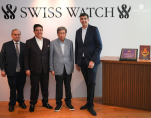
KUALA LUMPUR, MALAYSIA – Media OutReach Newswire – 5 April 2026 – Swiss Watch, Malaysia’s premier luxury timepiece and jewellery curator, has been appointed as the Purveyor of Fine Watches and Jewellery to His Royal Highness, the Sultan of Selangor. This prestigious seal of approval from the Royal family marks a truly historic milestone for Swiss Watch.

His Royal Highness, The Sultan of Selangor, with the Executive Directors of Valiram.

Proudly Malaysian, Swiss Watch has grown to become a cornerstone of the luxury watch and jewellery community in the region, collaborating closely with the world’s most esteemed maisons. This Royal Warrant is a testament to this journey, reflecting Swiss Watch’s unwavering dedication, its shared pursuit of excellence, and the sincere commitment of its network of Watch Experts.

“Our team has been instrumental in shaping Swiss Watch into a leading watch retailer in the region – we would not have come this far without their continuous contributions. This recognition is a momentous milestone in our ongoing journey in Celebrating Fine Watchmaking, and Swiss Watch is more committed than ever to continue creating exceptional experiences that celebrate the legacy of fine watchmaking,” said Ashvin Valiram, Executive Director of Valiram.

The recognition validates Swiss Watch’s position as a leader in luxury watch and jewellery retail, operating 10 Swiss Watch boutiques and more than 30 specialist boutiques across Malaysia, Singapore, Australia, and Thailand. Each boutique serves as a curated destination where discerning collectors can discover the world’s most renowned watch and jewellery maisons.

Swiss Watch has been given the Royal Warrant plaque by His Royal Highness, The Sultan of Selangor.

Established in 2001 by leading luxury and lifestyle retail specialist Valiram, Swiss Watch has built a distinguished heritage rooted in local excellence while maintaining global standards of luxury. The company’s journey began with its first boutique at Penang International Airport, featuring an extensive selection of 16 watch brands at that time, earning the company a spot as one of the most prestigious watch emporiums.

This recognition reinforces Swiss Watch’s philosophy of discretion, expertise, and service excellence — values that remain central to its identity as it continues to honour the art of horology for future generations.

Hashtag: #SwissWatch


The issuer is solely responsible for the content of this announcement.

About Swiss Watch

Swiss Watch began as a multi-brand emporium of luxury watches established by luxury and lifestyle retail specialist Valiram. The business has grown remarkably since its inception in 2001 and today comprises ten Swiss Watch boutiques, and more than 30 specialist watch and jewellery boutiques representing the world’s best-loved brands and a sizable portfolio of almost 40 brands across Malaysia, Singapore, Australia and Thailand. Swiss Watch has become synonymous with horology destinations that cater for watch enthusiasts and collectors as much as it does for the first-time watch buyer, offering a compelling shopper experience through elegantly appointed boutiques enriched by exceptional service. Discover more at .

Arabian Post Staff -Dubai Dubai and Abu Dhabi have retained places among the world’s leading smart cities in the latest IMD Smart City Index, underscoring how the two emirates have turned digital infrastructure, public services and urban planning into a defining part of their global profile. The 2026 index placed Dubai sixth and Abu Dhabi tenth out of 148 cities, while the 2025 edition had ranked them […]

Greenlogue/AP Parched hillsides and a sharply weaker winter rain pattern are putting Darjeeling tea under fresh strain, with planters warning that the famed first flush harvest is again under pressure and that the flavour profile underpinning the tea’s global prestige is becoming harder to preserve. Rainfall deficits across eastern and north-eastern parts of the country were severe through early February, and Darjeeling itself was reported to have […]

VISHNU RAJA
RYO YAMADA
HITORI GOTOH
IKUYO KITA