News related to
world

Louvre Abu Dhabi has opened its signature dome to visitors for the first time through a new guided “Architectural Experience”, giving the public access to the museum’s most recognisable feature as it broadens its appeal beyond galleries and exhibitions into design-led cultural tourism. The new 90-minute tour begins this month and runs on Saturdays, with separate time slots for individuals and groups. The move marks a notable […]

Iran said on Friday that the Strait of Hormuz was open to commercial shipping during the ceasefire, easing pressure on one of the world’s most sensitive energy chokepoints and helping lift Bitcoin towards $78,000 as investors moved back into risk assets. The market reaction was swift across oil, equities and cryptocurrencies, though the rebound also reflected wider hopes that hostilities involving the US, Israel and Iran may […]

Arabian Post Staff -Dubai Oil prices fell sharply on Friday after Iran’s foreign minister said the Strait of Hormuz would remain open to commercial shipping during a ceasefire, easing immediate fears of a prolonged choke on one of the world’s most important energy routes. Brent crude and US West Texas Intermediate both tumbled by more than 11% at one stage of trading, as investors unwound risk premiums […]

  Roblox has agreed to a $12 million settlement with Nevada and is rolling out broader child safety and age-checking measures across its platform, as the gaming company faces mounting scrutiny over how it protects young users from harmful contact and unsuitable content. The deal, announced this week, combines payments for youth programmes and safety initiatives with product changes that Roblox says will apply nationwide by June. […]

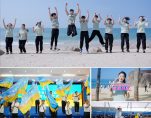
SANYA, CHINA – Media OutReach Newswire – 17 April 2026 – As the 6th Asian Beach Games draws near, 4,680 youth volunteers, affectionately known as the “Little Deer” (Xiao Lu Lu), have completed their general training and are now intensively honing their foreign language skills and job-specific practical abilities in final preparation for the event.

4,680 young Chinese volunteers ready for Asian Beach Games.

Recruited from 12 universities, including Hainan University and Hainan Normal University, as well as other local organizations, the volunteers share the common nickname “Little Deer.” The name is derived from Sanya’s nickname, “Deer City,” and is meant to reflect the volunteers’ lively, warm, and friendly spirit.

“See ya in Sanya” is both the slogan of the Asian Beach Games and the guiding principle for its volunteers. Liang Zihan, a student from Hainan Tropical Ocean University, said: “Since the launch of the volunteer recruitment drive, whether it is learning about the Games, mastering multilingual communication, or taking part in scenario-based drills and emergency exercises, I have given it my all. I hope to convey Sanya’s warmth, openness, and inclusiveness to every friend who comes from afar.”

Alongside local students, the volunteer team also includes many young people from across China brought together by the Games. Wu Yujia, a sophomore at the Hospitality Institute of Sanya, is one of them. “I want to show a warm, caring, and energetic Sanya,” she said. When asked about her future plans, she did not hesitate: “I want to stay in Sanya.” In her eyes, the city’s pleasant climate and beautiful scenery have deepened her affection for it and strengthened her commitment to volunteering.

The 6th Asian Beach Games will be held in Sanya, Hainan, from April 22 to 30, 2026. Delegations from all 45 member countries and regions of the Olympic Council of Asia (OCA) will take part in what is the largest and most influential beach sports event in Asia. As the first major international sporting event to be held in Hainan after the independent customs operations of the Hainan Free Trade Port, the Games are not only a celebration of Asian sport but also an important opportunity for Hainan to present an open and welcoming face to the world.

The issuer is solely responsible for the content of this announcement.

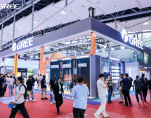
GUANGZHOU, CHINA – Media OutReach Newswire – 17 April 2026 – On April 15, the 139th China Import and Export Fair (hereinafter referred to as the “Canton Fair”) officially opened. As a leading enterprise in the manufacturing sector, Gree Electric made a grand appearance at Pavilion 4.2A under the theme “GREE, Making Better Electric Appliances,” presenting over a hundred innovative products in its largest exhibition area in Canton Fair history. Amid the global wave of green and intelligent manufacturing transformation, GREE is leveraging its hard-core independent innovation and full-industry-chain capabilities to show the world the confidence and resolve of China’s intelligent manufacturing to navigate industry cycles and lead the transformation.

GREE at the 139th China Import and Export Fair

Zhu Lei, CMO of Gree Electric, stated that Gree has participated in the Canton Fair for 31 consecutive years. This year, GREE brought 130 products to the event. Facing the global market, GREE strives to fully meet the practical needs of consumers from different regions worldwide. Notably, the majority of these products are originally manufactured in and exported from China, reflecting the dedication and ingenuity of GREE’s Chinese craftsmen.

It is reported that at this year’s Canton Fair, GREE has created a full-industry-chain exhibition space ranging from core components to scenario-based solutions. To date, buyers from over 50 countries and regions have scheduled visits and business negotiations, marking a 21% year-on-year increase.

Currently, the global home appliance industry is undergoing a dual transformation. On one hand, an energy efficiency revolution driven by the “Dual Carbon” goals makes the transition to eco-friendly refrigerants an urgent priority; on the other hand, an experience revolution spurred by consumption upgrades has made quietness, health, and smart features the core demands of users. GREE’s SilenzX series ultra-quiet air conditioners, showcased at the event, serve as a precise response to this trend. Equipped with a self-developed rotary four-cylinder compressor, the SilenzX series reduces the minimum sound pressure level of the outdoor unit to a mere 29 decibels—far below the industry average of 42 decibels. Backed by 137 invention patents, the product recently won a Gold Medal at the International Exhibition of Inventions Geneva, signaling that Chinese enterprises have shifted from being “followers” to “leaders” in the realm of comfort technology.

A deeper layer of competitiveness stems from GREE’s long-term bet on a green future. Among the products showcased at this Canton Fair, over 80% are equipped with AI, green energy-saving, and other advanced technologies. GREE has comprehensively implemented R290 eco-friendly refrigerant technology across its entire product matrix, including split units, window units, and water heaters. Furthermore, its world-first photovoltaic air conditioning system has achieved a systemic breakthrough of “zero carbon emissions, zero electricity bills, and zero waste.” The AI dynamic energy-saving technology also utilizes intelligent algorithm optimization to boost annual energy efficiency by 15.8% and reduce power consumption by 13.6%. Rather than isolated technological features, these represent comprehensive green solutions that cover the entire chain of energy production, transmission, and consumption, providing the industry with a leapfrog path from “low-carbon compliance” to “zero-carbon leadership.”

Behind this systemic innovation capability lies a full-industry-chain competitive moat forged through 35 years of independent R&D. At this Canton Fair, Gree introduced three major compressors—G-Boost, G-Storm, and G-Hyper—which have successfully overcome industry challenges such as ultra-high-temperature cooling and ultra-low-temperature heating. Its star product, the GMV 9 series, is capable of operating in an ultra-wide temperature range from -35°C to 60°C, marking GREE’s achievement of full-stack technological autonomy from core components to system integration.

Overseas buyers visit the booth of Gree

This strategic resolve is yielding substantial returns in GREE’s global layout. As one of the first Chinese home appliance companies to venture overseas, GREE has built a network covering more than 190 countries and regions. Independent brands now account for 70% of its total export volume, and this figure exceeds 85% in Belt and Road countries. This marks a highly successful, high-quality transformation from a traditional OEM (Original Equipment Manufacturer) model to an independent brand-led enterprise.

From core technological breakthroughs to a green and low-carbon transition, GREE remains rooted in technology and centered on quality. Its presence at the Canton Fair serves as a vivid microcosm of the transformation and upgrading of China’s manufacturing sector, demonstrating the powerful potential and dynamic momentum of “Made in China.”
Hashtag: #GREE

The issuer is solely responsible for the content of this announcement.

AD Ports Group says it has kept operations running normally through the Gulf supply chain disruption that began at the end of February, using its integrated network to reroute cargo across land, rail, sea and air as traffic through the Strait of Hormuz remained severely constrained. The Abu Dhabi-based operator said on April 16 that it had shifted volumes through Fujairah Terminals and Khor Fakkan Port, activated […]

Advertisements

Arabian Post Staff -Dubai Emirates and Wesgro have signed a memorandum of understanding aimed at increasing inbound travel to Cape Town and the Western Cape, giving the province a fresh marketing and air-connectivity push at a time when South Africa’s visitor numbers have climbed above pre-pandemic levels. The agreement was formalised on 16 April on the sidelines of World Travel Market Africa in Cape Town and was […]

Trend Micro’s enterprise business accelerates its transformation as AI security category leader

HONG KONG SAR – Media OutReach Newswire – 17 April 2026 – TrendAI™, the enterprise AI security leader from Trend Micro Incorporated (TYO: 4704; TSE: 4704), today announced a strategic engagement with Anthropic, embedding Claude models across its platform to power agentic workflows, automation, AI-native security operations, and develop threat research to identify vulnerabilities in AI systems and infrastructure. TrendAI™ will use Claude to advance vulnerability discovery while ensuring coordinated action in real-world risk reduction.

Rachel Jin, Chief Platform and Business Officer, Head of TrendAI™: “We launched TrendAI™ to define the AI security category. This next phase is about scaling that vision globally, with leading partners like Anthropic. Our broad, strategic collaboration across research, defense, and innovation will define how AI is secured moving forward.”

TrendAI™’s use of Claude spans threat research, real-world risk reduction, platform innovation, and global go-to-market execution. This will operate across the full AI security lifecycle, from vulnerability discovery to automated defense and AI-native operations.

Ash Alhashim, Head of Cybersecurity GTM at Anthropic: “For 35 years, TrendAI™ has been at the forefront of cybersecurity. By using Claude to power TrendAI Vision One™ and initiatives like TrendAI™ Zero Day Initiative™ (ZDI) and Pwn2Own, TrendAI™ is advancing the next iteration of vulnerability discovery and reporting—and tilting the scales toward defenders.”

Focus areas include:

Advancing AI Threat Research: TrendAI™ is scaling its threat research to address the growing attack surface of AI, building on proven programs like Pwn2Own Berlin under TrendAI™ ZDI. This approach brings real-world vulnerability discoveries into AI systems, helping identify and address critical weaknesses before it reaches production environments.

Driving AI-Native Innovation: Anthropic’s Claude models will help power TrendAI™’s platform innovation, enhancing agentic workflows, automation, and AI-native security operations. This enables organizations to reduce noise, act faster, and scale security alongside AI adoption.

The announcement comes as TrendAI™ prepares to welcome over 600 cybersecurity leaders to its Spark Leadership Exchange in Phoenix, Arizona in May. Anthropic will join TrendAI™ on stage at the event alongside other industry leaders, reinforcing a shared commitment to shaping the future of AI security and engaging directly with global enterprise leaders.

To learn more about the Spark Leadership Exchange, visit: https://resources.trendmicro.com/spark-leadership-exchange.html

Hashtag: #trendmicro #trendai #trendaivisionone #trendvisionone #visionone #cybersecurity


The issuer is solely responsible for the content of this announcement.

About TrendAI™

TrendAI™, the global AI security leader and enterprise business unit of Trend Micro, empowers organizations with full AI visibility and consolidated security that inspires confidence, drives innovation, and eliminates risk. Trusted by the largest enterprises and governments across 185 countries, TrendAI™ secures the entire organization, from identities to infrastructure to data. Global Fortune 500 companies rely on TrendAI™ to cut risk and stop threats up to three months earlier, powered by world-leading threat and attack intelligence. Through deep ecosystem partnerships with market leaders like NVIDIA, Anthropic, AWS, Google, and Microsoft, TrendAI™ empowers your organization to securely drive forward at the speed of AI. AI Fearlessly. Learn more at trendaisecurity.com.

Alarm over the Strait of Hormuz is spilling far beyond the Gulf, sharpening attention on the Malacca Strait near Singapore as traders, shipowners and Asian governments weigh what a prolonged disruption in West Asian energy flows could mean for the region’s busiest maritime corridor. The immediate military confrontation is centred on Hormuz, where Iran has tightened restrictions and the United States has imposed a blockade on Iranian […]

Flow Capital Partners is preparing to place a $150 million private credit fund on a blockchain-based platform in Singapore by the end of April, a move that pushes Asia’s fast-growing private lending market deeper into digital distribution and tests whether tokenised fund structures can broaden access without diluting regulatory controls. The plan places the Hong Kong-based manager among a small group of firms in the region using […]

HONG KONG SAR – Media OutReach Newswire – 17 April 2026 – Today, IX Asia Indexes announced the 2026 1st quarter review of the ixCrypto Index Series. The constituent changes will be implemented on the effective date of 24th April 2026 (Friday). The results of the constituent review and exchange review are as follows:

1. Constituent Review – ixCrypto Index Series

1. 1. ixCrypto Index (“IXCI”)
The number of constituents will remain at 19 with no additions and deletions.

Additions:
No addition

Deletions:
No deletion

The free float adjusted market capitalization coverage is 84.26%* (excluding stablecoins, which represents 10.90% of the total crypto universe), while the 90-day-average volume is 77.36%*. The recapping at 40% will take effect on the effective date.

Since the last review, there has been a decrease in the crypto total market capitalization from USD3.38T to USD2.62T (-22.53%)#, and a decrease in the daily volume from USD157.69B to USD108.17B (-31.40%)#. Bitcoin remains the largest crypto in the constituent list, with its price decreased by 24.58% since the last review.

1.2. ixCrypto Portfolio Indexes

1.2.1 ixCrypto 5 Equal Weight Index (“IXEW5”) and ixCrypto 5 Square Root Index (“IXSR5”)

Additions:
No addition

Deletions:
No deletion

1.2.2 ixCrypto 10 Equal Weight Index (“IXEW10”) and ixCrypto 10 Square Root Index (“IXSR10”).

Additions:
No addition

Deletions:
No deletion

1.2.3 ixCrypto Altcoin 10 EW Index (“IXAEW10”) and ixCrypto Altcoin 10 Square Root Index (“IXASR10”).

Additions: Monero

Deletions: Chainlink

1.3. ixCrypto BTC/ETH Indexes
As of the cut-off date on 31st March 2026, the ixCrypto BTC/ETH 50/50 Index (“IX5050”) maintains a 50%/50% weighting for the ixBitcoin Index “IXBI” and ixEthereum Index “IXEI”. The ixCrypto BTC/ETH Proportional Index (“IXPI”) has a weighting of 83.12% and 16.88% for IXBI and IXEI, respectively.

At the upcoming effective date, IX5050 weightings will remain unchanged at 50%/50%. IXPI weightings will be adjusted to 84.53% and 15.47% for IXBI and IXEI, respectively, reflecting the market capitalization proportions of Bitcoin and Ethereum at the cut-off date.

1.4. ixCrypto Stablecoin Index
The number of constituents will remain at 6 (Appendix 5). Stablecoin comprises 10.90% of the total crypto universe, and ixCrypto Stablecoin Index covers 98.26% of the 90-day average market capitalization in the stablecoin universe.

Additions
No addition

Deletions
No deletion

2. Exchange Review
To ensure the fairest price objective, all indexes are calculated based on average of multiple exchanges. As a result of exchange review, 10 exchanges passed the review process, which are as follows:

  1. Binance
  2. Pionex (ADDITION)
  3. BitMart (ADDITION)
  4. MEXC
  5. LBank
  6. Bybit
  7. Gate.io2
  8. Kucoin
  9. Crypto.com Exchange
  10. Coinbase Exchange

Deletion

  1. Huobi Global
  2. OKEx

The selected 10 exchanges will be used to generate each of the fair average prices for the IX indexes’ constituents. The exchange review covers volume rankings, exchange background checks, founders’ background checks, USD/USDT/USDC/BTC pair coverage, overconcentration rules, exchange API coverage checks, and stability, among other aspects, for an exchange.

For more details about our exchange selection criteria, please email [email protected]. More information on the ixCrypto Indexes, including their constituents and constituents’ weights, is provided in the Appendices, or refer to the website https://ix-index.com/.

*Exclude stable coins and coins that trigger conflict of interest (based on conflict-of-interest rule methodology 3.9, effective on Oct 2, 2020)
#As of 31th March 2026, based on the past 90 days average
XXXX (ADDITION)Newly introduced exchanges as of 2026 Q1

Appendix 1

ixCrypto Index (“IXCI”)

Universe All crypto coins traded in at least two different exchanges around the world
Selection Criteria Cryptocurrencies ranking in the top 80% of cumulative full market capitalization (“MC”) coverage and within an acceptable range in accordance with the Volume Buffer Rule in terms of 90-day average trading volume
Number of Constituents 19 in Q1 2026
Launch Date 12th December 2018
Base Date 3rd December 2018
Base Value 1,000
Reconstitution Rule If the coverage is below 75% or any of constituents is not within an acceptable range in accordance with the Volume Buffer Rule in terms of 90-day average trading volume, IXCI will be reconstituted to bring MC coverage back and do liquidity screening.
Reconstitution and Rebalancing Frequency Quarterly and with a fast entry rule
Weighting Methodology Free float adjusted market capitalization weighted with a cap of 40%
Currency US Dollar / HK Dollar [EOD in 14 currencies]
Dissemination Every 5 seconds for 24×7

(On Bloomberg, Reuters and major information vendors)

Website https://ix-index.com/
Bloomberg Page IXCI <GO>

Appendix 2

Weightings of the Constituents of ixCrypto Index

Crypto 90-day-average- Market Cap 90-day-average-Volume Cut-off
Price
Cumulative Market Coverage Weighting (%) After 40% Cap#
1 Bitcoin $1,533,407,044,481 $43,779,443,111 $66,691.44 58.59% 40.00%
2 Ethereum $291,140,668,312 $23,907,396,435 $2,023.51 69.71% 25.84%
3 BNB $99,700,601,834 $2,038,341,597 $608.55 73.52% 8.78%
4 XRP $98,820,126,064 $3,218,693,555 $1.32 77.30% 8.59%
5 Solana $58,322,802,634 $4,336,158,111 $82.44 79.53% 5.00%
6 TRON $27,802,977,066 $657,701,996 $0.32 80.59% 3.20%
7 Dogecoin $18,028,347,533 $1,341,528,833 $0.09 81.28% 1.47%
8 Cardano $11,055,216,118 $608,106,281 $0.24 81.70% 0.93%
9 Bitcoin Cash $10,617,756,282 $424,111,900 $459.70 82.10% 0.97%
10 Hyperliquid $8,515,529,227 $338,272,606 $36.79 82.43% 1.00%
11 Monero $7,415,161,010 $124,095,526 $321.29 82.71% 0.63%
12 Chainlink $7,273,963,510 $623,444,392 $8.61 82.99% 0.65%
13 Stellar $5,965,923,096 $147,863,725 $0.17 83.22% 0.59%
14 Zcash $4,956,891,601 $450,471,925 $225.56 83.41% 0.40%
15 Litecoin $4,745,674,586 $397,678,356 $53.20 83.59% 0.43%
16 Avalanche $4,565,289,028 $327,621,719 $8.79 83.76% 0.40%
17 Sui $4,558,926,661 $688,122,173 $0.86 83.94% 0.36%
18 Hedera $4,371,988,560 $136,144,137 $0.09 84.11% 0.40%
19 Shiba Inu $3,987,578,330 $135,856,575 $0.00 84.26% 0.36%

As of 31 March 2026

# Weighting (%) after 40% Cap is adjusted according to the cut-off price, the arrangement of order may not the same as 90-day-average-Market Cap

Selection of index constituents is based on the past 90-day-average market capitalization and volume.
For the calculation methodology of the index, please refer to the “ixCrypto Index Methodology Paper” on our website

Appendix 3

Weightings of the Constituents of ixCrypto Portfolio Indexes

Index Constituent ixCrypto 5 EW Index ixCrypto 5 SR Index ixCrypto 10 EW Index ixCrypto 10 SR Index ixCrypto Altcoin 10 EW Index ixCrypto
Altcoin 10
SR Index
1 Bitcoin 20.00% 47.35% 10.00% 38.28% – –
2 Ethereum 20.00% 20.26% 10.00% 16.37% 10.00% 25.472%
3 BNB 20.00% 11.81% 10.00% 9.54% 10.00% 14.848%
4 XRP 20.00% 11.67% 10.00% 9.44% 10.00% 14.682%
5 Solana 20.00% 8.91% 10.00% 7.20% 10.00% 11.199%
6 TRON – – 10.00% 5.76% 10.00% 8.968%
7 Dogecoin – – 10.00% 3.91% 10.00% 6.085%
8 Cardano – – 10.00% 3.10% 10.00% 4.829%
9 Bitcoin Cash – – 10.00% 3.18% 10.00% 4.944%
10 Hyperliquid – – 10.00% 3.22% 10.00% 5.005%
11 Monero – – – – 10.00% 3.968%

As of 31 March 2026

Appendix 4

Weightings of the Constituents of ixCrypto BTC/ETH 50/50 Index and ixCrypto BTC/ETH Proportional Index

Crypto 90-day-average Crypto Market Cap 90-day-average Crypto Volume Index Level Weight in BTC/ETH 50/50 Weight in BTC/ETH Proportional
Bitcoin $1,533,407,044,481 $43,779,443,111 16119.86 50.00% 84.53%
Ethereum $291,140,668,312 $23,907,396,435 17402.12 50.00% 15.47%

As of 31 March 2026

Appendix 5

Weightings of the Constituents of ixCrypto Stablecoin Indexes

Crypto 90-day-average- Market Cap 90-day-average-
volume
Cut-off Price Cumulative
Market Coverage
Weighting (%) After 40% Cap
1 USDt $185,014,602,798 $90,009,449,564 $0.9991 7.07% 40.00%
2 USDC $75,247,269,332 $12,399,472,322 $0.9997 9.94% 40.00%
3 Ethena USDe $6,227,533,422 $125,083,188 $0.9991 10.18% 6.02%
4 Dai $5,364,237,297 $153,912,985 $0.9997 10.39% 5.50%
5 World Liberty Financial USD $4,432,479,244 $1,826,951,498 $0.9995 10.56% 4.48%
6 PayPal USD $3,897,616,348 $150,988,466 $0.9996 10.71% 4.00%

As of 31 March 2026

Appendix 6

ixCrypto Indexes Dissemination

Real time indexes are disseminated every 5-second interval for 24×7 since 23 June 2022. The real-time indexes are available for viewing on the IX Crypto Index official webpage and Bloomberg Page IXCI <GO>. For IXCI, IXBI and IXEI, the indexes are also available through Nasdaq Global Index Data Service (GIDS) with the tickers “IXCI”, “IXBI” and “IXEI”, with dissemination interval kept at 15-second unchanged.

The vendor tickers are shown below:

Index Name Bloomberg Ticker TradingView Ticker Reuters Ticker
Real-time Delayed
ixCrypto Index IXCI IXCI2 IXCI .IXCI
ixBitcoin Index IXCBI IXCBI2 IXBI .IXBI1
ixEthereum Index IXCEI IXCEI2 IXEI .IXEI1

For further information about ixCrypto Index and other available indexes including IX Crypto spot price index series and EOD indexes, please visit company official webpage https://ix-index.com or subscribe to LinkedIn: IX Asia Indexes

For data licensing and product, please contact us at [email protected].

For free API use on academic research or trial, please contact [email protected]


Hashtag: #ixCryptoIndex

The issuer is solely responsible for the content of this announcement.

About IX Asia Indexes and IX Asia Index Advisory Committee

IX Capital International Limited is an award-winning index and investment advisory company. The index business arm- IX Asia Indexes, providing real-time digital asset and innovative indexes, disseminated 24×7 globally and built on robust infrastructure. Since the launch of the first crypto benchmark index (“IXCI”) launched in Hong Kong in December 2018, the ixCrypto index series expand into over 40 indexes designed for exchange futures products, mark-to-market, and fund managers’ portfolio construction purposes. To ensure the professionality and impartiality of the index methodologies and operations, IX Asia Indexes has established its index advisory committee with representation from different industries, including fund management, exchanges, brokerage, financial blockchain experts, crypto service providers, etc. The committee will meet quarterly a year to discuss matters relating to the IX Asia Indexes, including to review and to comment the data sources, methodologies, and operations of IX Asia Indexes, to provide guidance to the future development of new IX Asia Indexes and to handle other issues and decisions on an as-needed basis.

IX Asia Indexes was awarded the Fintech Award (wealth investment and management) 2019 and 2021 organised by ETNet. It as well won an award for Startup of the Year and Basic Technology (Big Data) from Hong Kong Fintech Impetus Awards 2022 by Metro Broadcast and KPMG. It also won Asia Pacific Enterprise Achievement Award 2024 by Echolade. IX Asia Indexes completed its IOSCO compliance statement and obtained ISO/IEC 27001:2022 UKAS certification.

Website:

Advisory Committee:

About IX Crypto Indexes

The ixCrypto index (“IXCI”) is the first crypto index launched in Hong Kong. It was launched on 12 December 2018. It is denominated in USD with a base value of 1000 and a base date on 3 December 2018. Designed to be easy to understand while providing a good representation of the crypto market, ixCrypto index aims to cover the top 80% of the cumulative free-float adjusted market capitalization in the crypto universe and, at the same time, the crypto currencies should fall within the top liquid cryptos ranked by trading volume in the 90 days preceding the review date. The index is to be reviewed quarterly and with a fast entry rule. Real time indexes are disseminated every 5-second for 24×7 since 23 June 2022. Real time index data together with ixBitcoin Index and ixEthereum Index can be obtained from IX Asia Indexes Data Services and Bloomberg terminal on IXCI <GO>. For IXCI, IXBI and IXEI, the indexes are also available through Nasdaq Global Index Data Service (GIDS) with the tickers “IXCI”, “IXBI”, “IXEI”, with dissemination interval kept at 15-second unchanged. Wechat: 信昇亞洲指數.


BEIJING, CHINA – Media OutReach Newswire – 16 April 2026 – With light and shadow flowing to carry forward the revolutionary legacy, and children’s voices resounding to celebrate the glorious chapters of our times. On April 9, guided by the Publicity Department of the CPC Beijing Committee, the event was jointly organized by the China National Film Museum, the China Film Association and the China Children’s Film Association.

As a public welfare brand dedicated to children’s growth and education for sixteen years, the activity continues to uphold the purpose of “fostering children’s growth, inspiring their minds, enriching their lives, and promoting children’s cinema.” Centered around the theme “A Dream of Light and Shadow, Voices Create Brilliance,” it targets children aged 7 to 16 both domestically and internationally. With film dubbing at its core, the activity provides a platform for artistic immersion, ideological guidance, and practical growth through diverse forms such as film lectures, dubbing challenges, film culture summer camps, and talent showcases, guiding children to experience the charm of film art in the world of light and shadow.

The year 2026 marks the 105th anniversary of the founding of the Communist Party of China and the 90th anniversary of the victory of the Long March of the Chinese Workers’ and Peasants’ Red Army. This edition of the event has selected classic films embodying historical memories and revolutionary spirit as dubbing materials, including Sparkling Red Star, The Letter with Feathers, The Detachment of The Hui People, Young Peng Dehuai, The Volunteers: Peace at Last, and Dead to Rights. These films guide children to revisit extraordinary years through cinematic images and grasp the spirit of the times through dubbing. Additionally, classic films showcasing China’s excellent traditional culture, such as Ne Zha 2, Chang‘An, I Am What I Am, and Big Fish & Begonia, help children strengthen their cultural confidence through diverse artistic nourishment.

With voices soaring, children interpret the legends of light and shadow; with dreams setting sail, they shine with youthful splendor. From today, the registration channel for the 17th China Children’s Film Dubbing Promotion and Exhibition Event is officially open! Dubbing enthusiasts aged 7 to 16 may access details and sign up via the official mini-program “Xiao Ying Mi Ai Pei Yin” or the WeChat Official Account of the China National Film Museum.

Hashtag: #ChinaNationalFilmMuseum

The issuer is solely responsible for the content of this announcement.

Arabian Post Staff -Dubai Dubai has moved to widen the role of small and medium-sized enterprises in its property market after Dubai SME and Dubai Land Department signed a memorandum of understanding aimed at giving entrepreneurs greater access to owners’ associations and real-estate operations, as the emirate pushes ahead with a broader strategy to deepen private-sector participation in one of its strongest growth industries. The agreement, announced […]

Arabian Post Staff -Dubai Dubai has moved to protect its standing as a fast-rising hedge fund centre by giving financial firms more room to handle disruption linked to the Iran war, as market volatility, staffing strains and geopolitical risk test one of the emirate’s most carefully cultivated growth stories. The Dubai Financial Services Authority said on 9 April it would offer temporary, proportionate relief across licensing, governance, […]

United Arab Emirates has won a seat on the World Food Programme’s Executive Board for the 2026–2028 term, giving it a direct role in shaping policy at the UN’s main food assistance agency as conflict, supply disruption and funding pressure deepen the global hunger crisis. The appointment places the country inside the WFP’s top governing structure at a moment when aid agencies are being forced to balance […]

Greenlogue/AP The UAE Ministry of Investment has signed a memorandum of understanding with China’s Jereh Group to develop an integrated clean energy and industrial platform in the Emirates, in a move that aligns industrial expansion with lower-carbon power and deeper commercial ties between Abu Dhabi and Beijing. The agreement was signed by Mohammad Abdulrahman Alhawi, Undersecretary at the Ministry of Investment, and Li Weibin, Executive President of […]

Singapore has rejected a pair of United States trade investigations that question its manufacturing profile and its enforcement against goods linked to forced labour, arguing that Washington’s claims do not fit the data and risk distorting a long-established commercial relationship between the two economies. The pushback, filed with the Office of the United States Trade Representative, has now been reinforced by Singapore’s business community, which says the city-state’s export performance is tied to demand, capital intensity and supply-chain positioning rather than state-backed excess capacity or weak labour controls.

The dispute sits inside a broader U. S. tariff reset. In March, the USTR opened Section 301 investigations into structural excess capacity in manufacturing across 16 economies, including Singapore, and launched another set of probes into whether about 60 economies have failed to prohibit or effectively enforce bans on imports made with forced labour. Reuters reported that the Trump administration moved down this route after a Supreme Court ruling in February struck at the legal basis of a large part of its earlier tariff framework, prompting Washington to search for narrower but still forceful trade instruments. USTR said comments were due by April 15, with hearings on forced labour beginning on April 28 and on overcapacity from May 5.

Singapore’s central argument is that the U. S. portrayal of the bilateral trade balance is flawed. In its submission, the Ministry of Trade and Industry said the United States has run a consistent overall trade surplus with Singapore for more than two decades. Data cited by Singapore from U. S. agencies show America posted a goods trade surplus of US$1.9 billion and a services trade surplus of US$25.1 billion with Singapore in 2024, with those surpluses rising in 2025 to US$3.6 billion and US$29.6 billion respectively. Singapore also said the U. S. recorded sectoral surpluses in semiconductors and electrical equipment as well as petrochemicals, undercutting the suggestion that exports from Singapore into the American market are being fuelled by a broad pattern of manufacturing distortion.

That matters because Washington’s overcapacity inquiry is built around the idea that some trading partners maintain large or persistent surpluses, idle production or both, allowing them to push artificially cheap goods into world markets. Singapore’s reply does not deny that the U. S. is entitled to examine trade imbalances, but it says its own industrial base does not fit that template. Officials pointed to manufacturing-space occupancy holding around 90 per cent over the past five years, which they said is consistent with advanced-economy norms and inconsistent with the claim of large underused capacity. Singapore further argued that, given land scarcity, it would run against policy and economic logic for industrial land to be left substantially idle.

On the labour side, Singapore’s response is equally direct. The government said it does not condone forced labour in supply chains and has legal and enforcement mechanisms to address such practices. Channel NewsAsia reported that Singapore told U. S. investigators it has a comprehensive domestic framework against forced labour and against the importation of goods produced through it. That is an important distinction, because the U. S. probe is not confined to labour abuses inside a country’s own factories; it is also examining whether governments adequately prevent tainted goods from entering their markets and then moving through global trade channels.

The business implications extend beyond Singapore. The U. S. investigations cover major manufacturing and export economies across Asia and Europe, and any eventual remedies could include new duties or other restrictions before temporary tariffs expire in July, according to Reuters and trade-law analyses tracking the dockets. For companies, that raises the prospect of higher compliance costs, closer supply-chain screening and a wider blending of trade policy with labour-rights enforcement. Singapore’s case is being watched because it is a high-value manufacturing and logistics hub with deep exposure to electronics, pharmaceuticals, petrochemicals and re-export trade, sectors where even modest tariff changes can alter sourcing decisions.

Politically, the row is awkward for both sides. Singapore is not only a long-standing U. S. economic partner; its free-trade agreement with Washington remains America’s only such pact with a South-east Asian trading partner. Singapore has said bilateral trade and investment support around 350,000 jobs in the United States, while its direct investment stock there reached US$71.7 billion in 2025. That does not shield it from a more aggressive U. S. trade climate, but it does give Singapore a stronger basis than many others to argue that the relationship is balanced, rules-based and mutually beneficial.

Global growth prospects have darkened after the International Monetary Fund cut its forecasts and warned that the war involving the United States, Israel and Iran has delivered a fresh energy shock just as many economies were regaining stability. The Fund’s latest assessment points to weaker output, firmer inflation and mounting fiscal pressure as oil flows through the Gulf remain disrupted and governments weigh how to shield households […]

China’s economy expanded faster than expected in the first quarter, giving Beijing a firmer platform as it confronts the fallout from the war involving Iran, but the details beneath the headline number pointed to a recovery still leaning heavily on industry and exports while households remain cautious. Official data released on Thursday showed gross domestic product grew 5.0% from a year earlier in January to March, above the 4.8% forecast in a Reuters poll and up from 4.5% in the final quarter of 2025. Quarterly growth came in at 1.3%, slightly ahead of the previous quarter.

The stronger reading suggested that the first shockwaves from the conflict in the Middle East have not yet knocked China off course. Markets took the figures as a sign of resilience. Mainland share indices rose after the release and the yuan held near its strongest levels in three years, reflecting confidence that the world’s second-largest economy has, for now, absorbed higher energy risks better than some had feared.

Yet the composition of growth was less reassuring. March industrial output rose 5.7% from a year earlier, beating expectations, but retail sales slowed to 1.7%, well below forecasts and down from 2.8% in the first two months of the year. Fixed-asset investment in the first quarter rose 1.7%, also missing expectations, while property investment fell 11.2%. Those figures reinforced a pattern that has defined China’s economy for months: factories, infrastructure and technology manufacturing are carrying more of the load than domestic consumption or housing.

That imbalance matters because Beijing has repeatedly signalled that stronger household demand is essential to putting growth on a steadier footing. Economists cited in the reporting on Thursday said the first-quarter strength was driven largely by momentum built in January and February, especially through exports and industrial activity, while March showed signs of softer conditions. The slowdown in shop spending is particularly sensitive because consumer confidence has remained fragile even as policymakers talk up support for incomes, jobs and services-led demand.

The war has complicated that task without yet derailing it. Since hostilities erupted on 28 February, China has faced a familiar vulnerability: it is the world’s largest energy importer and still relies on stable global shipping and manageable oil prices to protect factory margins and household purchasing power. Reuters reported that economists believe China has so far weathered the shock because of large oil reserves, a diversified energy mix and price controls, but they also warned that persistently higher oil costs are beginning to filter through supply chains and squeeze profits.

Evidence of that pressure is already visible. Reuters noted this week that factory-gate prices in March rose for the first time in more than three years, a signal that energy-driven cost increases are feeding into production. Export growth, which had been one of the brighter spots, also lost momentum in March after a very strong start to the year, raising the possibility that manufacturers will find it harder to sustain their pace if shipping costs stay elevated and overseas demand weakens.

Beijing’s response is likely to stay measured unless the conflict worsens. Policymakers have already set a budget deficit of about 4% of GDP for 2026 and planned heavy bond issuance to support activity. Analysts polled by Reuters expect the central bank to keep the one-year loan prime rate steady through the year, with only a modest cut to reserve requirements anticipated later on. A stronger first quarter gives officials more room to avoid large-scale stimulus at this month’s Politburo meeting, though that calculus could change if oil prices climb further or exports weaken more sharply.

The broader international backdrop is not especially forgiving. The IMF said in its April World Economic Outlook material that the Middle East conflict is lowering growth expectations for advanced economies in 2026, even if the aggregate effect is described as modest. For China, that matters less through direct battlefield exposure than through energy costs, shipping uncertainty and the health of major overseas markets. A prolonged conflict would test the durability of China’s export-led strength at the same time as its consumer recovery remains incomplete.

Alibaba Group Holding has unveiled a new artificial intelligence model aimed at building 3D environments and interactive video, widening its challenge to Tencent in one of the most commercially sensitive corners of China’s technology market: games, cloud services and creator tools. The model, called Happy Oyster, was introduced on Thursday as a “world model”, a system designed to generate explorable digital scenes rather than only short clips, […]

Bitcoin’s market backdrop has strengthened sharply, with a closely watched Bull Score Index climbing to its highest reading since October 2025 after several previously weak on-chain signals improved over roughly three days, according to market analytics platforms tracking network activity and investor behaviour. The shift has added momentum to a rebound that has pushed Bitcoin back towards the mid-$70,000 range, even as analysts warn that the move […]

Malaysia is positioning itself as a discreet diplomatic channel between Gulf capitals and Tehran, with Prime Minister Anwar Ibrahim saying leaders from the Arab world have asked Kuala Lumpur to convey their concerns to Iran’s leadership as governments search for ways to contain the Middle East conflict. Anwar made the remarks in Putrajaya on 16 April during a joint appearance with Australian Prime Minister Anthony Albanese, adding a new dimension to Malaysia’s response after it had already secured passage for its vessels through the Strait of Hormuz through direct engagement with Tehran.

The comments suggest Malaysia sees room to act beyond its traditional Southeast Asian brief at a moment when the war-linked shock in the Gulf is reverberating through energy markets, shipping lanes and food supply chains far beyond the region. Anwar’s statement also points to how some Gulf states may be looking for intermediaries that maintain workable ties with Iran while still being able to speak with a broader range of governments. Malaysia has presented itself as a neutral actor, and Anwar has argued that any contact with Tehran should be aimed at de-escalation rather than tactical positioning inside the conflict.

His remarks fit into a chronology that has been building for weeks. On 26 March, Anwar said Iran had agreed to allow Malaysian-flagged vessels to pass through the Strait of Hormuz after he held talks with leaders from Iran, Egypt, Turkey and other regional states. He thanked Iran’s president for facilitating the release of Malaysian oil tankers and their crews, while also acknowledging that Tehran remained wary because of what he described as broken assurances and the lack of firm security guarantees.

That earlier intervention mattered because the Strait has become one of the most sensitive pressure points in the wider confrontation. Iran’s restrictions and the broader conflict have disrupted oil and gas shipments, pushed governments to seek alternative supply arrangements and revived fears over the security of one of the world’s most important maritime corridors. ASEAN foreign ministers, in a virtual meeting on 13 April, urged the United States and Iran to sustain negotiations toward a permanent resolution and called for the restoration of safe and continuous navigation for vessels and aircraft through the Hormuz corridor.

Malaysia’s diplomatic posture is being shaped as much by economic exposure as by political calculation. Reuters reported this week that Kuala Lumpur and Canberra agreed to strengthen energy and trade ties in response to disruption caused by the Middle East conflict, with Anwar saying Petronas would prioritise supplying Australia with excess fuel. That followed reporting on Albanese’s 14-17 April visit to Brunei and Malaysia, where fuel security and fertiliser supply were central themes as Canberra sought to cushion the impact of the Hormuz disruption.

For Malaysia, that means diplomacy cannot be separated from domestic cost pressures. The government has already had to manage the implications of tighter oil and gas supplies, and Anwar said in March that while fuel subsidies would stay, Putrajaya would move to reduce subsidised fuel allocations to contain the fiscal strain. The message was that Malaysia’s outreach to Tehran is not only about foreign policy profile; it is also about protecting shipping, energy flows and household stability at home.

The broader regional setting helps explain why Gulf states might see value in using a country such as Malaysia as a messenger. Several governments in the Gulf are recalibrating how they deal with Tehran after the conflict exposed both their vulnerability to retaliation and the limits of outside security guarantees. At the same time, alternative mediators are emerging. Pakistan’s army chief was in Tehran on 16 April for talks linked to possible new US-Iran negotiations, underscoring how middle powers across Asia are trying to create off-ramps before the ceasefire window narrows further.

Malaysia is unlikely to become a formal broker on its own, and Anwar has not claimed such a mandate. What he has done is signal that Kuala Lumpur is already part of a live diplomatic relay, trusted by some Arab leaders to transmit messages to Tehran and willing to use that access in support of a political settlement. That role may suit all sides precisely because it is informal, low-key and tied to a country that has avoided the sharper alignments defining the conflict.

Arabian Post Staff -Dubai Middle East conflict damage to energy infrastructure could leave the region facing as much as $58 billion in repair costs, according to a sharply revised estimate from Rystad Energy, with oil and gas facilities alone accounting for up to $50 billion and much of the burden falling on complex plants whose restoration may take years rather than months. The research firm said the […]

VISHNU RAJA
RYO YAMADA
HITORI GOTOH
IKUYO KITA