

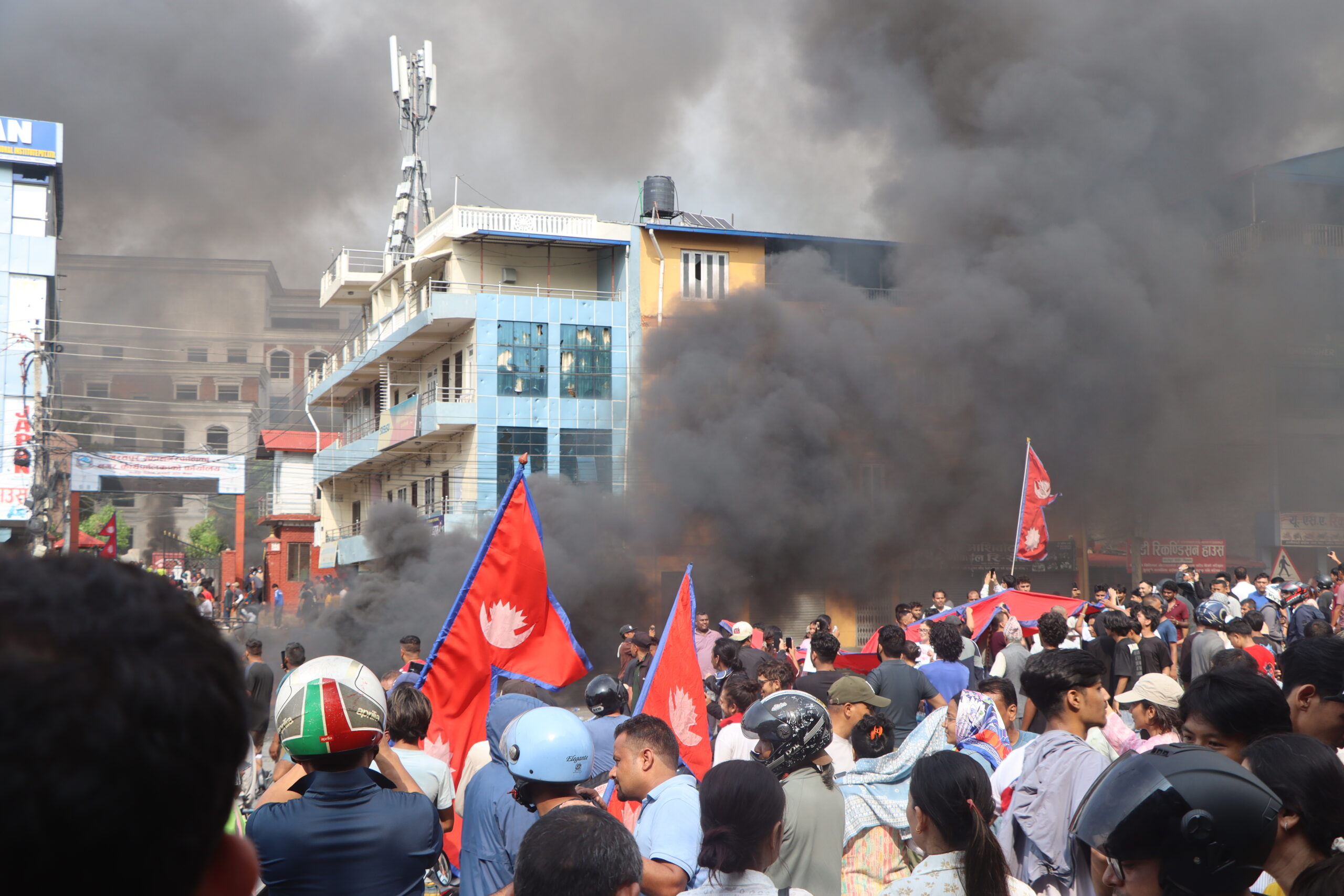
Is Bangladesh’s pre-election scenario is being repeated in Nepal which was the seat of a two day revolt by Gen Z of the country against the ruling K S Oli government in the second week of September this year? Major indications are leading to that, the only difference is that the students protesters in Bangladesh have a nine month old party of their own , but in Kathmandu, the Gen Z leaders and their mentors are still talking without any formal party base to fight the polls.
More than three months after the September uprising in the 2.9 million nation, all the preparations for holding the elections on March 5 next year have been taken. The Election Commission has prepared a voters list of 19 million and 114 political parties have been registered eligible for contests. But finally, the established political parties which ruled the Himalayan nation for the last two decades are mattering in the coming elections, with no strong political combination coming out to challenge the old establishment on behalf of the revolting Gen Z youths who made a history in forcing the then Prime Minister K S Oli to resign following two days of massive protests.
Similarly in Bangladesh, the National Citizens Party(NCP), the party set up by the students demonstrators of July 2024 uprising is failing to make any impact in the current election campaign with the established parties like BNP and Jamaat e Islami dominating as the national elections scheduled on February 12 are approaching. In Nepal, Prime Minister Sushila Karki was chosen by the Gen Z demonstrators to take over as the interim Prime Minister just like Muhammad Yunus was chosen on August 8 2024 by the students demonstrators to act as chief adviser of the interim government in Bangladesh.
Now Nepal’s interim PM is herself a bit frustrated as she finds that the prospects of new faces entering in politics to fight corruption in the government, are bleak. She joined the PM with the hope that as a fighter against corruption all through her career in the Supreme Court of Nepal, she will leave her interim position after ensuring the coming of a corruption free administration, but in recent days, she has been losing hope about the emergence of a New Nepal based on transparency bereft of corruption. Recently she had a meeting with the Citizen Protection Campaign team to discuss corruption and activists demands before the coming national elections.
Talks were held for holding a referendum on some of the major issues relating to eradication of corruption and protection of rights. Karki is expected to take a decision soon on this referendum issue. If she endorses this, this will be again a repeat of what is happening in Bangladesh. On February 12, 2026, in Bangladesh, along with national elections polling, voting will be taking place on referendum also. In Nepal also, the voting on referendum may take place on March 5 itself, if PM Karki approves the referendum proposal.
Nepal’s present Parliament has 334 members-275 to the lower house and 59 members to the upper house. The coalition government is the trend in the country after democracy started functioning following the abolition of monarchy. In the 2022 elections, the Nepali Congress with 89 seats emerged as the largest party but the last ruling coalition was headed by the Prime Minister K S R Oli of the Communist Party of Nepal(Maoist Centre) backed by Nepali Congress and some other parties.. The CPN(UML) is another Communist Party which was the second largest party in the last elections. The schism among the communist parties contributed much to the political instability in Nepal.
As of now, the same parties have come out and campaigning. There are talks of alliance in the 2022 pattern but that has not yet been finalized. All the parties are having internal problems. Nepal Congress leadership is under fire by a number of senior leaders while K S Oli was asked to resign in the last convention but he managed to deal with the dissent and came out as the leader again. Overall, seven parties have national status and the coalition governments are moving around them.
Nearly a fifth of the approved parties are new, with several registered by young activists who played leading roles in the anti-corruption protests that rocked Nepal in September this year. But the [problem is that all these fringe parties have yet to set up organisations to take care of the election battle. There is no guarantee that these parties of the Gen Z activists will have alliance before the elections. The Gen Z talked of unemployment problem in a big way during September uprising, but as of now, they have failed to produce any foolproof plan to deal with the crisis. The World Bank’s latest figures paint a stark picture: 82 percent of Nepal’s workforce is employed informally, and the country’s GDP per capita stood at just $1,447 in 2024. For millions of Nepalis, these are not just statistics—they’re daily realities.
There is still time. It has to be seen whether the Gen Z leaders can work out any common minimum programme among their approved parties and rally their forces to fight the established political parties who have got well oiled poll machinery. Some senior leaders of the Citizen Council as also the Prime Minister Sushila Karki are interested in a composite formation of a group who will fight the March 5 elections on the basis of the demands raised during the September uprising. If that bid for unity succeeds, there is some possibility of a stiff competition from the Gen Z to the traditional political parties. (IPA Service)
The article As Nepal Readies For National Elections On March 5, 2026, Where Is Gen Z’s Party? appeared first on Latest India news, analysis and reports on Newspack by India Press Agency).