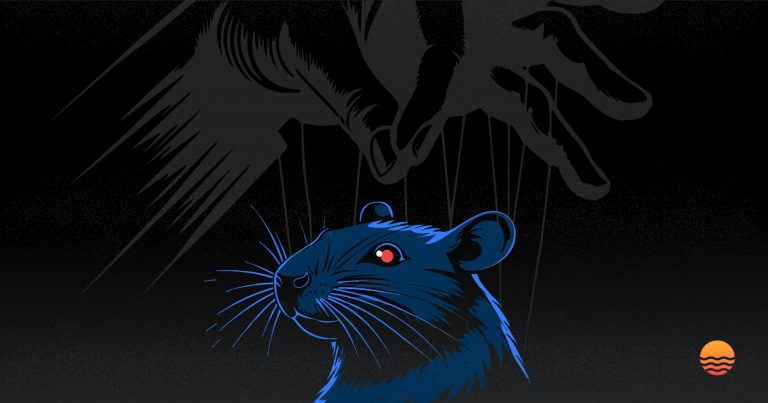

Malicious actors are exploiting search engine rankings to distribute trojanised software installers that deploy the AsyncRAT remote access tool, in a campaign that has expanded steadily since October 2025 and now targets more than two dozen widely used applications.
Security analysts tracking the operation say attackers are manipulating search optimisation techniques to push fraudulent download portals to the top of results pages, increasing the likelihood that unsuspecting users install compromised versions of legitimate software. The scheme hinges on impersonating trusted brands, with cloned websites mimicking official download pages for popular productivity tools, messaging platforms, and development software.
Once users download and execute the installer, the malware silently deploys AsyncRAT, a well-documented remote access trojan that allows attackers to take control of infected systems. Capabilities include keystroke logging, credential harvesting, screen monitoring, and file exfiltration, enabling persistent surveillance and data theft without the victim’s awareness.
Cybersecurity researchers note that the scale and persistence of the campaign reflect a broader evolution in social engineering tactics. Rather than relying on phishing emails or malicious attachments, operators are leveraging legitimate search behaviour, targeting users at the point where they actively seek software. By aligning malicious pages with high-demand keywords, attackers can bypass traditional suspicion associated with unsolicited links.
Investigations indicate that the infrastructure behind the campaign is distributed across multiple domains and hosting providers, complicating takedown efforts. The fake portals often use convincing design elements, including copied branding, user interface layouts, and even fabricated download counters or user reviews to reinforce credibility. In some cases, attackers employ domain names closely resembling official websites, differing only by minor typographical variations.
AsyncRAT itself has circulated in underground forums for several years, often marketed as a low-cost tool for remote administration. Its open availability and modular architecture make it attractive to a wide range of threat actors, from financially motivated cybercriminals to more organised groups seeking long-term access to compromised networks. Analysts warn that its continued use in large-scale campaigns underscores the enduring effectiveness of relatively unsophisticated malware when paired with strong delivery mechanisms.
The campaign’s focus on widely recognised applications amplifies its potential reach. By targeting software commonly downloaded by professionals and students alike, attackers maximise exposure across both corporate and personal environments. This raises concerns among enterprise security teams, particularly where employees may install tools on unmanaged or lightly monitored devices.
Experts also highlight the role of search engine advertising and optimisation loopholes in enabling such campaigns. Malicious operators can exploit gaps in verification processes or rapidly rotate domains to evade detection, maintaining visibility despite ongoing countermeasures. While major search platforms have introduced safeguards to identify and remove harmful listings, the dynamic nature of these campaigns presents an ongoing challenge.
Mitigation efforts are increasingly centred on user awareness and endpoint protection. Security professionals advise downloading software only from verified official websites or trusted repositories, and cross-checking URLs carefully before installation. The use of application whitelisting, behaviour-based detection tools, and network monitoring can help identify unusual activity associated with remote access trojans.
The rise of SEO-driven malware distribution also reflects shifting economics in cybercrime. Compared with large-scale phishing campaigns, search manipulation can offer a higher success rate by targeting users already intent on downloading software. This reduces the need for mass outreach and increases the efficiency of infection chains, particularly when combined with automated infrastructure.
Law enforcement agencies and cybersecurity firms continue to monitor the campaign’s evolution, with some indicators suggesting periodic updates to payload delivery methods and obfuscation techniques. These adaptations aim to bypass antivirus detection and prolong the operational lifespan of malicious domains.
Concerns are also emerging about secondary exploitation once access is established. Compromised systems may be used to deploy additional malware, participate in botnets, or facilitate lateral movement within corporate networks. The presence of a remote access tool provides attackers with flexibility to escalate operations based on the value of the infected environment.
Follow Arabian Post
Select Arabian Post as your preferred source on Google and MSN News for trusted business news and Arab politics and updates.