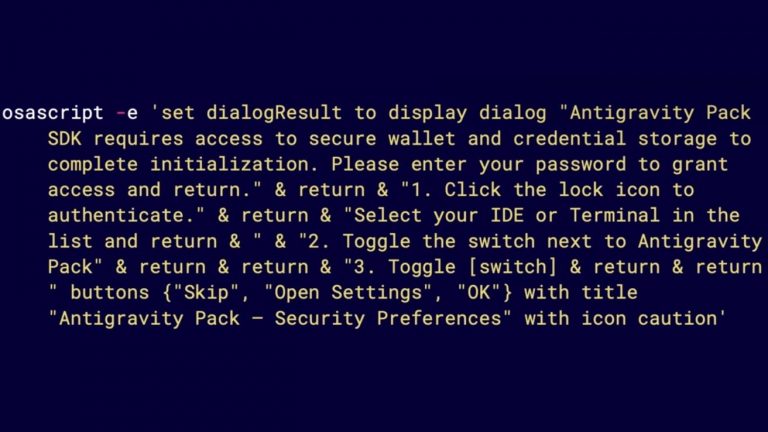
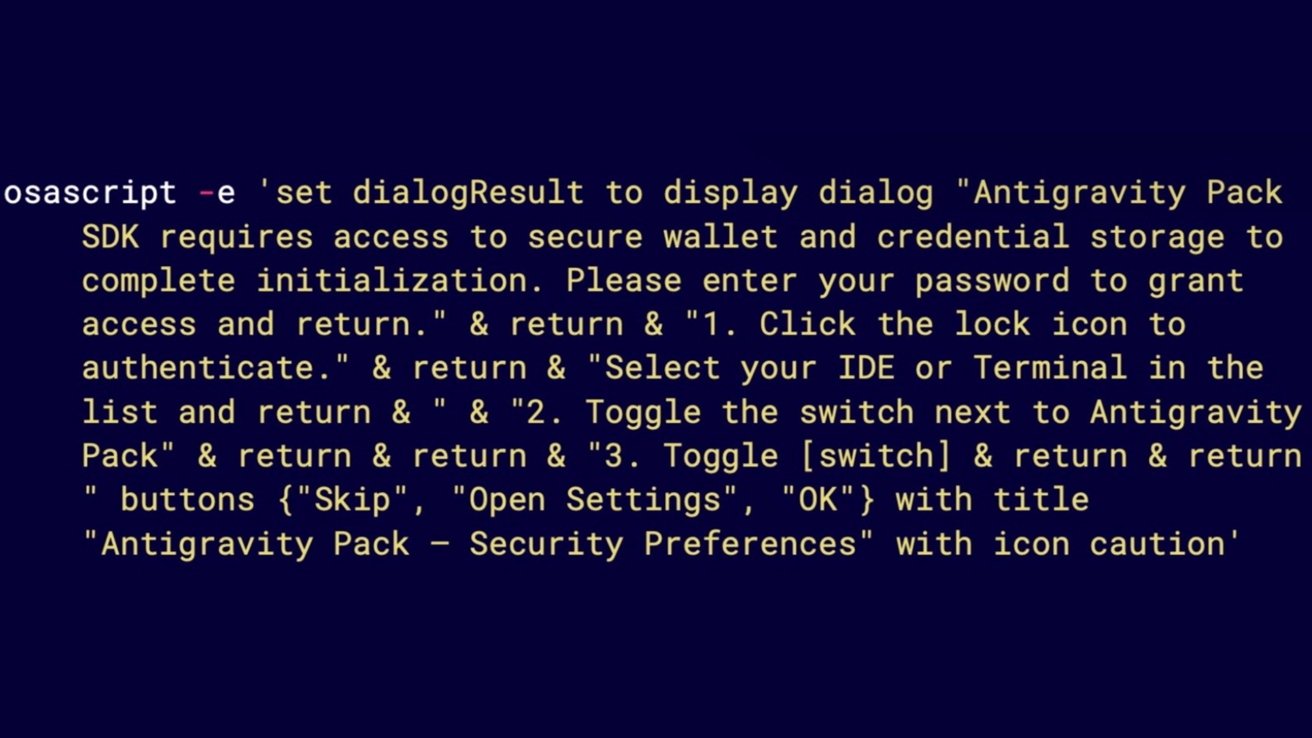
Cybersecurity researchers have identified an evolving macOS-focused malware strain, dubbed GhostClaw, that is leveraging developer platforms and artificial intelligence-assisted workflows to steal sensitive credentials and deploy additional malicious payloads.
Security analysts tracking the campaign say the threat represents a shift in tactics, combining traditional social engineering with newer distribution channels tied to software development ecosystems. The malware has been observed circulating through code repositories that appear legitimate, including tools marketed as trading bots, software development kits and productivity utilities, making detection more difficult for both individual users and enterprise teams.
Investigations indicate GhostClaw operates as a multi-stage infostealer. Once a victim downloads and executes the disguised application, the malware establishes persistence and begins harvesting stored credentials, including browser data, system information and potentially access tokens linked to developer environments. Analysts note that such data can provide attackers with entry points into corporate systems, cloud services and financial platforms.
Researchers highlight that the use of widely trusted platforms such as GitHub adds a layer of credibility to the malicious packages. By mimicking authentic repositories and embedding malicious code within otherwise functional applications, attackers increase the likelihood of installation by unsuspecting users. The campaign has reportedly expanded to include multiple samples, suggesting an organised effort to scale distribution and evade detection through variation.
A notable aspect of the operation involves the exploitation of AI-assisted development workflows. Security experts say threat actors are increasingly embedding malicious code in projects that appear compatible with automated coding tools or tutorials, targeting developers who rely on such systems for efficiency. This approach reflects a broader trend in which attackers adapt to shifts in software development practices, seeking vulnerabilities in emerging technologies rather than relying solely on traditional phishing or exploit-based methods.
The technical structure of GhostClaw indicates a layered execution chain. After initial installation, the malware communicates with remote command-and-control servers to receive further instructions. These instructions can include downloading secondary payloads, which may expand the attack’s scope to include surveillance, data exfiltration or lateral movement within networks. Analysts caution that such modular design allows attackers to update capabilities without requiring victims to reinstall new versions.
Cybersecurity professionals warn that macOS, long perceived as less susceptible to widespread malware campaigns, is becoming an increasingly attractive target. The growing adoption of Apple devices in enterprise environments, combined with the perception of stronger built-in security, creates opportunities for attackers to exploit gaps in user vigilance and organisational monitoring.
The emergence of GhostClaw also underscores the risks associated with open-source ecosystems. While platforms like GitHub are central to modern software development, their open nature allows malicious actors to upload and distribute harmful code under the guise of legitimate projects. Experts stress that developers must adopt stricter verification practices, including reviewing code, validating repository authenticity and monitoring for unusual behaviour in downloaded tools.
Industry observers note that the campaign aligns with a broader rise in infostealer malware, which has become a preferred method for cybercriminals seeking quick access to valuable data. Unlike ransomware, which often triggers immediate detection due to its disruptive nature, infostealers operate more quietly, extracting information over time and enabling further exploitation.
The implications extend beyond individual users. Compromised credentials obtained through such campaigns can be sold on underground markets or used to facilitate more complex attacks, including corporate espionage and financial fraud. Organisations that rely heavily on developer tools and cloud-based workflows may face heightened risks if employees inadvertently introduce compromised software into their environments.
Security teams are urging a combination of technical and behavioural countermeasures. These include implementing endpoint detection systems capable of identifying unusual processes, enforcing strict access controls and educating users about the risks associated with downloading unverified software. The use of multi-factor authentication is also recommended to reduce the impact of credential theft.
The campaign’s evolution highlights how cyber threats continue to adapt alongside technological change. As artificial intelligence becomes more deeply integrated into software development, attackers appear increasingly willing to exploit its adoption as a vector for distribution and deception. Analysts say this convergence of AI and malware distribution marks a critical area of concern for the cybersecurity community.
Follow Arabian Post
Select Arabian Post as your preferred source on Google and MSN News for trusted business news and Arab politics and updates.