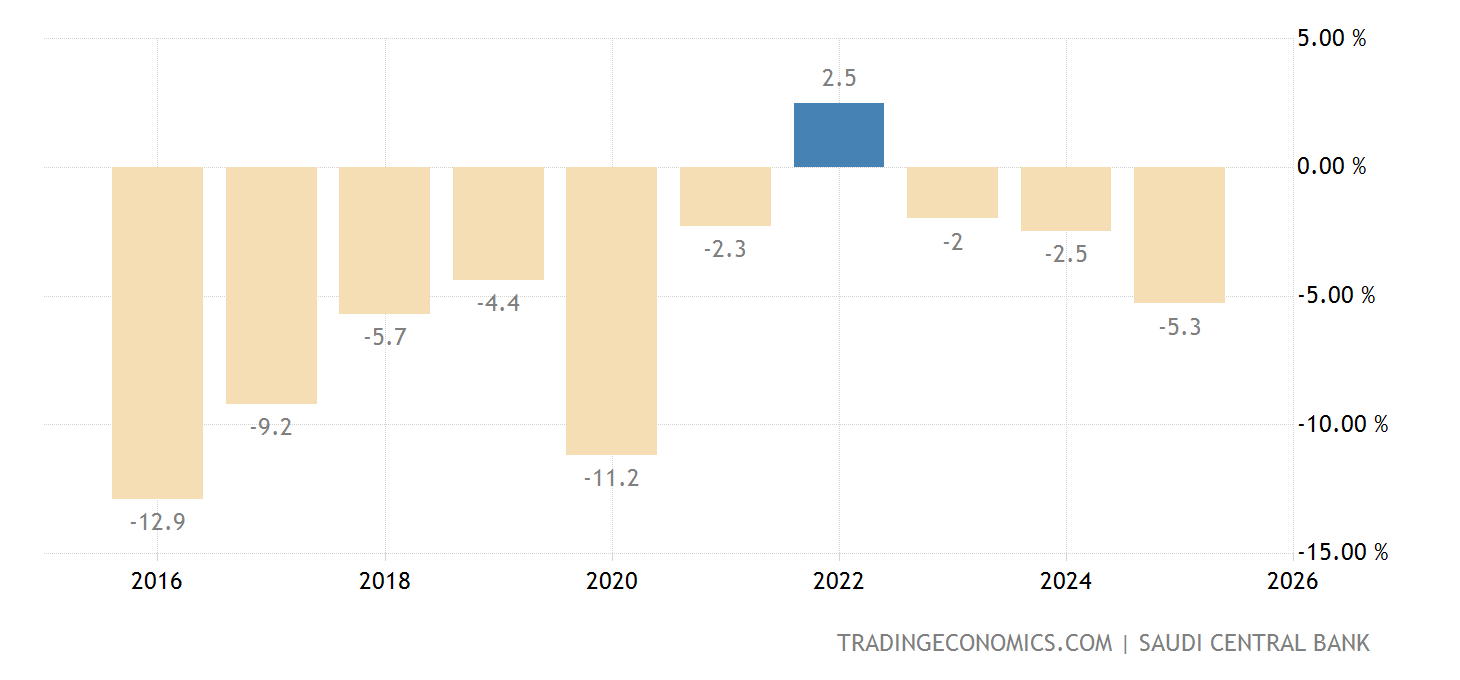
Saudi Arabia has reported a budget deficit of $22 billion for the fiscal year 2023, indicating economic challenges for the oil-dependent nation. The announcement came from the Saudi Ministry of Finance, revealing the financial gap as the country grapples with fluctuating oil prices and global economic uncertainties.
The budget, a key indicator of the nation’s economic health, underscores the impact of various factors on Saudi Arabia’s fiscal stability. Despite efforts to diversify its economy, the country remains heavily reliant on oil exports, making it vulnerable to market fluctuations. The deficit represents a significant challenge for the government in maintaining its ambitious development plans while ensuring financial sustainability.
The Saudi Ministry of Finance attributed the deficit to a combination of lower-than-expected oil revenues and increased government spending. The country’s budget heavily relies on oil-related income, and any volatility in global oil prices can directly affect its financial outlook. Despite ongoing efforts to reduce dependence on oil, the recent deficit emphasizes the need for continued economic diversification initiatives.
As the global economy grapples with uncertainties, Saudi Arabia’s economic challenges are not isolated. The kingdom faces the dual task of mitigating the impact of external factors on its budget while pursuing long-term economic reforms. The government’s Vision 2030 initiative, aimed at diversifying the economy and reducing reliance on oil, becomes even more critical in light of the recent budgetary shortfall.
The 2023 budget deficit is expected to prompt a reassessment of government spending priorities. Saudi authorities may need to review and potentially adjust expenditures to address the fiscal gap effectively. The deficit highlights the importance of maintaining a balance between economic development goals and fiscal responsibility, requiring strategic financial management to navigate the current economic landscape.
The International Monetary Fund (IMF) has been closely monitoring the economic situation in Saudi Arabia and has stressed the need for prudent fiscal policies. The IMF’s recommendations include enhancing non-oil revenue sources, implementing cost-cutting measures, and fostering private sector growth. Addressing the budget deficit will likely involve a combination of these strategies to ensure sustainable economic development.
This article first appeared on The WIRE and is brought to you by Hyphen Digital Network
(The content powered by our AI models is produced through sophisticated algorithms, and while we strive for accuracy, it may occasionally contain a few minor issues. We appreciate your understanding that AI-generated content is an evolving technology, and we encourage users to provide feedback if any discrepancies are identified. As this feature is currently in beta testing, your insights play a crucial role in enhancing the overall quality and reliability of our service. We thank you for your collaboration and understanding as we work towards delivering an increasingly refined and accurate user experience.)
Follow Arabian Post
Select Arabian Post as your preferred source on Google and MSN News for trusted business news and Arab politics and updates.