News related to
Expansion

The Trump administration has urged U. S. states to reverse the full payments of Supplemental Nutrition Assistance Program benefits, which were issued under court orders last week. This push comes after the U. S. Supreme Court intervened, issuing a stay on the judicial rulings that mandated the expanded benefits. The move has reignited a fierce legal and political battle surrounding the administration’s efforts to overhaul the nation’s […]

HONG KONG SAR – Media OutReach Newswire – 10 November 2025 – DL Holdings Group Limited (Stock Code: 1709.HK) today issued a positive profit alert, announcing that based on a preliminary review of the Group’s unaudited management accounts for the six months ended September 30, 2025. It is expected to record a profit of approximately HK$180 million to HK$220 million, compared with a net profit of about […]

International Holding Company, a prominent Abu Dhabi-based conglomerate, has posted significant financial results for the first nine months of 2025, driven by operational efficiency and a diversified investment portfolio. The company reported a 32.3 per cent increase in revenue, which reached Dhs84.6 billion, compared to the same period last year. The impressive growth in revenue was accompanied by an 8.3 per cent rise in net profit, which […]

Dubai’s economy has demonstrated remarkable strength in the first half of 2025, with growth surpassing projections and reaffirming the emirate’s status as a global economic powerhouse. The city’s GDP expanded by 4.4 percent, reaching AED 241 billion, while the second quarter saw a notable 4.7 percent growth, bringing the total GDP for Q2 to AED 122 billion.

Key sectors played a pivotal role in driving this impressive performance. Dubai’s diversified economy, marked by a robust blend of finance, tourism, real estate, and trade, continues to thrive despite global uncertainties. The construction sector also witnessed significant growth, with an influx of infrastructure projects reflecting Dubai’s ambition to maintain its position as a leading global business hub.

One of the standout performers has been Dubai’s financial services industry, which has grown by a substantial margin. This sector’s success is largely attributed to Dubai International Financial Centre, which continues to attract a global clientele seeking access to the region’s thriving markets. With new regulatory reforms and the expansion of digital financial services, the financial services sector remains a cornerstone of Dubai’s economic resilience.

In addition, the real estate sector has shown signs of recovery after a few years of downturn, with both residential and commercial properties seeing increased demand. This growth can be linked to Dubai’s competitive positioning within the global property market, particularly in the luxury and hospitality segments. The city’s focus on international investors and high-net-worth individuals, combined with attractive incentives such as long-term visas and ease of doing business, has further bolstered investor confidence.

Tourism has also been a driving force behind Dubai’s economic growth. The city has seen a steady rise in international visitors, who are drawn to its world-class attractions, shopping festivals, and hospitality offerings. The Dubai Expo 2020, now extended into 2025, has had a ripple effect on the tourism sector, generating further investments and exposure to new global markets. Events and conferences have continued to bring in significant numbers of international guests, contributing to growth in the hospitality, retail, and leisure sectors.

The transportation and logistics sectors have been equally important to Dubai’s continued success. Dubai’s strategic location as a transport and logistics hub for the Middle East, Africa, and Asia continues to give it a competitive edge. Dubai International Airport, which consistently ranks among the world’s busiest airports, has witnessed a surge in passenger traffic, further solidifying its position as a key global aviation hub. Meanwhile, the port sector remains robust, with Dubai Ports World continuing to expand its reach internationally through strategic acquisitions and partnerships.

The emirate’s government has played a significant role in fostering a business-friendly environment, attracting foreign investment and enhancing the ease of doing business. New initiatives such as the Dubai Future Foundation and Dubai 2040 Urban Master Plan have injected fresh momentum into the city’s long-term growth trajectory. Dubai’s commitment to sustainable development, with a focus on green energy and technological innovation, ensures its competitiveness in a rapidly changing global economy.

Dubai’s resilience in the face of global economic challenges speaks to the emirate’s strategic focus on diversification and innovation. The city has managed to stay ahead of the curve by adopting advanced technologies in sectors like finance, healthcare, and education. In particular, the embrace of artificial intelligence, blockchain, and digital innovation has helped Dubai stay at the forefront of global economic trends.


The aeronautical action‑adventure title The Falconeer has received what developer Tomas Sala describes as a “complete re‑imagining,” with the update being offered at no extra cost to all current players. Every major aspect of the game has been overhauled, from art and lighting to performance and environmental systems, signalling a clear pivot in the life of the originally released game. The new edition, dubbed the Revolution Remaster, introduces […]

Dubai’s property market is grappling with a widening supply-demand gap, as the number of completed units lags behind the increasing volume of new project announcements. While developers continue to launch projects at an accelerated pace, experts warn that this could lead to a critical imbalance in the coming years. According to real estate agency Allsopp & Allsopp, a significant discrepancy is emerging between the number of new […]

The GCC bond market has experienced a surge in activity this week, with borrowers from various sectors seizing the opportunity to tap into favourable financial conditions. The tightening of borrowing costs has created a window of opportunity for sovereigns, banks, and corporations, leading to a total of nine mandates being issued.

The rush for capital comes at a time when borrowing costs have reached historically low levels. For many issuers, this represents an ideal moment to lock in cheap debt ahead of any potential future rate hikes. Among the most notable developments in this surge are the issuances of subordinated US dollar-denominated instruments, which have become increasingly popular among borrowers.

Sovereign issuers have been particularly active, with a mix of established and emerging players entering the market to raise funds for various development projects. These sovereign bonds are typically seen as safe investments, attracting strong interest from global investors. The preference for subordinated debt, which is ranked lower than senior debt in the event of default, reflects the confidence investors have in the region’s economic stability despite global uncertainties.

Banks, too, have been prominent participants in this market rally. With liquidity abundant, financial institutions have been eager to raise funds through bonds in order to strengthen their balance sheets and support lending activities. Several major GCC banks have launched bond issues, with a focus on long-term debt offerings to manage their refinancing needs and capital adequacy requirements.

Corporate borrowers, meanwhile, have been drawn to the bond market as a means of financing expansion and strategic initiatives. In particular, companies with strong credit ratings have capitalised on the tight borrowing conditions to secure funding at competitive rates. The demand for subordinated instruments has allowed corporates to issue debt with slightly higher yields, while still benefiting from the current low-rate environment.

One of the key drivers behind this bond market activity is the broader economic stability in the GCC region. Despite global challenges such as oil price volatility and geopolitical tensions, the region’s sovereign wealth funds and strong fiscal management have provided investors with confidence. Additionally, the implementation of economic diversification strategies across the Gulf States has helped bolster investor sentiment.

Another contributing factor is the continued strength of the US dollar, which is pegged to most of the GCC currencies. With the Federal Reserve maintaining its policy stance and the dollar remaining strong, issuers are able to tap into deep liquidity pools from global investors who are looking to park funds in stable currencies. As a result, demand for US dollar-denominated bonds from the GCC remains robust, particularly in the context of tightening global financial conditions.

The trend towards subordinated debt issuance has also been partly driven by investor demand for higher-yielding instruments, as investors seek returns in an otherwise low-interest-rate environment. Subordinated debt typically offers a higher yield due to its increased risk profile, making it attractive for investors seeking greater returns, especially as other asset classes provide limited growth.

Looking ahead, it is expected that this trend will continue in the short term as issuers capitalise on the current favourable market conditions. Analysts predict that the next few weeks may see even more issuances, as sovereigns and corporates look to take advantage of tight borrowing costs before any potential shifts in the global financial landscape.

Advertisements

Abu Dhabi National Oil Company is poised to significantly ramp up its global trading operations, with plans to increase the volume it handles by two-thirds over the next few years. This expansion is part of a broader strategy to strengthen ADNOC’s position on the global stage and tap into new revenue streams. The move signals the growing ambition of the UAE’s state-owned oil giant to enhance its commercial footprint beyond traditional oil and gas production.

Since the establishment of its trading arm in 2018, ADNOC has been gradually building its global network, positioning itself as a major player in international energy markets. The company has already set up trading offices in key financial hubs such as Singapore and Geneva, with the United States next on its list. This expansion is seen as a strategic initiative aimed at consolidating ADNOC’s presence in both the fuel trading and energy markets, where it competes with some of the world’s largest oil companies.

Ahmed Bin Thalith, CEO of ADNOC Global Trading, outlined the company’s goals during a recent interview. He explained that ADNOC’s trading operations are central to its broader strategy of extracting greater value from the fuel produced not only in the UAE but from global markets. Thalith emphasized that the expansion of the trading unit is integral to ADNOC’s vision of becoming a more diversified energy enterprise, moving beyond its traditional role as a major oil producer.

The UAE, known for its vast reserves of oil and natural gas, is under pressure to diversify its economy, which is heavily dependent on hydrocarbons. By expanding its trading operations, ADNOC seeks to secure additional revenue streams from the global sale of fuel products, a vital step as the world moves towards a more sustainable energy future. The move aligns with the UAE’s broader vision of positioning itself as a global energy hub, diversifying into renewable energy and other industries, such as technology and manufacturing.

ADNOC’s global trading expansion follows a series of similar moves by other Gulf oil companies seeking to broaden their operations beyond the traditional export of crude oil. Companies like Saudi Aramco have been pursuing similar strategies to increase their influence in the global energy trading market. However, ADNOC’s strategy to build a robust trading platform since 2018 gives it a more established presence in the field. The company is now looking to leverage its growing infrastructure to manage an even greater volume of trades, both within the Middle East and globally.

In addition to expanding its physical presence in strategic locations, ADNOC Global Trading is also exploring new technologies to improve its operations. This includes the use of data analytics and advanced digital tools to monitor and predict market trends, a crucial aspect for maintaining competitiveness in the volatile global energy market. By integrating cutting-edge technology into its trading practices, ADNOC aims to stay ahead of the curve and better position itself in a market where agility and adaptability are paramount.

The decision to enter the U. S. market is one of the more ambitious elements of ADNOC’s expansion plans. The company aims to tap into the largest energy market in the world, which has seen significant changes in recent years due to the shale revolution and growing interest in alternative energy sources. By establishing a presence in the U. S., ADNOC hopes to gain access to new trading opportunities, as well as foster relationships with key players in the global energy sector.

The expansion also reflects ADNOC’s long-term vision of becoming a more diversified energy company that is not solely reliant on crude oil exports. The UAE has been increasingly investing in renewable energy, and ADNOC’s trading division is seen as a key pillar in achieving this transition. As part of its sustainability strategy, ADNOC has set ambitious targets for reducing its carbon footprint and increasing its investment in cleaner energy technologies, including solar power and hydrogen.

Two-day forum explores AI and blockchain venture capital landscape, unveiling new global capital trends HONG KONG SAR – Media OutReach Newswire – 7 November 2025 – Cyberport’s flagship event, the Cyberport Venture Capital Forum 2025 (CVCF), achieved a record-breaking over 500 deal flows, with more than 2,700 attendees and over 180,000 online views. Themed “The Innovation-Venture Nexus: Igniting Transformative Success”, the two-day forum, together with highlight events […]

Kenya’s leading telecommunications provider, Safaricom, has announced a significant 55 per cent increase in its half-year profits for 2025, driven by robust growth in data services and mobile transactions. The company, which holds a dominant position in East Africa’s telecom market, has seen a notable recovery in its performance following challenges in its Ethiopian venture. The surge in profits comes as Safaricom has navigated through the hurdles […]

Iron ore prices have continued their downward trend, heading towards their most significant weekly decline since February. The ongoing drop in prices is being driven by sluggish demand for steel in China and the tightening profit margins faced by steel mills. These factors have raised concerns about the overall stability of the global iron ore market, particularly in the world’s largest consumer, China.

Steel mills in China, which are the primary drivers of iron ore demand, are facing significant challenges due to rising input costs and tighter margins. The country’s construction and manufacturing sectors, which consume a large portion of steel, have struggled to gain momentum amid slower economic growth. With high input costs and a slowdown in industrial activity, many steelmakers have been forced to curb production, leading to reduced demand for iron ore.

At the same time, steel prices have also been under pressure, further exacerbating the squeeze on mill margins. While there were hopes for a recovery earlier in the year, the anticipated rebound in steel demand has yet to materialise, as economic conditions in China remain uncertain. The country’s industrial output has shown signs of stagnation, with infrastructure projects failing to meet expectations and housing activity continuing to struggle.

In addition to weak demand, iron ore prices have also been affected by rising supply levels. Brazilian mining giant Vale, one of the largest iron ore producers globally, has increased production in recent months, adding to the market’s supply glut. Vale’s expansion of its operations has helped to further ease supply concerns that have plagued the market over the last few years. However, this has created a situation where the supply of iron ore is outpacing demand, particularly given the subdued consumption from China’s steel mills.

The combination of oversupply and weakening demand has led to a decline in iron ore futures. The most actively traded contracts have experienced a significant fall in recent trading sessions, reflecting the broader bearish sentiment in the market. Prices have dropped by as much as 6% this week, marking a notable setback for an industry that had previously seen strong growth due to the post-pandemic recovery phase.

Global iron ore producers are feeling the impact of these declines as well. Companies such as Rio Tinto and BHP have faced a slowdown in earnings growth, despite their dominance in the market. Lower iron ore prices have put pressure on the profitability of these companies, leading to recalibrated forecasts for the rest of the year.

China’s role in the iron ore market remains critical, with the country accounting for over half of global iron ore consumption. However, the shift in the country’s steelmaking practices, including a push towards cleaner and more sustainable steel production, has led to concerns that long-term demand may not be as robust as previously expected. Furthermore, the government’s increasing focus on reducing emissions could eventually affect steel production levels in the country.

Despite these challenges, analysts believe that iron ore prices are unlikely to fall precipitously in the coming months. While demand from China may remain subdued, global steel production is expected to recover in other regions, such as Europe and North America. This could provide some support for iron ore prices, although the pace of recovery remains uncertain.

Pine Labs, a prominent Indian fintech firm, has raised a substantial Rs 1,754 crore from anchor investors in preparation for its initial public offering. The move signals strong investor interest ahead of the opening of the IPO on November 7, where shares will be priced within a range of Rs 210 to Rs 221 each.

The anchor investors, who are typically large institutional entities, have been allocated a significant portion of the shares to help stabilise demand for the listing. Among these investors are major domestic and international institutions, including mutual funds, insurance companies, and global financial entities. These strategic investments are expected to provide a solid foundation for Pine Labs’ public debut, further solidifying its position as a leader in the digital payments space.

The company, which is known for providing payment solutions to merchants across Asia and the Middle East, has seen significant growth in recent years, driven by the increasing adoption of cashless transactions and digital payment technologies. The funds raised from the anchor investors will enable Pine Labs to expand its offerings and continue developing cutting-edge solutions for a rapidly evolving market.

The upcoming IPO, which marks a key milestone in the company’s growth trajectory, is expected to attract substantial attention from retail and institutional investors alike. Pine Labs’ business model, which focuses on providing a wide range of payment solutions, has become increasingly relevant in a time when businesses and consumers alike are moving towards digital and contactless payment methods.

Pine Labs is well-positioned to capitalise on the growing demand for digital payment infrastructure. The company has a broad customer base that spans a wide array of industries, including retail, travel, and hospitality. This diverse portfolio allows Pine Labs to weather fluctuations in specific sectors while benefiting from overall trends towards digital transformation.

The funds raised will also support Pine Labs’ ongoing efforts to expand its geographical footprint and penetrate new markets. The company plans to increase its presence in Southeast Asia and the Middle East, where digital payment adoption is growing rapidly. This expansion is part of a broader strategy to become a leading player in the global digital payments ecosystem.

In addition to its core payment services, Pine Labs has been investing in expanding its offerings to include more advanced financial products. The company has introduced services like BNPL, which has garnered attention as a growing trend in the consumer finance space. By diversifying its product range, Pine Labs aims to attract new customers and deepen its relationships with existing clients.

Despite the competitive nature of the fintech industry, Pine Labs has demonstrated a strong track record of financial performance, which has helped to bolster investor confidence in its upcoming IPO. The firm has managed to build solid relationships with leading financial institutions and tech companies, giving it access to capital, resources, and cutting-edge technologies.

The European Commission has introduced the “Small Cars Initiative,” a new strategy designed to make small electric vehicles more accessible to European consumers. This move, coming at a time when China’s dominance in the global electric vehicle market continues to rise, aims to ensure Europe’s competitive position in the EV sector. The initiative is part of Europe’s broader efforts to transition to greener technologies and reduce dependence […]

A forecast from global property and advisory firm BlackBrick indicates that villa communities in Dubai are entering a phase of measured growth, as end-users and investors increasingly favour data-driven decisions over speculative leaps. The firm highlights key drivers behind villa demand in Q4 2025, underlining Dubai’s resilience in luxury real-estate.

According to founder and CEO Matthew Bate, the villa segment is evolving into “an era of intelligent luxury” where lifestyle and long-term value count more than sheer size or opulence. He states that buyers are now prioritising spaces with breathing room, community connection and ownership of land rather than just lavish finishes.

BlackBrick’s outlook identifies several communities expected to outperform over the next 12 months. Among them are Al Barari and Arabian Ranches where projected gains of 15-20 per cent are indicated, while Jumeirah Islands and Jumeirah Golf Estates are assigned more modest growth expectations of 7-12 per cent.

The underlying dynamics reflect broader trends in Dubai’s residential market. Analyst estimates show that prime villa prices increased by 94 per cent between Q1 2020 and Q4 2024, signalling sustained appetite for villa ownership in the emirate. Supply remains tight in several key enclaves, underpinning market strength. According to market commentary, villas continue to command a premium due to their scarcity and appeal to families, expatriates and high-net-worth individuals seeking long-term domiciliation.

BlackBrick’s forecast emphasises five main demand drivers. These include the appeal of open layouts and natural light; ownership of land; upgrade potential in older stock; community-focused living in gated compounds; and timeless design replacing overt extravagance. Bate argues that sustainable growth founded on genuine demand and limited supply reinforces market quality.

From a broader perspective, villa markets in Dubai are benefiting from macro-drivers such as population growth, global mobility and favourable tax frameworks. Consultant data suggests villa and townhouse sales accounted for 20 per cent of transactions but 42 per cent of total sales value in one recent quarter-year period — pointing to concentrated value capture in this segment. Meanwhile rental yields for villas and townhouses continue to remain attractive, further bolstering investor interest.

However, the market is not without caveats. The high entry cost for villas means that affordability remains a barrier to broader participation. While growth has been strong, analysts caution that the pace of appreciation may moderate as the market enters its maturity phase. One consultancy anticipates single-digit annual growth in prime villas going forward. Additionally, investors and buyers are advised to carefully consider developer track-records and listings pipelines, given limited resale inventory in select luxury enclaves.

Data-led brokers like BlackBrick suggest that the path ahead is less about aggressive expansion and more about sustained value capture. End-users, long-term residents and seasoned investors are shaping the villa market’s next chapter — one anchored in lifestyle, location and land ownership, rather than speculative upside alone. The hallmark now is thoughtful investment in vetted communities with established infrastructure, strong connectivity and recognized quality.

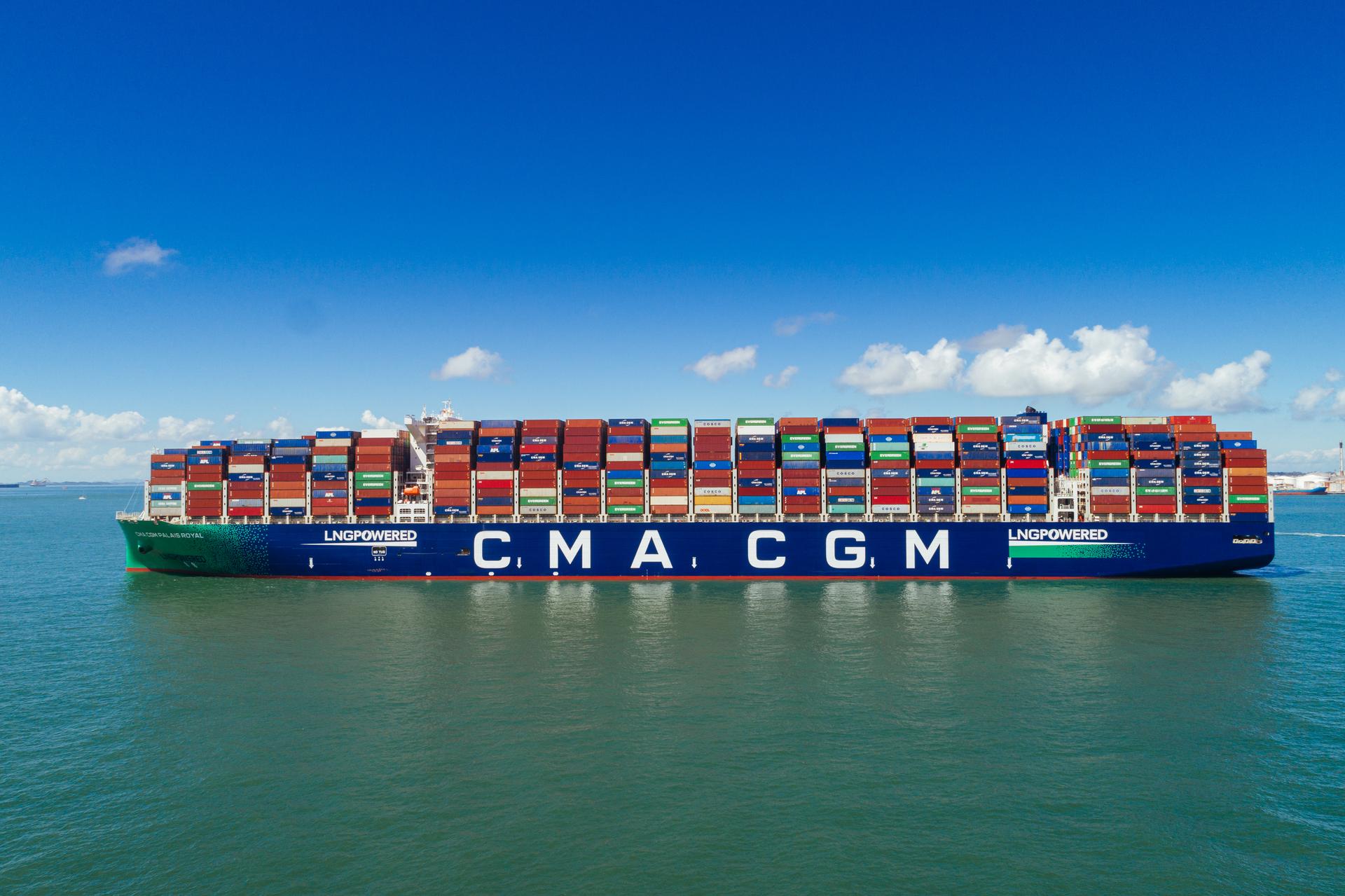
Abu Dhabi-headquartered AD Ports Group has reached a joint venture agreement with France’s CMA CGM Group to acquire a 20 per cent stake in the Latakia International Container Terminal in Syria for USD 22 million. The deal followed the ratification of a shareholders’ agreement signed in Abu Dhabi by Captain Mohamed Juma Al Shamisi, Managing Director & Group CEO of the AD Ports Group, and Rodolphe Saadé, Chairman & Chief Executive Officer of CMA CGM. The terminal handles over 95 per cent of Syria’s container traffic and is vital for the country’s agricultural export flows and industrial imports.

The new partnership builds on an existing franchise: CMA CGM has operated LICT since 2009 and in May this year signed a 30-year concession with Syrian authorities to expand and modernise the facility with a €230 million investment. Under this expansion plan the terminal’s capacity will scale from around 250,000 twenty-foot equivalent units to approximately 625,000 TEUs by the end of 2026. The AD Ports stake brings fresh funding, regional logistics know-how and establishes a feeder-service linkage via GFS expected to call Latakia in its emerging network.

Analysts note combining AD Ports’ digital-and-logistics platforms with CMA CGM’s terminal-operations experience offers a synergetic boost. Captain Al Shamisi described the deal as reinforcing AD Ports’ role as a “global enabler of trade, logistics and industry” and strengthening its international footprint; Saadé said it underscores CMA CGM’s commitment to the Eastern Mediterranean corridor. Yet risks remain: Syria’s infrastructure base was severely weakened by years of conflict, sanctions regimes remain in flux, and the geopolitical security climate in the Eastern Mediterranean remains volatile. In particular the coastal region around Latakia must contend with residual logistical bottlenecks and war-damaged hinterland links.

From a strategic viewpoint, the deal gives AD Ports exposure to an under-served Mediterranean gateway that has long been overshadowed by Cyprus, Turkey and Egypt. For CMA CGM it provides a partner that can bring capital, Gulf-region networks and feeder-service integration. It also aligns with Syria’s aim to attract foreign investment into its trade infrastructure under recent reforms, aiming to rehabilitate its war-impacted logistics chains and boost maritime connectivity. Governance observers point out that this investment marks one of the first substantial Gulf-region port-logistics ventures in Syria since the cessation of major international sanctions, signalling a potentially broader shift in regional trade flows.

Operationally, the agreement will focus on upgrading terminal infrastructure, digitising cargo-handling and container-tracking systems, enabling larger vessels by deepening docks and extending quays, and integrating feeder-shipping links. LICT’s current capacity constraints mean that the joint venture must invest quickly to meet anticipated growth in Syrian cargo volumes, especially agricultural exports and industrial imports. The container terminal’s status as the main node for land-locked regions within Syria gives it strategic significance beyond the coast: improved throughput at Latakia could ease pressure on border crossings and reduce logistics delays for inland cargo flows.

CEOs across Africa are signalling substantial confidence in their firms’ growth prospects, driven by plans for increased hiring and investment in artificial intelligence, according to a newly published survey by KPMG. The study shows that 79 % of surveyed executives believe their own organisations will grow, while 88 % plan staff increases within the next year. The survey, covering more than 130 executives across the continent, reveals […]

Saudi Arabia’s two leading technology infrastructure firms, HUMAIN and DataVolt, have entered a strategic partnership aimed at creating a multi-gigawatt-scale data-centre pipeline designed to support high-intensity artificial-intelligence workloads within the Kingdom. The alliance seeks to mobilise capacity on a scale rarely seen in the Middle East and forms a significant step in the country’s broader ambition to become a global AI hub. HUMAIN, a state-backed AI company […]

A prominent figure in the cryptocurrency world, Michael Saylor, has publicly declared that Bitcoin is “on sale”, signalling both bullish conviction and market caution in one of the most high-profile corporate crypto strategies. Saylor’s remarks, made via social-media post, come as Bitcoin slipped below the US $100,000 mark and as corporate and institutional appetite for the asset undergoes intense scrutiny.

Saylor, executive chairman of Strategy Inc., posted the phrase “₿itcoin on Sale” on his account, highlighting a rare moment of acquisition opportunity in his view. That post coincided with Bitcoin’s price retreat to just over US $103,000, following a sharp drop from its earlier peak above US $126,000. His firm continues to amass holdings at an average cost far below current market levels, reinforcing his narrative of seizing value amid volatility.

The strategy deployed by Saylor’s company remains centred on treating Bitcoin as a treasury asset rather than a speculative bet. Strategy now holds tens of billions of dollars worth of Bitcoin and has publicly declared an intention not to liquidate those holdings. Analysts estimate that the company faces around US $689 million in annual obligations—dividends, interest and operating costs—that will need to be met without selling crypto holdings. Failure to meet those obligations could force asset sales, but so far the company expects to service its debt and dividend commitments through equity issuance and other financing mechanisms rather than Bitcoin liquidation.

Saylor has reiterated a long-term price target of around US $150,000 for Bitcoin by the end of 2025, citing institutional demand, limited supply and the “digital gold” narrative that underpins his thesis. While that target remains ambitious, it signals the degree to which Strategy is doubling down on a one-asset treasury model. The company’s stock continues to trade at a significant premium to its net Bitcoin holdings, a premium build on investor belief in Saylor’s ability to deliver accretion of Bitcoin per share over time.

Market sentiment, however, tells a more cautious story. Bitcoin’s drop below US $100,000 has triggered outflows from spot-Bitcoin ETFs in the United States exceeding US $1.3 billion, according to data providers. At the same time, Strategy’s own valuation now absorbs significant risk: should Bitcoin stagnate or decline, the company’s heavy reliance on equity issuance to meet its obligations exposes existing shareholders to dilution. Critics such as prominent short-seller James Chanos have labelled the model “financial gibberish”, arguing that investors would be better off buying Bitcoin directly rather than trusting a leveraged equity vehicle.

Still, Strategy retains a cadre of committed supporters who believe the model is defensible if Bitcoin enters a sustained phase of adoption. Analysts covering the company have reaffirmed “buy” ratings and note that Saylor’s team does not appear to be slowing its accumulation of Bitcoin. That continued accumulation supports the “scarcity” argument Saylor advances, namely that corporate and institutional hoarding will reduce the available float and push prices higher.

The broader market context underscores the tension between optimism and caution. Bitcoin proponents emphasise macroeconomic factors such as inflation hedging, central-bank balance-sheet expansion and quantitative easing as tailwinds. Detractors point to regulatory risk, rising interest rates, and the possibility that the current cycle may be peaking or entering a correction phase. Within that dynamic Saylor’s “on sale” statement serves both as a rallying cry and a courageous public stance in a volatile landscape.

Cyberport Welcomed 10 Listed Companies and 2 Unicorns over the past year Cyberport Investors Network (CIN) Celebrates 8th Anniversary with a Yearly Threefold Growth Cumulative Funds Surpassed HK$4.2 Billion HONG KONG SAR – Media OutReach Newswire – 6 November 2025 – The annual flagship event Cyberport Venture Capital Forum 2025 (CVCF) officially opened today at Hong Kong Cyberport. The two-day forum, themed “The Innovation-Venture Nexus: Igniting Transformative […]

Turkish Airlines has finalised a landmark agreement with GE Aerospace to supply engines, spare engines and maintenance services for 75 Boeing 787-9 and -10 wide-body jets that the carrier has committed to acquiring. The deal covers the fleet due for delivery between 2029 and 2034 and marks a major step in the airline’s long-haul modernisation strategy.

The engine deal follows Turkish Airlines’ earlier announcement that it will purchase 75 Boeing long-haul aircraft as part of its fleet expansion. The airline stated that a full tender process for the engine, spare engine and maintenance package has been completed, culminating in the selection of GE Aerospace. The aircraft order is scheduled for delivery in the late-2020s and early 2030s.

Industry analysts note that the package offers Turkish Airlines integrated engine support over the lifecycle of the jets, aligning maintenance and spare-parts provisioning with its growth plans. The choice of GE Aerospace underscores the airline’s preference for a single-vendor solution, reducing complexity and potentially lowering long-term operating costs. Turkish Airlines’ chairman, Ahmet Bolat, stated that the airline expects to meet with Boeing and engine-supplier partners in the coming weeks to finalise its broader narrow-body fleet deals.

The wider fleet strategy to which this engines deal belongs involves Turkish Airlines’ intent to order up to 225 Boeing aircraft, including 75 wide-bodies and 150 narrow-body Boeing 737 MAX jets. That larger order remains subject to engine and maintenance negotiations for the 737 MAX fleet, in particular involving the joint-venture supplier CFM International. The engagement with GE Aerospace for the 787 bundle signals progress in the long-haul component of the airline’s transformation.

From a broader perspective, the engine deal comes at a time when global airlines are aggressively renewing fleets to improve fuel efficiency, reduce emissions and capture growth in international travel. The 787-9 and 787-10 variants are among Boeing’s most modern long-haul offerings, featuring advanced engines, aerodynamic enhancements and lower fuel burn. For GE Aerospace, securing the Turkish Airlines contract strengthens its market position in the wide-body market, where engine aftermarket services and spare-parts businesses constitute major revenue streams.

However, challenges lie ahead for Turkish Airlines. Deliveries of the 75 aircraft are spread out across 2029 to 2034, which means that the full benefits of the programme will not be realised for several years. Additionally, the narrow-body fleet deal remains unresolved, and any delay or change in that part could impact the airline’s overall fleet plan. The engine market itself is under pressure: supply-chain constraints, rising maintenance costs and global competition among engine makers could affect delivery schedules and pricing. For GE Aerospace, while the contract is valuable, it also carries long-term service-commitment risks, especially given the complexity of wide-body fleet operations.

Financial market observers say the announcement may provide a boost to Boeing’s orderbook visibility and reassure suppliers about long-term demand. Boeing will need to coordinate closely with GE Aerospace to support Turkish Airlines’ maintenance-and-spares demands, and the success of this deal may influence competitive dynamics for future orders from other carriers. For Turkish Airlines, the ability to ramp up long-haul services with modern aircraft may enhance its hub connectivity, strengthen its international reach and improve cost-competitiveness versus rivals.

Business conditions across the United Arab Emirates’ non-oil private sector eased with the headline S&P Global UAE Purchasing Managers’ Index slipping from 54.2 in September to 53.8 in October. Growth remained above the mid-year trend but the moderation highlights emerging caution amid new challenges. The decline in the PMI reflects a tempering of momentum, notably in hiring and new business orders. While the headline index still signals […]

Canada is set to introduce a comprehensive federal framework aimed at regulating fiat-backed stablecoins under its 2025 budget. The plan mandates issuers to maintain full asset reserves, enforce redemption policies, and deploy robust risk-management and data-security protocols.

The regulatory scheme will be overseen by the Bank of Canada under the existing Retail Payment Activities Act, with the BoC allocating CAD 10 million over two years beginning in the 2026-27 fiscal year for implementation. Administration thereafter is expected to cost around CAD 5 million annually, to be offset through regulated-issuer fees.

This approach aligns Canada with the global trend in digital-asset regulation. The United States passed its own stablecoin legislation in July, placing pressure on Canada to move with similar urgency. The international stablecoin market currently stands above USD 300 billion and is projected to reach USD 2 trillion by 2028.

Regulated issuers will face specific requirements: they must hold reserves sufficient to cover outstanding stablecoins, enable immediate redemption at par value, and adopt risk protocols covering operational, credit, and market exposures. Issuers also must protect consumers’ personal and financial data and support national-security safeguards. Entities already operating as payment-service providers may need to transition under the Retail Payment Activities Act if they issue “prescribed stablecoins”.

Industry reaction has been broadly positive. The Canada arm of Coinbase called the framework “a watershed moment” that will “change how Canadians interact with money and the internet”. Fintech firms such as Tetra Digital and Wealthsimple, which are developing Canadian-dollar stablecoin offerings, have welcomed clarity of regulation as unlocking innovation. Nonetheless, some market commentators caution that tighter regulation must avoid stifling fintech entrants or pushing innovation offshore.

Canada’s decision follows a growing regulatory impetus. The BoC had earlier urged federal and provincial authorities to coordinate efforts on stable-coin regulation and payment-system modernisation, highlighting that Canada’s payment infrastructure lagged that of other advanced economies.

The timing of the regulatory initiative is notable. While the budget itself does not specify the exact date when the legislation will be tabled, it signals a shift toward payment-ecosystem reform. The budget also signals expansion of the BoC’s oversight of payment-service firms and accelerated deployment of the Real-Time Rail payments system expected to launch in 2026.

Analysts see multiple drivers behind the move: protecting consumers from stable-coin issuer failure; preserving monetary sovereignty by keeping domestic transactions off unregulated foreign stablecoins; encouraging competition and innovation in the payments sector; and aligning with international regulatory frameworks as digital assets blur traditional banking boundaries.

Some key challenges lie ahead. Defining which tokens qualify as “stablecoins” under the framework, and carving the issuer view between payment-instrument regulation and securities regimes at the provincial level, remain open. Enforcement mechanisms, cross-border coordination, and transitional arrangements for existing issuers will also test regulators’ capacity.

Under the announced funding plan, the BoC will allocate CAD 10 million over the first two years to establish regulation of stablecoin issuance and oversight, beginning in the 2026-27 fiscal period. Ongoing annual oversight costs of CAD 5 million will be recouped via licensed-issuer fees. Regulators assert that the initiative will support faster, cheaper and safer payment flows for Canadians while reducing reliance on unregulated digital tokens.

The Abu Dhabi Investment Authority has secured a 4.7 per cent stake in the initial public offering of India’s investment-platform operator Groww, acquiring approximately 14 million shares via its India subsidiary Monsoon for 1.4 billion rupees. The investment was made through two separate transactions ahead of Groww’s IPO, in which 298.45 million equity shares were earmarked for institutional investors.

Groww’s anchor book raised 29.8 billion rupees from 102 institutional investors ahead of its public offer, which opens on 4 November and aims for a valuation of around US$754 million. The Government of Singapore committed 1.39 billion rupees in the anchor round for a 4.68 per cent stake.

The depth of anchor demand underlines strong institutional confidence in the Bengaluru-based company. The anchor tranche accounted for five out of the six largest global sovereign-wealth funds involved, and domestic mutual funds took nearly half of the allotted 29.84 million shares in the anchor raise at a unit price of ₹100. Groww’s parent, Billionbrains Garage Ventures, will deploy fresh issue proceeds for cloud-infrastructure upgrades, brand building and margin-trading facility expansion.

Groww faces a turning point as it transitions beyond core broking. In the quarter ended June 2025, broking revenue accounted for 79.5 per cent of total revenues, down from 87.4 per cent a year earlier, as the company ramps enrollment in commodities, bonds and margin-trading services. With strong backing from marquee institutional players, Groww appears to be counting on growth in wealth-management, lending and derivatives to justify its IPO valuation.

The involvement of ADIA gives Groww not only capital but credibility in the public markets. For the Abu Dhabi fund, the deal provides further exposure to India’s dynamic fintech ecosystem as it continues to expand its footprint through Asia-focused growth equity deals. The participation of the Government of Singapore and multiple global asset managers reinforces the message that the Indian retail-investment rally still commands global attention.

The Czech-based registry operator CZ. NIC has launched its new second-generation router, the Turris Omnia NG, which incorporates swappable Wi-Fi and cellular modules alongside a lifetime automatic update policy, signalling a push towards longer-term home network hardware. At its core the Turris Omnia NG runs a quad-core ARMv8 64-bit processor clocked at 2.2 GHz and features a passively-cooled design to deliver silent operation under heavy load. The […]

VISHNU RAJA
RYO YAMADA
HITORI GOTOH
IKUYO KITA