News related to
Google

A public beta of Zorin OS 18 has been launched, offering a reimagined interface and a suite of tools aimed at easing the migration from Windows as support for Windows 10 ends on 14 October 2025. The developers position this release as a compelling alternative for PCs that don’t qualify for Windows 11, while businesses, schools and individual users explore paths away from Microsoft’s ecosystem. The new […]

Google has introduced a “Help me schedule” feature inside Gmail that leverages its Gemini AI to suggest meeting times based on both email context and calendar availability. When the system detects language in a composed email indicating intent to set up a meeting, it surfaces a “Help me schedule” button in the toolbar. Clicking that prompts Gemini to analyse your Google Calendar and the tone and content […]

By Girish Linganna The prisoner-hostage exchange between Israel and Hamas has been completed successfully, and many are calling it a major victory for peace. Twenty Israeli hostages returned home in exchange for about 2,000 Palestinian prisoners, aid started flowing back into Gaza, and guns fell silent after months of devastating conflict. But anyone familiar with […]

The article A House Built On Sand: The Fault Lines In Trump’s 20 Point Gaza Peace Plan appeared first on Latest India news, analysis and reports on Newspack by India Press Agency).

By K Raveendran Oil prices fell to their lowest level in five months on Tuesday, continuing a slide that has gathered pace over the past several weeks. The benchmark Brent and West Texas Intermediate crude futures have both dipped significantly, erasing much of the year’s earlier gains. In stark contrast, gold has soared to an […]

The article Gold Feeds On Oil’s Misfortune; One Hits The Roof, The Other Down In The Dumps appeared first on Latest India news, analysis and reports on Newspack by India Press Agency).

Al Mal Capital REIT has sealed its first move into the healthcare sector by acquiring the real estate asset housing NMC Royal Hospital in Dubai Investments Park. The transaction lifts AMCREIT’s portfolio valuation to around AED 1.4 billion across six assets. The facility spans 492,332 square feet and comprises two hospital blocks alongside a fully leased commercial wing. The hospital, which supports nearly 120 inpatient beds, outpatient […]

Sharjah’s government has successfully raised Rmb 2 billion by issuing a three-year panda bond in China’s onshore renminbi market. The issuance marks the emirate’s return to the panda bond space after its inaugural foray seven years ago. The pricing range for the bond was initially indicated in the 2.5 % to 3.2 % area. The transaction was arranged through a syndicate led by Bank of China, with […]

By Nitya Chakraborty On October 10, the Nobel Prize Committee awarded the Peace prize for the year 2025 to the Venezuelan right wing politician Maria Corina Machado who has been working for the last few years for the removal of the President Nicholas Maduro from his office. The White House initially reacted that the Nobel […]

The article Trump Has Not Got Nobel Peace Prize But The Winner Machado Is His Acolyte In Latin America appeared first on Latest India news, analysis and reports on Newspack by India Press Agency).

Advertisements

Alphabet’s Google will commit $10 billion to develop a 1-gigawatt data centre and artificial intelligence infrastructure in Visakhapatnam, Andhra Pradesh, marking its largest investment in India to date, state officials have confirmed. A formal MoU is to be signed today to solidify the partnership.

The data centre campus across three sites — Tarluvada, Adavivaram and Rambilli — will form a hyperscale cluster integrated with AI computing capacity, robust fibre-optic links and dedicated power supply, including renewable energy sources. The initiative is central to Andhra Pradesh’s ambition to scale its data centre capacity to 6 GW over the coming years.

Ahead of the MoU signing, Chief Minister N. Chandrababu Naidu and Union ministers are expected to attend, reinforcing confidence in the project’s strategic significance. IT minister Nara Lokesh described data as “the new oil” underscoring the state’s drive to anchor itself in the global AI infrastructure map.

The Google investment taps into intensifying competition among global cloud and tech firms racing to establish AI infrastructure in India. Over the past months, tech majors have escalated commitments toward data centres, seeking to capitalise on surging demand for cloud and generative AI services.

Development of supportive infrastructure is underway in tandem. The state plans to enhance grid capacity, ensure uninterrupted power, and establish multiple cable landing stations to facilitate connectivity across Asia. The Hyderabad–Vizag corridor is poised to evolve as a subsea cable and data junction.

However, land acquisition hurdles pose a risk. Authorities have earmarked about 200 acres in Tarluvada, but litigation filed by claimants — some reportedly on behalf of proxy or deceased farmers — has slowed progress. The government has increased compensation to approximately ₹50 lakh per acre, and pledged jobs, shop spaces and housing plots to mitigate resistance. Chief Minister Naidu has directed efforts to fast-track resolution and suppress obstruction by alleged benami interests.

Political friction is surfacing. Local legislators from opposition parties accuse rivals of stalling the project to protect illicit land holdings. The TDP’s Palla Srinivasa Rao claimed that the ruling party is attempting to block acquisitions under the guise of safeguarding farmers’ rights, citing instances of forged or ghost claims. The government rejects these accusations and says it will uphold legitimate legal processes while pushing ahead.

Economic projections for the project are ambitious: estimates suggest the cluster could generate over 180,000 direct and indirect jobs between 2028 and 2032 and significantly boost Andhra Pradesh’s gross state domestic product. Analysts see the facility acting as a catalyst for ancillary sectors such as data-fabric supply chains, clean energy, construction and telecom.

This deal follows prior reports that Google had earlier signalled a $6 billion investment in Andhra Pradesh’s data infrastructure; that figure is now superseded by the $10 billion commitment, reflecting the expanded scale and inclusion of AI ambitions. The project’s success will depend on timely approvals, legal clearances, and seamless coordination between state, union and private stakeholders.

Visakhapatnam’s emerging status as a data centre hub is further supported by parallel developments: Sify is launching an AI edge data centre and submarine cable landing station; Meta is participating in undersea cable projects. With Google anchoring a flagship investment, Andhra Pradesh expects to draw further technology firms to its eastern corridor.

Dubai’s 45th edition of GITEX GLOBAL opened on 13 October at the Dubai World Trade Centre, attracting what organisers call unprecedented global participation. The event hosts more than 6,800 exhibitors, 2,000 startups and 1,200 investors from over 180 countries. Sheikh Mohammed bin Rashid Al Maktoum inaugurated the event, underscoring the UAE’s ambition to lead in AI-driven economies. Dubai’s leadership has signalled this edition will be the last […]

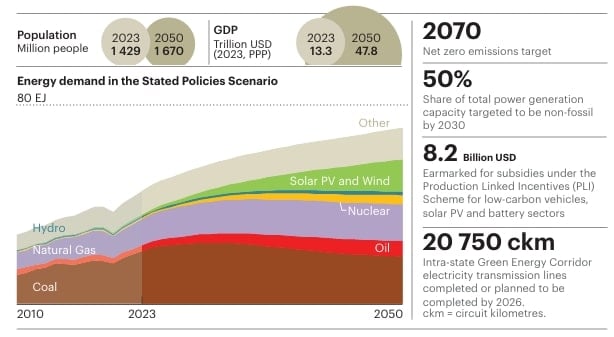
By Nantoo Banerjee There is little to be excited about the recent inauguration of predominantly mountainous Arunachal Pradesh’s first commercial coal mine at Namchik-Namphuk in the Changlang district jointly by Union Coal & Mines Minister G Kishan Reddy and Arunachal Chief Minister Pema Khandu, marking the state’s first coal mine project. With an officially estimated […]

The article India Must Cut Down Coal Consumption appeared first on Latest India news, analysis and reports on Newspack by India Press Agency).

Binance has pledged $283 million in compensation for users whose holdings suffered from token de-pegging during Friday’s extreme market turmoil. The capital injection is aimed at covering verifiable losses directly caused by platform anomalies.

The move follows a dramatic period of volatility that triggered sharp deviations in stablecoins and staking tokens, with some altcoins registering drastic steep declines or even temporary zero valuations on Binance. Analysts and insiders view the compensation effort as a critical test of the exchange’s stewardship and resilience.

Between 20:50 and 22:00 UTC on Friday, intense selling pressure and slumping liquidity pushed multiple tokens away from their pegged values, according to Binance’s internal timeline. The tokens most affected included USDE, BNSOL, and WBETH. Binance said the de-pegging began around 21:36 UTC and bottomed shortly thereafter.

The exchange insists that all compensations will be limited to losses traceable to system errors or platform shortcomings—not losses deriving from normal market fluctuations or unrealised price shifts. Users must substantiate their claims with transaction records and proof that the losses stemmed from mispricing on Binance.

During the crash, some tokens on Binance appeared to hit “zero” for brief moments. But that zero pricing was largely a display artifact linked to system overload and liquidity gaps, rather than reflecting true value collapse. In parallel, those same tokens maintained nonzero trading levels on other exchanges, underscoring that Binance’s internal issues amplified the anomaly.

To explain the phenomenon, Binance managers pointed to cascading liquidations. As prices dropped, collateralised altcoins were automatically sold to cover leveraged positions, feeding further selling pressure. That mechanism, combined with display parameter issues in decimal configuration, led to mispricing events.

Binance executive Richard Teng issued a public apology, stating: “I’m truly sorry to everyone who was impacted. We don’t make excuses — we listen closely, learn from what happened, and are committed to doing better.” Meanwhile, Binance co-founder Yi He reaffirmed that the firm sees this as a responsibility to its user community, pledging to examine each claim thoroughly.

Crypto markets were hit hard across the board. Over $20 billion in leveraged positions were liquidated industry-wide, with Bitcoin plunging from over $124,000 to lows near $105,000, while altcoins exposed to margin stress plunged further. The market contraction erased nearly $850 billion in market capitalisation within hours.

By Nitya Chakraborty There is a big possibility of renewal of India-US bilateral ties impacting the ongoing trade talks following the proposed one on one meeting between the Indian Prime Minister Narendra Modi and the U.S. President Donald Trump during their presence in Kuala Lumpur to attend the summit of ASEAN members on October 26 […]

The article Trump-Modi Meet At ASEAN Summit In Malaysia Can Remove Irritants In Indo-US Ties appeared first on Latest India news, analysis and reports on Newspack by India Press Agency).

Dubai’s GITEX GLOBAL 2025 is turning the spotlight on East Africa as a rising force in the artificial intelligence landscape, with regional governments and private players leveraging the event to signal ambition across infrastructure, AI research and startup ecosystems. More than 6,800 tech enterprises and 2,000 startups from 180 countries will convene in Dubai from 13 to 17 October under the GITEX banner, showcasing breakthroughs in biotech, […]

Ethereum’s value slipped beneath the psychologically and technically significant $4,000 mark today, intensifying fears that the second-largest cryptocurrency may be entering a deeper correction. On Binance, ETH dipped to $3,988.89, down almost 8 per cent in 24 hours.

The abrupt drop triggered widespread liquidations, especially among leveraged positions. On-chain liquidation trackers show nearly $188 million in crypto was liquidated in just one hour during the sharp move.

Persistent macroeconomic headwinds, alongside renewed U. S.–China trade tensions, appear to have compounded selling pressure. The Nasdaq and other equity benchmarks also suffered, amplifying risk aversion among crypto investors.

Technical analysts now view the breakdown below $4,000 as a turning point. From a charting perspective, the fall invalidated previously bullish setups such as bull flags, leaving Ethereum exposed to further downside. One analyst cautioned that extended weakness could push ETH toward the $3,750 to $3,500 zone if pivotal support fails.

Support between $4,200 and $4,300 had held in recent sessions, but now that zone is under siege. Should it collapse, the stage may be set for a retest of $3,900 or lower. Traders are watching whether buyers will defend this corridor or capitulate.

Despite today’s plunge, some investors see accumulation underway. Ethereum’s total on-exchange supply has declined to a nine-year low, with large holders withdrawing ETH from exchanges—an indicator that long-term confidence may still remain intact.

Longer term, expectations remain cautiously optimistic. Standard Chartered recently raised its year-end target for ETH to $7,500, citing heightened institutional adoption and increasing use of the Ethereum network in stablecoin and DeFi infrastructures. Meanwhile, Citigroup offers a more conservative forecast of $4,300 by end-2025, warning that current prices may be more sentiment-driven than fundamentals-rooted.

Major upgrades on Ethereum’s roadmap could yet shift sentiment. Among them: the Glamsterdam upgrade, which integrates enhanced proposer-builder separation. However, a fresh academic study warns of a “free option” risk under high volatility, whereby builders may cancel committed payloads without penalty—posing challenges to network liveness during stress.

In the short term, analysts are split. Some argue that the slide is a healthy reset before ETH resumes an uptrend, provided support zones hold. Others say the breach of $4,000 suggests a loss of momentum strong enough to spark a deeper correction.

Crypto markets are already exhibiting signs of strain beyond Ethereum. Bitcoin is under pressure as well, and risk assets broadly are being squeezed by mixed macro data and higher real-interest rates. Some strategists say the crypto pullback could morph into a broader derisking wave unless fresh catalysts emerge.

Looking ahead, observers point to a few key variables: whether ETH can reclaim and sustain above $4,500; whether buyers will step in at $4,200–$4,300; and whether the network upgrades can deliver tangible improvements to gas, scalability, and decentralisation.

By Girish Linganna In a move that would have seemed unthinkable just a few years ago, Taliban Foreign Minister Amir Khan Muttaqi arrived in New Delhi on October 9 for an eight-day official visit that marks a watershed moment in India’s foreign policy. His meetings with External Affairs Minister S. Jaishankar, followed by visits to […]

The article The Price Of Pragmatism: What India Gains (And Loses) By Courting The Taliban appeared first on Latest India news, analysis and reports on Newspack by India Press Agency).

A fresh campaign deploying SnakeKeylogger is targeting users with weaponized emails that lead to the execution of PowerShell scripts and ultimately exfiltrate sensitive data. Security analysts warn that the threat now blends social engineering with native Windows scripting to evade detection. Emails purporting to be from “CPA-Payment Files” or similar remittance services carry attachments—most often ISO or ZIP files. Once opened, these contain a malicious BAT file […]

Matein Khalid Gold is in its most spectacular bull run since 1976-1980, when prices rocketed from $91 to over $800 an ounce. The current cycle found its floor near $1,800 in late 2022, as the Powell Fed’s rate-hike campaign peaked and Washington froze $300 billion in Russian reserves in response to the invasion of Ukraine. “Dr Auric” now trades at just over $4,000 an ounce – a perfect vindication of […]

OpenAI has raised alarms with European Union antitrust regulators, warning that the growing dominance of major technology firms such as Google, Microsoft, and Apple poses a threat to competition within the sector. The company’s concerns centre around the increasing control these companies hold over vast amounts of data, which it claims could stifle innovation and lead to unfair market advantages. In a detailed submission to the European […]

Lyft Inc. has entered into a partnership with the autonomous vehicle company Tensor Auto Inc. to introduce a fleet of robotaxis across North America and Europe by 2027. The companies aim to reshape the transportation landscape, focusing on the future of urban mobility. Lyft’s venture into the robotaxi market signals a significant step towards embracing fully autonomous driving technologies, which could revolutionise urban transport systems globally.

Under the terms of the agreement, Tensor Auto will provide the necessary technology to power the autonomous vehicles, while Lyft will manage the operations, including fleet logistics, ride-hailing services, and customer-facing platforms. The collaboration is set to leverage Lyft’s extensive experience in the ride-hailing industry, which already covers a wide range of urban markets in both regions. This partnership marks a key milestone in the journey towards making driverless cars a reality, aiming to deliver more efficient and eco-friendly transportation alternatives.

Lyft’s move into robotaxis comes as the autonomous vehicle market is experiencing a rapid surge in interest, with several major players such as Tesla, Google’s Waymo, and others investing heavily in the technology. These vehicles are designed to operate without human intervention, using a combination of sensors, cameras, and advanced artificial intelligence to navigate city streets. By eliminating the need for drivers, robotaxis promise to cut costs, reduce congestion, and lower emissions, aligning with the growing demand for greener urban transport solutions.

The rollout of robotaxis is expected to be gradual, with Lyft planning to initially deploy a limited number of vehicles in select cities. The fleet will be integrated with Lyft’s existing app, allowing customers to book rides as they would with traditional cars. While the service will begin with a small fleet of vehicles, Lyft and Tensor Auto anticipate expanding the network as regulatory frameworks for autonomous vehicles evolve and urban infrastructure adapts to accommodate driverless cars.

Lyft’s decision to enter the autonomous ride-sharing market comes at a time when the company is looking to diversify its services beyond traditional ride-hailing. The potential of robotaxis could be a game changer in terms of profitability and service efficiency. As the global shift towards sustainability grows stronger, self-driving electric vehicles like these offer a promising solution to reduce carbon emissions and dependence on fossil fuels.

Tensor Auto, a leader in autonomous driving technology, has been a key player in the development of self-driving solutions for both private and commercial transportation. The company has been refining its autonomous system, focusing on the safety, reliability, and efficiency of its vehicles. Tensor Auto’s vehicles are equipped with state-of-the-art sensors and machine learning algorithms designed to enable smooth navigation in complex urban environments. These innovations are expected to be central to the success of the Lyft robotaxi initiative.

While many of the logistics regarding the fleet’s operation remain in development, key challenges will include regulatory approvals, vehicle safety standards, and ensuring that autonomous systems can navigate the dynamic nature of urban environments. Several regions, including parts of Europe and North America, have already started the process of revising their traffic laws to accommodate self-driving vehicles, with pilot programs and test sites being established in cities like San Francisco and London.

Experts suggest that the integration of robotaxis could lead to significant shifts in how people approach urban mobility. With the promise of safer, more reliable, and more affordable transportation, the expansion of driverless cars could be particularly beneficial in densely populated cities, where congestion and pollution are persistent challenges. Lyft and Tensor Auto’s collaboration could set a new benchmark for the future of transportation, one that is driven by sustainability and technological advancement.

By Nitya Chakraborty The Israel-Hamas peace deal announced by the US President Donald Trump on Wednesday night in Washington is a welcome development, however limited it be at the moment as the agreement between the two warring parties is only for the first phase of Trump sponsored deal involving the release of all hostages by […]

The article Israel-Hamas Ceasefire Deal Is Welcome But The Follow Up Is Crucial For Enduring Peace appeared first on Latest India news, analysis and reports on Newspack by India Press Agency).

Arabian Post Staff -Dubai TAG Heuer is stepping up its game in the smartwatch market with the release of its latest model, the Connected Calibre E5. This new iteration marks a significant departure from the brand’s previous reliance on Google’s Wear OS. Instead, TAG Heuer has opted for a proprietary operating system designed to offer a more seamless experience for its high-end clientele. The shift aims to […]

Bybit, a leading cryptocurrency exchange, has achieved a significant milestone by becoming the first fully licensed crypto exchange to operate in the UAE. This breakthrough comes amid the UAE’s ongoing efforts to establish itself as a global hub for digital assets and blockchain technology.

The UAE has long been a proponent of embracing emerging technologies, particularly in the fintech and blockchain sectors. The government’s progressive stance has attracted numerous cryptocurrency firms looking to establish a foothold in the region. Bybit’s licensing by the UAE’s Financial Services Regulatory Authority solidifies its position within this growing market.

The FSRA’s approval marks a crucial development, as it provides Bybit with a clear regulatory framework to offer crypto trading services to customers in the UAE. The exchange, which has previously operated under regulatory frameworks in other jurisdictions, will now operate in full compliance with local laws. This licensing allows Bybit to offer a wide range of digital asset services, including spot and derivatives trading, to both institutional and retail investors.

The approval is a testament to the UAE’s regulatory efforts to integrate the cryptocurrency sector into its broader financial ecosystem. The country has been proactive in ensuring that regulations keep pace with the rapid evolution of digital assets, making it an attractive destination for crypto companies seeking a compliant and stable environment.

Bybit’s decision to seek a licence in the UAE comes at a time when the global crypto market faces heightened scrutiny and regulatory challenges. In a climate where several countries have been introducing stringent regulatory measures, the UAE’s more flexible approach to crypto regulation has set it apart. This has resulted in an influx of international crypto firms looking to operate in the region, as they see the UAE as a secure base from which to expand their services.

The approval process for Bybit was rigorous and comprehensive, ensuring that the exchange adhered to strict security measures, anti-money laundering protocols, and customer protection standards. The FSRA has been meticulous in its review, demonstrating its commitment to fostering a secure and transparent environment for digital asset trading.

UAE officials have long spoken about their vision to turn the country into a leader in the global digital economy, with blockchain and cryptocurrency playing key roles in that vision. The emirate of Dubai, in particular, has been a front-runner in attracting cryptocurrency firms, with its Dubai International Financial Centre and the Dubai Financial Services Authority offering frameworks tailored to the needs of digital asset businesses.

The Bybit licensing follows a series of initiatives launched by the UAE government, including the establishment of the Dubai Virtual Asset Regulatory Authority. VARA’s creation was designed to regulate virtual assets, ensuring that companies operating within the region meet stringent compliance standards. This regulatory framework has been instrumental in bringing crypto companies into the fold, offering a more secure trading environment for users and businesses alike.

Bybit’s entry into the UAE market has also brought attention to the broader trends shaping the cryptocurrency industry in the Middle East. The UAE has become one of the leading markets for blockchain innovation, with numerous projects underway to integrate blockchain technology into sectors such as real estate, logistics, and finance. As the region’s appetite for digital innovation grows, companies like Bybit are poised to capitalise on this evolving landscape.

The licensing of Bybit is also expected to have a ripple effect on the wider cryptocurrency ecosystem. With the exchange now authorised to operate legally in the UAE, it may pave the way for other platforms to follow suit, thereby increasing the variety of options available to investors. This will likely enhance the overall appeal of the UAE as a destination for cryptocurrency trading and investment.

Despite the current global volatility in the crypto market, Bybit’s expansion into the UAE market reflects its long-term confidence in the future of digital assets. As the company continues to expand its services worldwide, the UAE’s stable regulatory environment offers a solid foundation for its growth in the Middle East.

LearningCrypto has emerged as a leading force in the intersection of cryptocurrency and artificial intelligence, capitalising on the growing interest in crypto education. As more individuals seek to understand the complexities of digital currencies, platforms like LearningCrypto are responding to an urgent demand for in-depth knowledge in the ever-evolving crypto space.

The expansion of AI-driven educational tools has significantly reshaped how cryptocurrency is taught. LearningCrypto, which has grown rapidly over the past year, leverages AI to personalise the learning experience for its users. The platform uses AI algorithms to track a learner’s progress, adapt content, and recommend courses based on individual learning preferences and gaps in knowledge. By tapping into AI, the platform aims to bridge the knowledge gap, enabling people of all levels—from beginners to seasoned investors—to enhance their understanding of crypto assets.

Market trends show an overwhelming shift toward digital learning, especially in niche fields like cryptocurrency. As blockchain technology continues to disrupt traditional industries, there is a growing need for professional development courses tailored to the crypto world. This demand is being fuelled by a surge in cryptocurrency adoption and institutional interest, coupled with an increase in regulatory scrutiny. Individuals and businesses alike are eager to stay ahead of the curve, making crypto education a crucial priority.

LearningCrypto’s rise highlights a broader trend in the education sector, where AI is being harnessed not only for customised learning experiences but also for its potential to simulate real-world trading scenarios. This feature appeals to both new investors looking to explore the market and seasoned professionals wanting to test their strategies without the risk of losing capital. The ability to create simulated trading environments has proven to be a game-changer, giving users a safe space to learn and practice their skills.

Several factors contribute to the rapid adoption of crypto education platforms, with accessibility being at the forefront. These platforms offer an array of resources, from video tutorials and webinars to live sessions with industry experts. The inclusion of AI-driven assistance allows users to receive real-time feedback, enhancing their ability to grasp intricate concepts at their own pace. With many courses offered online, learners have the flexibility to study on their terms, making education more accessible than ever before.

The integration of AI also addresses one of the key challenges in cryptocurrency education—keeping up with the pace of change in the crypto market. AI tools can quickly adapt content to reflect the latest developments, market trends, and regulatory updates. This ability to provide up-to-date information ensures that learners are not left behind as the landscape shifts. For example, new developments such as the rise of central bank digital currencies and the ongoing discussions around the regulation of stablecoins are integrated into course materials in real-time.

The success of LearningCrypto is also a testament to the broader trend of the digital transformation of education. As traditional educational models struggle to keep up with technological advancements, online learning platforms powered by AI are becoming the go-to option for learners. Cryptocurrency, once viewed as a niche market, has gone mainstream, and its educational demand reflects this shift. By leveraging AI, platforms like LearningCrypto are positioning themselves at the forefront of this digital revolution in finance education.

Key players in the crypto education space have also taken note of this trend, with many developing their own AI-powered features to enhance the learning experience. Some platforms offer AI chatbots that provide instant answers to users’ queries, while others employ predictive analytics to help learners anticipate and prepare for market trends. This evolving landscape has raised the bar for crypto education, pushing platforms to integrate cutting-edge technology to remain competitive.

Google has broadened the accessibility of its AI-powered search feature, now available in 35 additional languages and 40 more countries. This global expansion brings cutting-edge search capabilities to millions more users, further solidifying the tech giant’s position in the evolving digital landscape.

The search engine’s AI mode, which has already been integrated into several regions, is designed to enhance user experience by delivering more nuanced, contextually aware responses. It leverages advanced machine learning algorithms to provide users with relevant, personalised information based on their search queries. As a result, users now receive more accurate results and immediate answers, whether they’re looking for detailed technical data, news, or casual information.

The expansion into 35 new languages, including Bengali, Malay, and Persian, marks a significant milestone in Google’s ambition to create a more universally accessible search engine. The company’s efforts to make its AI-powered features more inclusive have resonated with a global audience, particularly in regions with high numbers of native speakers who had previously been underrepresented in AI-driven services.

This development is part of Google’s broader strategy to strengthen its competitive edge in the search market. With AI now becoming a central element in search functionality, the company aims to differentiate itself from other players, such as Microsoft’s Bing, which has also integrated AI technology into its search engine.

Google’s move aligns with its ongoing efforts to prioritise artificial intelligence across its platforms. AI’s role in search has evolved beyond simple query-based responses to complex problem-solving and semantic understanding. By deploying AI in this expanded format, the company is setting a new benchmark for how search engines should interact with users. The introduction of more languages ensures that users worldwide benefit from a more intuitive and responsive search experience.

The roll-out is also designed to capture the attention of non-English-speaking markets, where Google has faced competition from regional players. For example, in countries where local languages dominate, such as parts of Southeast Asia and the Middle East, the ability to use AI-driven search in native languages is a crucial step towards maintaining user loyalty. Google’s strategy appears to be not only about providing relevant information but also tailoring responses in ways that reflect cultural and linguistic contexts.

Industry analysts note that the deployment of AI in search is becoming increasingly vital for tech companies looking to stay ahead in the digital space. By bringing AI to more languages, Google is ensuring its search platform remains at the forefront of technological innovation, offering greater value to users around the globe. Furthermore, the technology promises to assist businesses in connecting with customers more effectively by improving discoverability and delivering content more suited to regional and linguistic preferences.

This step towards universal AI integration is also a response to the growing demand for more accessible, user-centric services. As artificial intelligence continues to mature, users expect it to provide not only immediate answers but also solutions that are tailored to their individual needs and linguistic background.

However, the move is not without its challenges. Ensuring that AI algorithms perform optimally in diverse languages, including those with complex grammatical structures and dialects, remains a significant hurdle. For instance, languages like Bengali or Malay pose unique challenges due to their rich vocabulary and varied sentence structures. Google’s AI team is likely to continue refining its models to handle these nuances, improving accuracy and overall user satisfaction.

The growing global reach of AI-powered search further emphasises the broader trend of AI’s role in shaping future technology. With machine learning increasingly being embedded into everyday tasks, from search engines to digital assistants, the evolution of AI represents both an opportunity and a responsibility for companies like Google. The company must balance rapid innovation with ethical considerations, ensuring that its AI systems are transparent, equitable, and accountable.


VISHNU RAJA
RYO YAMADA
HITORI GOTOH
IKUYO KITA