News related to
Google

OpenAI’s chief executive Sam Altman has said that India now has 100 million weekly active users of ChatGPT, elevating the country to the position of the platform’s second-largest market globally after the United States and underscoring its growing influence in the artificial intelligence ecosystem. Altman disclosed the figure in an opinion piece published ahead of the Global AI Impact Summit 2026 in New Delhi, where government officials and global tech leaders are convening to discuss the future of AI and its integration into education, enterprise and public services.

This milestone reflects not just a vast user base but also a distinct pattern of adoption: students in India now represent the largest single demographic of ChatGPT users worldwide, according to Altman, who highlighted the role younger generations are playing in embedding generative AI into daily workflows for learning and productivity.

The 100 million figure forms a significant share of ChatGPT’s global weekly active user count, which stood at about 800 million as of October 2025 and is widely projected to edge closer to 900 million as platforms refine their offerings and expand reach. OpenAI’s decision to open an office in New Delhi in August 2025 and tailor pricing, including a lower-cost subscription tier later made free for a year, is seen as part of a strategy to deepen engagement in what many technology firms regard as a key growth market.

Altman underscored India’s demographic advantages, including a population exceeding one billion internet users and a large proportion of English speakers outside native English-speaking countries — factors that have made the country fertile ground for generative AI adoption. Many students have turned to ChatGPT for support with research, coding, examination preparation and language practice, reflecting a broader trend of digital tools being woven into educational routines.

Despite this surge, translating sheer user numbers into sustained economic returns poses challenges for AI firms. India’s price-sensitive market and uneven internet access complicate monetisation, causing some companies to adjust their strategies to balance affordability with revenue generation. OpenAI’s tailored pricing and promotional offers have helped lower entry barriers, but broader monetisation across emerging markets may require further innovation in business models.

The competitive landscape in India’s AI space is intensifying. Alphabet’s Google has made inroads with its Gemini AI suite, aggressively targeting younger users through free one-year subscriptions and partnerships with telecom firms to broaden adoption among students and professionals. These efforts are part of a broader contest among technology giants to capture share in a market that has vast potential due to its size and digital engagement.

The presence of global tech leaders and politicians at the New Delhi summit highlights the geopolitical and economic significance of India’s AI trajectory. Policy discussions span topics from responsible AI governance and equitable access to scaling infrastructure and boosting domestic innovation capacity. Indian policymakers, alongside industry executives, are advocating approaches that leverage technology to enhance education, public services and economic participation, while grappling with concerns over job displacement and digital divides.

Altman has outlined priorities for fostering inclusive AI growth in India, emphasising the need for practical digital literacy, robust computing infrastructure and frameworks that ensure ethical deployment. Such an approach, he argues, will empower users to harness AI’s potential effectively rather than just expanding access to tools.

The prominence of India’s student base on ChatGPT has broader implications for how AI products are developed and tailored. Feedback from a large and diverse user community helps shape feature enhancements and localisation efforts, influencing global development roadmaps. For companies like OpenAI, this dynamic underscores a strategic shift from traditional markets in Europe and North America toward regions where usage patterns reflect unique demographic and cultural needs.

Anthropic has enabled its Claude artificial intelligence system to edit files directly within software development environments, marking a significant escalation in the race to build autonomous coding agents capable of handling complex engineering tasks with limited human intervention. The capability allows Claude to read, modify and write code across structured repositories, moving beyond code suggestions in chat windows to targeted alterations inside live projects. Developers can grant […]

By Nantoo Banerjee There is little to be excited about the defence ministry’s latest clearance for the acquisition of 114 Rafale fighter jets from France at a huge cost of Rs.3.25 lakh crore (nearly $40 billion), branded as ‘mother of all defence deals’. It is a matter of major concern that even 78 years after […]

The article India’s Reliance On Imported Arms For Defence Is A Concern appeared first on Latest India news, analysis and reports on Newspack by India Press Agency).

India has emerged as the second-largest market globally for Claude, the generative artificial intelligence model developed by US-based start-up Anthropic, underscoring the country’s expanding influence in the global AI ecosystem.

Debjani Ghosh, who leads Anthropic’s operations and policy engagement in India, said the scale of adoption by developers, enterprises and start-ups has placed the country just behind the United States in terms of usage and integration of Claude’s models. She described India as a “strategic growth engine” for the company, citing strong demand from sectors including financial services, healthcare, education and software development.

Anthropic, founded in 2021 by siblings Dario Amodei and Daniela Amodei, has positioned Claude as a competitor to models from OpenAI and Google. The company has attracted substantial backing from Amazon and Google, with Amazon committing up to $4 billion as part of a strategic partnership to integrate Claude into Amazon Web Services infrastructure. The funding has enabled Anthropic to expand globally, with India becoming a focal point due to its developer base and digital economy.

India’s prominence in the AI adoption cycle reflects broader structural factors. The country has one of the world’s largest pools of software engineers, a fast-growing start-up ecosystem, and a government push towards digital public infrastructure. Enterprises across banking and fintech have begun embedding generative AI tools to automate compliance checks, summarise documents and enhance customer interaction. In healthcare, pilot projects are under way to use AI systems for clinical documentation and triage support, while education technology platforms are deploying AI-driven tutoring tools.

Ghosh indicated that India’s market dynamics differ from those of Western economies. Cost sensitivity and the need for scalable deployment across diverse languages and devices have shaped how enterprises experiment with large language models. Claude’s emphasis on constitutional AI — a framework designed to make outputs safer and more aligned with human values — has resonated with corporate clients concerned about regulatory risk and reputational exposure.

Regulatory considerations are central to the AI conversation in India. The Ministry of Electronics and Information Technology has signalled its intent to craft a framework that balances innovation with safeguards against misinformation, bias and misuse. While India has not enacted a standalone AI law, policy discussions have intensified around data governance and algorithmic accountability. Companies operating in the country must also comply with the Digital Personal Data Protection Act, which imposes obligations on data fiduciaries and processors.

Industry analysts note that India’s large English-speaking population has historically accelerated the adoption of global technology platforms. However, the next phase of growth in AI is expected to depend on multilingual capabilities. Claude’s ability to handle multiple languages is seen as an advantage in a country with 22 constitutionally recognised languages and hundreds of dialects. Developers are increasingly testing generative models for vernacular content generation and customer support.

Competition in the Indian market is intensifying. OpenAI’s ChatGPT has built a strong user base, while Google has integrated its Gemini models into productivity tools and cloud services. Domestic start-ups are also entering the field, building foundation models trained on local datasets. Analysts say that enterprise adoption, rather than consumer usage alone, will determine long-term market leadership.

Anthropic’s expansion strategy in India includes partnerships with cloud providers and enterprise software companies. By leveraging Amazon Web Services’ presence in major Indian cities, Claude is being offered as part of broader digital transformation packages. Ghosh emphasised that collaboration with academic institutions and start-up incubators is another priority, with the aim of fostering responsible AI research and skills development.

The rapid uptake of generative AI has also raised concerns. Experts warn of the risks of hallucinations, data leakage and overreliance on automated systems. In financial services, regulators have cautioned against using AI outputs without human oversight. Cybersecurity specialists highlight the potential for AI tools to be misused for phishing or deepfake generation. Anthropic has sought to address such issues by embedding guardrails into its models and conducting external safety evaluations.

Zilliz has launched a new Zilliz Cloud region in Amazon Web Services’ eu-west-1 data centre in Ireland, expanding its European infrastructure as demand for localised artificial intelligence systems accelerates across Western Europe and the United Kingdom. The move positions the vector database specialist closer to enterprise customers that require data residency, lower latency and regulatory compliance within the European Union. By deploying in AWS’s Ireland region, Zilliz […]

Anthropic has entered a dispute with the United States Department of Defense over the proposed military use of its flagship artificial intelligence system, Claude, underscoring a widening rift between Silicon Valley’s safety-first rhetoric and Washington’s expanding appetite for advanced AI in national security. The San Francisco-based company, founded in 2021 by former OpenAI researchers including chief executive Dario Amodei and president Daniela Amodei, has built its brand […]

By K Raveendran The unfolding political narrative around the Indo-US trade treaty has done more than spark debate on tariffs, market access and diplomatic alignment: it has reshaped the contours of India’s domestic political landscape, particularly by elevating Rahul Gandhi’s stature as the principal opposition leader. The Modi government has positioned the trade agreement as […]

The article Indo-US Trade Deal Has A Most Unlikely Winner: Rahul Gandhi appeared first on Latest India news, analysis and reports on Newspack by India Press Agency).

Advertisements

Businessman and television personality Kevin O’Leary has been awarded $2.8 million in a federal defamation lawsuit against prominent crypto influencer Ben “BitBoy” Armstrong after a judge handed down a default judgment against the defendant for failing to mount a substantive defence. The ruling by a US District Court judge in Florida came after Armstrong published a series of false and defamatory claims online that accused O’Leary of […]

By Nitya Chakraborty The landslide win of the Bangladesh Nationalist Party (BNP) in the national elections in Bangladesh held on February 12 is a positive development in the geopolitics of not only South Asia, but also augurs well for the bilateral relationship between India and its eastern neighbour. BNP getting more than two-thirds of the […]

The article BNP’s Landslide Victory In Bangladesh Elections Is A Good Omen appeared first on Latest India news, analysis and reports on Newspack by India Press Agency).

Arabian Post Staff -Dubai Asus has introduced its latest dual-display laptop in the United Arab Emirates, positioning the Zenbook Duo UX8407AA as a flagship productivity device built around Intel’s Core Ultra platform and a redesigned twin-screen form factor. The launch marks a renewed push by the Taiwan-headquartered manufacturer to popularise multi-screen computing beyond niche creative users. The Zenbook Duo features two 14-inch 3K OLED panels branded as […]

China’s Z. ai has propelled its artificial intelligence ambitions into the global spotlight with the launch of GLM-5, a 744-billion-parameter open-source large language model that stands toe-to-toe with leading Western counterparts and underscores Beijing’s drive for technological self-sufficiency. Released on 11 February by the company formerly known as Zhipu AI, GLM-5 combines advanced architecture with broad hardware compatibility and permissive licensing, signalling a shift in the global AI landscape.

The GLM-5 model, built on a mixture-of-experts framework and trained on an expanded dataset of roughly 28.5 trillion tokens, is designed for multifaceted tasks including coding, reasoning and agentic operations. Z. ai reports that the model’s performance on internal benchmarks approaches that of leading proprietary systems such as Anthropic’s Claude Opus 4.5, and on certain tests it outperforms Google’s Gemini 3 Pro. Its permissive MIT licence allows unrestricted commercial use and adaptation, making GLM-5 one of the most accessible frontier AI models available to developers and enterprises worldwide.

A standout feature of GLM-5 is its independence from American semiconductor technology. Trained and deployable on domestic Chinese chips from manufacturers like Huawei Ascend, Moore Threads, Cambricon and Kunlunxin, the model sidesteps reliance on high-end Nvidia GPUs that are constrained under US export controls. Z. ai’s use of the MindSpore AI framework further embeds the model within a Chinese software ecosystem, emphasising self-reliant technological development. This strategy exemplifies a broader push within China’s AI sector to mitigate the impact of external trade restrictions and build robust, locally supported infrastructures.

Market reception underscored the impact of GLM-5’s launch: Z. ai’s shares surged nearly 29 per cent on the Hong Kong Stock Exchange following the announcement, reflecting investor optimism about the company’s competitiveness and growth prospects. Industry analysts note that GLM-5’s arrival comes amid an acceleration of model releases and chip optimisation efforts by several Chinese AI firms, signalling more intense competition on both domestic and international fronts.

Benchmarks published by Z. ai highlight GLM-5’s strengths and limitations. On software engineering evaluations, the model achieved a score of 77.8 per cent on the widely referenced SWE-bench Verified suite, trailing slightly behind Claude Opus 4.5’s 80.9 per cent but outperforming other notable systems in agentic and multitask contexts. The architecture’s efficient handling of long-context sequences—up to 200 000 tokens—positions GLM-5 for applications requiring extensive reasoning over lengthy inputs.

GLM-5’s low cost of deployment also enhances its appeal. Analyses of pricing data suggest inference can cost around US $1 per million tokens, a fraction of the fees charged by some proprietary APIs, potentially lowering barriers for startups and research teams seeking cutting-edge language modelling without prohibitive expenditure. The MIT licence further expands this accessibility by granting broad rights to adapt and deploy the underlying model weights in commercial and research settings.

Despite its technical achievements and open licensing, experts caution against over-interpretation of benchmark results as definitive proof of superiority. Performance under controlled test conditions does not always translate to uniformly strong real-world applications, particularly in generative and reasoning tasks where robustness and safety remain critical hurdles. Some observers also warn that differences between self-reported evaluations and independent assessments could emerge as the model is adopted more widely.

GLM-5’s emergence reflects broader trends within China’s AI ecosystem, where domestic firms and chipmakers are increasingly synchronised in advancing cutting-edge technologies. Industry developments suggest that model and hardware optimisation efforts are happening in near tandem, with architecture adaptations and inference support enabling faster incorporation of new Chinese semiconductor products. These developments sit against a backdrop of regulatory frameworks that increasingly emphasise the alignment of AI systems with government objectives, including content governance and cybersecurity considerations.

Construction of the first 200 megawatts of the Stargate Data Centre project in the UAE is advancing, according to ALEC Holdings, as structural works near completion and major mechanical and electrical installations gather pace. ALEC, a subsidiary of the Investment Corporation of Dubai, informed the Dubai Financial Market that building structures have been erected and that mechanical, electrical and plumbing works are well under way. The update […]

By Dr. Gyan Pathak India witnessed on Thursday February 12 the most intensified of all India general strike of workers in the country so far in which over 30 crores workers were estimated to have participated in about 600 districts of the country, surpassing the record of July 9, 2025 general strike in which over […]

The article General Strike Of Workers Spread And Intensify Creating History appeared first on Latest India news, analysis and reports on Newspack by India Press Agency).

Security analysts have uncovered a network of 287 Google Chrome browser extensions that siphon off users’ browsing data and send it to external servers, collectively installed on roughly 37.4 million devices worldwide. The discovery has alarmed privacy advocates and highlights ongoing weaknesses in browser extension marketplaces that allow ostensibly benign add-ons to conduct intrusive data collection without clear disclosure. This emergent threat comes amid broader scrutiny of […]

HONG KONG SAR – Media OutReach Newswire – 12 February 2026 – As real‑world asset (RWA) tokenization shifts from niche pilots to core infrastructure for institutional wealth management, it is redefining how capital flows across borders, asset classes, and generations. On February 9, 2026, FutureOne MENA (“FOM”), a pioneering enterprise focused on connecting family offices with future technology, with a particular emphasis on tokenization and RWAs, enabling them to access, structure, and invest in next-generation finance, and the Dubai Multi Commodities Centre (“DMCC”), a Government of Dubai authority and the region’s leading global business hub, signed a Memorandum of Understanding (MOU) during an exclusive family office dinner themed “The Future of Tokenizing Wealth” at Rosewood Hong Kong.

The partnership will create a strategic wealth corridor between Dubai and Hong Kong, enabling institutional‑grade RWA tokenization that connects Middle Eastern capital with Asia‑Pacific opportunities. By combining FOM’s AI‑driven investment intelligence and family‑office expertise with DMCC’s regulated, commodity‑rich ecosystem, the collaboration aims to unlock fractional, cross‑border ownership of high‑value assets, enhance liquidity for traditionally illiquid holdings, and accelerate the adoption of compliant, on‑chain wealth solutions for ultra‑high‑net‑worth investors and family offices.

The event, hosted by FOM with the support of InvestHK, convened over 100 high‑profile representatives from global family offices and institutional investors, including notable participants from Sunwah Group, CT Bright (CP Group), Keyestone Group, Lee Kum Kee Group, MindWorks Capital, Park Capital Group, E Fund Asset Management Hong Kong, K. Wah, and many others.

Dr. Anina Ho, Founder & CEO, FOM, stated “Today we formalize our collaboration on cross-border digital asset and RWA initiatives between Dubai and Hong Kong. This partnership bridges two of Asia’s leading financial hubs, creating institutional-grade solutions for family offices navigating digital wealth transformation.”

Belal Jassoma, Senior Director of Tech Ecosystems, DMCC, added, “This partnership reflects the next phase of digital asset adoption – moving beyond experimentation to institutional‑grade infrastructure. By connecting Dubai and Hong Kong as twin hubs for regulated real‑world asset tokenization, we are strengthening the framework through which family offices and institutional players can operate with confidence. Through DMCC’s Crypto Centre, Wealth Hub and other ecosystems and Dubai’s regulatory frameworks, combined with FOM’s strong family offices network, this collaboration establishes a practical wealth corridor that enhances cross‑border collaboration, transparency, and long‑term business expansion across two of the world’s most dynamic trade centers.”

Key value propositions

1. Establishing a powerful UAE-HK wealth corridor

Under the MOU, FOM and DMCC will collaborate to integrate the Middle East and Hong Kong financial ecosystems, leveraging DMCC’s specialized licensing, corporate structuring capabilities, and free‑trade zone advantages alongside FOM’s cutting‑edge digital asset solutions and connectivity to Hong Kong. This strategic alliance is poised to help family offices and high‑net‑worth individuals (HNWIs) in Dubai and Hong Kong capture the surging demand for compliant, institutional‑grade digital asset and alternative investment solutions, while maintaining strong governance and operational efficiency.

The initiative positions Dubai and Hong Kong as twin hubs for regulated RWA tokenization, connecting Middle Eastern capital with Asia‑Pacific opportunities through secure, transparent, and institutionally robust digital asset infrastructure. For family offices, this means greater diversification, improved risk‑adjusted returns, and streamlined access to global opportunities without compromising regulatory compliance.

2. Enhancing digital asset ecosystem

Through the strategic partnership, FOM and DMCC will develop robust frameworks for tokenizing RWAs including real estate, commodities, and other institutional-grade assets, thereby establishing standards for asset custody, settlement, compliance, and cross-border tokenization operations. This UAE-Hong Kong wealth corridor will not only facilitate capital flows but also provide a transparent and compliant environment for digital asset issuance, trading, and reporting, empowering family offices and institutional investors with confidence and clarity in private‑market deal‑making and public‑market participation.

Shaping the future of RWA tokenization

Following the MOU signing, the event featured insightful panel discussions titled “Turning Real‑World Assets into Digital Wealth” and “Everyday Digital Wealth: Stablecoins, Payments and Tokenized Income,” along with a fireside chat on “The Future of Digital Asset Platforms.” These discussions examined how Dubai and Hong Kong can collaboratively advance regulated structures, stable‑wealth solutions, and real‑world applications for institutional and family capital.

Distinguished panelists and speakers included Dr. Anina Ho, Founder & CEO, FOM; Mr. Belal Jassoma, Senior Director of Tech Ecosystems, DMCC; Mr. Ben Zhou, Co-Founder & CEO, Bybit; Mr. Bernard Charnwut Chan, GBM, GBS, JP; Ms. Denise Zhou, Chief Strategy Officer, FOM; Mr. Henri Arslanian, Co‑Founder, Nine Blocks Capital; Mr. Jesse Guild, Vice President, Product Management, Crypto & Digital Assets, Mastercard; Mr. Lennix Lai, Chief Commercial Officer, OKX; Ms. Lingling Jiang, Partner, DWF Labs; and Mr. Yat Siu, Co‑Founder & Executive Chairman, Animoca Brands. Together, these leaders exchanged insights on how emerging technologies, including blockchain, AI, and quantum computing are reshaping asset management and cross‑border investment frameworks. The event showcased the powerful synergy between Hong Kong’s innovation ecosystem and Dubai’s regulatory excellence, creating the foundation for global RWA leadership.

The strategic partnership between FOM and DMCC unites cutting-edge technology with world-class regulatory framework to establish a UAE-Hong Kong wealth corridor, connecting cross-border capital flows, enabling compliant digital transformation, and powering institutional-grade RWA opportunities for family offices and institutional investors.

Photos and photo captions:
https://drive.google.com/drive/folders/1FfQLNGYvDLKEoHWqKNxKyIK64tGU0aAC?usp=sharing

  1. Belal Jassoma (left), Senior Director of Tech Ecosystems, DMCC and Dr. Anina Ho (right), Founder & CEO, FOM sign a MOU during an exclusive family office dinner themed “The Future of Tokenizing Wealth” on February 9, 2026.
  2. Belal Jassoma (left), Senior Director of Tech Ecosystems, DMCC and Dr. Anina Ho (right), Founder & CEO, FOM shake hands after the MOU signing.
  3. Dr. Anina Ho, Founder & CEO, FOM delivers welcome remarks and introduces the event theme “From Theory to Real Use Cases in Tokenizing Wealth Between Dubai and Hong Kong.”
  4. Belal Jassoma, Senior Director of Tech Ecosystems, DMCC shares insights on “Bridging Physical Commodities & Digital Assets as a Global Trade Hub.”
  5. During the panel discussion titled “Turning Real World Assets into Digital Wealth,” moderated by Ms. Denise Zhou (left), Chief Strategy Officer, FOM, Mr. Lennix Lai (center), Chief Commercial Officer, OKX, and Mr. Belal Jassoma (right), Senior Director of Tech Ecosystems, DMCC share their insights on how tokenization is transforming traditional asset ownership and access.
  6. During the panel discussion titled “Everyday Digital Wealth: Stablecoins, Payments and Tokenized Income,” moderated by Mr. Henri Arslanian (first from the left), Co‑Founder, Nine Blocks Capital, Mr. Jesse Guild (second from the left), Vice President, Product Management, Crypto & Digital Assets, Mastercard, Ms. Lingling Jiang (second from the right), Partner, DWF Labs, and Mr. Yat Siu (first from the right), Co‑Founder & Executive Chairman, Animoca Brands explore how digital assets and tokenized products are taking shape in everyday finance.
  7. During the fireside chat moderated by Ms. Denise Zhou (left), Chief Strategy Officer, FOM, Mr. Ben Zhou (right), Co-Founder & CEO, Bybit shares insights on the future of digital asset platforms.

General Disclaimer
The press release is distributed solely as a corporate announcement of a strategic partnership and event recap, and not as an offer or solicitation to acquire any specific investment product, token, fund, or securities.

The information herein is based on sources believed reliable but not guaranteed as to accuracy or completeness. Recipients should conduct their own due diligence and consult qualified advisors before investing. No liability is accepted for decisions based on this material.

Hashtag: #FOM

The issuer is solely responsible for the content of this announcement.

About FutureOne MENA

FutureOne MENA (“FOM”) is a pioneering consultancy firm focused on connecting family offices with future technology, with a particular emphasis on tokenization and RWAs, enabling them to access, structure, and invest in next-generation finance. FOM integrates comprehensive market analysis with proprietary multi-agent AI systems to deliver actionable insights across technology, political, economic, financial, and security dimensions. As the cornerstone of the AFFLUENCE Integrated Ecosystem, FOM connects QonBay (digital payments), FutureOne MENA (family office network), FutureOne Bloom (ESG finance), FutureOne Capital (asset management & RWA), and FutureRyse (quantum AI optimization), empowering investors with intelligent tools for portfolio optimization, deal analysis, and strategic engagement with tokenized assets. For more information, please visit .

About DMCC

Dubai Multi Commodities Centre (“DMCC”) is a leading international business district that drives the flow of global trade through Dubai. We make it easier for our members to do business, helping them access the world’s fastest growing markets from a dynamic district that offers everything they need to thrive. This approach is why we are the preferred location for over 26,000 top multinationals and high-impact startups, contributing significantly to Dubai’s position as a global hub for trade and innovation. DMCC is where the world does business. For more information, please visit .

Apple has secured a patent outlining a flexible database architecture that could alter the direction of its productivity and data management software, including FileMaker and the iWork suite, while signalling a more assertive move into structured enterprise data. The patent, published by the United States Patent and Trademark Office, describes a system capable of handling dynamic schemas, varied data types and adaptive query mechanisms. Rather than relying […]

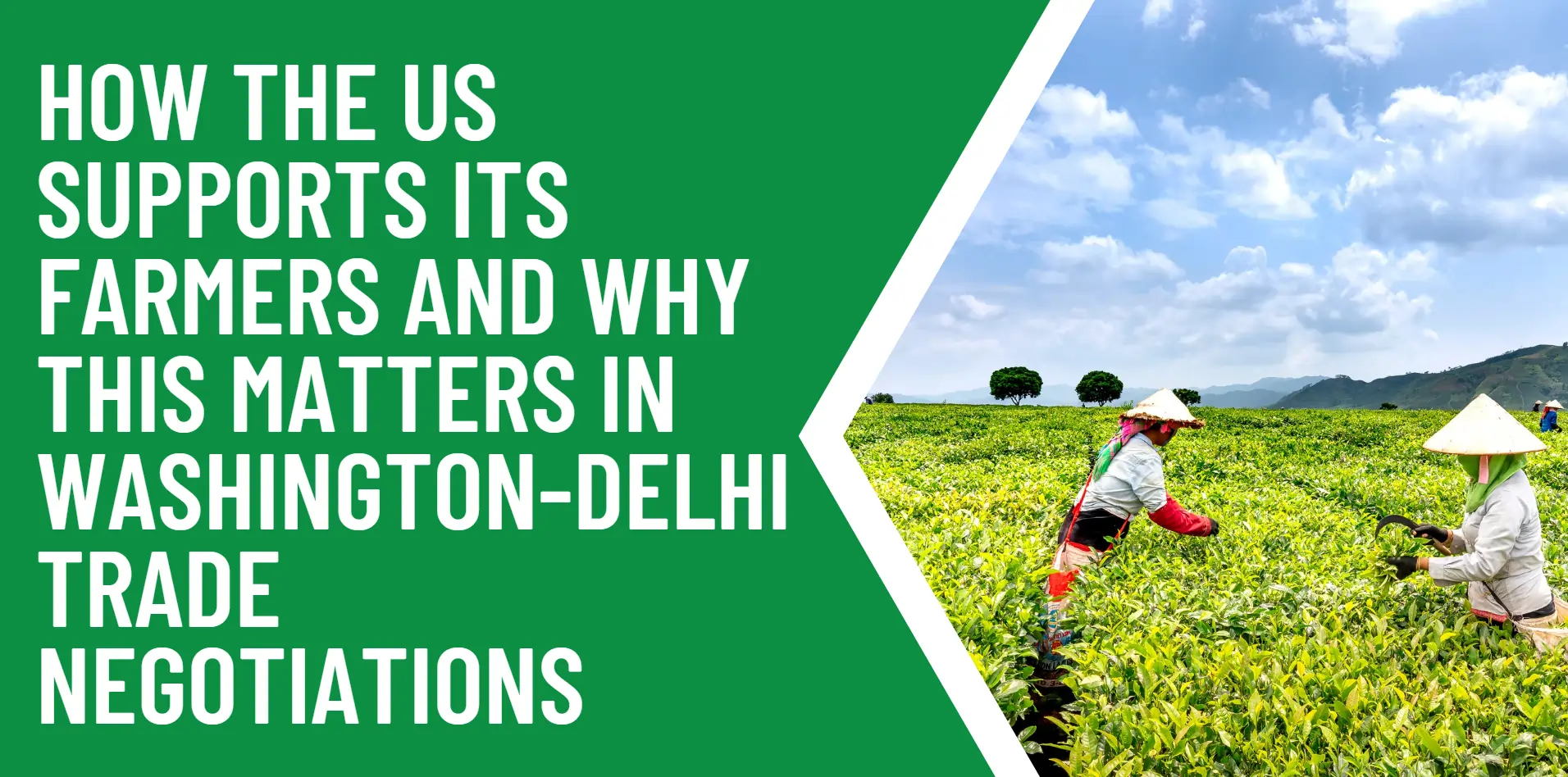
By Nitya Chakraborty Prime Minister Narendra Modi and his ministers in the Government as also loyal experts are having a pathetic time in explaining the great benefits that the Indo-US Trade Deal are conferring to India, especially the agricultural sector which is one of the major focus area of the US President Donald Trump. Commerce […]

The article Armed With Robust Subsidies, US Farm Producers To Flood Indian Market With Cheaper Goods appeared first on Latest India news, analysis and reports on Newspack by India Press Agency).

Amazon has outlined plans to channel up to $200 billion into artificial intelligence-focused data centres, networking and custom silicon through 2026, a scale of spending that would rank among the largest infrastructure pushes ever undertaken by a technology company. The investment, disclosed across earnings briefings and regulatory filings, is aimed at expanding Amazon Web Services capacity as customers accelerate the deployment of generative AI models and data-intensive […]

By Nantoo Banerjee The excitement over the finalization of the first tranche of the Indo-US trade deal during last weekend after months of negotiations and uncertainties may be irrational, if not too early, as it remains unclear about the US attitude towards India’s multi-alignment global trade and economic strategy combining countries such as Russia and […]

The article Indo-US Trade Deal Promises To Be Contentious appeared first on Latest India news, analysis and reports on Newspack by India Press Agency).

Reddit is no longer just a place for discussion threads and niche communities; it has become a primary search destination for tens of millions of users seeking answers without touching traditional search engines. Platform data and industry tracking show that about 80 million people now search directly on Reddit each month, underscoring a shift in how users navigate the internet for information, advice and recommendations. This behaviour […]

By Dr. Gyan Pathak The Supreme Court of India ordered extension of time for objections in West Bengal SIR by a week from Feb 14, which in the notified date for publication of the final electoral roll for the state. It has pointed out problem with the “software” that is being used in the Special […]


The article Supreme Court Orders Extension Of Time For Objections By A Week In Bengal appeared first on Latest India news, analysis and reports on Newspack by India Press Agency).

Bitcoin users have steadily shifted to a quieter but consequential upgrade that cuts fees and improves network efficiency without altering the asset’s core monetary rules. Segregated Witness, commonly known as SegWit, combined with the Bech32 address format, has changed how transaction data is structured and transmitted, allowing more payments to fit into each block and lowering the cost paid by users sending funds across the network. SegWit […]

Arabian Post Staff -Dubai Heroiks, a Paris-founded growth strategy and media activation consultancy, has established its first Middle East operation with a new office in Dubai Media City, aiming to strengthen its international footprint amid evolving marketing dynamics. The firm said the Dubai hub will serve as a strategic base to support local and international advertisers with data-driven growth strategy, omnichannel activation and performance measurement solutions. The […]

South Africa’s central bank is open to drawing on new repurchase agreement facilities from the European Central Bank should they become available, Governor Lesetja Kganyago said, signalling a pragmatic approach to shoring up foreign-currency liquidity as global financial conditions remain uneven. Speaking on the margins of international central-bank meetings, Kganyago indicated that access to euro liquidity via ECB repo lines would add a useful layer to South […]

VISHNU RAJA
RYO YAMADA
HITORI GOTOH
IKUYO KITA